Items Similar to Pair Chinese Monochrome Copper Red Ceramic Jars, Late Qing, Circa 1880

Want more images or videos?
Request additional images or videos from the seller
1 of 11
Pair Chinese Monochrome Copper Red Ceramic Jars, Late Qing, Circa 1880
$2,800per set
£2,142.52per set
€2,452.14per set
CA$3,954.34per set
A$4,297.69per set
CHF 2,303.17per set
MX$52,181.54per set
NOK 28,914.86per set
SEK 26,814.14per set
DKK 18,314.46per set
About the Item
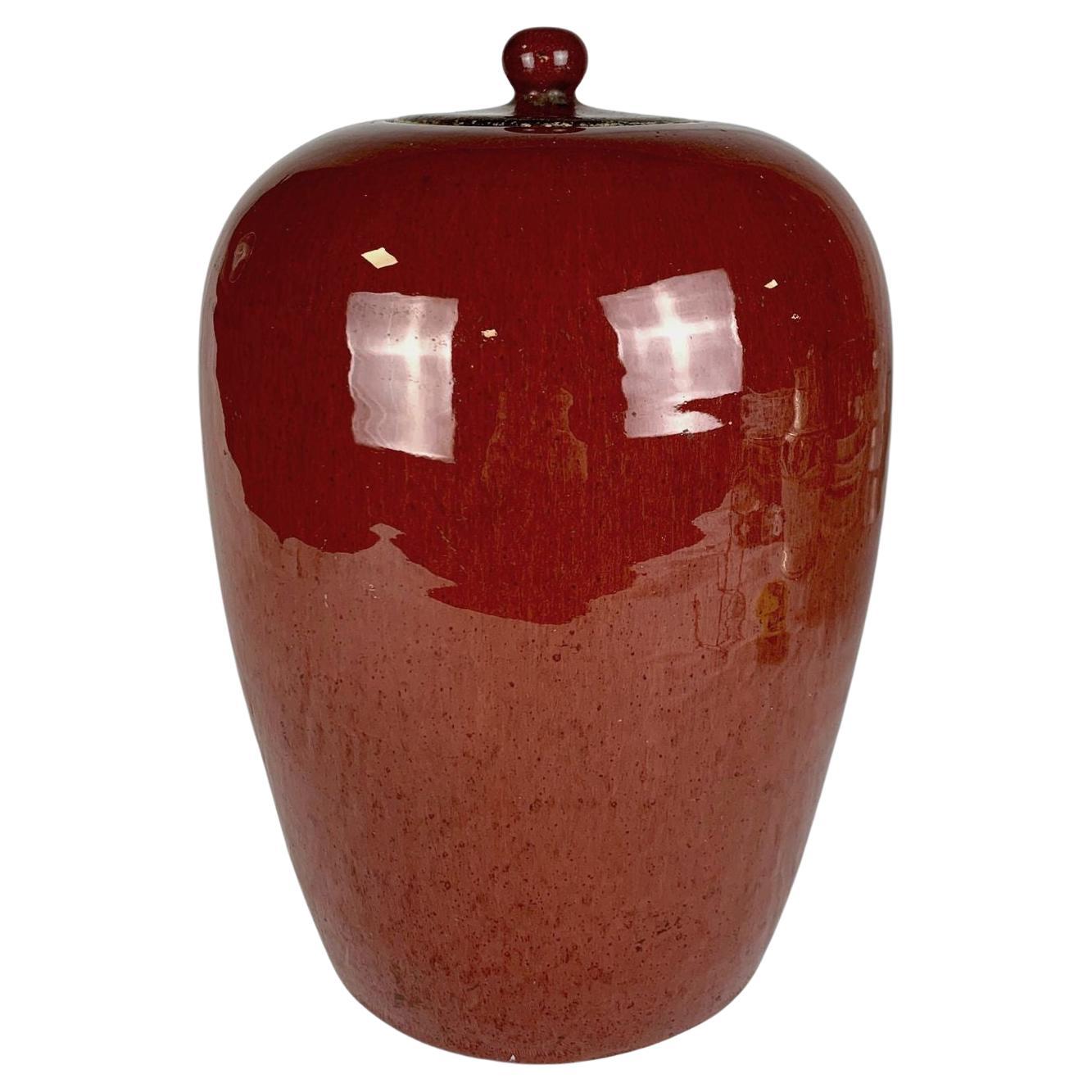
These two covered jars exemplify the quiet strength of Chinese monochrome copper-red ware. Each has a rounded, quietly solid form that provides a broad, uninterrupted surface for the glaze.
The color moves over each jar in one continuous sweep, allowing the deep monochrome red to register with clarity and presence.
Though different in height and proportion, the jars complement one another through their simple silhouettes and the concentrated intensity of their single-color glaze.
On the taller jar, the body tapers gently toward the base, allowing the copper-red glaze to flow evenly along its length.
The shorter jar has a more compact, full form, giving the monochrome surface a denser, more luminous quality.
In both pieces, the glaze shifts in tone as it moves down the vessel, pooling into warmer cherry red near the shoulders and settling into deeper shades toward the foot.
These variations are natural expressions of copper oxide's unpredictable behavior in the kiln.
Made in southern Chinese kilns during the late Qing period, the jars are formed of high-fired ceramic typical of utilitarian wares of the time.
Their surfaces reflect the mottled characteristics produced by traditional reduction firing.
Copper glaze turns red only within a brief and unpredictable moment in the reduction atmosphere — a moment potters describe as “catching a sunrise in the kiln,” when the oxygen drops suddenly and the glaze blooms into red.
This fleeting transformation gives monochrome copper-red ware its famed difficulty and enduring appeal.
The bases show the expected buff clay of southern kilns, with kiln adhesions and small chips around the foot from separation after firing.
These traces confirm the jars’ origins as practical storage vessels, made with the same traditional skill that produced the period’s celebrated monochrome wares. Together, the pair demonstrates both the beauty of copper-red glaze and the mastery required to achieve its even, saturated color.
Dimensions:
Taller Jar: 12.5" tall × 8" diameter at the widest point × 6.25" diameter at the base
Shorter Jar: 8.5" tall × 8.5" diameter
Condition: Wear and kiln chipping around the feet, typical of utilitarian vessels; glaze surfaces with slight wear. The smaller jar with chips on the inner flange.
Price: $2,800
Decoration: Monochrome copper-red glaze with natural tonal variation
Material: High-fired ceramic (stoneware body)
Style: Chinese monochrome stoneware glaze tradition
Origin: Southern Chinese kiln
Date: Late Qing, circa 1880–1890
Notable Details:
Broad, uninterrupted surfaces ideal for monochrome copper-red glaze
Natural tonal shifts from cherry red to deeper shades
Classic reduction-fired copper glaze chemistry
Expected kiln adhesions and traces of utilitarian use
Simple, rounded forms that heighten the impact of the monochrome glaze
Copper-Red Firing Note
Copper-red glazes develop their color only inside the kiln, never before. The potter applies a pale, unremarkable copper-bearing glaze to the unfired vessel, and nothing on its surface suggests the deep red to come. The transformation occurs solely during a narrow, unpredictable moment in the reduction firing, when the kiln’s oxygen falls just enough for the copper oxides to shift. In that instant, the glaze blooms into red — a change so brief and delicate that potters describe it as catching a sunrise in the kiln. Because that moment cannot be anticipated with certainty, even small shifts in temperature, airflow, or the vessel’s placement can turn the glaze brown, black, or green. Every successful monochrome copper-red piece is therefore the result of both mastery and atmospheric chance.
- Dimensions:Height: 12.5 in (31.75 cm)Diameter: 8.5 in (21.59 cm)
- Sold As:Set of 2
- Style:Qing (Of the Period)
- Materials and Techniques:Stoneware,Glazed
- Place of Origin:
- Period:
- Date of Manufacture:Circa 1880-1890
- Condition:
- Seller Location:Katonah, NY
- Reference Number:Seller: SKU000014381stDibs: LU866547800852
About the Seller
5.0
Recognized Seller
These prestigious sellers are industry leaders and represent the highest echelon for item quality and design.
Platinum Seller
Premium sellers with a 4.7+ rating and 24-hour response times
Established in 1962
1stDibs seller since 2009
503 sales on 1stDibs
Typical response time: 1 hour
- ShippingRetrieving quote...Shipping from: Katonah, NY
- Return Policy
More From This Seller
View AllChinese Monochrome Copper-Red Glazed Storage Jar, Late Qing Circa 1880
Located in Katonah, NY
This tall jar has a rounded, quietly solid form, revealing a broad, uninterrupted field of copper-red glaze.
The body tapers slightly toward the base, allowing the color to read as a...
Category
Antique Late 19th Century Chinese Qing Jars
Materials
Stoneware
Pair Chinese Porcelain Ginger or Temple Jars Famille Rose Hand Painted Qianlong
Located in Katonah, NY
This exceptional pair of 18th-century Chinese porcelain jars is hand-painted in vibrant famille rose enamels with blooming peonies, chrysanthemums, and plum blossoms in brilliant sha...
Category
Antique Mid-18th Century Qing Ceramics
Materials
Porcelain
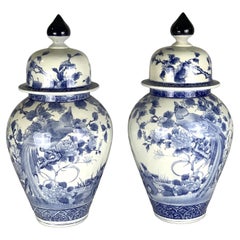
Pair of Large Blue and White Porcelain Jars, Japanese Meiji Era, Circa 1880
Located in Katonah, NY
This splendid pair of large 20" tall jars presents a lyrical garden scene hand-painted in underglaze cobalt blue on creamy white porcelain.
Each jar features a songbird perched amid ...
Category
Antique Late 19th Century Jars
Materials
Porcelain
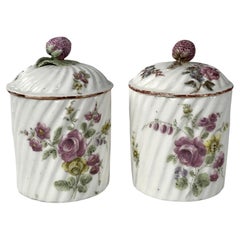
Pair French Mennecy Porcelain Jars, Hand Painted, 18th Century
By Mennecy Porcelain Manufactory 1
Located in Katonah, NY
This pair of soft-paste porcelain pomade jars was made at Mennecy in the mid-eighteenth century, around 1765.
These are rare survivors from one of France’s earliest porcelain factor...
Category
Antique Mid-18th Century French Rococo Vases
Materials
Porcelain
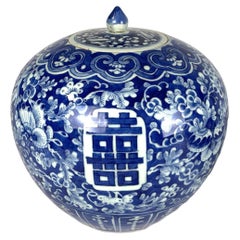
Antique Chinese Porcelain Blue
White Hand Painted Double Happiness Ginger Jar
Located in Katonah, NY
This hand-painted Chinese blue and white porcelain ginger jar was hand painted in the mid-19th century, during the reign of the Tongzhi Emperor (1856–1875).
The jar is richly decorated in deep cobalt blue with the Double Happiness symbol, butterflies, and scrolling peonies and lotus blossoms, each detail rendered with precision.
The floral motifs flow gracefully across the surface, their intricate brushwork revealing the confident hand of a skilled painter.
The glaze has a luminous surface that beautifully enhances the vibrancy of the underglaze painting.
Created as a symbol of marital joy and enduring harmony, Double Happiness ginger jars...
Category
Antique Mid-19th Century Chinese Qing Ceramics
Materials
Porcelain
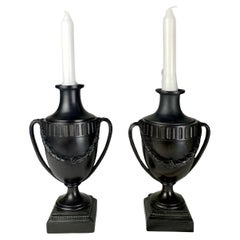
Pair of Antique Wedgwood
Bentley Black Basalt Jars England, Circa 1775
By Wedgwood
Bentley
Located in Katonah, NY
This pair of Wedgwood & Bentley black basalt urns was crafted at the renowned Etruria factory around 1775. They show the refined simplicity of Wedgwood's 18th-century neoclassical de...
Category
Antique Late 18th Century English Neoclassical Jars
Materials
Stoneware
You May Also Like
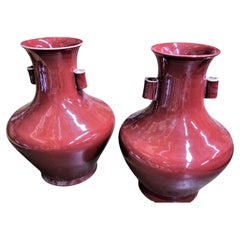
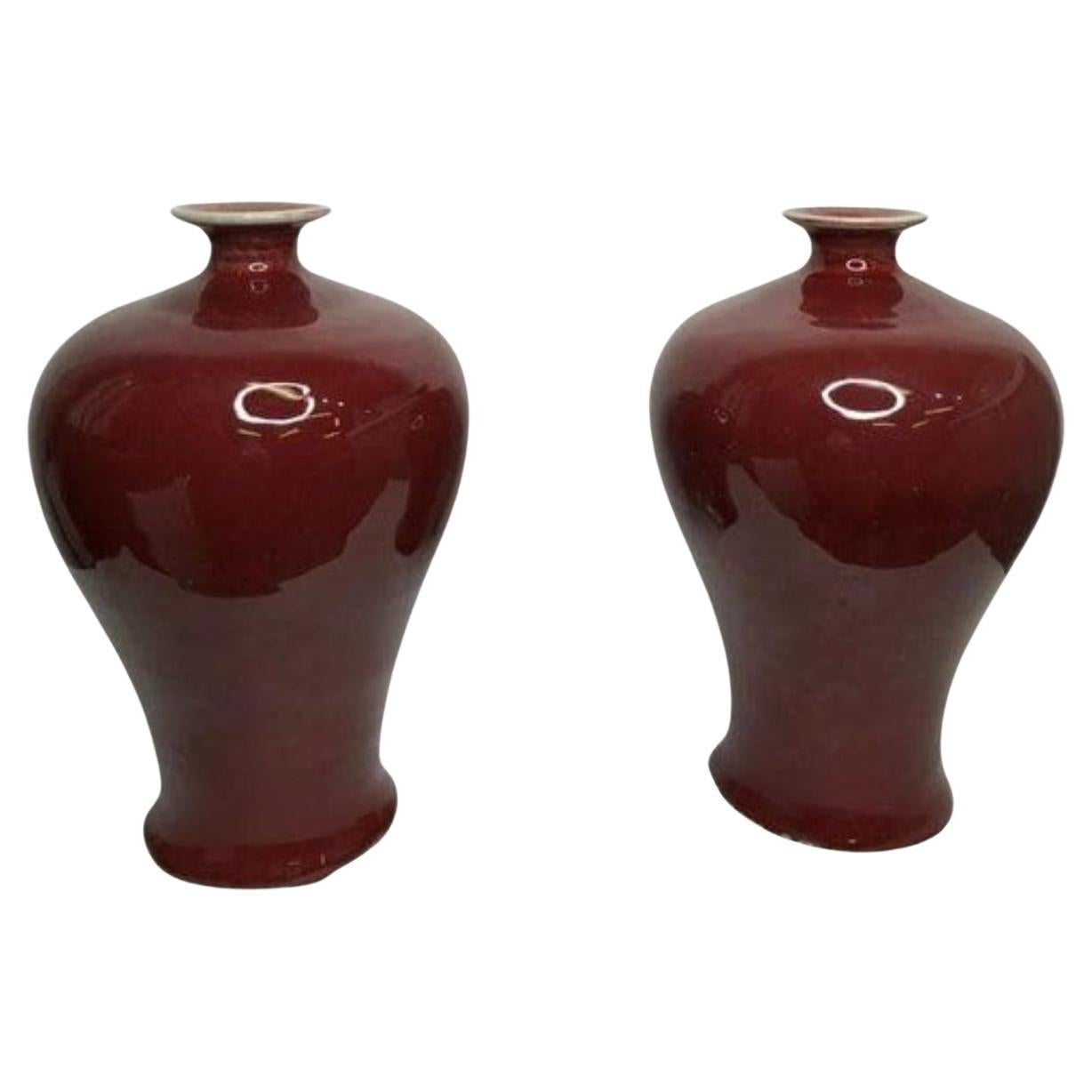
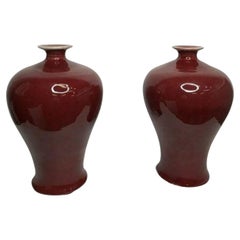
Antique Oxblood Pair of Chinese Meiping Vases with Fire Glaze
Located in Newmanstown, PA
Antique Oxblood Pair of Chinese Meiping with Fire Glaze
Category
Antique 19th Century Chinese Vases
Materials
Porcelain
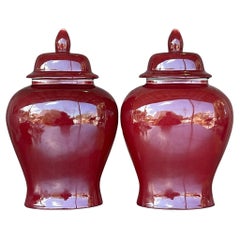
Vintage Asian “Sang De Boeuf” Glazed Ceramic Ginger Jar Urns - a Pair
Located in West Palm Beach, FL
A gorgeous pair of vintage Asian lidded urns. done in the chic “Sang De Boeuf” style with a deep red glazed ceramic finish. Acquired from a Palm Beach estate.
Category
Late 20th Century Chinese Jars
Materials
Ceramic
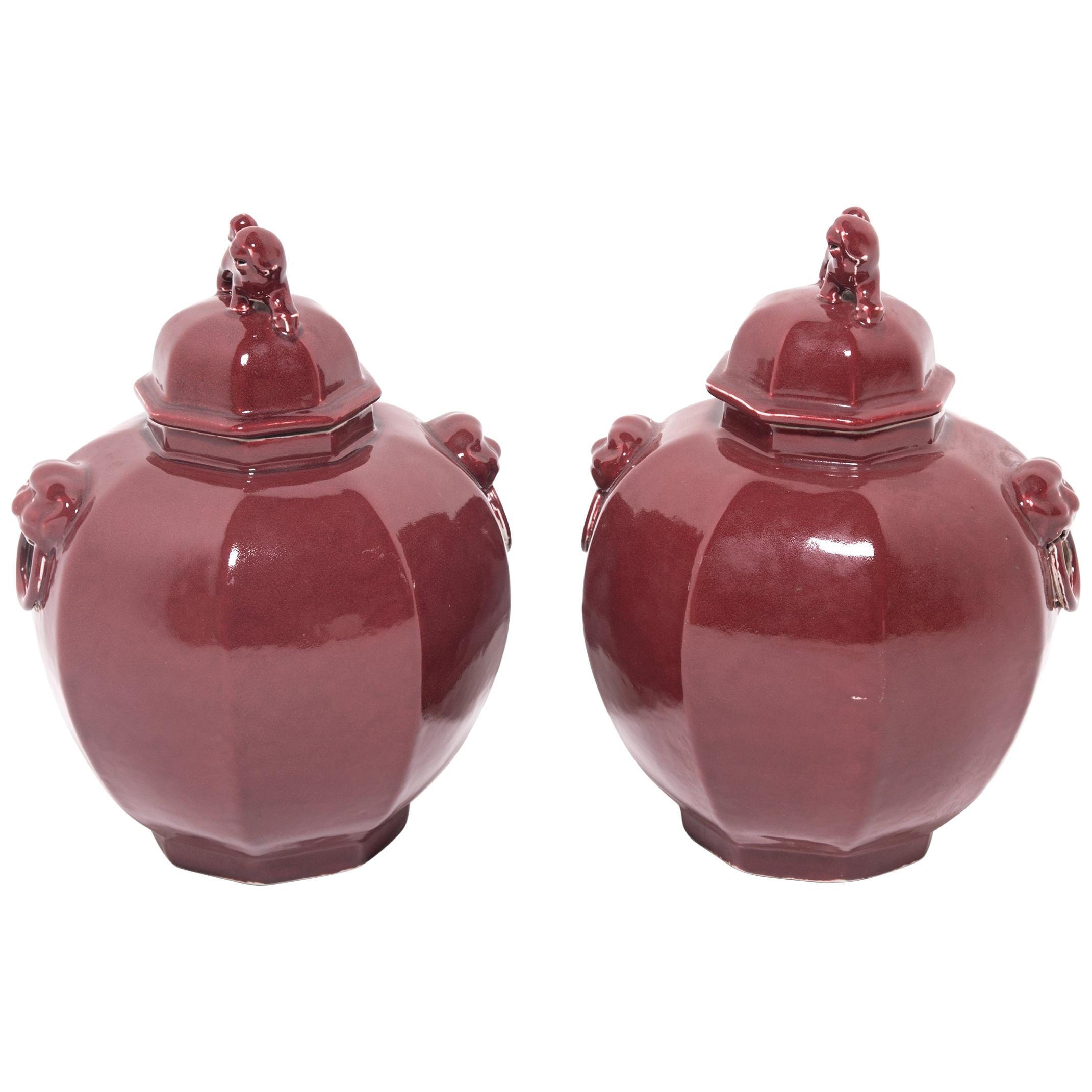
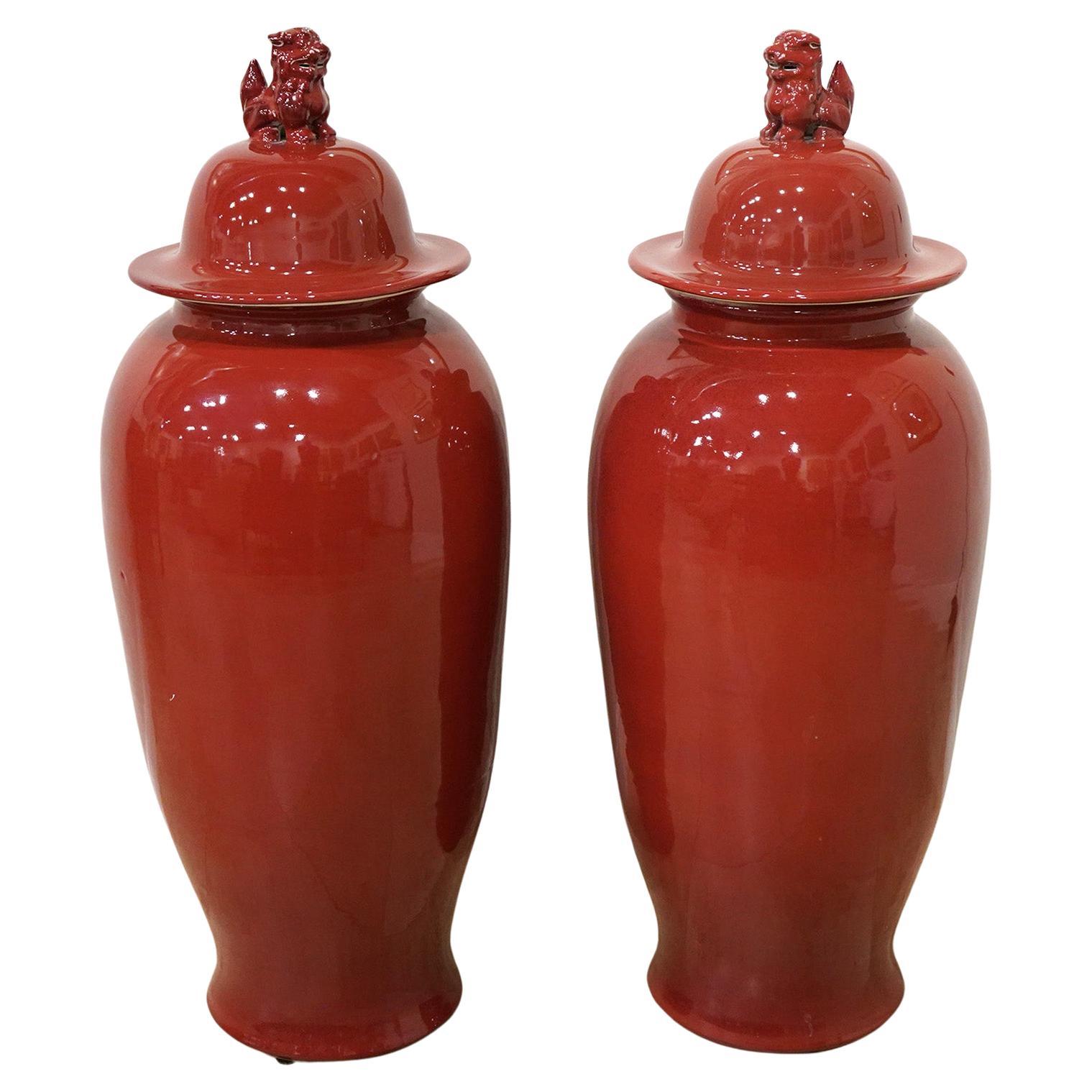
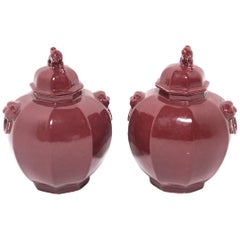
Pair of Chinese Shizi Hong Ginger Jars
Located in Chicago, IL
A rich, monochrome red glaze coats this ginger jar shaped contemporary vase, drawing attention to its updated profile and its sculptural Fu dog top. Referred to as shizi, these mythi...
Category
21st Century and Contemporary Chinese Ceramics
Materials
Porcelain
$1,280 / set
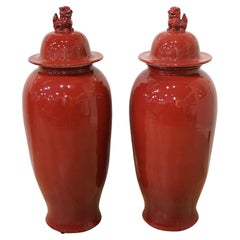
Pair of LARGE Chinese Palace Size Oxblood Colored Urns 47" H
Located in Ft. Lauderdale, FL
Pair of palace sized Chinese oxblood / Sang de Boeuf colored lidded urns. Lids have foo dog finial tops. Marked on the bottom. I believe they're 20th Ct but not entirely sure. 47" H ...
Category
Mid-20th Century Chinese Urns
Materials
Porcelain
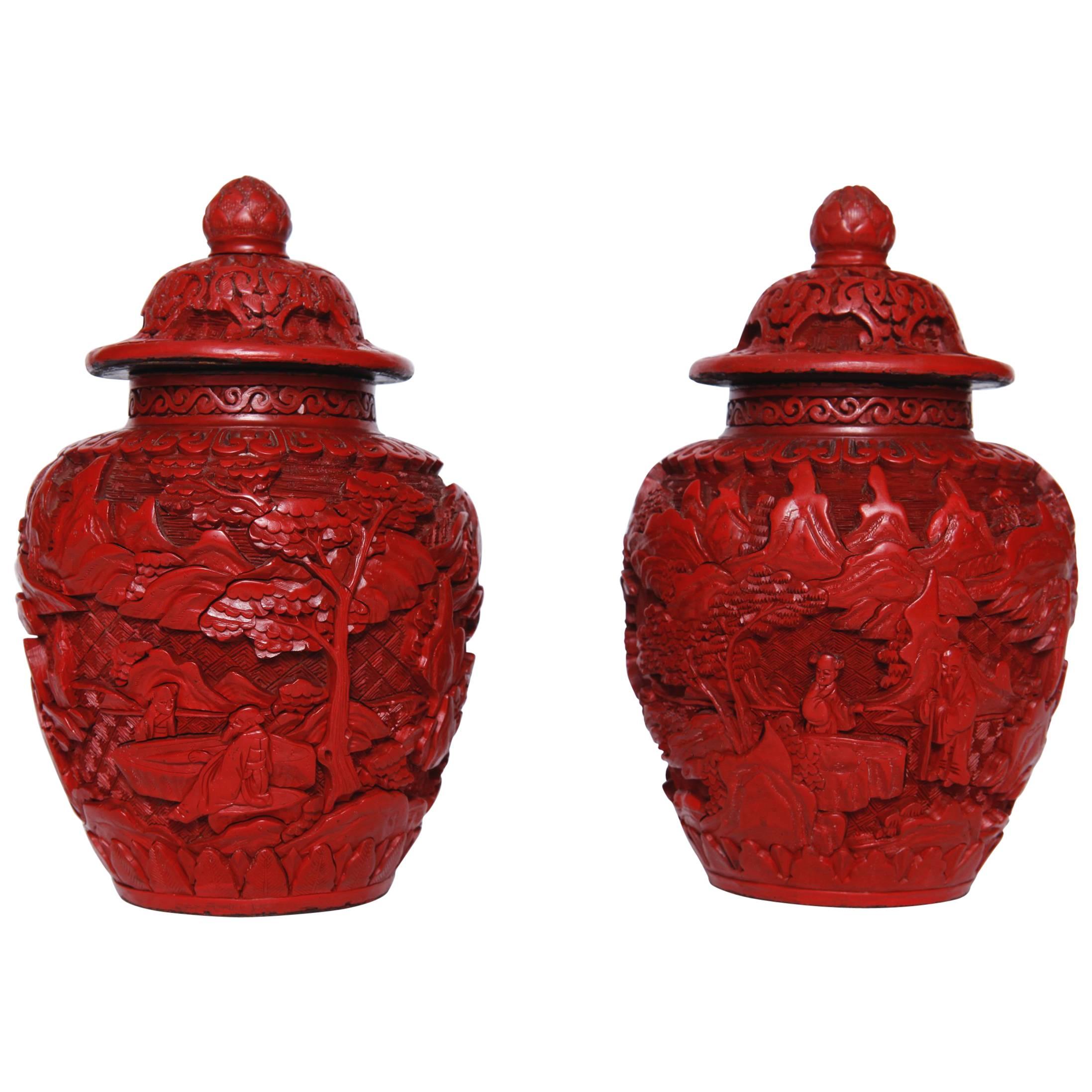
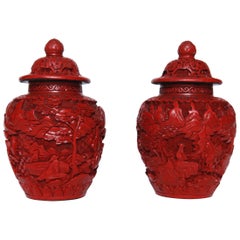
Pair of Chinese Cinnabar Covered Ginger Jars
Located in New York, NY
Pair of Chinese cinnabar covered ginger jars
decorated with carved figural landscapes
Late Qing dynasty
Measures: H 8 in. (20.3 cm).
Category
Antique 19th Century Chinese Jars
Materials
Crystal, Other
$4,800 / set
Pair of Large Oxblood Chinese Porcelain Vases with Handles
Located in Newmanstown, PA
Beautiful large oxblood Chinese vases.They are 22" tall, 14" wide.
Category
Vintage 1950s Chinese Vases
Materials
Porcelain