1 of 6
Tetsubin Iron Bronze Brown Water Kettle Japan Meiji Dragonfly Motif
$2,510List Price
About the Item
- Dimensions:Height: 8.5 in (21.59 cm)Diameter: 7.5 in (19.05 cm)
- Style:Meiji (Of the Period)
- Materials and Techniques:
- Place of Origin:
- Period:
- Date of Manufacture:1890-1920
- Condition:Wear consistent with age and use.
- Seller Location:Monterey, CA
- Reference Number:1stDibs: LU329319346731
Authenticity Guarantee
In the unlikely event there’s an issue with an item’s authenticity, contact us within 1 year for a full refund. DetailsMoney-Back Guarantee
If your item is not as described, is damaged in transit, or does not arrive, contact us within 7 days for a full refund. Details24-Hour Cancellation
You have a 24-hour grace period in which to reconsider your purchase, with no questions asked.Vetted Professional Sellers
Our world-class sellers must adhere to strict standards for service and quality, maintaining the integrity of our listings.Price-Match Guarantee
If you find that a seller listed the same item for a lower price elsewhere, we’ll match it.Trusted Global Delivery
Our best-in-class carrier network provides specialized shipping options worldwide, including custom delivery.You May Also Like
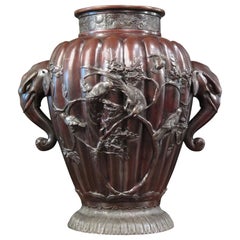
Massive Japanese Meiji Period Bronze Vase, Late 19th Century, Japan
Located in Austin, TX
A very large Meiji period bronze vase, possibly for temple use, with high relief design and elephant head handles, late 19th century, Japan.
Of baluster form and unusual size, yet ...
Category
Antique Late 19th Century Japanese Meiji Vases
Materials
Bronze
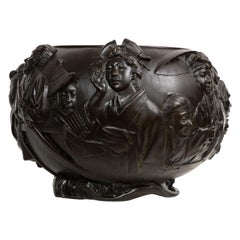
Meiji Japanese Bronze Jardinière Japanese People on a Boat, Genryusai Seiya Zo
Located in New York, NY
A masterpiece, rare, 19th Century Japanese bronze Jardinière/centerpiece of a group of Japanese travelers on a boat, signed on the bottom, Genryusai Seiya...
Category
Antique Early 1900s Japanese Meiji Metalwork
Materials
Bronze
$48,800
H 14.5 in Dm 21.5 in
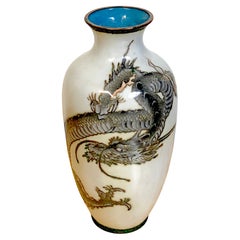
Exquisite Japanese Wireless Cloisonné Dragon Motif Vase, Meiji / Taisho Period
Located in West Palm Beach, FL
Japanese Wireless Cloisonné Enamel Vase, likely from the Meiji period (1868–1912) or possibly the early Taisho period (1912–1926). The vase features a dynamic depiction of a Japanese...
Category
Early 20th Century Japanese Meiji Vases
Materials
Copper
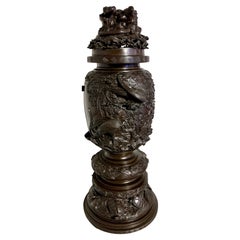
Large Japanese Bronze Koro Incense Burner, Meiji Period, 19th Century, Japan
Located in Austin, TX
A large and fantastic Japanese cast bronze incense burner, koro, with high relief design, Meiji period, late 19th century, Japan.
The large and tall koro cast in extremely high re...
Category
Antique Late 19th Century Japanese Meiji Metalwork
Materials
Bronze
$5,200
H 30.5 in Dm 13 in
Antique Signed Japanese Meiji Period Mixed Metals Bronze Double Gourd Form Vase
Located in Philadelphia, PA
A fine antique Japanese bronze vase.
From the Meiji Period.
With copper and silver floral and vine and butterfly inlay as well a kanji symbol to the neck (possibly a stylized f...
Category
Early 20th Century Japanese Meiji Vases
Materials
Silver, Bronze, Copper
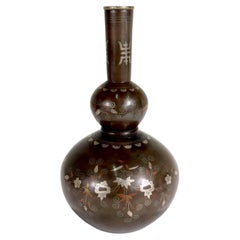
$895
H 6.88 in Dm 3.88 in
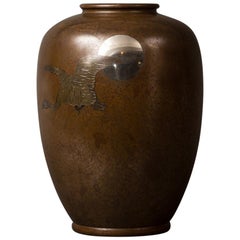
Japanese Meiji Bronze Takaoka Vase with Waterfowl and Moon Design
Located in Hudson, NY
Japanese Meiji bronze Takaoka vase with waterfowl and moon design
Meiji period (1868-1912) bronze vase from Takaoka, in Toyama prefecture, is a city historically known for its metal work. Vase has silver inlay moon and waterfowl, signature on the bottom: Yoshihiko, full name of artist...
Category
Antique 1880s Japanese Meiji Metalwork
Materials
Silver, Bronze
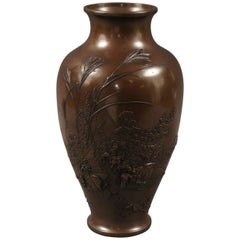
Meiji Period Japanese Bronze Vase with Grasses and Quail Design
Located in Hudson, NY
Meiji Japanese bronze vase with grasses and Quail design, Meiji period (1868-1912) bronze vase with elaborate raised design of wild grasses,...
Category
Antique Late 19th Century Japanese Meiji Metalwork
Materials
Bronze
Japanese Meiji Twin Handled Bronze Vase with Silver, Brass
Copper Inlay
Located in Bishop
s Stortford, Hertfordshire
A fine antique Japanese Meiji twin handled bronze vase decorated with floral designs in silver, brass and copper inlay dating from the 19th century...
Category
Antique 19th Century Japanese Meiji Metalwork
Materials
Silver, Brass, Bronze, Copper
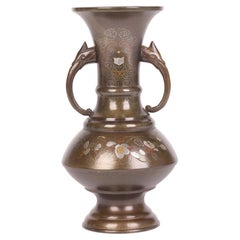
$654
Free Shipping
H 6.89 in Dm 3.55 in
19th Century Japanese Bronze Vase With Gilt Decoration, Meiji Period
Located in Stamford, CT
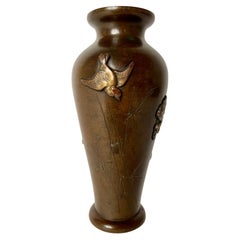
19th century Meiji Period diminutive bronze vase with lovely etched and applied decoration. A raised gilt bird is shown flying above etched bamboo on one side, gilt applied lilies wi...
Category
Antique Late 19th Century Japanese Meiji Metalwork
Materials
Bronze
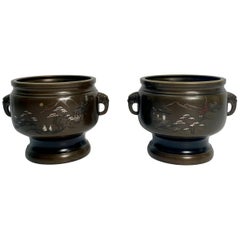
Pair of Japanese Bronze Hibachi with Silver and Copper Inlay, Meiji Period
Located in Austin, TX
An exquisite pair of Japanese mixed metal bronze hibachi with idyllic landscape scenes, Meiji period (1868-1912), late 19th or early 20th century, Japan.
The hibachi of generous proportions, with a high, slightly splayed foot, a short, narrow waist, and a large and wide cylindrical body. The body decorated in the mixed metal technique. The bronze carved and set with inlays of copper and silver to create wonderful landscape scenes. A pair of animal mask handles to the sides. Each hibachi with a cast signature reading ?? (Toyomi?) to the underside.
One side of each hibachi depicting an evening scene, with scholars walking about a mountain retreat, replete with a waterfall, pavilions, pagodas, and pine trees, all shimmering under a full moon.
The other side of the hibachi depicting a daytime scene, with a view of similar pavilions, pagoda, and pine, though with boats also visible in the distance.
Copper inlay has been used for the roofs and the trunks of the pine trees. Silver inlay has been used for the pine needles, scholars, building supports, water, boats, moon, as well as the distant mountains.
Originally used as a simple and elegant space heater...
Category
Antique Late 19th Century Japanese Meiji Metalwork
Materials
Silver, Bronze, Copper
$4,950 / set
H 10 in W 13.75 in D 10.5 in
Still Thinking About These?
All Recently ViewedMore Ways To Browse
Studio Grun
Vintage Village Pottery Water Jar
Waterford Cookie Jar
Lalique Parakeet Vase
Man Ray Kiki
Teppei Ono
Air Raid Siren
Antique Copper Oil Can
Chinese Mountain Jar
Giant Factice Perfume Bottles
Guerin Pottery Jars
Illinois Stoneware
Jerry Meek
Vintage Bakelite Canisters
Vintage Dakota Square Drugstore Apothecary Ground Glass Jars With
Waterford Horse Racing
Wedgwood Hunting Scene
4 Pc Apple Canister Set