Items Similar to Chinese Export Porcelain Rose Canton Cache Pot
Stand
Video Loading
Want more images or videos?
Request additional images or videos from the seller
1 of 18
Chinese Export Porcelain Rose Canton Cache Pot
Stand
$3,800
£2,893.70
€3,304.42
CA$5,339.47
A$5,858.42
CHF 3,085.93
MX$69,692.03
NOK 39,530.41
SEK 36,096.66
DKK 24,687.18
About the Item
A Gilded Age of Trade: Chinese Export Porcelain Rose Canton Cache Pot
Stand
This striking Chinese Export porcelain ensemble, dating from the 1820s to 1840s, comprises a large hexagonal cachepot and its original matching stand. The set is painted in the distinctive Rose Canton palette, characterized by its extensive use of gold and a focus on natural elements like flowers, birds, and insects, often surrounding scenic vignettes.
The hexagonal cachepot is divided into six distinct panels, each featuring a detailed scene likely drawn from Chinese mythology or historical narratives. The panels are arched at the base and framed by a rich decorative scheme. A continuous band of colorful leaves and flowers, painted against a vibrant gold ground, encircles the foot—a hallmark of the opulent decorative style popular in the early 19th century.
The original stand mirrors the pot's hexagonal form and is raised on small feet. Its exterior and the interior top of the cachepot are adorned with scattered botanical paintings that unify the set. The interior well of the stand, designed to collect water runoff, features charming, hand-painted motifs of butterflies, fruits, and water lilies, adding a delicate, unexpected layer of detail.
The impressive size and symmetrical form of this set, combined with the detailed figural and botanical painting, classify it as a premium example of early 19th-century Chinese Export porcelain designed specifically for the discerning Western market.
Historical Context: Rose Canton and the 19th-Century Trade
This cachepot and stand set was created during a transitional period for Chinese export ceramics. By the early 19th century, the established Rose Medallion, Rose Mandarin, and Rose Canton styles dominated production. The Rose Canton style, in particular, is defined by its use of panels focusing on flora and fauna, though the presence of detailed mythological or historical scenes here is also characteristic of the period's narrative focus.
The large-scale production of such wares was concentrated in Canton (Guangzhou), the only port sanctioned for European trade between 1757 and 1842 under the restrictive Canton System. While the porcelain bodies were still fired in the imperial kilns at Jingdezhen, the elaborate overglaze enameling, including the application of the striking gold detailing, was often completed by workshops in Canton, closer to the European trading factories.
Vessels like this cachepot and stand were highly sought after by wealthy American and European consumers for decorating their formal drawing rooms and conservatories. They were primarily used to display prized potted plants or exotic bulbs, reflecting a growing passion for botany and horticulture in the West. The continuous gold banding and rich, figural narratives speak to the contemporary Western demand for luxurious, exotic goods that conveyed status and worldliness. This piece is a testament to the robust and increasingly specialized trade that connected the workshops of China to the drawing rooms of the West during the first half of the 19th century.
This striking Chinese Export porcelain ensemble, dating from the 1820s to 1840s, comprises a large hexagonal cachepot and its original matching stand. The set is painted in the distinctive Rose Canton palette, characterized by its extensive use of gold and a focus on natural elements like flowers, birds, and insects, often surrounding scenic vignettes.
The hexagonal cachepot is divided into six distinct panels, each featuring a detailed scene likely drawn from Chinese mythology or historical narratives. The panels are arched at the base and framed by a rich decorative scheme. A continuous band of colorful leaves and flowers, painted against a vibrant gold ground, encircles the foot—a hallmark of the opulent decorative style popular in the early 19th century.
The original stand mirrors the pot's hexagonal form and is raised on small feet. Its exterior and the interior top of the cachepot are adorned with scattered botanical paintings that unify the set. The interior well of the stand, designed to collect water runoff, features charming, hand-painted motifs of butterflies, fruits, and water lilies, adding a delicate, unexpected layer of detail.
The impressive size and symmetrical form of this set, combined with the detailed figural and botanical painting, classify it as a premium example of early 19th-century Chinese Export porcelain designed specifically for the discerning Western market.
Historical Context: Rose Canton and the 19th-Century Trade
This cachepot and stand set was created during a transitional period for Chinese export ceramics. By the 19th century, the established Rose Medallion, Rose Mandarin, and Rose Canton styles dominated production. The Rose Canton style, in particular, is defined by its use of panels focusing on flora and fauna, though the presence of detailed mythological or historical scenes here is also characteristic of the period's narrative focus.
The large-scale production of such wares was concentrated in Canton (Guangzhou), the only port sanctioned for European trade between 1757 and 1842 under the restrictive Canton System. While the porcelain bodies were still fired in the imperial kilns at Jingdezhen, the elaborate overglaze enameling, including the application of the striking gold detailing, was often completed by workshops in Canton, closer to the European trading factories.
Vessels like this cachepot and stand were highly sought after by wealthy American and European consumers for decorating their formal drawing rooms and conservatories. They were primarily used to display prized potted plants or exotic bulbs, reflecting a growing passion for botany and horticulture in the West. The continuous gold banding and rich, figural narratives speak to the contemporary Western demand for luxurious, exotic goods that conveyed status and worldliness. This piece is a testament to the robust and increasingly specialized trade that connected the workshops of China to the drawing rooms of the West during the first half of the 19th century.
Dimensions: Total 11 inches wide x 7 1/4 inches high x 9 1/2 inches deep, (27.94 cm wide x 19.05 cm high).
(Ref: NY9920-nmrr)
- Dimensions:Height: 7.25 in (18.42 cm)Width: 11 in (27.94 cm)Depth: 7.25 in (18.42 cm)
- Style:Chinese Export (Of the Period)
- Materials and Techniques:
- Place of Origin:
- Period:
- Date of Manufacture:1840-60
- Condition:Wear consistent with age and use. Great condition-fully usuable.
- Seller Location:Downingtown, PA
- Reference Number:Seller: NY9920-nmrr1stDibs: LU861029093222
About the Seller
5.0
Recognized Seller
These prestigious sellers are industry leaders and represent the highest echelon for item quality and design.
Gold Seller
Premium sellers maintaining a 4.3+ rating and 24-hour response times
Established in 1916
1stDibs seller since 2009
434 sales on 1stDibs
Typical response time: 1 hour
Associations
The Art and Antique Dealers League of AmericaAntiques Associations Members
- ShippingRetrieving quote...Shipping from: Downingtown, PA
- Return Policy
More From This Seller
View All18th-century Chinese Export Porcelain Large Famille Rose Cachepot
Located in Downingtown, PA
Chinese Export Porcelain Famille Rose Cachepot,
Circa 1750-60
The very large Chinese Export porcelain cachepot is of cylindrical form with an ...
Category
Antique Mid-18th Century Chinese Chinese Export Planters, Cachepots and ...
Materials
Porcelain
18th-century Chinese Export Porcelain Famille Rose Wine Cooler
Located in Downingtown, PA
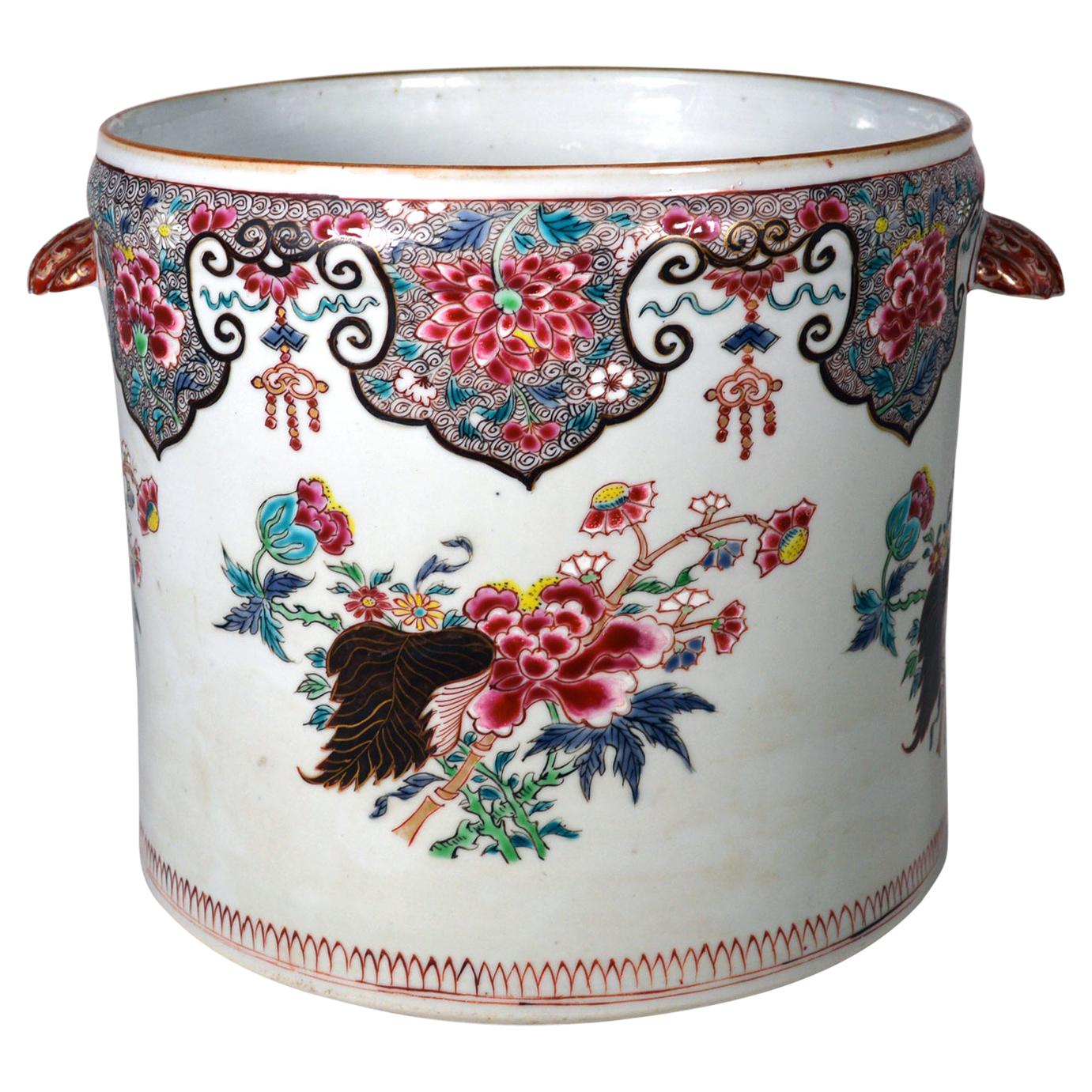
Elegant Tableware: Chinese Export Famille Rose Porcelain Wine Cooler
Circa 1775
A finely potted and well-preserved Chinese Export porcelain vessel, functioning as either a wine co...
Category
Antique 1770s Chinese Chinese Export Planters, Cachepots and Jardinières
Materials
Ceramic, Porcelain

Chinese Export Famille Rose Porcelain Garniture
Located in Downingtown, PA
Chinese Export Five Piece Famille Rose Porcelain Garniture,
circa 1730-1750
The garniture of five Chinese Export porcelain vases consists of three covered baluster vases and two ...
Category
Antique Mid-18th Century Chinese Chinese Export Vases
Materials
Porcelain
$12,400 / set
Chinese Export Porcelain Large Rose Medallion Vases
Located in Downingtown, PA
Chinese export porcelain large rose medallion vases,
Circa 1850-65
The early rose medallion/rose mandarin porce...
Category
Antique Mid-19th Century Chinese Chinese Export Vases
Materials
Porcelain
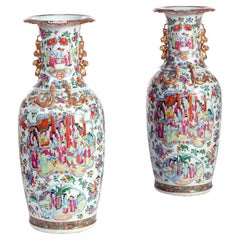
Chinese Export Porcelain Canton Jar decorated with Panels of Chinese Figures
Located in Downingtown, PA
Chinese Export Porcelain Large Canton Temple Jar,
American Market,
Daoguang,
First Quarter 19th Century
A handsome Chinese Export Canton Large Temple Jar, produced for the American ...
Category
Antique Mid-19th Century Chinese Chinese Export Jars
Materials
Porcelain
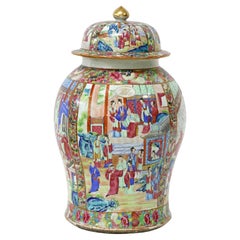
18th Century Chinese Export Porcelain Bowl with Chinese Domestic Furniture
Located in Downingtown, PA
Chinese Export Famille Rose porcelain bowl with Chinese "Antiques" & Scholar's items on Furniture,
Qianlong Period,
circa 1735-1740.
The Chinese Export porcelain bowl is finely painted inside and out with famille rose enamels. On the front is a depiction of an unusual grouping of Chinese domestic...
Category
Antique 1730s Chinese Chinese Export Porcelain
Materials
Porcelain
You May Also Like
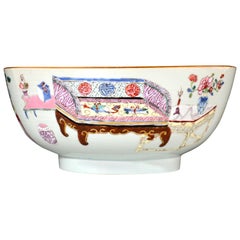
Samson Porcelain Jardiniere
Located in Essex, MA
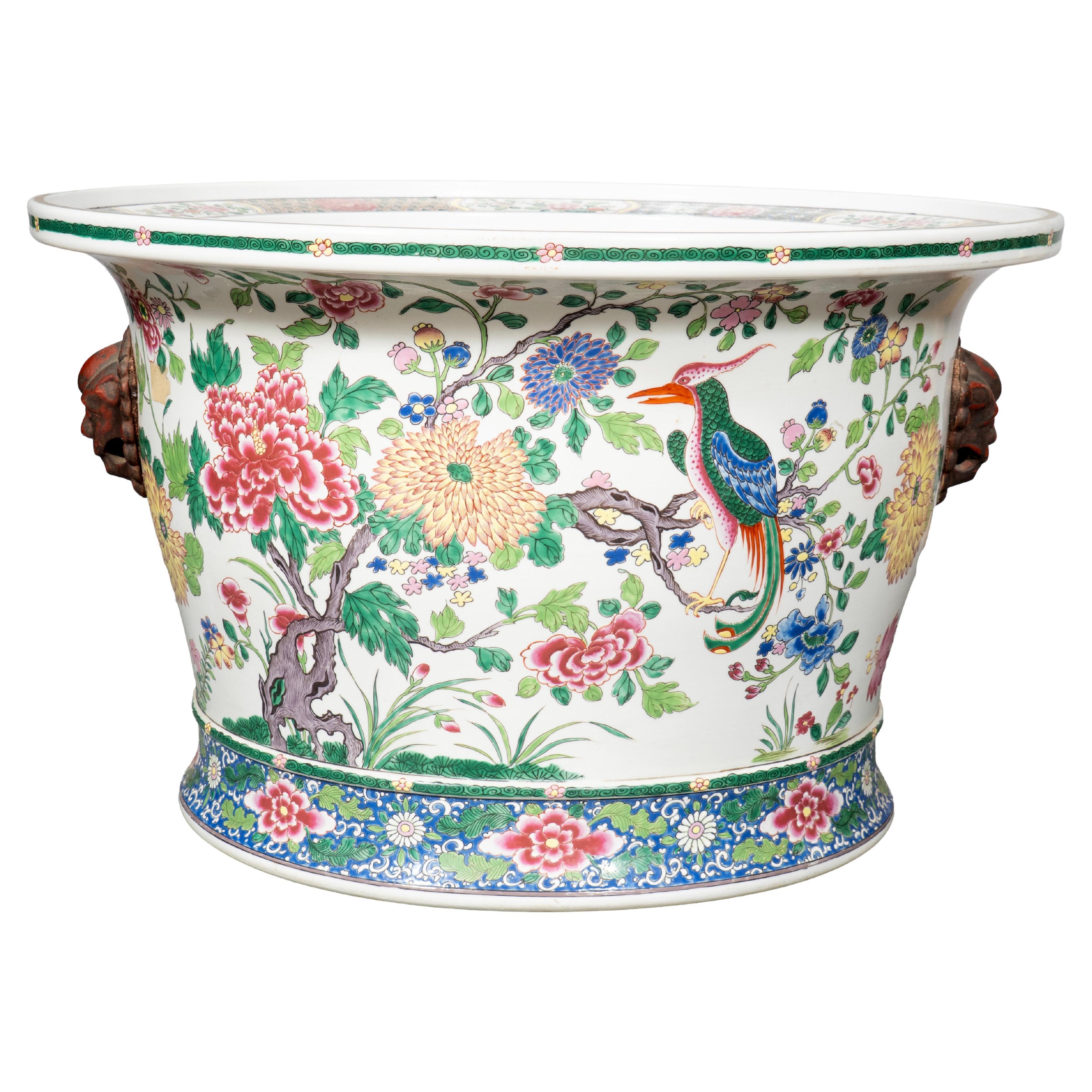
Bright enamels with birds and prunus. Interior decorated with carp and pinwheel lotus design. Stylized cinnabar red dragon heads on each side. From a Montecito California estate.
Category
Antique Late 19th Century French Chinese Export Planters, Cachepots and ...
Materials
Porcelain
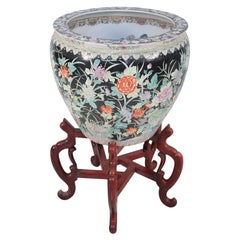
Chinese Floral Porcelain Planter with Wooden Stand
Located in Queens, NY
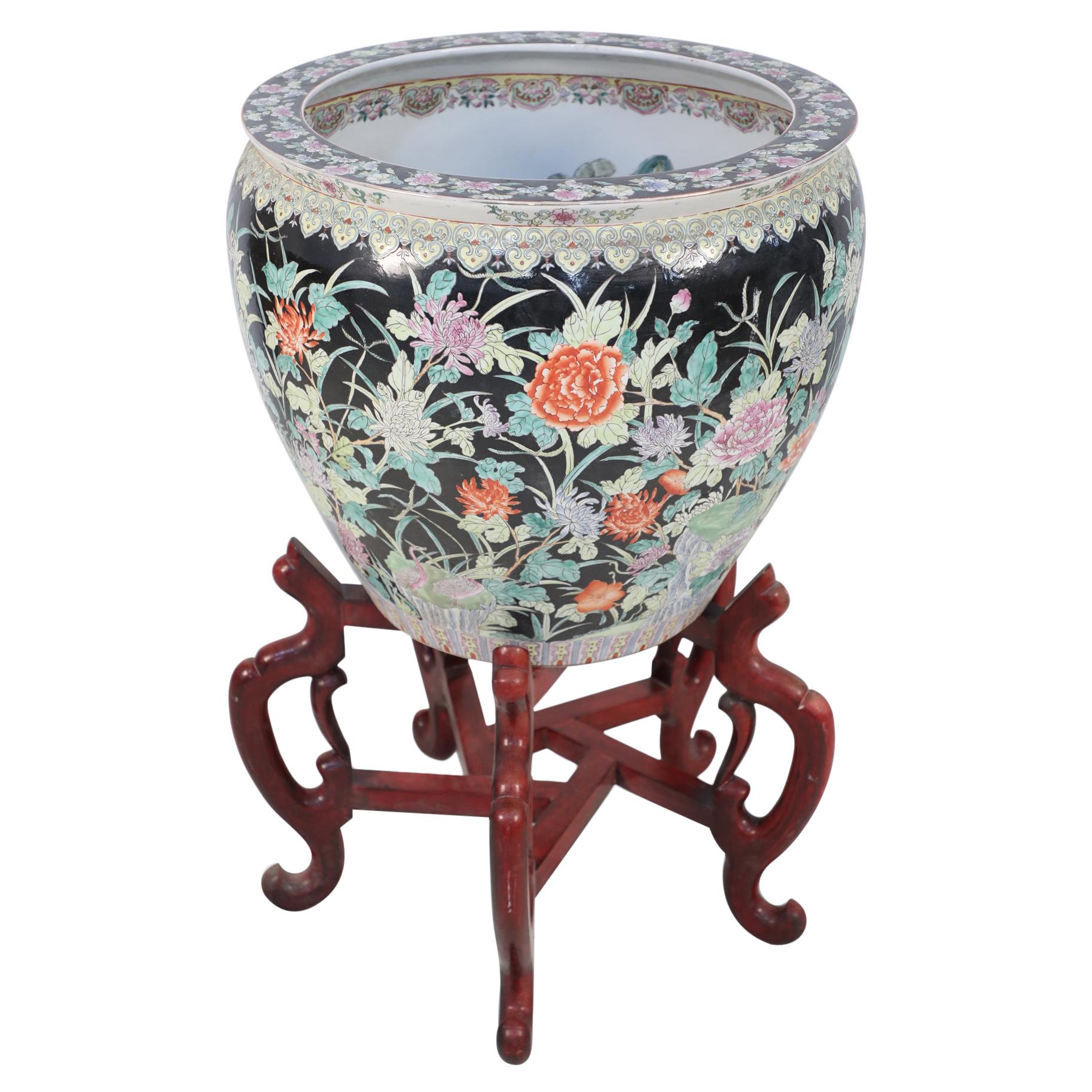
Chinese porcelain planter painted with florals and greenery over a black ground on the exterior and fish amidst seaweed along the interior. The pot sits atop a 5-footed wooden stand ...
Category
20th Century Chinese Export Planters and Jardinieres
Materials
Porcelain
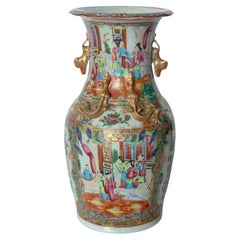
19th Century Chinese Rose Canton Porcelain Vase
Located in Los Angeles, CA
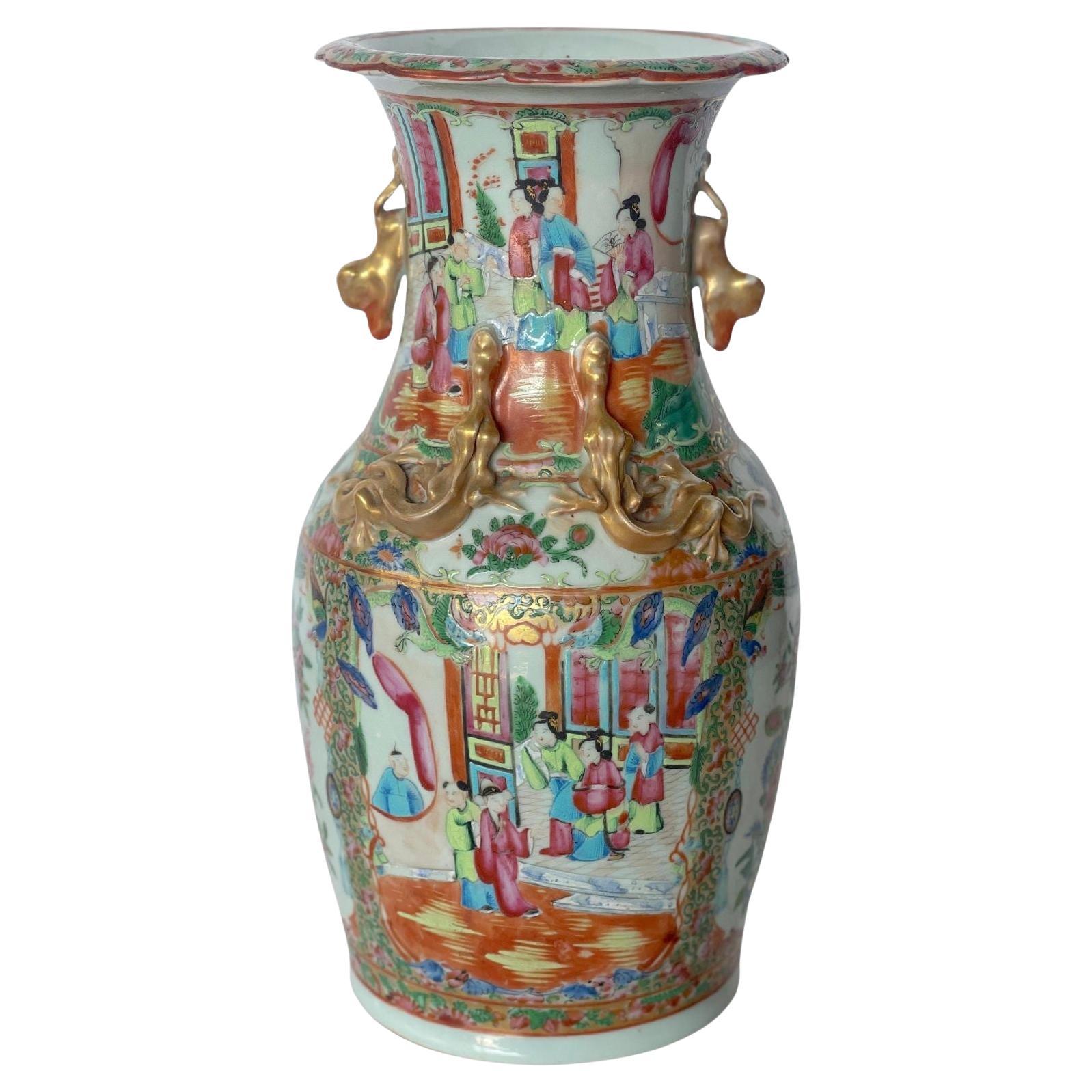
Traditional Chinese Rose Canton porcelain vase. Made in the 19th century.
Dimensions:
14"H x 7.5"D
Category
Antique 19th Century Chinese Vases
Materials
Porcelain
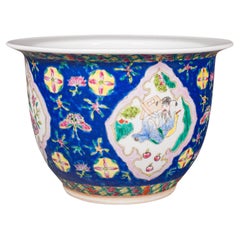
Antique Decorative Jardiniere, Chinese, Ceramic Planter, Qing Dynasty, Victorian
Located in Hele, Devon, GB
This is an antique decorative jardiniere. A Chinese, ceramic planter, dating to the late Victorian period, circa 1900.
Delightful decorative interest with rich colour and Oriental t...
Category
Antique Late 19th Century Chinese Late Victorian Planters, Cachepots and...
Materials
Ceramic
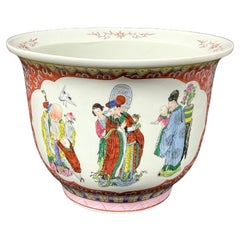
Chinese Famille Rose Porcelain Planter
Located in Bradenton, FL
Early 20th Century Famille Rose Porcelain Planter. Planter is decorated with a continuous figural family scene of a man, woman, child and elder. All are dressed in traditional garmen...
Category
Early 20th Century Chinese Chinese Export Ceramics
Materials
Porcelain
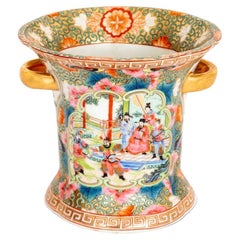
Chinese Daoguang Mark Rose Medallion Cache Pot
Located in Astoria, NY
Chinese Rose Medallion Porcelain Two-Handled Cache Pot, red Daoguong mark to underside, hand-painted with figural group scenes on scrolling floral gilt ground. 7.25" H x 8" W x 7.25"...
Category
Early 20th Century Chinese Qing Planters, Cachepots and Jardinières
Materials
Porcelain
More Ways To Browse
Antique Canton Porcelain
Chinese Canton Porcelain
Antique Chinese Pot
Antique Chinese Pots
Canton China Export
Flower And Butterfly Porcelain Vase
Chinese Porcelain Pot
Canton Vase
Chinese Canton Vases
Antique Canton Vases
Canton Porcelain Vase
19th Century Cache Pots
Chinese Hexagon
Hexagon Porcelain
Rose Canton Vases
Porcelain Cache Pot
Chinese Planter Stands
Chinese Pot Stand