1 of 4
Japanese Meiji Period Imari Jardinière
Price:$1,550
About the Item
- Dimensions:Height: 9.25 in (23.5 cm)Diameter: 12 in (30.48 cm)
- Style:Meiji (Of the Period)
- Materials and Techniques:
- Place of Origin:
- Period:
- Date of Manufacture:circa 1875
- Condition:Wear consistent with age and use.
- Seller Location:Wells, ME
- Reference Number:Seller: Ref. # 46941stDibs: LU5046117563141
Authenticity Guarantee
In the unlikely event there’s an issue with an item’s authenticity, contact us within 1 year for a full refund. DetailsMoney-Back Guarantee
If your item is not as described, is damaged in transit, or does not arrive, contact us within 7 days for a full refund. Details24-Hour Cancellation
You have a 24-hour grace period in which to reconsider your purchase, with no questions asked.Vetted Professional Sellers
Our world-class sellers must adhere to strict standards for service and quality, maintaining the integrity of our listings.Price-Match Guarantee
If you find that a seller listed the same item for a lower price elsewhere, we’ll match it.Trusted Global Delivery
Our best-in-class carrier network provides specialized shipping options worldwide, including custom delivery.You May Also Like
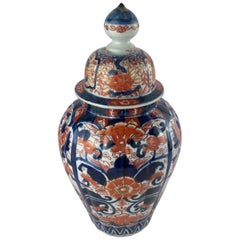
19th Century Japanese Imari Temple Jar with Fluted Lid, Meiji Period
Located in Miami, FL
19th Century Japanese Imari Temple Jar with Fluted Lid, Meiji Period Hand-Painted Porcelain
A very fine 19th-century Japanese Imari temple jar, Meiji...
Category
Early 20th Century Japanese Meiji Porcelain
Materials
Porcelain
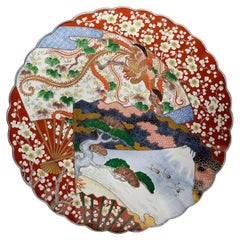
Meiji period, Japanese Imari charger.
Located in Brighton, Sussex
A very decoration late 19th Century, Meiji period Japanese Imari porcelain charger, depicting Prunus blossom to the ground, two fans one with a mythical bird the other with Cranes in...
Category
Antique Late 19th Century Japanese Porcelain
Materials
Porcelain
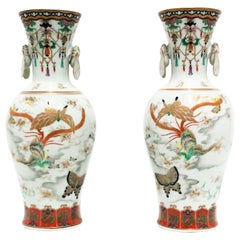
Art Deco Japanese Porcelain Vases Meiji Period, Pair
Located in New York, NY
A very beautiful pair of polychromed Kutani porcelain Japanese vases, circa early 20th century, Meiji period, Japan. Vases are hand painted and designed with two different sides; one...
Category
Early 20th Century Japanese Meiji Porcelain
Materials
Porcelain
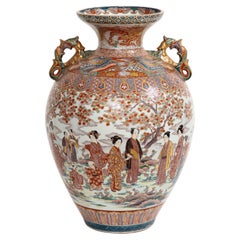
Monumental Japanese Kutani Porcelain Vase, Meiji/Taisho Period, Signed
Located in New York, NY
A Monumental Japanese Kutani porcelain vase, Meiji/Taisho Period, Signed Akiyama sei. The main body is all hand-painted with wonderful ...
Category
Antique Early 1900s Japanese Meiji Vases
Materials
Porcelain
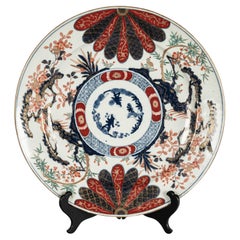
Monumental Antique Japanese Meiji Period Imari Porcelain Charger Plate 1880
Located in Portland, OR
A fine & monumetal Japanese Meiji period Porcelain charger/plate, circa 1890.
The charger is very finely decorated with underglaze blue, red iron oxide glazes and heightened with gil...
Category
Antique 1880s Japanese Meiji Porcelain
Materials
Porcelain
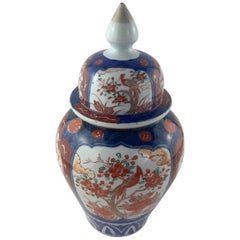
19th Century Japanese Imari Porcelain Lidded Temple Jar
Located in Miami, FL
19th Century Japanese Imari Porcelain Lidded Temple Jar
A fine 19th century Japanese Imari porcelain lidded temple jar, hand-painted with exquisite detail in rich natural pigment g...
Category
Antique 19th Century Japanese Meiji Porcelain
Materials
Porcelain
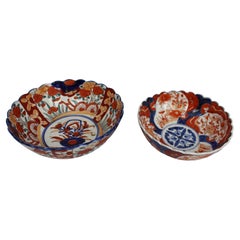
Pair of Japanese Imari Porcelain Bowls, Meiji Period, circa 1900
Located in Worcester, GB
Pair of Japanese Imari Porcelain Bowls, Meiji Period, circa 1900
A fine pair of Japanese Imari porcelain bowls dating to the Meiji period, circa 1900. Each of fluted circular form w...
Category
20th Century Japanese Porcelain
Materials
Porcelain
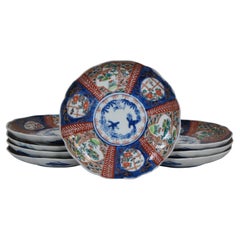
8 Antique Japanese Imari Meiji Scalloped Porcelain Salad Dinner Plates 9"
Located in Dayton, OH
Set of 8 early 20th century Japanese imari porcelain salad / dinner plates with scalloped edges, hand painted with fan-like panels of landscapes and flowers, surrounded with designs ...
Category
Early 20th Century Japanese Meiji Porcelain
Materials
Porcelain
$560 Sale Price / set
30% Off
H 1.25 in W 8.75 in D 8.75 in
Pair of Large 19th Century Japanese Imari Porcelain Temple Jars with Cover
Located in El Monte, CA
An exceptional pair of large scale late 19th century Japanese Imari temple jars from the Meiji period with covers, also can be referred to as ginger jars. Rare octagonal facet cuts a...
Category
Antique Late 19th Century Japanese Meiji Porcelain
Materials
Porcelain
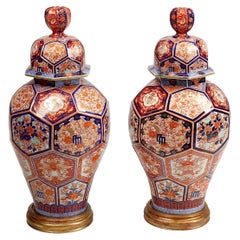
$8,200 / set
H 13 in Dm 28 in
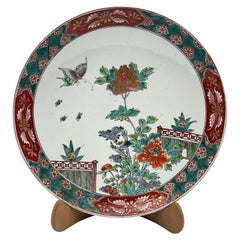
Japanese Meiji Period Imari Porcelain Charger with Flowers and Bees, ca. 1900
Located in New York, NY
Japanese Meiji Period Imari Porcelain Charger with Flower and Bees, ca. 1900
DIMENSIONS:
Diameter: 16 inches
DETAILS
Meiji Period: 1868-1912
ABOUT IMARI PORCELAIN
Japanese Imari porcelain refers to a type of porcelain ware that was produced in the town of Arita, in Saga Prefecture on Japan’s Kyushu island, and exported primarily from the nearby port of Imari—hence the name.
Origins & History:
• Early 17th century (Edo period): Porcelain production began in Arita after Korean potters, brought to Japan during the Japanese invasions of Korea (1592–1598), discovered kaolin (porcelain clay) in the area.
• Mid-17th century to 18th century: Imari ware became a major export to Europe via the Dutch East India Company.
• Declined in export after 1750s as Chinese porcelain re-entered European markets.
Characteristics:
• Base: Made from fine white porcelain.
• Decoration: Richly colored and ornate, featuring:
o Underglaze blue painting (Arita blue-and-white style).
o Overglaze enamels, especially in red, gold, green, and blue (the classic “Kinrande” Imari style).
• Designs: Often feature floral motifs, birds, mythical creatures, and geometric patterns in bold symmetrical compositions.
Types of Imari:
1. Early Imari / Shoki...
Category
Antique Late 19th Century Japanese Japonisme Porcelain
Materials
Porcelain
Still Thinking About These?
All Recently ViewedMore Ways To Browse
Imari Jardiniere
Imari Planter
Imari Cachepot
Imari Vase Planter
Cachepot Pair
Large Cachepot
Planter Italian Mid Century
Antique French Majolica Vases
Antique Lion Ring
Antique Chinese Planter
Chinese Planter Jardiniere Cachepot
Cache Pots
Jardiniere Planter Majolica
Antique Majolica Jardiniere
Antique Flower Pot
Antique Glazed Planter
Tin French
Lions Head Handles