Want more images or videos?
Request additional images or videos from the seller
1 of 10

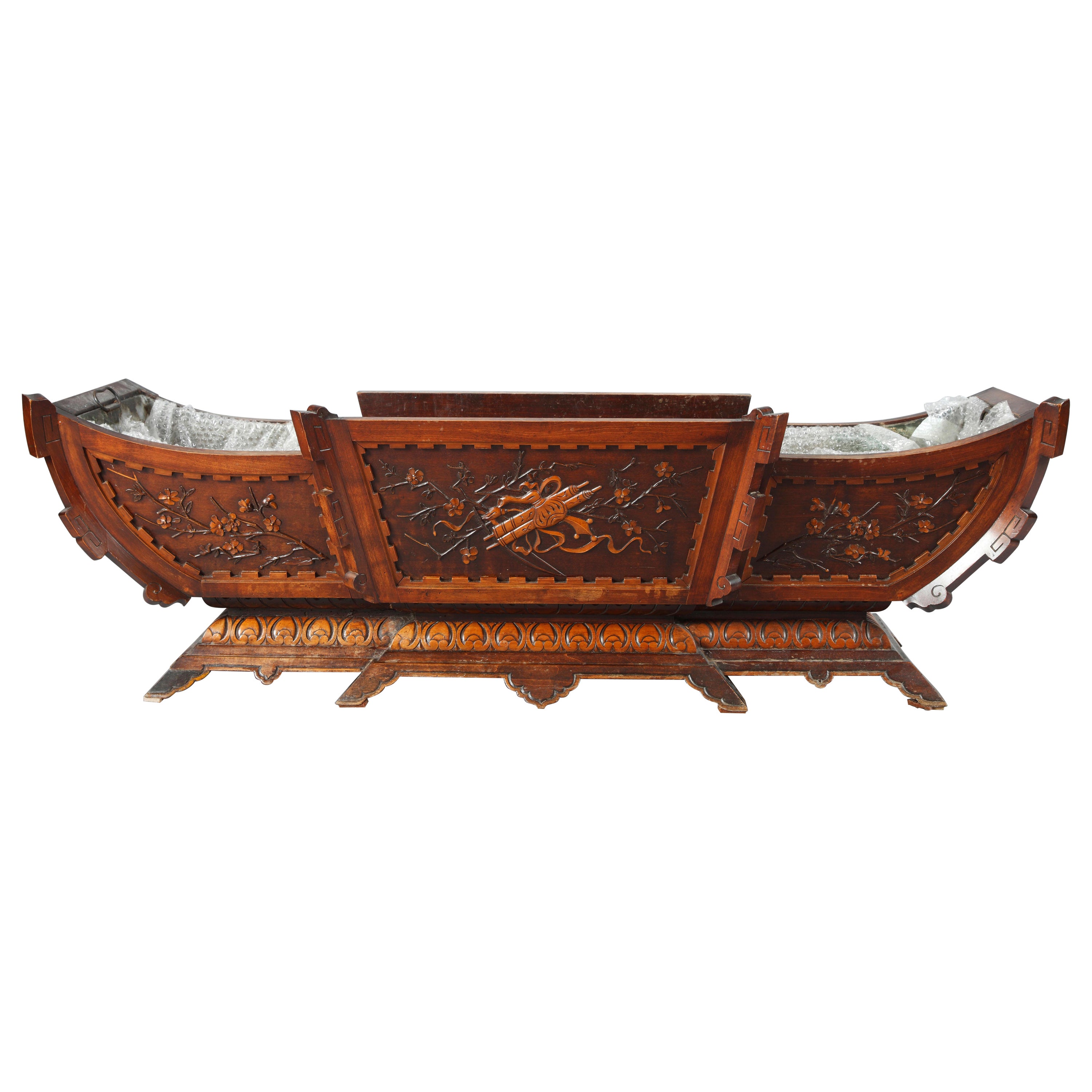
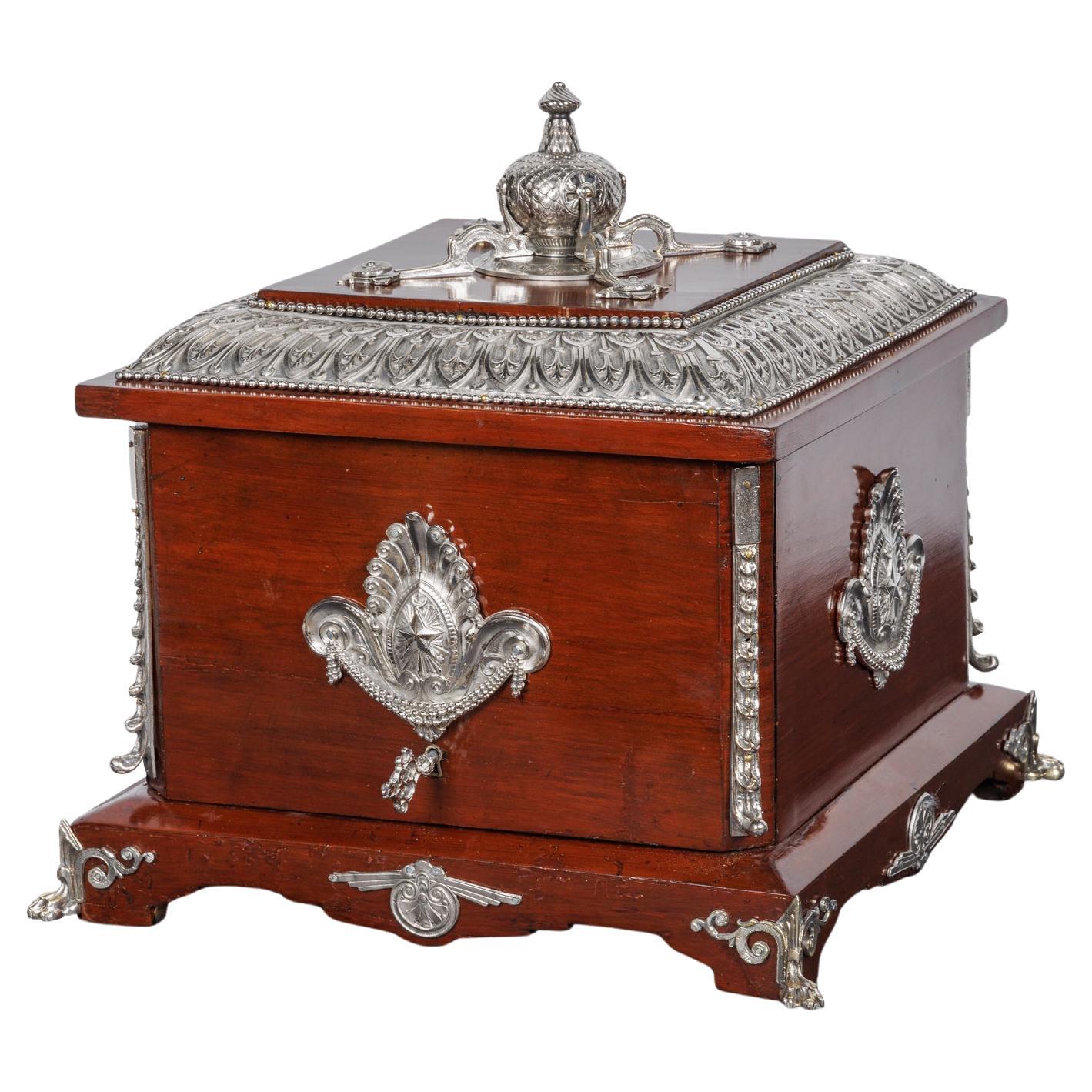
Outstanding Blackened Wood Planter Attributed to C.-G. Diehl, France, Circa 1880

$38,460.81
£28,489.19
€32,000
CA$52,613.05
A$57,345.53
CHF 30,318.08
MX$690,331.41
NOK 384,811.98
SEK 352,793.93
DKK 243,822.33

About the Item

A blackened wood planter attributed to Diehl, with silvered bronze ornaments, resting on four feet gathered by a stretcher. The pot is adorned with Bacchus’ masks and other antiques patterns after designs by J. Brandely, and, at its four corners with four silvered bronze felines, which are typical patterns in E. Frémiet’s works. The whole is topped by a rich lid with a palms’ frieze, arrow cartridges with medallions, and a button. Arriving in Paris in about 1840 Charles-Guillaume Diehl (1811-1885) founded his cabinet making and decoration firm at 19 rue Michel-le-Comte in 1885. His workshops produced elegant little pieces of furniture in rosewood and thuja and novelties with bronze and porcelain embellishments (see “Les ébénistes du XIXème siècle”,D. LeDoux-Lebard, Ed. de l’amateur, 1982, p.164). It was his luxury boxes, however (liqueur cellarettes, cigar cabinets, games boxes, cashmere cases, jewelry cases) which assured Diehl’s renown (see “l’Art en France sous le Second Empire”, Exposition Grand-Palais, Paris, 1979, p.133). Already rewarded with a bronze medal at the Universal Exhibition of 1855 in Paris, he exhibited a jardinière with china columns and a liqueur cabinet at the Industrial Arts Exhibition in 1861. In collaboration with the designer Jean Brandely (active from 1867 until 1873), Diehl renovated his decorative repertory and created astonishing pieces of furniture in the Grecian style which had a dazzling success at the Universal Exhibition in Paris in 1867, where his cabinets also won a silver medal. Certain motifs were so typical of Diehl’s work that they received extensive commentary by the art critic J. Mesnard in his book “Les Merveilles de l’Exposition Universal de 1867” (vol. II, pp. 133 149). He writes of a table of which “the pendant bearing hooks and the fan shaped radiating motif which ornaments the entablature are engraved with love (p. 133)” and a jewelry case where “The head in Fine Grecian style makes up the essential part of the Fine gilt bronze ornamentation” (p. 149). For this Universal Exhibition Diehl also formed a partnership with two famous sculptors : Emile Guillemin (1841-1907) who carved the relief for a mahogany sideboard with galvanic gilt bronzes (Orsay Museum, Paris, Inv. O.A.O. 992) and Emmanuel Frémiet (1824-1910) who executed the low relief for a cedar medal cabinet with marquetry and silver plated bronzes (Orsay Museum, Paris, Inv. O.A. 10440). Diehl was again rewarded with a medal of honour at the Union Central Exhibition of 1869 and a progress medal at the Universal Exhibition in Vienna in 1873 (Sideboard in blackened pear wood and lemon wood with galvanic bronzes, designed by J. Brandely with a low relief by E. Guillemin, Orsay Museum, Paris, Inv. O.A.O. 336). Showered with praise by the critics, Diehl is considered as one of the most innovating artists of the 19th Century. His final appearance was at the 1878 Universal Exhibition in Paris where he presented outside the competition, his most recent creations, including a work table in marquetry which with its naturalistic grasshopper motif anticipated “Art Nouveau” (Musée de l’Ecole de Nancy, Nancy).
  • Creator:
    Charles-Guillaume Diehl (Cabinetmaker),Jean Brandely (Illustrator),Emmanuel Fremiet (Sculptor)
  • Dimensions:
    Height: 35.44 in (90 cm)Width: 25.6 in (65 cm)Depth: 19.69 in (50 cm)
  • Style:
    Greek Revival (In the Style Of)
  • Materials and Techniques:
    Bronze,Wood,Blackened,Silvered
  • Place of Origin:
  • Period:
  • Date of Manufacture:
    Circa 1880
  • Condition:
    Wear consistent with age and use.
  • Seller Location:
    PARIS, FR
  • Reference Number:
    Seller: 15581stDibs: LU3860311590981

More From This Seller

View All
Lovely Neo-Greek Planter Attributed to C-G Diehl, France, Circa 1870
By Charles-Guillaume Diehl
Located in PARIS, FR
Circular plant pot with a double tray united by a black tripod attributed to C-G Diehl. Charming wood marquetry. A beautiful gilded bronze adornment complete this piece. Arriving in...
Category

Antique 1870s French Greek Revival Planters and Jardinieres

Materials

Bronze

Neo-Greek Inkwell by C.G. Diehl, E. Frémiet and J. Brandely, France, Circa 1867
By Emmanuel Fremiet, Jean Brandely, Charles-Guillaume Diehl
Located in PARIS, FR
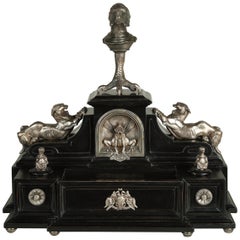
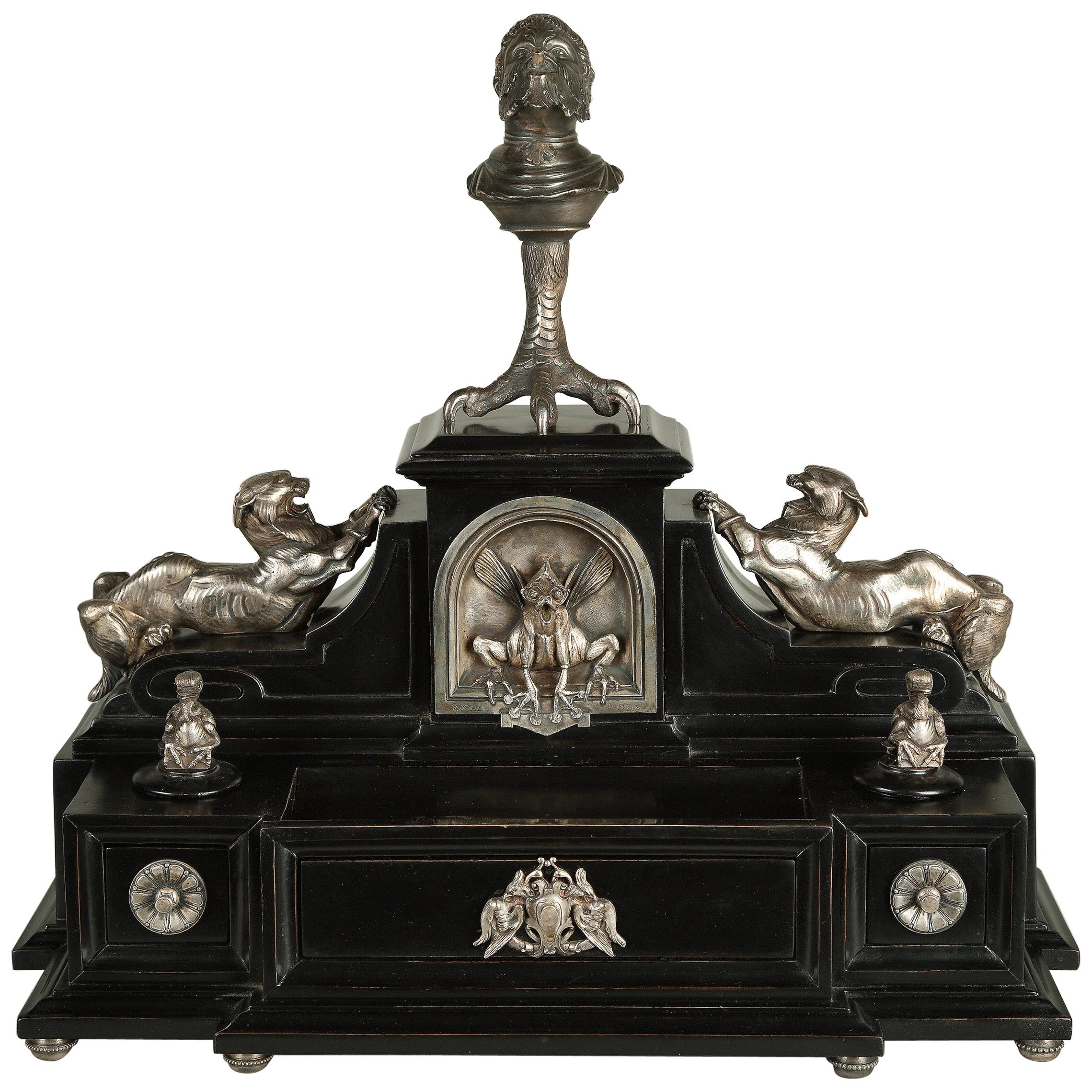
Signed Diehl à Paris. Wood and silvered copper inkwell. Central drawer ornamented with an escutcheon and flanked by two small lateral drawers forming two containers, surmounted by a lid representing a nestling. Central niche ornamented with a winged creature. Inkwell flanked by two felines. Toped by a penholder representing a Moorish head resting on an eagle claw. This exceptional piece was realized thanks to the collaboration of ornemanist J. Brandely, sculptor E. Frémiet and cabinet-maker C.-G. Diehl. The motif of the fantasy creature dear to Diehl, is to be seen on the famous cabinet made by him in 1867 and now exhibited at the Metropolitan Museum of Art in New York (Inv. 1989.197). Arriving in Paris in about 1840 Charles-Guillaume Diehl (1811-1885) founded his cabinet making and decoration firm at 19 rue Michel-le-Comte in 1885. His workshops produced elegant little pieces of furniture in rosewood and thuja and novelties with bronze and porcelain embellishments (see “Les ébénistes du XIXème siècle”, D. Ledoux-Lebard, Ed. de l’amateur, 1982, p.164). It was his luxury boxes, however (liqueur cellarettes, cigar cabinets, games boxes, cashmere cases, jewelry cases) which assured Diehl’s renown (see “l’Art en France sous le Second Empire”, Exposition Grand-Palais, Paris, 1979, p.133). Already rewarded with a bronze medal at the Universal Exhibition of 1855 in Paris, he exhibited a jardinière with china columns and a liqueur cabinet at the Industrial Arts Exhibition in 1861. In collaboration with the designer Jean Brandely (active from 1867 until 1873), Diehl renovated his decorative repertory and created astonishing pieces of furniture in the Grecian style which had a dazzling success at the Universal Exhibition in Paris in 1867, where his cabinets also won a silver medal. Certain motifs were so typical of Diehl’s work that they received extensive commentary by the art critic J. Mesnard in his book “Les Merveilles de l’Exposition Universal de 1867” (vol. II, pp. 133 & 149). He writes of a table of which “the pendant bearing hooks and the fan shaped radiating motif which ornaments the entablature are engraved with love” (p. 133) and a jewelry case where “The head in fine Grecian style makes up the essential part of the fine gilt bronze ornamentation” (p. 149). For this Universal Exhibition Diehl also formed a partnership with two famous sculptors: Emile Guillemin (1841-1907) who carved the relief for a mahogany sideboard with galvanic gilt bronzes (Orsay Museum, Paris, Inv. O.A.O. 992) and Emmanuel Frémiet (1824-1910) who executed the low relief for a cedar medal cabinet...
Category

Antique 1860s French Greek Revival Inkwells

Materials

Copper

Neo-Greek Cigar Cellarette, C.G. Diehl, E. Frémiet J. Brandely, Circa 1867
By Charles-Guillaume Diehl, Emmanuel Fremiet, Jean Brandely
Located in PARIS, FR
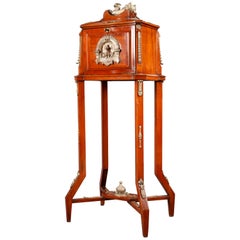
Rare cigar humidor made in wood, with a front flap, discovering five sliding cane trays. Beautiful bronze and silver electroplated brass ornaments, such as the central niche decorated with a winged creature, surmounted on top of the cabinet with a feline. Resting on four tall legs joined by a stretcher decorated with a silvered pierced bronze incense burner. The central relief of that cellarette for cigars, with that fantasy creature, is directly inspired from the one designed by J. Brandely for the front door of the Merovingian Cabinet made by Diehl in 1867, and now preserved at the Metropolitan Museum of Art in New York (Inv. 1989.197). Arriving in Paris in about 1840 Charles-Guillaume Diehl (1811-1885) founded his cabinet making and decoration firm at 19 rue Michel-le-Comte in 1885. His workshops produced elegant little pieces of furniture in rosewood and thuja and novelties with bronze and porcelain embellishments (see « Les ébénistes du XIXème siècle »,D. Ledoux-Lebard, Ed. de l’amateur, 1982, p.164). It was his luxury boxes, however (liqueur cellarettes, cigar cabinets, games boxes, cashmere cases, jewelry cases) which assured Diehl’s renown (see « l’Art en France sous le Second Empire », Exposition Grand-Palais, Paris, 1979, p.133). Already rewarded with a bronze medal at the Universal Exhibition of 1855 in Paris, he exhibited a jardinière with china columns and a liqueur cabinet at the Industrial Arts Exhibition in 1861. In collaboration with the designer Jean Brandely (active between 1867 and 1873), Diehl renovated his decorative repertory and created astonishing pieces of furniture in the Grecian style which had a dazzling success at the Universal Exhibition in Paris in 1867, where his cabinets also won a silver medal. Certain motifs were so typical of Diehl’s work that they received extensive commentary by the art critic J. Mesnard in his book « Les Merveilles de l’Exposition Universal de 1867 » (vol. II, pp. 133 149). He writes of a table of which « the pendant bearing hooks and the fan shaped radiating motif which ornaments the entablature are engraved with love » (p. 133) and a jewelry case where « The head in fine Grecian style makes up the essential part of the fine gilt bronze ornementation » (p. 149). For this Universal Exhibition of 1867, Diehl also formed a partnership with two famous sculptors : Emile Guillemin (1841-1907) who carved the relief for a mahogany sideboard with galvanic gilt bronzes (Orsay Museum, Paris, Inv. O.A.O. 992) and Emmanuel Frémiet (1824-1910) who executed the low relief for a cedar medal cabinet...
Category

Antique 1860s French Greek Revival Tobacco Accessories

Materials

Brass, Bronze

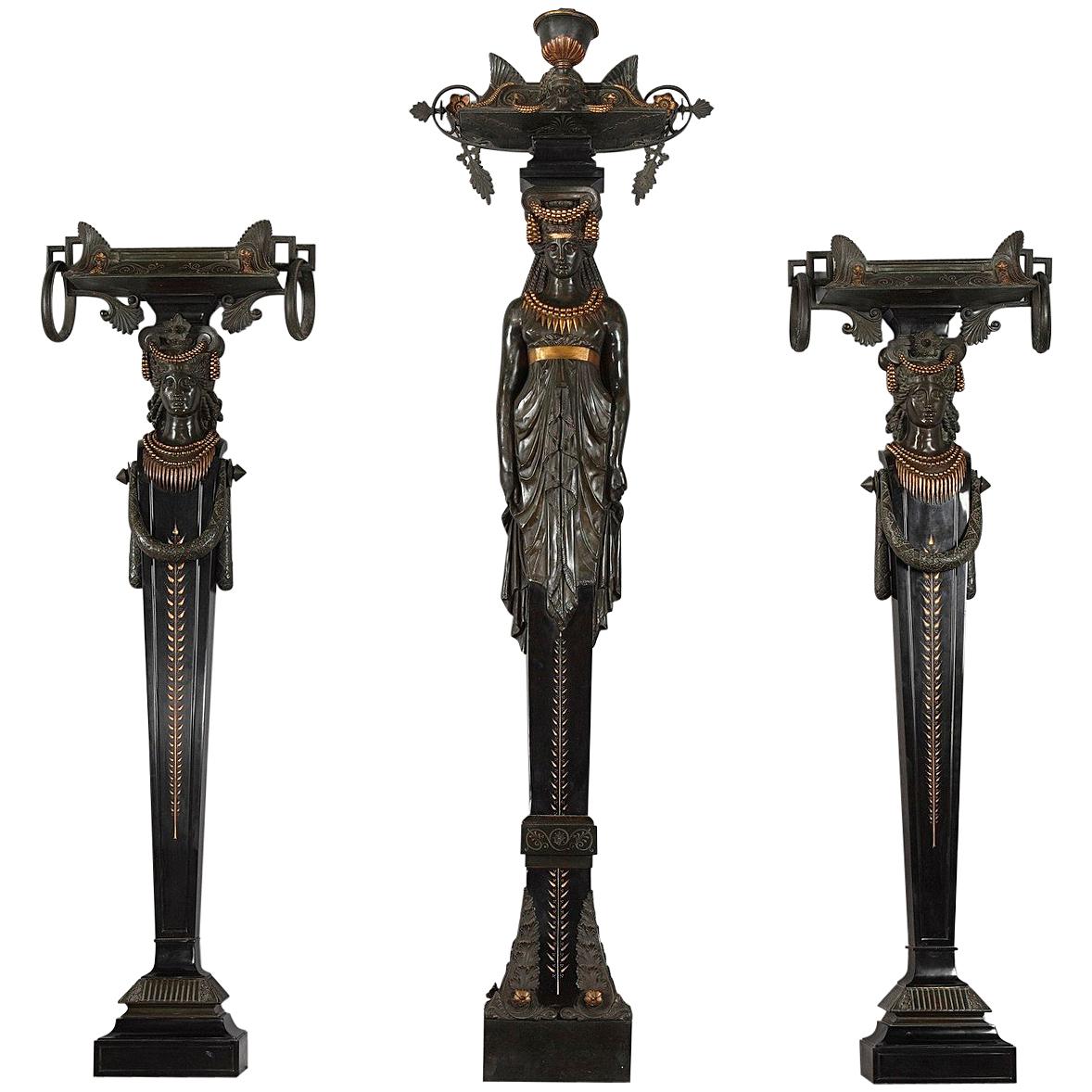
Set of Three Caryatid Planters Attributed to G. Servant, France, Circa 1880
By Georges Emile Henri Servant
Located in PARIS, FR
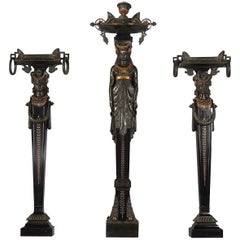
Measures : Tallest caryatid : Height 225 cm (88.6 in.) ; width 65 cm (25.6 in.) ; depth : 40 cm (15,7 in.) Two smaller caryatids : Height 183 cm (72 in.) ; width 55 cm (21.6 in.) ; depth : 21 cm (8,3 in.) An outstanding set of three monumental black marble and bronze caryatid planters in the Greek style attributed to G. Servant. All three are caryatid terms on pedestal: the tallest one is shaped as a Grecian woman with her antique drapery and gilt bronze ornaments, such as belt, necklace, headband and garlands, surmounted by an Ionic capital supporting a large planter adorned with foliage pattern and a vase in patinated and gilt bronze. Two smaller planters complete the set, using the same ornamental patterns: the Grecian head...
Category

Antique 1880s French Greek Revival Planters, Cachepots and Jardinières

Materials

Marble, Bronze

Pair of Neo-Greek Pedestals. C.G. Diehl J.Brandely, France, circa 1867
By Jean Brandely, Charles-Guillaume Diehl, Lebeuf Milliet Cie Creil Montereau
Located in PARIS, FR
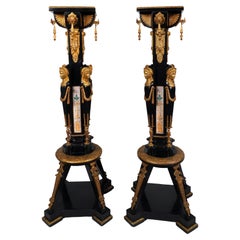
Exceptional pair of neo-Greek style pedestals, made in blackened pearwood, gilded galvanic bronze and glazed earthenware. The sheath-shaped shaft is decorated with rectangular plates...
Category

Antique 1860s French Greek Revival Pedestals

Materials

Bronze

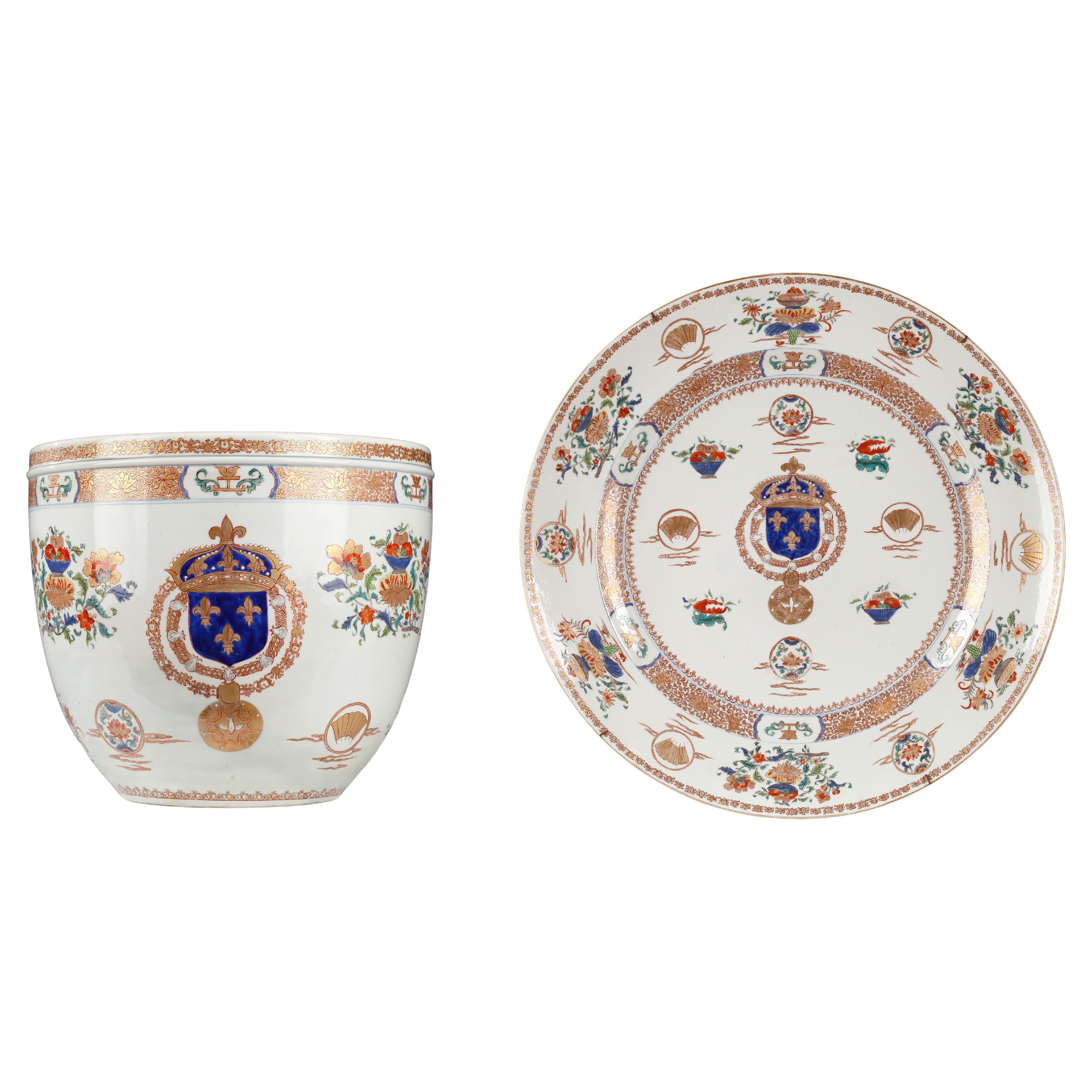
Planter and Decorative Dish Attributed to Samson Cie, France, Circa 1880
By Samson Cie
Located in PARIS, FR
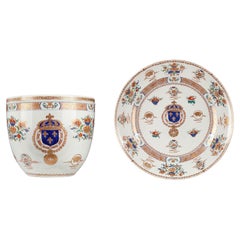
Important porcelain planter and decorative dish attributed to Samson Cie. They are decorated with golden and red friezes of intertwined lotus, fruits and flower cups, fans and...
Category

Antique 1880s French Planters, Cachepots and Jardinières

Materials

Porcelain

You May Also Like

A Rare French Cigar Humidor by Charles Guillame Diehl and Jean Brandley
By Charles-Guillaume Diehl, Jean Brandely
Located in Queens, NY
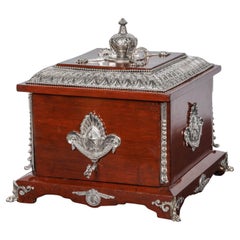
A Rare Wood and Silvered Bronze French Cigar Humidor by Charles Guillaume Diehl and Jean Brandely, C. 1860, Paris This extraordinary cigar humidor, crafted by the esteemed French ar...
Category

Antique 19th Century French Napoleon III Cigar Boxes and Humidors

Materials

Bronze

Small " Egyptomania " wood table planter, France circa 1830
Located in PARIS, FR
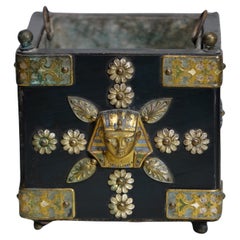
Small table planter in wood and tin with enameled decorations of flowers, palm leaves and a sarcophagus mask. Egyptomania refers to the revival of European interest in ancient Egypt ...
Category

Antique 1830s French Egyptian Revival Planters, Cachepots and Jardinières

Materials

Wood

19 C French Onyx, Silvered, and Gilt-Bronze Vase Attributed to Charpentier Cie
By Charpentier et Cie
Located in New York, NY
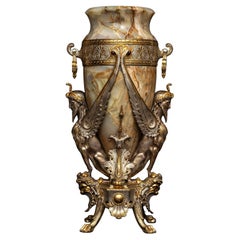
A Large 19th Century French Onyx, Silvered, and Gilt-Bronze Vase Attributed to Charpentier & Cie. The vase consists of an onyx body with a flared, slightly everted rim and a taperin...
Category

Antique 1880s French Greek Revival Vases

Materials

Onyx, Bronze

Highly Decorative French Enamelled Vase, Attributed to Samson of Paris, c.1880
Located in Worcester, GB
Highly Decorative French Enamelled Vase, Attributed to Samson of Paris, c.1880 A richly ornamental and strikingly colourful late 19th-century Fren...
Category

Antique Late 19th Century European Vases

Materials

Porcelain

Pair of Ceramic Planters, Attributed to Sarreguemines, France, Late 19th Century
By Sarreguemines
Located in Buenos Aires, Buenos Aires
Pair of ceramic planters. Attributed to Sarreguemines. France, late 19th century. Planters dimensions: 42 cm diameter, 36 cm height. Bases...
Category

Antique Late 19th Century French Neoclassical Planters, Cachepots and Ja...

Materials

Ceramic

Napoleon III enamelled cast-iron planter, Japanese decor, France, circa 1880
Located in Paris, FR
Rare planter with base in brown enameled cast iron, decorated with palms in relief. This palm decoration and the shape of the handles, as well as the saddle, give way to the Japonism...
Category

Antique 1880s French Napoleon III Planters, Cachepots and Jardinières

Materials

Iron