Want more images or videos?
Request additional images or videos from the seller
1 of 12

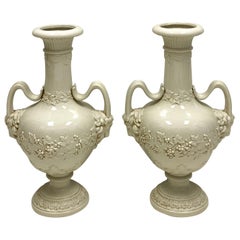
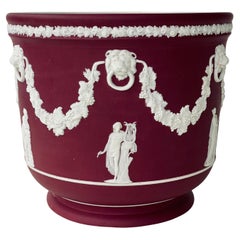
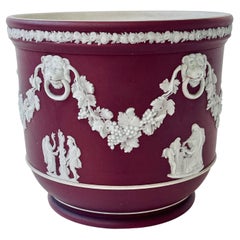
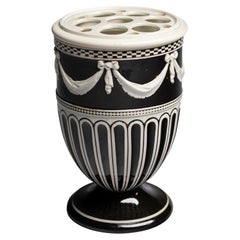
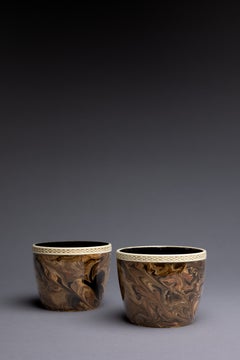
Pair of Early Wedgwood Pearlware Porphyry Urns

$2,950List Priceper set

You May Also Like

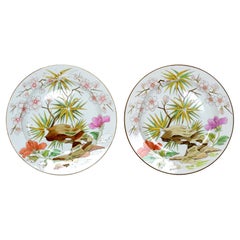
Pair of Early 19th c Wedgwood Pearlware Prunus Pattern 8" Plates
By Wedgwood
Located in valatie, NY
Pair of Early 19th c Wedgwood Pearlware Prunus Pattern 8" Plates. With impressed 'WEDGWOOD' mark on the base and the number '10'. This is a hard to find pattern. Trent Antiques has ...
Category

Antique Early 19th Century English Pottery

Materials

Pottery

Pair of French Provincial Clay Amphora Pottery/Urns
Located in Los Angeles, CA
Pair of antique French Provincial Amphora pottery. One stands approx 14" tall and the other is approx 13" tall. Very similar colors and patina. One ...
Category

Antique 19th Century French Vases

Materials

Clay

Pair of French Provincial Clay Amphora Pottery/Urns
$960 Sale Price / set
25% Off
H 14 in W 9 in D 9 in
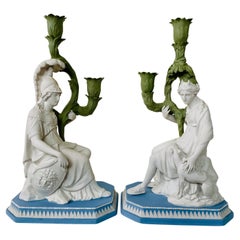
Pair Modern Wedgwood Tricolor Jasper Ware Two Branch Candlesticks
By Wedgwood
Located in Asheville, NC
Barlaston, Staffordshire, c.2002, each with solid green capitals and branches suspended by a seated white figure on a blue plinth decorated with white bas-relief meander, embossed in...
Category

21st Century and Contemporary English Neoclassical Pottery

Materials

Stoneware

Large Scale Italian Neoclassical Style Urns or Vases with Ram’s Heads, a Pair
Located in Kennesaw, GA
This is a pair of monumental neoclassical style pottery urns handcrafted in Italy. They are marked and in very good condition. The urns most likely date to the later part of the 20th...
Category

Late 20th Century Italian Neoclassical Pottery

Materials

Ceramic, Pottery

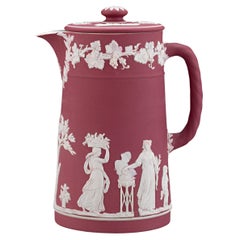
Wedgwood Crimson Jasperware Pitcher
By Wedgwood
Located in New Orleans, LA
This striking Wedgwood crimson dip bas-relief covered jug features an applied white jasper neoclassical decoration of grapevines bordering the rim. De...
Category

20th Century English Neoclassical Pottery

Materials

Pottery

Wedgwood Crimson Jasperware Pitcher
$3,850
H 7.25 in W 5.38 in D 5.38 in
Pair Modern Wedgwood Black Jasper Ware Ewers, Sacred to Bacchus and Neptune
By Wedgwood
Located in Asheville, NC
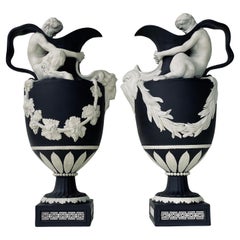
Barlaston, Staffordshire, 1988, each solid black jasper moulded body bolted on respective base and plinth, white jasper bas- and haut-relief decoration applied throughout, white jasp...
Category

Vintage 1980s English Neoclassical Pottery

Materials

Stoneware

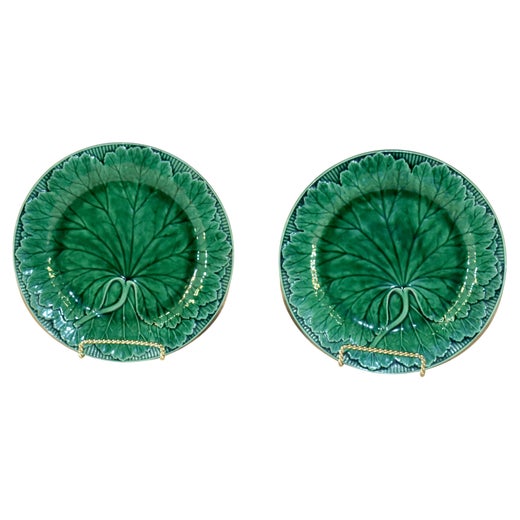
Wedgwood Pair Floral Rimmed Majolica Pottery Plates
By Wedgwood
Located in Bishop s Stortford, Hertfordshire
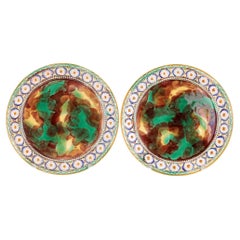
A fine pair antique English majolica floral rimmed pottery plates by Wedgwood and dated 1872. The lightly potted plates are of simple rounded form standing on a round foot with a sli...
Category

Antique 1870s English Arts and Crafts Pottery

Materials

Majolica, Pottery

Wedgwood Pair Floral Rimmed Majolica Pottery Plates
$640
Free Shipping
H 0.5 in Dm 7.88 in
Antique Pair English Porcelain Royal Doulton Art Nouveau Ewers Pitchers Urns
By Doulton Lambeth
Located in Dublin, Ireland
A Very Stylish Identical Pair of English Royal Doulton Lambeth English Moulded Salt-Glaze Stoneware Pottery Ewers of compact proportions. Each of bulbous form with wavy flared rim ...
Category

Early 20th Century English Late Victorian Vases

Materials

Ceramic, Porcelain

Wedgwood Crimson Dip Jasper Ware Garden Pot
By Wedgwood
Located in Asheville, NC
Etruria, Staffordshire, circa 1925, turned Wedgwood shape no. 317, stoneware with crimson Jasper dip ground, decorated with sprigged white Jasper bas-relief depictions of muses and A...
Category

Early 20th Century English Neoclassical Pottery

Materials

Stoneware

1930s Wedgwood Crimson Dip Jasper Ware Garden Pot
By Wedgwood
Located in Asheville, NC
Etruria, Staffordshire, 1929-1938 , turned Wedgwood shape no. 317, stoneware with crimson Jasper dip ground, decorated with sprigged white Jasper bas-relief classical cameos, ringed ...
Category

Vintage 1930s English Neoclassical Pottery

Materials

Stoneware

More From This Seller

View All
Early Wedgwood Dipped Pearlware Bough Pot
By Wedgwood
Located in Fort Lauderdale, FL
A dark brown-glazed pearlware bough pot with pierced cover and applied decoration, made by Wedgwood circa 1785. The development of a whiteware body had been a goal of ceramicists ac...
Category

Antique Late 18th Century British Neoclassical Vases

Materials

Ceramic, Earthenware, Pearlware

Pair of Wedgwood Bentley Agate Plant Pots
By Wedgwood Bentley
Located in Fort Lauderdale, FL
A pair of plant pots covered in marbled brown glaze emulating agate gemstone encircled with checkered rims accented in gold, made circa 1770 by Wedgwood &...
Category

Antique 1770s English Neoclassical Planters and Jardinieres

Materials

Creamware, Pottery

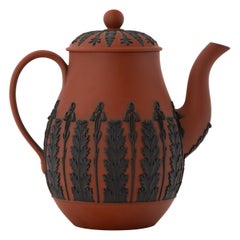
Early Wedgwood Egyptian Revival Neoclassical Rosso Antico Coffee Pot
By Josiah Wedgwood
Located in Fort Lauderdale, FL
A Wedgwood rosso antico coffee pot made ca. 1810. The pot's red body is accentuated by black basalt details in the Egyptian Revival style. Developed by Josiah Wedgwood in the 1760s, rosso antico famously exhibits the Egyptian Revival style that became popular in the early 19th century during Napoleon...
Category

Antique Early 19th Century British Neoclassical Pitchers

Materials

Earthenware

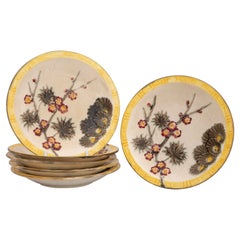
Six Wedgwood Majolica Argenta Lincoln Pattern Dessert Dishes
By Wedgwood
Located in Fort Lauderdale, FL
Six Wedgwood majolica Argenta palette ‘Lincoln' pattern dessert plates with finely molded maroon prunus blossoms and dark taupe pine branches surrounded by a yellow Greek key border. The dishes are decorated in the japonisme style and feature the “Three Friends of Winter” motif, an Asian artistic convention showing the pine, plum, and bamboo together to represent steadfastness, perseverance, and resilience. The Wedgwood factory introduced muted Argenta glazes to its majolicas in the 1880s to keep up with ever-changing fashions. The Argenta glaze color palette was more subdued than that of traditionally vibrant majolica, and was thus more appealing to the Aesthetic Movement japonisme style that pervaded the market. These Argenta majolica dessert dishes...
Category

Antique Late 19th Century English Japonisme Pottery

Materials

Earthenware, Majolica

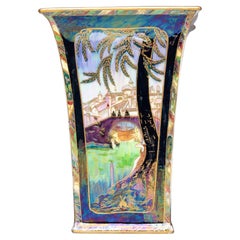
Daisy Makeig-Jones Fairyland Wedgwood Lustre Vase
By Wedgwood, Daisy Makeig-Jones, Wedgwood Fairyland Lustre
Located in Fort Lauderdale, FL
A Wedgwood Fairyland lustre vase designed by Daisy Makeig-Jones ca. 1920 and decorated with the 'Castle on a Road' pattern. Daisy Makeig-Jones is best known for the Fairyland Lustre...
Category

Vintage 1920s English Art Nouveau Vases

Materials

Ceramic, Luster, Porcelain

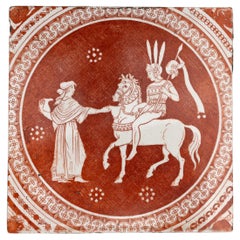
Early Spode Red Greek Pattern Tile
By Spode, Josiah Spode
Located in Fort Lauderdale, FL
A Neoclassical red transferware tile made by Spode 1806-1810, with the ‘Refreshments for Phliasian Horseman’ pattern. Sir William Hamilton’s Collection of Etruscan, Greek and Roman antiquities, first published in 1766 by Pierre d’Hancarville, was a landmark publication in English design. It intended to disseminate the Antique style through its engravings of Attic pottery. The catalog’s faithful reproductions of Classical vases led British potteries, including Spode, to adapt or even copy the ancient art for modern life. These Spode Greek pattern tiles reflect the major influence of Hamilton’s catalog on English Neoclassicism. The central scene was taken directly from the catalog. This tile can be dated to a narrow window of production in the Spode factory, 1806-1810. During that time, Spode used a technique known as the “Pluck and Dust” method to print in red transfer designs onto creamware. Using this method, source prints were transferred overglaze using tissue imprinted with a very faint rendition of the design outlined in sticky oil. The decorator applied the tissue to the object then carefully “plucked” or pulled it away, leaving the sticky oil design behind. Then, a finely-ground enamel color was “dusted” onto the surface, sticking to any areas that had the oil. A final firing at a low temperature in the enamel kiln made the pattern permanent. The Pluck and Dust technique improved upon bat-printing and enabled larger designers to be transferred. It was short-lived, however, as under-glaze transfer printing soon took over as the preferred method for producing transferwares. Dimensions: 5 in. x 5 in. x 1/4 in. Condition: Excellent. Slight chip to the upper left corner measuring approximately 0.9 cm. in length. Provenance: The Collection of Nancy and Andrew Ramage Jonathan Horne...
Category

Antique Early 19th Century English Neoclassical Pottery

Materials

Earthenware, Creamware

Still Thinking About These?

All Recently Viewed