Items Similar to Chinese Export Famille Rose Porcelain Garniture
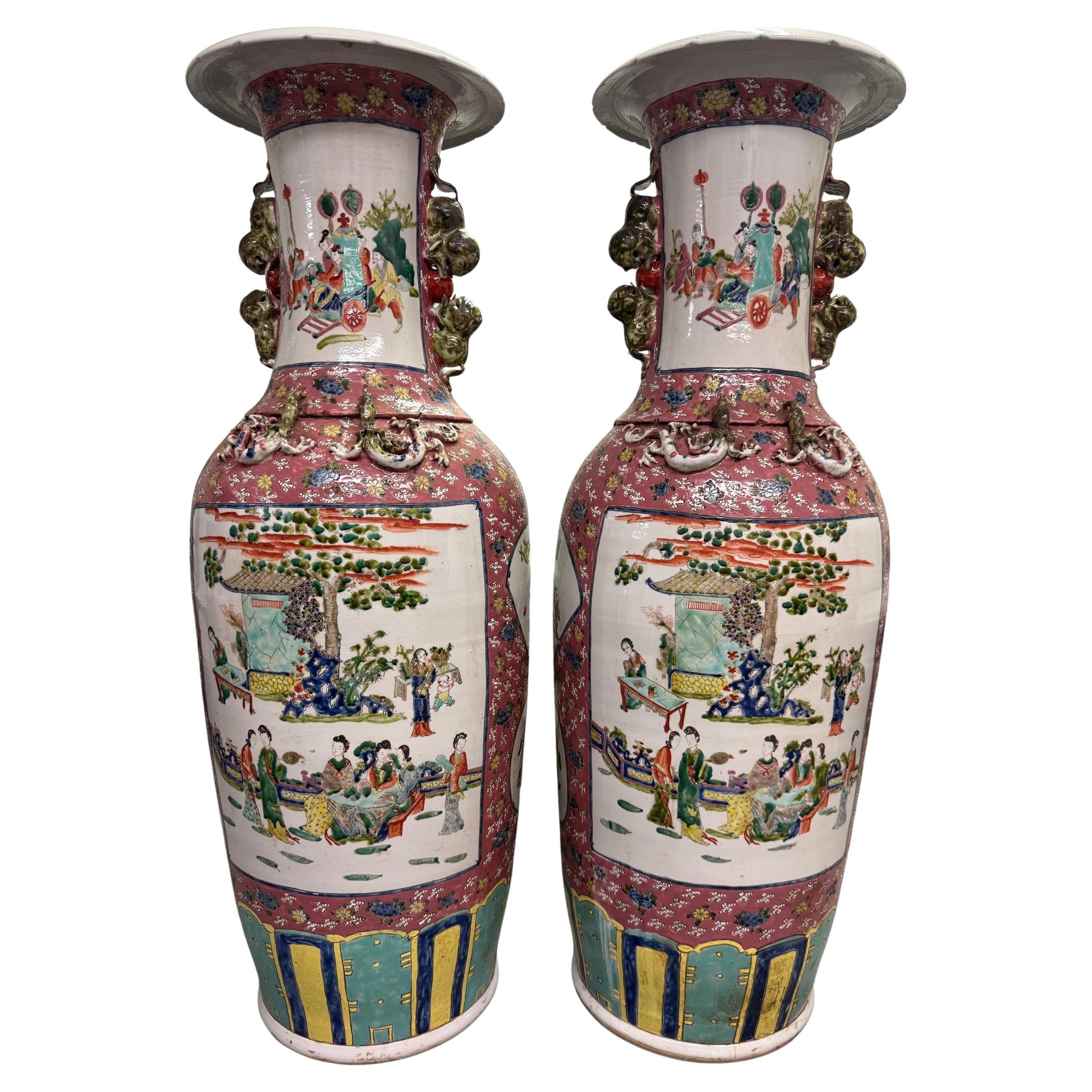
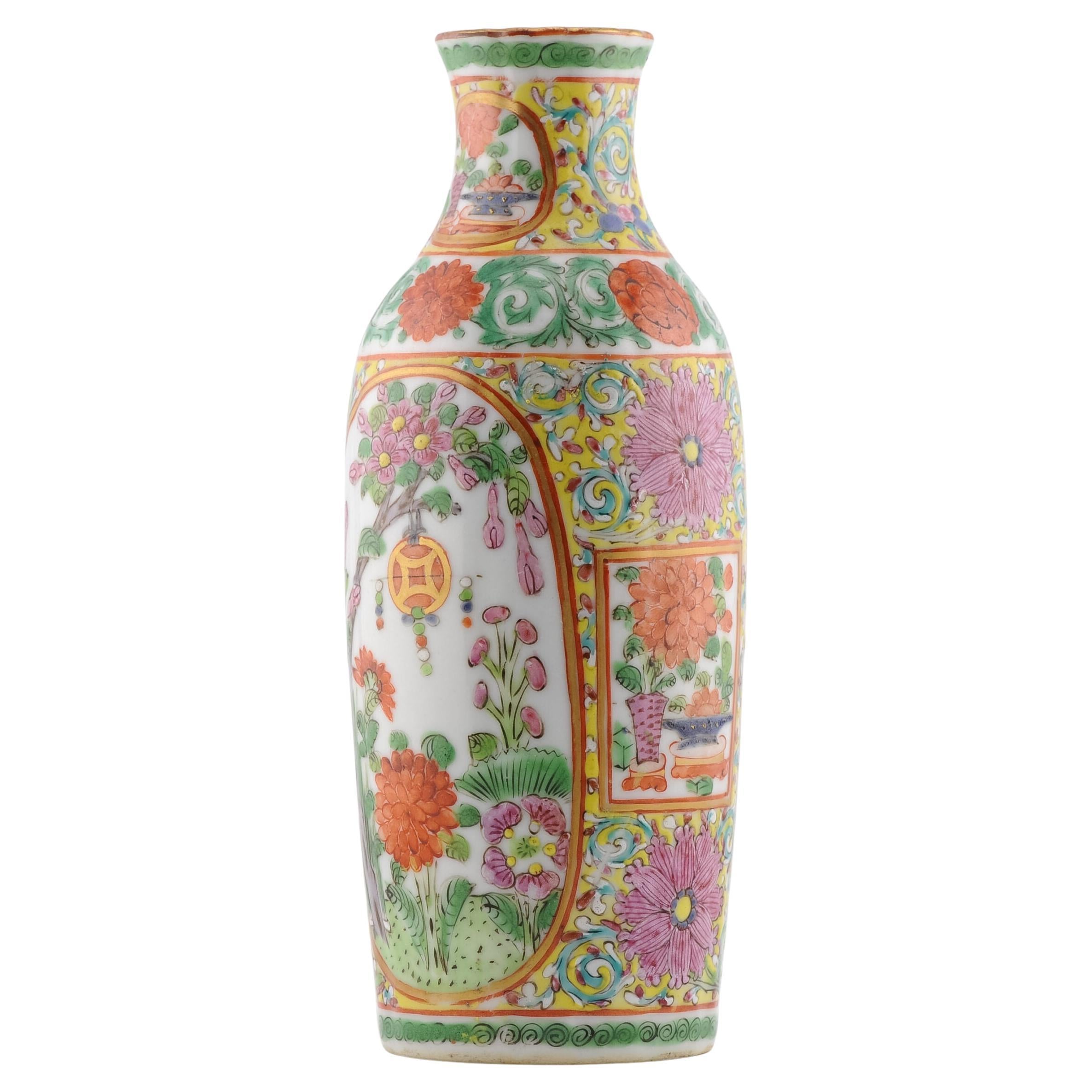
Want more images or videos?
Request additional images or videos from the seller
1 of 13
Chinese Export Famille Rose Porcelain Garniture
$12,400per set
£9,365.31per set
€10,818.39per set
CA$17,469.83per set
A$18,710.20per set
CHF 10,058.47per set
MX$227,246.30per set
NOK 127,093.72per set
SEK 116,363.75per set
DKK 80,833.15per set
About the Item
Chinese Export Five Piece Famille Rose Porcelain Garniture,
circa 1730-1750
The garniture of five Chinese Export porcelain vases consists of three covered baluster vases and two trumpet-form vases. They are all painted with groupings of precious objects and auspicious fruit in a porcelain bowl on a wood stand surrounded by flowers including peony blooms. The base with alternating pink and blue enamel, the pink with suspended white flowers and green stems. The shoulder with a blue enamel band highlighted with flowers and bands. The necks with scattered flowers. The covers with a pointed button knob. One vase with a u-shape piece in/out invisibly repaired.
Dimensions: Covered vases 9 1/4 inches high x 3 1/2 inches wide; Trumpet vases: 7 3/16 inches high x 3 3/4 inches wide.
Provenance:
Private Collection,
Lyndia Willauer Antiques.
The introduction of the famille rose enameling style was encouraged by the Kangxi emperor’s liking for painted enamels on copper. A workshop set up within the Forbidden City made use of an imported crimson-pink enamel derived from gold, and an opaque white, which together facilitated an entire range of new soft and shaded tints. Manchu imperial taste is reflected in the creation for the court of porcelain bowls with flowers depicted on brilliantly coloured grounds, which continued to be made in successive reigns. The use of coloured grounds combined with finely painted designs remained a feature of court wares of the Qianlong and later periods. Meanwhile, quantities of famille rose decorated wares were made for export to the West, including vases, figure models and table wares. Some were shaped or decorated to order with armorial and other designs.
Text adapted from Chinese and Japanese Works of Art in the Collection of Her Majesty the Queen: Volume I.
- Dimensions:Height: 9.25 in (23.5 cm)Diameter: 3.5 in (8.89 cm)
- Sold As:Set of 5
- Style:Chinese Export (Of the Period)
- Materials and Techniques:
- Place of Origin:
- Period:
- Date of Manufacture:1730-50
- Condition:Repaired: Small break to one neck of one covered vase invisibly repaired and one finial chp repaired invisibly. Minor structural damages. Beautiful enamels.
- Seller Location:Downingtown, PA
- Reference Number:Seller: NY10299-krlm1stDibs: LU861034609132
About the Seller
5.0
Recognized Seller
These prestigious sellers are industry leaders and represent the highest echelon for item quality and design.
Gold Seller
Premium sellers maintaining a 4.3+ rating and 24-hour response times
Established in 1916
1stDibs seller since 2009
438 sales on 1stDibs
Typical response time: 1 hour
Associations
The Art and Antique Dealers League of AmericaAntiques Associations Members
- ShippingRetrieving quote...Shipping from: Downingtown, PA
- Return Policy
More From This Seller
View AllVintage Tobacco Leaf Porcelain Garniture of Five Vases
Located in Downingtown, PA
A Phoenix in Bloom: The Enduring Charm of the "Tobacco Leaf" Garniture
Title: Large Tobacco Leaf Porcelain Garniture of Five Vases
Culture/Orig...
Category
20th Century Chinese Export Vases
Materials
Porcelain
Chinese Export Porcelain Large Rose Medallion Vases
Located in Downingtown, PA
Chinese export porcelain large rose medallion vases,
Circa 1850-65
The early rose medallion/rose mandarin porce...
Category
Antique Mid-19th Century Chinese Chinese Export Vases
Materials
Porcelain
Chinese Export Porcelain Group of Batavia-ware Urns
Covers
Located in Downingtown, PA
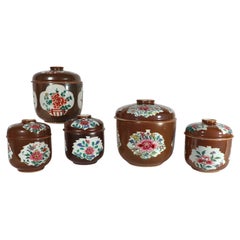
Collection of Five Chinese Export 'Batavia-ware' and Famille Rose Jars and Covers
Qianlong Period, China, Circa 1750s
This handsome collection of five graduated covered jars is a magnificent and rare example of mid-18th-century Chinese Export porcelain, illustrating the highly successful fusion of Chinese ceramic technology and European market demand during the height of the global trade era.
________________________________________
Description and Aesthetic
Medium: Porcelain with underglaze brown glaze and overglaze Famille Rose enamels.
Period: Qianlong (1736–1795).
Origin: Jingdezhen kilns, China, made for the European export market.
The collection comprises two large, two medium, and one small jar, intended to be displayed together as a garniture—a decorative set prized for mantelpieces and cabinets in opulent European interiors.
• The 'Batavia' Ground: Each piece is characterized by a luxurious, deep chocolate-brown glaze covering the exterior, a distinctive aesthetic known historically as "Batavia-ware" or descriptively as café au lait. This rich, monochrome ground was achieved by bathing the porcelain in an iron-rich slip before glazing and firing.
• The Famille Rose Reserves: The dark ground provides a dramatic backdrop for finely painted, leaf-shaped reserves (panels). These panels are adorned with exquisite floral sprays executed in the vibrant Famille Rose palette (meaning "pink family"), which was introduced to China from Europe in the early 18th century. The opaque enamels—dominated by the rose-pink created from colloidal gold—allow for subtle shading and realism, brilliantly depicting the peony (mudan), the Chinese flower of wealth, nobility, and honor.
• The Covers: The domed covers maintain this contrast, with a high, lustrous brown glaze broken by Famille Rose floral sprays that echo the motifs on the body.
________________________________________
Historical Context: Global Trade and Naming
The name "Batavia-ware" is a crucial historical reference, even though the porcelain was manufactured in the kilns of Jingdezhen.
1. The Dutch East India Company (VOC): Batavia (modern-day Jakarta, Indonesia) served as the fortified administrative and trading headquarters of the Dutch East India Company (VOC) in Asia.
2. The Trade Route: Porcelain destined for the European market was collected from various Chinese ports and then centrally transshipped through Batavia. This particular style became famously associated with that major transit port among Western collectors, hence the name, which links the sophisticated manufacturing of China to the powerful trade infrastructure of the Dutch.
3. 18th-Century Opulence: Garnitures like this were highly desirable statements of wealth and worldliness in 18th-century Europe. Their acquisition signified participation in the exotic, global market and a cosmopolitan taste capable of appreciating the high technical and artistic quality of Chinese porcelain.
The successful combination of the deep, rich brown glaze—which evokes a feeling of luxurious Eastern lacquer or polished wood—with the delicate, luminous European-inspired Famille Rose palette represents a brilliant convergence of East-West artistic demands at the height of the Qianlong Emperor’s reign.
________________________________________
Dimensions
Largest Jar: 7 1/2 inches high x 7 1/2 inches diameter; Second Jar: 7 1/4 inches high x 6 1/2 inches diameter; Third Jar: 5 1/2 inches high x 5 inches diameter; Pair of Smaller Jars...
Category
Antique 1750s Chinese Chinese Export Jars
Materials
Porcelain
Chinese Export Porcelain Canton Jar decorated with Panels of Chinese Figures
Located in Downingtown, PA
Chinese Export Porcelain Large Canton Temple Jar,
American Market,
Daoguang,
First Quarter 19th Century
A handsome Chinese Export Canton Large Temple Jar, produced for the American ...
Category
Antique Mid-19th Century Chinese Chinese Export Jars
Materials
Porcelain
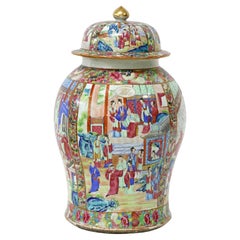
18th-century Chinese Export Porcelain Large Famille Rose Cachepot
Located in Downingtown, PA
Monumental Chinese Export Porcelain Famille Rose Cachepot or Wine Cooler
This magnificent Chinese Export porcelain cachepot or wine cooler, dati...
Category
Antique Mid-18th Century Chinese Chinese Export Planters, Cachepots and ...
Materials
Porcelain

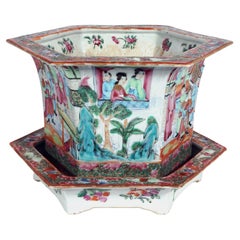
Chinese Export Porcelain Rose Canton Cache Pot
Stand
Located in Downingtown, PA
A Gilded Age of Trade: Chinese Export Porcelain Rose Canton Cache Pot & Stand
This striking Chinese Export porcelain ensemble, dating from the 1820s to 1840s, comprises a large hexa...
Category
Antique Early 19th Century Chinese Chinese Export Planters, Cachepots an...
Materials
Porcelain
You May Also Like
Chinese Famille Rose Vases
Located in Dallas, TX
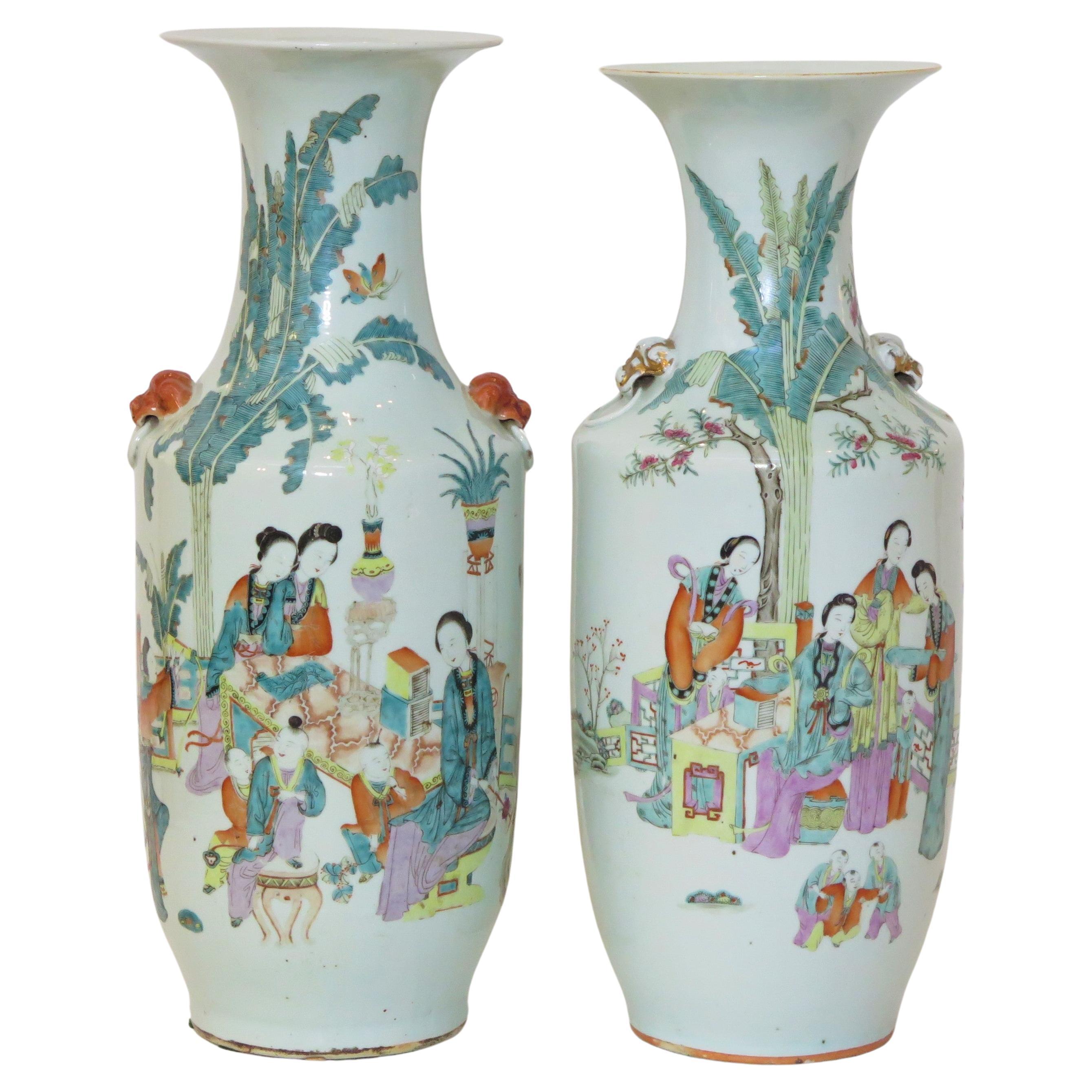
Chinese Famille Rose vases, very similar / near pair, note different foo lion mask handles (one gilt, one orange) and slight height difference, orange, pink, and green color palette ...
Category
Antique Late 19th Century Chinese Chinese Export Vases
Materials
Porcelain
$3,300 / set
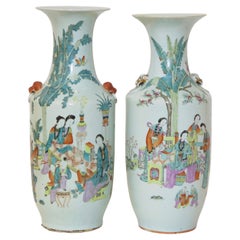
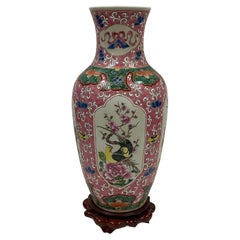
Early-20th Century Antique Chinese Famille Rose Porcelain Vase
Located in Pomona, CA
Look at this magnificent Chinese Famille Rose vases. It was hand made and hand painted in about 1850 - 1900 in a civilian kiln. It has hand painted Chinese traditional folks arts of ...
Category
Early 20th Century Chinese Chinese Export Vases
Materials
Porcelain
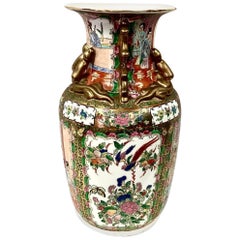
Chinese Famille Rose Porcelain Vase
Located in Bradenton, FL
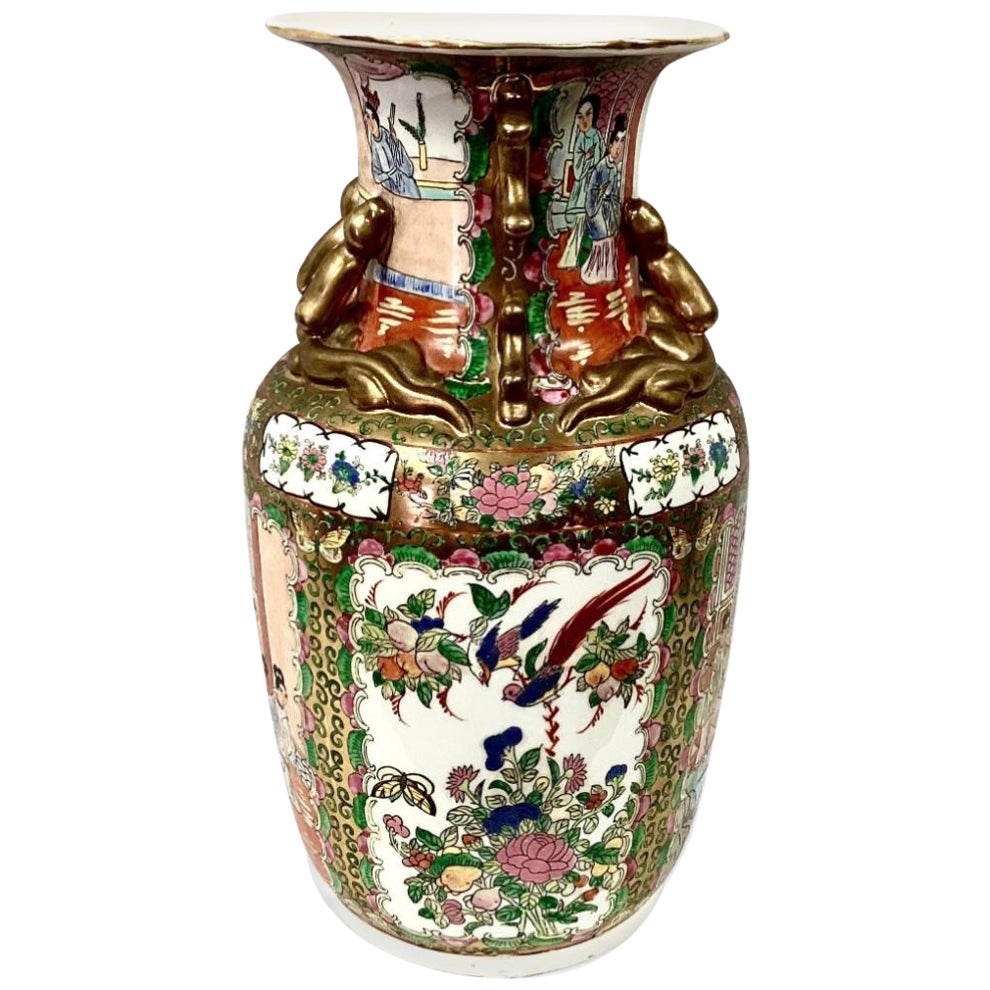
Chinese Famille Rose porcelain vase. Decorated with birds, flowers, and figures of the era with gold figures on neck and gold trim. Chinese signature mar...
Category
Early 20th Century Chinese Chinese Export Ceramics
Materials
Ceramic
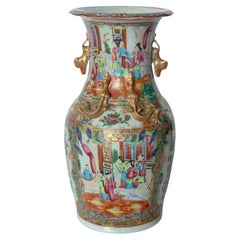
19th Century Chinese Rose Canton Porcelain Vase
Located in Los Angeles, CA
Traditional Chinese Rose Canton porcelain vase. Made in the 19th century.
Dimensions:
14"H x 7.5"D
Category
Antique 19th Century Chinese Vases
Materials
Porcelain
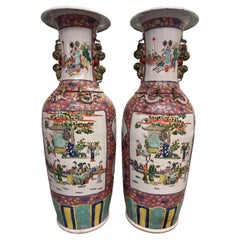
Late 20th Century Pair of Famille Rose Porcelain Chinese Palace Vases
Located in Stamford, CT
Late 20th Century pair of Famille Rose porcelain Chinese palace vases. A beautiful and large pair of vases, with alternating reserves of figures s...
Category
Late 20th Century Chinese Ceramics
Materials
Porcelain
Antique 19th c Chinese Porcelain Cantonese Floral Objects Qing Daoguang
Located in Amsterdam, Noord Holland
Nice and Beautifully painted Cantonese vase with a south east asian decoration.
Condition
Perfect. Size 18CM high
Period
19th century Qing (1661 - 1912)
Category
Antique 19th Century Chinese Qing Planters, Cachepots and Jardinières
Materials
Porcelain

$1,753 Sale Price
20% Off
More Ways To Browse
Export Blue And White 18th Century
Forbidden City
18th Century Blue And White Bowl
18th Century Chinese Export Porcelain Bowl
Blue And White Kangxi Vase
Porcelain Fruit Bowl
Blue And White Armorial Export China
Poland Crystal
Ribbed Glass Vase
Royal Copenhagen Salto
Terra Cotta Vessel
Threaded Glass Vase
Vintage Murano Sommerso Vase
Vintage Swirl Glass Vase
Vintage Wood Vase
Aldo Londi Bitossi For Raymor
Bohemian Cut Glass Vase
Charles Catteau Art Deco Vase