Items Similar to Copeland Porcelain Cat and Cream Churn Vase
Want more images or videos?
Request additional images or videos from the seller
1 of 21
Copeland Porcelain Cat and Cream Churn Vase
$403.06
£295
€346.48
CA$559.97
A$602.32
CHF 321.90
MX$7,099.67
NOK 4,058.39
SEK 3,710.14
DKK 2,588.78
About the Item
A delightful and scare antique English porcelain vase modelled as a cat looking into a cream or milk churn made by renowned makers Copeland and dating from the 19th century. The vase is formed as a funnel with a wide rounded unglazed foot with slight recessed base, the body narrowing towards the upper body with a slightly splayed flat top rim with a cat perched on the side of the vase with its front paws resting on the top rim. The cat peers inside the vase. The body of the vase is applied with a molded strapwork patterning with mock loop strap handles applied to either side of the body. The vase is glazed in natural glazes on a white ground while the cat has been painted in turquoise tones and is well detailed with excellent features. The vase has a Copeland printed makers mark to the base.
Provenance: Acquired from the UK Art Market
The vase is offered in good original condition.
- Creator:Coalport Porcelain (Maker)
- Dimensions:Height: 5.71 in (14.5 cm)Diameter: 3.25 in (8.25 cm)
- Style:Aesthetic Movement (Of the Period)
- Materials and Techniques:
- Place of Origin:
- Period:
- Date of Manufacture:19th Century
- Condition:Wear consistent with age and use.
- Seller Location:Bishop s Stortford, GB
- Reference Number:Seller: CE240911stDibs: LU1328242671812
About the Seller
5.0
Gold Seller
Premium sellers maintaining a 4.3+ rating and 24-hour response times
Established in 2009
1stDibs seller since 2015
1,451 sales on 1stDibs
Typical response time: 6 hours
Associations
LAPADA - The Association of Arts
Antiques DealersInternational Confederation of Art and Antique Dealers
Associations
- ShippingRetrieving quote...Shipping from: Bishop s Stortford, United Kingdom
- Return Policy
More From This Seller
View AllCharles Hubert Brannam Grotesque Pottery Smiling Cat Figure
By Charles Brannam
Located in Bishop
s Stortford, Hertfordshire
An unusual large art pottery figure of a grotesque smiling cat with glass eyes from an original design by Blanche Vulliamy made by Charles Hubert B...
Category
Antique Early 1900s English Art Nouveau Pottery
Materials
Pottery
Knud Kyhn Danish Royal Copenhagen Porcelain Puma Sculptural Figure
By Knud Kyhn
Located in Bishop
s Stortford, Hertfordshire
A large and stunning Danish Royal Copenhagen porcelain sculptural figure of a Puma by renowned animal artist Khud Kyhn (Danish, 1880-1969) conc...
Category
20th Century Danish Art Deco Animal Sculptures
Materials
Porcelain

Royal Copenhagen Large Porcelain Siamese Cat Figure Model 3281
By Royal Copenhagen
Located in Bishop
s Stortford, Hertfordshire
A fine quality vintage Danish porcelain model of seated Siamese cat by renowned and sought after makers Royal Copenhagen and dating from around 1980. The large, seated cat is beautif...
Category
Vintage 1980s Danish Modern Animal Sculptures
Materials
Porcelain
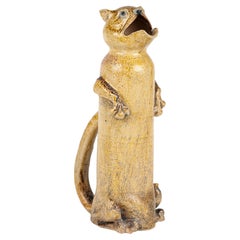
Martin Brothers Rare Large Tall Grotesque Spoon Warmer Jug
By Martin Brothers
Located in Bishop
s Stortford, Hertfordshire
An extremely rare and probably unique, tall grotesque figural ewer or spoon/ladle warmer by Robert Wallace Martin for the Martin Brothers dated 1880. The stoneware ewer is of tall cy...
Category
Antique 1880s British Arts and Crafts Pitchers
Materials
Stoneware
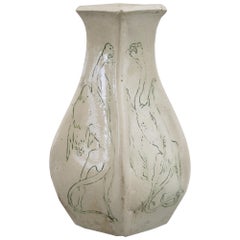
A G Sangwell Martin Brothers Pottery Grotesque Dragons Tribute Art Pottery Vase
By Martin Brothers
Located in Bishop
s Stortford, Hertfordshire
An unusual and rare Martin Brothers tribute vase by A G Sangwell, but recorded by the collector as A E Sangwell the owner of a hardware shop at 25 Featherstone Road (confirmed throug...
Category
Vintage 1930s English Arts and Crafts Vases
Materials
Pottery
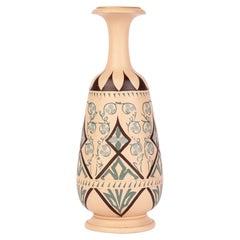
Minnie G Thompson Doulton Lambeth Pigment Painted Vase, 1883
By Doulton Lambeth
Located in Bishop
s Stortford, Hertfordshire
A very unusual Aesthetic Movement biscuit fired Doulton Lambeth stoneware vase pigment hand-painted with stylized foliage and geometric designs by Minnie G Thompson...
Category
Antique 1880s English Aesthetic Movement Vases
Materials
Stoneware
You May Also Like
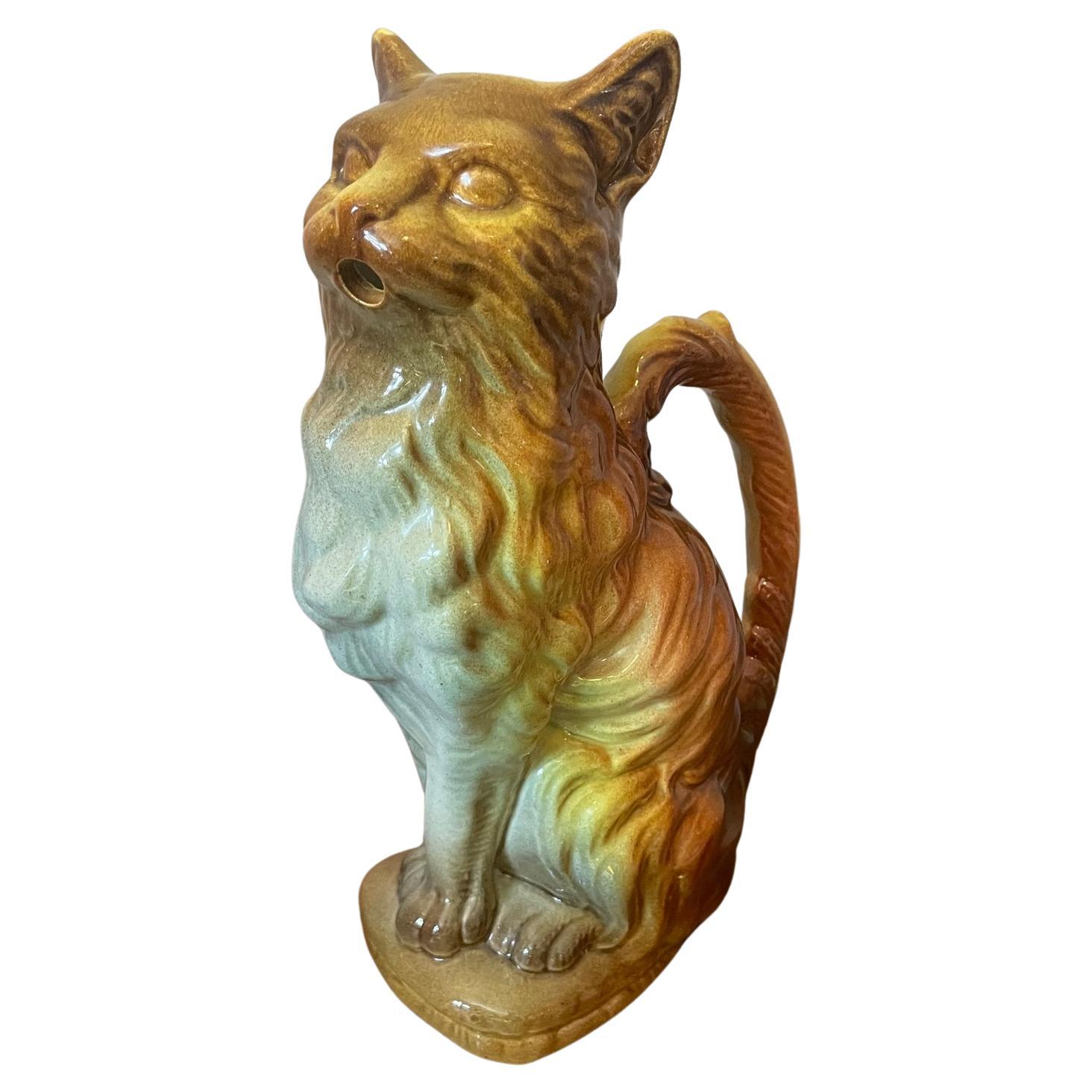
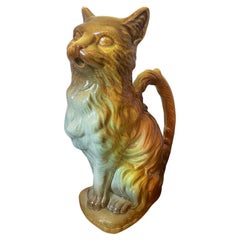
Early 20th Century French Barbotine Cat Pitcher, 1900s
Located in LEGNY, FR
Very nice 20th century French Ceramic Barbotine Cat pitcher.
Stamped 7486 France under. Brown and green colors.
Very good condition.
Category
Antique Early 1900s French Pitchers
Materials
Ceramic
$427 Sale Price
20% Off
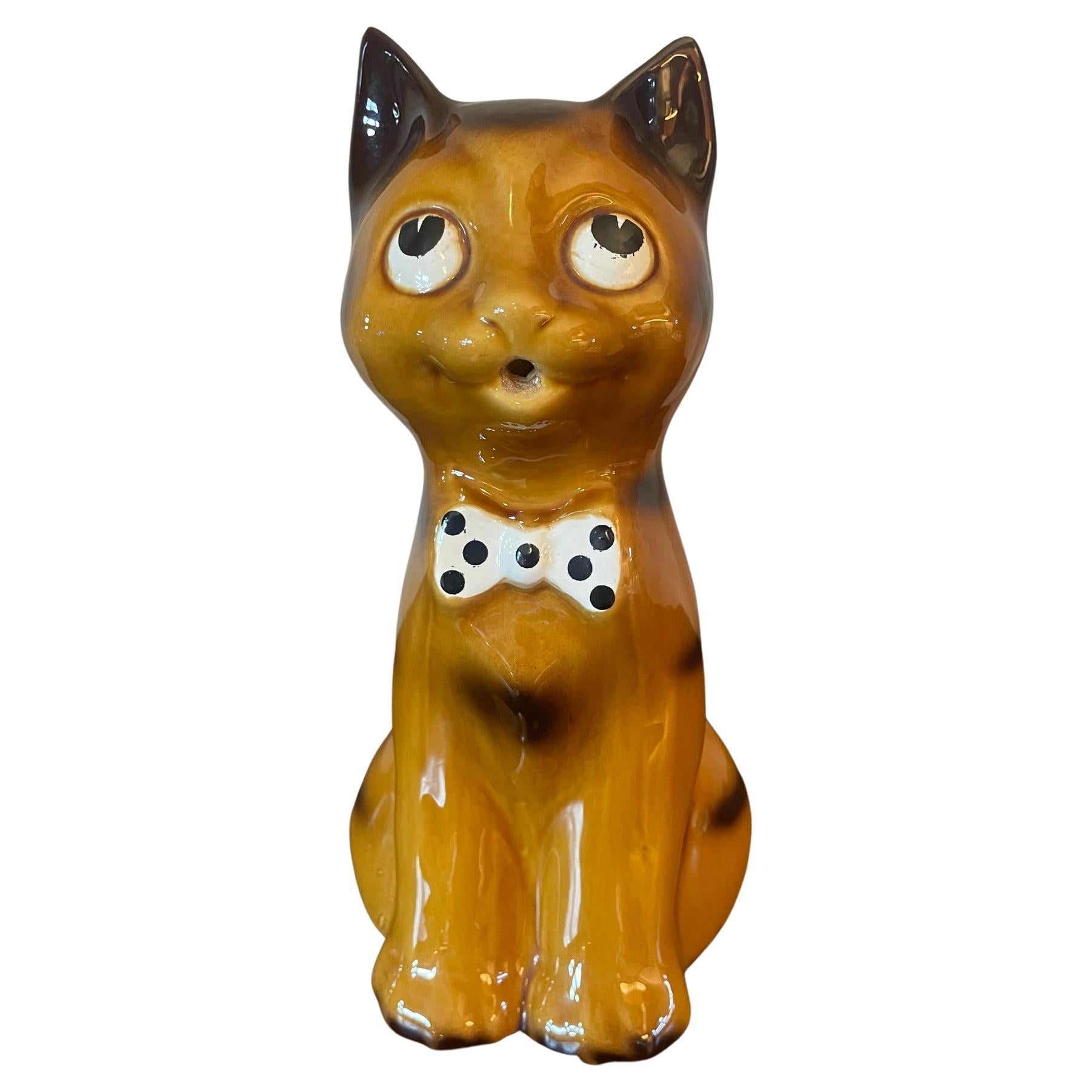
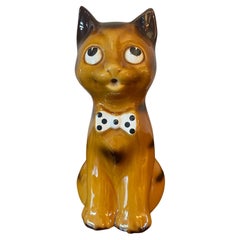
20th Century French Vintage Ceramic Cat Pitcher, 1960s
Located in LEGNY, FR
Very nice vintage ceramic pitcher with a cat shape rolling his eyes up. Large dimension.
(small scratches on the ears) Good general condition.
Category
Vintage 1960s French Ceramics
Materials
Ceramic
$332 Sale Price
20% Off
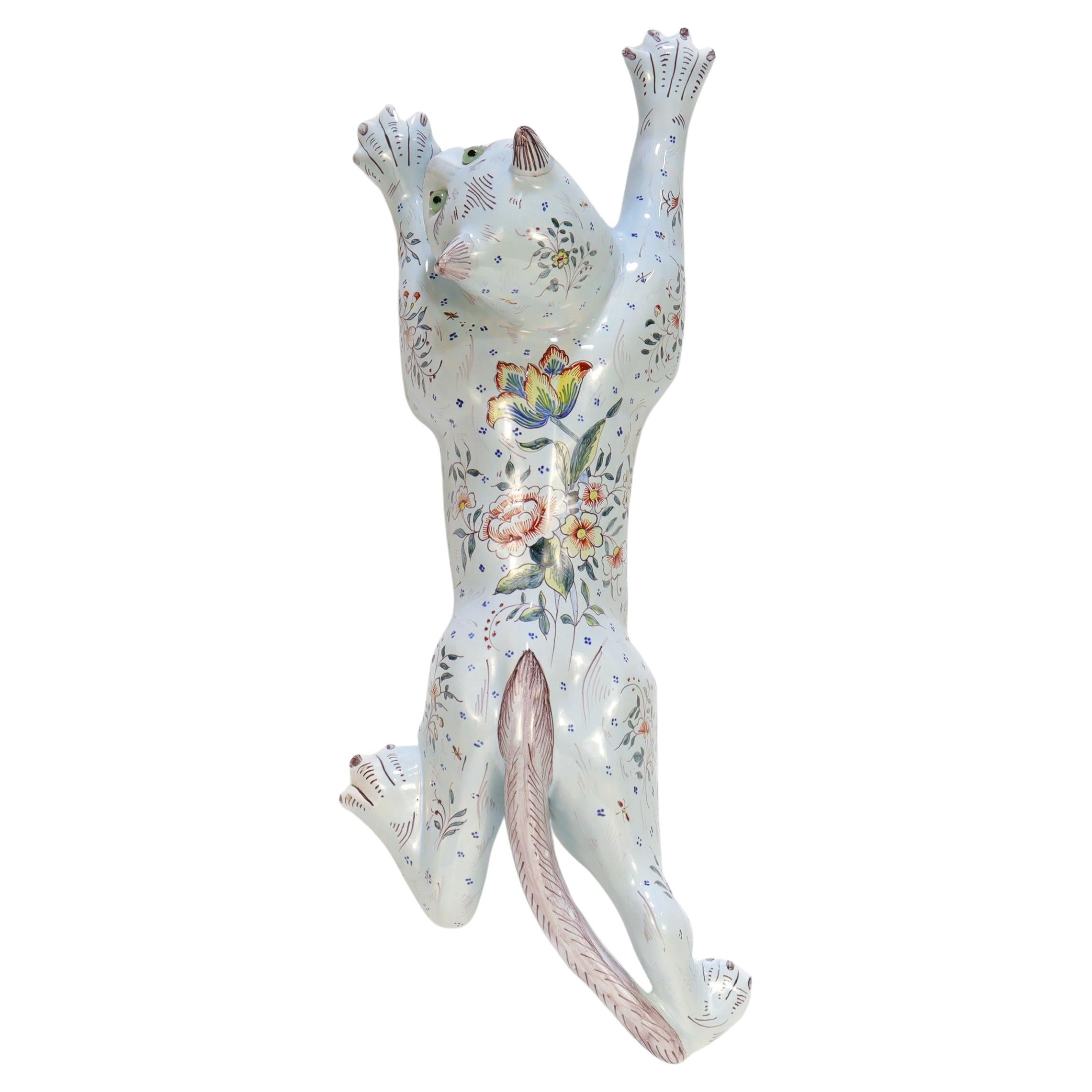
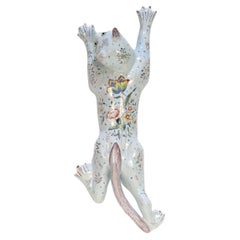
French Desvres Faience Figural Cat Wall Pocket Vase or Bouquetière by Geo Martel
By Desvres, Quimper Faience Pottery, Émile Gallé
Located in Philadelphia, PA
A fine French faience wall pocket / vase.
By Geo Martel, founder of the Gaëtan Level ceramics factory in Desvres starting circa 1900.
In the form of a cat climbing with floral mark...
Category
Early 20th Century French Delft and Faience
Materials
Faience
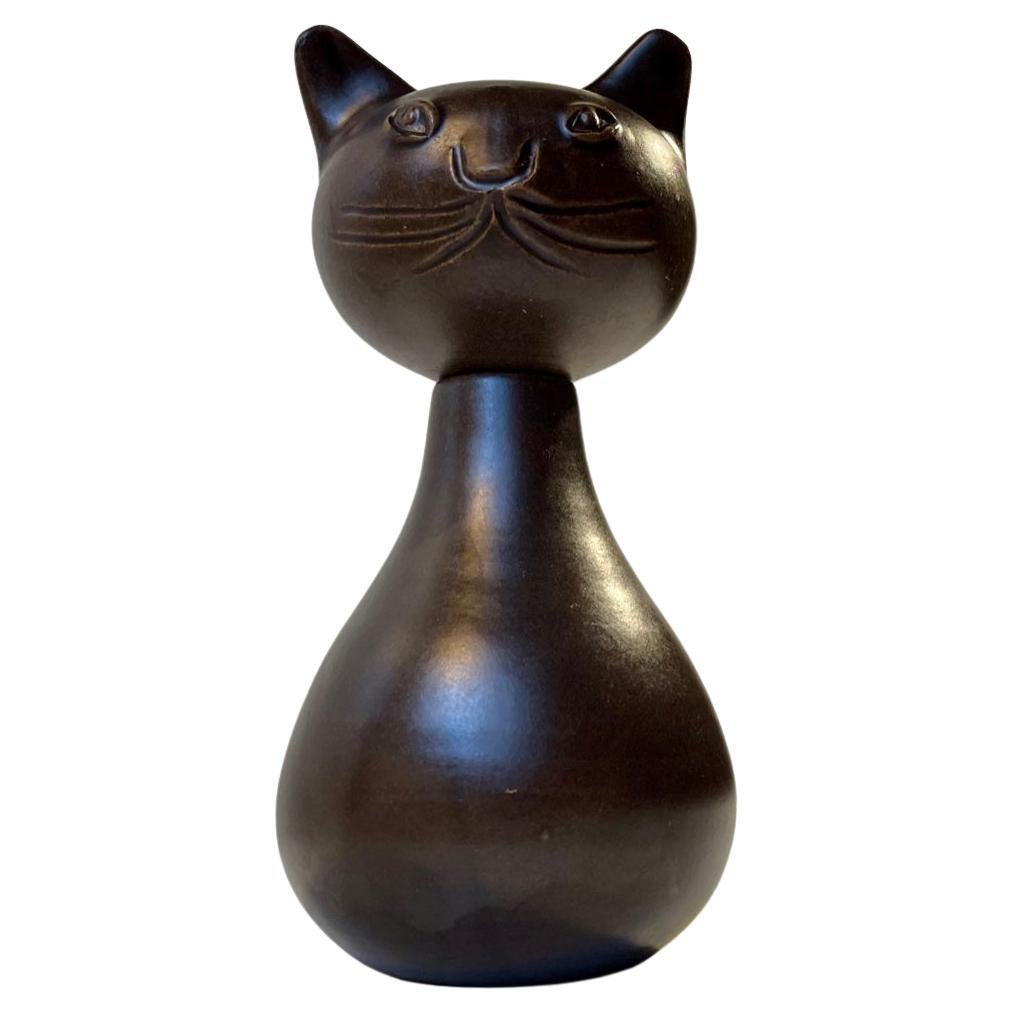
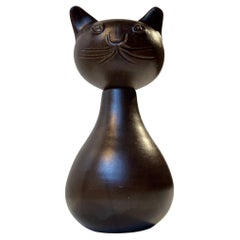
Scandinavian Glazed Ceramic Cat Decanter or Vase by Bjerre, 1970s
Located in Esbjerg, DK
Unusual piece unique from the danish ceramist Bjerre. A dark brown glazed ceramic cat that is intended as a vase/decorative object but also can be used as a decanter. It is signed Bj...
Category
Vintage 1970s Danish Scandinavian Modern Vases
Materials
Ceramic
$238 Sale Price
44% Off
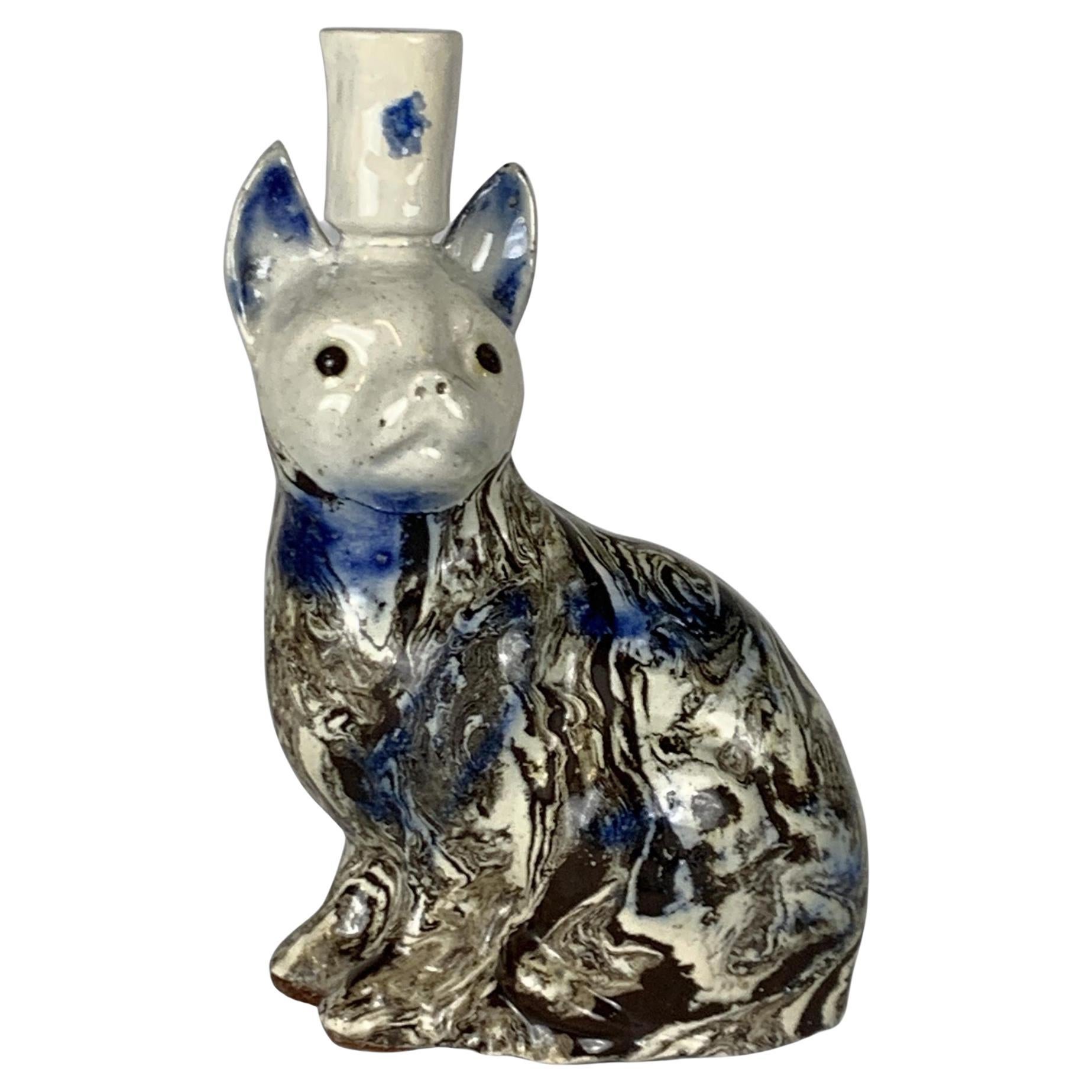
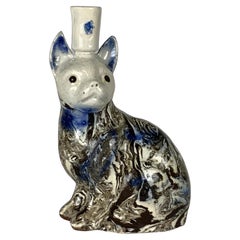
Salt-Glazed Solid Agateware Cat with Candle Holder, Staffordshire, Mid-18th C.
By Staffordshire
Located in Katonah, NY
Staffordshire, England, circa 1745 – 1760
This charming and unusual figure depicts a seated cat, its body marbled in tones of buff, grey, and warm brown, the patterns flowing like fur beneath a translucent salt glaze.
From the crown of its head rises a small candleholder—an enchanting, functional variation that transforms the cat into a decorative light for the Georgian home.
The salt-glazed surface has a gentle satin sheen, enlivened by a cobalt wash brushed across the ears and shoulders, a subtle touch of colour that draws the eye. The figure is compact and beautifully balanced, exuding both humor and grace: a work of wit and craftsmanship meant to charm and amuse as much as to illuminate.
As a pair, this cat with candleholder and its companion cat carrying a mouse form a dialogue of light and life—one playful, one practical—representing the Staffordshire potters’ genius for turning everyday subjects into artful curiosities.
Attribution and Significance
Within the history of English ceramics, agateware animals represent the marriage of experimentation and domestic charm.
They were objects of conversation—proof of a potter’s technical mastery and a household’s refinement.
This cat, with its delicate candleholder, captures that artistic playfulness and innovation.
The glaze’s clarity, the elegant pose, and the subtle marbling make it not only an artifact of mid-18th-century Staffordshire but also a small masterpiece of whimsy and craft.
Scholarly Analysis and Authentication
The figure is made from laminated clays of contrasting colors, known as laid agate, a technique perfected in Staffordshire workshops during the 1740s and 1750s.
Strata of buff, pale grey, and iron-bearing brown clay were rolled together, pressed into a two-part mold, and luted along the spine before firing.
The cat’s body thus shows true through-body marbling: the veining continues through the thickness of the clay, not merely applied on the surface.
The candle socket, made from a single buff clay rather than agate, was luted to the head before glazing.
This practical choice prevented distortion during firing and was a typical workshop economy seen in other mid-18th-century functional animal forms.
The piece was salt-glazed in a wood- or coal-fired kiln into which common salt was introduced near peak temperature.
Sodium vapor combined with the silica of the clay to form a thin, glassy coating.
Here, the glaze is smooth and even, suggesting the cat was fired within a protective sagger.
The underside of the figure is open, revealing the pressed-clay interior.
Two or three minute stilt contacts are visible on the bottom ledge, confirming that the figure rested on kiln props during firing rather than being supported from beneath a closed base.
The cobalt wash was brushed under the glaze before firing.
It fuses permanently into the surface, creating soft haloes of blue wholly consistent with decoration on salt-glazed figures from the Whieldon circle circa 1750-1760.
Later 19th-century reproductions employ overpainted enamels that sit atop the glaze.
The open underside, authentic stratified body, integrated socket, and original cobalt staining collectively identify this as a genuine product of Staffordshire’s mid-18th-century agateware tradition, most plausibly from the orbit of Thomas Whieldon at Fenton Vivian or a closely related potter.
The measured height, modelling, and marbling correspond closely to examples in the Burnap Collection (nos.. 362–363, Nelson-Atkins Museum) and Sotheby’s (2015) — “A Staffordshire agateware cat-form candlestick, circa 1755.
Provenance / Condition:
Current Condition: Excellent, with one ear repaired at the tip and restoration at the top of the candleholder; the glaze remains bright and continuous across the body and socket.
References:
Burnap Collection, English Pottery 1675–1825, nos. 362–363.
Sotheby’s (2015) — “A Staffordshire agateware cat-form candlestick, circa 1755.
Christie’s, London 2010, lot 82.
1stDibs “Staffordshire Agateware Pottery Saltglaze Figure of a Cat,” item ref LU95812370442 Price: $4,482.16
Chipstone Foundation, Marbled Agateware: Techniques and Identification, 2005.
Henry Sandon, Staffordshire Pottery, 1970, pp. 52–54.
John Howard Antiques, Antique Agateware...
Category
Antique Mid-18th Century English Folk Art Animal Sculptures
Materials
Stoneware
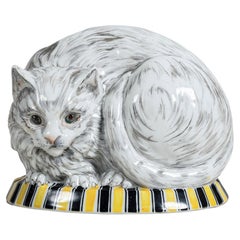
Enamel porcelain cat table lamp by PB Paris, France, circa 1940.
Located in Buenos Aires, Buenos Aires
Enamel porcelain cat table lamp by PB Paris, France, circa 1940.
Category
Vintage 1940s French Art Deco Table Lamps
Materials
Enamel
More Ways To Browse
Antique Cream Furniture
Antique Funnel
Antique Coalport
Antique Copeland
England Coalport
Coalport Hand Painted
Antique Milk Churns
Milk Churn
Antique Fan Vases
Art Deco Japanese Awaji Pottery Vase
Art Glass Floor Vase
Austrian Pottery Vases
Barbini Murano Scavo
Barovier Pink Vase
Brass Bud Vase
Broken Vase
Bronze Vase Japan Edo
Brule Parfum