Items Similar to Émile Gallé Art Nouveau Enamel Soliflore w/ Dragonfly
Thistles, Nancy, c. 1900
Want more images or videos?
Request additional images or videos from the seller
1 of 17
Émile Gallé Art Nouveau Enamel Soliflore w/ Dragonfly
Thistles, Nancy, c. 1900
$16,500
£12,530.34
€14,395
CA$23,261.11
A$24,731.37
CHF 13,373.98
MX$294,187.14
NOK 167,528.06
SEK 153,002.96
DKK 107,535.62
About the Item
Art Nouveau
Émile Gallé
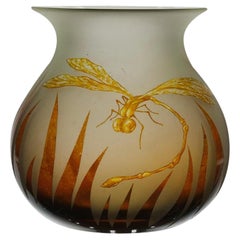
Dragonfly and Thistles Soliflore (Bud Vase)
Multi-Color Enamel over Clear Art Glass
Nancy, France
Circa 1900
DIMENSIONS
Height: 3.25 inches
Max. Diameter: 2.75 inches
Opening Diameter: 0.75 inches
MARKINGS
Signed in enamel at the base, bearing the mark “E. Gallé de Nancy.”
MATERIALS
Multi-color enamel on clear art glass
CONDITION
Excellent condition, with no chips, cracks, or restorations.
ABOUT
“The aim of my work is the study of nature, the love of nature's art and the need to express what one feels in one's heart.” – Emile Gallé
A rare and exquisite cabinet-sized soliflore by Émile Gallé, exemplifying the highest artistic standards of early French Art Nouveau. The vase displays an exceptional and sculpturally sophisticated form—its body conceived as a sphere discreetly contained within a smaller cube—resulting in sensuously rounded, perfectly balanced contours that are both visually arresting and elegantly understated.
The clear glass body is decorated with finely rendered, hand-applied enamels depicting a dragonfly in flight among mountain grasses and thistles—a lyrical theme central to Gallé’s celebration of the natural world. The composition is executed with subtle tonal gradations and refined brushwork, capturing both the delicate movement and the ephemeral beauty of the scene.
A museum-quality example, notable for its rare form, poetic decoration, and intimate scale. A superb addition to any serious Art Nouveau or Gallé collection.
ABOUT ARTIST
Émile Gallé Gallé (French, 1846 – 1904)
Emile Galle was a French glass and ceramic designer who combined art and botany. Most of his glass vases are created in Art Nouveau style. Born on May 4, 1846 in Nancy, France, Émile Gallé seemed destined for a career in glassmaking. Nancy was well-established for its glass artistry, and his father, Charles Gallé was an established faïence (ceramic) and glassmaker with his own successful manufactory, the Maison Gallé-Reinemer. It would be here under the guidance of his father that the young Emile began to learn the art of glassmaking while simultaneously indulging his academic interests in philosophy, botany and chemistry. In 1867, Gallé joined his father working full-time at the Maison.
Gallé's glasswork, even at its earliest stages, was heavily influenced by nature, with his very first pieces incorporating enameled floral motifs painted upon clear glass. He was an avid botanist his entire life, collecting plants, flowers, and insects from which to study and draw inspiration. He was even elected Secretary-General for Nancy's Société centrale d'horticulture.
Gallé traveled throughout Europe studying works at museums and private institutions, gaining insight from ancient glass antiquities to Japonesque masterpieces, and everything in between. It would be Gallé’s trip to the British Museum in 1871 that would alter the course of his art career. Enamored by the famed ancient Roman cameo glass artifact known as the Portland Vase, the intrepid artist began experimenting with cameo glass upon his return to Nancy.
His melding of ancient tropes with modern technology led to the evolution of Gallé’s most incredible and distinguishable oeuvre. Color was a dominant force in all his designs. Galle’s method of layering various colors of glass and exposing the base layers via precise acid etching gave birth to some of the French glass master’s most memorable creations. Layering metallic foils between the colored glass prompted the discovery of exceptional highlighting effects that breathed life into Gallé’s naturalistic motifs, and the incorporation of air bubbles into the molten glass added a textural element never before seen in the medium. He even continued in his experimentations with enamel, mixing it with metal oxides to create absolutely breathtaking, glistening effects that were revealed only in the final firing.
Taking all of his revelations into account, Gallé had the ability to create the most picturesque landscapes and give life to any flora or fauna known to man within his majestic glass art. His showing at the 1878 Exhibition Universelle and a decade later at the 1889 Exhibition catapulted Gallé to international fame. His organic, flowing patterns captivated the global audience and effectively gave relevance to the burgeoning Art Nouveau movement.
Along with Louis Majorelle, Auguste and Antonin Daum and other pioneers in Art Nouveau, Gallé founded the ç to expand the scope of the Art Nouveau movement. The institution had the goal of blending artistry with industry from all areas of decorative arts and making arts, or art deco, more accessible for people from all walks of life, not just the elite. Gallé served as the first president of the school until his death in 1904.
Here is a brief timeline of Emile Gallé’s life as it relates to art glass and his achievements in the field.
Most people want to know why Gallé art glass is so much more valuable than almost all other art glass. The short answer is that it is valuable because it is always in high demand. Today we all know that glass can be a form of artistic expression. Back in the 1870s when Gallé got started there was virtually no glass being made just for the sake of art. The “art glass” that was being made was not especially interesting or inventive. Gallé introduced bold colors and subject matters and combined them to make expressive and telling objects of art.
1846 – Émile Gallé mile Gallé is born
1867 – Émile Gallé mile Gallé e starts working for his father’s faience and glass factory
1873 – Gallé started his own glass studio
1877 – Gallé took over his father’s studio
1878 – Gallé won the Grand Prix at the Paris Exhibition
1889 – Gallé displays his glass designs at The Paris International Exposition
1894 – Gallé’s first full production glass factory was established in Nancy, France
1900 – Gallé wins two top awards at The International Exhibition in Paris
1904 – Émile Gallé mile Gallé passes away from Leukemia at 58 years old.
1905 – Émile Gallé Gallé’s wife continues to make art glass but these works are marked with a star after
1908 – Gallé book “Écrits pour l'art” 1884–89 ("Writings on Art 1884–89") is published posthumously.
1919 – Émile Gallé Gallé’s son-in-law, Paul Perdizet, continues glass making under the Gallé name
1936 – All authentic productions of Gallé art glass were discontinued.
- Dimensions:Height: 3.25 in (8.26 cm)Diameter: 2.75 in (6.99 cm)
- Style:Art Nouveau (Of the Period)
- Materials and Techniques:
- Place of Origin:
- Period:1900-1909
- Date of Manufacture:ca. 1900
- Condition:Wear consistent with age and use. We make our best effort to provide a fair and descriptive condition report. Please examine photos attentively, as they are part of the description. Send us a message to request more details or discuss price.
- Seller Location:New York, NY
- Reference Number:1stDibs: LU2819347650522
About the Seller
5.0
Platinum Seller
Premium sellers with a 4.7+ rating and 24-hour response times
Established in 1993
1stDibs seller since 2017
93 sales on 1stDibs
Typical response time: 2 hours
- ShippingRetrieving quote...Shipping from: New York, NY
- Return Policy
More From This Seller
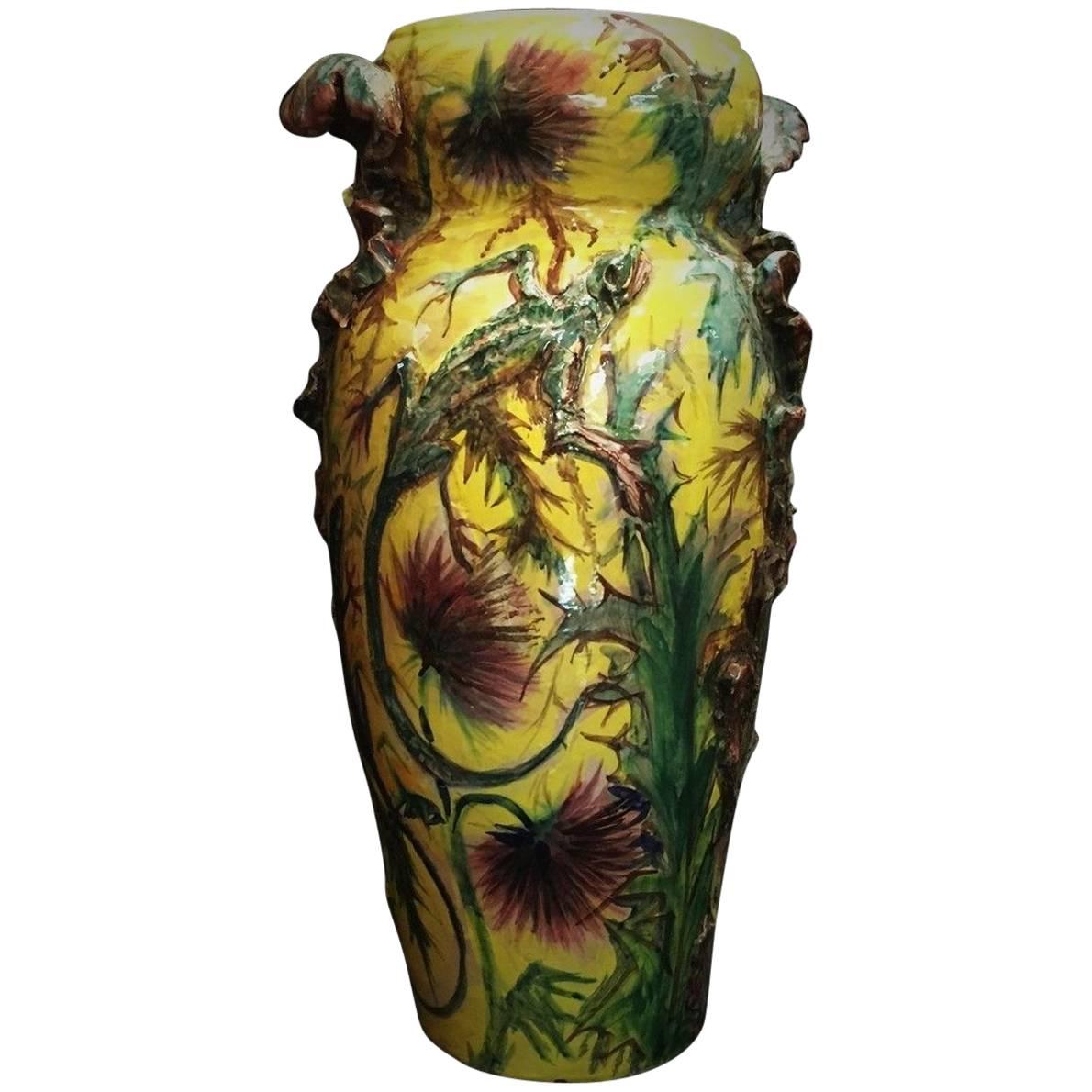
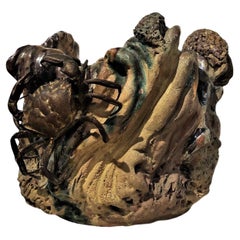
View AllFrench Art Nouveau Majolica Vase with Thistles and Lizards, circa 1900
Located in New York, NY
This beautifully designed and highly decorative Art Nouveau ceramic vase is outstanding by all measures. It is very impressive and fabulously rendered in a most unusual technique, co...
Category
Antique Early 1900s French Art Nouveau Vases
Materials
Majolica
French Art Nouveau Iridescent Stoneware
Bronze Vase or Cachepot, ca. 1900s
Located in New York, NY
French Art Nouveau
Ocean Life Theme
Vase Cachepot
Iridescent Stoneware & Patinated Bronze Crab Appliqué
ca. 1900s
ABOUT
We present here a most unusual and utterly decorative Fren...
Category
Antique Early 1900s French Art Nouveau Vases
Materials
Stoneware
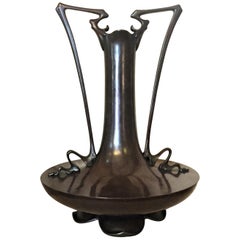
Japanese Art Nouveau Meiji Period Patinated Bronze Vase, circa 1900
Located in New York, NY
Although unmarked, this rare and important, grand but at the same exquisite patinated bronze vase has just a very few little details, defying the shape of the handles, as well as the...
Category
Antique Early 1900s Japanese Art Nouveau Vases
Materials
Bronze
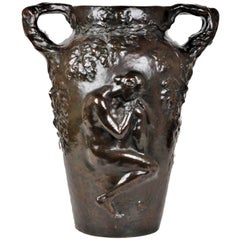
Charles Vital-Cornu, French Art Nouveau Bronze Sculptural Floral Vase, 1900s
By Charles Vital-Cornu
Located in New York, NY
Charles Vital-Cornu (French, 1851 - 1927), Jouffroy’s and Pils’ pupil, he acquired a skillfulness mastery in carving marbles and producing bronzes. He used several patinas in his production. Indeed, if his pieces' embodiments are often golden-brown colored, the hollow part are darker. His figures, hands, faces, and bodies are of a great quality.
Charles Vital-Cornu had participated in numerous annual ‘‘Salons’’ organized in Paris by ‘‘la Société des Artistes Français’’ where he got several awards, such as a mention of Honor in 1880 and 1881, a third class medal in 1882, a travelling grant in 1883, a second class medal in 1886, a bronze medal at the 1889 World Fair and, finally, a silver medal at the 1900 World Fair at the Grand palace...
Category
Antique Early 1900s French Art Nouveau Vases
Materials
Bronze
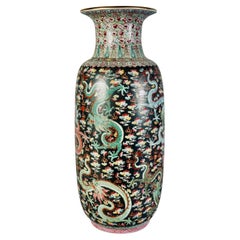
Chinese Art Deco Famille-Rose Vase with Flower and Dragon Motif, Ca. 1920
Located in New York, NY
Chinese Art Deco Famille-Rose Vase with Flower and Dragon Motif, Ca. 1920
DIMENSIONS
Height: 24 inches
Diameter: 10 inches
Category
Vintage 1920s Chinese Japonisme Vases
Materials
Porcelain
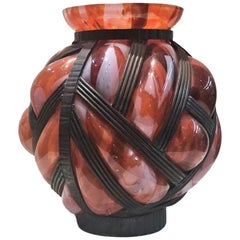
French Art Deco Art Glass and Wrought Iron Flower Vase, circa 1920s
By Charles Schneider
Located in New York, NY
Although unsigned, this Art Deco masterpiece in red and white art glass and wrought iron most probably by Charles Schneider.
Charles and Ernest Schneider were a generation younger...
Category
Vintage 1920s French Art Deco Vases
Materials
Wrought Iron
You May Also Like
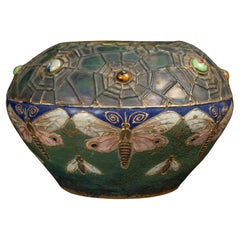
Art Nouveau Gres Bijou Butterfly
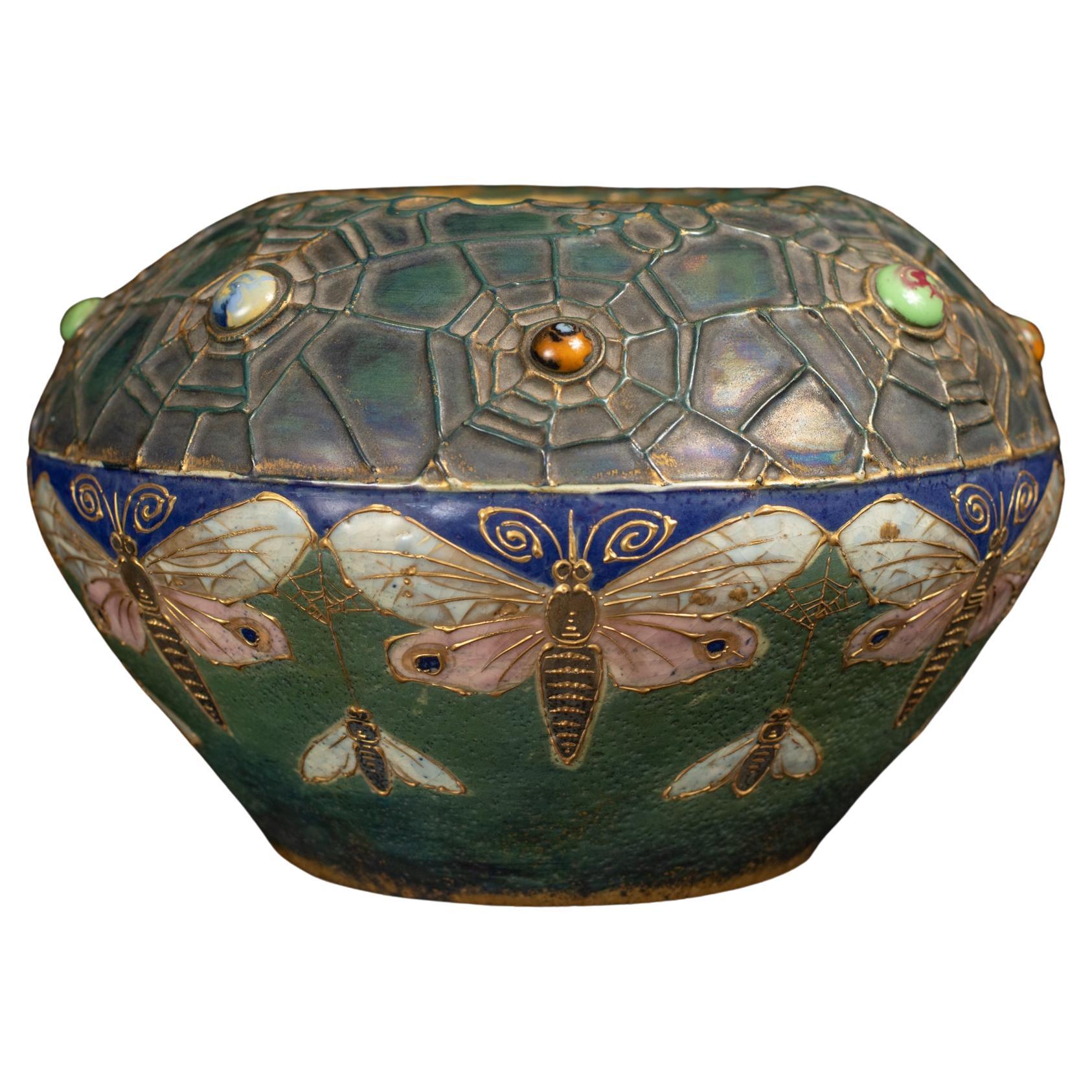
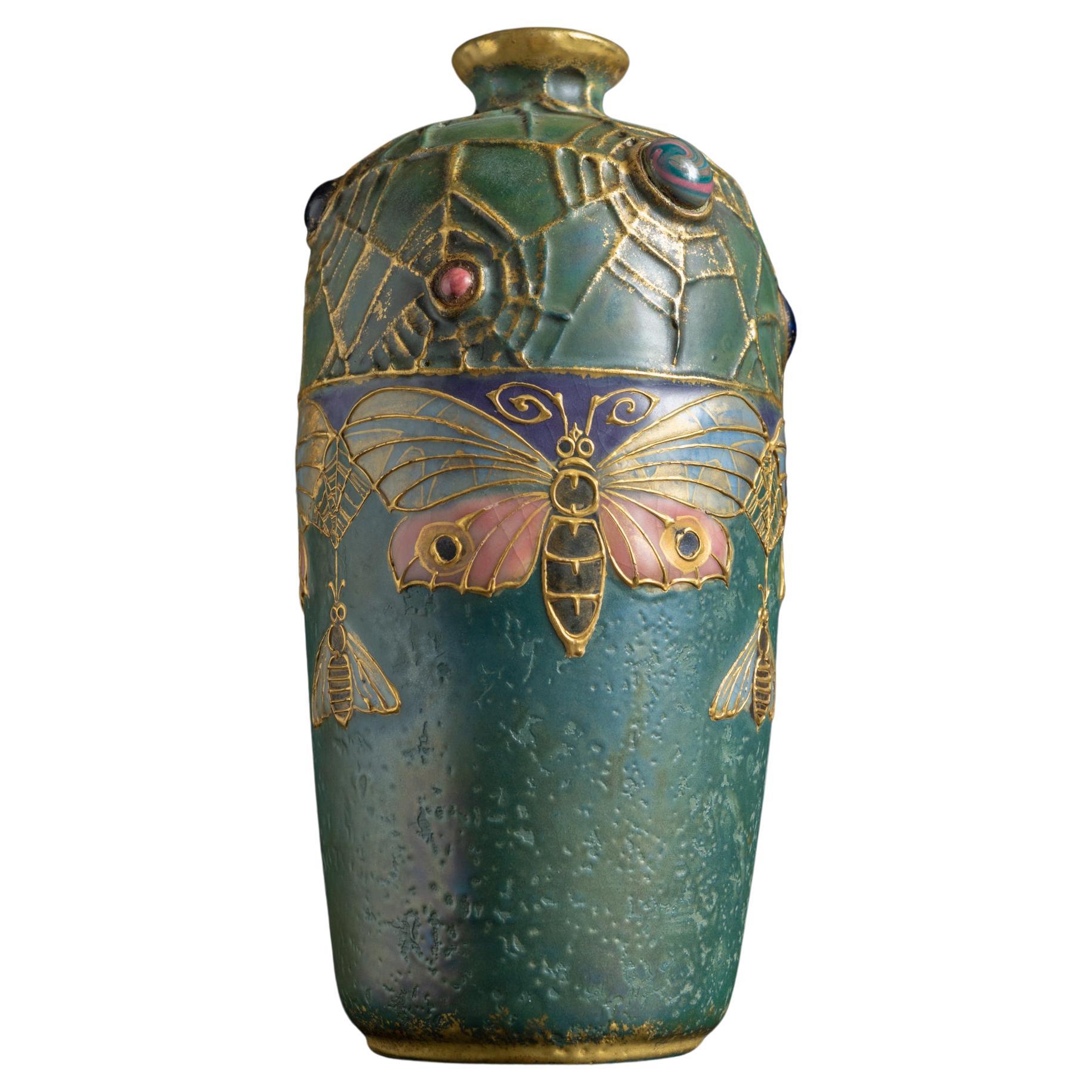
Spiderweb Bowl-Shaped Vase by RStK Amphora
By Reissner Stellmacher
Kessel
Located in Palm Beach, FL
Note: We highly recommend shipping through 1stDibs for its cost effectiveness, full insurance coverage, and reliable handling. While standard parcel services are an option, the defau...
Category
Antique Early 1900s Austrian Art Nouveau Vases
Materials
Earthenware, Glass
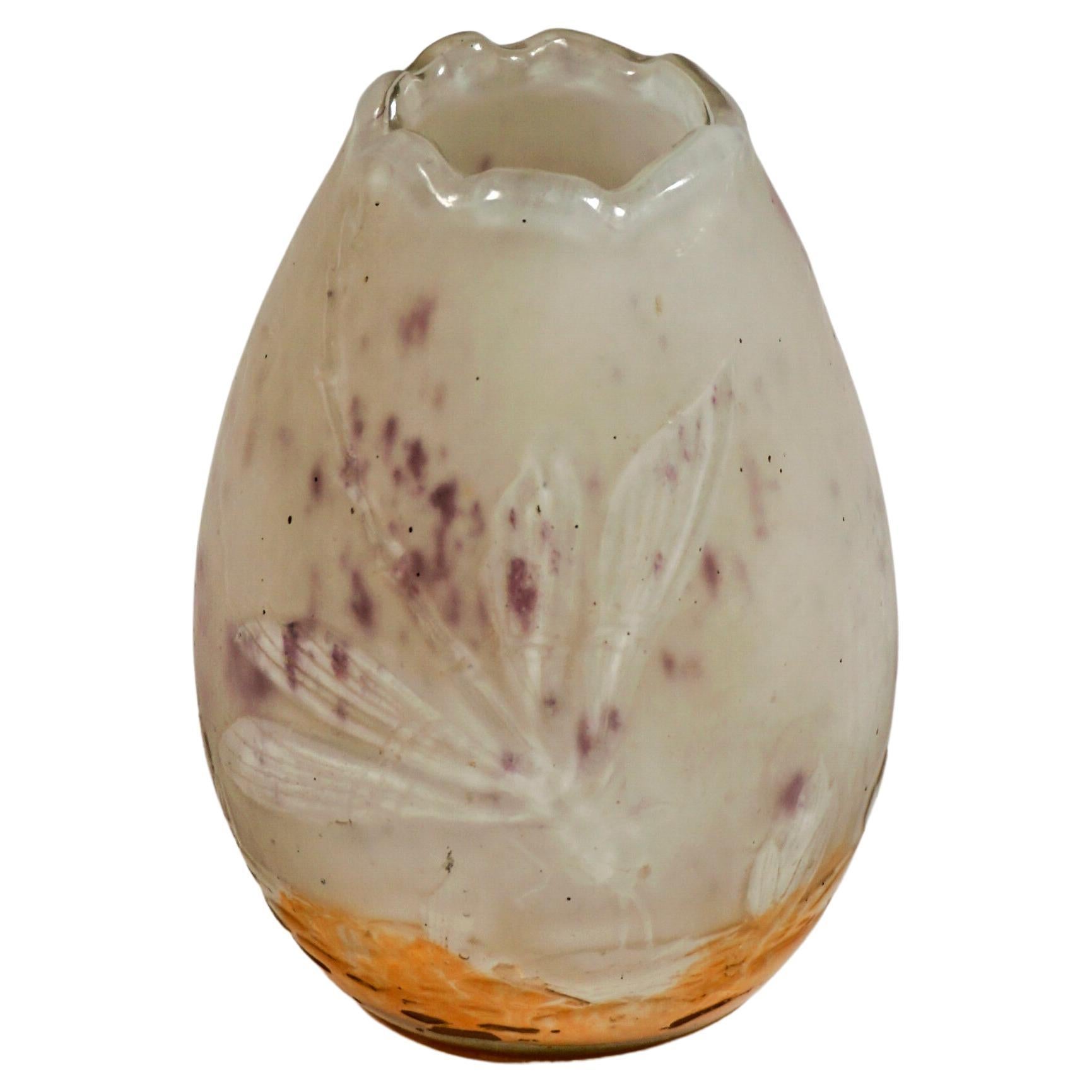
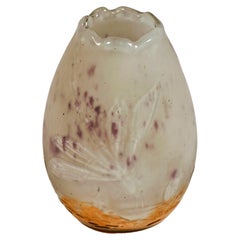
Daum Nancy Art Nouveau Cameo Egg-Shaped Vase with Dragonfly Decor, France c 1895
By Daum
Located in Vienna, AT
Very rare and exceptional piece of Art Nouveau glass:
Egg-shaped vase with irregularly notched mouth rim, colorless glass with flaky powder melts in grayish-white, violet and yellow...
Category
Antique 1890s French Art Nouveau Glass
Materials
Glass
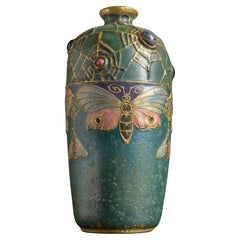
Art Nouveau Gres Bijou Butterfly
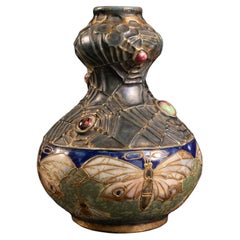
Spiderweb Semiramis Vase by RStK Amphora
By Reissner Stellmacher
Kessel
Located in Palm Beach, FL
Note: We highly recommend shipping through 1stDibs for its cost effectiveness, full insurance coverage, and reliable handling. While standard parcel services are an option, the defau...
Category
Antique Early 1900s Austrian Art Nouveau Vases
Materials
Earthenware, Glass
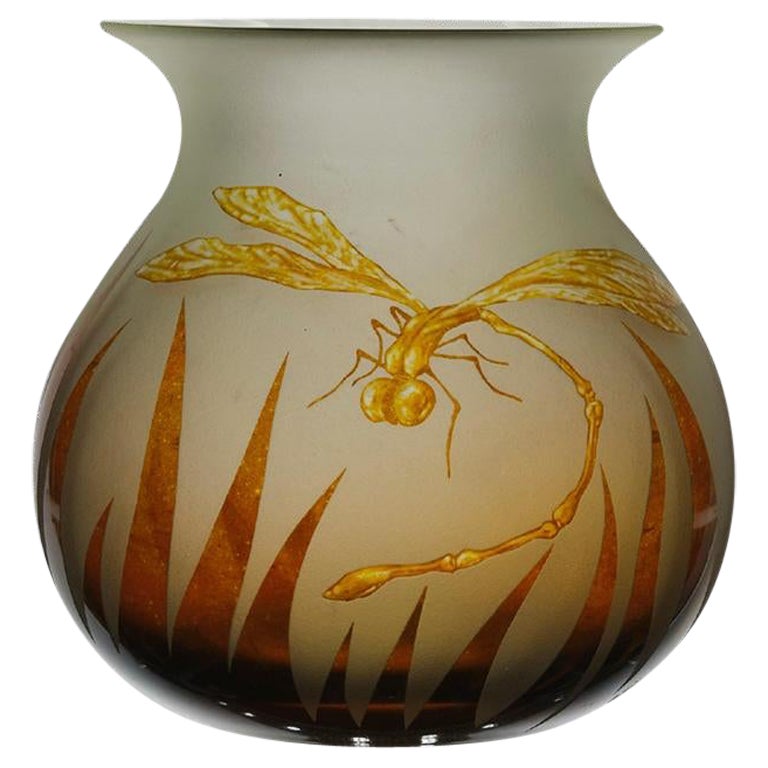
Limited Edition 21st Century Cameo Glass " Dragonfly Vase" by StanMir GR
Located in London, GB
An attractive late 20th Century frosted glass vase cased and acid cut with a decoration of two flying dragonflies amongst water reeds with very fine colour and detail, signed StanMir...
Category
21st Century and Contemporary Polish Art Deco Vases
Materials
Glass
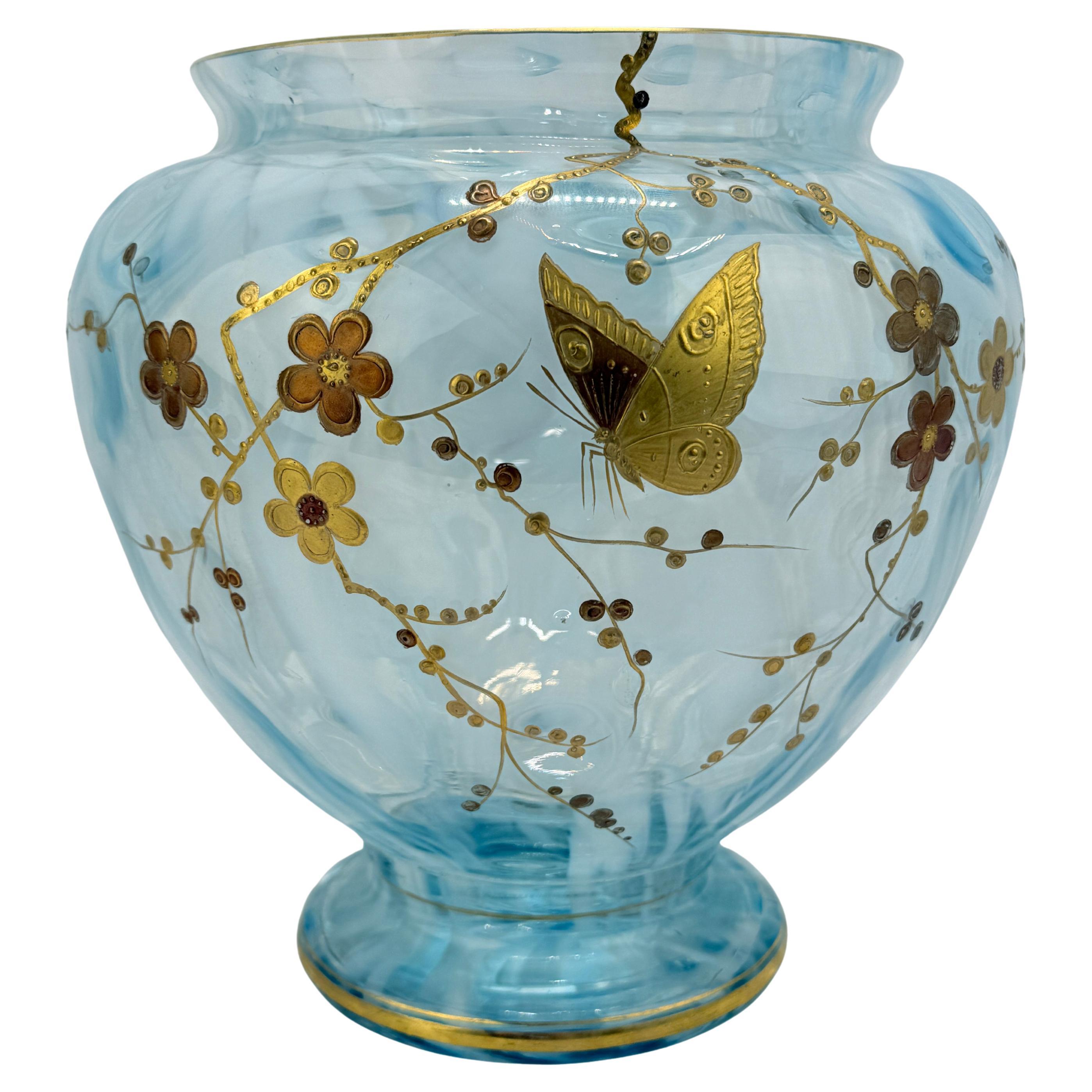
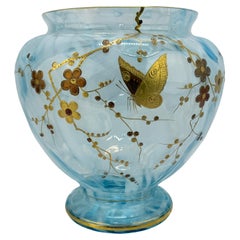
Harrach Bohemian Art Glass Vase, Gilt Butterfly
Floral Enamel C. 1900
By Harrach Glassworks
Located in Atlanta, GA
This exquisite art glass vase was produced by the renowned Harrach Glassworks, one of the oldest and most esteemed glass manufacturers in Bohemia, known for their exceptional craftsm...
Category
20th Century Czech Art Nouveau Vases
Materials
Enamel
$1,000 Sale Price
20% Off
Art Nouveau Gres Bijou Butterfly
Spiderweb Gourd-Shaped Vase by RStK Amphora
By Reissner Stellmacher
Kessel
Located in Palm Beach, FL
Note: We highly recommend shipping through 1stDibs for its cost effectiveness, full insurance coverage, and reliable handling. While standard parcel services are an option, the defau...
Category
Antique Early 1900s Austrian Art Nouveau Vases
Materials
Earthenware, Glass