Items Similar to English Hexagonal Ironstone Vases
Covers, Mason
s Ironstone or Ashworth
Want more images or videos?
Request additional images or videos from the seller
1 of 18
English Hexagonal Ironstone Vases
Covers, Mason
s Ironstone or Ashworth
$8,500per set
£6,490.44per set
€7,389.60per set
CA$11,935.34per set
A$13,047.67per set
CHF 6,902.80per set
MX$156,136.29per set
NOK 87,828.24per set
SEK 80,397.87per set
DKK 55,195.72per set
About the Item
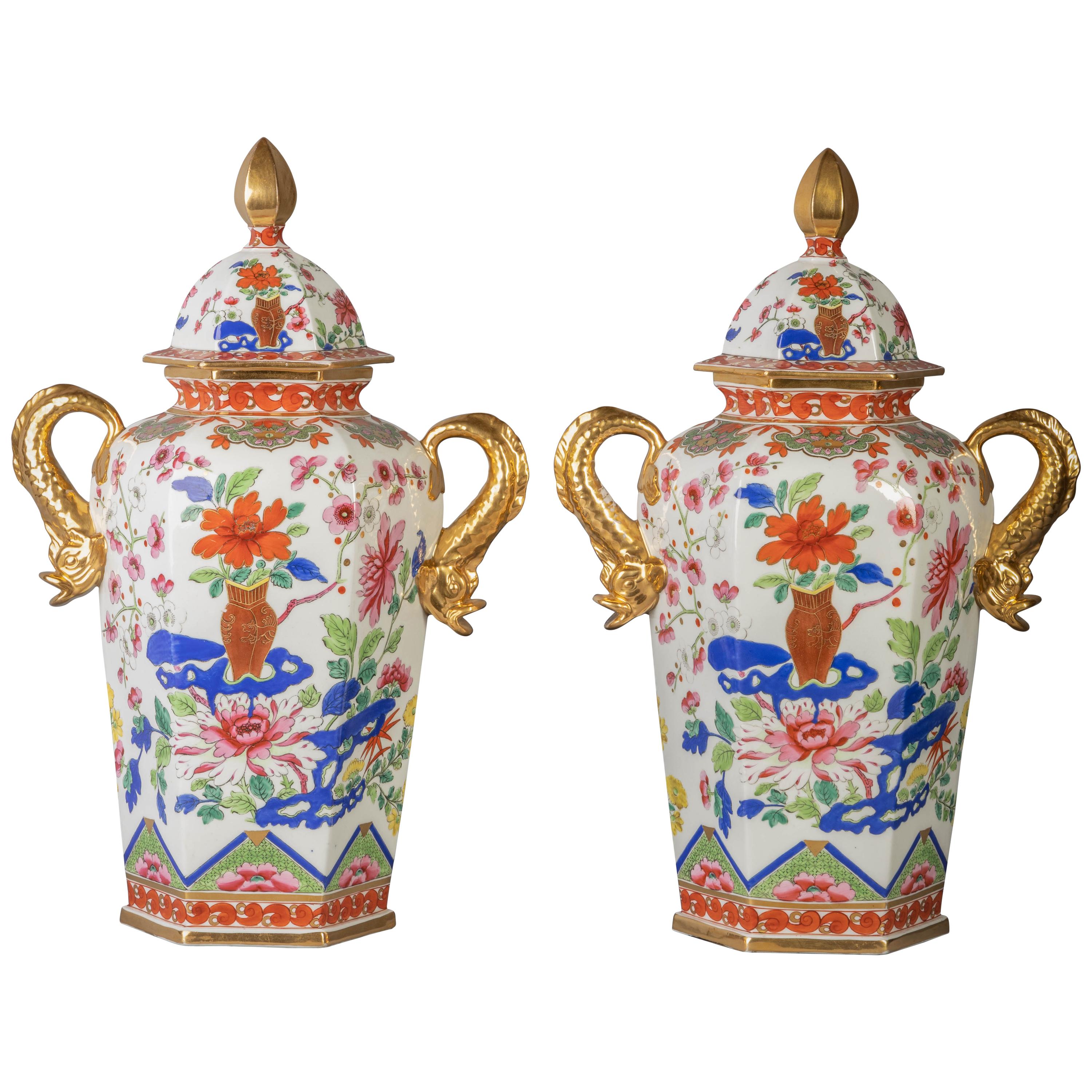
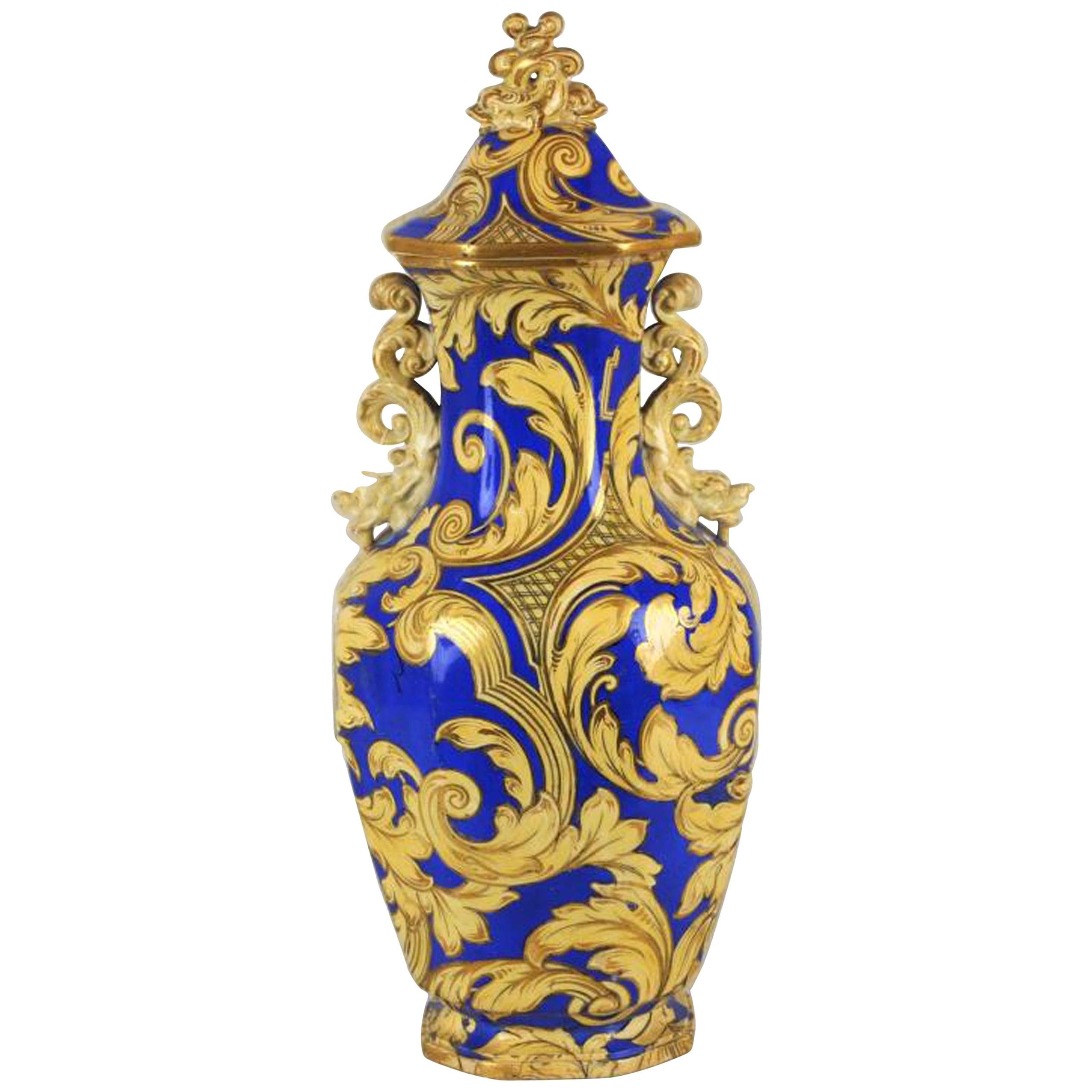
Eclectic Grandeur: Hexagonal Ironstone Potpourri Vases
Object: Pair of Potpourri Vases and Covers (Potpourri Jars)
Maker: Attributed to Mason's Ironstone or Ashworth (Staffordshire, England)
Date: Circa 1845
Medium: Ironstone Earthenware, Underglaze Blue Transfer, Overglaze Gilt
Dimensions: 22 inches high x 12 inches wide x 12 inches deep (55.88 cm high x 30.48 cm wide).
Mid-Victorian Fusion and Function
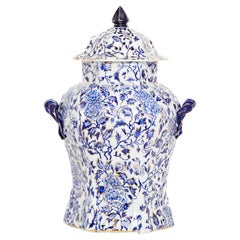
This elegant pair of hexagonal ironstone vases showcases the spectacular visual drama and eclectic taste of the mid-Victorian era. Decorated primarily in underglaze blue with scrolling peony and floral motifs, the pattern directly imitates high-quality 18th-century Chinese porcelain. This traditional blue-and-white print is dramatically highlighted with lavish gilded accents, transforming the quiet Eastern pattern into a bold, statement-making European centerpiece.
The form of the vase itself is a study in cultural and functional fusion. Its structure includes:
Chinese Iconography: The high, pierced covers are surmounted by intricate Foo Dog finials, traditional symbols of protection and good fortune in China.
European Classicism: The handles are fashioned in the form of stylized dolphins, a classical motif commonly used in Regency and Victorian decorative metalwork.
The combination of the durable, British-invented Ironstone body with these ornate global motifs made the vases highly desirable status symbols intended for the drawing rooms and sideboards of wealthy homes.
Historical Context: Ironstone and the Decorative Revival
These pieces are made from Ironstone China, a hard, opaque earthenware developed in the early 19th century by Charles James Mason. Ironstone's strength made it ideal for manufacturing large, heavily decorated objects that could withstand shipping and domestic use, positioning British potters to dominate the market for high-quality, imposing display pieces.
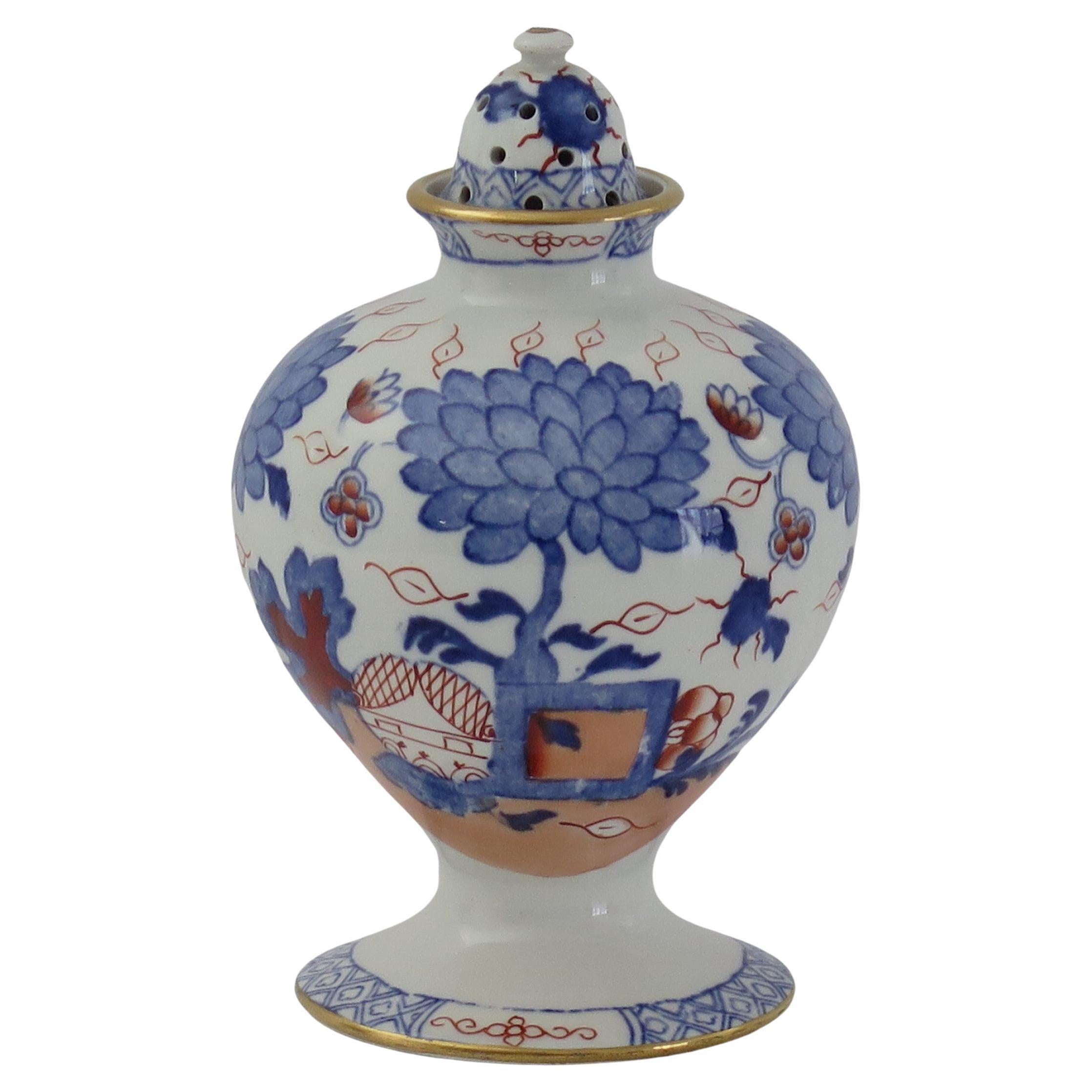
The vases' pierced covers confirm their original purpose as potpourri vases (or potpourri jars), which were functional items used in the Victorian home to hold scented dried flowers and spices, allowing the fragrance to permeate the room through the vented bell-form tops. This combination of size, mixed Eastern/Western motifs, and functional opulence perfectly represents the mid-Victorian revival of Chinoiserie and the luxurious scale of the period's domestic display.
Reference
Samlesbury Hall Anniversary Exhibition and Sale of Mason's Patent Ironstone China, 17th January–February 8, 1987, Lot 55 (For similar shape).
(Ref: NY10610-cirr)
- Creator:Mason s Ironstone (Manufacturer)
- Dimensions:Height: 22 in (55.88 cm)Width: 12 in (30.48 cm)Depth: 12 in (30.48 cm)
- Sold As:Set of 2
- Style:Early Victorian (Of the Period)
- Materials and Techniques:
- Place of Origin:
- Period:
- Date of Manufacture:1845
- Condition:Wear consistent with age and use. Minor structural damages. Small hairline in the neck on the back of one- see last photos.
- Seller Location:Downingtown, PA
- Reference Number:Seller: NY10610-cirr1stDibs: LU861041546742
About the Seller
5.0
Recognized Seller
These prestigious sellers are industry leaders and represent the highest echelon for item quality and design.
Gold Seller
Premium sellers maintaining a 4.3+ rating and 24-hour response times
Established in 1916
1stDibs seller since 2009
432 sales on 1stDibs
Typical response time: 1 hour
Associations
The Art and Antique Dealers League of AmericaAntiques Associations Members
- ShippingRetrieving quote...Shipping from: Downingtown, PA
- Return Policy
More From This Seller
View AllMason
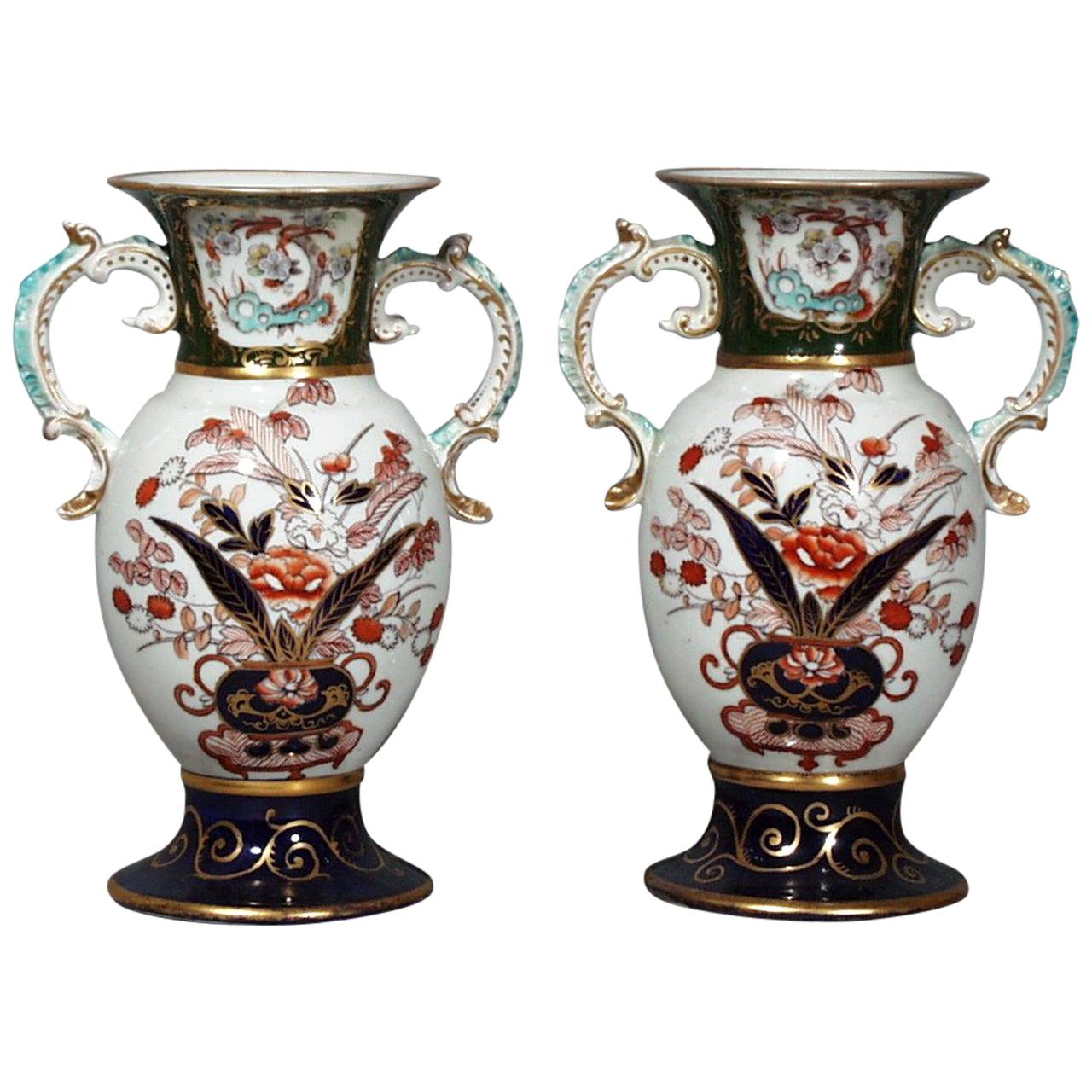
s Ironstone Japan Pattern Vases, a Pair
By Mason
s Ironstone
Located in Downingtown, PA
Mason's ironstone Japan pattern pair of vases,
circa 1830-1840.
The vases are decorated in an imari palette with scroll handles highlighted in tu...
Category
Antique Mid-19th Century English William IV Vases
Materials
Ironstone
$1,250 / set
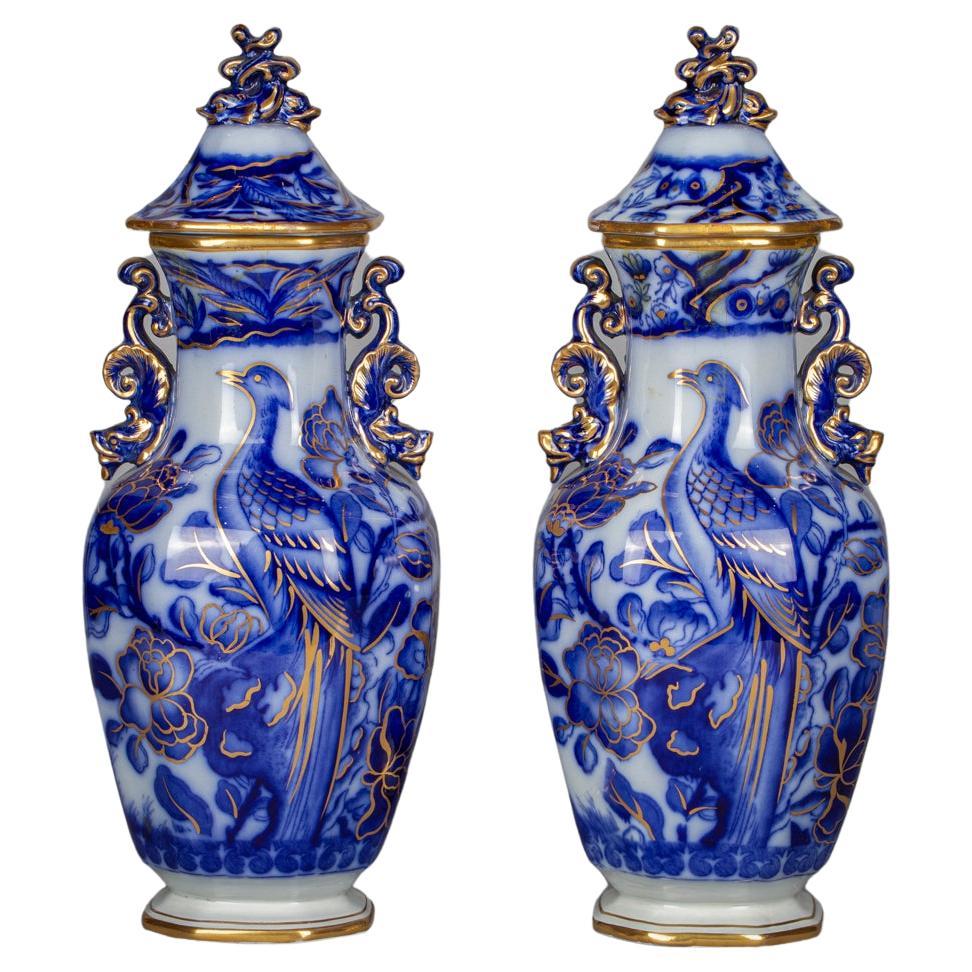
English Ironstone Vase and Cover, Morley Ashworth Ironstone
By Ashworth Ironstone
Located in Downingtown, PA
Morley Ashworth English Ironstone Vase & Cover
This exquisite English Ironstone Vase & Cover, dating from circa 1855-62, showcases the artistry...
Category
Antique Mid-19th Century English Early Victorian Vases
Materials
Ironstone
$2,000 Sale Price
51% Off
Mason
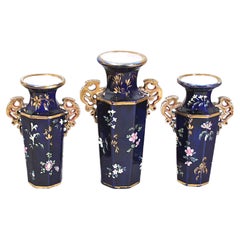
s Ironstone Garniture of Three Vases, Circa 1835
By Mason
s Ironstone
Located in Downingtown, PA
Regency Opulence: Mason's Ironstone Garniture Vases
Object: Garniture of Three Vases (One central, two flanking)
Manufacturer: Mason's Ironstone China, Staffordshire, England
Date: ...
Category
Antique Mid-19th Century English William IV Vases
Materials
Pottery, Ironstone
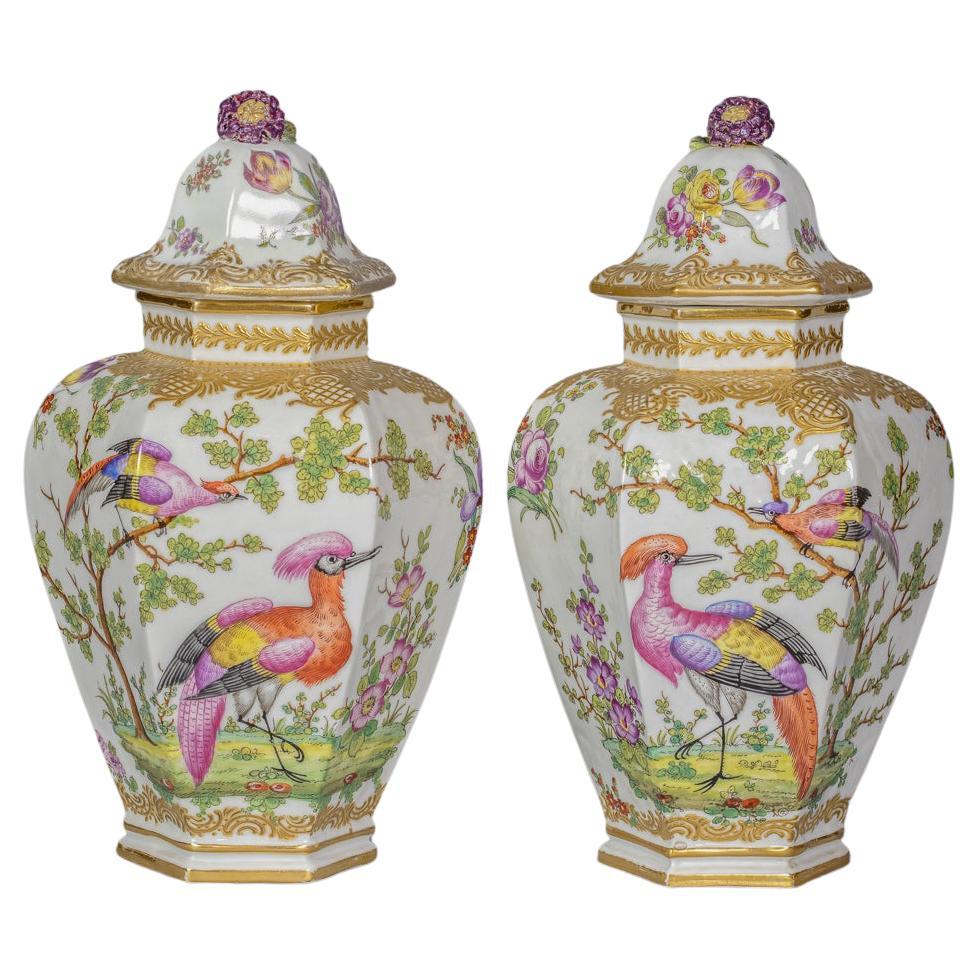
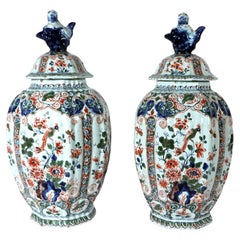
French Faience Octagonal Fluted Bird Decorated Vases and covers , Geo Martel
Located in Downingtown, PA
French Faience Chinoiserie Octagonal Fluted Vases and Covers with Bird Decoration,
Geo Martel,
Circa 1907
The Chinoiserie octagonal vases and covers have the same painted decoratio...
Category
Early 20th Century French Georgian Vases
Materials
Faience
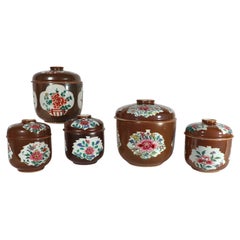
Chinese Export Porcelain Group of Batavia-ware Urns
Covers
Located in Downingtown, PA
Collection of Five Chinese Export 'Batavia-ware' and Famille Rose Jars and Covers
Qianlong Period, China, Circa 1750s
This handsome collection of five graduated covered jars is a magnificent and rare example of mid-18th-century Chinese Export porcelain, illustrating the highly successful fusion of Chinese ceramic technology and European market demand during the height of the global trade era.
________________________________________
Description and Aesthetic
Medium: Porcelain with underglaze brown glaze and overglaze Famille Rose enamels.
Period: Qianlong (1736–1795).
Origin: Jingdezhen kilns, China, made for the European export market.
The collection comprises two large, two medium, and one small jar, intended to be displayed together as a garniture—a decorative set prized for mantelpieces and cabinets in opulent European interiors.
• The 'Batavia' Ground: Each piece is characterized by a luxurious, deep chocolate-brown glaze covering the exterior, a distinctive aesthetic known historically as "Batavia-ware" or descriptively as café au lait. This rich, monochrome ground was achieved by bathing the porcelain in an iron-rich slip before glazing and firing.
• The Famille Rose Reserves: The dark ground provides a dramatic backdrop for finely painted, leaf-shaped reserves (panels). These panels are adorned with exquisite floral sprays executed in the vibrant Famille Rose palette (meaning "pink family"), which was introduced to China from Europe in the early 18th century. The opaque enamels—dominated by the rose-pink created from colloidal gold—allow for subtle shading and realism, brilliantly depicting the peony (mudan), the Chinese flower of wealth, nobility, and honor.
• The Covers: The domed covers maintain this contrast, with a high, lustrous brown glaze broken by Famille Rose floral sprays that echo the motifs on the body.
________________________________________
Historical Context: Global Trade and Naming
The name "Batavia-ware" is a crucial historical reference, even though the porcelain was manufactured in the kilns of Jingdezhen.
1. The Dutch East India Company (VOC): Batavia (modern-day Jakarta, Indonesia) served as the fortified administrative and trading headquarters of the Dutch East India Company (VOC) in Asia.
2. The Trade Route: Porcelain destined for the European market was collected from various Chinese ports and then centrally transshipped through Batavia. This particular style became famously associated with that major transit port among Western collectors, hence the name, which links the sophisticated manufacturing of China to the powerful trade infrastructure of the Dutch.
3. 18th-Century Opulence: Garnitures like this were highly desirable statements of wealth and worldliness in 18th-century Europe. Their acquisition signified participation in the exotic, global market and a cosmopolitan taste capable of appreciating the high technical and artistic quality of Chinese porcelain.
The successful combination of the deep, rich brown glaze—which evokes a feeling of luxurious Eastern lacquer or polished wood—with the delicate, luminous European-inspired Famille Rose palette represents a brilliant convergence of East-West artistic demands at the height of the Qianlong Emperor’s reign.
________________________________________
Dimensions
Largest Jar: 7 1/2 inches high x 7 1/2 inches diameter; Second Jar: 7 1/4 inches high x 6 1/2 inches diameter; Third Jar: 5 1/2 inches high x 5 inches diameter; Pair of Smaller Jars...
Category
Antique 1750s Chinese Chinese Export Jars
Materials
Porcelain
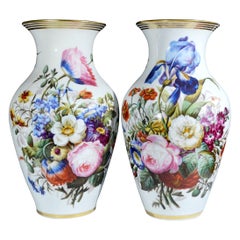
Paris Porcelain Botanical Vases, French, Mid-19th Century
By Old Paris
Located in Downingtown, PA
Pair of large Paris Porcelain Botanical Vases,
Mid-19th century.
Each of the baluster form vases has a cylindrical neck and everted rim and is painted...
Category
Antique Mid-19th Century French Victorian Vases
Materials
Porcelain
You May Also Like
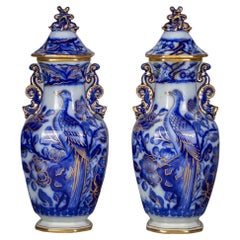
Pair of English Mason
s Ironstone Covered Vases, Circa 1830
Located in New York, NY
Decorated in various tones of blue on a gray ground with stylized birds and flowers with gilt highlights, with dolphin handles and twin dolphin finials.
Category
Antique 1830s English Vases
Materials
Porcelain
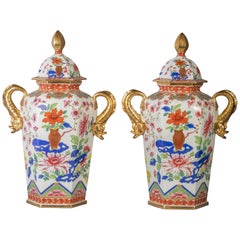
Pair of English Ironstone Imari Hexagonal Covered Vases, circa 1815
Located in New York, NY
Each of hexagonal form with gilt dolphin handles, painted in the Famille Rose palette and enriched with blue, the front and back with chrysanthemum issuing from a brown vase and flow...
Category
Antique 1810s English Vases
Materials
Porcelain
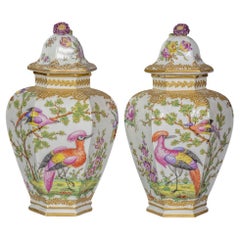
Pair of English Porcelain Covered Hexagonal Vases, circa 1840
Located in New York, NY
Depicting birds amongst foliage.
Category
Antique 1840s English Vases
Materials
Porcelain
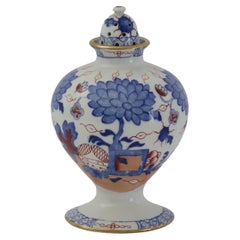
Mason
s Ironstone Pot-Pourri Vase
Cover in Jardiniere Pattern, circa 1890
By Mason
s Ironstone
Located in Lincoln, Lincolnshire
This is a rare Pot-Pourri Vase and Cover, hand painted in the Jardiniere pattern, made by Mason's Ironstone, Lane Delph, England and dating to circa...
Category
Antique Late 19th Century English Late Victorian Pottery
Materials
Pottery
19th Century, Large English Porcelain Covered Urn
Located in Tarry Town, NY
Beautiful and elegant 19th century English porcelain three piece decorative covered urn / vase with exterior hand painted floral and gilt design details. The covered urn / vase featu...
Category
Antique 1830s English Planters, Cachepots and Jardinières
Materials
Gold
Matching Pair of Chinese Hexagonal Porcelain Vases, 19th Century
Located in Norton, MA
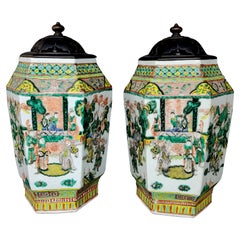
A truly fine hand-painted matching images of porcelain vases, amazing quality from Qing Dynasty Famille rose polychrome decorated panels of courtly pursuits with carved hardwood lids...
Category
Antique 19th Century Chinese Qing Vases
Materials
Porcelain
More Ways To Browse
Antique Masons Ironstone
Masons Ironstone England
Antique Ironstone China
Blue And White China English China
English Blue And White Pottery
Masons Patent Ironstone
English Blue And White China
English Ironstone
Antique English Ironstone
Masons Patent Ironstone China England
Mason Ironstone China
Antique Masons Ironstone China
Antique Ironstone Pottery
White Ironstone
Early English Pottery
Antique White Ironstone
English Mason
Masons Antique Pottery