Items Similar to French Beaux Arts, Patinated Bronze Figural Vase by A. Bofill, Ca. 1900
Want more images or videos?
Request additional images or videos from the seller
1 of 12
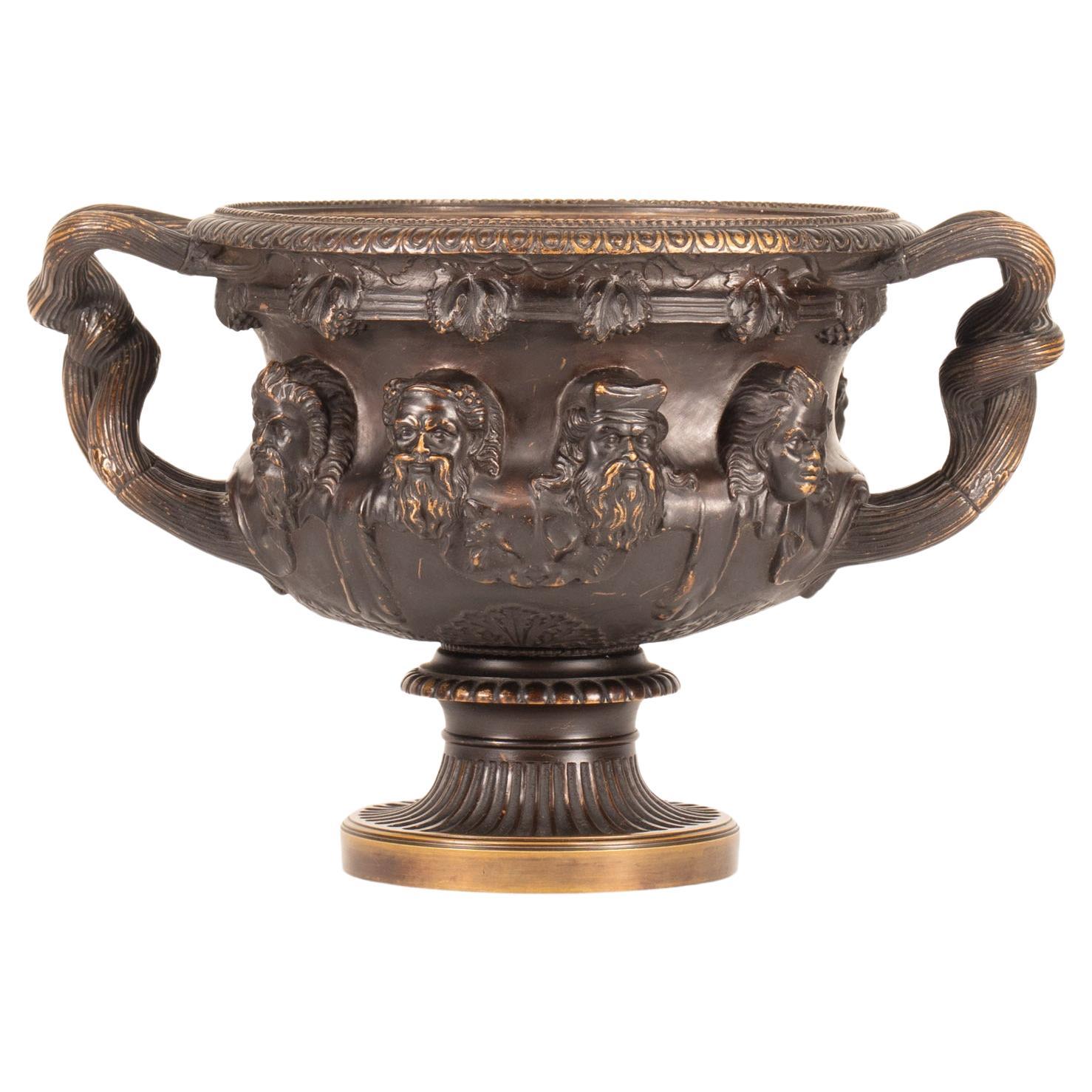
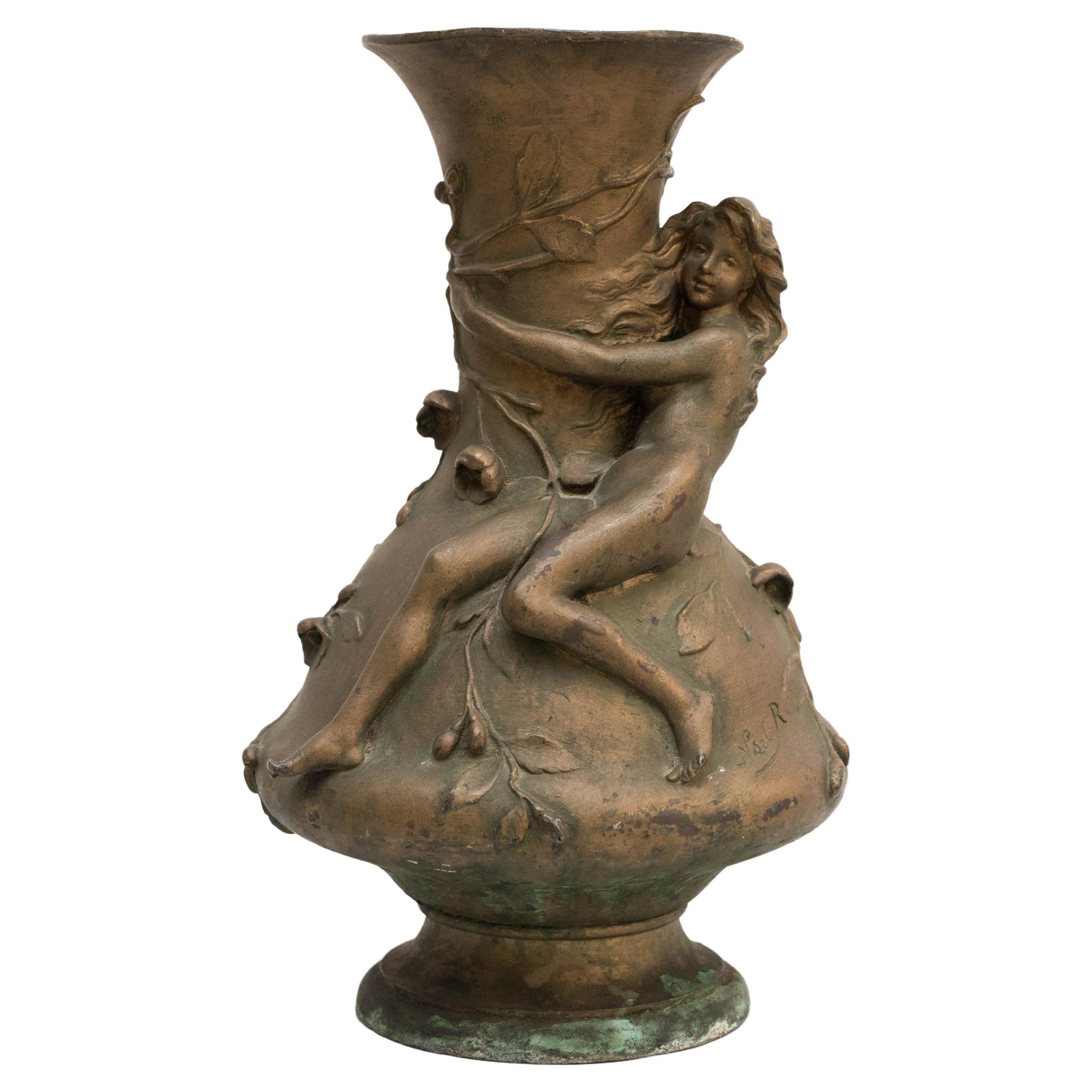
French Beaux Arts, Patinated Bronze Figural Vase by A. Bofill, Ca. 1900
$1,150
£874.98
€1,008.16
CA$1,632.64
A$1,751.53
CHF 939.49
MX$21,088.19
NOK 11,843.31
SEK 10,799.46
DKK 7,532.28
About the Item
Antoine Bofill (Spanish-French, 1875-1925) was a Spanish artist and member of the Animalier movement of the 19th century. Best known for his small, decorative bronze sculptures, Bofill often focused on Neoclassical themes, historical scenes, female nudes, and, most frequently, animals.
His intricate and realistic works are especially notable for their frequent inclusion of ivory in his miniature bronze casts, an unusual practice that set him apart from the other sculptors of his time.
Born in 1875 in Barcelona, Spain, he studied at the Academy of Beaux Arts in Barcelona, Spain, before garnering contact with the Parisian art world. He went on to regularly exhibit in the prestigious salons of Societe des Artistes from 1901 to the mid-1920s.
Bofill is thought to have died sometime after 1925.
- Creator:Antoine Bofill (Sculptor)
- Dimensions:Height: 6.5 in (16.51 cm)Width: 6.5 in (16.51 cm)Depth: 5 in (12.7 cm)
- Style:Beaux Arts (Of the Period)
- Materials and Techniques:Bronze,Patinated
- Place of Origin:
- Period:1900-1909
- Date of Manufacture:circa 1900
- Condition:Wear consistent with age and use. We make our best effort to provide a fair and descriptive condition report. Please examine photos attentively, as they are part of the description. Send us a message to request more details or discuss price.
- Seller Location:New York, NY
- Reference Number:1stDibs: LU2819323270422
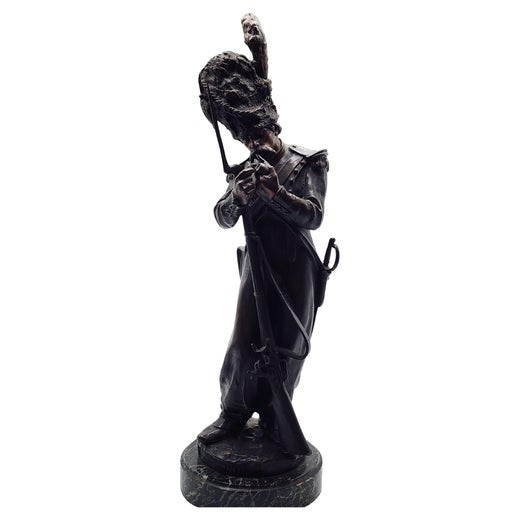
Antoine Bofill
Antoine Bofill was born in Barcelona in 1875. He studied at the Fine Art Academy in Barcelona. He exhibited in Spain, Germany and Austria as well as in France. Bofill started exhibiting at the Paris Salon from 1894 and in 1902, he was awarded an honorable mention.
About the Seller
5.0
Platinum Seller
Premium sellers with a 4.7+ rating and 24-hour response times
Established in 1993
1stDibs seller since 2017
93 sales on 1stDibs
Typical response time: 2 hours
- ShippingRetrieving quote...Shipping from: New York, NY
- Return Policy
More From This Seller
View AllCharles Vital-Cornu, French Art Nouveau Bronze Sculptural Floral Vase, 1900s
By Charles Vital-Cornu
Located in New York, NY
Charles Vital-Cornu (French, 1851 - 1927), Jouffroy’s and Pils’ pupil, he acquired a skillfulness mastery in carving marbles and producing bronzes. He used several patinas in his production. Indeed, if his pieces' embodiments are often golden-brown colored, the hollow part are darker. His figures, hands, faces, and bodies are of a great quality.
Charles Vital-Cornu had participated in numerous annual ‘‘Salons’’ organized in Paris by ‘‘la Société des Artistes Français’’ where he got several awards, such as a mention of Honor in 1880 and 1881, a third class medal in 1882, a travelling grant in 1883, a second class medal in 1886, a bronze medal at the 1889 World Fair and, finally, a silver medal at the 1900 World Fair at the Grand palace...
Category
Antique Early 1900s French Art Nouveau Vases
Materials
Bronze
Alfonso Canciani, Viennese Secession Orientalist Bronze Vase, c. 1910
By Alfonso Canciani
Located in New York, NY
Alfonso Canciani (Italian-Austrian, 1863-1955) was a famous Italian-Austrian sculptor of the period of accession to the Viennese Secession. Son of a stonemason, after a realist period he managed to establish himself as a leading sculptor of the Viennese Secession. In fact, he worked in Vienna, where he had enrolled in 1886 at the Academy of Fine Arts, then at the Higher School of Sculpture and finally at the Special School, where he obtained the Rome prize for the sketch for Dante's Monument.
He developed a notable business obtaining important prizes and numerous commissions. First among the sculptors of the Viennese capital, he was invited to join the Association of the Viennese Secession, of which Klimt was magna pars, after the exhibition of Dante's group in 1900 at the Secession exhibition, and obtained the most important Austrian artistic prize, the Kunstlerlpreis.
This same work, presented in 1910 in Berlin, at the Great Art Exhibition, also received an important recognition here. He obtained the Rome prize in 1896, exhibited successfully in Munich and in 1899 at the III International Art Exhibition in Venice.
In that period he made some statues of saints for the cathedral of Santo Stefano in Vienna, the monument to Wagner, the bust of Nietzsche for the University, the scepter and the gold chain of the University Rector, figures of Italian poets ( Petrarch, Boccaccio, Tasso, Ariosto).
He submitted a sketch for the official monument to Empress Elizabeth, which was then built in Austrisn Gföhl and Pula. At the time of his accession to the Secession, he dedicated himself to decorating the facade of the Artaria house in Vienna in collaboration with the architect Max Fabiani.
He later abandoned the symbolist decorativism of the Jugendstil for a more concentrated and vigorous style, approaching the Belgian sculptor Constantin Meunier for the theme of work, and preferring to exhibit at the Künstlerhaus.
In Vienna, he was generous with advice and help with the Italians and in particular with his fellow citizens (such as the Brazzanese Luigi Visintin, then a university student).
After the First World War, he returned to Italy and lived in Friuli, penalized by the fact that the Habsburg Empire had by now disappeared. Instead of large-scale public monuments, he then devoted himself to engraving medals (e.g. for Benedict XV and for the Italian mission in Vienna in 1919) and to designing funeral monuments (examples in Mali Lošinj and Trieste) and portrait busts (of Generals Carlo Caneva and Antonio Baldissera in Udine, sculptures of the War Memorial of Corno di Rosazzo). After all, he had already executed the Bab grave monument in the Döblinger cemetery in Vienna in 1909.
He taught in Trieste from 1920 until 1935, at the local school of industrial art, where he had Marcello Mascherini...
Category
Vintage 1910s Austrian Jugendstil Vases
Materials
Bronze
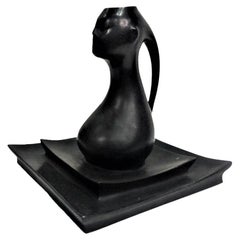
Japanese Art Nouveau Meiji Period Patinated Bronze Vase, circa 1900
Located in New York, NY
Although unmarked, this rare and important, grand but at the same exquisite patinated bronze vase has just a very few little details, defying the shape of the handles, as well as the...
Category
Antique Early 1900s Japanese Art Nouveau Vases
Materials
Bronze
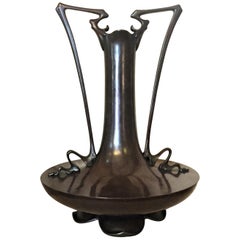
Franz Xavier Bergmann, Sculptural Bud Vase, Vienna Bronze, circa 1900
By Franz Bergmann
Located in New York, NY
Dimensions
Height: 7.25 inches
Width: 5.25 inches
Depth: 4.5 inches.
Markings
Fully marked on the bottom with a "B" in an urn-shaped cartouche (for “Bergmann”), and “GESHUTZED” (German: “PROTECTED).
ABOUT
What distinguishes this unique bud vase from others is a perfect synthesis of a utilitarian object and a Fine sculpture. It is not only the amazing subtlety and taste of the author’s artist skills, but an extraordinary design and an absolutely outstanding original plot. Designed for a single flower only, it is nonetheless a very complex and multifaceted composition filled with warm humor and fantasy. Sitting on a vessel shaped as a gourd, clasping its goat legs with hooves and holding on to the neck with one hand in order not to fall of it; a playful and mischievous faun holds by the tail a fleeing lizard with the other hand.
FRANZ XAVIER BERGMANN (Austrian, 1861–1936) was the owner of a Viennese foundry who produced numerous patinated and cold-painted bronze oriental, erotic and animal figures, the latter often humanized or whimsical, humorous objects d'art. Cold painted bronze refers to pieces cast in Vienna and then decorated in several layers with so-called dust paint; the expertise for the mix of this kind of paint has been lost. The color was not fired hence "cold painted". Mainly women working...
Category
Antique Early 1900s Austrian Jugendstil Vases
Materials
Bronze
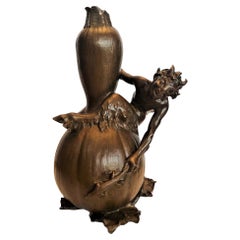
Antique Continental Patinated Bronze Fawn Candlestick, 19th Century
Located in New York, NY
Probably Italian, 19th Century patinated bronze candlestick in form of a dancing Fawn holding a candle-vessel in his hands, on its original wood base.
Category
Antique 1880s Italian Belle Époque Figurative Sculptures
Materials
Bronze
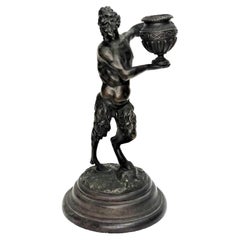
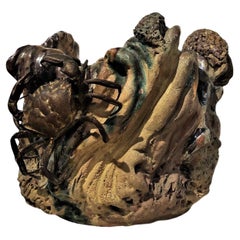
French Art Nouveau Iridescent Stoneware
Bronze Vase or Cachepot, ca. 1900s
Located in New York, NY
French Art Nouveau
Ocean Life Theme
Vase Cachepot
Iridescent Stoneware & Patinated Bronze Crab Appliqué
ca. 1900s
ABOUT
We present here a most unusual and utterly decorative Fren...
Category
Antique Early 1900s French Art Nouveau Vases
Materials
Stoneware
You May Also Like
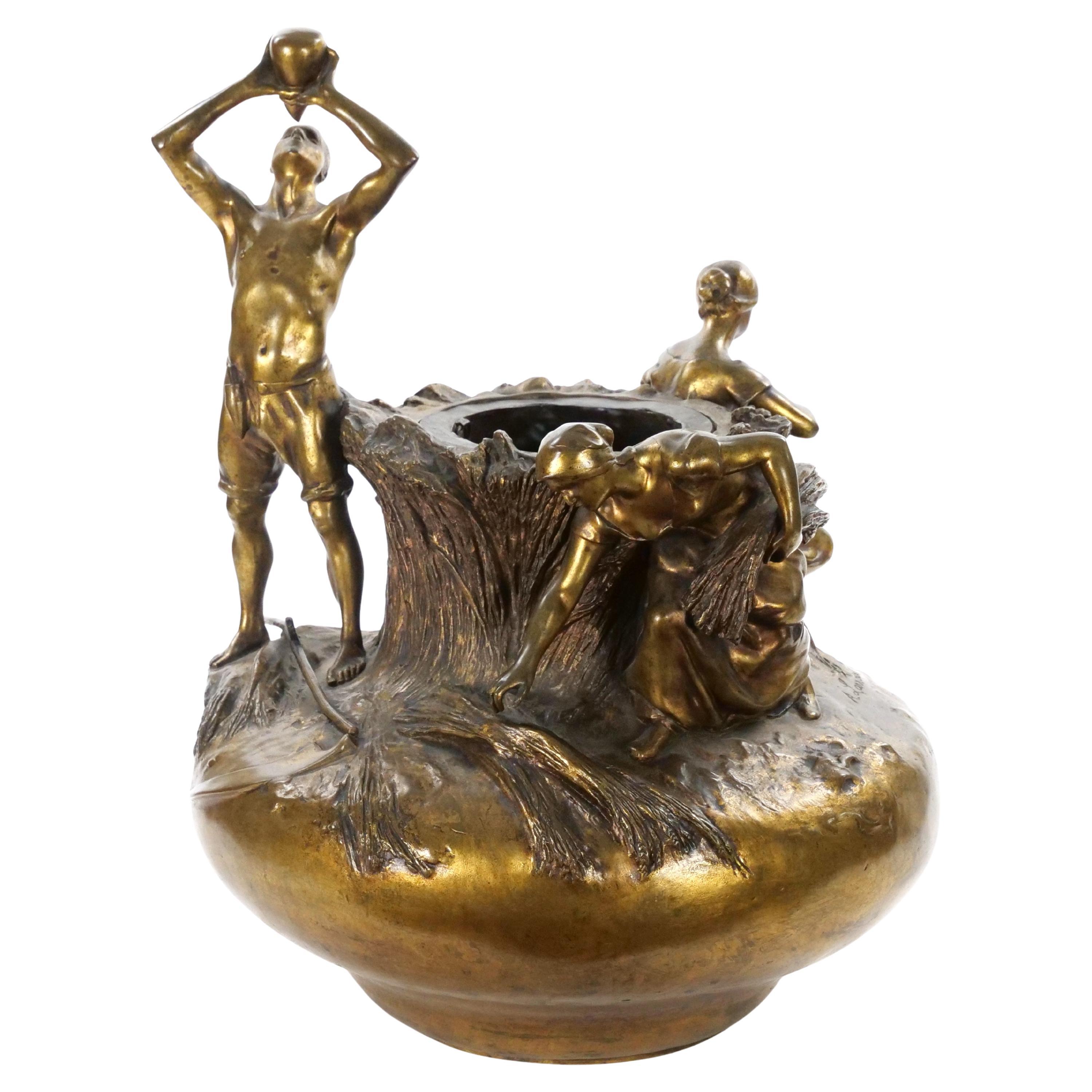
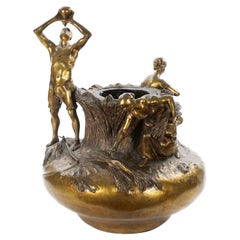
Antique French Gilt Bronze Figural Vase by Antonin Larroux (1859–1913)
By Antonin Larroux
Located in Tarry Town, NY
An exceptional and rare antique gilt bronze decorative vase by celebrated French sculptor Antonin Larroux, renowned for his expressive and naturalistic depictions of rural life in 19...
Category
Late 20th Century French Figurative Sculptures
Materials
Bronze
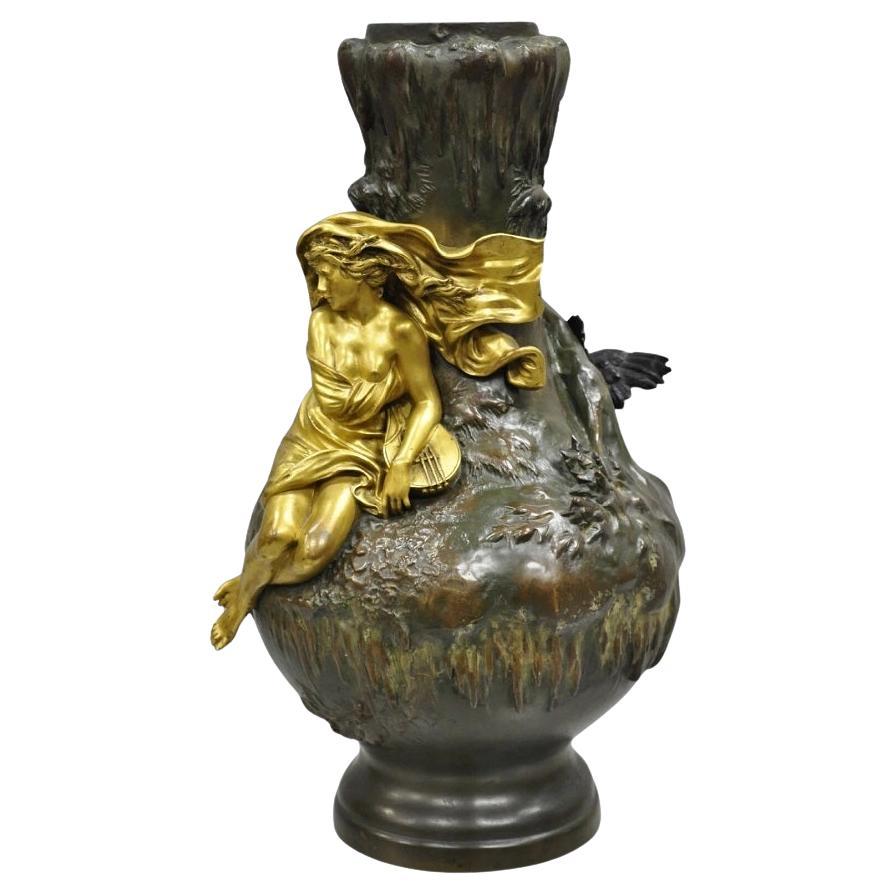
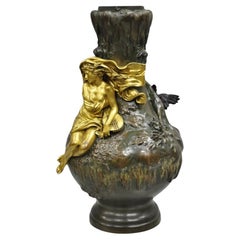
Charles Georges Ferville-Suan French Art Nouveau Gold Gilt Patinated Bronze Vase
By Charles Georges Ferville-Suan
Located in Philadelphia, PA
Antique Charles Georges Ferville-Suan (1847-1925) French Art Nouveau Gold Gilt Patinated Bronze Sculpture Vase. Item features a gold gilt bronze figure of a woman musician, birds, br...
Category
Antique Late 19th Century Unknown Art Nouveau Figurative Sculptures
Materials
Bronze
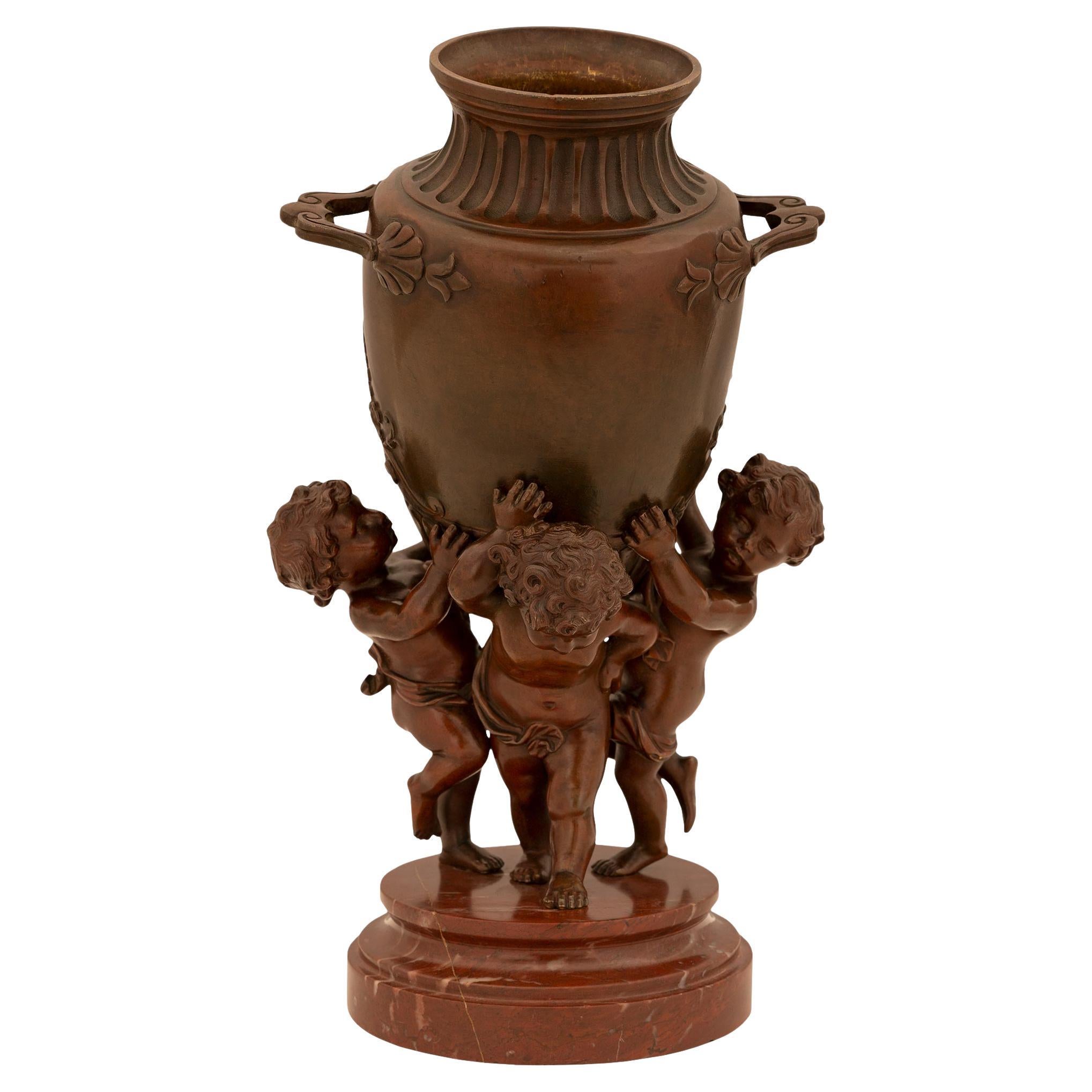
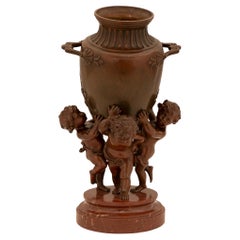
French 19th century Belle Epoque Period Bronze and Marble urn
By Auguste Moreau
Located in West Palm Beach, FL
An exquisite French 19th century Belle Epoque Period Louis XVI st. red patinated Bronze and Rouge Griotte marble urn, attributed to Auguste Moreau. This most charming Bronze urn is r...
Category
Antique 19th Century French Belle Époque Urns
Materials
Marble, Bronze
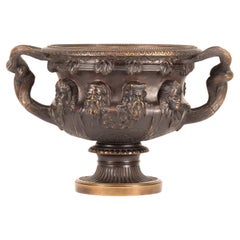
Mid 19th Century French Bronze Grand Tour Vase Signed by Achille Collas
By F. Barbedienne Foundry, Achille Collas
Located in Chicago, IL
This exquisite 19th-century patinated bronze vase, crafted by the esteemed Ferdinand Barbedienne foundry, beautifully demonstrates the innovative reduction technique developed by Ach...
Category
Antique Mid-19th Century French Neoclassical Vases
Materials
Bronze
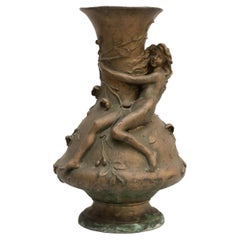
Modernist Bronze Vase by Noel R. in a Wooden Stand, circa 1920
Located in Barcelona, Barcelona
Bronze vase, circa 1920.
Manufactured in France.
Signed by Noel R
In original condition, with minor wear consistent of age and use, preserving a beautiul patina.
Material:
Bronze
...
Category
Vintage 1920s French Mid-Century Modern Ceramics
Materials
Bronze
$1,653 Sale Price
60% Off
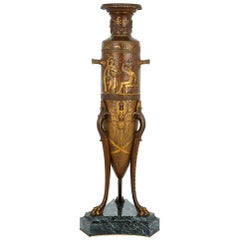
19th Century French Neoclassical Style Bronze Vase by Levillain and Barbedienne
By Ferdinand Levillain, Ferdinand Barbedienne
Located in London, GB
This elegant vase is cast entirely in bronze and it is signed by its makers, the sculptor Ferdinand Levillain (French, 1837-1905) and the master bronzier Ferdinand Barbedienne (Frenc...
Category
Antique 19th Century French Neoclassical Vases
Materials
Marble, Bronze, Ormolu
More Ways To Browse
Figural Vase
Iittala Glasses
Mid Century Hand Thrown Pottery
Murano Glass Vase With Bubbles
Tall Blue And White Vase
Antique Japanese Pottery
Antique Number Stamps
Art Deco Bedroom Set 1920
Art Deco Crystal Vase France
Large Brown Pottery
Meiji Cloisonne Vase
Vintage Studio Art Vase
Daum Nancy Art Glass
Handmade Ceramic Vessels
Large Chinese Vase
19th Century Japanese Bronze Vases
Vintage Lalique Crystal
Ormolu Mount Vase