Want more images or videos?
Request additional images or videos from the seller
1 of 9
Leonardo German Postmodern Glass Vase
$360List Price
About the Item
- Dimensions:Height: 13.5 in (34.29 cm)Diameter: 4 in (10.16 cm)
- Style:Post-Modern (Of the Period)
- Materials and Techniques:
- Place of Origin:
- Period:
- Date of Manufacture:Late 20th Century
- Condition:Wear consistent with age and use.
- Seller Location:Astoria, NY
- Reference Number:Seller: S138XX - 76200 - 04211stDibs: LU889323522022
About the Seller
4.9
Vetted Professional Seller
Every seller passes strict standards for authenticity and reliability
1stDibs seller since 2010
2,610 sales on 1stDibs
Typical response time: 13 hours
Authenticity Guarantee
In the unlikely event there’s an issue with an item’s authenticity, contact us within 1 year for a full refund. DetailsMoney-Back Guarantee
If your item is not as described, is damaged in transit, or does not arrive, contact us within 7 days for a full refund. Details24-Hour Cancellation
You have a 24-hour grace period in which to reconsider your purchase, with no questions asked.Vetted Professional Sellers
Our world-class sellers must adhere to strict standards for service and quality, maintaining the integrity of our listings.Price-Match Guarantee
If you find that a seller listed the same item for a lower price elsewhere, we’ll match it.Trusted Global Delivery
Our best-in-class carrier network provides specialized shipping options worldwide, including custom delivery.You May Also Like
Postmodern German Ceramic Vase from Amano, Germany
Located in Hamburg, DE
Postmodern German Ceramic Vase from Amano, Germany, in Very Good conditions. Designed 1990 to 1999 This piece has an attribution mark.
Additional information:
Materials: Ceramic
Col...
Category
20th Century German Post-Modern Vases
Materials
Ceramic
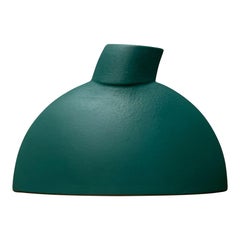
Postmodern German Minimalist Vase from Arzberg, 1980s
By Arzberg
Located in Hamburg, DE
Postmodern German Minimalist Vase from Arzberg, 1980s, in Very Good conditions. Designed 1980 to 1989 This piece has an attribution mark.
Additional...
Category
20th Century German Post-Modern Vases
Materials
Porcelain
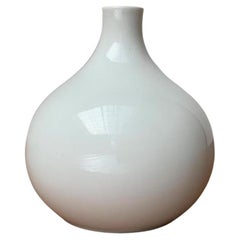
Vintage Postmodern German Studio Pottery Vase, 1970s
Located in Hamburg, DE
Vintage Postmodern German Studio Pottery Vase, in Very Good conditions. Designed 1970 to 1979.
Additional information:
Material: Ceramic
Color: Blue
Styles: Postmodern
Country of Or...
Category
20th Century German Post-Modern Vases
Materials
Ceramic
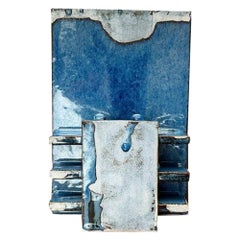
Large Postmodern German Porcelain Vase from Rosenthal, 1980s
By Rosenthal
Located in Hamburg, DE
Large Postmodern German Porcelain Vase from Rosenthal, 1980s, in Very Good conditions. Designed 1980 to 1989 This piece has an attribution mark.
Additional information:
Materials: P...
Category
20th Century German Post-Modern Vases
Materials
Porcelain
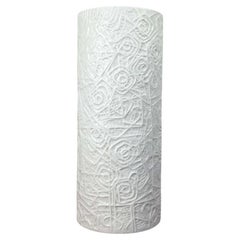
Postmodern German Studio Pottery Art Vase Sculpture, 1982
Located in Hamburg, DE
Postmodern German Studio Pottery Art Vase Sculpture, 1982, in Very Good conditions. Designed 1980 to 1989.
Additional information:
Materials: Ceramic
Color: Beige
Styles: Postmodern...
Category
20th Century German Post-Modern Vases
Materials
Ceramic
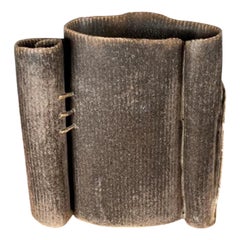
Postmodern
Harlequin
Art Glass Vase 1980s
Located in Meer, VAN
Postmodern 'Harlequin' Art Glass Vase, Europe, 1980s.
This is a very beautiful art glass vase from the 1980s. A fun and joyful postmodern 'harlequin' style design, with hand painted...
Category
Late 20th Century European Post-Modern Vases
Materials
Glass
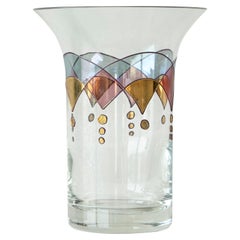
Karim Rashid for Leonardo Germany Limited Edition New Move Glass Vase, ca 1999
By Karim Rashid
Located in Cathedral City, CA
Karim Rashid for Leonardo Germany Limited Edition New Move Silver Glass Vase, ca 1999.
Measures 8” high, base 3-1/2” wide, and mouth 2-1/4” wide.
There is a small scratch of silver finish/coating on glass (we've posted an image of the interior and exterior at the area of the scratch). There is also a faint area of small blemishes at the base See images for more detail.
If there’s one thing karim rashid hates, it’s trophies. The 40-year-old designer has more than 40 of them, from big international ones like the 1999 George Nelson Award (given for breakthrough furniture design), to quaint little Canadian ones like Designer of the Year 2001. “It came with a little pin,” says Rashid, “and a … a … very nice …” He tries to describe the shape of the award with his hands but gives up. “It’s time that whole trophy thing changes. It’s kitsch. They’re functionless things.” Rashid was asked to design one for the DaimlerChrysler Design Awards (he’s a past recipient). “I was going to make it electro-luminescent. When the lights go out, it has a sensor so it turns on,” he says. But the trophy-as-night-light, a reminder of one’s worth in the darkest hours, didn’t impress Chrysler’s people. He never heard back.
They may well be gnawing their knuckles over that decision right now because Rashid’s conquest of the realm of product design is all but complete. A lush and suitably worshipful retrospective of his work, Karim Rashid: I Want to Change the World (Thames & Hudson; 249 pages), hits Australasian bookstores this month. There was a crowd around anything with his stamp on it-including stools, chess sets and storage units-at the recent International Contemporary Furniture Fair in New York City. More than 2 million North Americans are throwing their rubbish into a receptacle he designed, while 750,000 or so park their rears on one of his cheapo plastic chairs. It’s not just in North America. He has been dubbed Der Poet des Plastiks by a retailer in Germany and the prolifico progettista Americano by Interni magazine in Italy.
Trophies he may despise, but accolades Rashid can handle. The problem with being the Most Famous Industrial Designer in All the Americas is that you’re still less famous than someone who got kicked off Survivor the first week. Most people cannot name the designer of one nonclothing item in their homes. Rashid, who was born in Egypt, raised in Canada and is living in New York City, is more than happy to bring an end to this anonymity. Not just because he wants to be famous, although there seems to be that, but because he believes design should be a bigger part of the social discourse. “I have been almost alone in this country, trying to make design become a public subject,” he says.
His chief method of persuasion is to make the banal better so that people notice design more. He likes creating expensive furniture and perfume bottles just fine, but what really gets his juices going is the everyday: manhole covers, a cremation urn, disposable cigarette lighters, garbage bins, salt and pepper shakers, plastic pens. “I want American Standard to come to me to do the toilets for Home Depot,” he says.
In many ways Rashid is more like an itinerant industrial evangelist than a designer. He traveled 200 days last year. He claims to have been to every major mall in America, where he signs his products in high-end design stores and trolls about observing humans interacting with the objects around them. He has taught at design schools for more than a decade, and his work has been in 11 art shows in the past eight months. But mostly he has proselytized the corporate barbarians. And like any good missionary, he has learned to speak the language of his converts. One of the first things he does when he gets new clients is tour their factories to understand their manufacturing capacity. He also visits the retail outlets to see how the product might be displayed. And he really knows how to sell, especially himself. “I work with a guy in L.A.,” says Rashid, declining to name him. “He made a lot of really bad furniture. His business was hand-to-mouth. I proposed seven or eight projects. The pieces I’ve done for him have already become iconic.” The subtitle of his monograph, I Want to Change the World, is not ironic, just characteristically immodest.
“Most industrial-design studios try to interpret a client’s needs and come up with a style,” says Paul Rowan, co-founder of housewares manufacturer Umbra. “Karim has his own personal vision.” It helps that Rashid’s vision incorporates things that Rowan needs, like a design that will stack and ship easily and that creates little waste in the making.
Rashid’s father was a set designer for Canadian TV who rearranged the family furniture every Sunday. So perhaps it was ordained that Karim would grow up to become one of the pioneers in non-cheesy plastic, making objects that have energy and personality but aren’t wacky. He, like many of his generation, has championed the could-only-be-designed-with-computers blob. But his is not just a blob for its own sake. His Oh Chair...
Category
1990s German Minimalist Vases
Materials
Blown Glass
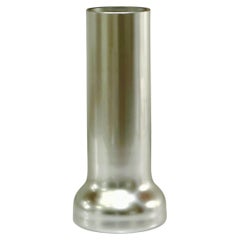
$250
H 8 in W 3.5 in D 3.5 in
Postmodern West German Pottery Vase from Steuler, 1980s
By Steuler
Located in Hamburg, DE
Postmodern West German Pottery Vase from Steuler, 1980s, in Very Good conditions. Designed 1980 to 1989 This piece has an attribution mark.
Additional information:
Material: Ceramic...
Category
20th Century German Post-Modern Vases
Materials
Ceramic

Postmodern Memphis Style Vase by Thomas, Rosenthal, Germany, 1980s
By Thomas, Rosenthal
Located in Halle, DE
A very rare and extraordinary Postmodern base by Thomas Porzellan, Atelier Collection, a Division of Rosenthal.
Made in Germany in the 1980s this obj...
Category
Vintage 1980s German Post-Modern Vases
Materials
Porcelain
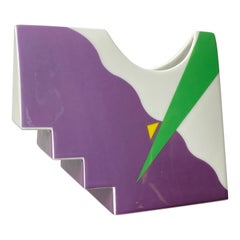
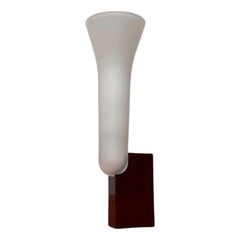
Postmodern German 488 Wall Bathroom Vase from Hewi, 1980s
Located in Hamburg, DE
Postmodern German 488 Wall Bathroom Vase from Hewi, 1980s, in Flawless conditions. Designed 1980 to 1989 This piece has an attribution mark.
Additional information:
Materials: Glass...
Category
20th Century German Post-Modern Vases
Materials
Glass, Plastic
More From This Seller
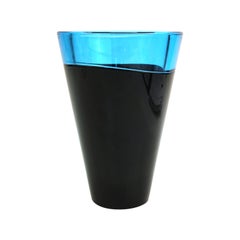
View AllSoichiro Sasakura for Sasaki Japanese Postmodern
San Marino
Art Glass Vase
By Soichiro Sasakura
Located in Astoria, NY
Soichiro Sasakura for Sasaki Japanese postmodern glass vase, deep opaque blue with sheer light blue band at top, marked "Sasaki" at base. 6.5" H x 9" Diameter.
Category
1990s Japanese Post-Modern Vases
Materials
Art Glass
$450 Sale Price
52% Off
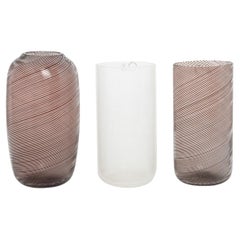
Venini Murano Latticino Glass Vases, 3
By Venini
Located in Astoria, NY
Three Venini Murano Latticino Glass Cylindrical Vases, 1983, two with purple caning and one white, with etched "venini italia 83" marks to undersides "...
Category
Vintage 1980s Italian Post-Modern Vases
Materials
Murano Glass
$1,450 / set
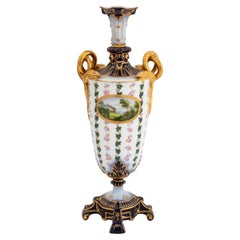
German Porcelain Two Handle Vase
Located in Astoria, NY
German Porcelain Two Handle Vase, late 19th century, with snake entwined handles, oval painted landscape panel, signed illegibly "A. Schu... (?)", with bands of roses and grape vine,...
Category
Antique Late 19th Century German Neoclassical Vases
Materials
Porcelain
$550 Sale Price
35% Off
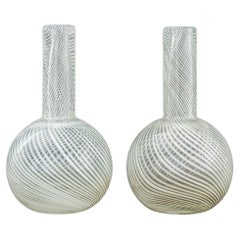
Venini Style Clear Glass Bottle Vases, Pair
By Venini
Located in Astoria, NY
Pair of Venini Style Clear Glass Bottle Vases, with white caned swirl motif, unmarked. 6.25" H x 3.75" Diameter. Provenance: The Upper East Side Estate of Anne Kaufman Schneider, the...
Category
Late 20th Century Post-Modern Vases
Materials
Murano Glass
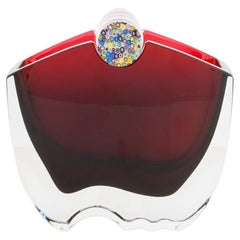
Thomas Bastide x Baccarat "Oceanie" Glass Vase
By Thomas Bastide, Baccarat
Located in Astoria, NY
Thomas Bastide (French, b. 1954) for Baccarat "Oceanie" Red and Clear Glass Vase, with clear glass and millefleur removable central rod, with ...
Category
Late 20th Century French Post-Modern Vases
Materials
Glass, Art Glass
German Porcelain Campagna Urn Vase, 19th C.
Located in Astoria, NY
German Porcelain Two-Handled Campagna Urn Vase, late 19th century, the body painted with a panel of Apollo and Aphrodite and an interior scene of two women playing cards with a cat, ...
Category
Antique Late 19th Century German Neoclassical Vases
Materials
Porcelain

$850 Sale Price
41% Off
Still Thinking About These?
All Recently ViewedMore Ways To Browse
Ribbed Glass Vase
Leonardo Glass Vase
Vaso Vintage
Iittala Glass Vintage
Bronze Cloisonne
Schneider Art Glass
Clear Glass Vase With Etched
Flute Vases
Metallic Glaze
Swedish Pewter
18th Century Chinese Porcelain Vases
Belgian Art Nouveau
Large German Ceramic
Austrian Glass Vases
Cobalt Blue Decorative Object
French 1920 Ceramic
German Vases Hand Painted
Japanese Porcelain Vases 20th Century