Want more images or videos?
Request additional images or videos from the seller
1 of 6
Meiji Period Hirado Blue and White Vase
$3,006.74List Price
About the Item
- Creator:Hirado (Maker)
- Dimensions:Height: 11.82 in (30 cm)Diameter: 6.3 in (16 cm)
- Style:Japonisme (Of the Period)
- Materials and Techniques:
- Place of Origin:
- Period:
- Date of Manufacture:1900
- Condition:Wear consistent with age and use.
- Seller Location:Brighton, GB
- Reference Number:Seller: Batch 38 35821 BDEUZ1stDibs: LU1227217763422
About the Seller
5.0
Platinum Seller
Premium sellers with a 4.7+ rating and 24-hour response times
1stDibs seller since 2015
505 sales on 1stDibs
Typical response time: 1 hour
Associations
LAPADA - The Association of Arts
Antiques Dealers
Authenticity Guarantee
In the unlikely event there’s an issue with an item’s authenticity, contact us within 1 year for a full refund. DetailsMoney-Back Guarantee
If your item is not as described, is damaged in transit, or does not arrive, contact us within 7 days for a full refund. Details24-Hour Cancellation
You have a 24-hour grace period in which to reconsider your purchase, with no questions asked.Vetted Professional Sellers
Our world-class sellers must adhere to strict standards for service and quality, maintaining the integrity of our listings.Price-Match Guarantee
If you find that a seller listed the same item for a lower price elsewhere, we’ll match it.Trusted Global Delivery
Our best-in-class carrier network provides specialized shipping options worldwide, including custom delivery.You May Also Like
Large Japanese Blue and White Vase by Mazuku Kozan Meiji Period
By Makuzu Kozan
Located in Atlanta, GA
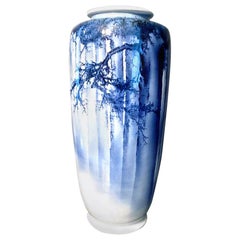
A striking blue and white vase from the studio of Japanese Potter Makuzu Kozan, also known as Miyagawa Kozan (1842–1916), one of the most established and collected ceramist from Meiji Period. Born as Miyagawa Toranosuke, Kozan established his pottery studio in Yokohama around 1870s and later became one of the appointed artist to the Japanese Imperial household. His work was exhibited in many international fairs that the Meiji government participated at the turn of the century and won many grand prizes.
With a relative large size, this vase is decorated with underglaze cobalt blue using the novel technique developed by Kozan called Fuki-e (the blow painting), in order to achieve the striking dimensional misty winter landscape. The pine trees with upright trunks and down-sweeping branches appear receding into the depth of the mist, forming an visually unending forest. Known as one of the most creative ceramists, around 1880s, Kozan started experimenting with new chemical colors from the West in the format of his porcelain glaze. New colors allowed him to create underglaze design that appeared bright, smooth and glossy. He even invented his own receipt of cobalt blue to achieve a much brighter yet softer shade, as evident on this vase. To create landscape that is realistic and dimensional, more common in the western paintings, he was inspired by the native Japanese ink painting technique developed around 1900 by Yokoyama...
Category
Early 20th Century Japanese Japonisme Ceramics
Materials
Porcelain
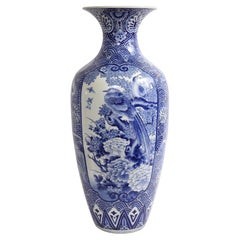
Japanese Meiji Period, Blue and White Vase with Phoenix Decoration
Located in New York, NY
A Palace Size Japanese Meiji Period (1868-1912) Blue and White Vase with Phoenix Decoration. This vase is absolutely beautiful with an incredible array of hand-painted blue decoratio...
Category
Antique 1890s Japanese Meiji Ceramics
Materials
Porcelain
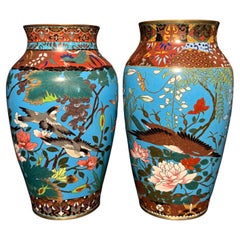
2 Japanese Meiji Period Turquoise Cloisonne Vases
Located in Norwood, NJ
Near pair of late Meji period turquoise ground cloisonne vases with birds and foliage motif. Bright colors with good enameling, cranes, butterflies and sparrow birds surrounded by fl...
Category
Early 20th Century Japanese Japonisme Vases
Materials
Enamel
Japanese Porcelain Vase Makuzu Kozan Meiji Period
By Makuzu Kozan
Located in Atlanta, GA
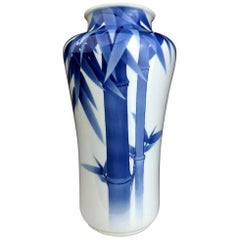
A striking blue and white vase from the studio of Japanese Potter Makuzu Kozan, also known as Miyagawa Kozan (1842–1916), one of the most established and collected ceramist from Meiji Period. Born as Miyagawa Toranosuke, Kozan established his pottery studio in Yokohama circa 1870s and later became one of the appointed artists to the Japanese Imperial household. His work was exhibited in many international fairs that the Meiji government participated at the turn of the century and won many grand prizes.
Of a relatively large size, this vase is decorated with underglaze cobalt blue using the novel technique developed by Kozan called Fuki-e (the blow painting). As a result, the bamboos appear took on a three-dimensional quality as if appearing in a mist. Known as one of the most creative ceramists, circa 1887, Kozan started experimenting with new chemical colors from the West in the format of his porcelain glaze. New colors allowed him to create underglaze design that appeared bright, smooth and glossy. He even invented his own receipt of cobalt blue to achieve a much brighter yet softer shade, as evident on this vase. To create landscape that is realistic and dimensional, more common in the western paintings, he was inspired by the native Japanese ink painting technique developed around 1900 by Yokoyama Taikan...
Category
Antique Early 1900s Japanese Japonisme Ceramics
Materials
Ceramic
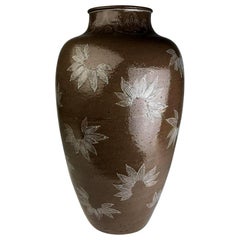
Rare Large Vase with White Slip Inlay Makuzu Kozan Meiji Period
By Makuzu Kozan
Located in Atlanta, GA
A impressively large and unusual stoneware vase in an urn shape from the studio of Japanese Potter Makuzu Kozan, also known as Miyagawa Kozan (1842–1916), one of the most established and collected ceramist from Meiji Period. Born as Miyagawa Toranosuke, Kozan established his pottery studio in Yokohama circa 1870s and later became one of the appointed artist to the Japanese Imperial household. His work was exhibited in many international fairs that the Meiji government participated at the turn of the century and won many grand prizes.
This vase is dated to the end of Makuzu's life circa 1910-1916 based on similar work created around that time. After achieving domestic and international fame, Makuzu retired and handed the business to his son Hanzan in 1912. He dedicated his time to other selected projects that were more in tune with Japanese sensibility than export aesthetic. He made a group of stoneware pottery pieces inspired by Edo master like Ninsei and Kenzan as well as his own poetic creation. This piece is attributed to that period.
Standing of an impressive size, this vase is more like an urn, made with stoneware instead of porcelain. It was coated with a brown iron glaze with a slight translucent quality. Underglaze whit slips were used to draw low relief decoration of bamboo leaves that sparsely scatter on the surface. Slightly more elaborate scrolling vines and autumn flowers circles under the mouth rim. Same white slip inlay was used to sign the vase under the base. The whole effect of the piece is unusual. With its dark glaze in contrast with the sparse white decoration that is more abstract and geometric than realistic, it appears almost modern with an Art Deco flavor.
For stoneware urn and vase in the similar genre by Makuzu Kozan: see figure 113 on page 182 of "Sekai ni Aisa Reta ya Kimono" MIYAGAWA KOZAN MAKUZU...
Category
Vintage 1910s Japanese Japonisme Ceramics
Materials
Ceramic
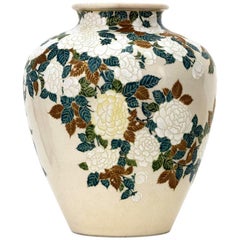
Japanese Ceramic Vase by Ito Tozan I Meiji Period
By Ito Tozan I
Located in Atlanta, GA
This stoneware vase of a jar form was finely decorated with low relief carving and delicate colored glazes depicting bundles of peony flowers. It was made by Ito Tozan I (1846-1920) circa 1890-1900s in the late Meiji Period. The color pallet was both bold and subtle, with dark green and rusty leaves with golden outlines and white and light yellow peony petals covering much of the surface. Impressed with potter's mark on the base.
Examples of two pieces by Ito Tozan I were in the collection of MNAAG (Guimet) Paris. Inventory no. MG 13790 an 13792.
A vase with similar shape and decoration techniques is featured as Lot 1340 Fine Japanese Art, 13 Sep 2017 Bonhams New York
Tozan Ito I established his ceramic business in Kyoto 1867. His studio made both porcelain and stoneware in a style some considered Satsuma while they retained a sophistication of Kyoto ware...
Category
Antique 1890s Japanese Japonisme Ceramics
Materials
Ceramic
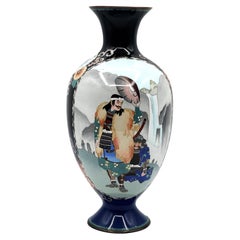
Japanese Meiji Period Cloisonné Vase with Samurai and Floral Motif, Ca. 1890
Located in New York, NY
Japanese Meiji Period Cloisonné Vase w/ Samurai, Attendant, and Floral Motif, Ca. 1890
DIMENSIONS:
Height: 12 inches
Diameter: 5.5 inches
ABOUT
An elegant cloisonné enamel vase fr...
Category
Antique 1890s Japanese Japonisme Vases
Materials
Porcelain
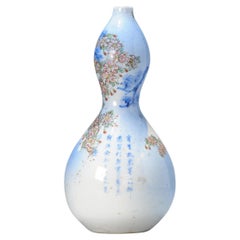
Antique Meiji Period Japanese Double Gourd Vase Blue White, 19th Century
Located in Amsterdam, Noord Holland
Sharing with you this fantastic and Quality painted double gourd vase from the Meijij period. The flowers are in enamel and thickly painted in a bit of relief when you touch them. Al...
Category
Antique 19th Century Japanese Meiji Vases
Materials
Porcelain
19th Century Meiji Period Japanese Imari Ribbed Blue
White Porcelain Vase
By Imari Porcelain
Located in Pearland, TX
A gorgeous antique 19th-Century Japanese Imari scalloped floral vase made during the Meiji period. This fine vase has a lovely baluster form with a ribbed design, ruffled rim, and ha...
Category
Antique 19th Century Japanese Vases
Materials
Porcelain
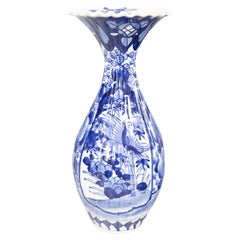
$995
H 14.75 in W 6 in D 6 in
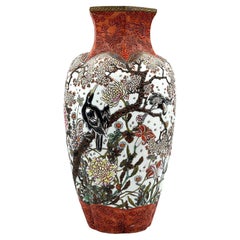
Japanese Meiji Period Porcelain Vase by Shimazu Gyokuzan, Ca. 1890
Located in New York, NY
Japanese Meiji Period Porcelain Vase by Shimazu Gyokuzan, Ca. 1890
DIMENSIONS
Height: 18.5 INCHES
Diameter: 9 inches
DETAILS
Meiji Period (1868 -1912) – Ca.18...
Category
Antique 1890s Japanese Japonisme Vases
Materials
Porcelain
More From This Seller
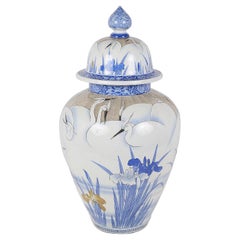
View AllMeiji Period Fukagawa Porcelain Lidded Vase
By Fukagawa
Located in Brighton, Sussex
A fine quality hand painted Japanese Meiji period (1868-1912) Fukagawa porcelain lidded vase. Depicting exotic Cranes among Reeds and Lillys, boa...
Category
Antique Late 19th Century Japanese Japonisme Vases
Materials
Porcelain
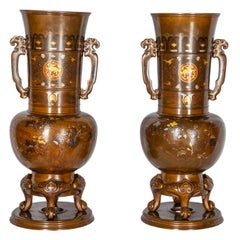
Pair of Japanese Meiji Period Bronze and Gilt Vases
By Zo Miyao 1
Located in Brighton, Sussex
Pair of fine quality Japanese Meiji period (1868-1912) patinated bronze Miyao style gold and silver overlay two handled vases, each with twin handles, classical motif decoration with...
Category
Antique Late 19th Century Japanese Japonisme Vases
Materials
Bronze
$10,933 / set
Meiji period Satsuma vase.
By Satsuma
Located in Brighton, Sussex
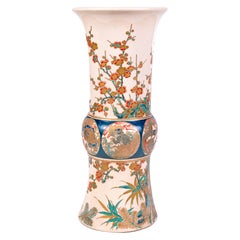
A good quality 19th Century Japanese Satsuma vase, having imperial influences with a dark blue ground, blossom tree decoration to the flared neck, circul...
Category
Antique Late 19th Century Japanese Vases
Materials
Porcelain
Large Japanese Meiji Period Bronze over Lay Vase
Located in Brighton, Sussex
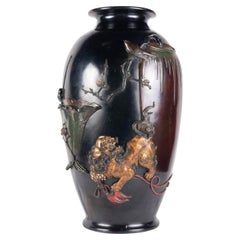
A wonderful Japanese Meiji period (1868-1912) Bronze overlay vase. Having exquisite and amusing scenes in relief, patinated and overlay of a Dog of Foo, a Frog fishing in a Lotus lea...
Category
Antique Late 19th Century Japanese Japonisme Vases
Materials
Bronze
Large Japanese Meiji Period Bronze over Lay Vase
Located in Brighton, Sussex
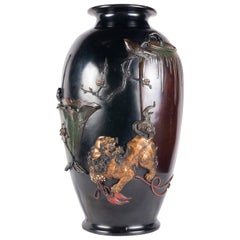
A wonderful Japanese Meiji period (1868-1912) Bronze overlay vase. Having exquisite and amusing scenes in relief, patinated and overlay of a Dog of Foo, a Frog fishing in a Lotus lea...
Category
Antique Late 19th Century Japanese Japonisme Vases
Materials
Bronze
Meiji Period Japanese Bronze Enamel Vase
Located in Brighton, Sussex
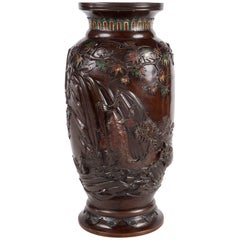
A very impressive Japanese bronze and cloisonne enamel vase having raised decoration depicting a carp in the river, with a deer under a tree.
Category
Antique Late 19th Century Japanese Meiji Vases
Materials
Bronze
Still Thinking About These?
All Recently ViewedMore Ways To Browse
Murano Glass Flavio Poli
Vintage Hall Green Glazed
Late 1800S Antique Bedroom Furniture 1800S
Rare Antique Vase
Rare Vases Antique
Baluster Vase
Gilt Ormolu Mount Furniture
Belgium Vase
Vintage Kosta Boda
Red And White Murano Glass
Porcelain Flowers
Textured Vases
Antique French Vessel
Murano Glass Signed
1930s Gold Furniture
Amber Decorative Objects
Cenedese Murano
Scandinavian Vase Denmark