Items Similar to Mid-Century Swedish Brutalist Glass Vase by Göte Augustsson for Ruda, 1960s
Want more images or videos?
Request additional images or videos from the seller
1 of 13
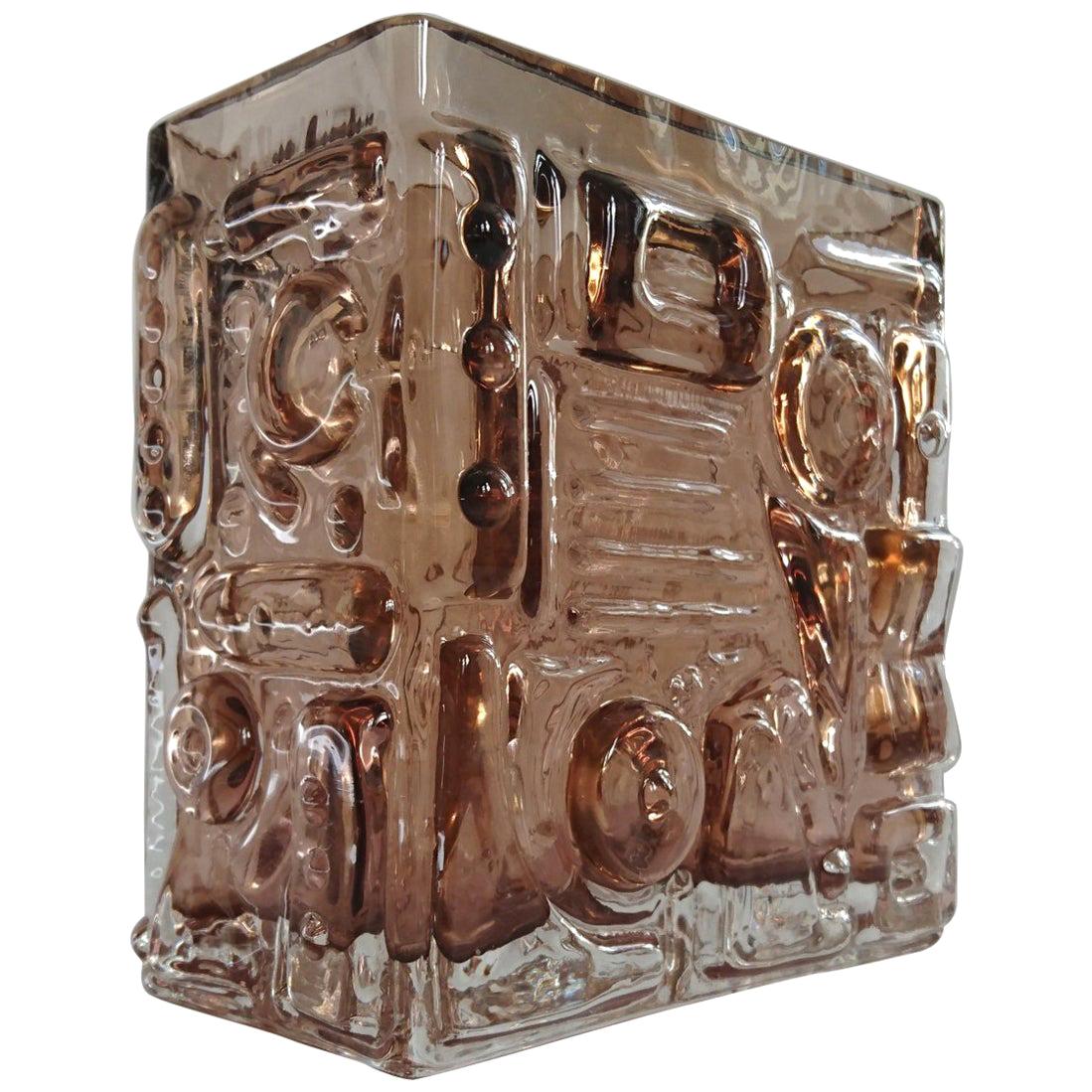
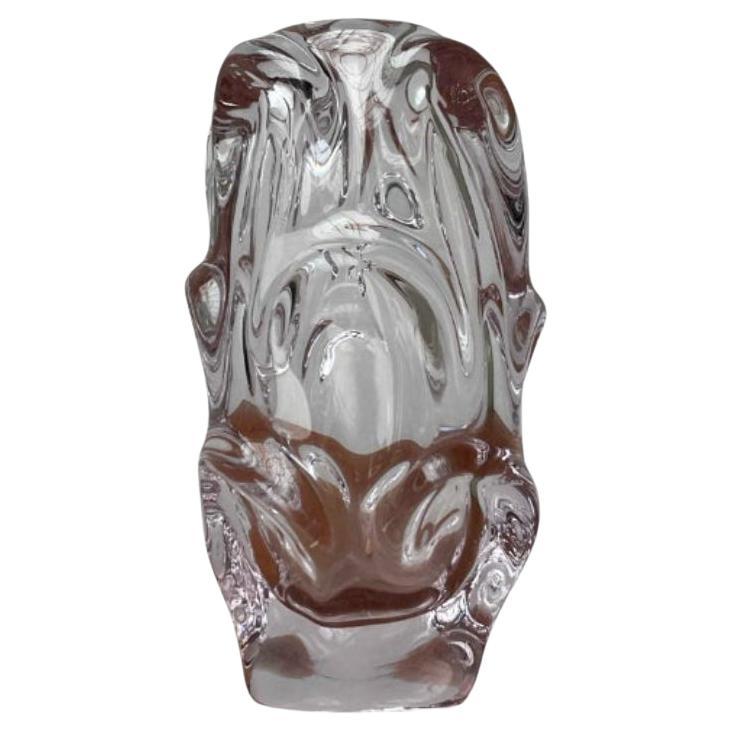
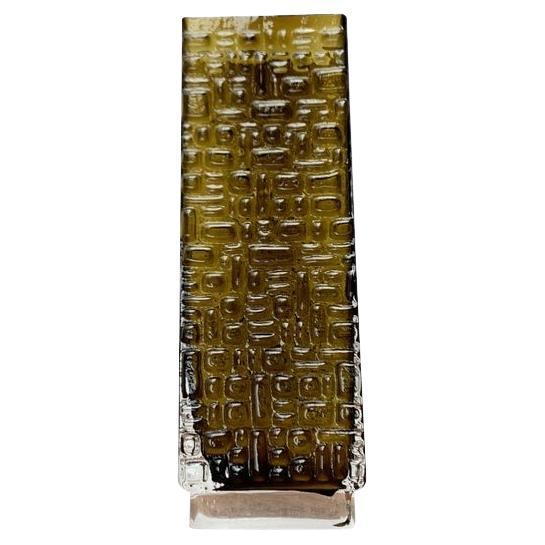
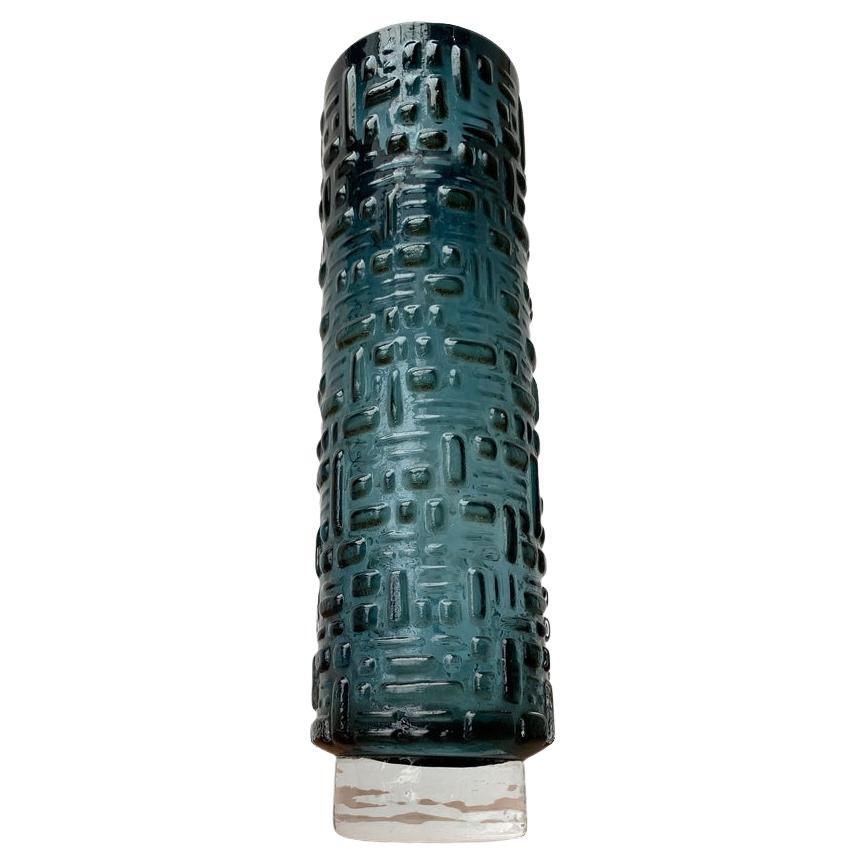
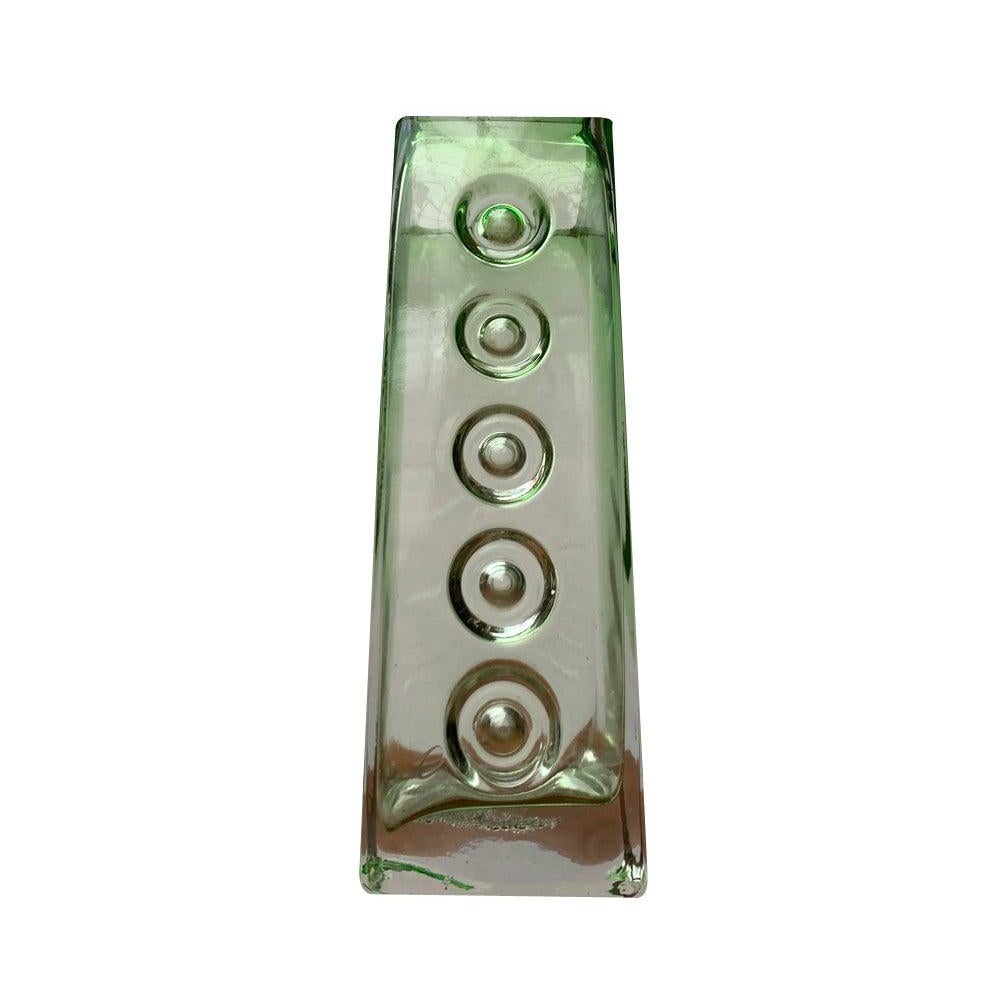
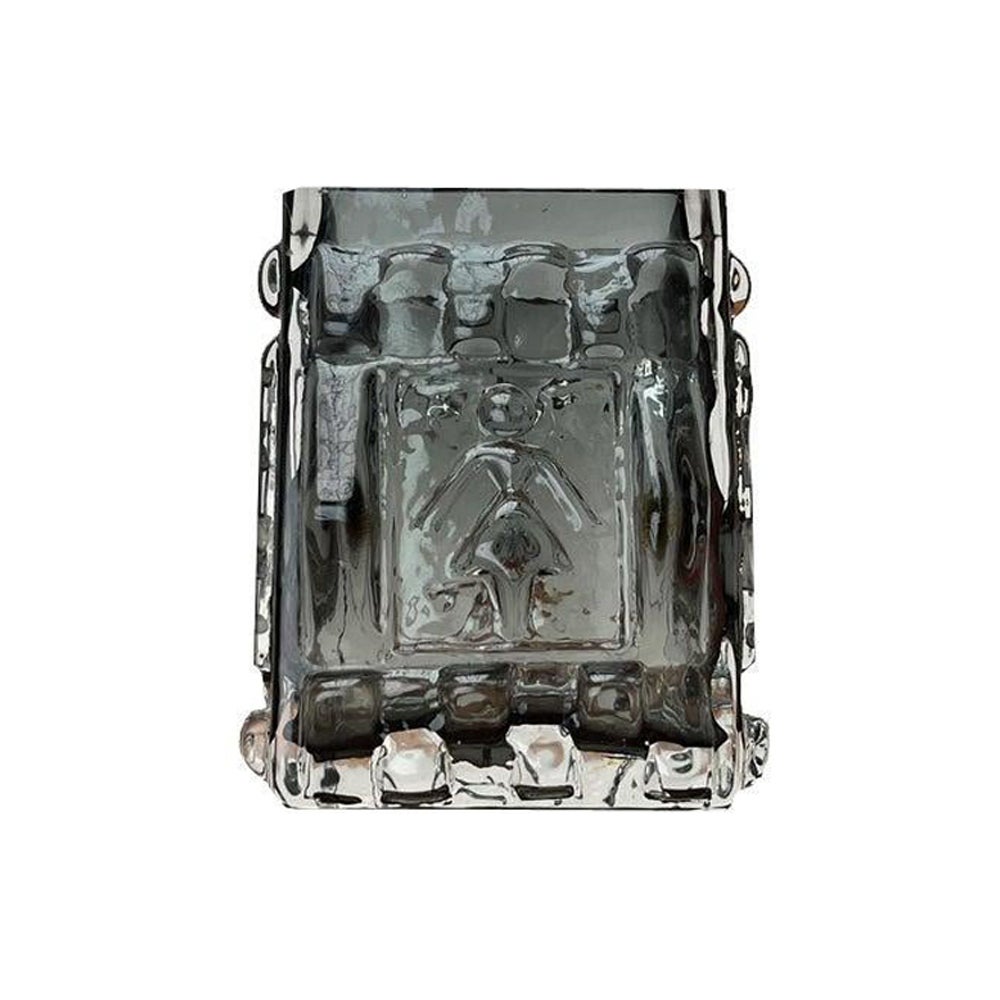
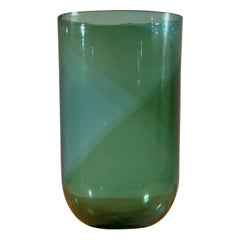
Mid-Century Swedish Brutalist Glass Vase by Göte Augustsson for Ruda, 1960s
$1,759
£1,342.07
€1,527.84
CA$2,472.29
A$2,717.65
CHF 1,426.76
MX$32,314.85
NOK 18,322.78
SEK 16,690.07
DKK 11,415.45
About the Item
Mid-Century Swedish Brutalist Glass Vase by Göte Augustsson for Ruda, 1960s, in Very Good conditions. Designed 1960 to 1969 have official proof of authenticity such as vintage catalogs, designer records, or other literature sources for any authenticity issues arising from misattribution.
Additional information:
Material: Glass
Color: Green
Styles: Brutalist
Country of Origin: Sweden
Item Type: Vintage, Antique or Pre-owned
Diamension: 7.48ʺW × 3.15ʺD × 5.12ʺH
Condition: Unknown, Some Imperfections
Condition Notes: Patina Consistent with Age and Use
- Creator:Gote Augustsson (Artist)
- Dimensions:Height: 5.12 in (13.01 cm)Width: 7.48 in (19 cm)Depth: 3.15 in (8.01 cm)
- Style:Brutalist (Of the Period)
- Materials and Techniques:
- Place of Origin:
- Period:
- Date of Manufacture:1960s
- Condition:Wear consistent with age and use. Some Imperfections. Patina Consistent with Age and Use.
- Seller Location:Hamburg, DE
- Reference Number:1stDibs: LU10114244002672
About the Seller
5.0
Platinum Seller
Premium sellers with a 4.7+ rating and 24-hour response times
Established in 2017
1stDibs seller since 2024
74 sales on 1stDibs
Typical response time: <1 hour
- ShippingRetrieving quote...Shipping from: Hamburg, Germany
- Return Policy
More From This Seller
View AllSwedish Organic Glass Vase by Börne Augustsson for Aseda Sweden, 1960s
Located in Hamburg, DE
Mid-Century Swedish Organic Shaped Glass Vase by Börne Augustsson for Aseda Sweden, 1960s, in Very Good conditions. Designed 1960 to 1969
Official proof of authenticity such as vint...
Category
20th Century Swedish Mid-Century Modern Vases
Materials
Glass
Mid-Century German Space Age Brutalist Bubble Glass Vase by Emil Funke, 1960s
By Emil Funke
Located in Hamburg, DE
Mid-Century German Space Age Brutalist Bubble Glass Vase by Emil Funke for Gral, 1960s, in Very Good conditions. Designed 1960 to 1969 official proof of authenticity such as vintage ...
Category
20th Century German Mid-Century Modern Vases
Materials
Glass
Mid-Century Brutalist Bubble Glass Model F231 Vase by Emil Funke for Gral, 1960s
By Emil Funke
Located in Hamburg, DE
Mid-Century Brutalist Bubble Glass Model F231 Vase by Emil Funke for Gral, in Very Good conditions. Designed 1960 to 1969 official proof of authenticity such as vintage catalogs,
des...
Category
20th Century German Mid-Century Modern Vases
Materials
Glass
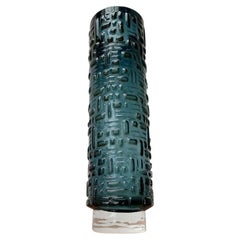
Mid-Century Space Age Brutalist Glass Block Vase, 1960s
Located in Hamburg, DE
Mid-Century Space Age Brutalist Glass Block Vase, 1960s, in Very Good conditions. Designed 1960 to 1969.
Additional information:
Material: Glass
Color: Green
Styles: Brutalist, Mid-...
Category
20th Century Mid-Century Modern Vases
Materials
Glass
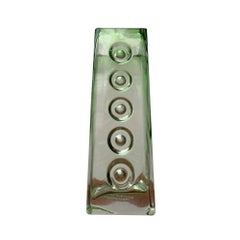
Mid-Century Swedish Brutalist Bubble Glass Block Vase by Josef Schott, 1960s
By Josef Schott
Located in Hamburg, DE
Mid-Century Swedish Brutalist Bubble Glass Block Vase by Josef Schott for Smålandshyttan, 1960s, in Very Good conditions. Designed 1960 to 1969 official proof of authenticity such as...
Category
20th Century Swedish Mid-Century Modern Vases
Materials
Glass
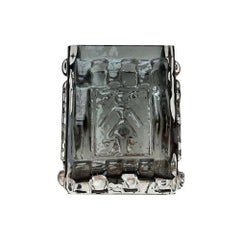
Mid-Century German Glass Block Vase, 1960s
Located in Hamburg, DE
Mid-Century German Glass Block Vase, 1960s, in Very Good conditions. Designed 1960 to 1969.
Additional information:
Materials: Glass
Color: Blue
Styles: Mid-Century Modern
Country o...
Category
20th Century German Mid-Century Modern Vases
Materials
Glass
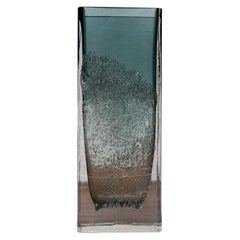
You May Also Like
Midcentury Glass Vase by Josef Schott, Smålandshyttan, Sweden
By Smålandshyttan, Josef Schott
Located in Albano Laziale, Rome/Lazio
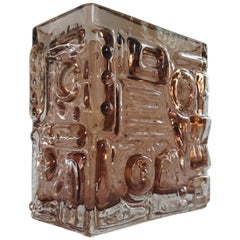
Heavy molded sommerso vase by Josef Schott for Smålandshyttan, Sweden, 1960s. Smokey pink glass, cased in clear. Impressed in the glass as part of the pattern on one of the short sid...
Category
Vintage 1960s Swedish Mid-Century Modern Vases
Materials
Art Glass
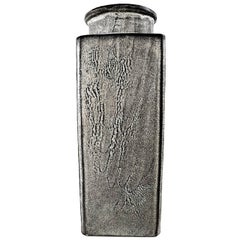
Kähler, Denmark, Glazed Large Stoneware Vase. Nils Kähler, 1960s
Located in København, Copenhagen
Kähler, Denmark, glazed large stoneware vase. Nils Kähler, 1960s.
In perfect condition.
Stamped.
Measures 34 x 14 cm.
Category
Vintage 1960s Danish Scandinavian Modern Vases
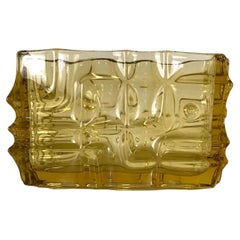
Rectangular Vladislav Urban Glass Vase Sklo Rosice Glasswork Czechoslovakia 1968
By Urban Glass, SkLO, Sklo Union Rosice
Located in Miami, FL
Vladislav Urban, born 1937 Pilsen, Czechoslovakia, is a glass and jewelry designer. Urban, among others, was instrumental in the evolution of Czech pre...
Category
Vintage 1960s Czech Mid-Century Modern Vases
Materials
Glass
$180 Sale Price
20% Off
Vase, Kai Blomqvist, Kumela, 1960
s
By Kaj Blomquist
Located in Stockholm, SE
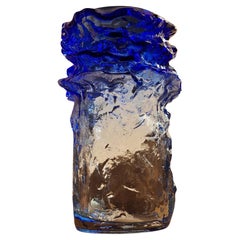
A Kai Blomqvist vase. Glass, made for Kumela, Finland 1960/70's.
Signed and marked Kumela. Good condition. Wonderful free form, almost looks like a sculpture. The vivid colours of b...
Category
Mid-20th Century Finnish Mid-Century Modern Vases
Materials
Glass
A Rare "Coreani" GLASS VASE by TAPIO WIRKKALA, VENINI MURANO, Italy, 1970
By Tapio Wirkkala
Located in PARIS, FR
A large model of the "Coreani" vase by Tapio Wirkkala, Venini Murano, Italy 1970. This beautiful piece in blown glass in the tones of watery green and blue sky, is acid signed Venini...
Category
Vintage 1970s Italian Mid-Century Modern Vases
Materials
Blown Glass
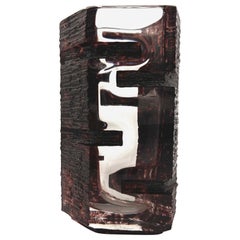
Cesar Baldaccini ( 1921-1998 ) Vase model Argos for Daum France 1970
By Daum, César Baldaccini
Located in palm beach, FL
Vase A by Cesar Baldaccini for Daum, France, 1970s, is a magnificent work of art that seamlessly combines form and function. Designed by renowned French sculptor Cesar Baldaccini, this multi-faceted vase is a stunning example of his mastery of sculptural forms. Made by renowned French glassmaker Daum, this vase features a highly polished, multi-faceted surface that reflects and refracts light in fascinating ways. The veneers are perfectly aligned and flawlessly executed, creating a breathtaking sense of depth and texture. The vase is signed "Daum France", which adds a touch of authenticity and provenance to the piece. This is a true collector's item, sought after by art lovers and collectors around the world. Functional, the Argos vase is ideal for presenting flowers or other decorative objects. Its sculptural form and multi-faceted surface create a dynamic backdrop that enhances the beauty of any arrangement. Overall, the Argos vase by Cesar Baldaccini for Daum, France, 1970s, is a masterpiece of design and craftsmanship. Its striking form, impeccable craftsmanship and exceptional provenance make it a highly coveted piece that is sure to impress and enchant anyone who sees it.
Cesar Badaccini (1921-1998)
His parents, Omer and Lelia Baldaccini, Italians of Tuscan origin, ran a bar in Marseille where César was born, with his twin sister Amandine, in 1921 in the popular district of Belle-de-Mai, at 71 rue Loubon, in the 3rd arrondissement1. "I am basically an absolute self-taught," he will say2. At the time, he designed and tinkered with carts for his little brother with cans. Nevertheless, after first working for his father (he also helped a butcher neighbor for a meager salary after leaving school at the age of twelve), he followed the courses of the École supérieure des beaux-arts de Marseille from 1935 to 1939; in 1937, he obtained three prizes, in engraving, drawing and architecture3.
Not mobilized during the war (he also escaped the STO), he lived on scams before settling in Paris to be admitted, in 1943, to the École nationale supérieure des beaux-arts with Michel Guino, Albert Féraud, Daniel David, Eugène Dodeigne and Philippe Hiquily, like him in the workshop of Marcel Gimond. In 1945, he returned to Marseille to marry Maria Astruc, with whom he set up a business (they divorced in 1959). He returned to Paris in 1946 where he occupied a studio in an old brothel at 21 rue de l'Échaudé, whose rooms, following the Marthe Richard law, had been assigned to students4. There he met Émilenne Deschamps, who would later become one of his muses.
Faced with the impossibility for him to work the stone, because of its cost, he turned to other materials3. From 1947, he worked on plaster and iron. In 1949, he was introduced to arc welding in an industrial carpentry in Trans-en-Provence and used lead in pushed sheets and welded iron wires. In 1951, he visited Pompeii and remained marked by the casts of the bodies of the inhabitants caught in the lava3. In 1952, he used inexpensive recovered materials and made his first sculptures in welded scrap metal: his means were then still modest. Thus, for lack of money and to afford marble, César will recover in the scrap dumps the materials of his first sculptures: tubes, bolts, screws that become insects or end up in the powerful curves of the Venus de Villetaneuse (1962).
In 1954, he exhibited at the Lucien Durand gallery in Paris and obtained the "collabo" prize for a sculpture entitled Le Poisson5, made in Villetaneuse, a city where he worked for a dozen years thanks to the help of a local industrialist, Léon Jacques6. He gained fame when his work was bought for 100,000 francs in 1955 by the State for the National Museum of Modern Art7. The same year, he exhibited at the Salon de Mai. The following year, the MNAM bought Chauve-souris from 1954 and the museum of modern art in the city of Paris Le scorpion from 1955. From 1954 (Torse, MOMA), he also made sculptures in welded metal, then in partially polished bronze, of busty women (Ginette, 1958, Victoire de Villetaneuse, 1965).
In 1956, he participated in the Venice Biennale then in the São Paulo Biennale and in the Documenta II in 1959. In 1958, he signed a contract with the Parisian gallery Claude Bernard3. In 1961, he approached Marino di Teana and joined the group of Nouveaux réalistes, a movement founded by art critic Pierre Restany8, including Arman, Jean Tinguely, Niki de Saint Phalle and Gérard Deschamps.
When he could afford a workshop in 1957, rue Campagne-Première in Paris, he married Rosine Groult-Baldaccini (met at the Beaux-Arts in 1948) with whom he had a daughter, Anna, a year later. He also begins to frequent the world of the In 1968, he created at the National Manufacture of Sèvres a porcelain Ashtray published in fifty copies. Made of porcelain with a semi-matt pearly cover, it represents a plaster mold used for the production of the pieces, and was produced from an original aluminum model. In 1971, during a premiere at the Lido, he found more media than him: Salvador Dalí, the master of extravagance. He debates the same year in Italiques with François Truffaut, Lucien Bodard and Asher Ben...
Category
Vintage 1970s French Mid-Century Modern Vases
Materials
Glass
More Ways To Browse
Swedish Brutalist
Swedish Brutalist Furniture
Ruda Sweden
Alhambra Vase
Angeliki Stamatakou
Antique Bronze Relief
Antique Flower Pink Vase
Antique Rosenthal Porcelain Vase
Antique Swedish Pottery
Ariel Glass Vase
Art Deco Dinanderie Vase
Baccarat Gilded
Bamboo Porcelain Vase
Barbedienne Sevin
Bernard Leach Pottery
Bitossi Purple
Black Jasperware Wedgwood
Blenko Green