1 of 7

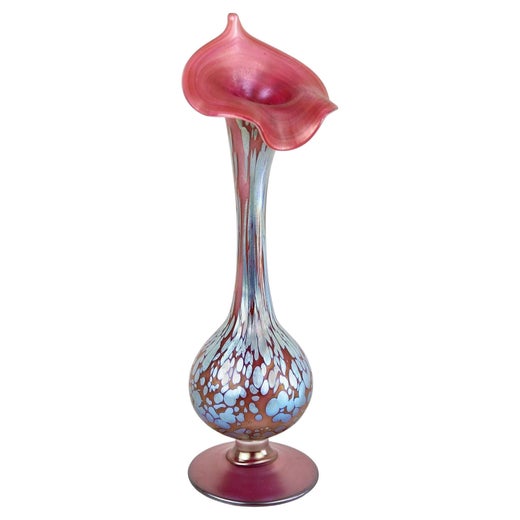
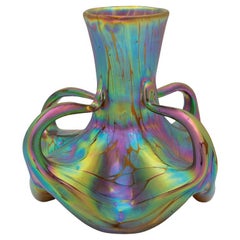
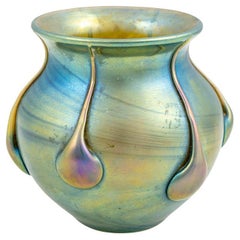
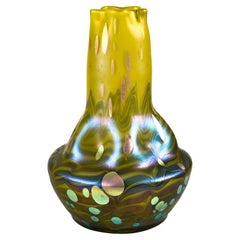
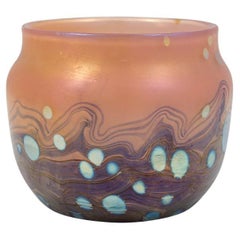
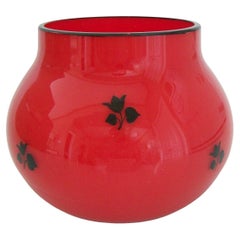
Rare Loetz Vase Leonidas Decoration ca. 1904 Wiener Werkstatte

$6,209.92List Price

You May Also Like

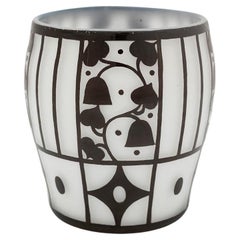
Vase with etched Decoration Josef Hoffmann Loetz ca. 1911 Jugendstil Black White
By Josef Hoffmann, Loetz Glass
Located in Klosterneuburg, AT
vase, Josef Hoffmann, Johann Loetz Witwe, Weiss Opal außen Schwarz decoration, glass, mould-blown, etched, ca. 1911 Hoffmann's vase designs from the 1910s are characterized above al...
Category

Vintage 1910s Austrian Jugendstil Vases

Materials

Brass

Viennese Art Nouveau Vase Johann Loetz Witwe Creta Papillon decoration ca. 1898
By Loetz Glass
Located in Klosterneuburg, AT
Vase, Johann Loetz Witwe, Creta Papillon decoration, ca. 1898 technique: glass, mould-blown and freeform, reduced and iridescent bib.: A. Adlerova, E. Ploil, H. Ricke, T. Vlcek (ed...
Category

Antique 1890s Austrian Jugendstil Vases

Materials

Glass

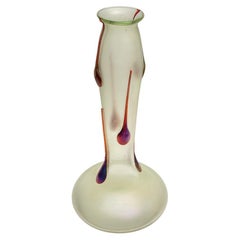
Viennese Art Nouveau Loetz Vase "Olympia mit rothen Tropfen" decoration ca. 1901
By Loetz Glass
Located in Klosterneuburg, AT
vase, Johann Loetz Witwe, "Olympia mit rothen Tropfen" decoration, ca. 1901
Category

Antique Early 1900s Austrian Art Nouveau Vases

Materials

Glass

Antique Glass Vase Loetz PG 1/413 Decoration 1901 signed Vienna Jugendstil
By Loetz Glass
Located in Klosterneuburg, AT
Vase, Johann Loetz Witwe, PG 1/413 decoration, circa 1901, signed Material and technique: glass, mould-blown and freeform, reduced and iridescent Bib.: A. Adlerova, E. Ploil, H. R...
Category

Antique Early 1900s Austrian Jugendstil Vases

Materials

Glass, Blown Glass, Art Glass

Viennese Art Nouveau vase Johann Loetz Witwe Dekor Capri ca. 1902
By Loetz Glass
Located in Klosterneuburg, AT
vase with drop applications, Johann Loetz Witwe, Capri decoration, ca. 1902 technique: glass, mouth-blown, reduced and iridescent
Category

Antique Early 1900s Austrian Jugendstil Vases

Materials

Glass

Glass Vase Cytisus Decoration Lemon Yellow Green Blue Loetz circa 1902 Austria
By Loetz Glass
Located in Klosterneuburg, AT
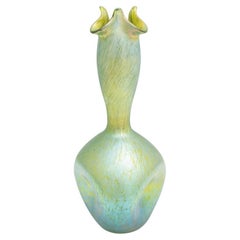
Austrian Jugendstil glass vase "Cytisus Lemon Yellow" decoration Johann Loetz Witwe yellow green blue circa 1902 The “Cytisus” decoration is certainly one of the most exquisite decor variations created by the Loetz glassworks. With its shimmering gold particles, it reflects the secessionist ornamentation of turn-of-the-century Vienna. In this way, Max Ritter von Spaun and his collaborators proved that they had their finger on the artistic and aesthetic pulse of the times. Executed in the form of a reduced flower calyx with five indentations in the wall and a five-pass distorted mouth, this vase fits into the style of production around 1902. The fused crumbled dots seem to float on the vase like lightweight gold particles. The complex decoration as well as the technically elaborate glass body are evidence of the great mastery of the glassblowers in Klostermühle and show why the Johann Loetz Witwe glass manufactory was one of the leading producers of precious luxury glass in Vienna 1900. Bib.: J. Lnenickova, “Loetz – Series II Paper Patterns for Glass from 1900...
Category

Antique Early 1900s Austrian Jugendstil Vases

Materials

Glass

Glass Vase Loetz Cytisus Decoration Blue Orange Gold, circa 1902, Art Nouveau
By Loetz Glass
Located in Klosterneuburg, AT
Austrian Jugendstil glass vase Johann Loetz Witwe blue orange gold circa 1902 "Cytisus Neuroth" decoration Art Nouveau Bohemian Glass The "Cytisus" decoration is certainly one of ...
Category

Antique Early 1900s Austrian Jugendstil Vases

Materials

Glass

Dagobert Peche, Loetz, Cased Glass Vase with Enamel Decoration, C.R, C.1915
By Loetz Glass, Dagobert Peche
Located in Chatham, ON
Dagobert Peche (1887-1923) - LOETZ - Antique Jugendstil clear cased red glass vase - rare form with hand painted black enamel floral sprigs alternating in two rows over the body - bl...
Category

Early 20th Century Czech Art Nouveau Vases

Materials

Enamel

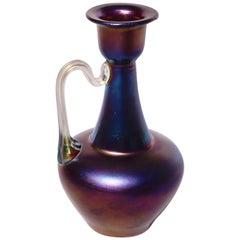
Loetz Rubin Matte Iris Handles Ewer Vase, Rare 1898
By Loetz Glass
Located in Dallas, TX
Loetz Rubin Matte Iris - 1898 (aka: rubin metall) Registered Model: PM I-7875 Ruby ground; metallic-bronze iridescent finish (iris) with purple highlights. Measures: Height 7.75 inches Width 4.25 inches Condition: Excellent AVANTIQUES is dedicated to providing an exclusive curated collection of Fine Arts, Paintings, Bronzes, Asian treasures, Art Glass and Antiques. Our inventory represents time-tested investment quality items with everlasting decorative beauty. We look forward to your business and appreciate any reasonable offers. All of our curated items are vetted and guaranteed authentic and as described. Avantiques only deals in original antiques and never reproductions. We stand behind our treasures with a full money back return if the items are not as described. In 1836, Johann Eisner established a glassworks in the Southern Bohemian town of Klostermühle, today part of the Czech Republic and called Klášterský Mlýn. His heirs sold the glassworks to Martin Schmid in 1849, and two years later Schmid sold it to Frank Gerstner, attorney-at-law, and his wife Susanne. Susanne was the widow (‘Witwe’ in German) of Johann Loetz, a glassmaker about whom we know very little. Gerstner transferred sole ownership to Susanne shortly before his death in 1855, and she successfully led and expanded the company during the subsequent 20 years, manufacturing mainly crystal, overlay and painted glass. In 1879, Susanne transferred the company – now called ‘Johann Loetz Witwe’ – to Maximilian von Spaun, the son of her daughter Karoline. One year later, von Spaun hired Eduard Prochaska and the two of them modernized the factory and introduced new, patented techniques and processes. The Historicist Period The first fruits of this collaboration were exciting innovations in Historicism glass, including Intarsia and Octopus glass and the very popular marbled (‘marmorisierte’) glass which imitated semi-precious stones like red chalcedony, onyx and malachite. Success at exhibitions in Brussels, Munich and Vienna were crowned by awards at the Paris World’s Exposition in 1889. In 1897, von Spaun first saw Tiffany Favrile glass exhibited in Bohemia and Vienna, and this convinced him that the art nouveau style was also the way to go for Loetz Witwe. The next eight years were to be the most artistically significant and profitable period in the entire history of the company. The Art Nouveau Period – the Glory Years Loetz Paris-Expo1900Loetz Paris-Expo1900The glassworks created large numbers of its own new designs of iridescent, trailing art nouveau glass, sometimes in collaboration with well-known artists and designers like Marie Kirschner and Franz Hofstötter (aka Franz Hofstätter). The zenith of Loetz art nouveau glass was epitomized by the so-called Phänomen series of designs, much of it designed by Hofstötter, which won a Grand Prix (alongside Tiffany, Gallé, Daum and Lobmeyr) at the Paris World’s Exposition in 1900. The company’s success during this period had two prime drivers – the technical expertise of Prochaska and the business acumen of von Spaun. Loetz Witwe created many of its own designs, and also supplied glass commissioned by major customers like E. Bakolowits (Vienna) and Max Emanuel...
Category

Antique 1890s Czech Art Nouveau Vases

Materials

Art Glass

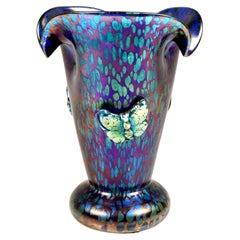
Loetz Art Nouveau Vase Cobalt Papillon with Applied Butterflies, Ca 1900
By Loetz Glass
Located in Vienna, AT
Finest Bohemian Art Nouveau glass vase: Mould-blown vase with torus-shaped stand and funnel-shaped attached wall with trefoil-shaped, lobed mouth rim, wall and inside satin-finished, polished pontil. Shape: Production number / pattern not preserved Decor: Cobalt Papillon...
Category

Antique Early 1900s Austrian Art Nouveau Glass

Materials

Glass

Still Thinking About These?

All Recently Viewed