Want more images or videos?
Request additional images or videos from the seller
1 of 10

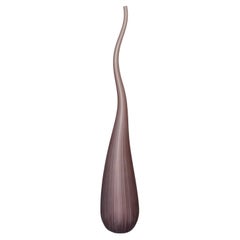
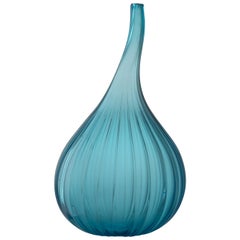
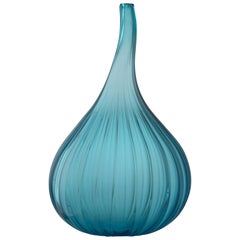
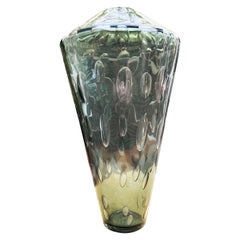
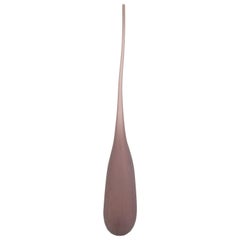
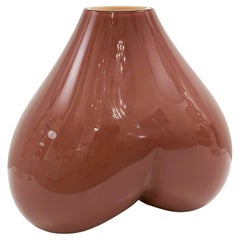
Renzo Stellon for Salviati Orange Satin Finish "Drops" Vase 2003

$350List Price

You May Also Like

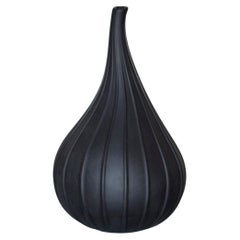
“Drops” Small Black Matte Murano Glass Vase by Renzo Stellon for Salviati, 2010
By Salviati, Renzo Stellon
Located in Aramits, Nouvelle-Aquitaine
“Drops” vase designed by Renzo Stellon for Salviati, Venezia, Italy, 2010. Small size, Hand-blown using the traditional rigadin technique, this sculptural piece reveals elegant verti...
Category

2010s Italian Modern Vases

Materials

Glass, Blown Glass

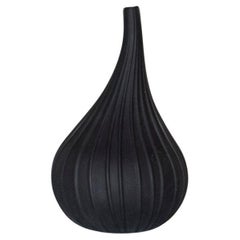
“Drops” Small Black Matte Murano Glass Vase by Renzo Stellon for Salviati, 2010
By Salviati, Renzo Stellon
Located in Aramits, Nouvelle-Aquitaine
“Drops” vase designed by Renzo Stellon for Salviati, Venezia, Italy, 2010. Small size, Hand-blown using the traditional rigadin technique, this sculptural piece reveals elegant verti...
Category

2010s Italian Modern Vases

Materials

Glass, Blown Glass

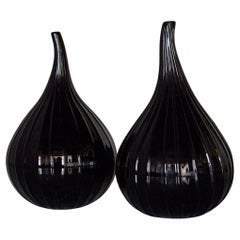
Pair of “Drops” Black Murano Glass Vases by Renzo Stellon for Salviati, 2009
By Salviati, Renzo Stellon
Located in Aramits, Nouvelle-Aquitaine
Elegant pair of “Drops” vases designed by Renzo Stellon for Salviati, Murano, Italy, 2009. Each vase is hand-blown using the traditional rigadin technique, creating fine vertical rib...
Category

Early 2000s Italian Modern Vases

Materials

Glass, Blown Glass

“Aria” Rose Matte Murano Glass Vase by Renzo Stellon for Salviati, 2008
By Salviati, Renzo Stellon
Located in Aramits, Nouvelle-Aquitaine
“Aria” vase designed by Renzo Stellon for Salviati, Murano, Italy, 2008. Expertly mouth-blown in softly matte rose glass, this medium-sized vessel embodies the purity and lightness t...
Category

Early 2000s Italian Modern Vases

Materials

Glass, Blown Glass

Medium Drops Lucido Vase in Murano Glass by Renzo Stellon
By Renzo Stellon, Salviati
Located in Venezia, IT
Hand-formed and hot finished blown glass vase made with the rigadin technique.
Category

21st Century and Contemporary Italian Modern Vases

Materials

Glass

Small Drops Lucido Vase in Murano Glass by Renzo Stellon
By Salviati, Renzo Stellon
Located in Venezia, IT
Hand-formed and hot finished blown glass vase made with the rigadin technique.
Category

21st Century and Contemporary Italian Modern Vases

Materials

Glass

Salviati Murano by Renzo Stellon "Millebolle" Model
By Salviati
Located in Saint Ouen, FR
Salviati Murano by Renzo Stellon Millebolle model 2 cone-shaped vases decorated with large grey bubbles in smoked grey Murano glass Signed and dated 2009 Measures: 43 H x 24 D New from stock in their original box 1650 euros per pair Salviati. Glass since 1859. Founded in 1859, Salviati sits amongst the most prestigious glass manufacturers in Venice. Over 150 years of glass making knowledge and strong collaborations with international designers characterise a collection of timeless pieces of outstanding quality and design. Salviati today shows the ability to master the heritage of the Muranese legacy and explore the art of the possible. Salviati’s products are highly recognizable for their strong narrative, creativity and distinctive design they embody the Venetian tradition and interpret extraordinary making techniques in a contemporary way. Historically Salviati has worked with designers and artists with great sensibility and abilities to understand glass as a material. What we do. Salviati and its designers are committed to investigate the limits in making and exploring new aesthetics to create considered and powerful objects. Salviati has worked with designers and artists like: Luciano Gaspari, Ingo Maurer, Ross Lovegrove, Amanda Levete, Tom Dixon, Nigel Coates, Thomas Heatherwick...
Category

Early 2000s Italian Vases

Materials

Murano Glass

Large Salviati Murano Aria Vase by Renzo Stellon in Amethyst Glass Mouth Blown
By Salviati
Located in Miami, FL
Unique and sophisticated, this vase is crafted of mouth-blown Murano glass and hand-decorated using the "rigadin" technique, that creates stunning vertical lines along its tapered an...
Category

20th Century Italian Bottles

Materials

Art Glass

Large Salviati Vase
By Salviati
Located in Lake Worth Beach, FL
Artist/Designer: Salviati Additional Information: Salviati is a world renowned Murano based manufacturer of glass since 1859. Marking(s); notes: Salviati label Country of origin; ...
Category

Late 20th Century Italian Vases

Materials

Glass

Large Salviati Vase
$1,050 Sale Price
30% Off
H 19 in Dm 8 in
Sommerso Vase by Salviati
By Salviati
Located in Los Angeles, CA
Italian Murano glass vase or sculpture hand blown in Sommerso technique to form elegant layers in clear, smoky and red / Made in Italy by Salviati, circa 1980s Original sticker on th...
Category

Late 20th Century Italian Modern Vases

Materials

Blown Glass, Murano Glass

Sommerso Vase by Salviati
$1,200 Sale Price
40% Off
H 7.5 in W 8.5 in D 4.5 in

More From This Seller

View All
Karim Rashid for Leonardo Germany Limited Edition New Move Glass Vase, ca 1999
By Karim Rashid
Located in Cathedral City, CA
Karim Rashid for Leonardo Germany Limited Edition New Move Silver Glass Vase, ca 1999. Measures 8” high, base 3-1/2” wide, and mouth 2-1/4” wide. There is a small scratch of silver finish/coating on glass (we've posted an image of the interior and exterior at the area of the scratch). There is also a faint area of small blemishes at the base See images for more detail. If there’s one thing karim rashid hates, it’s trophies. The 40-year-old designer has more than 40 of them, from big international ones like the 1999 George Nelson Award (given for breakthrough furniture design), to quaint little Canadian ones like Designer of the Year 2001. “It came with a little pin,” says Rashid, “and a … a … very nice …” He tries to describe the shape of the award with his hands but gives up. “It’s time that whole trophy thing changes. It’s kitsch. They’re functionless things.” Rashid was asked to design one for the DaimlerChrysler Design Awards (he’s a past recipient). “I was going to make it electro-luminescent. When the lights go out, it has a sensor so it turns on,” he says. But the trophy-as-night-light, a reminder of one’s worth in the darkest hours, didn’t impress Chrysler’s people. He never heard back. They may well be gnawing their knuckles over that decision right now because Rashid’s conquest of the realm of product design is all but complete. A lush and suitably worshipful retrospective of his work, Karim Rashid: I Want to Change the World (Thames & Hudson; 249 pages), hits Australasian bookstores this month. There was a crowd around anything with his stamp on it-including stools, chess sets and storage units-at the recent International Contemporary Furniture Fair in New York City. More than 2 million North Americans are throwing their rubbish into a receptacle he designed, while 750,000 or so park their rears on one of his cheapo plastic chairs. It’s not just in North America. He has been dubbed Der Poet des Plastiks by a retailer in Germany and the prolifico progettista Americano by Interni magazine in Italy. Trophies he may despise, but accolades Rashid can handle. The problem with being the Most Famous Industrial Designer in All the Americas is that you’re still less famous than someone who got kicked off Survivor the first week. Most people cannot name the designer of one nonclothing item in their homes. Rashid, who was born in Egypt, raised in Canada and is living in New York City, is more than happy to bring an end to this anonymity. Not just because he wants to be famous, although there seems to be that, but because he believes design should be a bigger part of the social discourse. “I have been almost alone in this country, trying to make design become a public subject,” he says. His chief method of persuasion is to make the banal better so that people notice design more. He likes creating expensive furniture and perfume bottles just fine, but what really gets his juices going is the everyday: manhole covers, a cremation urn, disposable cigarette lighters, garbage bins, salt and pepper shakers, plastic pens. “I want American Standard to come to me to do the toilets for Home Depot,” he says. In many ways Rashid is more like an itinerant industrial evangelist than a designer. He traveled 200 days last year. He claims to have been to every major mall in America, where he signs his products in high-end design stores and trolls about observing humans interacting with the objects around them. He has taught at design schools for more than a decade, and his work has been in 11 art shows in the past eight months. But mostly he has proselytized the corporate barbarians. And like any good missionary, he has learned to speak the language of his converts. One of the first things he does when he gets new clients is tour their factories to understand their manufacturing capacity. He also visits the retail outlets to see how the product might be displayed. And he really knows how to sell, especially himself. “I work with a guy in L.A.,” says Rashid, declining to name him. “He made a lot of really bad furniture. His business was hand-to-mouth. I proposed seven or eight projects. The pieces I’ve done for him have already become iconic.” The subtitle of his monograph, I Want to Change the World, is not ironic, just characteristically immodest. “Most industrial-design studios try to interpret a client’s needs and come up with a style,” says Paul Rowan, co-founder of housewares manufacturer Umbra. “Karim has his own personal vision.” It helps that Rashid’s vision incorporates things that Rowan needs, like a design that will stack and ship easily and that creates little waste in the making. Rashid’s father was a set designer for Canadian TV who rearranged the family furniture every Sunday. So perhaps it was ordained that Karim would grow up to become one of the pioneers in non-cheesy plastic, making objects that have energy and personality but aren’t wacky. He, like many of his generation, has championed the could-only-be-designed-with-computers blob. But his is not just a blob for its own sake. His Oh Chair...
Category

1990s German Minimalist Vases

Materials

Blown Glass

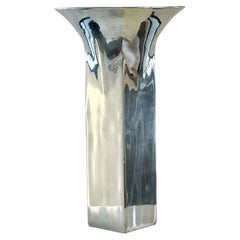
Michael Lax Design Grainware METAAL Vase, circa 1992
By Michael Lax
Located in Cathedral City, CA
Measures 12-3/4” high, 7-1/2” wide at the mouth, 2-7/8” wide at the base. Stamped on base METAAL Grainware c 1992 Michael Lax Design ML-4012 There are some light scuffs and scratches especially toward the base, patina to finish. See images for detail. Michael Lax (1929–1999) was an American industrial designer who created household products for companies such as Copco, Lightolier, Dansk, Salton, Metaal, Mikasa, Tupperware, and American Cyanamid. Several of his best-known products, including the Lytegem lamp by Lightolier and the Copco enamel...
Category

1990s American Post-Modern Vases

Materials

Aluminum

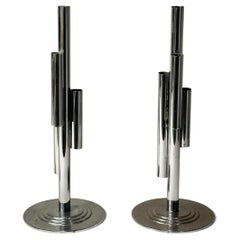
American Deco Pair Chrome Bud Vases, ca 1930s
By Chase Brass and Copper Company
Located in Cathedral City, CA
American Deco Pair Chrome Bud Vases, ca 1930s Unmarked, therefore listed as "in the style" of Chase and Co. Original vintage condition and expected wear. Some scratches throughout ...
Category

Early 20th Century American Art Deco Vases

Materials

Metal, Steel, Chrome

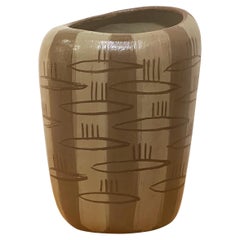
Lee Rosen Design Technics Incised Slip Decorated Abstract Design Vase ca 1950s
By Lee Rosen, Design Technics
Located in Cathedral City, CA
Lee Rosen for Design Technics Incised and Slip Decorated Abstract Design Vase, ca 1950s This is a gorgeous and unique Design Technics vase by Lee Rosen that features a biomorphic sh...
Category

Mid-20th Century American Mid-Century Modern Vases

Materials

Ceramic, Pottery

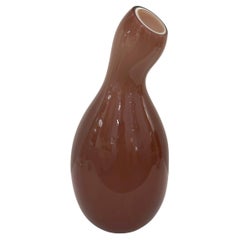
Marre Moerel Anatomy Series Corpus Cavernosum Murano Glass Vase Covo, Italy
By covo, Marre Moerel
Located in Cathedral City, CA
Marre Moerel Signed and Numbered Limited Edition "Corpus Cavernosum" Murano Glass Vase for Covo, Italy, ca 2001. This vase is part of her Anatomy Series and is numbered #2 of 29. The glass is a deep purple color (eggplant or wine) cased with white glass sandwiched with a pink/clear glass on the interior. Marre has said that the shapes were in reference to the beauty of the human body and colors chosen to reflect the variety of skin tones. Highly evocative and intriguing, this design is beautiful and also evokes conversation and thought. A true piece of art! This vase is part of a project named Smash, and curated by Emmanuel Babled for Covo in 2001. A group of famous designers (James Irvine, Jeffrey Bennet, Jerszy Seymour, Marre Moerel, Richard Hutten, Ritsue Mishima...
Category

21st Century and Contemporary Italian Modern Abstract Sculptures

Materials

Art Glass, Blown Glass, Murano Glass

Marre Moerel Anatomy Series Signed Edition Gluteus Murano Glass Vase Covo, Italy
By covo, Marre Moerel
Located in Cathedral City, CA
Marre Moerel Signed and Numbered Limited Edition "Gluteus" Murano Glass Vase for Covo, Italy, ca 2001. This vase is part of her Anatomy Series and is numbered #5 of 29. The glass is a deep purple color (eggplant or wine) cased with white glass sandwiched with a pink/clear glass on the interior. Marre has said that the shapes were in reference to the beauty of the human body and colors chosen to reflect the variety of skin tones. Highly evocative and intriguing, this design is beautiful and also evokes conversation and thought. A true piece of art! This sculpture is part of a project named Smash, and curated by Emmanuel Babled for Covo in 2001. A group of famous designers (James Irvine, Jeffrey Bennet, Jerszy Seymour, Marre Moerel, Richard Hutten, Ritsue Mishima...
Category

21st Century and Contemporary Italian Modern Abstract Sculptures

Materials

Art Glass, Blown Glass, Murano Glass

Still Thinking About These?

All Recently Viewed