Items Similar to Stoin for Burley Winter Pair of Vases, American Art Deco Pottery 1930s
Video Loading
Want more images or videos?
Request additional images or videos from the seller
1 of 14
Stoin for Burley Winter Pair of Vases, American Art Deco Pottery 1930s
$520per set
$650per set20% Off
£396.25per set
£495.31per set20% Off
€456.99per set
€571.23per set20% Off
CA$738.56per set
CA$923.19per set20% Off
A$793.54per set
A$991.92per set20% Off
CHF 425.73per set
CHF 532.16per set20% Off
MX$9,348.78per set
MX$11,685.97per set20% Off
About the Item
Vintage pair of Art Deco ceramic vases feature matte mottled and splash glaze in green and pastel pink palette. The minimal, but elegant shape of the vases, created in contemporary Art Deco style with strong Arts and Crafts influence, was used as a canvas to explore the effects that can be achieved with different applications of the tints and shades of green colored glaze on the pale pink background. The vases form the cohesive pair that offers an additional visual interest in glaze variations on surface decoration.
The vases are marked with the identical model numbers on the bottoms; the definitive attribution can be made by various printed and online resources.
The Burley Winter Pottery Company was founded in 1872 in Crooksville, Ohio. The owners, William Newton Burley and Wilson Winter, hired the popular designer Stoin M. Stoin in 1932, who created some of the best art pottery for the company in 1930s. His work for Burley Winter was characterized by the matte glazes, without even a hint of a sheen; the urns, jardinieres, and jars appeared as if they had been found lying in a field with centuries of age from an ancient civilization, with the thick, heavy shapes of the vases that were implying some archaic design. Mottling blues, greens, and reds palette, the renowned matte finish, and the shapes designed to look older than they were in attempt to replicate the aged surface of more dated pottery created a characteristic look for Stoin work of that period. The 1930s Stoin lines were either signed an incised “Burley Winter” mark, or not marked at all. The Burley Winter Pottery Company achieved its greatest commercial success in the 1930's, but in early 1940s all art pottery production ceased in favor of industrial products for the war effort.
Stoin M. Stoin (1895-1988) was well known during his lifetime, but biographical details of his life and his body of work, usually not signed, were not well documented. A Bulgarian émigré, Stoin settled in East Liverpool, Ohio, around 1922, but his skills and compelling aesthetic vision didn’t gain recognition until 1926 when he was hired by Eugene Houghton to develop a line of decorative wares for the Houghton Pottery in Dalton. His early work was concentrated on the asymmetrical application of glazes over minimalistic jars and vases. His fascination with the use of variations of sponged, wiped, or sprayed glazes over white or colored underglazes continued for almost 50 years; his work was characterized by simple forms, unconventional glazes, and the natural qualities of clay. After his initial two-year experience in Dalton, Stoin worked as a manager, potter, or glaze technician at 14 other large and small potteries, including three that he established, in Ohio, Illinois, Arkansas, and West Virginia, creating pottery that often was glazed with original, sometimes secret, recipes from his personal collection of nearly 150 glazes. He created successful lines for Houghton, Dalton, Burley Winter, Weller (specifically, the Juneau and the Barcelona lines, with total of 7 named lines of wheel-thrown vases and containers for the Weller Pottery designed in 1928, with specific color themes and glaze applications for each line that were also designed by him), Niloak (at least 62 numbered shapes for Hywood Art Pottery line in 1931), and Monmouth Stoneware before founding the Stoin-Lee Pottery in 1942, which was within a few months re-named APCO and operated until 1955. Stoin’s retirement years were spent with a son and his family in Farmington, Arkansas, where he threw pottery on an electric wheel for personal pleasure. Stoin pottery represents a significant aspect of early 20th-century vernacular modernism from the Mississippi River Basin; his work is in collection of several museums, including Museum of Art in Zanesville, OH.
- Creator:Burley Winter (Manufacturer)
- Dimensions:Height: 7 in (17.78 cm)Diameter: 5.25 in (13.34 cm)
- Sold As:Set of 2
- Style:Arts and Crafts (Of the Period)
- Materials and Techniques:
- Place of Origin:
- Period:
- Date of Manufacture:1930s
- Condition:Wear consistent with age and use.
- Seller Location:Clifton Springs, NY
- Reference Number:1stDibs: LU4421143188742
Roman Erlikh
Roman Erlikh is a professional woodworker with over 20 years’ experience. Roman Erlikh Studio creates bespoke and limited edition contemporary furniture and art objects. His first furniture collections were inspired by traditional Art Deco and Biedermeier styles interpreted through a modern lifestyle demands. Stepping away from merely utilitarian view of everyday objects, his recent collections are filled with meaningful textual context while incorporating traditional and modern woodworking techniques. Roman is using practical function as a common denominator to create emotionally charged art objects, blurring the boundary between art and function. While appreciating possibilities of ordinary materials, Roman is developing new mixed media multilayered composite varnishes and utilizes decorative gilding and mica veneer to actively engage ambient light, giving an additional aspect to relation of his objects to their environment. The decision to work in custom format was based on environmental concerns and opposition to culture of mass production and pure consumerism. The choice of materials was heavily influenced by sustainability and environmental concerns. All objects are made locally in the Brooklyn Navy Yard workshop. Elimination of storage and transportation needs for mass-produced furniture in lieu of creating a custom made objects on demand allows us to reduce waste of materials and energy.
About the Seller
5.0
Platinum Seller
Premium sellers with a 4.7+ rating and 24-hour response times
Established in 2011
1stDibs seller since 2019
291 sales on 1stDibs
Typical response time: <1 hour
- ShippingRetrieving quote...Shipping from: Clifton Springs, NY
- Return Policy
More From This Seller
View AllSet of 2 Dümler
Breiden Lava Vases, West German Pottery
By Dümler
Breiden, West German Pottery
Located in Clifton Springs, NY
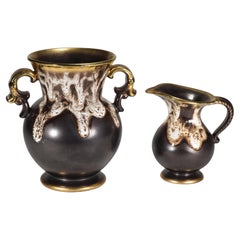
Set of 2 Mid Century Modern vases feature textured lava glaze in mocha and off-white colors on espresso brown background color; the handles, bases, and rims are accentuated with gol...
Category
Mid-20th Century Mid-Century Modern Vases
Materials
Ceramic, Porcelain
Bill Stewart Set of Two Sculptural Vases or Vessels, American Art Studio Pottery
By Bill Stewart
Located in Clifton Springs, NY
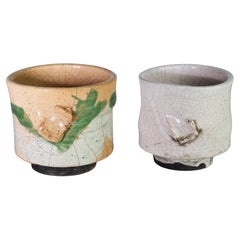
Two sculptural vases or vessels are free-formed by hand and glazed in complex, semi-gloss crackle glaze; matte graphite-colored glaze was used on the bottom parts of the vessels. Bo...
Category
20th Century American Organic Modern Vases
Materials
Ceramic, Majolica, Terracotta
Linn Phelan Vase, Early American Studio Pottery 1932
By Linn Lovejoy Phelan
Located in Clifton Springs, NY
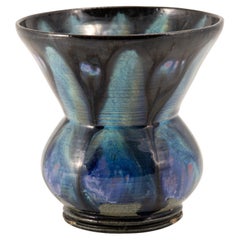
Sculptural vintage vase features a bulbous body with pronounced wide rim; it is decorated in complex drip glaze in blue, teal, and green palette with beige pink accents. Parts of the vase near the bottom are intentionally left unglazed to accentuate the unpredictable nature of the drip glazes. The inner surfaces are decorated with the glazes in the same palette, and the inner part of the rim is done with the same drip glaze pattern as the outer surfaces, creating a continuous composition and guiding the eyes of the viewers along the lines of the piece.
The vase is signed and dated by the artist on the bottom, "Linn L. Phelan 1932", circling the base, and marked with that appears to be either model or glaze numbers in the center. The date corresponds with Phelan's training under Arthur Baggs; the vase is an important example of Phelan's early work and of early American studio pottery movement. While the form of the vase shows Art Deco style influence, the striking glaze on the piece points towards the distinctive works Phelan created later in his career. We are offering a large ceramic decorative bowl, created by Phelan in 1950s-1960s, in a separate listing.
Linn Lovejoy Phelan (1906-1992) was a renowned American ceramic artist, who operated famous Rowantrees and Linwood Pottery in Maine. He studied art in Bevier School of Art of the Rochester Athenaeum and Mechanics Institute (now Rochester Institute of Technology) in Rochester, New York, in 1928, and received his BFA in Ceramic Art in Ohio State University, Columbus, Ohio, in 1932. While attending Ohio State University, Phelan took "Ceramic Art: Survey of the Field" class, taught by Arthur Baggs. After Phelan left the school, he corresponded with Baggs, and in late 1930s Phelan wrote to Baggs of his experiences in helping to start up what becomes Rowantrees Pottery of Blue Hill, Maine. Arthur E. Baggs (1886-1947) studied at Alfred University in 1903-1905 and 1910-1911 with Dr. Charles F. Binns, who was considered "the father of American ceramic art"; Baggs worked at Marblehead Pottery and Cowan Pottery Studio, and became the head of the Ceramic Art Division of the Fine Arts Department at Ohio State University in 1928. Examples of Baggs work are in the collections of The Metropolitan Museum of Art in New York; Museum of Fine Arts, Boston; Everson Museum of Art in Syracuse, NY; and Columbus Museum of Art in Ohio. Baggs was an extremely influential figure in early American ceramics; he was given the Binns medal for outstanding achievement, made a Fellow of the American Ceramic Society and a member of Keramos. Through Baggs Phelan was exposed to the foundations of technical creativity and advancements in ceramic art in Alfred University, as well as the early 1900s studio pottery movement in America, linking the Arts and Crafts phase of studio pottery to Modernist movement.
In 1940s Phelan started teaching ceramics at School of American Craftsman (SAC), founded by Aileen Osborn Webb at Darthmouth College in 1944; SAC moved to Alfred University in Alfred, New York, in 1946, and to Rochester Institute of Technology (RIT) in 1950s. In 1940s SAC faculty included Edwin Blanchard Brown, Ernest Frank Brace, Laurits Eichner, Philip Morton, Charles Reese, Ethel Mitchell, Robert Savage, Thomas Mclure, along with Linn Phelan and another renowned ceramist, Herbert...
Category
Vintage 1930s American Vases
Materials
Ceramic, Pottery
I.C.S. Art Deco Majolica Vase, Italy 1927-1940
By Industria Ceramica Salernitana
Located in Clifton Springs, NY
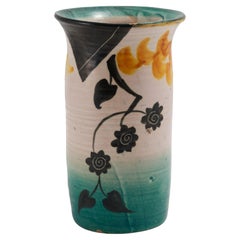
Rare vintage ceramic vase features streamlined cylinder form with slightly flared out rim and graphic decor in off white, teal, black, and yellow palette. The main motif of abstract flowers on a branch, descending from a triangular structure, hand painted in monochromatic black glaze, is juxtaposed with the ombre off white and teal background and an abstracted flock of birds in shades of yellow. The sophisticated Art Deco style flowering branch, with contrasting, clearly defined, angular outline, is softened with rounded, Folk Art or Naive Art style, almost cloud-like bird motifs, asymmetrically placed on one side of the branch. The decor repeats on front and back sides of the vase with slight variations in colors and placements that are consistent with hand-painted nature of the piece. The vase retains obvious hand-formed concentric ridges throughout the whole body that add textural element to the piece and allow for slight pooling of the glazes. The bottom is concave and glazed in off-white, with the unglazed foot, showing pinkish beige clay; it is not a glaze defect, as it was left unglazed intentionally when the vase was placed in the kiln for firing.
The vase is signed on the bottom with "Italy I.C.S" and Industria Ceramica Salernitana company's fish mark. It is in good vintage condition with age-appropriate small losses on glaze of the rim and bottom that do not detract from the quality and artistic expression of the vase and can be repaired professionally; please see pictures.
I.C.S. was founded in 1927 by Berlin-born Moses Malamerson in Vietri Sul Mar on Amalfi coast in Italy. I.C.S quickly gained recognition by participating in multiple major European and American expositions and art competitions available, attracting many artists that were looking to escape the economic depression and political upheaval of 1930s. I.C.S. can claim the honor of having employed all the famous artists of the German (Tedesco) Period, including Studemann, Irene Kowalski, Hannasch, Richard Dolker...
Category
Early 20th Century Italian Art Deco Vases
Materials
Ceramic, Majolica, Pottery
Robert Maxwell for Pottery Craft USA Bud Vase
By Robert Maxwell
Located in Clifton Springs, NY
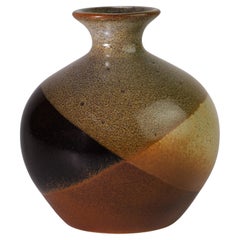
Striking modern slip-cast vase with overlapping circles motif was created by Robert Maxwell for Pottery Craft USA using his innovative glazing techn...
Category
Mid-20th Century American Mid-Century Modern Vases
Materials
Pottery, Ceramic
Robert Maxwell for Pottery Craft USA Vase
By Robert Maxwell
Located in Clifton Springs, NY
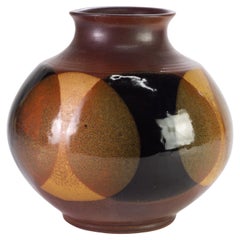
Striking modern slip-cast vase with overlapping circles motif was created by Robert Maxwell for Pottery Craft USA using his innovative glazing techn...
Category
20th Century American Mid-Century Modern Vases
Materials
Ceramic, Pottery
You May Also Like
1940s McCoy Ceramics - Set of Two Matte Glazed Ceramic Vases
By Nelson McCoy Pottery Company
Located in Chicago, IL
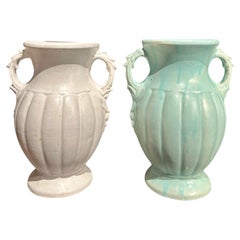
Produced in the 40s by McCoy Pottery, this set of two ceramic vases serves as both classic decorative art and functional pieces for any home. Adorn any shelf or table with a solitary...
Category
Vintage 1940s American Art Deco Vases
Materials
Ceramic, Celadon
Set of 2 Art Deco Ceramic Vases, Germany
Located in Hamburg, DE
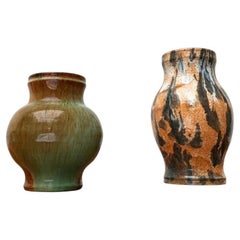
Art Deco Ceramic Vases, Germany, Set of 2, in Very Good conditions. Designed 1920 to 1949.
Additional information:
Materials: Ceramic
Color: Brown
Country of Origin: Germany
Item Ty...
Category
20th Century German Vases
Materials
Ceramic
$704 / set
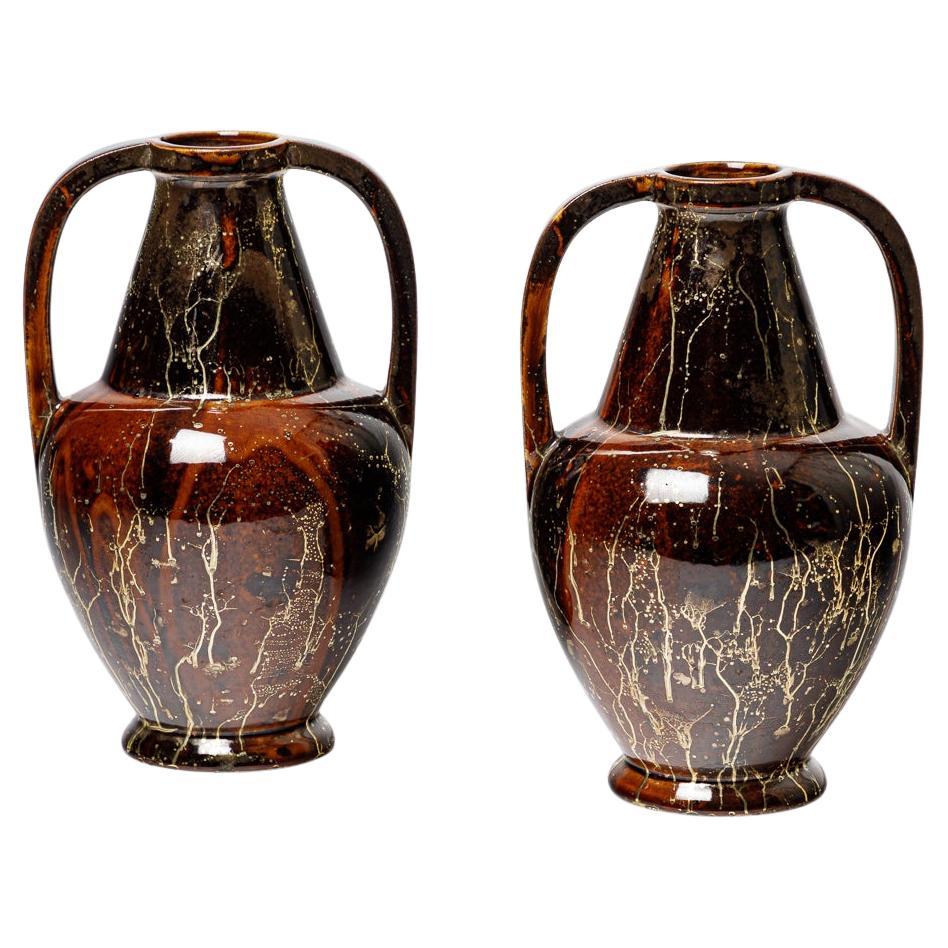
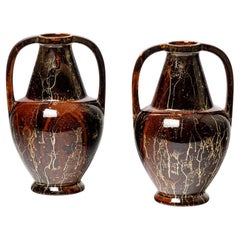
A pair of ceramic vases by Lucien Brisdoux, circa 1930-1950
By Lucien Brisdoux
Located in Saint-Ouen, FR
A pair of ceramic vases with brown-black and gold glazes by Lucien Brisdoux ( 1878-1963)
Perfect original conditions.
Signed under the bases.
Circa 1930-1950.
Dimensions :
H : 26 X 1...
Category
20th Century French Art Deco Vases
Materials
Ceramic
Pr. Art Pottery Floor Vases att. McCoy c. 1930/40
s
By Brush Mccoy
Located in New York, NY
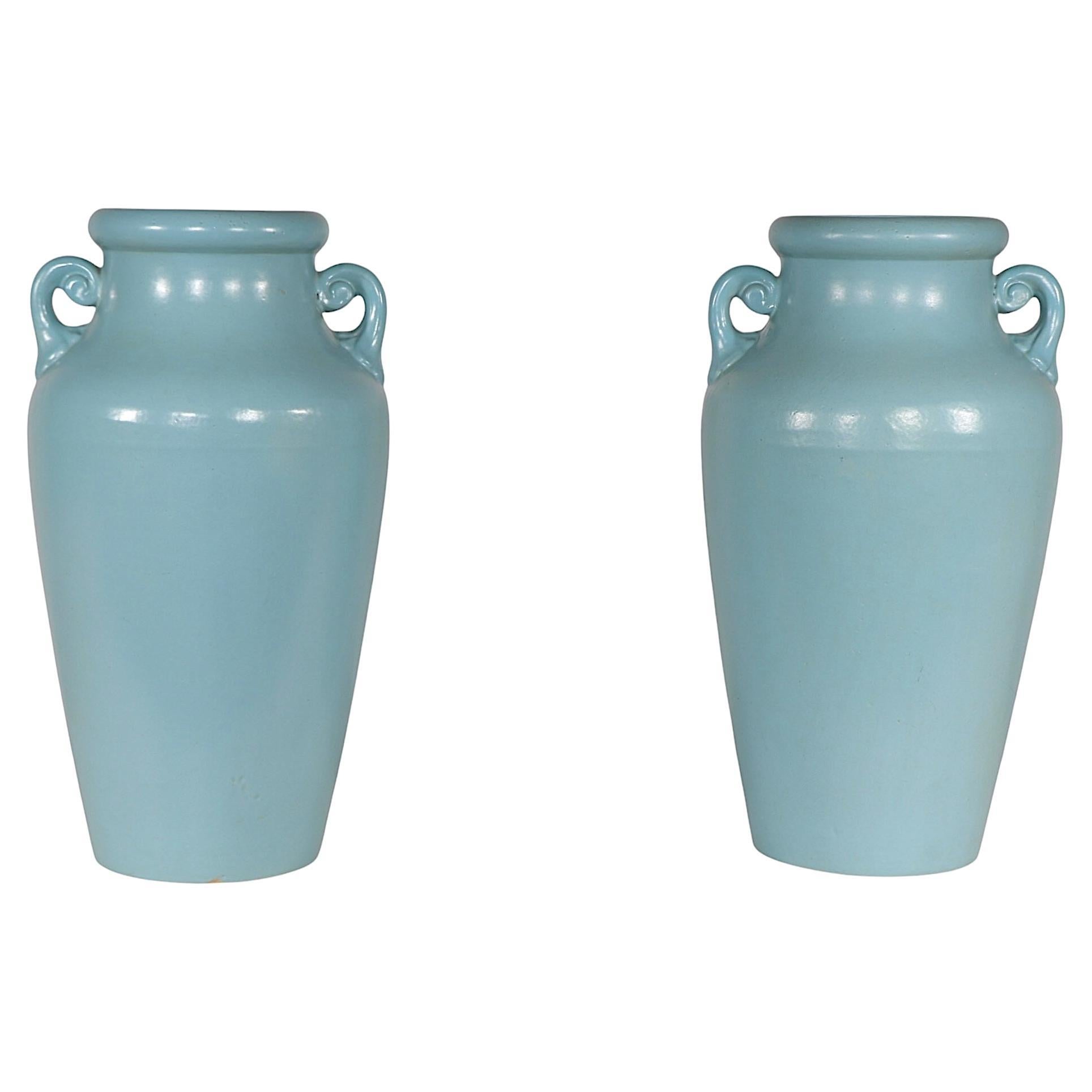
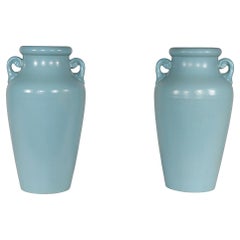
Pair of vintage Art Deco pottery vases, circa 1930/40's, marked U.S.A. 151/150 on verso, as shown. Executed in robins egg blue, shouldered form with two decorative handles . The vas...
Category
Mid-20th Century American Art Deco Vases
Materials
Pottery
Pair of English Sylva Stoneware Vases
Located in Los Angeles, CA
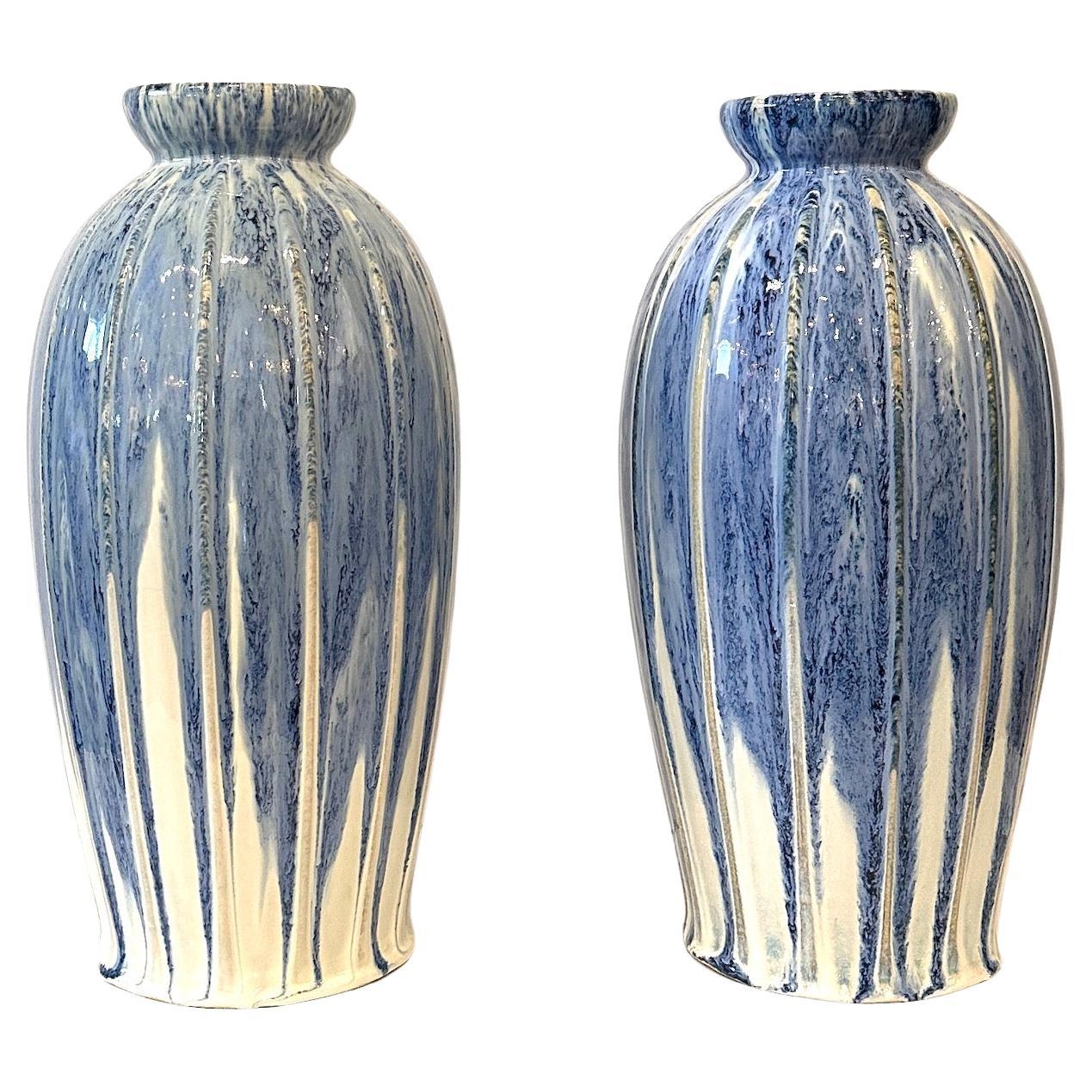
A pair of ribbed, stoneware vases from the Sylva Company in Stoke-On-Trent, Staffordshire.
Category
Vintage 1930s British Vases
Materials
Stoneware
$8,500 / set
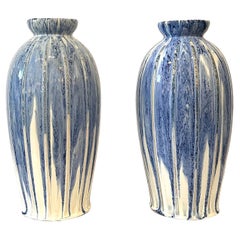
Two Danish ceramic vases, Danico and other. 1940s.
Located in København, Copenhagen
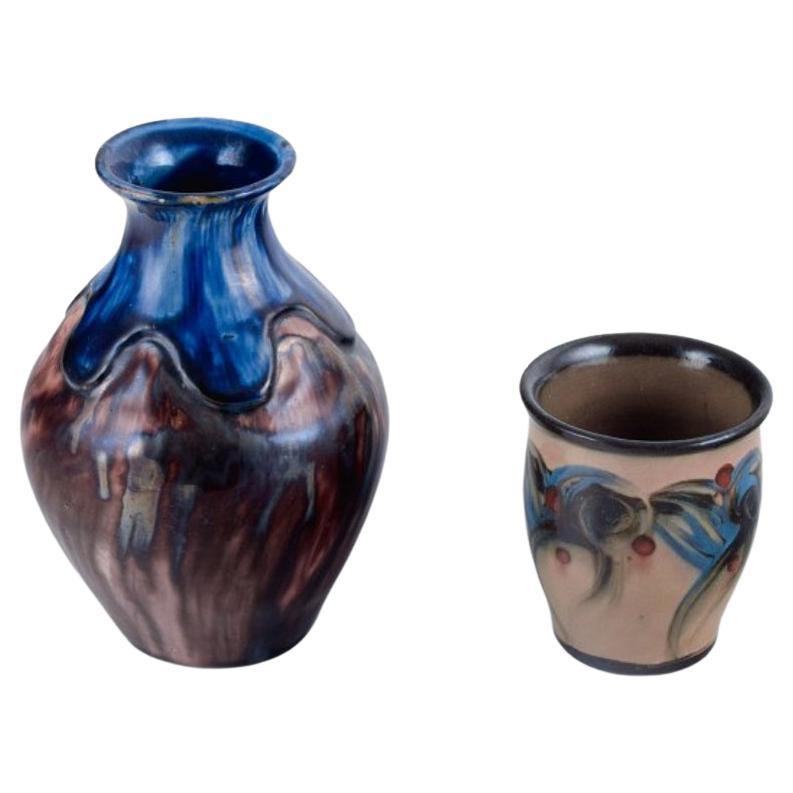
Two Danish ceramic vases, Danico and other.
1940s.
Float glaze and glaze in cow horn technique.
Marked.
In excellent condition. Large vase with sma...
Category
Vintage 1940s Danish Vases
Materials
Ceramic