Video Loading
Want more images or videos?
Request additional images or videos from the seller
1 of 17

Swedish Grace 1930s Large Art deco Argenta Vase By Wilhelm Kåge for Gustavsberg

$993.21
£741.83
€830
CA$1,368.33
A$1,491.24
CHF 789.68
MX$17,911.39
NOK 9,997.49
SEK 9,191.70
DKK 6,323.16

About the Item

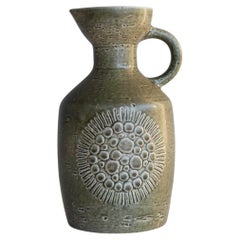
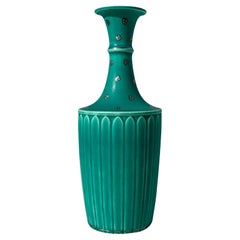
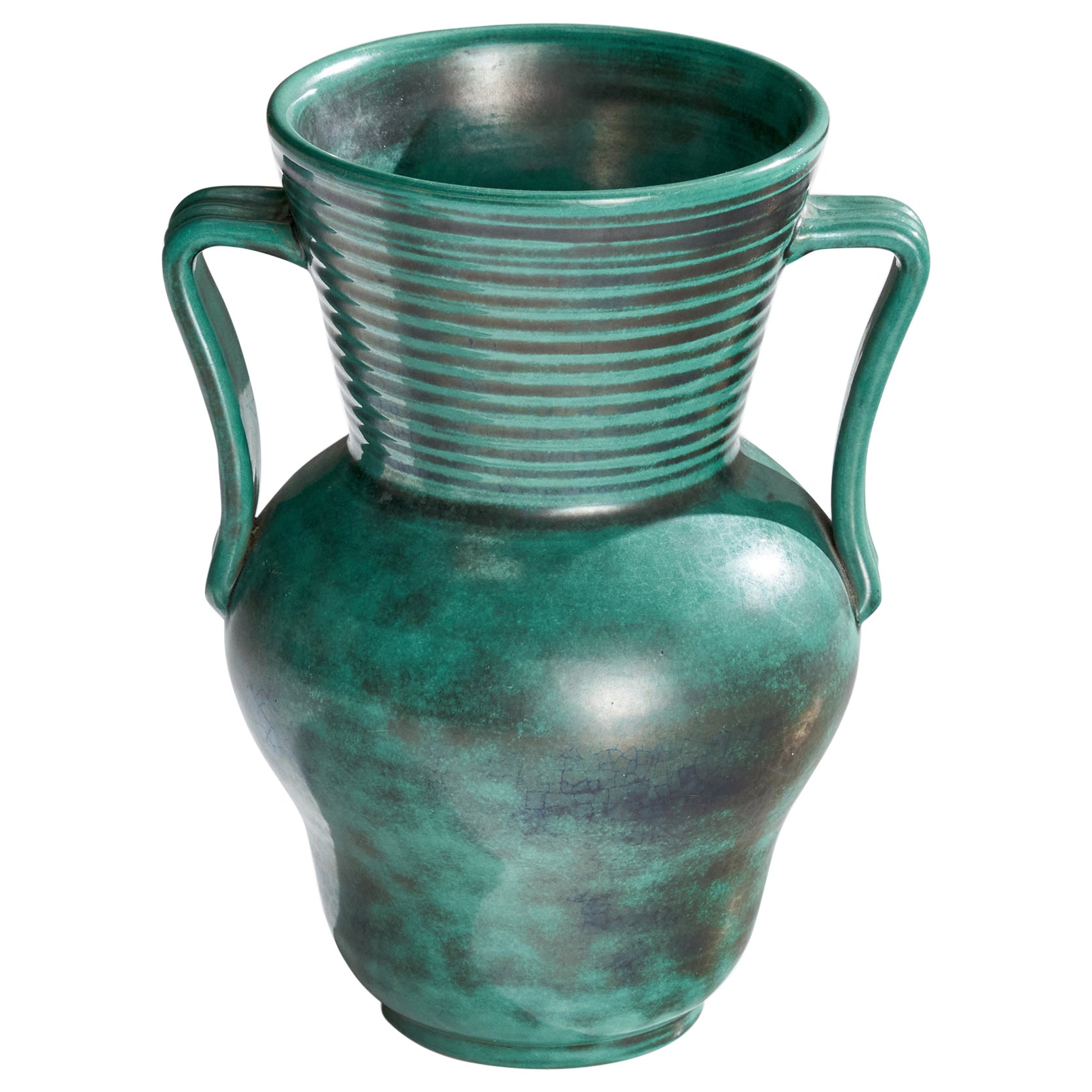
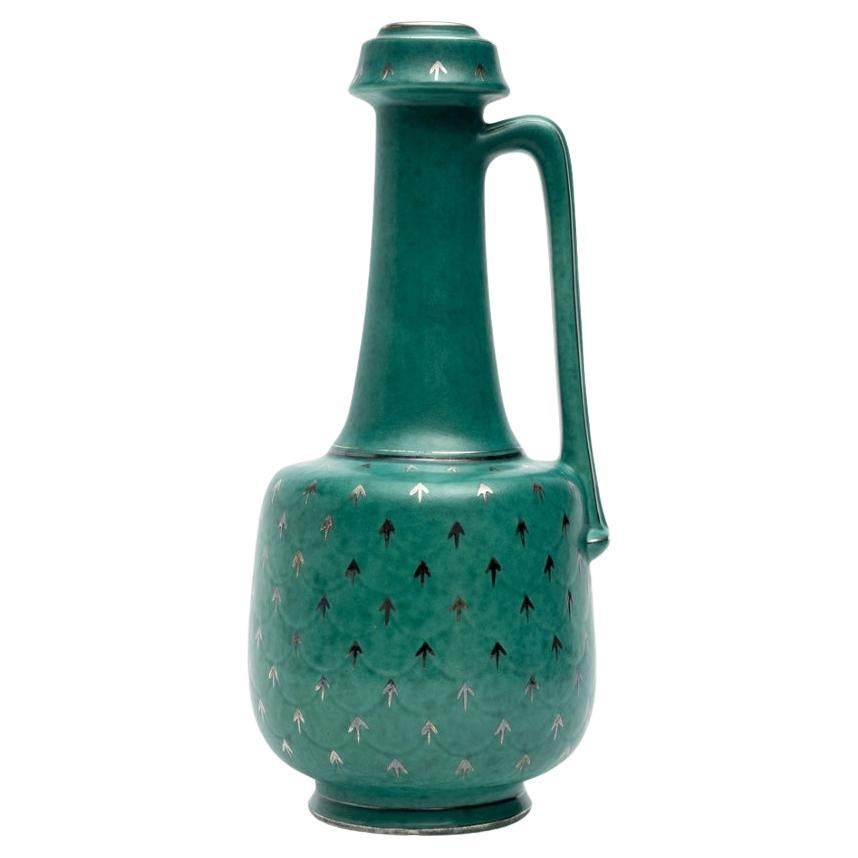
A rather large Art deco vase known as "Argenta" designed by Wilhelm Kåge and handmade for Gustavsberg in the 1930s. Green ceramic with fish scale decoration. The Argenta series is very typical of the Swedish Grace style that was popular in Sweden in the 1920s and 1930s and took inspiration from earlier periods but with a modern twist. The line was introduced at the Stockholm exhibition in 1930 and has become very rare and sought after. The vase is in a very good condition with almost no ware at all, the glazing is just fantastic with fish scales, given the age it is still a things of beauty. Designer: Wilhelm Kåge Maker: Gustavsberg Design Period: 1930 to 1939 Production period: 1930s Country of Manufacture: Sweden It is 31cm (12.20") high and 13cm (5.11") in diameter, the price includes free shipping. Gustavsberg Gustavsberg history dates back to 1825. In 1826, the wholesaler Herman Öhman tore down the old brick mill and started a porcelain factory on the site. His plan was to supply the growing Swedish middle class with porcelain goods. However, there were major production problems in the factory, and the quality of the produced goods was substandard. No artists were recruited, and the Gustavsberg pottery was highly influenced by German and English shapes and decorations. Like many of the local Gustavsberg boys, Josef Ekberg (1877-1945) started to work at the porcelain factory at the age of 12. He was first hired as an assistant, but over time he began crafting artworks on his own. Ekberg and fellow artist Gunnar Wennerberg jointly developed the famed Sgraffito technique, where a pattern is carved on a glazed surface. The art pieces they produced received a warm welcome at the World Exhibition in Paris in 1900. The Gustavsberg company was about to received worldwide recognition for the quality of its work. Wilhelm Kåge (1889-1960) first gained notoriety in Sweden for his colorful posters during the 1910s. He soon attracted the attention of the Gustavsberg factory which sought out artists with new ideas. Kåge accepted the offer from the factory, despite his lack of experience in ceramic production. His task was to add an artistic touch to the factory’s functional items. Berndt Friberg (1899-1981) was hired by the Gustavsberg factory in 1934. During his first years, he worked as a thrower for Wilhelm Kåge. Friberg’s arrival was marked by a significant increase in the quality of Kåge’s art pieces. Soon enough, he became the undisputed master thrower at Gustavsberg. Through his early career, Friberg wasn’t known for his artistic ambition. His artistic debut wouldn’t come until the age of 42. He became known as a perfectionist with an eye for delicate, sensuous forms and magnificent glazes. The young art student Stig Lindberg (1916-1982) went unannounced to the Gustavsberg factory in 1937 looking for a summer job. The skinny, odd-looking young man exuded confidence: ”If you hire me, I will ensure that there will be jobs in the factory.” Lindberg was hired as an assistant but climbed fast through the ranks because of his frenetic energy and wealth of fresh ideas. Wilhelm Kåge and Stig Lindberg jointly developed the noteworthy faience production through the late 1930s and early 1940s. The faience objects were created from reddish earthenware, coated with a milky-white glaze and hand painted bold colored decor. The floral motifs of the 1940s slowly gave way to the era-typical geometrical decor of the 1950s and 1960s. The faience series became a huge success and is still one of the most well-known symbols of Swedish mid-century design. In 1949, Stig Lindberg succeeded Wilhelm Kåge as artistic leader. His influence was quickly felt across the entirety of the design world; from slender, delicate stoneware to TV sets, wash basins, tableware, home decor, textiles, children’s books, enamel, and glass art. It is easy to get lost in the sheer breadth of artistic production over Lindberg’s lifetime. He did not make a distinction between the artistic merit of industrial design and more traditional works of art. Lindberg famously noted, “A thumbtack holds for me as much poetry as a wildflower.” Lisa Larson was hired by Stig Lindberg in 1954 after performing well in a Scandinavian school competition. The Gustavsberg factory flourished in the 1950s and 60s, and Larson quickly became one of the most notable designers. Her serial production often depicted people and animals with rounded and swelling shapes. The expression was warm-hearted, humorous, and sometimes subtly ironic. Rustic primitive art often inspires Larson’s unique artworks. Spontaneous whim is generally treasured more than perfectionism. She frequently experiments with traditional techniques, incised decorations, rough surfaces and matte glazes in her unique production.
  • Creator:
    Gustavsberg (Manufacturer),Wilhelm Kage (Designer)
  • Dimensions:
    Height: 12.2 in (30.99 cm)Diameter: 5.11 in (12.98 cm)
  • Style:
    Art Deco (Of the Period)
  • Materials and Techniques:
    Ceramic,Glazed
  • Place of Origin:
  • Period:
  • Date of Manufacture:
    circa 1930
  • Condition:
    Wear consistent with age and use.
  • Seller Location:
    Skarpnäck, SE
  • Reference Number:
    1stDibs: LU7766243014692

More From This Seller

View All
Gunnar Nylund pottery vase or jug "ASR" by , Rörstrand, Sweden
By Rörstrand, Gunnar Nylund
Located in Skarpnäck, SE
An extraordinary, rare and rather large hand-made vintage ceramic vase known as "ASR", design by the very talented Gunnar Nylund for Rörstrand. What makes this vase so very special i...
Category

Vintage 1960s Swedish Mid-Century Modern Vases

Materials

Ceramic

Mid-century modern art vase by Mari Simmulson for Upsala Ekeby, Sweden
By Mari Simmulson, Upsala Ekeby
Located in Skarpnäck, SE
A lovely vintage handmade vase, made by the talented and well-known artist Mari Simmulson for equally famous Upsala Ekeby in the 60s. It has a fantastic glazing with stunning details...
Category

Vintage 1960s Swedish Mid-Century Modern Vases

Materials

Ceramic

Ceramic Vase by Arthur Andersson for Wallåkra, Sweden, 1960s
By Wallåkra, Arthur Anderson
Located in Skarpnäck, SE
A fantastic vintage ceramic vase, handmade and design by Arthur Andersson, for Wallåkra Keramik, Sweden. The vase has a lovely color, a pale brown or beige color, with hints of musta...
Category

Vintage 1960s Swedish Mid-Century Modern Vases

Materials

Ceramic

Scandinavian modern vintage pottery by Gunnar Nylund ZENIT vase by Rörstrand
By Gunnar Nylund, Rörstrand
Located in Skarpnäck, SE
A large version of a vintage vase known as Zenit, made by one of Scandinavias most talented and famous designer; Gunnar Nylund for the prestigious Rörstrand, Sweden. What makes this ...
Category

Vintage 1960s Swedish Mid-Century Modern Vases

Materials

Ceramic, Stoneware

Scandinavian modern vintage pottery vase from Tilgmans, Sweden
By Tilgmans Keramik
Located in Skarpnäck, SE
A fantastic large ceramic vase from Tilgmans, Sweden. Tilgman's ceramics are mainly known for ceramics that are decorated with so-called graffito technology. Which is the case for th...
Category

Vintage 1960s Swedish Mid-Century Modern Vases

Materials

Wicker, Art Glass

Modernist, earthenware ceramic vase by Inger Persson for Rörstrand, Sweden
By Inger Persson, rorstrand studio
Located in Skarpnäck, SE
A signed rare brutalist studio production art ceramic vase by Inger Persson for Rörstrand, Sweden. As a studio product it is very rare and has an unusual shape and pattern. As always...
Category

Vintage 1960s Swedish Mid-Century Modern Vases

Materials

Ceramic

You May Also Like

Art Deco Vase in patinated bronze designed by Jacob Ängman for GAB Sweden, 1930s
By GAB Guldsmedsaktiebolaget
Located in Knivsta, SE
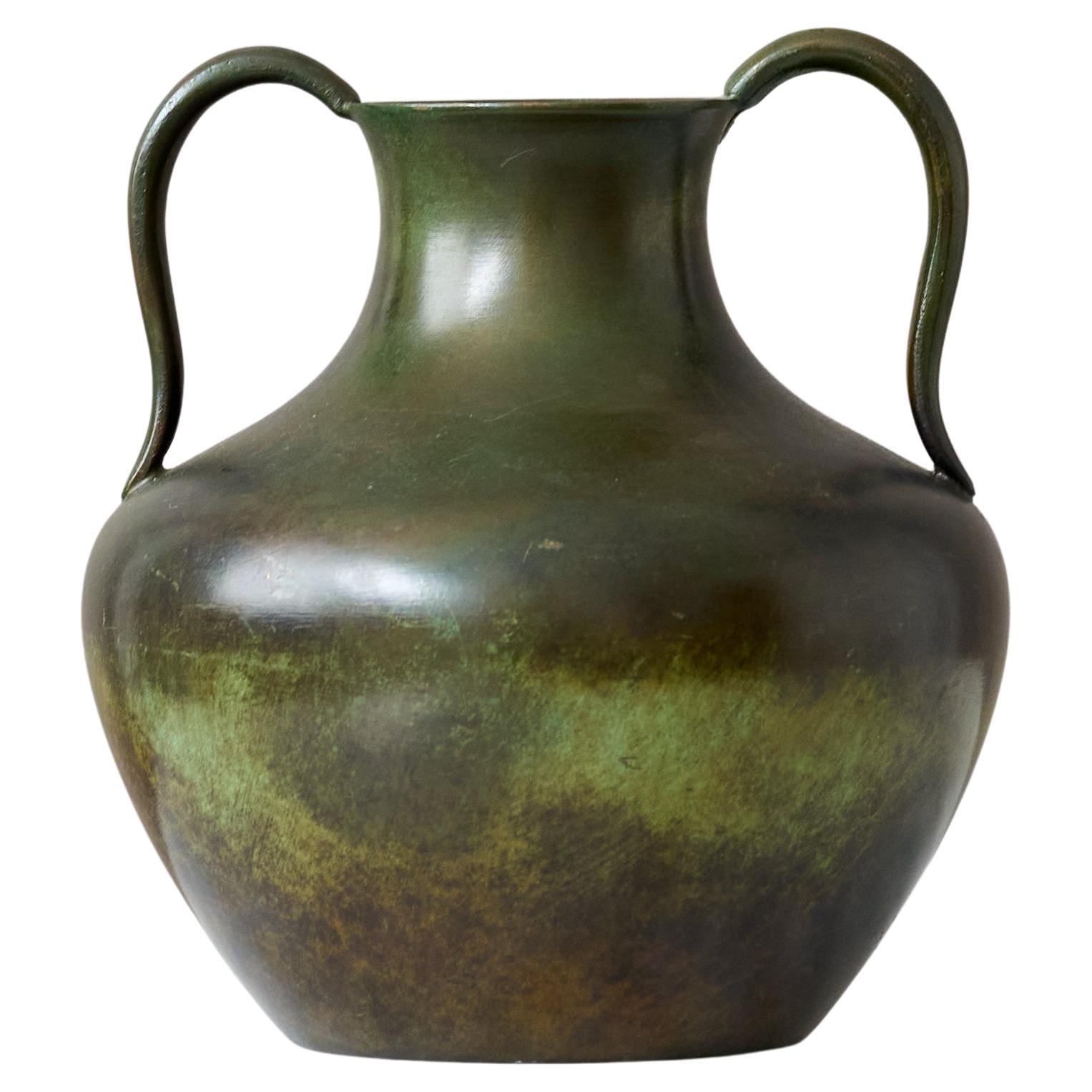
Beautiful Art Deco Vase in patinated bronze designed by Jacob Ängman (1876-1942) for GAB (Guldsmedsaktiebolaget) in Sweden during the 1930s. Wear consistent with age and use
Category

Vintage 1930s Swedish Art Deco Vases

Materials

Bronze

1930s Wilhelm Kåge Silver Decor Argenta Vase for Gustavsberg, Sweden
By Gustavsberg, Carl-Harry Stålhane, Upsala Ekeby, Wilhelm Kage, Josef Ekberg
Located in Copenhagen, DK
Sculptural stoneware “Argenta” vase by Wilhelm Kåge with soft fluted body and elegant slender neck. From top to bottom silver inlay lines and floral decor on matte deep ocean green g...
Category

Early 20th Century Swedish Art Nouveau Vases

Materials

Silver, Silver Leaf

Upsala Ekeby, Vase, Earthenware, Sweden, 1930s
By Upsala Ekeby
Located in High Point, NC
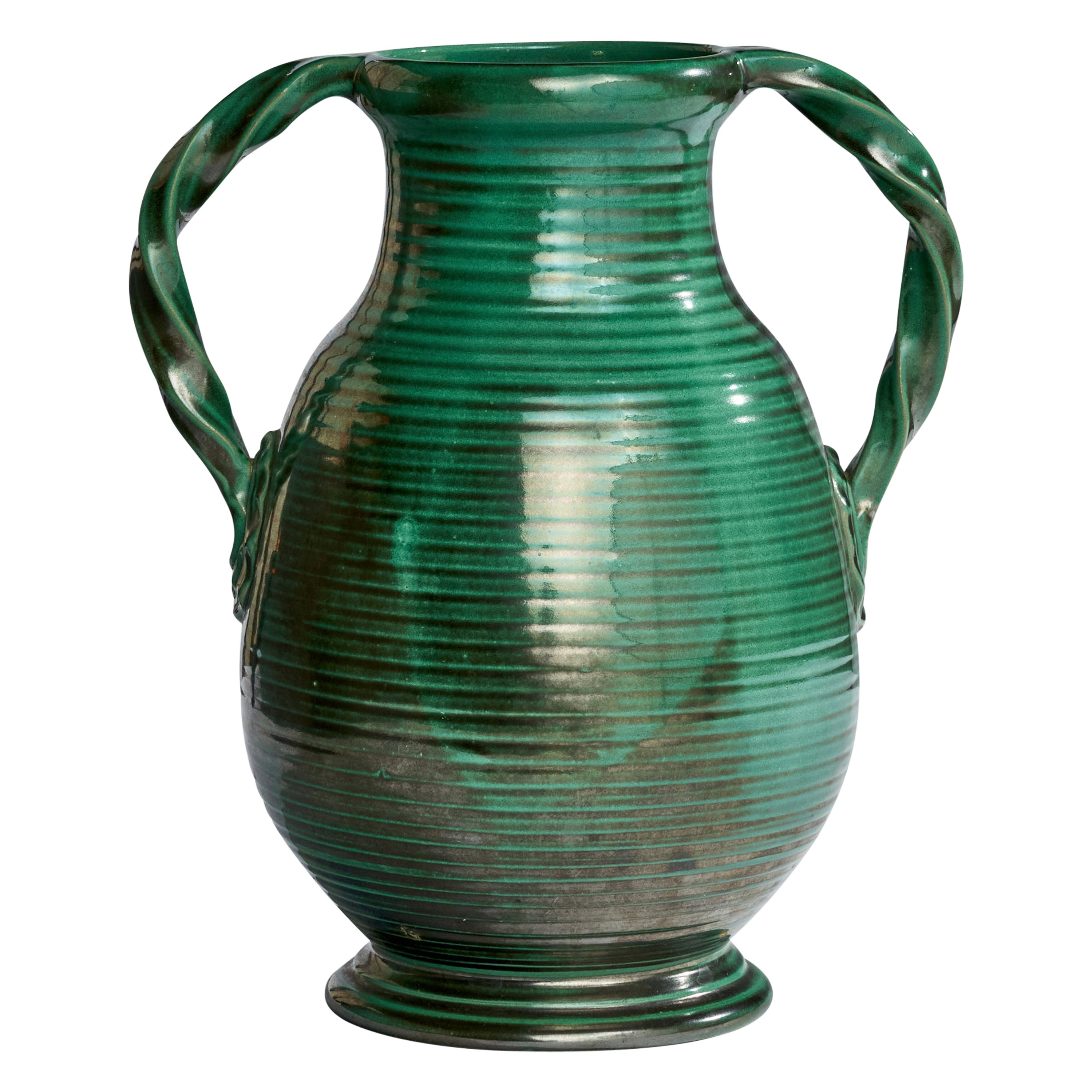
A green-glazed earthenware vase designed and produced by Upsala Ekeby, Sweden, 1930s.
Category

Vintage 1930s Swedish Scandinavian Modern Vases

Materials

Earthenware

Upsala Ekeby, Vase, Earthenware, Sweden, 1930s
By Upsala Ekeby
Located in High Point, NC
A sizeable green-glazed vase designed and produced by Upsala Ekeby, Sweden, 1930s.
Category

Vintage 1930s Swedish Scandinavian Modern Vases

Materials

Earthenware

Vase with Handle by Wilhelm Kåge for Gustavsberg
By Wilhelm Kage, Gustavsberg
Located in Brooklyn, NY
1940s, Sweden. Handled Vase by Wilhelm Kåge from his Argenta collection of stoneware produced for the Gustavsberg Factory. Speckled turquoise glaze with silver leaf arrow along the v...
Category

Vintage 1940s Swedish Vases

Materials

Stoneware

Art Deco Bronze Vase by GAB Guldsmedsaktiebolaget, Sweden, 1930s.
By GAB Guldsmedsaktiebolaget, Just Andersen, Sune Bäckström
Located in Malmö, SE
A beautiful bronze vase with amazing patina. Made by GAB Guldsmedsaktiebolaget, Sweden, 1930s. Good condition, some light scratches, scuffs and wear to the patination. Stamped ...
Category

Vintage 1930s Swedish Art Deco Vases

Materials

Bronze