Items Similar to Silver ashtray w/ the coat of arms of Portugal
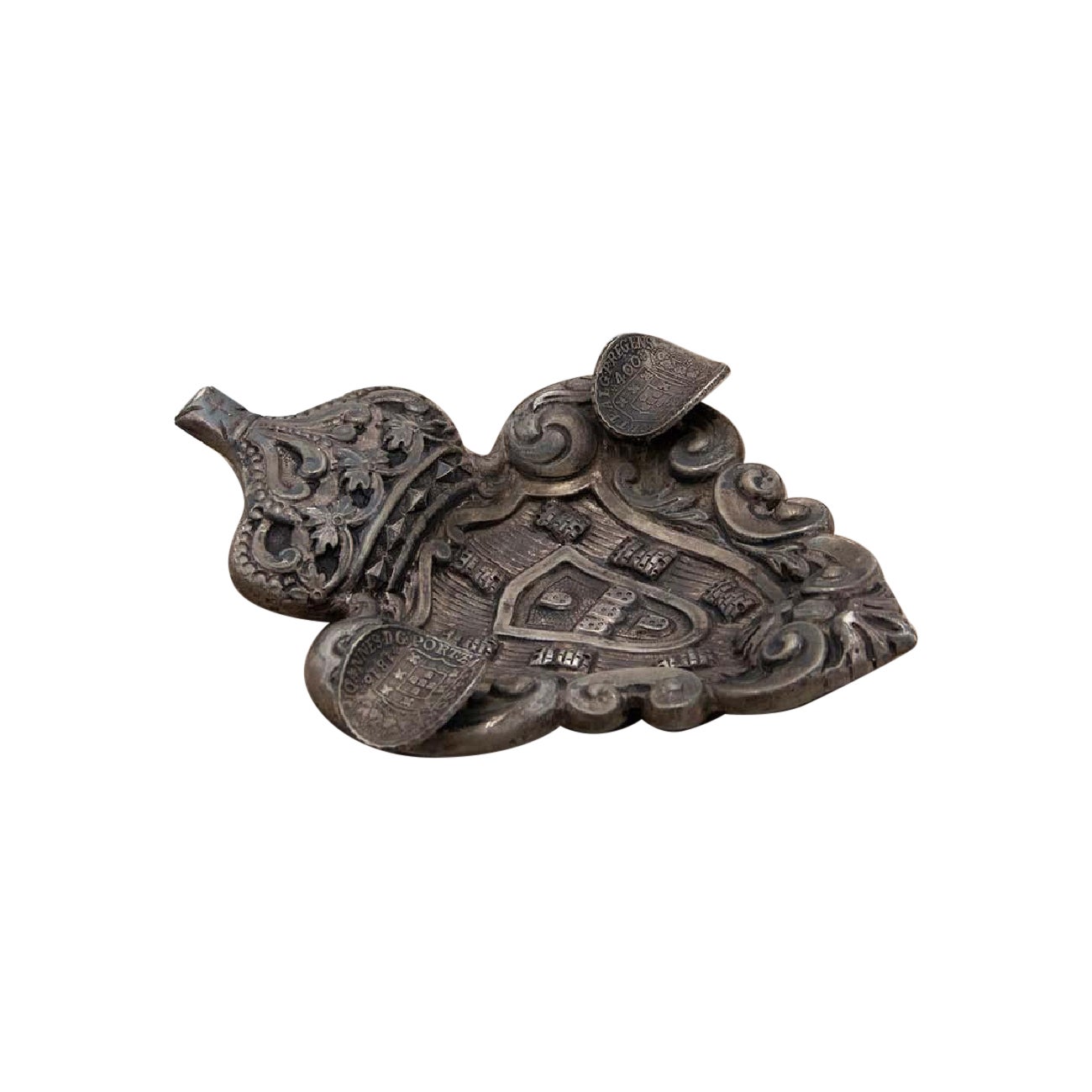
two 500 reis coins of D Luís
Want more images or videos?
Request additional images or videos from the seller
1 of 10
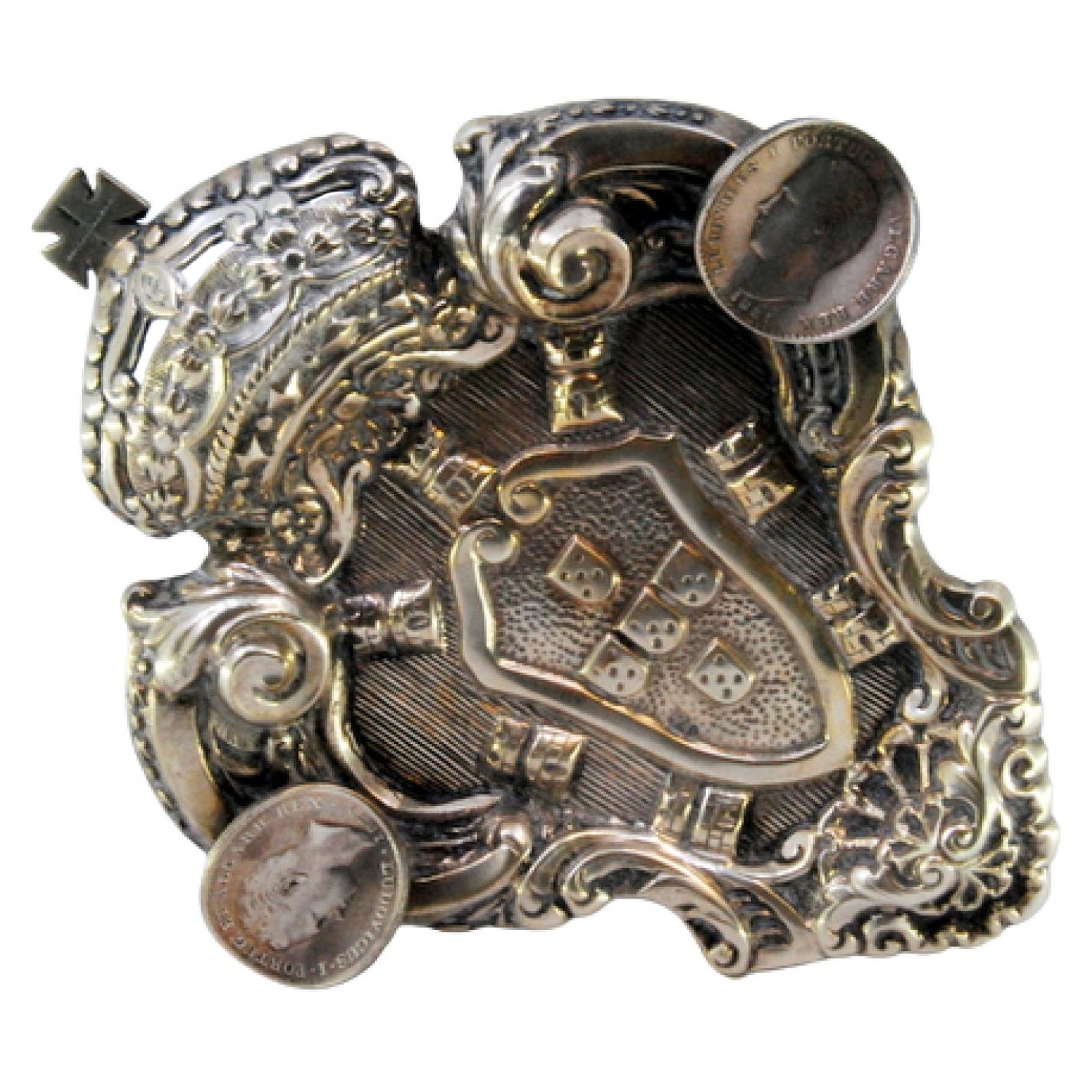
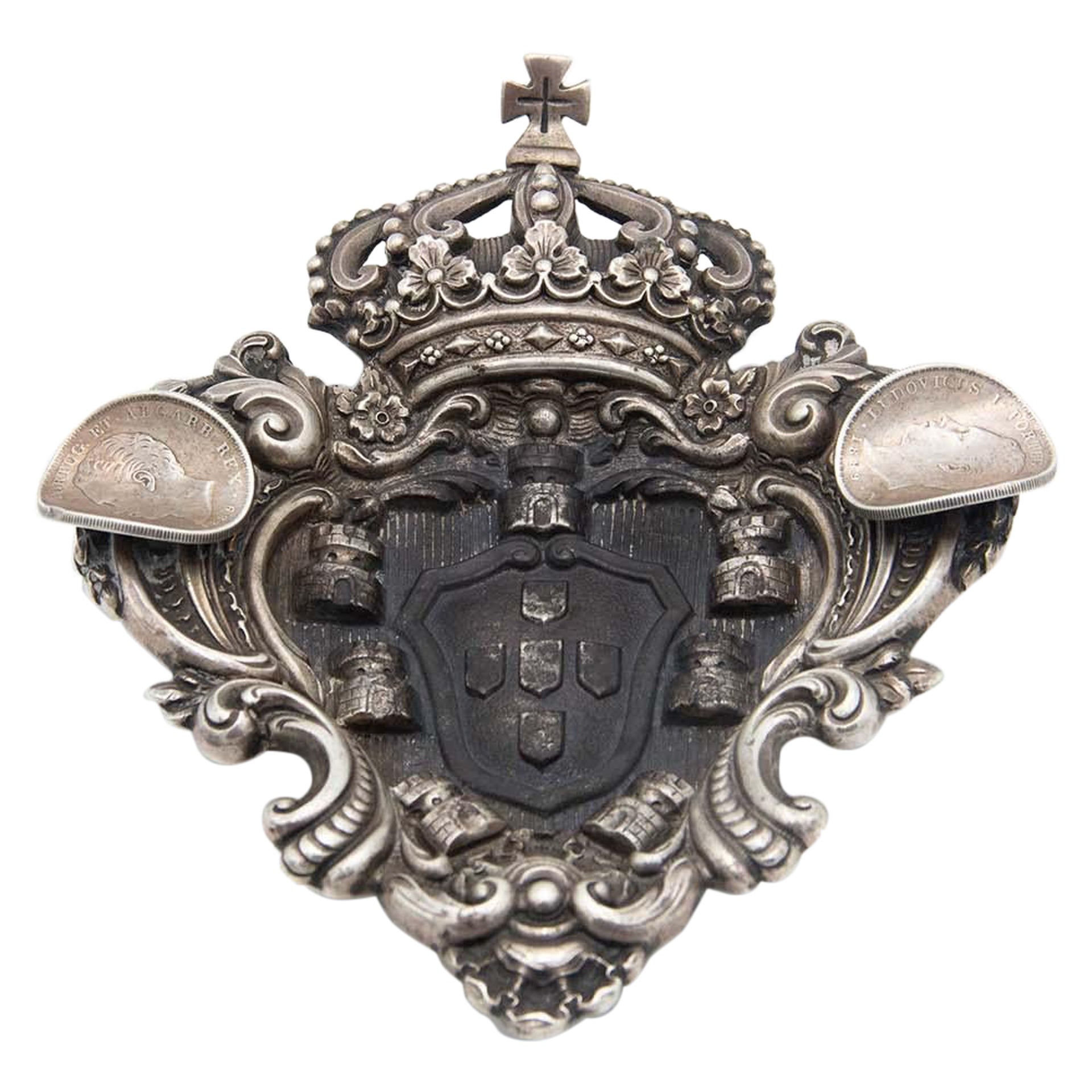
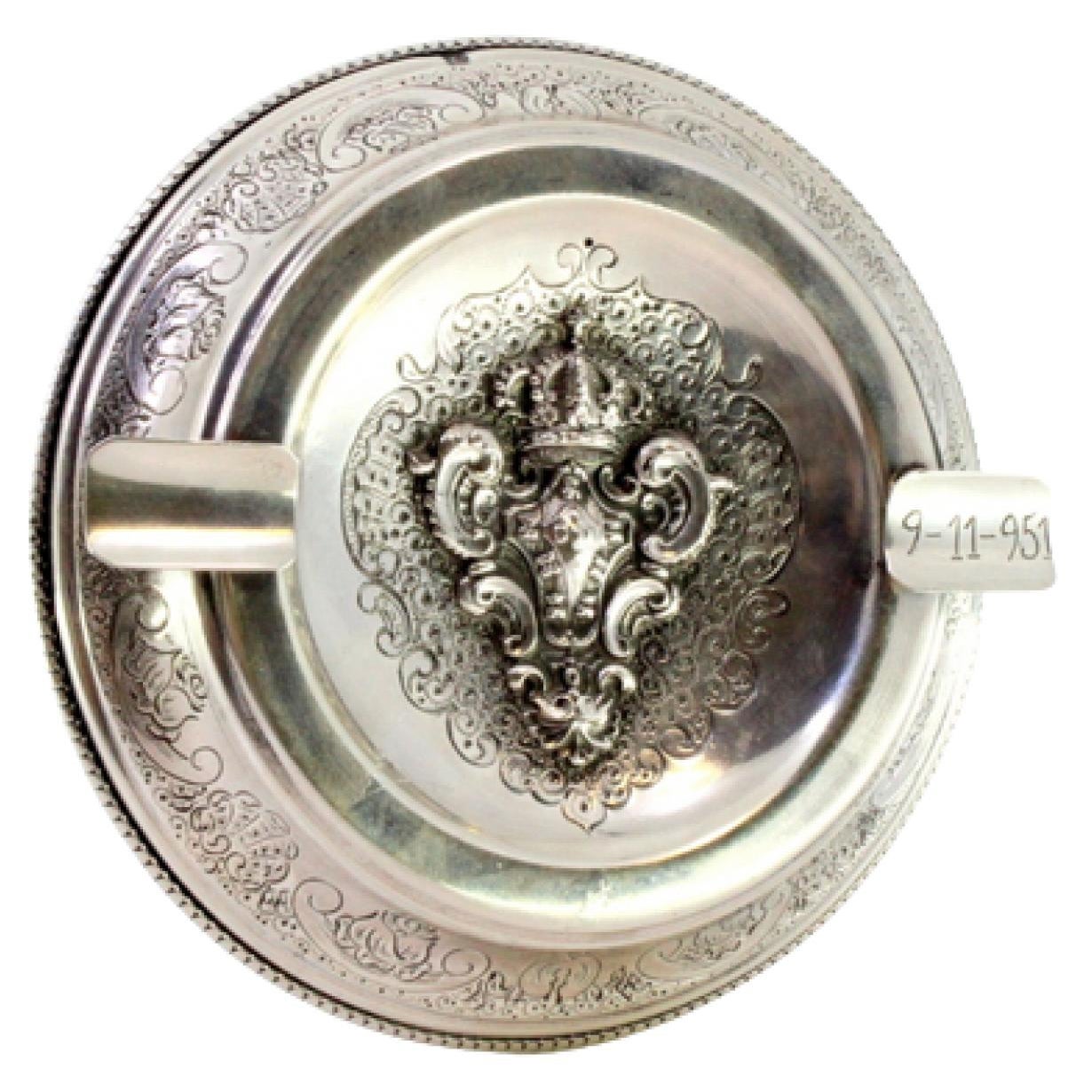
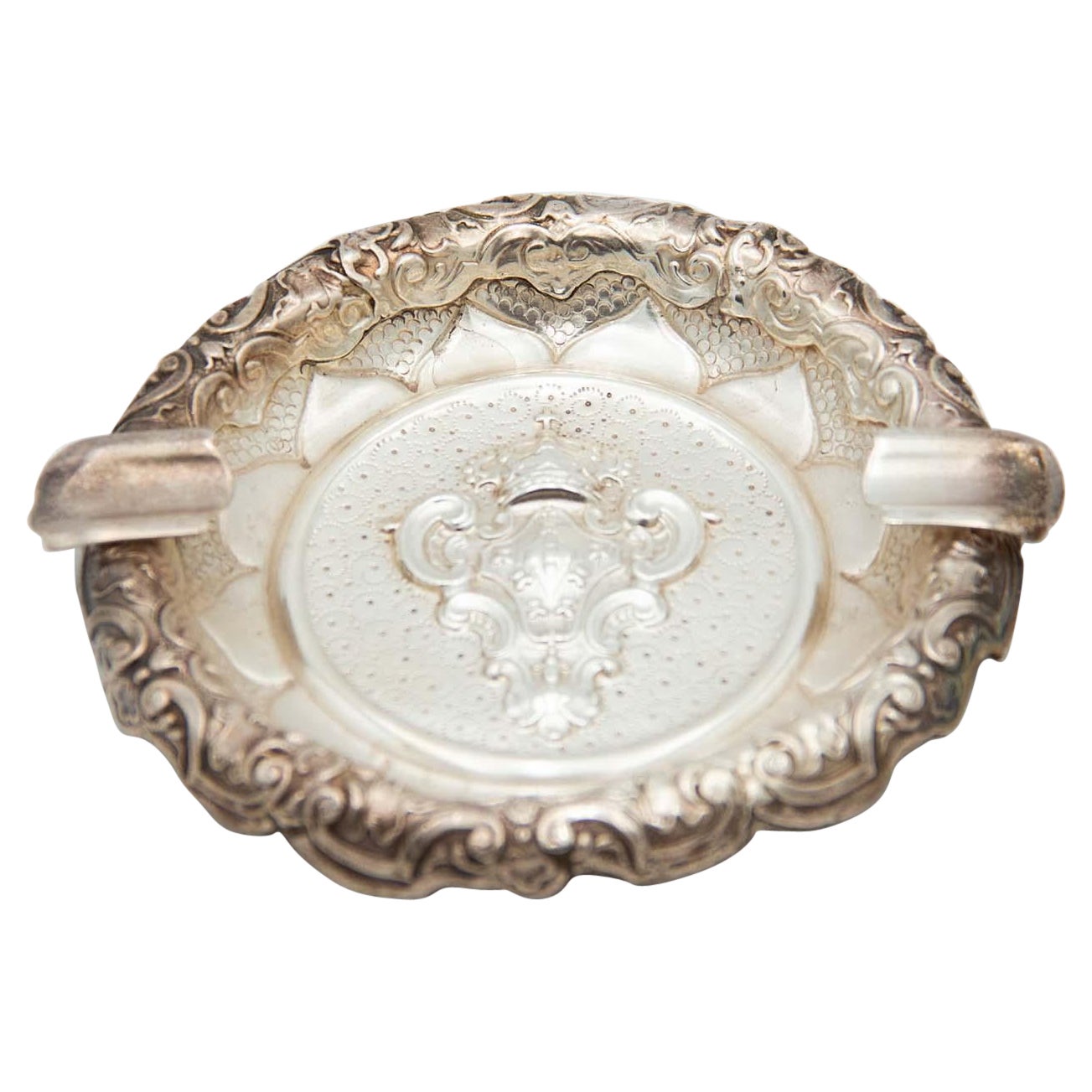
Silver ashtray w/ the coat of arms of Portugal
two 500 reis coins of D Luís
$400
$80050% Off
£305.43
£610.8650% Off
€347.75
€695.4950% Off
CA$561.66
CA$1,123.3350% Off
A$614.01
A$1,228.0250% Off
CHF 324.84
CHF 649.6850% Off
MX$7,347.59
MX$14,695.1850% Off
NOK 4,133.09
NOK 8,266.1950% Off
SEK 3,783.43
SEK 7,566.8650% Off
DKK 2,597.45
DKK 5,194.8950% Off
About the Item
Description: Silver ashtray with the coat of arms of Portugal and two 500 reis coins of D. Luís. Metal: Silver. Origin: Portuguese. Mark: standing eagle. Weight: 127.76 grams. Dimensions: 17.4x14.6cm. Content: 833/1000. Assay Mark: Yes, between 1938 and 1984. Additional information: Good condition.
- Dimensions:Height: 6.86 in (17.4 cm)Width: 5.75 in (14.6 cm)Depth: 0.79 in (2 cm)
- Materials and Techniques:
- Place of Origin:
- Period:
- Date of Manufacture:20th Century
- Condition:
- Seller Location:Porto, PT
- Reference Number:Seller: 20200032561stDibs: LU10523247761442
About the Seller
New to 1stDibs
Joined in the past six months.
4.0
Vetted Professional Seller
Every seller passes strict standards for authenticity and reliability
Established in 2000
1stDibs seller since 2025
Typical response time: 3 hours
- ShippingRetrieving quote...Shipping from: Porto, Portugal
- Return Policy
More From This Seller
View AllSilver ashtray with Portuguese arms and three D. Luís coin rests
Located in Porto, PT
Description: Silver ashtray with the Portuguese coat of arms and three coins of D. Luís as a cigarette holder. Metal: Silver. Origin: Portuguese. Mark: standing eagle. Weight: 128.45...
Category
20th Century European Ashtrays
Materials
Silver
Silver ashtray with the coat of arms of Portugal
Located in Porto, PT
Description: Silver ashtray with the Portuguese coat of arms alluding to D. José I and two cigarette holders. Metal: Silver. Origin: Portuguese. Brand: javali I Title. Weight: 112.07...
Category
Antique 19th Century European Ashtrays
Materials
Silver
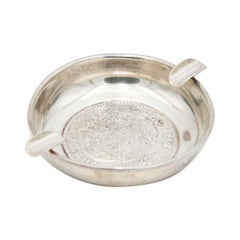
Silver ashtray with two coins of King Luís I of Portugal
Located in Porto, PT
Description: Silver ashtray with the Portuguese Coat of Arms and two coins of D. Luís I of Portugal. Metal: Silver. Origin: Portuguese. Brand: boar II Title. Weight: 138.52 grams. Di...
Category
Antique 19th Century European Ashtrays
Materials
Silver
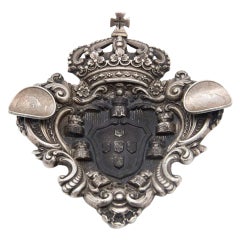
Silver ashtray with Portuguese coat of arms, reliefs, two cigarette rests
Located in Porto, PT
Description: Silver ashtray with the Portuguese coat of arms in the center with reliefs and engravings, two cigarette holders. Metal: Silver. Origin: Portuguese. Mark: standing eagle...
Category
20th Century European Ashtrays
Materials
Silver
$275 Sale Price
50% Off
Free Shipping
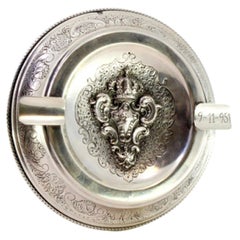
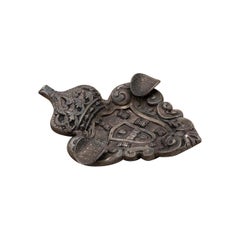
Circular silver ashtray with the coat of arms of Portugal
Located in Porto, PT
Description: Circular silver ashtray with the Portuguese coat of arms in relief in the center. Metal: Silver. Origin: Portuguese. Mark: standing eagle. Weight: 86.16 grams. Dimension...
Category
20th Century European Ashtrays
Materials
Silver
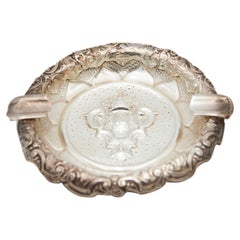
Silver ashtray with the Portuguese coat of arms and 400 reis coins
Located in Porto, PT
Description: Silver ashtray with Portuguese coat of arms and 400 reis coins. Metal: Silver. Origin: Portuguese. Mark: open-winged eagle. Weight: 175.07 grams. Dimensions: 18.5cmx4.2c...
Category
20th Century European Ashtrays
Materials
Silver
$625 Sale Price
50% Off
Free Shipping
You May Also Like
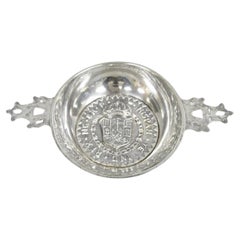
Vintage Spanish Renaissance Silver Plated Coat of Arms Communion Cup Bowl
Located in Philadelphia, PA
Vintage Spanish Renaissance Silver Plated Coat of Arms Communion Cup Bowl. Interior marking: HISPAN TE IND REX NG 8R P. Circa Mid 20th Century. Measurements: 2.25" H x 14.5" W x 8.75...
Category
Mid-20th Century Unknown Renaissance Serving Bowls
Materials
Silver Plate
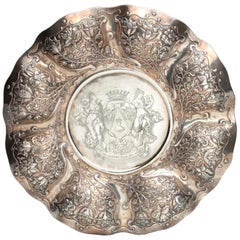
Dutch Colonial Silver Dish with the Von Pfeffel Coat-of-arms, 17th Century
Located in Amsterdam, NL
An unusual Indonesian lobbed silver dish
Jakarta (Batavia) or Coromandel coast, third quarter 17th century, apparently unmarked
The eight lobbed dish exuberantly decorated with floral motifs, with the middle section replaced, consisting of indistinctly marked German silver from the early 19th century, bearing the coat-of-arms of the Von Pfeffel family.
Diam. 30.5 cm
Weight 461 grams
Note:
Lobbed silver dishes with exuberant floral decorations were characteristic of the decorative arts in the Netherlands in the first half of the 17th century. This style of floral decoration was adopted by silversmiths as well as by furniture makers working on the Coromandel Coast and in Batavia, often by workers who had fled the Coromandel Coast because of war and famine. In Batavia this style was known as “Custwerck” (work from the Bengal coast).
These lobbed dishes are seldom marked. Only after 1667 the use of the town mark became obligatory in Batavia but only for silver made in Batavia not for silver imported in Batavia from other VOC settlements. The engraved coat of arms in the centre is a replacement of the original centre.
The coat of arms can be identified as those of Christian Hubert von Pfeffel (1765- 1834). As a diplomat, statesman, ambassador of Bavaria in London and Saxony and councillor to the King of Bavaria, he was made “Freiherr” in 1828 and since then used this coat of arms. His son Karl Maximilian Friederich Hubert Freiherr von Pfeffel (1811-1890) in 1836 married Karoline Adelheid Pauline von Rottenburg (1805-1872), the natural daughter of Prins Paul von Württemberg (1785-1852) and his mistress Margrethe Porth. Paul was the jounger brother of the King Wilhelm I of Württemberg (1781-1864). The heraldic motto of the von Pfeffels Vur Schande habe den Huot means as much as “Beware of Shame”. Christian Hubert Theodoor Marie Karl von Pfeffel Karl Maximilian’s grandson was the last male in the von Pfeffel line. His daughter, Marie Louise (Paris in 1882 - Cornwall 1944), born and grown-up in France, changed her name in de Pfeffel. She was the great grandmother of Boris Alexander de Pfeffel Johnson, the present British Secretary of State. None of the members of the von Pfeffel family had any direct links with the Dutch East Indies but indirectly by way of the Royal House of Württemberg they did.
Sophia Frederika Mathilda von Württemberg (1818-1877), daughter of Wilhelm I King of Württemberg, in 1839 married Willem III...
Category
Antique Late 17th Century Indonesian Dutch Colonial Sterling Silver
Materials
Silver
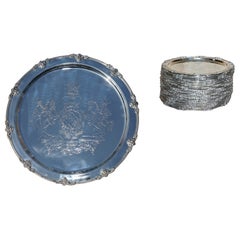
1 of 29 Sterling Silver Plated 1918 Armorial Crest Coat of Arms Serving Trays
Located in West Sussex, Pulborough
We are delighted to offer for sale 1 of 29 Sterling Silver plated, fully hallmarked for Sheffield 1919 Serving trays with engraved Armorial coat of arms crest " Metuenda Corolla Draconis" for Stewart Alexander John...
Category
Vintage 1910s English Edwardian Sterling Silver
Materials
Sterling Silver
Old Sheffield silver plate circa 1820 bearing coat of arms
Located in Houston, TX
The excellent workmanship exhibited in this piece makes
It exceptional. A coat of arms is engraved on the front
Which bears the arms of Pearce Impaling Haines. The silver
Work is im...
Category
Antique Early 19th Century British Sheffield and Silverplate
Materials
Silver
$1,680 Sale Price
30% Off
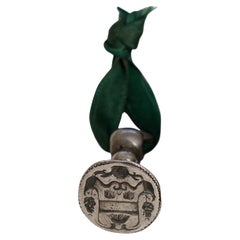
Seal Silver Coat of Arms 17 Century
Located in BUNGAY, SUFFOLK
There is no letter date demonstrating that this seal was made before 1697 when the letter date became mandatory. This seal is an early shape, engraved with the owners coat of arms.
...
Category
Antique 17th Century English Baroque Sterling Silver
Materials
Silver, Britannia Standard Silver
1 of 19 King George Auguseue Frederick Arms Sterling Silver Plated 1919 Trays
Located in West Sussex, Pulborough
We are delighted to offer 1 of 19 Sterling Silver plated, fully hallmarked for Sheffield 1919 Serving trays with engraved Armorial coat of arms crest for King George IV “His Royal Highness George Auguseue Frederick”
This sale is for one tray with the option to purchase up to nineteen, I also have five more which has a gold gilt finish and twenty-nine more with a different armorial coat coat of arms,
These are truly exquisite trays, the armorial coat of arms is for King George IV, a brief history as below
The trays are very decorative and expertly made, the Armorial coat of arms must have cost quite a pretty penny to have the press made. Each tray is fully hallmarked for the sideways facing Lion for Sterling Silver, the Queens Crown for Sheffield made and the date letter A for 1919
The condition of each tray is good, some have more wear and light discolouration than others as you would expect from 100+ year old pieces, there will be normal honest patina front and back, none have any chips or damage
Dimensions
Height:- 50cm
Width:- 50cm
Depth:- 3cm
Please note all measurements are taken at the widest point,
George IV (George Augustus Frederick; 12 August 1762 – 26 June 1830) was King of the United Kingdom of Great Britain and Ireland and King of Hanover from the death of his father, King George III, on 29 January 1820 until his own death ten years later.
He had already been serving as Prince Regent since 5 February 1811, during his father's final mental illness. George IV was the eldest child of King George III and Queen Charlotte.
He led an extravagant lifestyle that contributed to the fashions of the Regency era. He was a patron of new forms of leisure, style and taste. He commissioned John Nash to build the Royal Pavilion in Brighton and remodel Buckingham Palace, and commissioned Jeffry Wyatville to rebuild Windsor Castle.
George's charm and culture earned him the title "the first gentleman of England", but his dissolute way of life and poor relationships with his parents and his wife, Caroline of Brunswick, earned him the contempt of the people and dimmed the prestige of the monarchy.
He excluded Caroline from his coronation and asked the government to introduce the unpopular Pains and Penalties Bill in an unsuccessful attempt to divorce her.
Despite presiding over the British Empire's emergence as a global hegemon, his rule was tarnished by scandal and financial extravagance. His ministers found his behaviour selfish, unreliable and irresponsible, and he was strongly influenced by favourites.
During most of George's Regency and reign, Lord Liverpool controlled the government as Prime Minister of the United Kingdom. Liverpool's government presided over Britain's ultimate victory over Napoleon and negotiated a peace settlement with the French.
After Liverpool's retirement, George IV was forced to accept Catholic emancipation...
Category
Vintage 1910s English Edwardian Sterling Silver
Materials
Sterling Silver