Want more images or videos?
Request additional images or videos from the seller
1 of 12

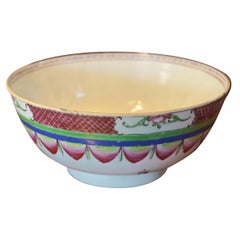
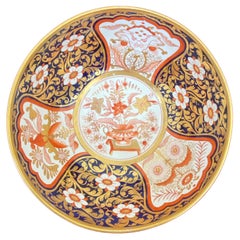
Early Spode Regency Dollar Pattern Punch Bowl

Price:$2,750
$4,000List Price

You May Also Like

Regency Spode Imari Punch Bowl, Pattern # 2283
By Spode
Located in Downingtown, PA
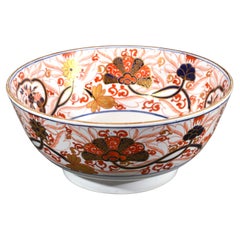
Spode 'New Stone' Imari Punch Bowl, Pattern 2283 Circa 1820 This beautiful Spode punch bowl, dating from circa 1815-1820, is a superb example of the ...
Category

Antique Early 19th Century English Regency Ceramics

Materials

Ceramic

Boy in the Window pattern Punch Bowl
Located in Huntington, NY
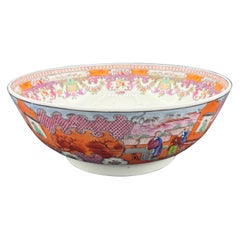
Boy in the Window pattern Punch Bowl punch bowl, circa 1800, printed and painted with the 'Boy in the window' pattern in Chinese export Famille Rose style, script mark in blue , 11....
Category

Antique Early 19th Century Chinese Chinese Export Serving Bowls

Materials

Porcelain

Spode Porcelain Teacup Trio, Red Imari Dollar Pattern, Regency, ca 1810
By Spode
Located in London, GB
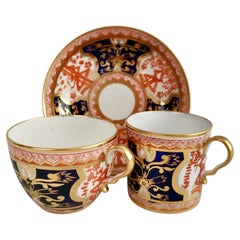
This is a beautiful orphaned teacup made by Spode in about 1810. It bears a lavish Japanese-inspired Imari pattern. Spode was the great pioneer among the Georgian potters in England. Around the year 1800 he perfected the bone china recipe that has been used by British potters ever since, and he was also the leading potter behind the technique of transferware, making it possible for English potters to replace the Chinese export china, which had come to an end around that time, with their own designs. This was fundamental to a thriving industry that would last for about 150 years and provide half the world with their tableware. Spode porcelain is regarded as one of the highest quality porcelains around; for a soft-paste porcelain it is surprisingly hard and fine, and has a wonderful bright white colour. The pattern on this can is called "Dollar" pattern, a very famous pattern that was used by English potters in the 18th and early 19th Century. It is obvious why it is called “dollar” - but its origin is less obvious! It is thought that this pattern was derived from a very old Chinese pattern depicting a tree with elaborate foliage that hides a Chinese character representing longevity or happiness. Traditionally, this went with a an image called “Taotie”, which was used on very ancient bronze vases...
Category

Antique Early 1800s English Regency Porcelain

Materials

Porcelain

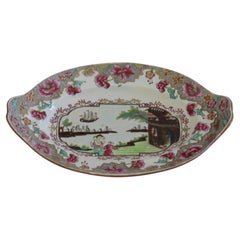
Spode Stone China Small Serving Dish in Ship Pattern 3068, circa 1810
By Spode
Located in Lincoln, Lincolnshire
This is a good small Serving Dish made of ironstone (Spode's Stone China) in the Ship Pattern, No 3068, produced by the English, Spode factory early in the 19th century, George 111rd Period. The pattern is called the Ship pattern number 3068, the chinoiserie decoration being transfer printed under-glaze, then very carefully hand painted in bold colored enamels with additional gilding over-glaze. As is usual with Spode ware the standard of hand painted detail is very high. A plate in this pattern is shown on page 54 of Steven Smith's book; "Spode and Copeland" published by Schiffer. The pattern is in the Chinese taste as produced by many of the English potteries of the time, to compete directly with the large import of Canton or Chinese Export porcelain from China. The dish has a mid brown edge similar to that often seen on Chinese plates. It is fully marked to the base, with the earlier Spode black printed Stone-China mark...
Category

Antique Early 19th Century English Chinoiserie Ceramics

Materials

Ironstone

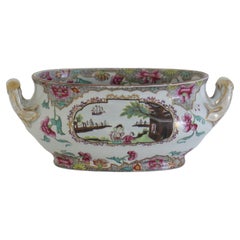
Georgian Spode Stone China Sauce Tureen in Ship Pattern 3067, circa 1810
By Spode
Located in Lincoln, Lincolnshire
This is a very good sauce tureen made of ironstone (Spode's Stone China) in the Ship Pattern, No 3067, produced by the English, Spode factory early in the 19th century, George 111rd Period. The piece is well potted with two side handles. The pattern is called the Ship pattern number 3067, the chinoiserie decoration being transfer printed under-glaze, then very carefully hand-painted in bold colored enamels with additional gold gilding over-glaze. As is usual with Spode ware the standard of hand painted detail is very high. A plate in this pattern is shown on page 54 of Steven Smith's book; "Spode and Copeland" published by Schiffer. The pattern is in the Chinese taste as produced by many of the English potteries of the time, to compete directly with the large import of Canton or Chinese Export porcelain from China. The piece has a mid brown edge similar to that often seen on Chinese plates. The piece is fully marked to the base, with the earlier Spode black printed Stone-China mark...
Category

Antique Early 19th Century English Chinoiserie Serving Bowls

Materials

Ironstone

Early 19th Century Chinese Export Punch Bowl
Located in Richmond, VA
Early 19th century Chinese export punchbowl.
Category

Antique Early 19th Century Hong Kong Porcelain

Materials

Porcelain

A very fine Spode porcelain punch bowl in pattern 944 c.1805-1810
By Spode
Located in Exeter, GB
A very fine Spode porcelain punch bowl c.1805-1810. Finely decorated and gilded in a rich pattern number 944. Condition: Excellent 
Category

Antique 19th Century British Porcelain

Materials

Porcelain

A very fine Spode porcelain  punch bowl in pattern 944 c.1805-1810
$1,802 Sale Price
20% Off
H 5.12 in Dm 11.23 in
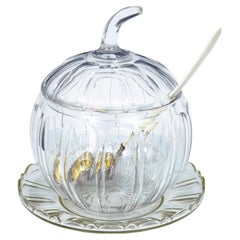
Early 20th century cut glass pumpkin halloween punch bowl
Located in Debenham, Suffolk
Early 20th century cut glass pumpkin halloween punch bowl circa 1920. A fine quality cut class pumpkin form punch bowl with lid, complete with original cut glass plate.  Supplied wi...
Category

Early 20th Century English Art Deco Serving Bowls

Materials

Cut Glass

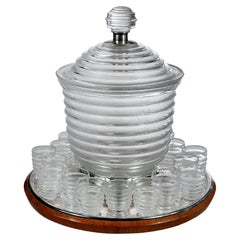
German Art Deco Punch Bowl Set
Located in New York, US
Our set by Wilhelm von Eiff (1890–1943) includes a large bowl with frosted and carved horizontal bands with domed lid with silver mount, 17 3/4 by 12 1/2 inches, finial showing a young Hercules wrestling a serpent, ladle with Hercules cameo in .800 silver, signed W.V. Eiff, a glass ladle...
Category

Early 20th Century German Art Deco Serving Bowls

Materials

Silver

German Art Deco Punch Bowl Set
$19,000
H 17.75 in Dm 12.5 in
American Victorian Pressed Glass Punch Bowl
Located in Queens, NY
American Victorian-style (20th Century) pressed glass punch bowl with scalloped edge.
Category

20th Century American Victorian Serving Bowls

Materials

Glass

More From This Seller

View All
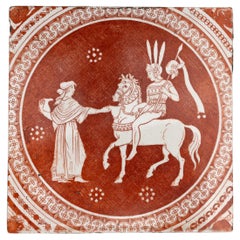
Early Spode Red Greek Pattern Tile
By Spode, Josiah Spode
Located in Fort Lauderdale, FL
A Neoclassical red transferware tile made by Spode 1806-1810, with the ‘Refreshments for Phliasian Horseman’ pattern. Sir William Hamilton’s Collection of Etruscan, Greek and Roman antiquities, first published in 1766 by Pierre d’Hancarville, was a landmark publication in English design. It intended to disseminate the Antique style through its engravings of Attic pottery. The catalog’s faithful reproductions of Classical vases led British potteries, including Spode, to adapt or even copy the ancient art for modern life. These Spode Greek pattern tiles reflect the major influence of Hamilton’s catalog on English Neoclassicism. The central scene was taken directly from the catalog. This tile can be dated to a narrow window of production in the Spode factory, 1806-1810. During that time, Spode used a technique known as the “Pluck and Dust” method to print in red transfer designs onto creamware. Using this method, source prints were transferred overglaze using tissue imprinted with a very faint rendition of the design outlined in sticky oil. The decorator applied the tissue to the object then carefully “plucked” or pulled it away, leaving the sticky oil design behind. Then, a finely-ground enamel color was “dusted” onto the surface, sticking to any areas that had the oil. A final firing at a low temperature in the enamel kiln made the pattern permanent. The Pluck and Dust technique improved upon bat-printing and enabled larger designers to be transferred. It was short-lived, however, as under-glaze transfer printing soon took over as the preferred method for producing transferwares. Dimensions: 5 in. x 5 in. x 1/4 in. Condition: Excellent. Slight chip to the upper left corner measuring approximately 0.9 cm. in length. Provenance: The Collection of Nancy and Andrew Ramage Jonathan Horne...
Category

Antique Early 19th Century English Neoclassical Pottery

Materials

Earthenware, Creamware

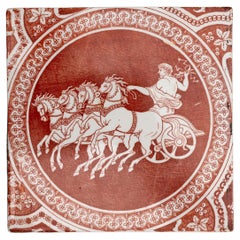
Early 19th Century Spode Red Greek Pattern Tile
By Josiah Spode, Spode
Located in Fort Lauderdale, FL
A Neoclassical red transferware tile made by Spode 1806-1810, with the ‘Zeus in His Chariot’ pattern. Sir William Hamilton’s Collection of Etruscan, Greek and Roman antiquities, first published in 1766 by Pierre d’Hancarville, was a landmark publication in English design. It intended to disseminate the Antique style through its engravings of Attic pottery. The catalog’s faithful reproductions of Classical vases led British potteries, including Spode, to adapt or even copy the ancient art for modern life. These Spode Greek pattern tiles reflect the major influence of Hamilton’s catalog on English Neoclassicism. The central scene was taken directly from the catalog. This tile can be dated to a narrow window of production in the Spode factory, 1806-1810. During that time, Spode used a technique known as the “Pluck and Dust” method to print in red transfer designs onto creamware. Using this method, source prints were transferred overglaze using tissue imprinted with a very faint rendition of the design outlined in sticky oil. The decorator applied the tissue to the object then carefully “plucked” or pulled it away, leaving the sticky oil design behind. Then, a finely-ground enamel color was “dusted” onto the surface, sticking to any areas that had the oil. A final firing at a low temperature in the enamel kiln made the pattern permanent. The Pluck and Dust technique improved upon bat-printing and enabled larger designers to be transferred. It was short-lived, however, as under-glaze transfer printing soon took over as the preferred method for producing transferwares. Dimensions: 5 in. x 5 in. x 1/4 in. Condition: Excellent. Provenance: The Collection of Nancy and Andrew Ramage Jonathan Horne...
Category

Antique Early 19th Century English Neoclassical Pottery

Materials

Earthenware, Creamware

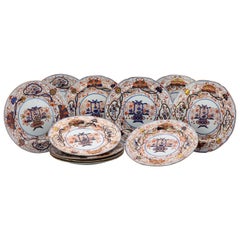
Set of 11 Early Spode Ironstone Imari Dessert Dishes Made circa 1815
By Spode
Located in Fort Lauderdale, FL
A set of 11 Imari style ironstone dessert dishes, made by Spode circa 1815. Josiah Spode II began producing stone china in 1813 as an alternative to porcelain. Stone china, also kno...
Category

Antique Early 19th Century English Regency Dinner Plates

Materials

Ironstone

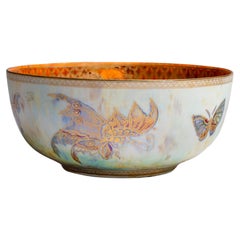
Daisy Makeig-Jones Wedgwood Butterfly Lustre Bowl
By Daisy Makeig-Jones, Wedgwood, Wedgwood Fairyland Lustre
Located in Fort Lauderdale, FL
A butterfly lustre bowl designed by Daisy Makeig-Jones for Josiah Wedgwood & Sons circa 1915. This butterfly lustre bowl is a gorgeous example of Daisy Makeig-Jones’s unique artistr...
Category

Vintage 1910s British Art Nouveau Serving Bowls

Materials

Porcelain

Copeland Spode Aesthetic Movement Comport or Cake Stand
By Copeland Spode, Spode
Located in Fort Lauderdale, FL
An 1870s Spode Aesthetic Movement comport in cream-colored earthenware with a beautiful transfer-printed pattern of birds and butterflies. After Japan was forcibly opened to Western...
Category

Antique 1870s English Aesthetic Movement Centerpieces

Materials

Earthenware

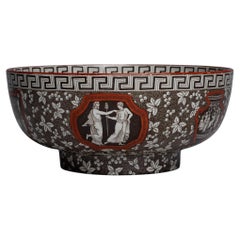
19th Century Greek Revival Copeland Spode Bowl
By Copeland Spode
Located in Fort Lauderdale, FL
A vibrant Neoclassical Revival decorative bowl in the 'Greek' pattern made by Copeland Spode in the late 19th century. Sir William Hamilton’s Collection of Etruscan, Greek and Roman antiquities, first published in 1766 by Pierre d’Hancarville, was a landmark publication in English design. It intended to disseminate the Antique style through its engravings of Attic pottery. The catalog’s faithful reproductions of Classical vases led British potteries, including Spode, to adapt or even copy the ancient art for modern life. This Copeland Spode Greek...
Category

Antique Late 19th Century British Neoclassical Revival Pottery

Materials

Earthenware, Pearlware

Still Thinking About These?

All Recently Viewed