1 of 14
Black Basalt Teapot with Enamel Decoration, Probably Spode C1800
$1,800List Price
About the Item
- Attributed to:Josiah Spode (Manufacturer)
- Dimensions:Height: 5 in (12.7 cm)Width: 8.5 in (21.59 cm)Depth: 6 in (15.24 cm)
- Style:Neoclassical (Of the Period)
- Materials and Techniques:Stoneware,Molded
- Place of Origin:
- Period:
- Date of Manufacture:circa 1800
- Condition:Wear consistent with age and use.
- Seller Location:Melbourne, AU
- Reference Number:Seller: 15461stDibs: LU3151325958012
Authenticity Guarantee
In the unlikely event there’s an issue with an item’s authenticity, contact us within 1 year for a full refund. DetailsMoney-Back Guarantee
If your item is not as described, is damaged in transit, or does not arrive, contact us within 7 days for a full refund. Details24-Hour Cancellation
You have a 24-hour grace period in which to reconsider your purchase, with no questions asked.Vetted Professional Sellers
Our world-class sellers must adhere to strict standards for service and quality, maintaining the integrity of our listings.Price-Match Guarantee
If you find that a seller listed the same item for a lower price elsewhere, we’ll match it.Trusted Global Delivery
Our best-in-class carrier network provides specialized shipping options worldwide, including custom delivery.You May Also Like
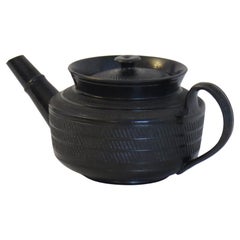
Georgian Black Basalt Teapot
Cover Engine Turned Decoration, English Ca 1825
Located in Lincoln, Lincolnshire
This is a good black basalt Teapot and cover lid, which we attribute to a Staffordshire Potteries, English maker, circa 1825.
The teapot is wel...
Category
Antique Early 19th Century English Georgian Ceramics
Materials
Pottery
$559
H 3.38 in W 7.15 in D 4.3 in
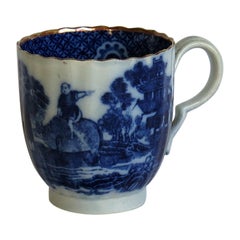
Early Coffee Cup Blue and White Boy on a Buffalo Ptn probably Spode, circa 1790
By Josiah Spode
Located in Lincoln, Lincolnshire
This is a good, very early, rare blue and white coffee cup in the "Boy on a Buffalo" pattern, probably from the factory of Josiah Spode, stoke on Trent, Staffordshire, England, made...
Category
Antique Late 18th Century English Chinoiserie Ceramics
Materials
Earthenware
$272
H 2.5 in W 3.25 in D 2.38 in
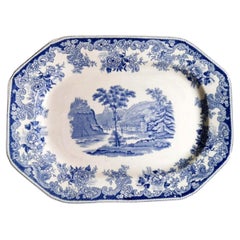
Copeland-Spode English Tray With Blue Transferware Decorations
By Copeland Spode
Located in Prato, Tuscany
We kindly suggest you read the whole description, because with it we try to give you detailed technical and historical information to guarantee the authenticity of our objects.
Elegant and refined English octagonal ceramic tray; on the white background, soft and rich blue decorations have been executed using the transferware method; in the center we find the poetic and graceful representation of the Severn River and the town of Bridgnorth (the name of this decoration is "Severn"), while the edges of the tray are adorned with sumptuous and spectacular flower and leaf decorations. The Severn River is the longest river in the United Kingdom (350 km), rising in Wales and flowing into the Bristol Channel; Bridgnorth is an ancient Saxon settlement; observing the view of the river and town from his castle at Bridgnorth King Charles I Stuart (1600-1649) said "the most beautiful sight in all my kingdom". On the back of the tray there are 3 imprinted marks including one with final number 14, then we find in the center a blue mark, these indicate to us exactly that the tray was produced in Stoke-on-Trent by the Copeland-Spode company in 1914 (see mark no.1079 p.172 of "Encyclopaedia of British Pottery and Porcelain Mark). The Spode firm was founded in the heart of the Potteries - Stoke-on-Trent by Josiah Spode in 1770. Josiah Spode is most famous for developing the specific design technique that meant underglaze transfers could be printed on earthenware. Later, focusing on porcelain production, Josiah Spode pioneered the development of a new form of porcelain, originally called "Stoke China...
Category
Early 20th Century British Victorian Ceramics
Materials
Ceramic
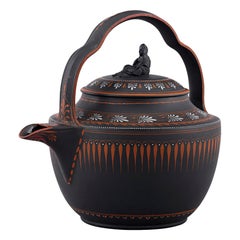
Wedgwood Black Basalt and Encaustic Enamel Rum Kettle
By Wedgwood
Located in New Orleans, LA
Crafted by Wedgwood, this rare, round-shaped rum kettle is comprised of black basalt and features a molded bail handle and glazed interior. Referred to as “...
Category
Antique Early 19th Century English Classical Greek Ceramics
Materials
Enamel
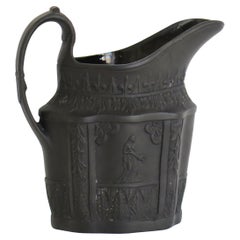
Georgian Black Basalt Creamer Jug by Turner, English circa 1800
By John Turner
Located in Lincoln, Lincolnshire
This is a very good Black Basalt Creamer Jug or small pitcher, which we attribute to John Turner of Lane End, Longton, Staffordshire Potteries, circa 1762 to 1806 of the English Geor...
Category
Antique Early 19th Century English Georgian Ceramics
Materials
Pottery
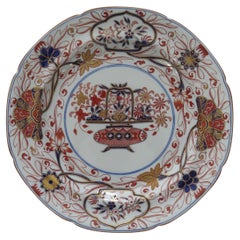
Georgian Spode Dinner Plate A Ironstone Chinoiserie Pattern No.2283, circa 1820
By Josiah Spode
Located in Lincoln, Lincolnshire
This is a very beautiful hand painted dinner plate, produced by the Spode factory in the late Georgian period, Circa 1820.
This is pattern number 2283, the chinoiserie decoration ...
Category
Antique Early 19th Century English Chinoiserie Ceramics
Materials
Ironstone
$443
H 1 in Dm 9.63 in
Wedgwood
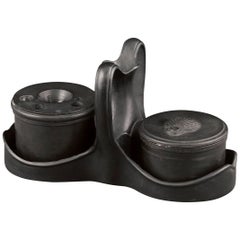
Bentley Black Basalt Inkstand
By Wedgwood
Bentley
Located in New Orleans, LA
This elegant inkwell set by Wedgwood & Bentley is crafted of black basalt, one of Wedgwood’s finest inventions. The set is comprised of two canisters, both held within an intriguing double stand. One is designed to hold ink and features a top with slots for quills or pens, and the other is a powder Shaker with a shell-ornamented lid. Black basalt refers to the fine-grained stoneware that Josiah Wedgwood, inspired by the hard, natural stone known as Egyptian basalt...
Category
Antique 18th Century English Other Inkwells
Materials
Ceramic
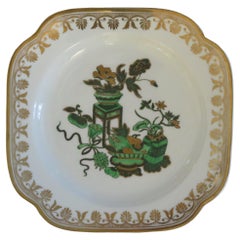
Georgian Spode Plate or Dish Chinoiserie Pattern No. 1867 porcelain, circa 1820
By Josiah Spode
Located in Lincoln, Lincolnshire
This is a beautiful square plate or dish produced by the Spode factory and made of porcelain, in the early 19th Century, Circa 1815 to 1827.
The dish is well potted on a low foot ...
Category
Antique Early 19th Century English Chinoiserie Decorative Bowls
Materials
Porcelain
$361
H 1.25 in W 8.2 in D 8.2 in
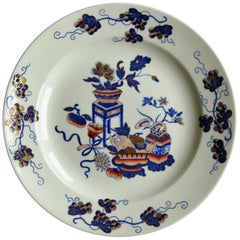
Georgian Plate by Spode in Gilded Bow Pot Pattern Number 2954, circa 1820
By Josiah Spode
Located in Lincoln, Lincolnshire
This is a beautiful plate in the Bow Pot pattern, produced by the Spode factory and made of a type of earthenware pottery called Pearl-ware, in the early 19th century, circa 1820.
...
Category
Antique Early 19th Century English Chinoiserie Pottery
Materials
Pearlware
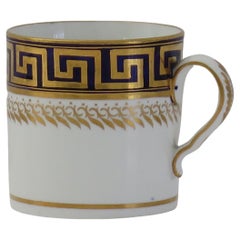
Early 19th Century Spode Porcelain Coffee Can Greek Key Pattern 742, circa 1810
By Josiah Spode
Located in Lincoln, Lincolnshire
This is a very good example of an English George III period, porcelain, coffee can, made by Spode in the early 19th century, circa 1810.
The can is nominally straight sided and ha...
Category
Antique Early 19th Century English George III Ceramics
Materials
Porcelain
$300
H 2.57 in W 3.3 in D 2.57 in
Still Thinking About These?
All Recently ViewedMore Ways To Browse
18th Century Teapot
18th Century Silver Teapot
18th Century Stoneware
Stoneware Teapot
Late Spode
Enamel Teapot
Black Antique Teapot
Spode Neoclassical
Antique Stoneware Teapot
Spode Black
Basalt Teapot
Antique Spode Teapot
Spode Teapot
Italian Fine Ceramics
Remy Marzi
Sharland England
Tobacco Leaf China
1950s 1960s Ceramics