Items Similar to Costumi Ceramic Tiles by Giò Ponti for Bardelli Ceramica
Want more images or videos?
Request additional images or videos from the seller
1 of 13
Costumi Ceramic Tiles by Giò Ponti for Bardelli Ceramica
$8,875.74
£6,632.59
€7,500
CA$12,359.02
A$13,281.07
CHF 7,126.07
MX$156,442.90
NOK 89,602.37
SEK 81,851.18
DKK 57,173.08
About the Item
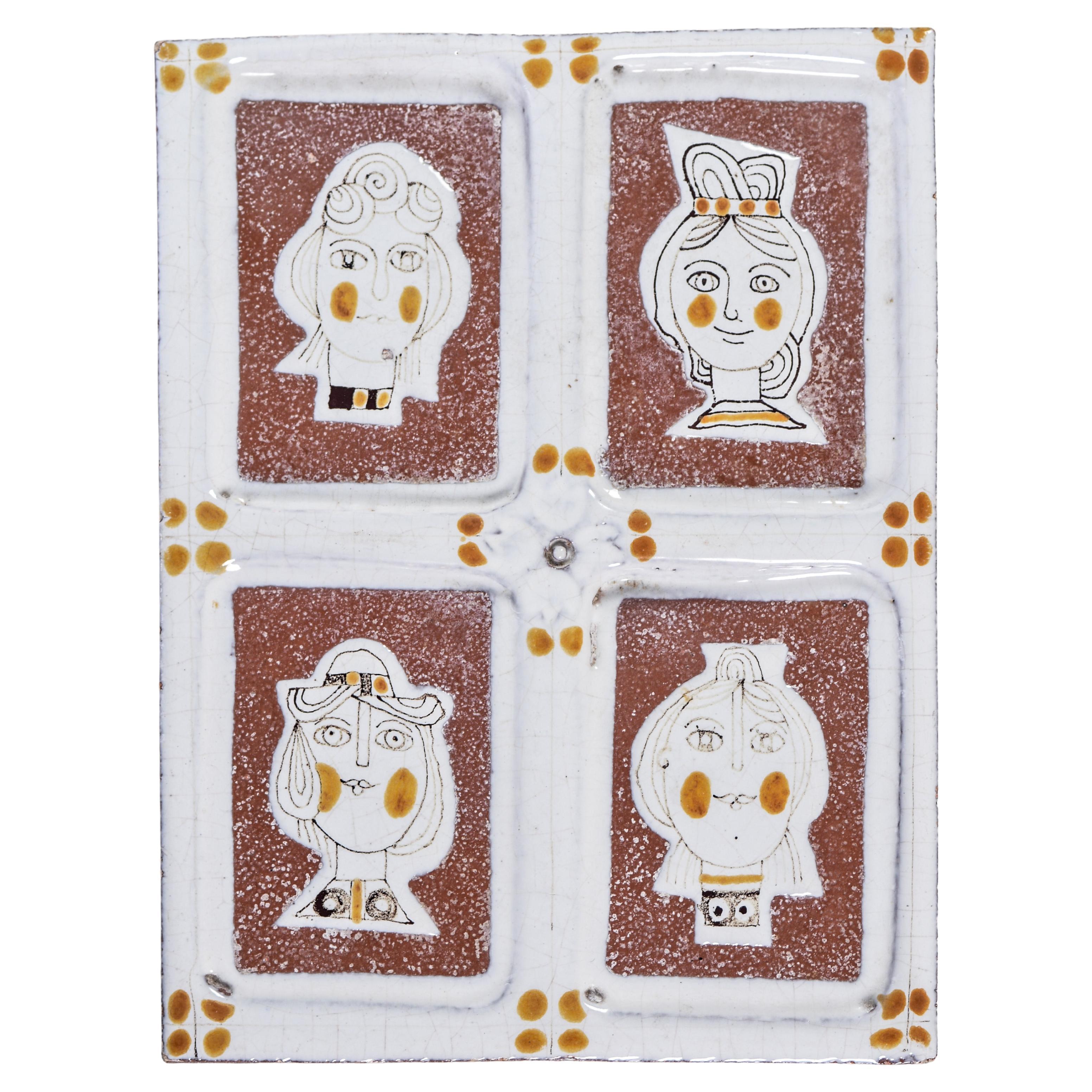
Discover a piece of design history with this rare and exquisite set of ceramic tiles titled Costumi. Designed by the legendary Gio Ponti and produced by Bardelli Ceramica in the 1980s, this collection captures the artistic essence and innovation of one of the most influential designers of the 20th century.
Each tile in this set is a vibrant illustration of theatrical costumes, showcasing Ponti’s masterful use of color and whimsical artistry. The Costumi series is not just a decorative element but a testament to Ponti’s creative genius, making it perfect for collectors, interior designers, or art enthusiasts looking to own a piece of Italian design heritage.
With their hand-painted charm and unique historical significance, these tiles can elevate any space—whether as a stunning wall installation or a sophisticated centerpiece. Rarely available on the market, this collection is a true treasure for connoisseurs of fine design.
About Gio Ponti
Gio Ponti (1891–1979) was an iconic Italian architect, industrial designer, and artist whose influence spanned over six decades. Known for his innovative approach, Ponti transformed modern design, blending functionality with art. He founded the influential design magazine Domus in 1928, which became a cornerstone of modern architectural and design discourse.
Ponti’s portfolio is remarkably diverse, including skyscrapers, such as Milan’s iconic Pirelli Tower, as well as furniture, ceramics, and glassware. His collaborations with leading manufacturers, including Richard Ginori and Venini, elevated Italian craftsmanship to an international level. The Costumi tiles reflect Ponti’s fascination with theatrical and expressive forms, adding yet another layer to his vast legacy.
Bardelli Ceramica, renowned for its high-quality artisanal ceramic production, collaborated with Ponti to bring his designs to life in the 1980s. This partnership resulted in the Costumi series, showcasing Ponti’s playful yet sophisticated aesthetic, which continues to resonate with design enthusiasts worldwide.
Seize this rare opportunity to own a piece of Gio Ponti’s artistic legacy—an investment in timeless beauty and historical significance.
The tiles will be shipped insured in a custom made wooden crate. Cost of insured transport to the US, is crate included
Wear consistent with age and use.
Colors may slightly vary due to photographic lighting sources or your monitor settings.
Il Pulcinella di Strawinsky's "Pulcinella" and Gluck's "Orfeo".
These were Gio Ponti's two principal encounters with the theatre, taking place within the same decade and cantered on La Scala: I have worked at La Scala Scenes and costumes: but Ponti would have liked to be the director and not just dress the characters and dress the stage. He had felt this way ever since he had fallen in love with the Russian ballets of Diaghilev at first sight, and then with Apia's theatre. Gio Ponti's architecture was itself almost a theatre, a stage for the moving figures that appeared and disappeared from its staircases, balustrades, balconies, and perspectives. And the clothes that he loved to designwere already costumes. Like the ones for his theatre: costumes that looked as if they were cut out of paper, that one slipped into to make them dance: total costumes, in which the wearer disappeared; the hands vanished always gloved, and so did the hair always under a hat. Simplified costumes, made to be viewed from afar, with nothing material, and still less historical, about them. So were his scenes, which had to look like mere enlargements of rapid sketches. That is to say, they were intended to allude to scenes, not to be them. To simulate the theatre. This is why Ponti wrote on his sketches, do it badly. What he loved about theatrical costume makers was their extraordinary capacity for improvisation. What he feared, and detested, were attempts at theatrical realism. It could be said that his kind of performance was the ballet, and his kind of character was Harlequin, an acrobat of grace and detachment even if -see his theatre script II Coro- he sometimes lapsed into solemnity.
GIO PONTI was born in Milan on November 18th, 1891. He graduated in architecture to the Polytechnic of his town in 1921. He carried out his activity for six decades - from 1920 up to 1970 - not only in architecture, but also in the fields of painting, design, teaching, and journalism. Planning and promoting quality, by means of exhibitions and magazines, were the univocal objectives for him, and for his meaning for future. Of the years twenty are his first architecture “neoclassic” works, the house of Randaccio street in Milan, the Bouilhel house in Garches, Paris. From 1923 up to 1930 he was the artistic manager of Richard Ginori, and he remade the entire production of the company. For Gio Ponti the ceramics was always his favorite explication, from the creation of the “animated bottles” for Ceramica d’Imola, to the various ceramic series often created in connection with architecture, such as the ceramic tiles “diamanti” of the Ceramica Joo, and also for the façades of the Pirelli skyscraper, or the Shui-Hing Stores in Hong Kong, or the Bijenkorf Stores in Eindoven Holland, or the INA palace in S. Paolo street Milan. In 1928 he established Domus magazine, that will be managed for fourty years. In 1941 he established the magazine Stile. Gio Ponti architecture, well known all over the world can be discussed in an emblematic way; if the Pirelli tower is the architectural symbol of 1950, the cathedral of Taranto and the museum of Denver in Colorado are the new symbols of 1970. In the design field, the Pavoni coffee-machine pointed out the creative reneval of design in 1950, such as also the super-light chair of Cassina. The “colored floors” for “Salzburger Nachrichten” in Salisburgo are the Gio Ponti contribution to the description of the years ’70. Gio Ponti died in Milan on September 16th, 1979, he was 88 years old.
These tiles were "made under license by the Gio Ponti heirs".
- Creator:(After) Gio Ponti (Designer)
- Dimensions:Height: 7.88 in (20 cm)Width: 7.88 in (20 cm)Depth: 0.4 in (1 cm)
- Style:Mid-Century Modern (Of the Period)
- Materials and Techniques:
- Place of Origin:
- Period:1980-1989
- Date of Manufacture:1980
- Condition:Wear consistent with age and use.
- Seller Location:Weesp, NL
- Reference Number:1stDibs: LU1464235410192
About the Seller
5.0
Platinum Seller
Premium sellers with a 4.7+ rating and 24-hour response times
Established in 1996
1stDibs seller since 2015
390 sales on 1stDibs
Typical response time: <1 hour
- ShippingRetrieving quote...Shipping from: Weesp, Netherlands
- Return Policy
More From This Seller
View All20th Century Avantgarde Artwork by Rita Aldrovandi
Located in Weesp, NL
This captivating artwork by Rita Aldrovandi, displayed here in elegant minimalist style, is a profound testament to the artist’s visionary approach to line drawings. Aldrovandi, cele...
Category
Vintage 1970s Mid-Century Modern Drawings
Materials
Paper
1970 Lithograph by Kumi Sugai
By Kumi Sugai
Located in Weesp, NL
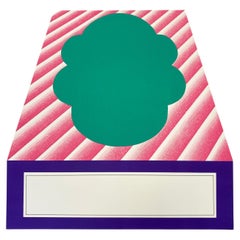
Kumi Sugaï — “Le Printemps”, 1970
Original Color Lithograph Signed
Numbered Edition of 100
Bold, vibrant, and unmistakably modern, Le Printemps (French for “Spring”) by cel...
Category
Vintage 1970s Japanese Mid-Century Modern Prints
Materials
Paper
Object MO6 by Studio Zero Milano, 1970
By Studio Zero
Located in Weesp, NL
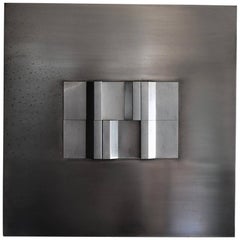
Studio Zero Milano Object MO6, 1970
Abstract composition "multipli" on the plate, label marked G. Tonti, Studio Zero, Milan.
Giorgio Tonti was de found...
Category
Vintage 1970s Italian Mid-Century Modern Decorative Art
Materials
Aluminum
Cuno Fischer Vases for Rosenthal
By Cuno Fischer
Located in Weesp, NL
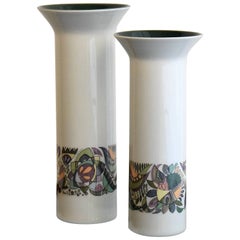
Two porcelain vases designed in the 1960's by Cuno Fischer (1914-1973) for Rosenthal.
Both vases are in excellent condition.
...
Category
Vintage 1960s German Vases
Materials
Porcelain
$674 Sale Price / set
40% Off
Limited Edition 30/100 Lithography by Antonio Seguí, 1971
By Antonio Seguí
Located in Weesp, NL
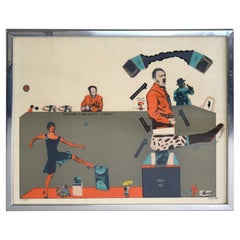
Antonio Seguí signed and dated limited edition 30/100 lithography ' Aussi simple à régler qi un fer à repasser! ' 1971.
One of the most internationall...
Category
Vintage 1970s Argentine Expressionist Prints
Materials
Paper
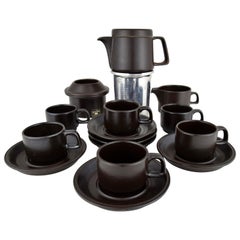
Mid-Century Modern Ceramic Espresso Set by Franco Pozzi
Located in Weesp, NL
New Old Stock Mid-Century Modern dark brown 9 pcs Espresso set produced by Ceramica Franco Pozzi. This set has never been used. It contains the perculator...
Category
Vintage 1960s Italian Mid-Century Modern Ceramics
Materials
Ceramic
You May Also Like
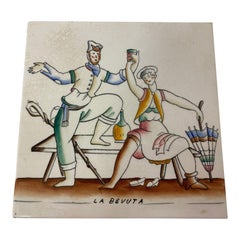
Ceramic Tile by Gio Ponti for Richard Ginori
By Gio Ponti, Richard Ginori
Located in London, London
Polychrome Ceramic tile
By Gio Ponti
For Richard Ginori
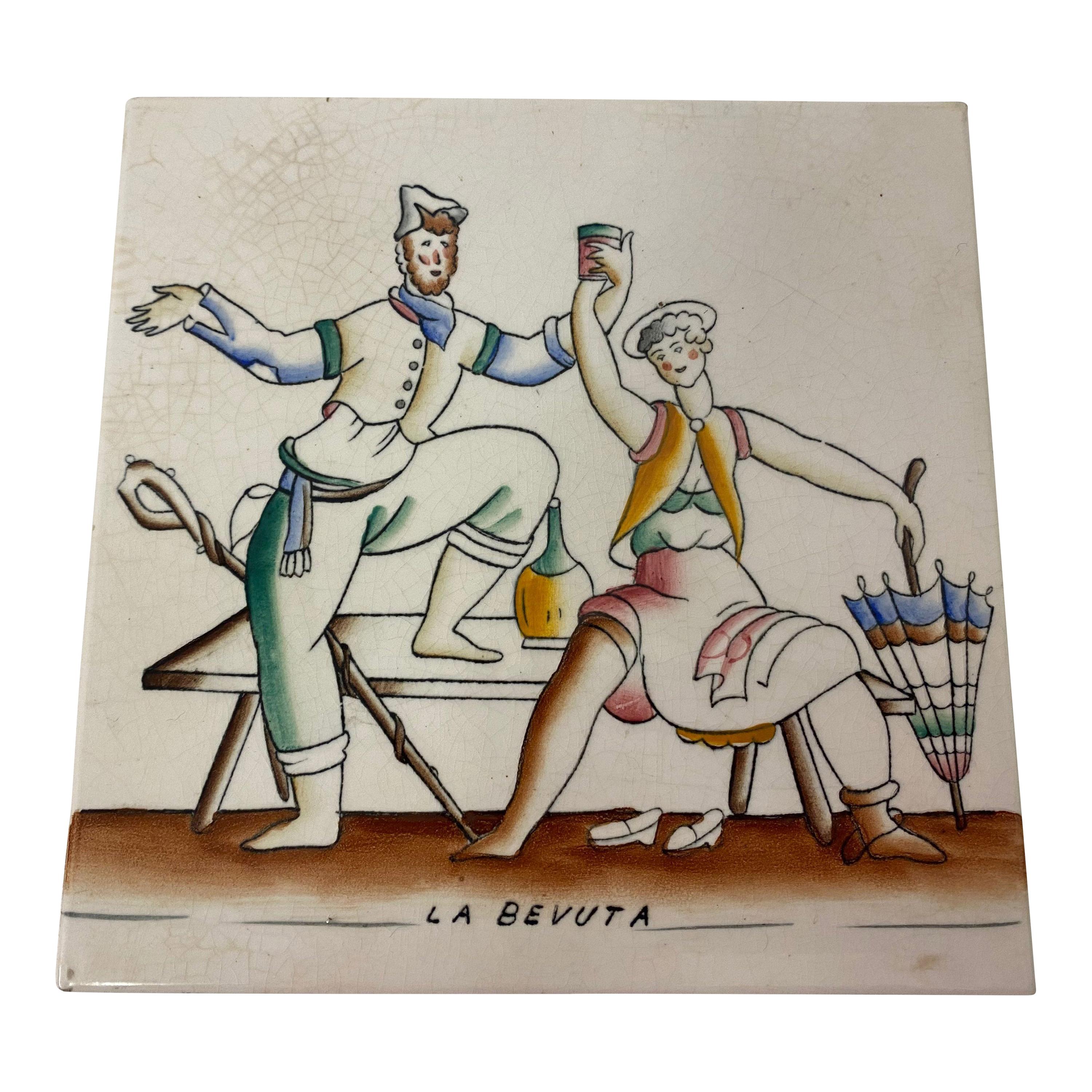
Titled "La Bevuta"
Marked to the reverse Richard Ginori, Made in Italy
Impressed initials RGM
Italian 1930s.
Category
Mid-20th Century Italian Mid-Century Modern Ceramics
Materials
Ceramic
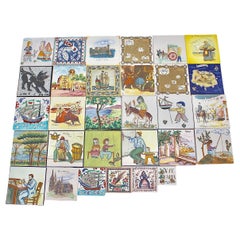
Mid Century Modern Vintage Collection Ceramic Tiles 1960s Greece, Italy, Spain
Located in Vienna, AT
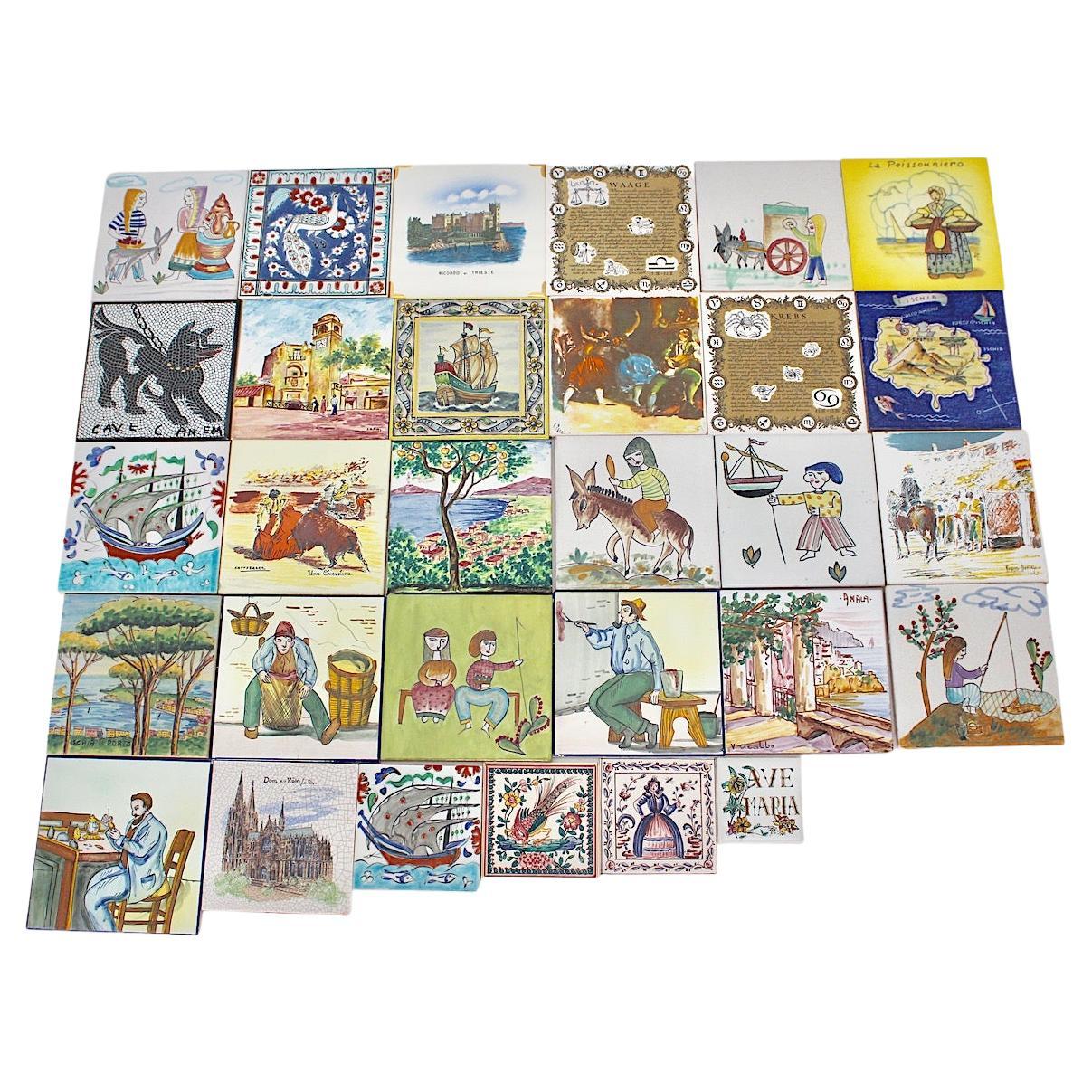
Mid Century Modern Vintage collection of thirty ( 30 ) ceramic tiles in various colors and sizes from 1960s Italy, Greece, Spain, Portugal, Austria.
A stunning collection of ceramic ...
Category
Late 20th Century Mid-Century Modern Flooring
Materials
Ceramic
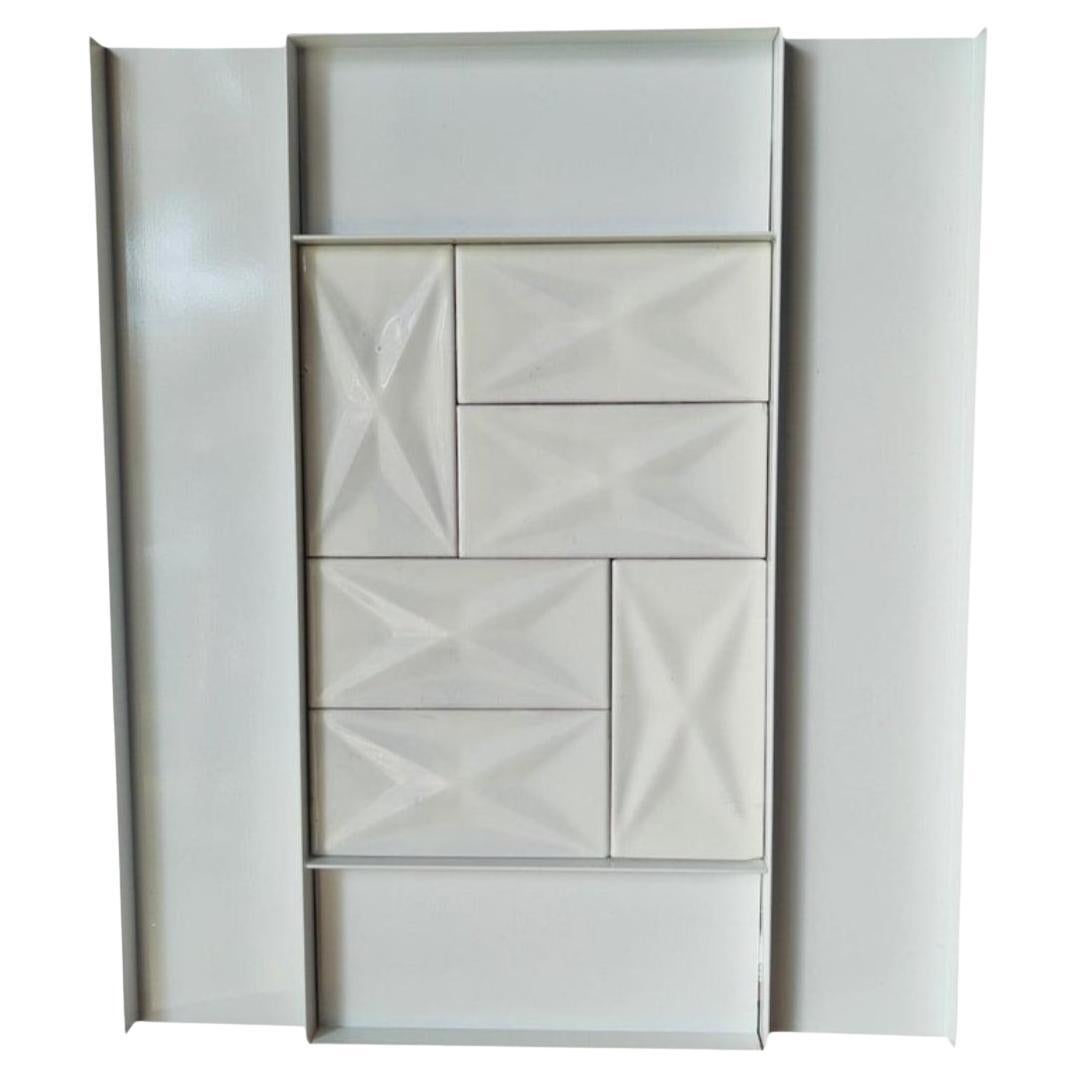
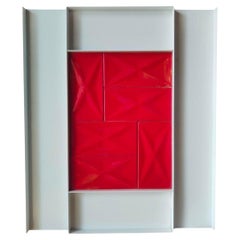
original "diamond" ceramic tiles by Gio Ponti for Joo Milano 1960s
By Gio Ponti
Located in taranto, IT
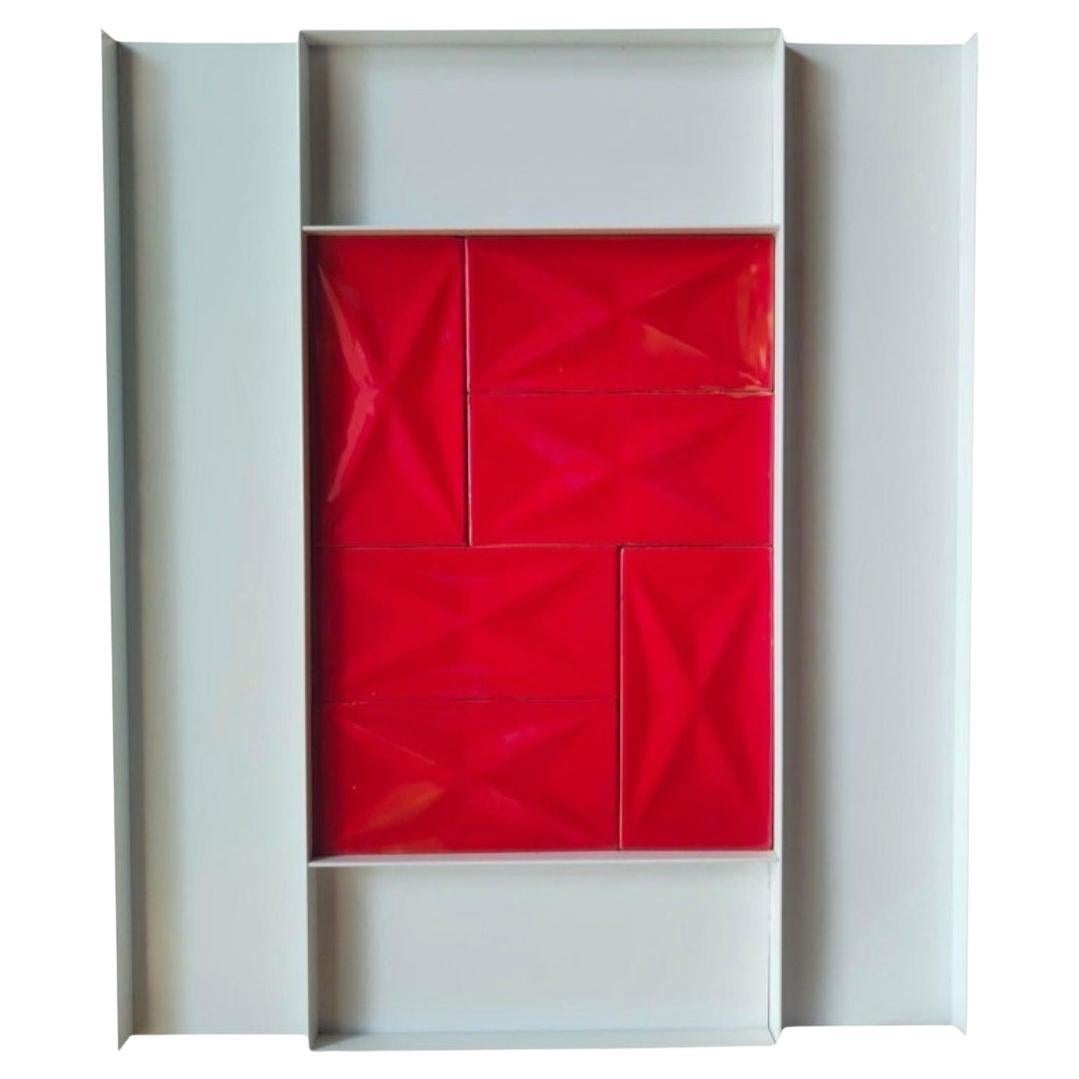
Wall panel composed of a very rare group of 6 ceramic tiles designed in 1960 by Gio Ponti for Joo Ceramiche Milano, "diamond" model, fire-red in white aluminum frame.
The whole panel...
Category
Vintage 1960s Italian Mid-Century Modern Ceramics
Materials
Aluminum
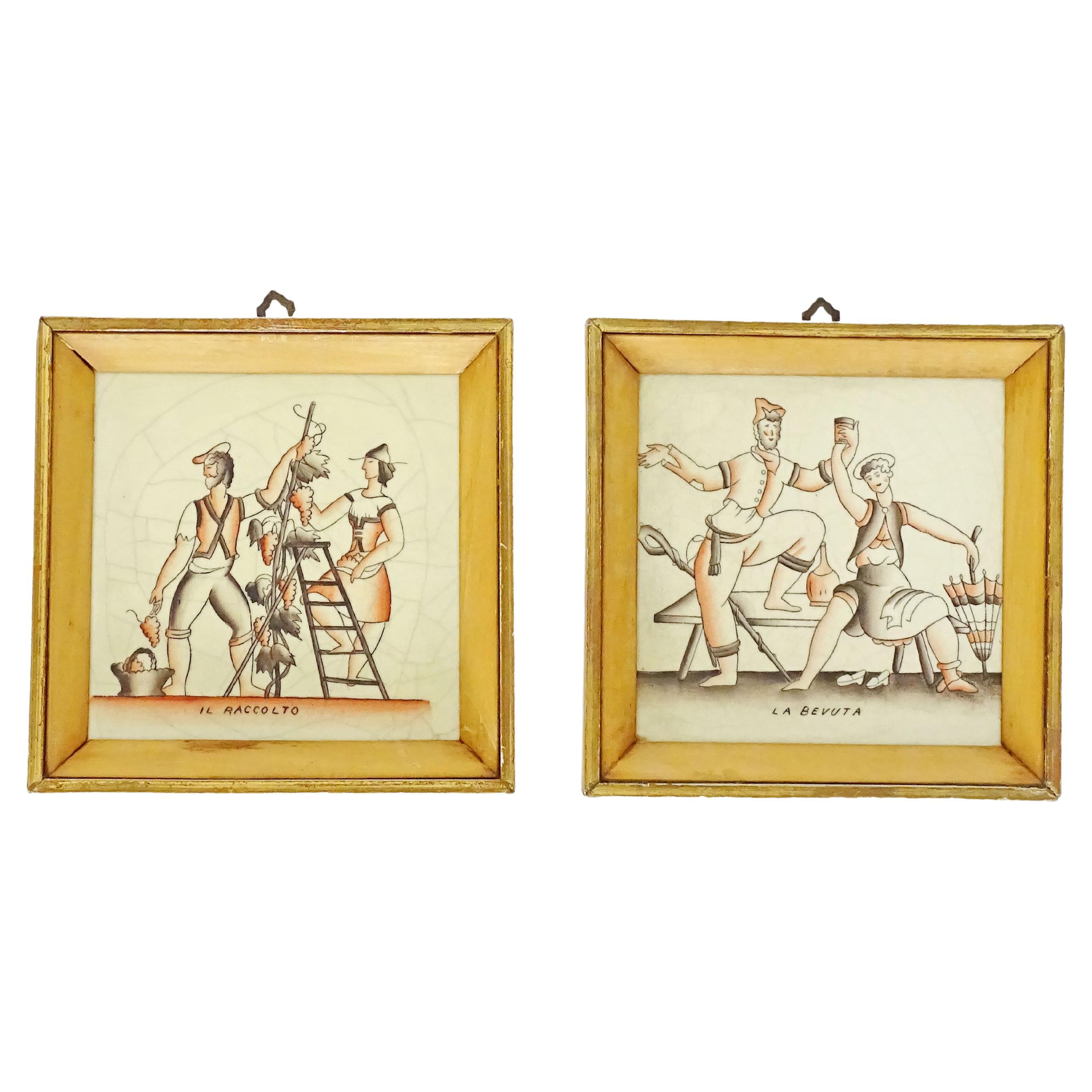
Gio Ponti
Vendemmia
series two tiles for Richard Ginori, Italy, 1920s
By Gio Ponti, Richard Ginori
Located in Milan, IT
Gio Ponti two 'Vendemmia' series tiles in frames for Richard Ginori, Italy, 1920s
Fully marked.
Category
Vintage 1920s Italian Art Deco Ceramics
Materials
Ceramic, Wood
Decorative Ceramic Tile c.1977
By Roger Capron
Located in Holmfirth, GB
Artist: Roger Capron
Medium: Ceramic Tile
Year: 1977
Size: 17cm x 23cm x 1.5cm
Made in Vallauris, France
Note: Decorative tiles such as this look very attractive fr...
Category
Vintage 1970s French Modern Ceramics
Materials
Ceramic
Original "Diamante" ceramic tiles by Gio Ponti for Joo Milano 1960s
By Gio Ponti
Located in taranto, IT
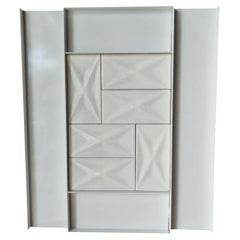
Wall panel composed of a very rare group of 6 ceramic tiles designed in 1960 by Gio Ponti for Joo Ceramiche Milano, "diamond" model, white in white aluminum frame.
The whole panel me...
Category
Vintage 1960s Italian Mid-Century Modern Ceramics
Materials
Aluminum