Want more images or videos?
Request additional images or videos from the seller
1 of 8
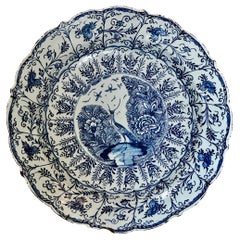
Four small and rare English delftware lobed dishes, London, ca. 1700
$1,320List Price
About the Item
- Dimensions:Height: 8.88 in (22.56 cm)Diameter: 8.88 in (22.56 cm)
- Materials and Techniques:
- Place of Origin:
- Period:
- Date of Manufacture:1700
- Condition:Wear consistent with age and use.
- Seller Location:Charlottesville, VA
- Reference Number:1stDibs: LU8351241725792
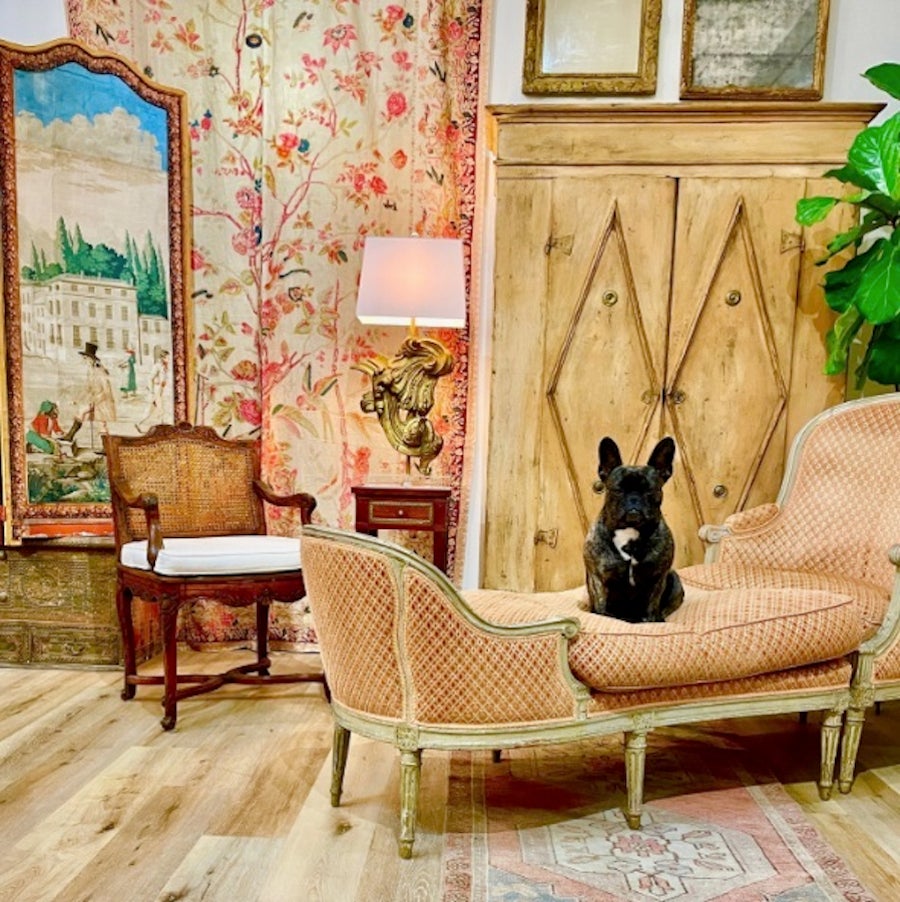
About the Seller
5.0
Vetted Professional Seller
Every seller passes strict standards for authenticity and reliability
Established in 2003
1stDibs seller since 2023
19 sales on 1stDibs
Typical response time: 3 hours
Authenticity Guarantee
In the unlikely event there’s an issue with an item’s authenticity, contact us within 1 year for a full refund. DetailsMoney-Back Guarantee
If your item is not as described, is damaged in transit, or does not arrive, contact us within 7 days for a full refund. Details24-Hour Cancellation
You have a 24-hour grace period in which to reconsider your purchase, with no questions asked.Vetted Professional Sellers
Our world-class sellers must adhere to strict standards for service and quality, maintaining the integrity of our listings.Price-Match Guarantee
If you find that a seller listed the same item for a lower price elsewhere, we’ll match it.Trusted Global Delivery
Our best-in-class carrier network provides specialized shipping options worldwide, including custom delivery.You May Also Like
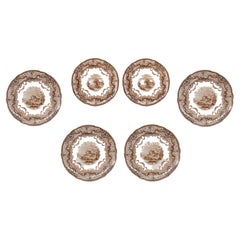
English Old Dishes
Located in Alessandria, Piemonte
O/3008 - There are four dishes diameter 23 and two diameter 19 cm.
The name is "Continental Views" by Copeland and Garrett, very famous in Europe.
These dishes are suitable for maki...
Category
Antique Mid-19th Century English Other Ceramics
Materials
Ceramic
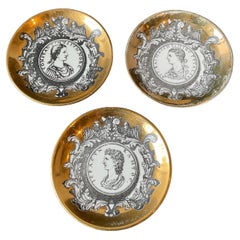
3 1960s Fornasetti Small Dishes
Located in Tarrytown, NY
3 Small Fornasetti dishes.
Category
Vintage 1960s Ceramics
Materials
Ceramic
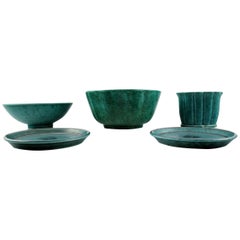
Wilhelm Kåge, Josef Ekberg, Gustavsberg Argenta, 3 Vases and 2 Small Dishes
Located in København, Copenhagen
Wilhelm Kåge, Josef Ekberg, Gustavsberg Argenta, three vases and two small dishes.
Stamped.
1st. factory quality. In perfect condition.
The large bowl measures 12 x 6 cm.
Category
Vintage 1940s Swedish Art Deco Ceramics
$300 / set
H 2.37 in Dm 4.73 in
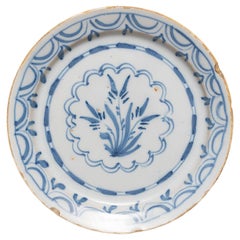
Plate Delftware, English Small Stylised Floral Spray London, Blue and White
Located in BUNGAY, SUFFOLK
Decorated with a stylised fern surrounded by a double-circle petal shaped border and an arc border around the rim. Decorated in blue on blue glaze. In original condition. Probably Lo...
Category
Antique 18th Century English Chinoiserie Delft and Faience
Materials
Earthenware
$2,045
H 0.79 in Dm 7.68 in
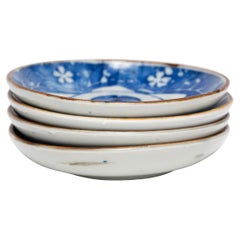
Set of Four Petite Japanese Blue
White Inban Dishes
Located in Chicago, IL
These petite Japanese dishes are patterned with a bright, cobalt blue design of flowers and leaves, arranged to form a large, five-petal plum or cherry blossom. A type of porcelain w...
Category
Mid-20th Century Japanese Chinese Export Decorative Dishes and Vide-Poche
Materials
Porcelain
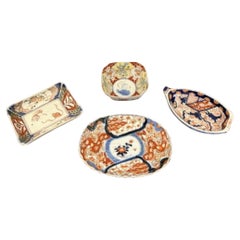
Unusual collection of four antique Japanese imari shaped dishes
Located in Ipswich, GB
Unusual collection of four antique Japanese imari shaped dishes having a unusual collection of four shaped imari dishes in various shaped and sizes hand painted with flowers, leaves,...
Category
Early 20th Century Ceramics
Materials
Ceramic
$927 / set
Free Shipping
H 1.38 in W 7.49 in D 5.52 in
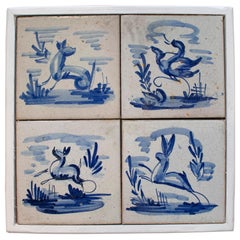
Set of Four 19th Century Dutch Delftware Hand Painted Glazed Ceramic Tiles
Located in Marbella, ES
Set of four 19th century Dutch Delftware hand painted glazed ceramic tiles, framed
Dimensions exclude frame.
Category
Antique 19th Century Dutch Ceramics
Materials
Ceramic
$1,494
H 11.03 in W 11.03 in D 0.99 in
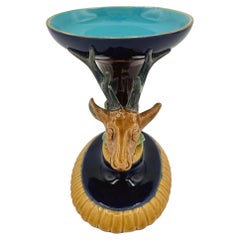
A Minton Majolica Stag
s Head Small Taza in Cobalt Blue, English, ca. 1868
By Minton
Located in Banner Elk, NC
A Minton Majolica Small Tazza formed as a shallow bowl supported by a horn and naturalistic stag's head, with green stylized leaves, the oval base glazed in cobalt, with gadrooned ed...
Category
Antique 19th Century English Victorian Ceramics
Materials
Majolica
$1,585
H 4.5 in W 4.38 in D 6.5 in
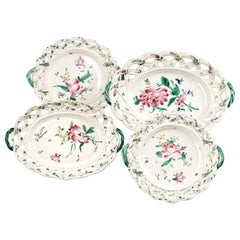
Four Italian Ancient Dishes, Antonio Ferretti, Lodi, circa 1770-1780
By Antonio Ferretti
Located in Milano, IT
Assortment of 4 dishes with braided rim
Antonio Ferretti Manufacture
Lodi, circa 1770-1780
Maiolica polychrome decorated “a piccolo fuoco” (third fire).
Measures: 14 x 10 in (35.5 x 25.5 cm);
12.2 x 8.39 in (31 x 21.3 cm);
10.4 x 9.65 in (26.5 x 24.5 cm);
10.8 x 9.61 in (27.5 x 24.4 cm).
Weight: 4.4 lb (1.998 kg)
State of conservation: some chips due to use on the edges and on the parts in relief.
The four different dishes have a foot with a low lip from which extends a wide, flat, slanted rim resembling a basket weave. The small handles are painted green: they resemble wickerwork in the two oval dishes and take the form of a sinuous branch in the round ones.
The third fire decoration is inspired by the naturalistic floral botanical patterns on the ceramics produced by the Hannong family in Strasbourg. Here the pattern is defined by the rapidity and subtlety of the brushstrokes and the result is particularly tasteful, characterized by compositional intelligence and pictorial expertise.
A main corolla, either a wild or garden rose, is set slightly off center in each well. From this extends a thin stem holding a small secondary bud and there are small field florets dotting the composition to lend volume to the delicate bunch of flowers.
On the brim, small polychrome flowers add color to the weave, accompanied by lanceolate leaves of a very intense green.
There exist few and very rare examples for comparison with this morphology: a round plate - entirely consistent with those in question - has been dated to around 1775 (S. Levy, Maioliche settecentesche lombarde e venete, Milano 1962, tav. 200). Two other dishes with a basket rim, but with parallel striped brim decoration, were exhibited in the 1995 exhibition on Lodi ceramics; the attribution to the Lombard town near Milan is therefore almost exclusively derived from the decoration called "alla rosa contornata" or "alla vecchia Lodi" and constitutes one of the most popular decorations during the eighteenth century. (M. L. Gelmini, in Maioliche lodigiane del '700 (cat. mostra Lodi), Milano 1995, pp. 31 p. 162-163 nn. 181-182).
This decorative choice represented a strong point of the Lodi factory, which established itself thanks to the vivid nature of the colors made possible by the introduction of a new technique perfected by Paul Hannong in Strasbourg and which Antonio Ferretti introduced in Italy. This production process, called “piccolo fuoco” (third fire), allowed the use of a greater number of colors than in the past; in particular, the purple of Cassius, a red made from gold chloride, was introduced. Its use allowed for many more tones and shades, from pink to purple.
The Ferretti family had started their Maiolica manufacturing business in Lodi in 1725.
The forefather Simpliciano had started the business by purchasing an ancient furnace in 1725 and, indeed, we have evidence of the full activity of the furnaces from April of the same year (Novasconi-Ferrari-Corvi, 1964, p. 26 n. 4). Simpliciano had started a production of excellence also thanks to the ownership of clay quarries in Stradella, not far from Pavia. The production was so successful that in 1726 a decree of the Turin Chamber came to prohibit the importation of foreign ceramics, especially from Lodi, to protect internal production (G. Lise, La ceramica a Lodi, Lodi 1981, p. 59).
In its initial stages, the manufacture produced maolicas painted with the “a gran fuoco” (double fire) technique, often in turquoise monochrome, with ornamentation derived from compositional modules in vogue in Rouen in France. This was also thanks to the collaboration of painters like Giorgio Giacinto Rossetti, who placed his name on the best specimens next to the initials of the factory.
In 1748 Simpliciano made his will (Gelmini, 1995, p. 30) appointing his son Giuseppe Antonio (known as Antonio) as universal heir. After 1750, when Simpliciano passed away, Antonio was directly involved in the Maiolica factory, increasing its fortunes and achieving a reputation on a European level. Particularly important was the aforementioned introduction in 1760 of the innovative “a piccolo fuoco” (third fire) processing, which, expanding the ornamental repertoire with Saxon-inspired floral themes, could commercially compete with the German porcelains that had one of its most renowned offerings in the naturalistic Deutsche Blumen. Antonio Ferretti understood and promoted this technique and this decoration, proposing it in a fresher and more corrective version, less linked to botanical tables...
Category
Antique 1770s Italian Neoclassical Ceramics
Materials
Maiolica
$4,183 / set
H 1.38 in W 13.98 in D 10.04 in
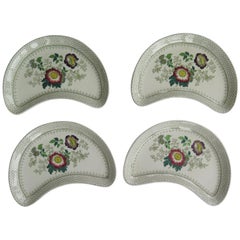
Set of FOUR Victorian Masons Ashworths Ironstone Supper Dishes, circa 1890
By Mason
s Ironstone
Located in Lincoln, Lincolnshire
These are a good and unusual set of four ironstone supper dishes from the Mason's Factory when it was owned by the Ashworth Brothers. From about 1861 the Mason's Company traded under...
Category
Antique Late 19th Century English Late Victorian Decorative Dishes and V...
Materials
Pottery, Ironstone
$361 / set
H 1 in W 9.38 in D 6.5 in
More From This Seller
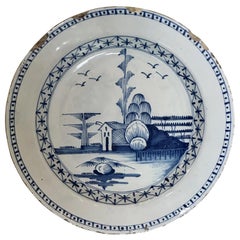
View AllBlue and White Delft Charger, London
Located in Charlottesville, VA
Delft charger, London, painted in blue with a house in a stylized landscape, 18th Century. diam. 14.25 in.
Category
Antique 18th Century English Ceramics
Materials
Ceramic
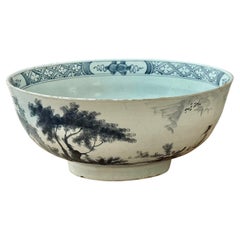
Rare English Delft bowl, London, c. 1770, Blue and white
Located in Charlottesville, VA
English delftware bowl, London, c. 1770. 5” h. x 12” diam. Having a whimsical pastoral landscape design around the entire exterior. Though referred to...
Category
Antique Late 18th Century English Serving Bowls
Materials
Delft
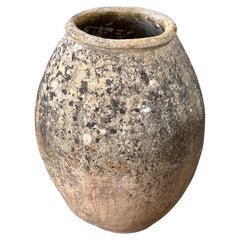
Rare French 18th Century Biot Jar
Located in Charlottesville, VA
Fine, rare 18th Century French biot jar, having fabulous patination and lichen. Found in Provence.
Category
Antique 18th Century French Ceramics
Materials
Ceramic
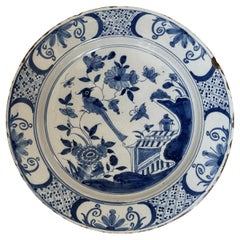
Fine English delft charger featuring a chinoiserie garden scene
Located in Charlottesville, VA
A fine English delft charger featuring a chinoiserie garden scene with long-tailed bird, butterflies, and bees amid peonies and a fence, painted in deep cobalt blue on a tin-glazed g...
Category
Antique 18th Century English Chinoiserie Ceramics
Materials
Delft
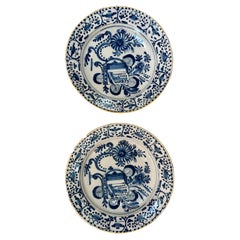
Pair of 18th Century Blue and White Dutch Delft Chargers
Located in Charlottesville, VA
Rare pair of 18th Century Dutch Delft Chargers, stylized blue and white floral decoration with yellow rims. 13.74” diam, 2” h.
Category
Antique 18th Century Ceramics
Materials
Ceramic, Delft
Scalloped Blue and White Delft Charger with Crane
Floral Decoration, 18th Cent
Located in Charlottesville, VA
Exceptional, scalloped Delft Charger having crane, floral decoration, Mid-18th C., bears axe mark of De Porceleyne Bijl workshop.
Category
Antique 18th Century Dutch Ceramics
Materials
Ceramic
Still Thinking About These?
All Recently ViewedMore Ways To Browse
Delftware And English
18th Century London Delft
Roger Capron Fish
Rorstrand Monkey
Saxbo Danish Teapot
Silver Lustreware
Silver Soap Dish
Spanish Majolica Plate
Sugar Mold
Sunderland Lustre
Talavera Set
Tazza Majolica
Theodore Deck On Sale
Torino Silver
Troll Glass
Turkey Decanter
Uzbek Ceramics
Vintage Dansk Stoneware