Items Similar to Italian Midcentury Decorative Ceramic by Osvaldo Gualdo Dolci, 1950s
Video Loading
Want more images or videos?
Request additional images or videos from the seller
1 of 10
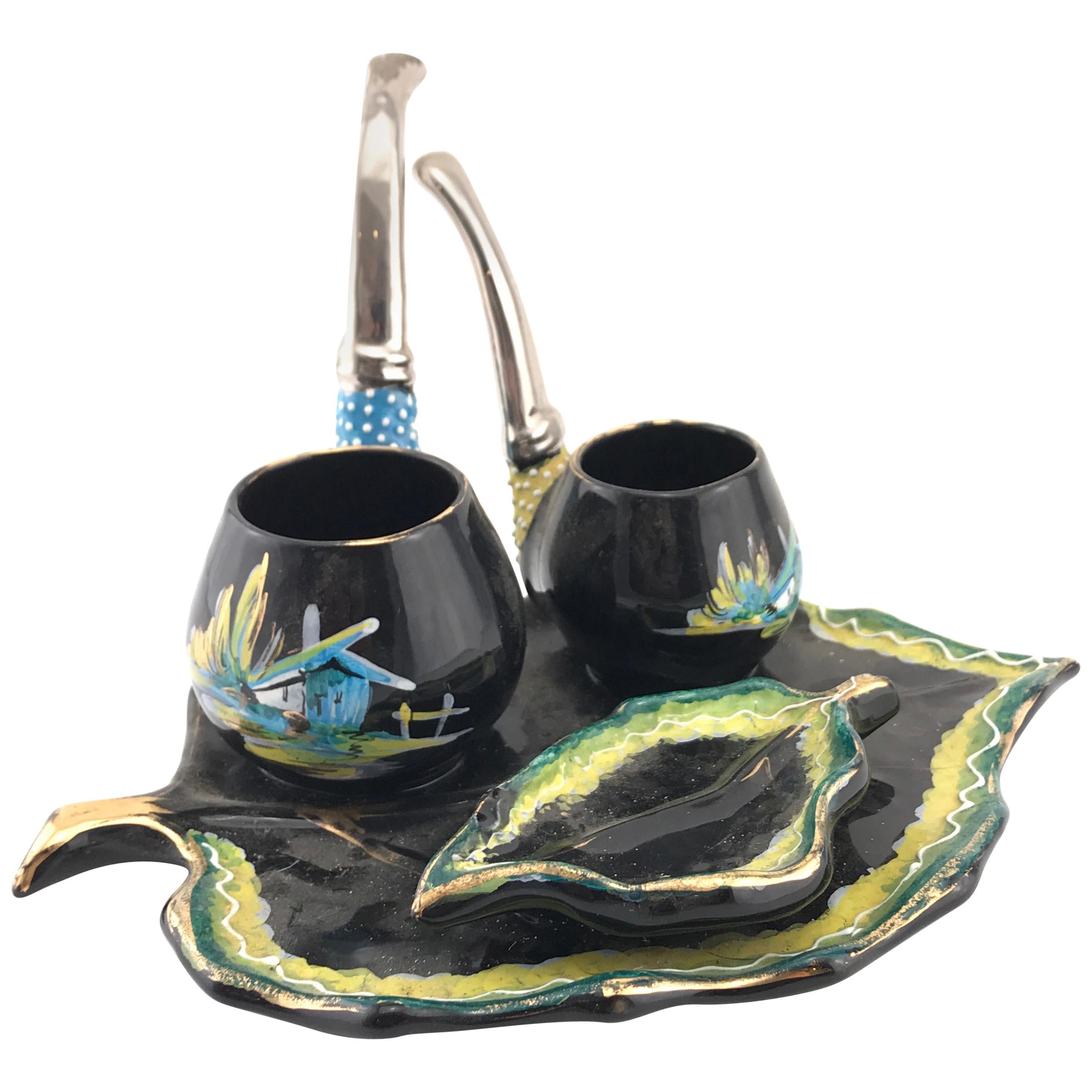
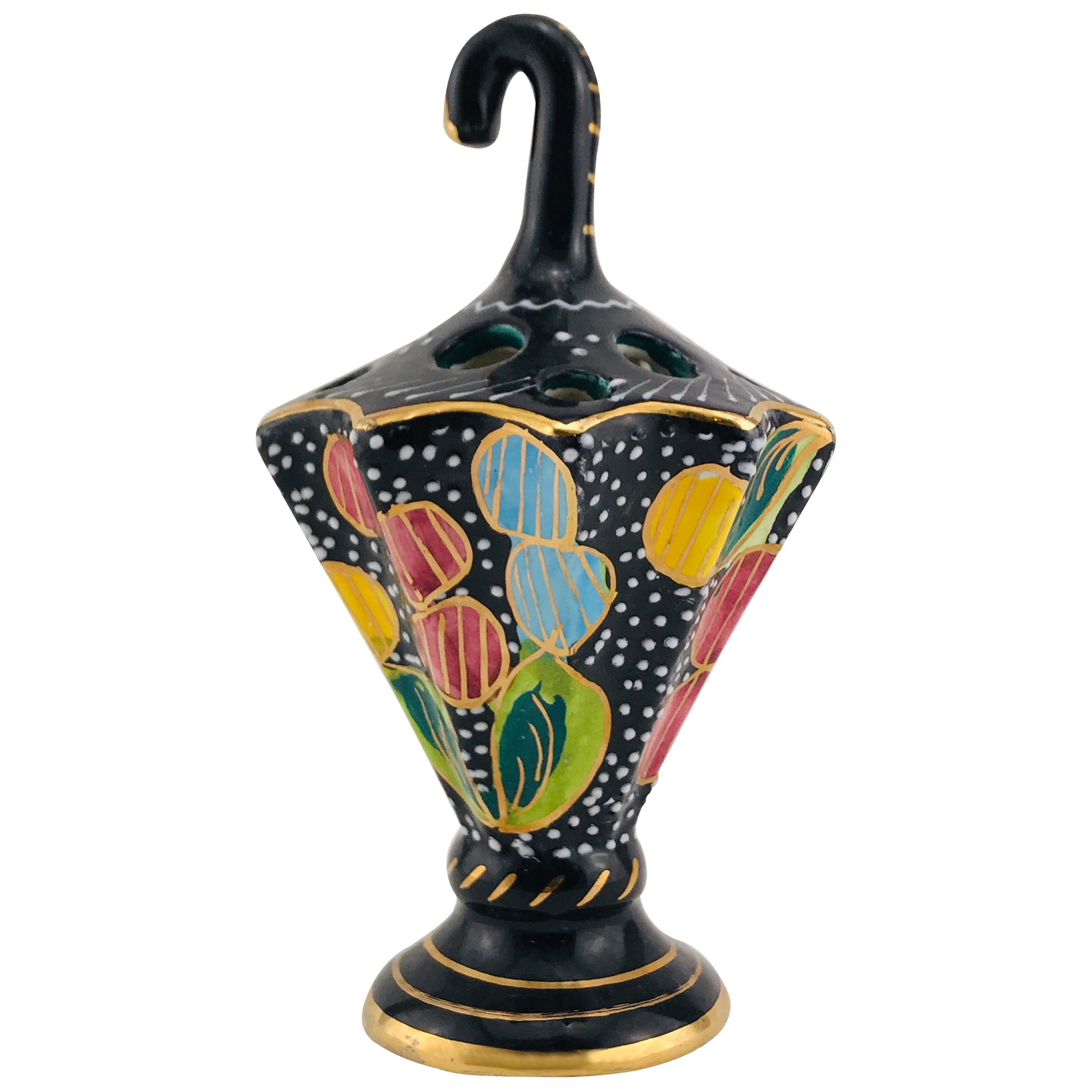
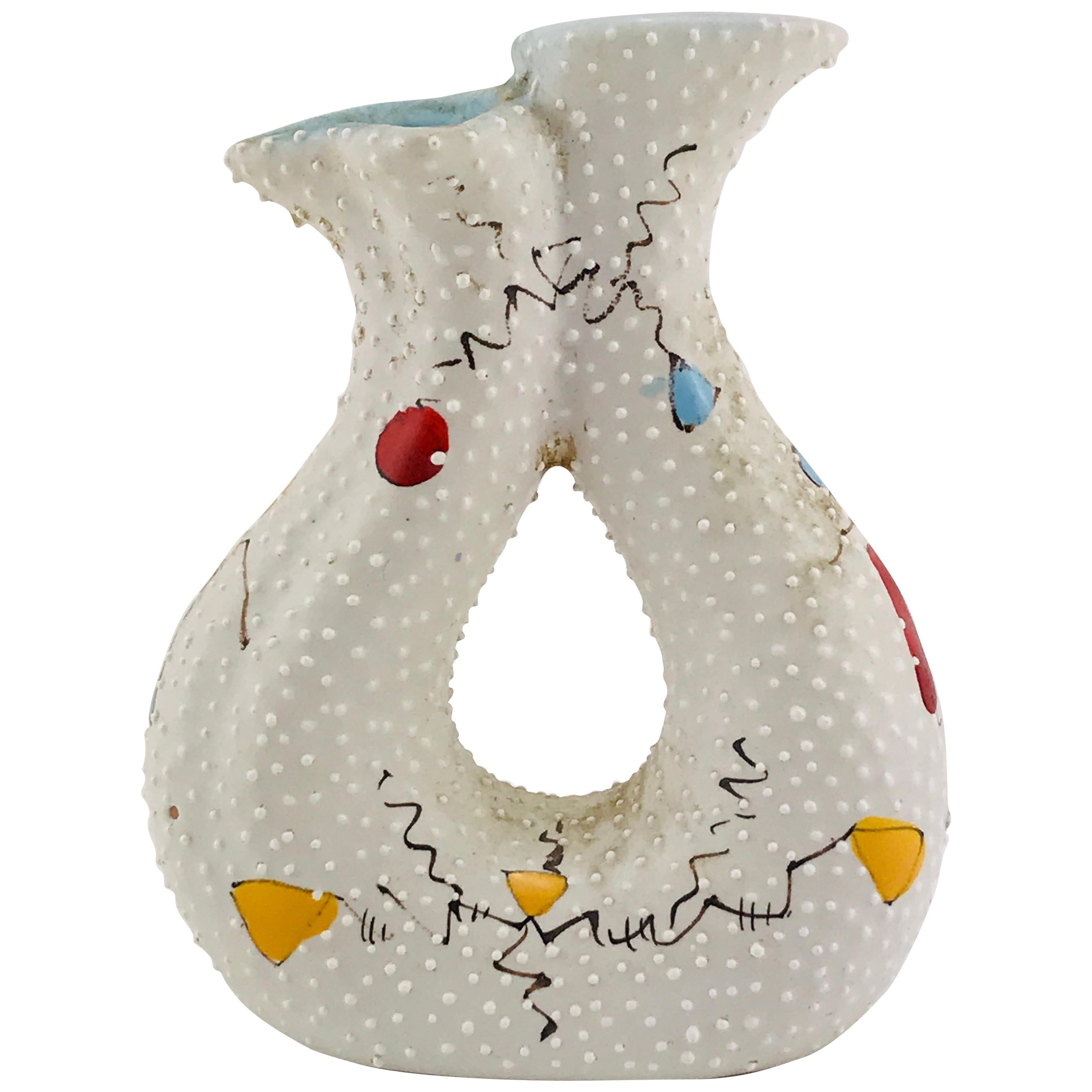
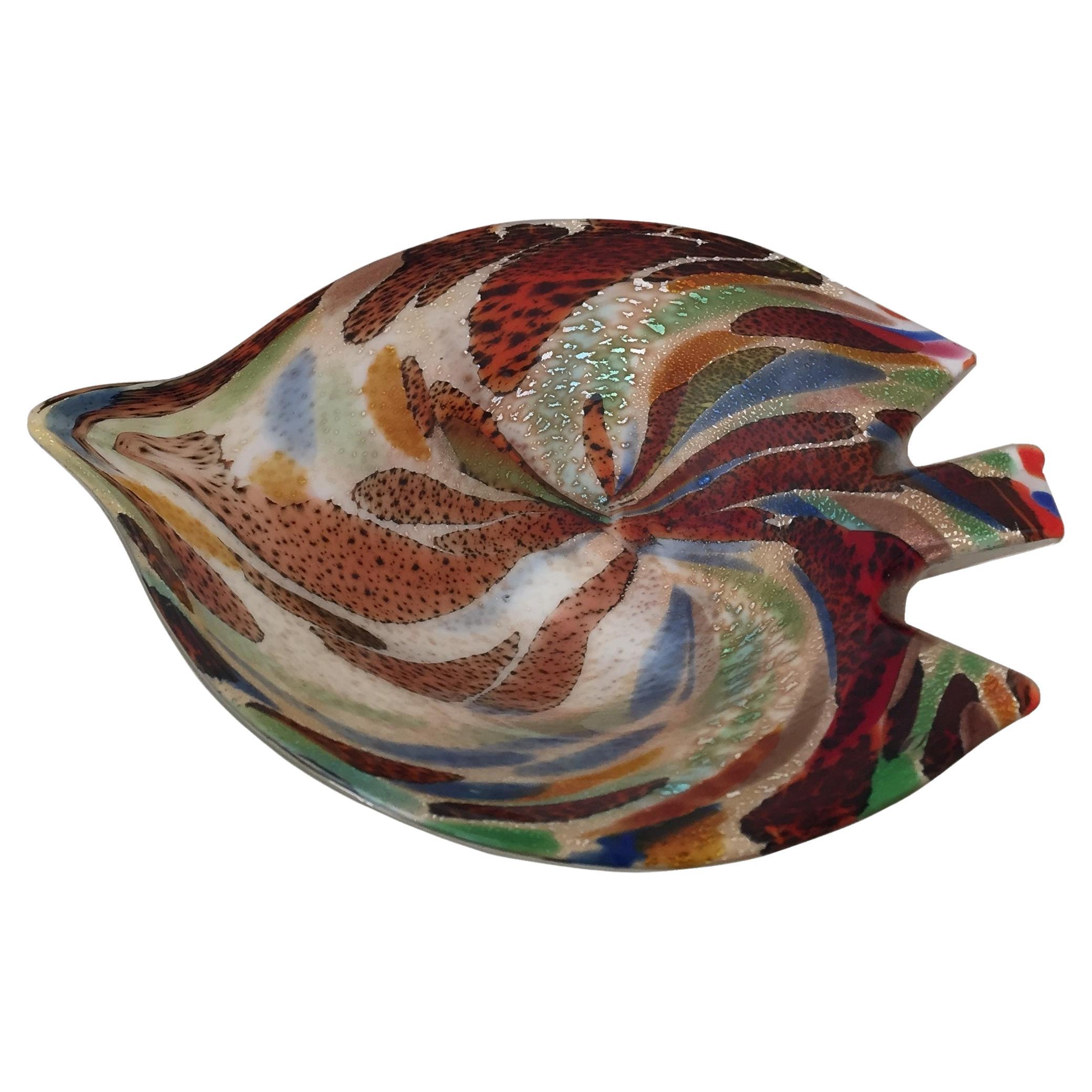
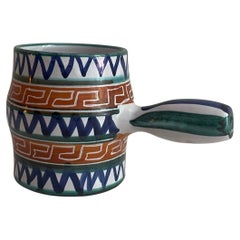
Italian Midcentury Decorative Ceramic by Osvaldo Gualdo Dolci, 1950s
$700
£533.55
€615.40
CA$994.21
A$1,068.38
CHF 573.25
MX$12,584.89
NOK 7,207.97
SEK 6,584.44
DKK 4,599.23
About the Item
Osvaldo Gualdo Dolci was an Italian ceramic artist known for his contributions to midcentury decorative ceramic design. He was born in 1917 in Rome, Italy, and began his career as a painter. However, he soon shifted his focus to ceramics and established his own studio, where he started experimenting with various techniques and designs.
In the 1950s, Dolci gained significant recognition for his innovative approach to ceramics, which blended traditional craftsmanship with modern aesthetics. His works from this period often featured vibrant colors, geometric patterns, and abstract motifs, reflecting the artistic trends of the midcentury era. He created a wide range of decorative objects, including vases, bowls, figurines, and plates, all of which showcased his unique style.
Dolci's ceramics are highly sought after by collectors and enthusiasts of midcentury design due to their artistic value and historical significance. His pieces are known for their craftsmanship, quality, and timeless appeal. While some of his works might bear his signature, others may be identified by the distinct style and design elements characteristic of his creations.
Collectors and admirers of midcentury decorative ceramics often appreciate Osvaldo Gualdo Dolci's contributions to the art form, as he played a significant role in shaping the aesthetic of the time.
- Creator:Gualdo Dolci (Maker)
- Dimensions:Height: 5.91 in (15 cm)Width: 9.45 in (24 cm)Depth: 7.09 in (18 cm)
- Style:Mid-Century Modern (Of the Period)
- Materials and Techniques:
- Place of Origin:
- Period:
- Date of Manufacture:1950s
- Condition:
- Seller Location:Byron Bay, AU
- Reference Number:1stDibs: LU4258235586942
About the Seller
5.0
Vetted Professional Seller
Every seller passes strict standards for authenticity and reliability
Established in 2017
1stDibs seller since 2018
67 sales on 1stDibs
Typical response time: 1 hour
- ShippingRetrieving quote...Shipping from: Byron Bay, Australia
- Return Policy
More From This Seller
View AllItalian Midcentury Decorative Ceramic by Osvaldo Gualdo Dolci, 1950s
By Gualdo Dolci
Located in Byron Bay, NSW
Incredible ceramic by Osvaldo Gualdo Dolci from, Italy, 1950s.
Category
Vintage 1950s Italian Mid-Century Modern Ceramics
Materials
Ceramic
$675 Sale Price
25% Off
Mid-Century Modern Italian Ceramic by Cima Deruta, 1950s
By Cima
Located in Byron Bay, NSW
Beautiful ceramic by Cima (Italy) probably design as pens holder, amazing colours and in very good condition.
Category
Vintage 1950s Italian Mid-Century Modern Ceramics
Materials
Ceramic
$480 Sale Price
20% Off
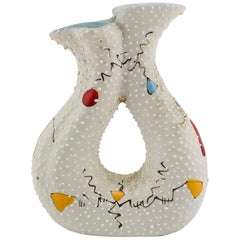
Italian Midcentury Ceramic Vase by Gualdo Dolci, 1950s
By Gualdo Dolci
Located in Byron Bay, NSW
Beautiful vase by Gualdo Dolci also signed Rappallo a place in Italy famous for their beautiful ceramics in 1950s.
Category
Vintage 1950s Italian Mid-Century Modern Ceramics
Materials
Ceramic
$420 Sale Price
30% Off
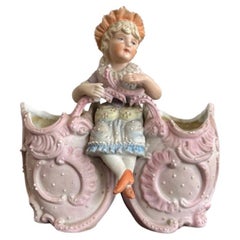
Italian Hand Made Ceramic 1970
Located in Byron Bay, NSW
Italian hand made ceramic
Category
Vintage 1970s Mid-Century Modern Ceramics
Materials
Ceramic
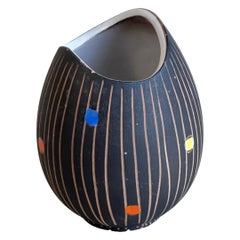
Italian Hand Painted Ceramic 1960s
Located in Byron Bay, NSW
Italian 1960s Hand Painted ceramic vase.
Signed ceramic by AT serial number 3969.
Hand spited stripes and yellowed and blue decorations.
Category
Vintage 1960s Italian Mid-Century Modern Ceramics
Materials
Ceramic
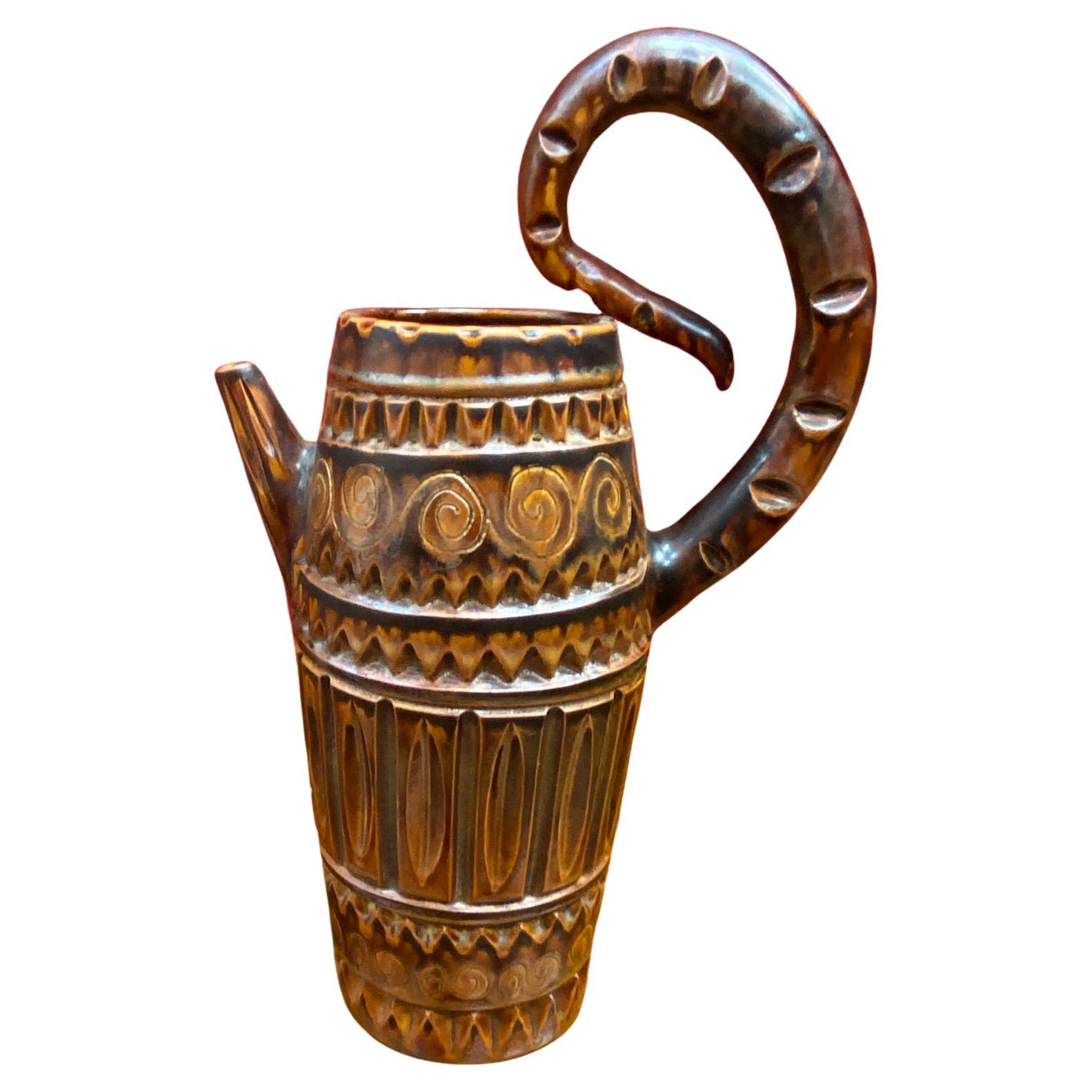
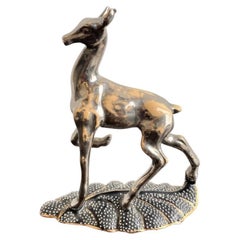
Italian Gualda Docci Handmade Ceramic 1970s
Located in Byron Bay, NSW
Italian handmade ceramic please refer to photos for condition as one on the horn is broken hence this price
Category
Vintage 1970s Italian Mid-Century Modern Ceramics
Materials
Ceramic
You May Also Like
Huguette Bessone, Signed, Ceramic Vallauris, circa 1970
By Huguette Bessone
Located in Saint-Ouen, FR
Huguette Bessone, signed, ceramic Vallauris, circa 1970.
Category
Vintage 1970s French Mid-Century Modern Ceramics
Materials
Ceramic
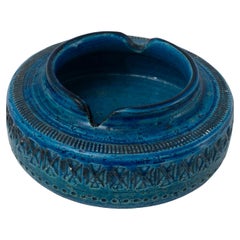
"Rimini" ceramic ashtray by Aldo Londi, Bitossi, 1960s
By Aldo Londi
Located in Bastia Umbra, IT
"Rimini" ceramic ashtray by Aldo Londi, Bitossi, Made in Italy, 1960s.
Pretty round ashtray/emptying tray from the 1960s made of blue "Rimini" glazed ceramic. This piece was designe...
Category
Vintage 1960s Italian Mid-Century Modern Ashtrays
Materials
Ceramic
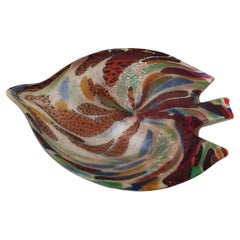
Murano, 1930, Italian, Attributed to Fratelli Toso Technical Avventurina
By Fratelli Toso
Located in Ciudad Autónoma Buenos Aires, C
Murano
Technical Avventurina :
We have specialized in the sale of Art Deco and Art Nouveau and Vintage styles since 1982. If you have any questions we are at your disposal.
Pushing the button that reads 'View All From Seller'. And you can see more objects to the style for sale.
Fratelli Toso, Venice
One of the oldest glass factories established in Murano, Fratelli Toso was founded in 1854 by six brothers who loved the art of glassmaking. With over 150 years of experience in the field, the Toso family improved their techniques and nowadays are one of the top award-winning manufacturers of Murano glass.
Technical Avventurina :
Avventurina is a Murano glass-making technique developed on Murano island in the 17th century. I was first mentioned in a document dating from 1614 as "a kind of stone with gilt stars inside", at which point it already mesmerized people with the unusual and attractive look. The technique owes its name to the fact that its discovery happened by chance thanks to a lucky coincidence, when a glass artisan is said to have accidentally dropped some metal shavings into the glass mixture. Italians say it happened "all'avventura", which in Italian means "by chance".
The first documented recipe for the technique dates from 1644, when Murano master glassmaker Giovanni Darduin described how Avventurina glass should be created. The recipe involves adding various metal oxides such as copper and iron to the hot glass mixture, which will cause tiny particles of the metals to crystallize as the glass mixture cools off.
Complicating the process, for such crystallization to occur the furnace had to get fully extinguished, and the metal particles would slowly separate from the glass base over a few days during the natural cooling of the glass. This was a very difficult process from a logistical perspective, since every time a glass furnace got extinguished it caused work to be paused, and re-igniting it was quite a big process, as it took time to fully heat it to the desired temperature.
As industrial revolution set foot on Murano in the nineteenth century, the process got a remake. Large volumes of fine Avventurina paste were made and then skillfully stretched into glass canes, which were then re-melted for jewelry-making under a small flame, or for glass blowing. This Avventurina paste received worldwide acclaim and re-ignited the fame of Murano Glass workshops due to its use in Salviati mosaics...
Category
Vintage 1930s Italian Art Deco Centerpieces
Materials
Murano Glass
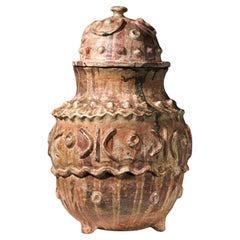
Large Italian ceramics signed Clizia from the 1960s mid century
Located in Ternay, Auvergne-Rhône-Alpes
Large Italian ceramic from the 1960s signed by the artist Clizia. The ceramic rests on three small feet and is decorated throughout with added decorative elements, also in ceramic. T...
Category
Vintage 1960s Italian Mid-Century Modern Ceramics
Materials
Ceramic
Vallauris ceramics by Robert Picault
By Robert Picault
Located in MADRID, ES
Vallauris ceramic vessel by Robert Picault. With RP signature on the base. France, 1970.
Robert Picault, a renowned ceramist active in the 20th century, marked his era with his uniq...
Category
Vintage 1970s French Serving Bowls
Materials
Ceramic
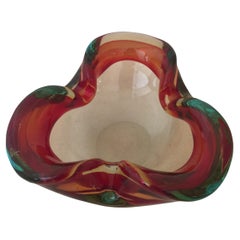
Murano, Italian, Attributed to Barovier Toso, 1940
By Vetreria Artistica Barovier
C.
Located in Ciudad Autónoma Buenos Aires, C
Murano with gold
We have specialized in the sale of Art Deco and Art Nouveau and Vintage styles since 1982. If you have any questions we are at your disposal.
Pushing the button that reads 'View All From Seller'. And you can see more objects to the style for sale.
Attributed to Barovier Toso
We have specialized in the sale of Art Deco and Art Nouveau and Vintage styles since 1982.
The company is one of the oldest family businesses in the world, founded in 1295 as Barovier. "The name Barovier derives from the term berroviere (highwayman/policman , which indicates the armigero (person entitled to bear arms guarding the captain of the people. It is probable that some Barovier, originally from Treviso, settled in Murano around 1291, when a law of the Republic imposed the concentration on the island of all glass furnaces." Jacobello was the first member of the Barovier family to work glass at this time. It is thought that the company originated in Treviso[citation needed]. The Toso family had been established in Murano since around 1350. In the 1400s Angelo Barovier created glass objects which are currently preserved in various museums.[6] Angelo is recognized as significant for uniting the knowledge which had been developed and handed down by family Barovier. He was not only considered and artist but a scientist.
The company became Ferro Toso Vetrerie Artistiche Riunite S.A in 1936 when Vetreria Artistica Barovier merged with Ferro Toso, specializing in crystalline glass, mother-of-pearl glass, and gold-free cornelian red glass. In 1942, the company was renamed Barovier & Toso.
In 1919–1920, 30 year old designer Ercole Barovier began a 50-year career as the artistic director of Barovier & Toso. "After studying medicine and working as a radio operator during World War One he joined the family firm in 1920 when he and his brother Nicolo took over the management from their father Benvenuto. From 1927 Ercole was the main designer and from 1934, when Nicolo left the company, (he was) also the sole owner." While Barovier did not have formal training as a glassblower, his artistic designs produced objets d'art that have become the most critically acclaimed in the history of Ercole - Barovier.[9] In 1930 he produced his award-winning “Primavera” series. "The Primavera series ... is distinguished by a milky white 'craquelé' glass with the addition of black or blue pasta vitrea trim ("opaque colored glass whose consistency is made to appear like ceramic") and decoration. There was a very limited production of this series due to the fact that it was a result of a glass mixture obtained accidentally so it could never be replicated."[13] One example of this series, a Primavera Pigeon, was sold at auction for GBP 275,000 (approximately $360,000 USD, not inclusive of the buyer’s premium) on October 16, 2019.
Barovier continued to produce innovative designs of which the “Lenti” vase...
Category
Vintage 1940s Italian Art Deco Centerpieces
Materials
Murano Glass
More Ways To Browse
Rose Medallion Platter
S C Richard
Spode Coffee Can
Thomas Sargent
Vietri Vintage
Wedgwood Biscuit
Welsh Ceramics
Angel Ceramics
Ashworth Brothers
Castelli Majolica
Ceramic Crock
Ceramic Trees
Ceramica Di Laveno Vintage
Chinese Export Porcelain Octagonal
Chinese Porcelain Tankard
Cloutier Ceramics
Dame Lucie Rie
Gatti Faenza