Items Similar to Maiolica Pitcher Antonio Maria Coppellotti Manufacture, Lodi, Circa 1735
Video Loading
Want more images or videos?
Request additional images or videos from the seller
1 of 21
Maiolica Pitcher Antonio Maria Coppellotti Manufacture, Lodi, Circa 1735
$2,959.66
£2,211.09
€2,500
CA$4,121.18
A$4,427.97
CHF 2,375.60
MX$52,166.64
About the Item
Majolica pitcher
Antonio Maria Coppellotti Manufacture
Lodi, circa 1735
Majolica decorated in cobalt blue monochrome
It measures 7.36 in hight x 8.07 x 4.52 (h 18.7 cm x 20.5 x 11.5)
Weight: 0.859 lb (390 g)
State of conservation: intact, apart from a slight chip on the tip of the spout due to use.
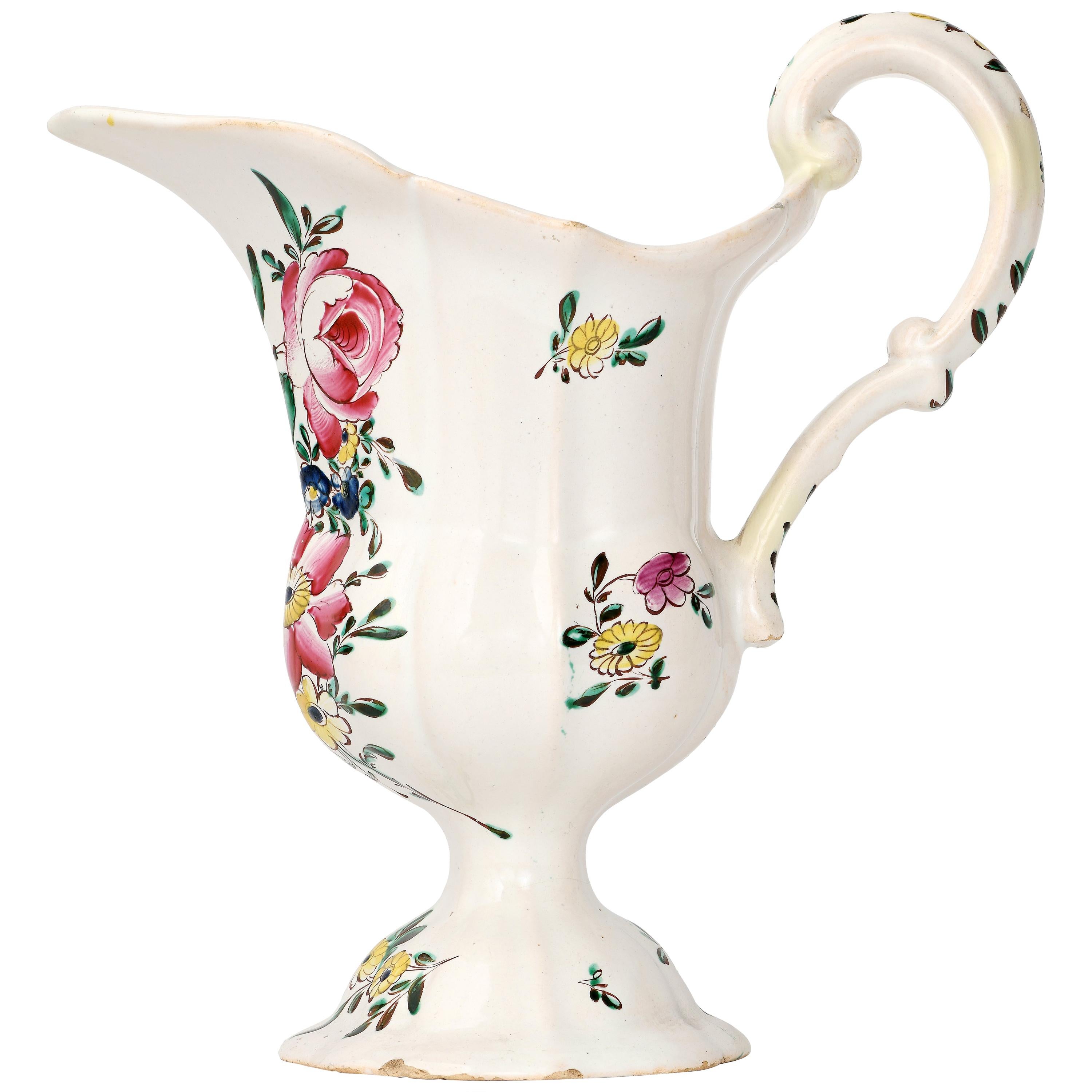
The maiolica pitcher has a mouth with a long triangular spout and a contoured, slightly flared rim that rises at the back where the handle is attached. The latter is carried high and consists of a flat-sectioned ridge that, from the attachment to the rim, traces a descending 'S' ending with a slight protrusion. The smooth and cylindrical vessel widens at the base to form a slightly lobed, rounded chalice, then it narrows into a stem and expands into a broad, ribbed, slightly flared, contoured foot with a concave base.
The surface is covered with a thick white glaze; the artistry of the painting is quick but precise and does not skimp on the use of the precious blue pigment. The decoration covers the entire surface, including the inner rim. On the front it features a flower with wide petals accompanied by a phytomorphic decoration that radiates with dense geometric arabesques, following the principles of the so-called "a lace" decoration inspired by the contemporary French decoration lambrequins et rayonnants or the Rouen style. The decoration interrupts at the cup, which is adorned with oval-shaped lobes, then resumes in the same manner on the foot, as in the Rouen style.
This pitcher accompanied the equipment of a complex eighteenth-century table setting and in theory functioned as a vessel for pouring liquids: It was coupled with a tub for washing hands, and was for pouring wine into glasses, not at the table, but rather with each glass poured and offered by dedicated waiters to each diner.
The small number of consistent works in terms of morphology, dimensions, and decoration, found in private collections, confirms the attribution of the small pitcher in question to the Lodi manufacture of Antonio Maria Coppellotti in its early phase around 1735-1740. See the two spouts or pitchers presented at the Lodi maiolica exhibition (M. L. Gelmini, in Maioliche lodigiane del '700, cat. mostra di Lodi, Milano 1995, pp. 76-77, nn 39-40) and the pouring spout, previously part of the Robiati collection, exhibited at the Poldi Pezzoli in 1964. (G. Gregorietti, Museo Poldi Pezzoli, Maioliche di Lodi, Milano e Pavia, Milan 1964, no. 32). A particularly similar work is preserved in a private collection in Lodi. (F. Ferrari, La ceramica di Lodi, Lodi 2003, p. 94, n. 4). The use of this same mold is also derived from jugs that bear different decorations, such as, for example, the two pitchers with 'fruit' decorations (Gelmini, op. cit., pp. 118-119, nos. 113-114), confirming the success of this form in the Coppellotti manufacture as documented in 1750.
Other published examples document the use of different molds in the manufacture, as evidenced by the morphology of other specimens that differ both in size and in the different characteristics of the vessel's shape, foot, or handle applied in a raw state. The execution of the decoration, similar to ours in design, remains different due to the different personalities of the painters themselves.
The examined work stands out from comparisons due to an intriguing distinctive characteristic of the form that, during the drying phase from the raw state, underwent a slight and unusual compression on the neck of the foot caused by the weight of the vessel: this 'defect' did not prevent, even in ancient times, the piece from leaving the manufacture, as it was not considered detrimental to the quality of the work. Indeed, this piece has come down to us with all its simple beauty still intact.
The first mention of the Coppellotti family as potters comes from archival documents which record the official request of an unknown Giovanni Coppellotti to open a majolica factory in Lodi in 1674.
The factory, located near the church of St. John the Baptist. Philip seems to have been immediately quite successful. However, it was only in 1679, when the management of the factory passed to Antonio Giovanni Maria Coppellotti - the son or perhaps grandson of the original Giovanni - that the production reached the peak of success and became an example for the main Italian manufactures of the time, especially those in Veneto and Liguria. In 1728 the factory had to move outside the city walls at the behest of the authorities, who feared the possibility of fires.
The activity continued until about 1750, the year of Anton Maria's death and resumed later with his son, Bassano Coppellotti, under the guide of some other directors, among whom we note: first, G. Moroni, followed by Giulio Berinzaghi and in 1771 Pedrinazzi. Finally, in 1787 a new municipal ordinance ordered the definitive closure of the manufactory.
The maiolica produced during the initial period are characterized by the use of a thick, velvety enamel and have ornaments ranging from monochrome turquoise with Italian (ruins, castles, flowers) and French motifs ("rabeschi," ramage), to decorations in the manner of Chinese porcelain and oriental inspiration.
Of particular importance are ornaments of Baroque fruit which show the amazing relief effects produced by using the red tone called "Armenian bolus." This great variety of decorations appeared between 1735 and 1740 by which time, alongside the production of turquoise monochrome, polychromy with high fire technique was firmly established.
Bibliography:
C. Baroni, Storia delle ceramiche nel Lodigiano, in Archivio storico per la città e i comuni del circondario e della diocesi di Lodi, XXXIV (1915), pp. 118, 124, 142; XXXV (1916), pp. 5-8;
A. Novasconi - S. Ferrari - S. Corvi, La ceramica lodigiana, Lodi 1964, ad Indicem; Maioliche di Lodi, Milano e Pavia (cat.), Milan 1964;
G. Gregorietti Museo Poldi Pezzoli, Maioliche di Lodi, Milano e Pavia (cat.), Milan 1964, no. 32;
M. L. Gelmini, in Maioliche lodigiane del '700 (Lodi exhibition cat.), Milan 1995, pp 76-77, nn. 39-40;
R. Ausenda (a cura di), Musei e Gallerie di Milano. Museum of Applied Arts. Le ceramiche. Tomo secondo, Milano 2000, pp. 213-220;
F. Ferrari, La ceramica di Lodi, Lodi 2003, p. 94, n.4.
- Attributed to:Antonio Maria Coppellotti (Maker)
- Dimensions:Height: 7.09 in (18 cm)Width: 8.08 in (20.5 cm)Depth: 4.53 in (11.5 cm)
- Style:Baroque (Of the Period)
- Materials and Techniques:
- Place of Origin:
- Period:1730-1739
- Date of Manufacture:Circa 1735
- Condition:Wear consistent with age and use. Intact, apart from a slight chip on the tip of the spout due to use.
- Seller Location:Milano, IT
- Reference Number:1stDibs: LU4352238828342
About the Seller
4.3
Vetted Professional Seller
Every seller passes strict standards for authenticity and reliability
Established in 1860
1stDibs seller since 2018
23 sales on 1stDibs
Typical response time: 5 hours
Associations
International Confederation of Art and Antique Dealers
Associations
- ShippingRetrieving quote...Shipping from: Milano, Italy
- Return Policy
More From This Seller
View AllItalian Maiolica Pitcher, Ferretti Manufacture, Lodi Circa 1770 - 1780
By Antonio Ferretti
Located in Milano, IT
Maiolica pitcher
Antonio Ferretti Manufacture
Lodi, circa 1770-1780
Maiolica polychrome decorated “a piccolo fuoco” (third fire).
It measures 8.66 x 8.66 x 4.33 in (22 x 22 x 11 ...
Category
Antique 1770s Italian Rococo Ceramics
Materials
Maiolica
Ancient Italian Coffee Pot, Coppellotti Manufacture, Lodi, Circa 1740
By Antonio Maria Coppellotti
Located in Milano, IT
Coffee pot
Antonio Maria Coppellotti Manufacture
Lodi, Circa 1740
High fire polychrome maiolica
It measures: 7.87 in x 6,49 x 5.11 (20 cm x 16,5 x 13); weight 1.23 lb (561 g)
...
Category
Antique 1730s Italian Rococo Ceramics
Materials
Maiolica
Ancient Maiolica Cup, Rubati Manufacture, Milan, Circa 1770 - 1780
By Pasquale Rubati
Located in Milano, IT
Sick cup
Pasquale Rubati Manufacture
Milan, Circa 1770 - 1780
Maiolica decorated in polychrome “a piccolo fuoco” (third fire)
It measures: h 2.36 x 7.4 x 7.87 (h 6 x 19 x 20 cm)
...
Category
Antique 1770s Italian Rococo Ceramics
Materials
Maiolica
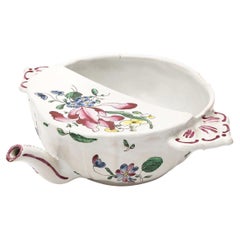
Two Ancient Maiolica Pot Mustard Set, Milan, 1745-1788 Circa
By Felice Clerici
Located in Milano, IT
Two pot mustard set
Felice Clerici or Pasquale Rubati Factory
Milan, 1745-1788 Circa
Majolica polychrome decorated "a piccolo fuoco" (third fire)
It measures: 3.94 in in height x...
Category
Antique 18th Century and Earlier Italian Rococo Ceramics
Materials
Maiolica
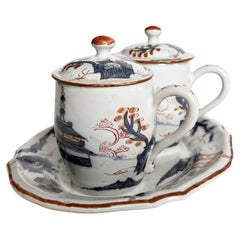
Italian Maiolica Ancient Sugar Bowl, Lodi, 1770-1780
By Antonio Ferretti
Located in Milano, IT
Maiolica sugar bowl
Antonio Ferretti Manufacture
Lodi, Circa 1770-1780
Maiolica polychrome decorated “a piccolo fuoco” (third fire).
It measures 3.54 x 4.52 x 3.54 in (9 x 11,5 x 9 cm)
Weight: 0.394 lb (0.179 kg)
State of conservation: small and slight chips on the edges.
The small sugar bowl has a swollen and ribbed body resting on a flat base. The cap-shaped lid follows the rib of the container and is topped with a small knob in the shape of a two-colored fruit.
The sugar bowl is painted “a piccolo fuoco” (third fire) with the characteristic floral motif of bunches and isolated semis.
An example which closely corresponds to this one is kept at the Civic Museum in Lodi (G. Gregorietti, Maioliche di Lodi, Milano e Pavia, Catalogo della Mostra, Milano, 1964 n. 137).
This decorative style represented a strong point of the Lodi factory, which established itself thanks to the vivid nature of the colors made possible by the introduction of a new technique perfected by Paul Hannong in Strasbourg and later introduced by Antonio Ferretti to Italy. The production process, called “piccolo fuoco” (third fire), allowed the use of a greater number of colors than in the past; in particular, the purple of Cassius, a red made from gold chloride, was introduced. Its use allowed for many more tones and shades, from pink to purple.
The Ferretti family started their maiolica manufacturing business in Lodi in 1725.
The forefather Simpliciano started the business by purchasing an ancient furnace in 1725 and, indeed, we have evidence of the full activity of the furnaces starting from April of the same year (Novasconi-Ferrari-Corvi, 1964, p. 26 n. 4). Simpliciano started a production of excellence also thanks to the ownership of clay quarries in Stradella, not far from Pavia. The production was so successful that in 1726 a decree of the Turin Chamber came to prohibit the importation of foreign ceramics, especially from Lodi, to protect internal production (G. Lise, La ceramica a Lodi, Lodi 1981, p. 59).
In its initial stages, the manufacture produced maolicas painted with the “a gran fuoco” (double fire) technique, often in turquoise monochrome, with ornamentation derived from compositional modules in vogue in Rouen in France. This was also thanks to the collaboration of painters like Giorgio Giacinto Rossetti, who placed his name on the best specimens next to the initials of the factory.
In 1748 Simpliciano made his will (Gelmini, 1995, p. 30) appointing his son Giuseppe Antonio (known as Antonio) as universal heir. After 1750, when Simpliciano passed away, Antonio was directly involved in the maiolica factory, increasing its fortunes and achieving a reputation on a European level. Particularly important was the aforementioned introduction in 1760 of the innovative “a piccolo fuoco” (third fire) processing, which, expanding the ornamental repertoire with Saxon-inspired floral themes, was able to commercially compete with the German porcelains that had one of its most renowned offerings in the naturalistic Deutsche Blumen. Antonio Ferretti understood and promoted this technique and this decoration, proposing it in a fresher and more corrective version, less linked to botanical tables, both with or without contour lines, as well as in purple or green monochrome. After efforts to introduce more industrial production techniques to the sector succeeded, even the Ferretti manufacture, in the last decade of the eighteenth century, started heading towards decline despite its attempts to adapt production to neoclassical tastes.
In 1796 the Napoleonic battle for the conquest of the Lodi bridge over the Adda definitively compromised the furnaces. Production resumed, albeit in a rather stunted manner, until Antonio's death on 29 December 1810. (M. L. Gelmini, pp. 28-30, 38, 43 sgg., 130-136 (for Simpliciano); pp. 31 sgg., 45-47, 142-192 (for Antonio).
Bibliography
G. Gregorietti, Maioliche di Lodi Milano e Pavia Catalogo della Mostra, Milano, 1964 n. 137;
C. Baroni, Storia delle ceramiche nel Lodigiano, in Archivio storico per la città e i comuni del circondario e della diocesi di Lodi, XXXIV (1915), pp. 118, 124, 142; XXXV (1916), pp. 5-8;
C. Baroni, La maiolica antica di Lodi, in Archivio storico lombardo, LVIII (1931), pp. 453-455;
L. Ciboldi, La maiolica lodigiana, in Archivio storico lodigiano, LXXX (1953), pp. 25 sgg.;
S. Levy, Maioliche settecentesche lombarde e venete, Milano 1962, pp. 17 sgg.;
A. Novasconi - S. Ferrari - S. Corvi, La ceramica lodigiana, Lodi 1964, ad Indicem; Maioliche di Lodi, Milano e Pavia (catal.), Milano 1964, p. 17;
O. Ferrari - G. Scavizzi, Maioliche italiane del Seicento e del Settecento, Milano 1965, pp. 26 sgg.;
G. C. Sciolla, Lodi. Museo civico, Bologna 1977, pp. 69-85 passim; G. Lise, La ceramica a Lodi, Lodi 1981;
M. Vitali, in Storia dell'arte ceramica...
Category
Antique 1770s Italian Rococo Ceramics
Materials
Maiolica
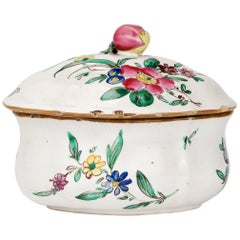
Maiolica Bottle Cooler Joseph Hannong, Strasbourg France, circa 1771
By Joseph Hannong
Located in Milano, IT
Bottle cooler
Manufacture Joseph Hannong
Strasbourg, France, circa 1771
Maiolica polychrome decorated “a piccolo fuoco” (third fire)
It measures 7.40 in in height x 9.64 in diam...
Category
Antique 1770s French Rococo Vases
Materials
Maiolica
You May Also Like
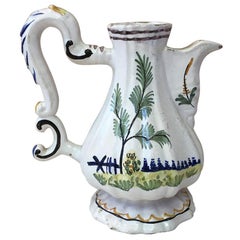
19th Century Italian Faience Pitcher
Located in Austin, TX
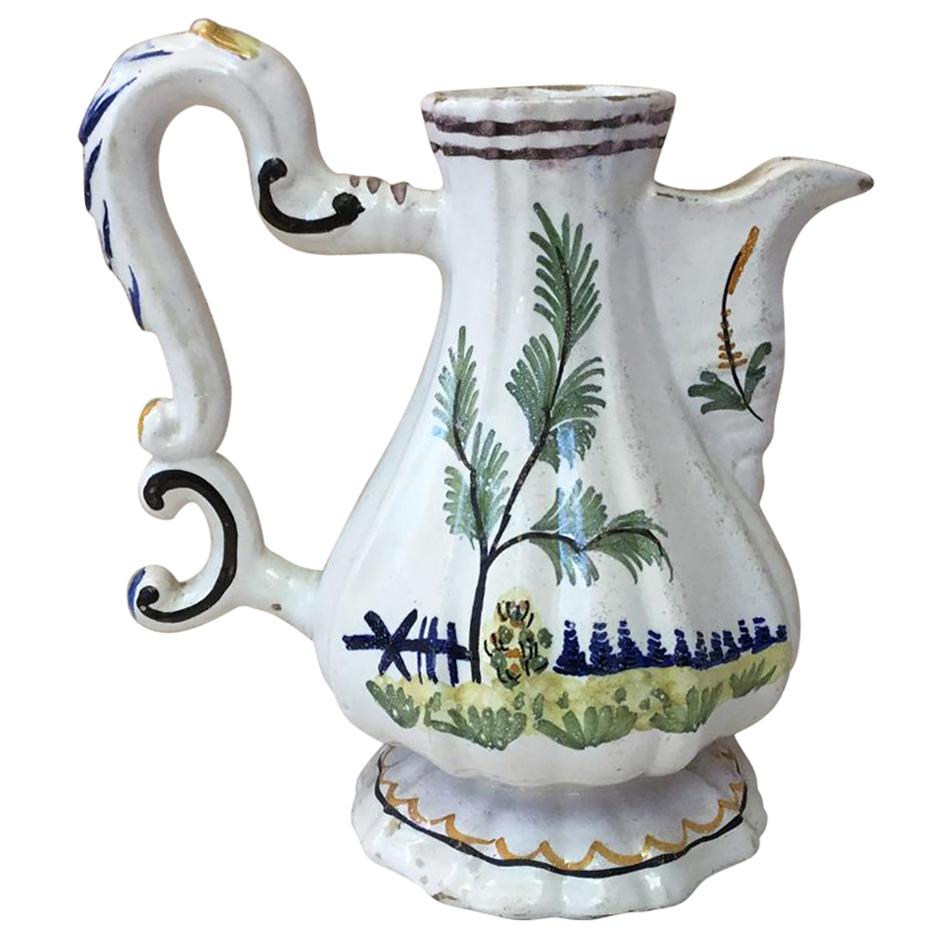
19th century Italian faience pitcher decorated with bird on a fence and a tree on the other side.
Category
Antique 1850s Italian Country Pitchers
Materials
Faience
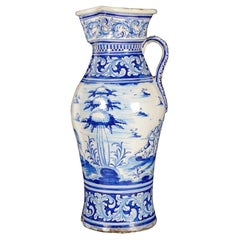
Large 18th/19th Century French Faience Pitcher
Located in Bradenton, FL
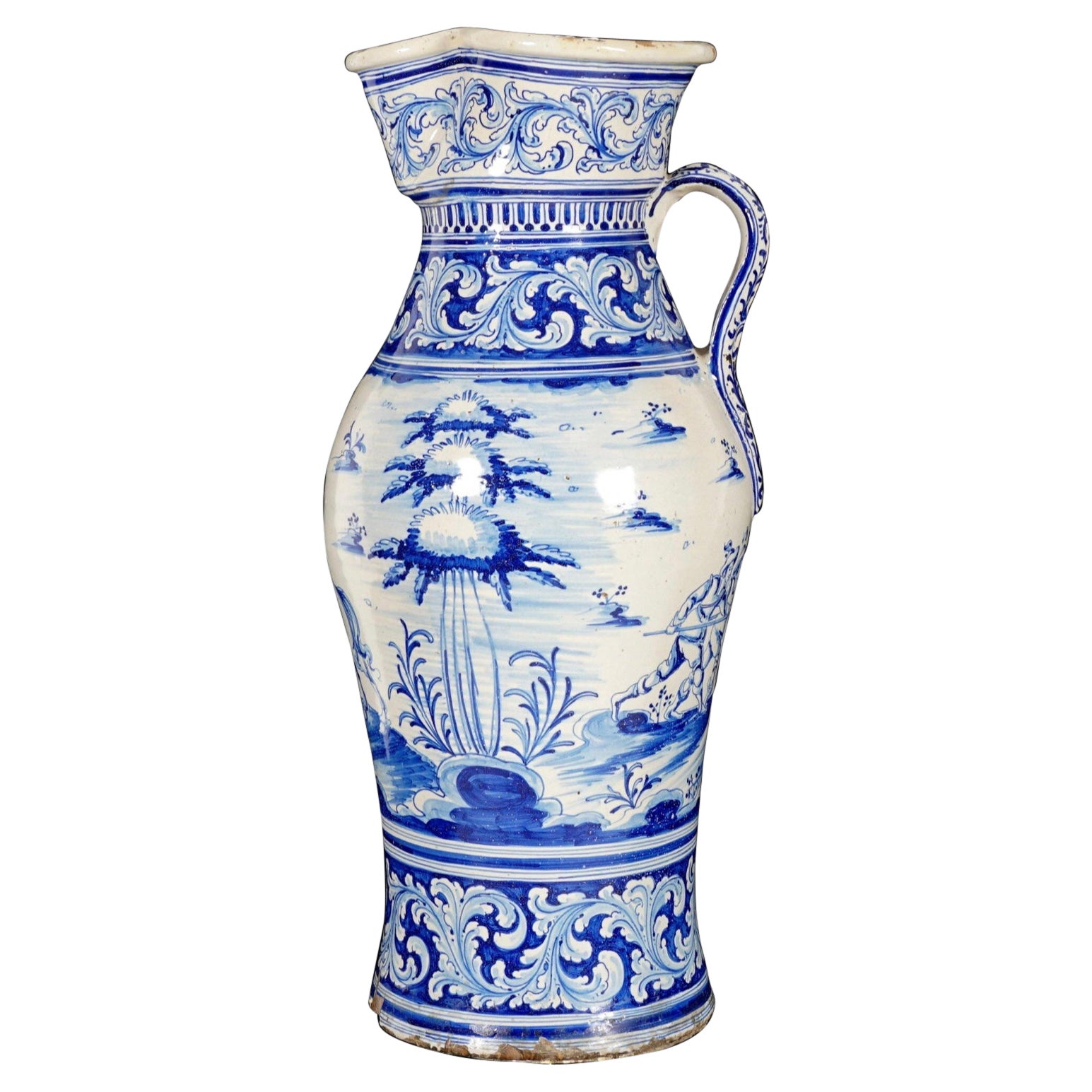
Monumental 18th/19th Century French Blue and White Faience Pitcher. Large blue and white faience decorated water pitcher / vessel, foliate scroll bands and hunting genre scenes, shap...
Category
Antique Late 18th Century French French Provincial Pitchers
Materials
Faience
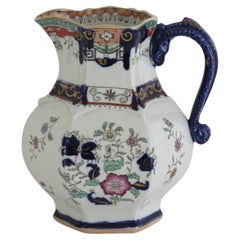
Mason
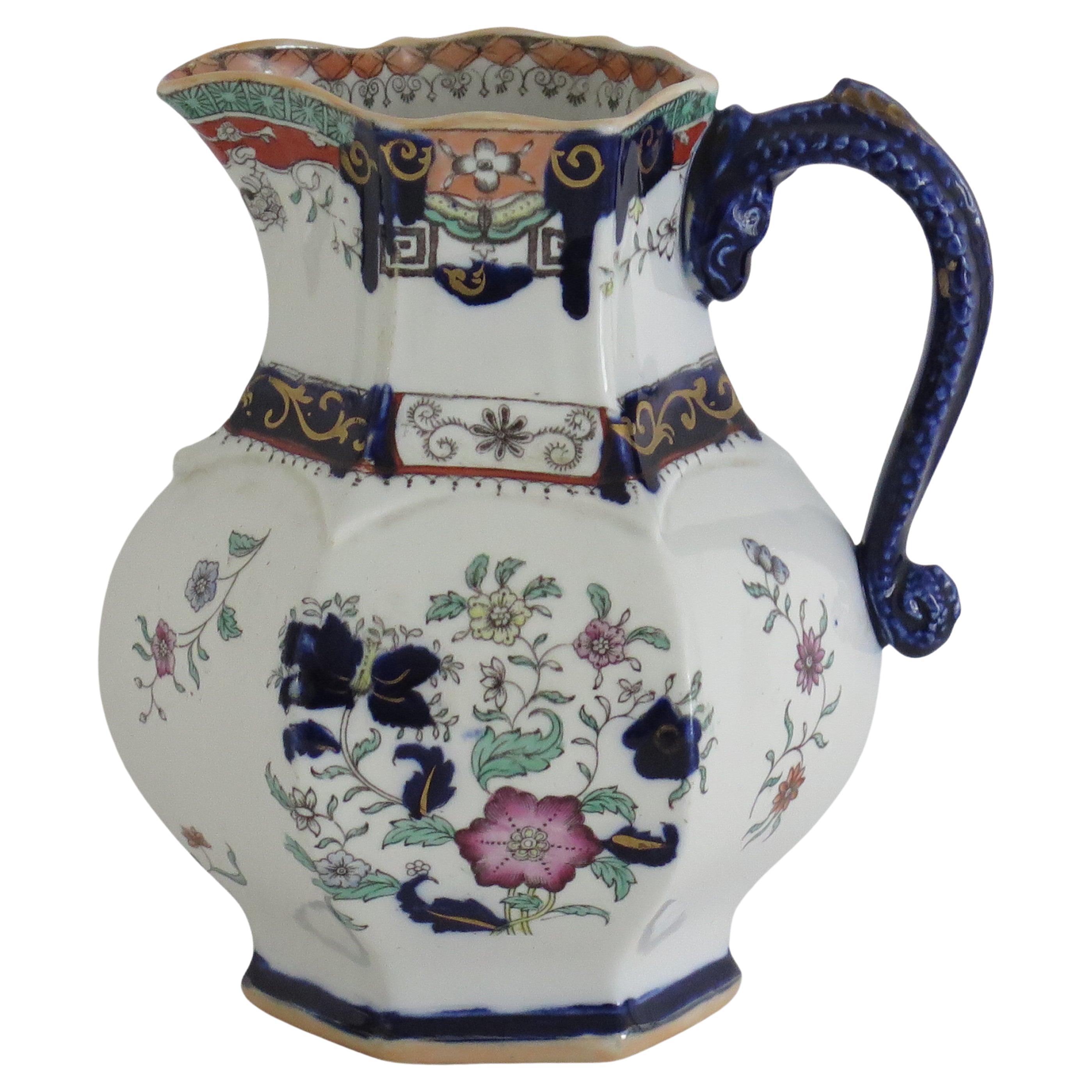
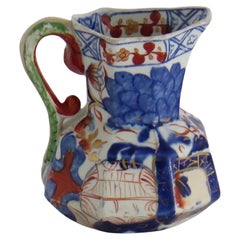
s Ironstone Jug or Pitcher in Rare Shape with Serpent Handle, circa 1830
By Mason
s Ironstone
Located in Lincoln, Lincolnshire
This is a very decorative fairly large & well hand painted, Jug or Pitcher made by Mason's Ironstone pottery, circa 1830.
It has a rare shape and pattern.
A jug of the same sha...
Category
Antique Early 19th Century English William IV Pitchers
Materials
Ironstone
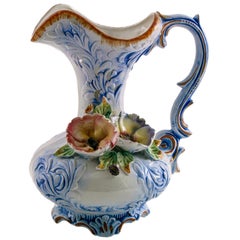
1930s Midcentury Baroque Large Italy Capodimonte Porcelain Pitcher
By Capodimonte
Located in Vigonza, Padua
A modern Italian Capodimonte porcelain jug from the midcentury, 1930s, with handle decorated in baroque forms. The pitcher features a col...
Category
Mid-20th Century Italian Baroque Jars
Materials
Ceramic
Georgian Davenport small Jug or Pitcher Ironstone Jardinière Ptn, circa 1815
By Davenport Porcelain
Located in Lincoln, Lincolnshire
This is a small size antique Hydra jug or Pitcher made by the Davenport Company of Longport, Staffordshire, England in the late Georgian period, circa 1805-1820, made of Ironstone po...
Category
Antique Early 19th Century English Georgian Pitchers
Materials
Ironstone
19th Century French Rouen Faience Pitcher
By Rouen
Located in Winter Park, FL
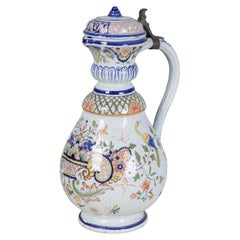
A 19th century French Rouen faience pitcher with hinged lid. Intricate hand-painted design featuring floral, foliate and geometric motifs in blue, orange, green and yellow. Influence...
Category
Antique 19th Century French Delft and Faience
Materials
Metal
More Ways To Browse
Antique Italian Pitchers
F Antonio
Pearl Pottery
Peter Shire Mugs
Pierced Creamware
Pilgrim Glass
Restaurant Ware Vintage
Restaurant Ware
Richard Ginori Tiles
Ridgway Ironstone
Roger Capron Bird
Rorstrand Figure
Royal Doulton Bone China
Royal Ironstone
Sage Green Wedgwood Jasperware
Scheier Ceramics
Silver Sake Bottle
Sottsass Teapot