Want more images or videos?
Request additional images or videos from the seller
1 of 5

Wedgwood Tri-Color Teapot

$3,850
£2,907.78
€3,358.94
CA$5,424.10
A$5,809.22
CHF 3,122.99
MX$70,556.31
NOK 39,460.55
SEK 36,129.07
DKK 25,097.39

About the Item

This charming Wedgwood teapot is crafted of tri-color jasperware, one of the firm’s rarest creations. The teapot’s classic form displays beautifully applied figures in lilac and sage bas relief in a neoclassical motif that was highly popular during the late Victorian era. A study in timeless design, this rare jasperware encapsulates Wedgwood's genius for innovation and artistry. Features impressed "WEDGWOOD ENGLAND" mark Circa 1891-98 Measures: 6" wide x 4" deep x 5 1/2" high.
  • Creator:
    Wedgwood (Maker)
  • Dimensions:
    Height: 5.5 in (13.97 cm)Width: 6 in (15.24 cm)Depth: 4 in (10.16 cm)
  • Style:
    Victorian (Of the Period)
  • Materials and Techniques:
  • Period:
  • Date of Manufacture:
    circa 1891-1898
  • Condition:
  • Seller Location:
    New Orleans, LA
  • Reference Number:
    Seller: 31-09051stDibs: LU891124026702

More From This Seller

View All
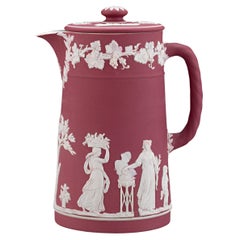
Wedgwood Crimson Jasperware Pitcher
By Wedgwood
Located in New Orleans, LA
This striking Wedgwood crimson dip bas-relief covered jug features an applied white jasper neoclassical decoration of grapevines bordering the rim. De...
Category

20th Century English Neoclassical Pottery

Materials

Pottery

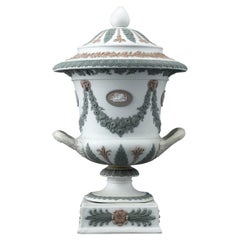
Wedgwood Tri-Colored Jasper Vase
By Wedgwood
Located in New Orleans, LA
This exceptional and rare Wedgwood tri-colored jasper vase exemplifies that renowned firm’s classical artistry. Crafted of jasper, perhaps the greatest of Josiah Wedgwood’s porcelain innovations, in the shape of an ancient Greek calyx krater...
Category

Early 20th Century English Classical Greek Vases

Materials

Ceramic

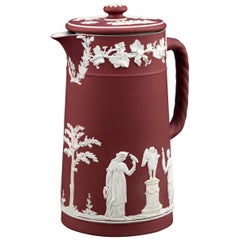
Wedgwood Crimson Covered Jug
By Wedgwood
Located in New Orleans, LA
A lovely crimson jasperware jug by Wedgwood, featuring an applied white jasper neoclassical decoration of acanthus leaves and grapes bordering the rim. ...
Category

Antique Late 19th Century English Neoclassical Ceramics

Materials

Ceramic, Pottery

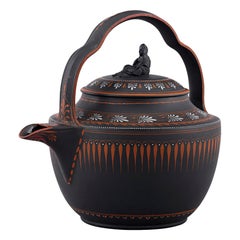
Wedgwood Black Basalt and Encaustic Enamel Rum Kettle
By Wedgwood
Located in New Orleans, LA
Crafted by Wedgwood, this rare, round-shaped rum kettle is comprised of black basalt and features a molded bail handle and glazed interior. Referred to as “...
Category

Antique Early 19th Century English Classical Greek Ceramics

Materials

Enamel

Paul Revere Coffee Pot
By Paul Revere
Located in New Orleans, LA
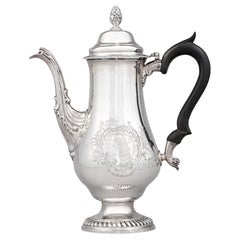
Sterling Silver Coffee Pot Paul Revere Circa 1775 This phenomenal and incredibly rare silver coffee pot by the legendary patriot Paul Revere is one of only six armorial coffee pots crafted before the Revolutionary War, and one of only three still in private hands. The other two are housed in the collections of the Worcester Art Museum and the Museum of Fine Arts, Boston, making this coffee pot an extraordinary treasure. In terms of maker, quality and provenance, this coffee pot is the most significant American silver object available today. The coffee pot bears the hallmarks of Revere's exquisite craftsmanship at every turn. Revere was not only the preeminent silversmith in America—he was the only silversmith in the colonies capable of crafting a finished product from the silver ingot to a finished engraved treasure, all by himself. Perfectly balanced and adorned with such fine Rococo detailing as a fluted scroll spout rising from a shell and a flower spray cartouche, this coffee pot epitomizes Revere's unmatched talent. The pot also notably features Revere’s stamped maker’s mark and the original scratch weight of 40.1 troy ounces on the bottom of the pot. The average silver object made by the famed American would have weighed approximately five troy ounces, and his grand serving spoons averaged approximately two ounces each—making this coffee pot one of Revere's most magnificent and monumental masterpieces. Within the central cartouche, the monogram "MSS" appears, belonging to the prominent Dr. Micajah Sawyer (1737-1815). A distinguished Harvard graduate, Sawyer was well-known as the "celebrated physician of Newburyport." Such an extraordinary object would have been a precious family heirloom, and this coffee pot remained in the Sawyer family until 1980, when it was sold to another American private collection, where it has remained until now. It was also prominently displayed at the Virginia Museum of Fine Arts for more than 30 years, from the 1980s until 2014. Born in 1734 to a Huguenot silversmith, Paul Revere's patriotism and his contribution to the American decorative arts are of inestimable value. He was immortalized in Henry Wadsworth Longfellow's poem, The Midnight Ride of Paul Revere, which tells of how he heroically rode through the countryside warning of the approaching British troops at the beginning of the American Revolution. This legendary event, along with his extraordinary work as a silversmith, has ensured a timeless legacy for Revere. In 1768, on the eve of the American Revolution, Revere crafted the “Sons of Liberty Bowl,” now housed at the Museum of Fine Arts in Boston. Both before and after serving his country during the Revolution, Revere was at the forefront of American silver, producing elegant bowls, sauceboats and creamers. By far, his most important works are coffee pots, of which only 15 are listed in his records books, making this coffee pot the ultimate piece of Revere's legacy. Maker's mark "Revere" stamped near the top of the handle 12 1/4" high x 10" wide x 5" deep 42 ounces Provenance: Micajah and Sibyl Sawyer, Newburyport Descended in the family until sold Sotheby Parke Bernet, New York, April 30—May 3, 1980, lot 184 Private Collection, United States M.S. Rau, New Orleans Literature: Patricia E. Kane, Colonial Massachusetts...
Category

Antique 18th Century American Sterling Silver

Materials

Sterling Silver

Wedgwood First Edition Portland Vase
By Josiah Wedgwood
Located in New Orleans, LA
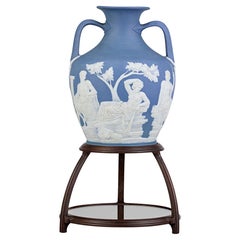
This extraordinary First Edition Wedgwood rendering of the legendary Portland Vase is one of the rarest masterpieces of Josiah Wedgwood, the most important ceramics manufacturer of the 18th century. A tour de force of ceramic art, the Portland Vase First Editions are regarded as one of the greatest ceramic accomplishments of the 18th century, and they are a testament to the superior skill of Josiah Wedgwood, his extraordinary ambition and his tireless dedication to perfection. One of the very few First Editions still in private hands, this exceptional Wedgwood Portland Vase is one of the most important works of ceramics on the market. The story of Wedgwood and the Portland Vase is legendary. The original Portland Vase is the ancient world's most famous decorative arts masterpiece—a cameo glass vase dating to circa 25 CE with a frieze representing the myth of Peleus and Thetis, initially thought to be carved from stone. When it was first rediscovered around 1582, it captivated the world with its opaque white cameo figures over its rich blue background. After the vase was excavated it was owned by Cardinal Barberini, whose family later sold it to the Duke of Hamilton who eventually sold it to the Duchess of Portland, from whom the famed vase now takes its name. The famed British sculptor John Flaxman was likely the first to have brought the vase to Wedgwood’s attention. In a letter dated February 5, 1784, he wrote: “I wish you may soon come to town to see William Hamilton’s vase, it is the finest production of Art that has been brought to England and seems to be the very apex of perfection to which you are endeavouring to bring your bisque and jasper…” Indeed, the Portland Vase is a masterpiece of cameo-cutting, with a stunning frieze of opaque white cameo glass over its translucent deep blue form. Its beauty and translucence would inspire Wedgwood to undertake his years-long endeavor to precisely replicate the original in porcelain. Upon closer examination, Wedgwood realized the vase was not made of stone or earthenware, but of cameo glass—a technique so advanced it remains the masterpiece of cameo-cutting. Today, the vase is housed in the British Museum, where it is the second most viewed antiquity, only after the Rosetta Stone. It then took Wedgwood several painstaking years to craft his unparalleled copy of the vase, during which he perfected the jasperware technique that would become his crowning achievement. To this day, the renowned porcelain firm regards the vase as its most momentous triumph, so much so that the vessel’s silhouette is incorporated into the Wedgwood logo. The four years it took Wedgwood to complete his vase were not without tribulations. From the start, Wedgwood encountered numerous problems with his copies, from cracking and blistering to the difficulty of replicating the translucent effects of the original. The first acceptable copy was produced in October 1789 and sent to Wedgwood’s physician and friend Erasmus Darwin, the grandfather of Charles Darwin. Wedgwood presented another copy to Queen Charlotte in May 1790 and afterward organized a private exhibition of the vase at the Portland House in London. The viewing proved so popular that Wedgwood was forced to restrict the show to 1,900 visitors. Much of London wished to see Wedgwood’s greatest major achievement. Perhaps the highest praise of Wedgwood’s copy came from the famed artist Sir Joshua Reynolds, the founder of the British Royal Academy: “I can venture to declare it a correct and faithful imitation, both in regard to the general effect, and the most minute detail of the part.” Over the next few years, Wedgwood's oven records listed 43 First Edition copies of the Portland Vase produced between 1791 and 1796, 11 of which were broken during the firing process. In all, it is believed around 30 First Edition vases were completed, though an unknown number of these were somewhat damaged—one of these imperfect examples is currently held by the Victoria & Albert Museum in London. The perfect examples such as ours have found their way into the most important museum collections in the world. The British Museum (London), Art Institute of Chicago, Birmingham Museum of Art, Museum of Fine Arts (Boston) and the Fitzwilliam Museum (Cambridge, UK), among others, all hold one of these highly coveted vases in their collections. In terms of technical achievement, the First Edition Portland Vases...
Category

Antique 18th Century English Classical Roman Vases

Materials

Porcelain

You May Also Like

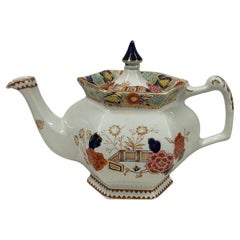
Antique Woods Ware Wincanton Hand painted Porcelain Teapot
Located in Pomona, CA
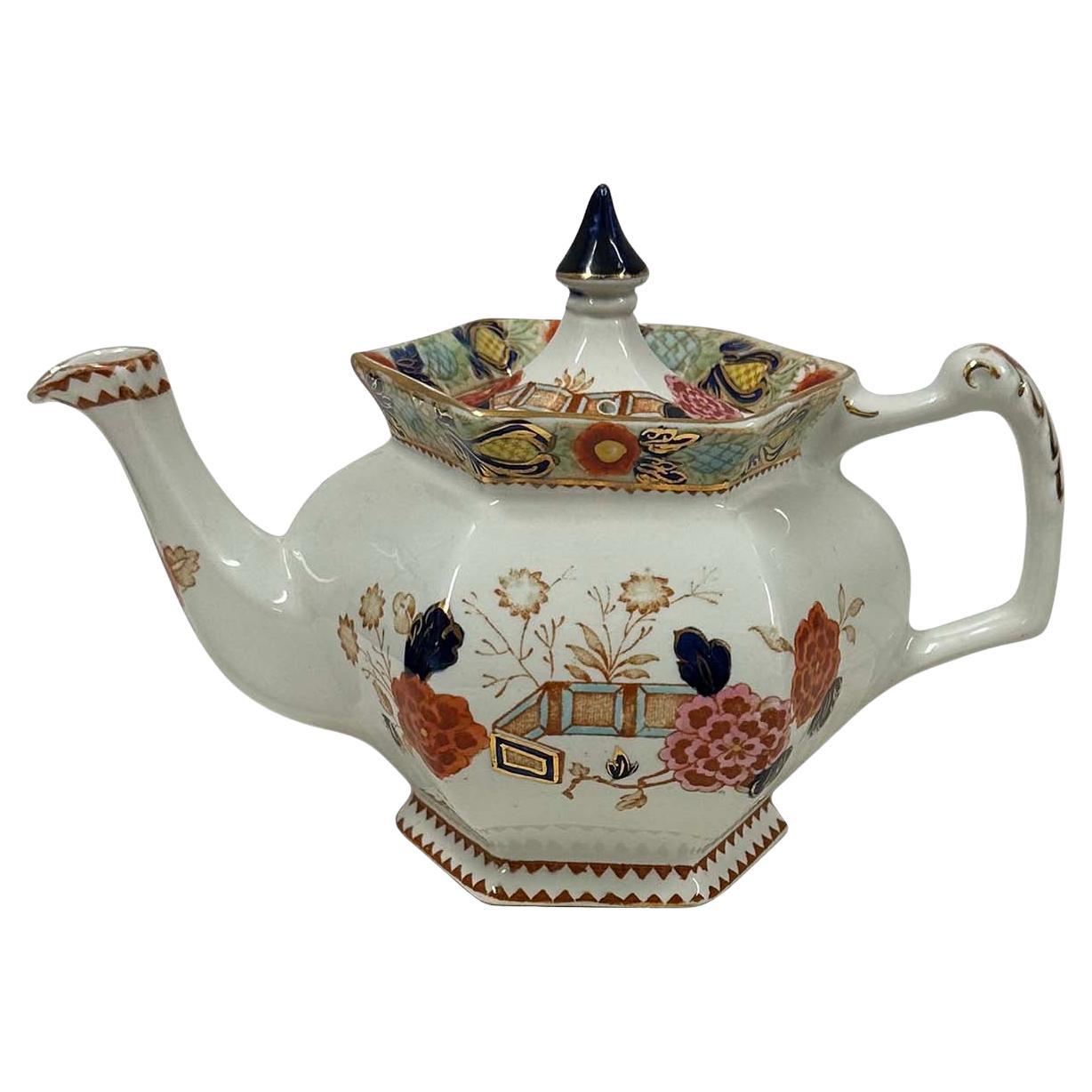
Woods Ware Wincanton Teapot from England, hand Painted Circa 1885. This teapot is in very good antique condition, no cracks or chips, some crazing. This Tea...
Category

Antique Late 19th Century British Victorian Tea Sets

Materials

Porcelain

Worcester Rare Porcelain Melon Shaped Teapot Cover
By Royal Worcester
Located in Bishop s Stortford, Hertfordshire
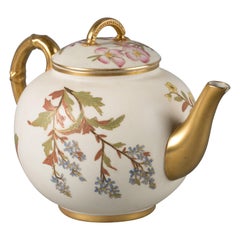
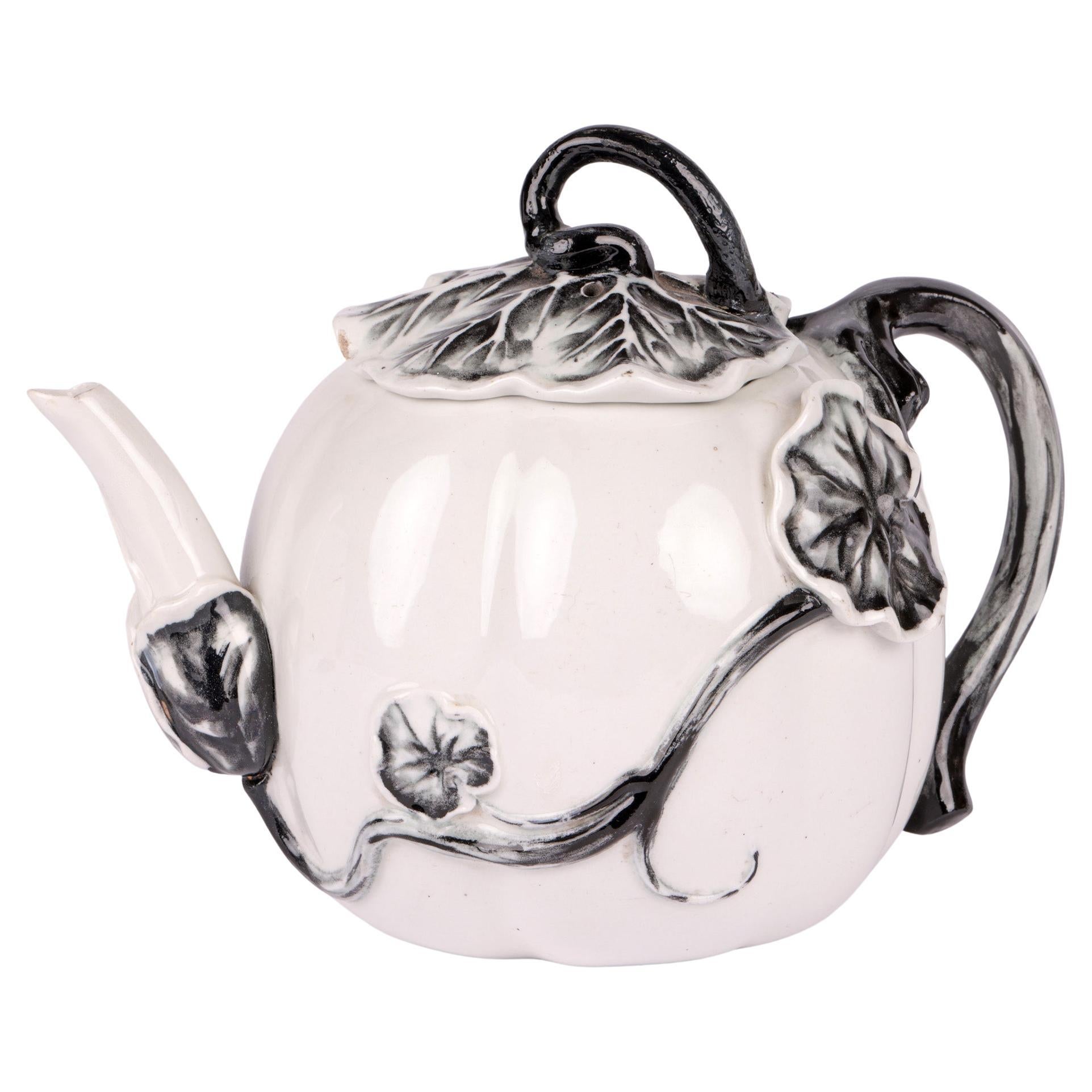
A rare antique Worcester porcelain melon shaped teapot and cover dating from around 1880. The teapot is of round melon shape and applied in relief with trailing leafy stems with a fu...
Category

Antique 1880s English Victorian Porcelain

Materials

Porcelain

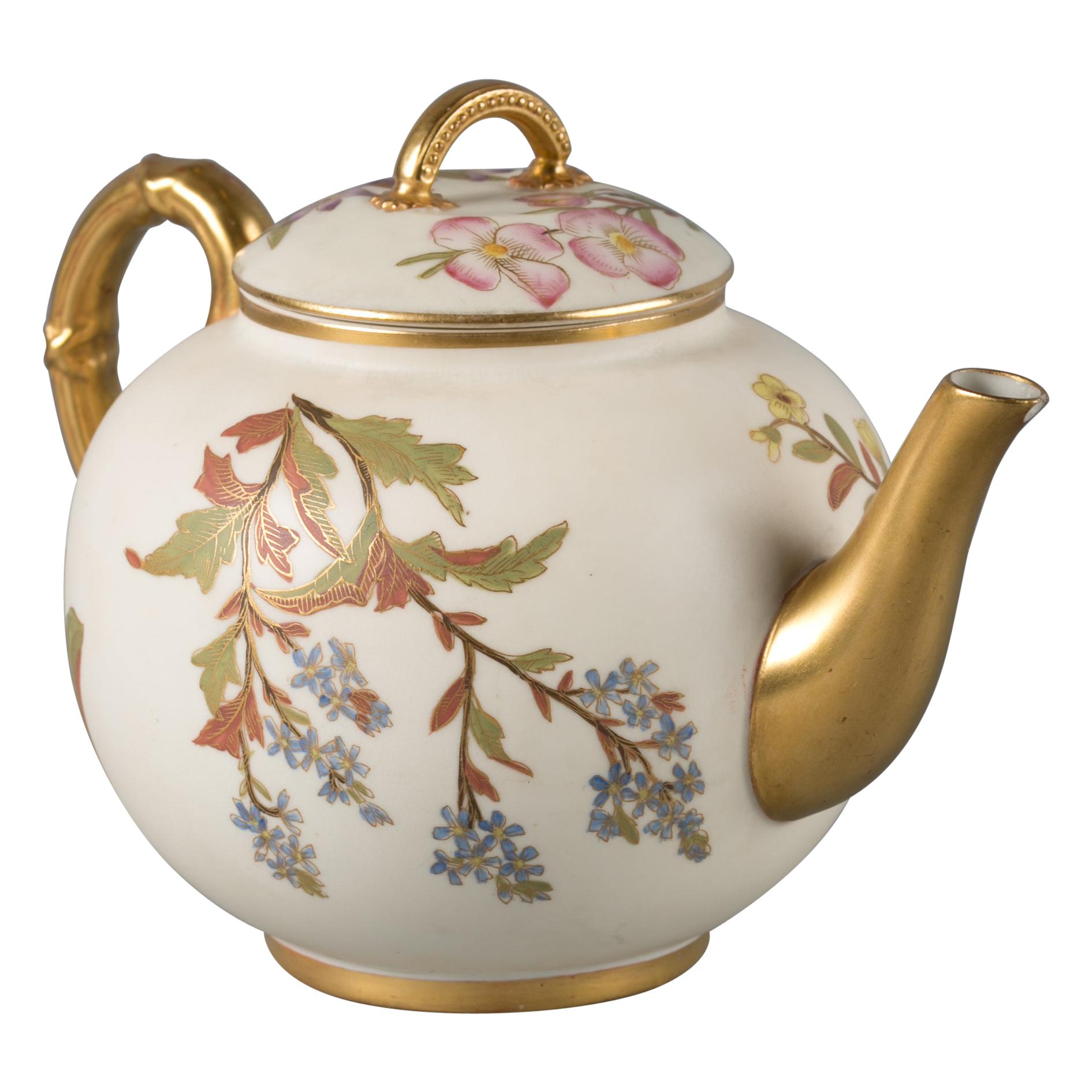
English Porcelain Pot, Royal Worcester, Dated 1888
Located in New York, NY
Category

Antique 1880s English Tea Sets

Materials

Porcelain

19th Century Wedgwood Etruria Drab Stoneware Smear-Glazed Teapot
By Wedgwood
Located in Delft, NL
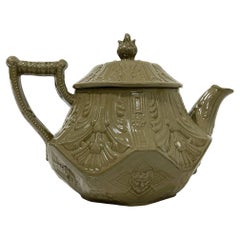
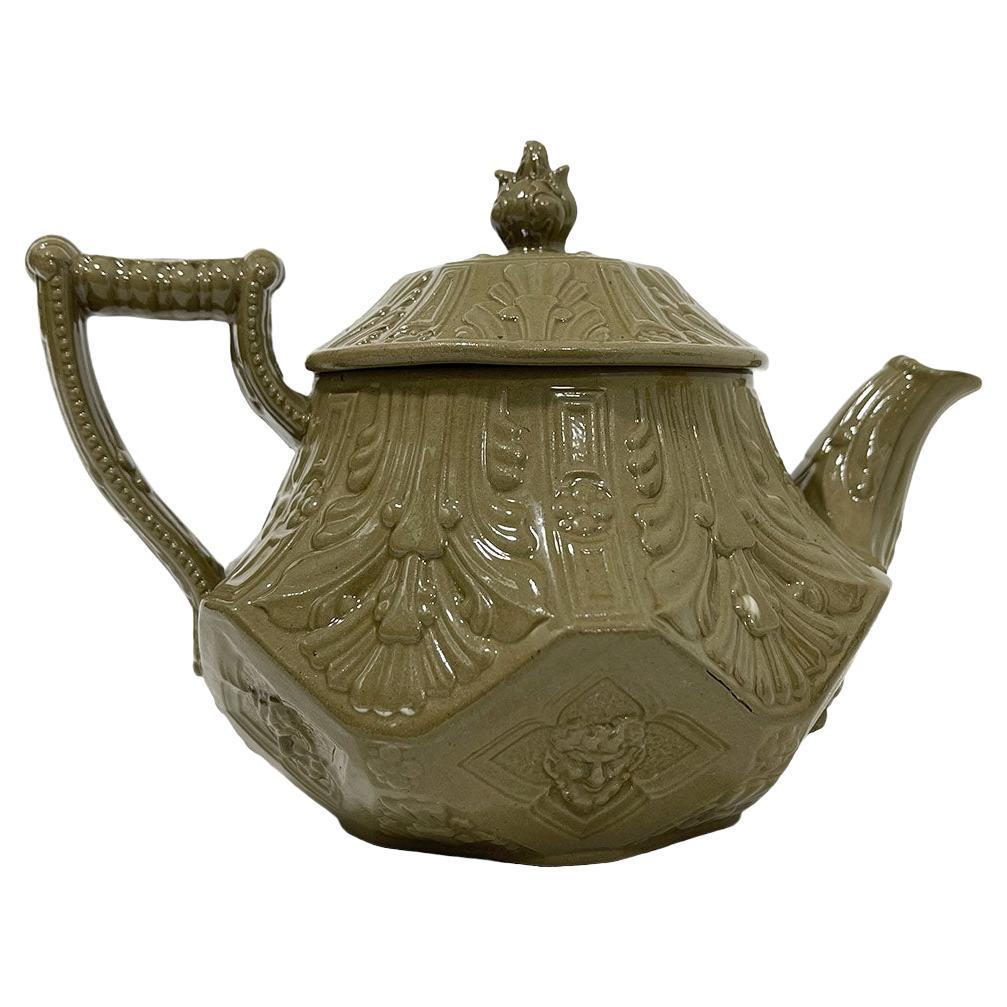
19th Century wedgwood Etruria drab stoneware smear-glazed teapot A wedgwood teapot in Drab stoneware smearglazed green with raised relief, model 15...
Category

Antique 19th Century English Tea Sets

Materials

Stoneware

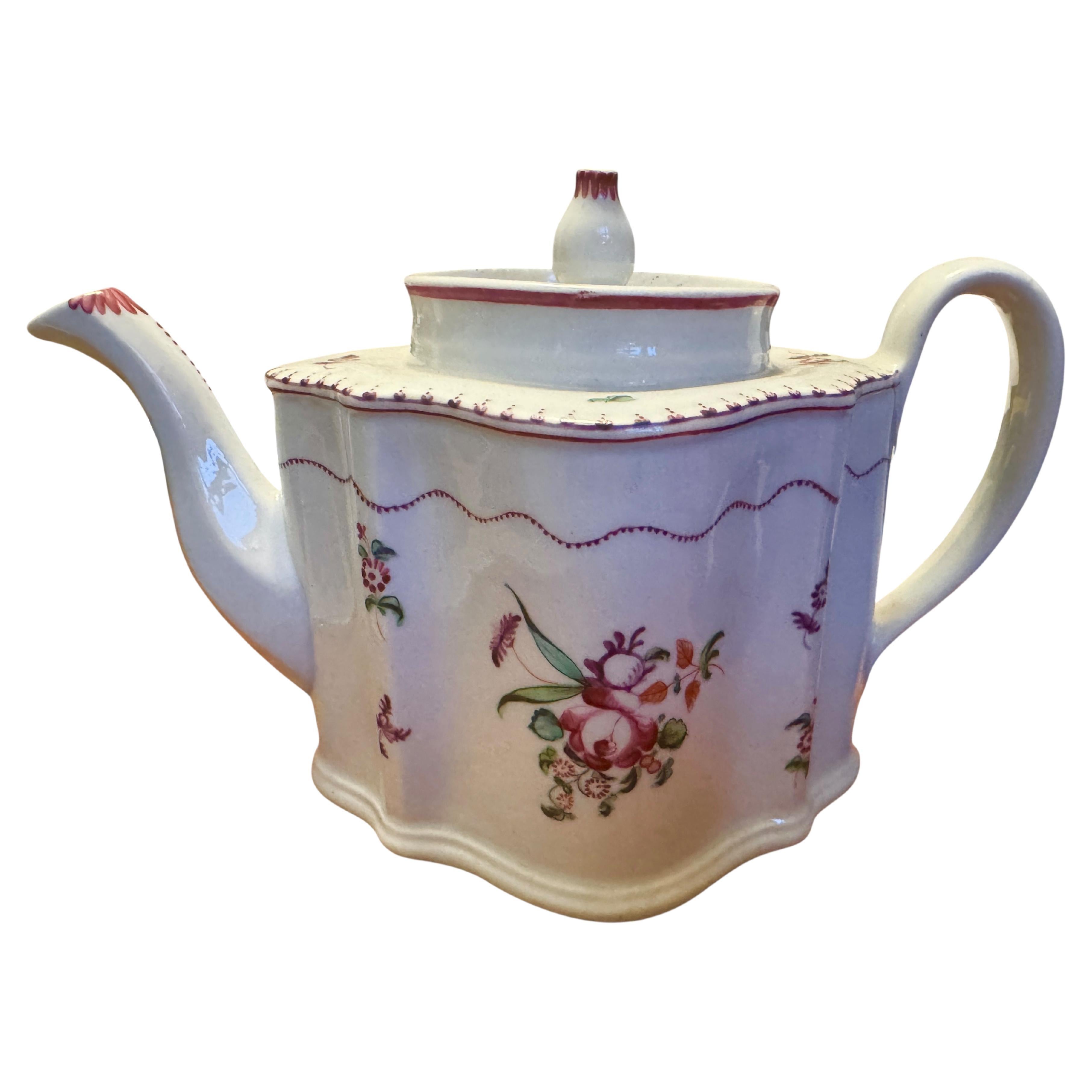
A late 18th century New Hall porcelain teapot
By New Hall
Located in Henley-on-Thames, Oxfordshire
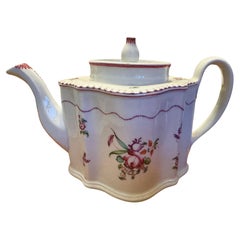
An Elegant Late 18th Century New Hall Porcelain Teapot, Hand-Painted Floral Decoration, c. 1790–1810. Pattern number 253 A charming and beautifully preserved New Hall hard-paste por...
Category

Antique Late 18th Century British George III Porcelain

Materials

Porcelain

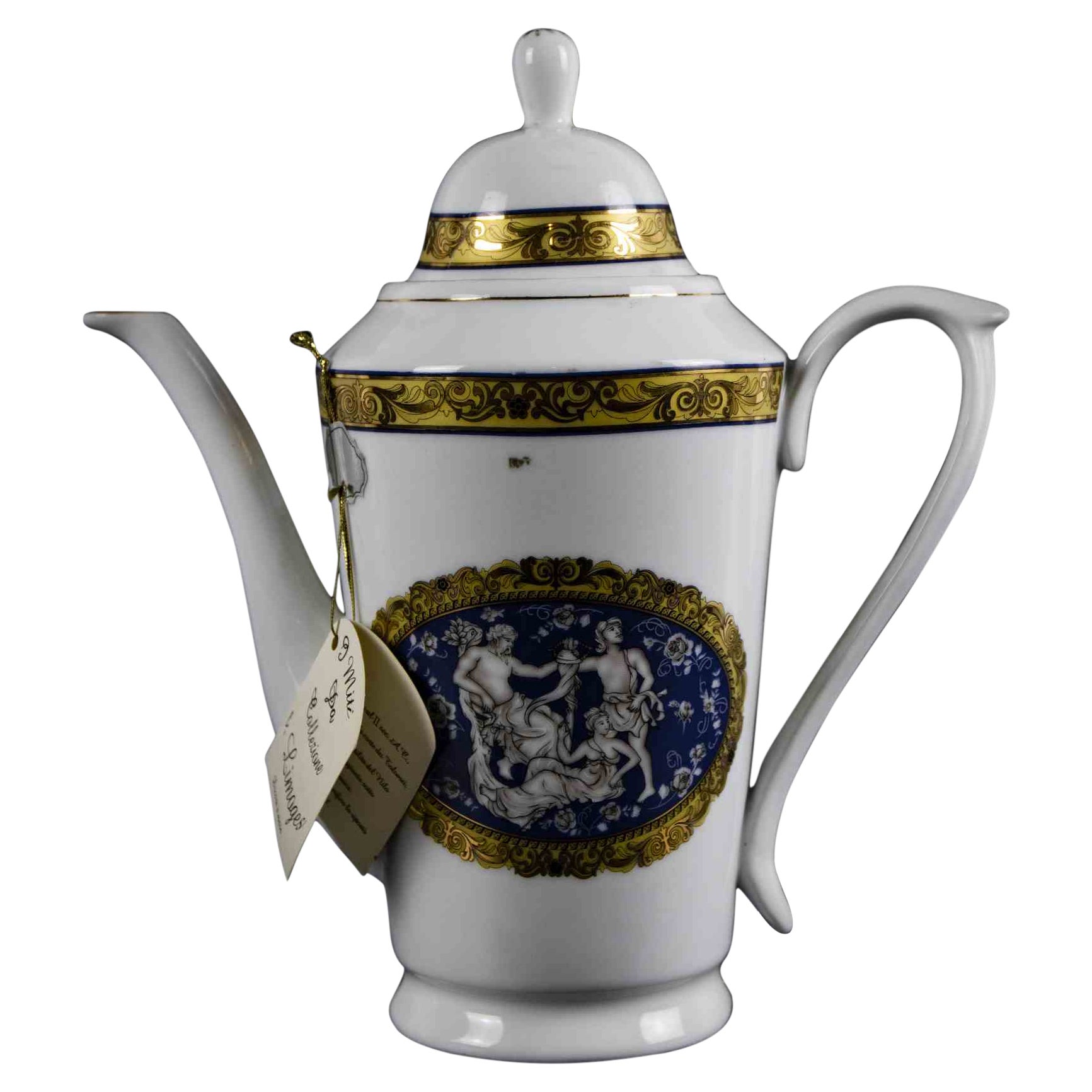
Limoges Porcelain Teapot, 1950s
By Limoges
Located in Roma, IT
Limoges porcelain teapot is an original decorative object realized in the Mid-20th Century. Made in France. Original fine Limoges Porcelain with...
Category

Vintage 1950s French Tea Sets

Materials

Porcelain

Limoges Porcelain Teapot, 1950s
$291 Sale Price
30% Off