Want more images or videos?
Request additional images or videos from the seller
1 of 11
Red Antique Greek Ware Dishes Eight in a Neoclassical Pattern in Stock
$3,600List Priceper set
About the Item
- Creator:Herculaneum Pottery (Maker)
- Dimensions:Height: 1 in (2.54 cm)Diameter: 9.75 in (24.77 cm)
- Sold As:Set of 8
- Style:Neoclassical (Of the Period)
- Materials and Techniques:
- Place of Origin:
- Period:
- Date of Manufacture:circa 1810
- Condition:
- Seller Location:Katonah, NY
- Reference Number:1stDibs: LU866511781911
Herculaneum Pottery
Herculaneum Pottery was started in Liverpool, England, in 1793. The factory made creamware and pearl-glazed creamware pottery as well as bone china porcelain. The National Museums Liverpool has an excellent collection of Herculaneum ceramics.
About the Seller
5.0
Recognized Seller
These prestigious sellers are industry leaders and represent the highest echelon for item quality and design.
Platinum Seller
Premium sellers with a 4.7+ rating and 24-hour response times
Established in 1962
1stDibs seller since 2009
508 sales on 1stDibs
Typical response time: 1 hour
Authenticity Guarantee
In the unlikely event there’s an issue with an item’s authenticity, contact us within 1 year for a full refund. DetailsMoney-Back Guarantee
If your item is not as described, is damaged in transit, or does not arrive, contact us within 7 days for a full refund. Details24-Hour Cancellation
You have a 24-hour grace period in which to reconsider your purchase, with no questions asked.Vetted Professional Sellers
Our world-class sellers must adhere to strict standards for service and quality, maintaining the integrity of our listings.Price-Match Guarantee
If you find that a seller listed the same item for a lower price elsewhere, we’ll match it.Trusted Global Delivery
Our best-in-class carrier network provides specialized shipping options worldwide, including custom delivery.You May Also Like
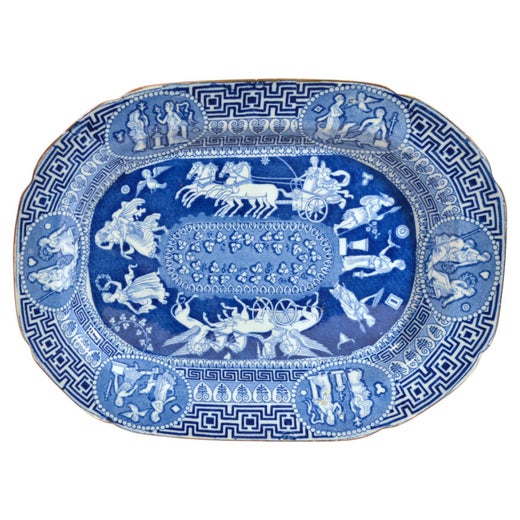
Regency Herculaneum Neo-Classical Greek Pattern Blue Printed Dish
By Herculaneum Pottery
Located in Downingtown, PA
Herculaneum neo-Classical Greek Pattern blue printed dish,
Early-19th century
The Herculaneum pottery underglaze blue central pattern shows a s...
Category
Antique Early 19th Century English Neoclassical Pottery
Materials
Pearlware, Pottery
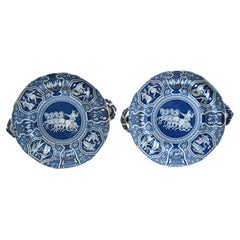
Spode Neo-classical Greek Pattern Blue Printed Hot Water Dishes
By Spode
Located in Downingtown, PA
Spode Neo-classical Greek pattern blue printed hot water dishes,
Zeus in his Chariot,
A pair,
Early 19th century
(We have five in all-two pairs and a single)
The Spode pottery...
Category
Antique Early 19th Century Neoclassical Pottery
Materials
Pearlware, Pottery
Early Spode Red Greek Pattern Tile
By Josiah Spode, Spode
Located in Fort Lauderdale, FL
A Neoclassical red transferware tile made by Spode 1806-1810, with the ‘Refreshments for Phliasian Horseman’ pattern.
Sir William Hamilton’s Collection of Etruscan, Greek and Roman antiquities, first published in 1766 by Pierre d’Hancarville, was a landmark publication in English design. It intended to disseminate the Antique style through its engravings of Attic pottery. The catalog’s faithful reproductions of Classical vases led British potteries, including Spode, to adapt or even copy the ancient art for modern life. These Spode Greek pattern tiles reflect the major influence of Hamilton’s catalog on English Neoclassicism. The central scene was taken directly from the catalog.
This tile can be dated to a narrow window of production in the Spode factory, 1806-1810. During that time, Spode used a technique known as the “Pluck and Dust” method to print in red transfer designs onto creamware. Using this method, source prints were transferred overglaze using tissue imprinted with a very faint rendition of the design outlined in sticky oil. The decorator applied the tissue to the object then carefully “plucked” or pulled it away, leaving the sticky oil design behind. Then, a finely-ground enamel color was “dusted” onto the surface, sticking to any areas that had the oil. A final firing at a low temperature in the enamel kiln made the pattern permanent. The Pluck and Dust technique improved upon bat-printing and enabled larger designers to be transferred. It was short-lived, however, as under-glaze transfer printing soon took over as the preferred method for producing transferwares.
Dimensions: 5 in. x 5 in. x 1/4 in.
Condition: Excellent. Slight chip to the upper left corner measuring approximately 0.9 cm. in length.
Provenance:
The Collection of Nancy and Andrew Ramage
Jonathan Horne...
Category
Antique Early 19th Century English Neoclassical Pottery
Materials
Earthenware, Creamware
Regency Herculaneum Greek Pattern Blue Printed Pottery Dish
By Herculaneum Pottery
Located in Downingtown, PA
Herculaneum Neo-classical large Greek pattern blue printed dish,
Early-19th century
The Herculaneum pottery underglaze blue central pattern shows ase...
Category
Antique Early 19th Century English George III Pottery
Materials
Pearlware, Pottery

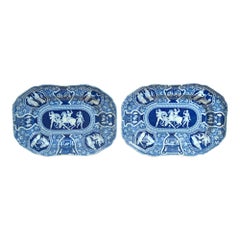
Regency Period Spode Neo-classical Greek Pattern Blue Dessert Dishes- a Pair
By Spode
Located in Downingtown, PA
Regency Spode neo-Classical Greek pattern blue rectangular dessert dishes,
Four figures in battle,
Early 19th century
The Spode Greek pattern pott...
Category
Antique Early 18th Century English Neoclassical Pottery
Materials
Pearlware, Pottery
$1,400 / set
H 1 in W 9.25 in D 6.5 in
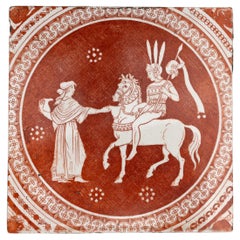
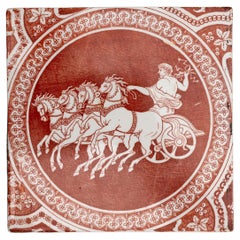
Early 19th Century Spode Red Greek Pattern Tile
By Spode, Josiah Spode
Located in Fort Lauderdale, FL
A Neoclassical red transferware tile made by Spode 1806-1810, with the ‘Zeus in His Chariot’ pattern.
Sir William Hamilton’s Collection of Etruscan, Greek and Roman antiquities, first published in 1766 by Pierre d’Hancarville, was a landmark publication in English design. It intended to disseminate the Antique style through its engravings of Attic pottery. The catalog’s faithful reproductions of Classical vases led British potteries, including Spode, to adapt or even copy the ancient art for modern life. These Spode Greek pattern tiles reflect the major influence of Hamilton’s catalog on English Neoclassicism. The central scene was taken directly from the catalog.
This tile can be dated to a narrow window of production in the Spode factory, 1806-1810. During that time, Spode used a technique known as the “Pluck and Dust” method to print in red transfer designs onto creamware. Using this method, source prints were transferred overglaze using tissue imprinted with a very faint rendition of the design outlined in sticky oil. The decorator applied the tissue to the object then carefully “plucked” or pulled it away, leaving the sticky oil design behind. Then, a finely-ground enamel color was “dusted” onto the surface, sticking to any areas that had the oil. A final firing at a low temperature in the enamel kiln made the pattern permanent. The Pluck and Dust technique improved upon bat-printing and enabled larger designers to be transferred. It was short-lived, however, as under-glaze transfer printing soon took over as the preferred method for producing transferwares.
Dimensions: 5 in. x 5 in. x 1/4 in.
Condition: Excellent.
Provenance:
The Collection of Nancy and Andrew Ramage
Jonathan Horne...
Category
Antique Early 19th Century English Neoclassical Pottery
Materials
Earthenware, Creamware
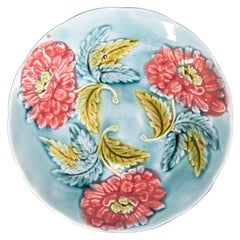
Antique 19th Century French Majolica Floral Plate
Located in Pearland, TX
A lovely antique French majolica floral plate, circa 1890. This beautiful French country style plate has hand painted pink flowers and leaves on a ligh...
Category
Antique Late 19th Century French Dinner Plates
Materials
Majolica
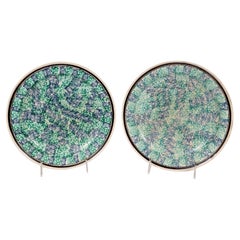
Pair of Antique Early 19th Century Spongeware Staffordshire Pottery Plates
Located in Philadelphia, PA
A fine pair of 19th century English Spongeware pottery plates.
Both plates with green & blue painted decoration that appears to have been dabbed or spread with a sponge, hence the name spongeware.
One of the plates has some overpaint and is more brightly decorated than its mate.
Simply a great pair of 19th century Staffordshire spongeware plates...
Category
Antique Early 19th Century English Early Victorian Pottery
Materials
Pottery
$950 / set
H 0.75 in Dm 9 in
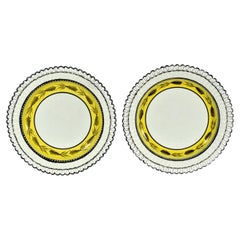
Liverpool Herculaneum Yellow-Banded Openwork Creamware Dessert Dishes
By Herculaneum Pottery
Located in Downingtown, PA
The Liverpool creamware openwork dishes were made at the Herculaneum factory. The charming dishes have an outer band of openwork attached to a bask...
Category
Antique Early 19th Century English Regency Pottery
Materials
Pottery, Creamware
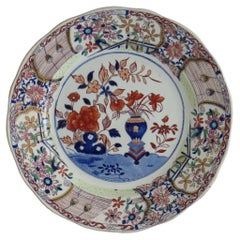
Georgian Masons Ironstone large Dinner Plate in Vase
Rock gilded Ptn, Ca 1818
By Mason
s Ironstone
Located in Lincoln, Lincolnshire
This is a very decorative ironstone pottery Large Dinner Plate produced by the Mason's factory at Lane Delph, Staffordshire, England, circa 1818.
The plate is circular with a wavy indented edge & moulded floral detail to the inner rim edge .
This Plate is beautifully and elaborately decorated in one of Mason's chinoiserie patterns, called Vase and Rock which is sometimes called Peking Vase and tends to be a rarer pattern. The pattern is very richly hand-painted, over-glaze in brilliant enamels of cobalt blue, burnt orange, green, yellow and puce all in varying shades, over a blue transfer printed...
Category
Antique Early 19th Century English Chinoiserie Dinner Plates
Materials
Ironstone
More From This Seller
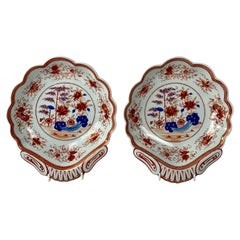
View AllPair Antique Spode Shell-Shaped Dishes Orange and Blue Pattern England Circa 182
By Spode
Located in Katonah, NY
Spode made this pair of fine quality shell-shaped dishes in England in the early 19th century, circa 1820.
The dishes were printed in shades of orange and blue
Orange and blue is t...
Category
Antique Early 19th Century English Chinoiserie Pottery
Materials
Ironstone
Set of 14 Antique French Porcelain Dishes
By Edmé Samson
Located in Katonah, NY
A set of 14 antique French porcelain dishes made in the last quarter of the 19th century circa 1870-1880. Attributed to the factory of ...
Category
Antique 1870s French Chinoiserie Dinner Plates
Materials
Porcelain
$1,430 / set
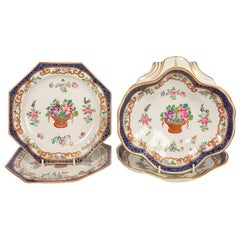
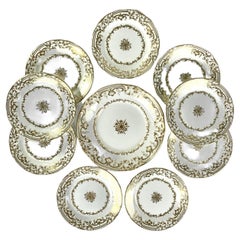
Nine Antique Porcelain Dessert Dishes White and Gold with Matching Cookie Plate
Located in Katonah, NY
This set of nine antique porcelain small dessert dishes with a matching cookie or serving plate was made in France circa 1870.
The porcelain is white with finely detailed gilt decora...
Category
Antique 1870s Neoclassical Dinner Plates
Materials
Porcelain
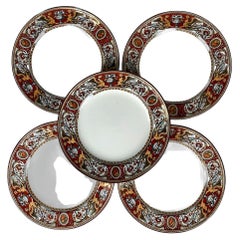
Set of 12 Antique Dinner Plates Neoclassical "Florentine" by Minton in 1874
By Minton
Located in Katonah, NY
This set of antique ironstone plates, made by Minton in England circa 1874, features the richly detailed Florentine pattern.
The wide border is hand-painted in deep red and embellis...
Category
Antique 1870s English Neoclassical Dinner Plates
Materials
Ironstone
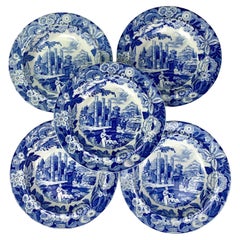
Eight Antique Staffordshire Blue and White Large Soup Plates Circa 1820
By Don Pottery 1
Located in Katonah, NY
This set of eight large soup dishes or pasta plates was made by Don Pottery circa 1820.
The design is part of Don Potery's series of dishes, " Italian Views".
The center is decorated...
Category
Antique Early 19th Century English Neoclassical Dinner Plates
Materials
Pearlware
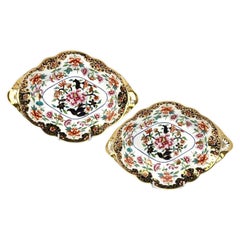
Pair Antique Spode Oval Shaped Dishes Decorated with Waterlilies England C-1825
By Josiah Spode
Located in Katonah, NY
The most exceptional aspect of this pair of dishes is the fabulous gilding lavished over the cobalt borders.
As a less prominent feature, the gilding carries throughout the decoratio...
Category
Antique Early 19th Century English Decorative Dishes and Vide-Poche
Materials
Pearlware
Still Thinking About These?
All Recently ViewedMore Ways To Browse
Prints By Sir William Hamilton
Greek Etruscan Vases
Antique Transferware Patterns
European Ware
Greek Pattern Plates
Herculaneum Pottery
Red Glass Antique Dishes
Antique Porcelain Dinner Sets
Antique Silver Dinner Sets
Faience Bird
Keller Guerin
Majolica Grape
Majolica Pink
Ceramic Plates Bird
Silver Bread Plate
Tiffany And Co Glass Plate
Antique Shell Plate
Antique Collector Plates