Items Similar to Samuel Alcock Plate, Melted Snow Border, Periwinkle Blue Lilac, Flowers, ca 1822
Want more images or videos?
Request additional images or videos from the seller
1 of 11
Samuel Alcock Plate, Melted Snow Border, Periwinkle Blue Lilac, Flowers, ca 1822
$400
£303.90
€349.25
CA$561.85
A$611.56
CHF 324.04
MX$7,354.92
NOK 4,120.12
SEK 3,775.64
DKK 2,608.85
About the Item
A plate with white melted snow border on a periwinkle ground with tiny gilt stars, with a beautifully painted flower bouquet in the centre
There are several other items available in near-identical style, see separate listings.
Pattern unknown
Year: ca 1822
Size: 23cm diameter (9”)
Condition: rubbing
The Samuel Alcock factory was operative in Staffordshire between 1822 and 1856, after which it was bought by Sir James Duke and Nephews. The factory started as a partnership between the young Samuel Alcock and the older Ralph Stevenson, who provided the factory and capital. Alcock quickly took the factory to great heights, building one of the biggest factories of its time. Alcock jumped on the new Rococo Revival fashion and served a huge new middle class market. The reason we now don't hear much about Samuel Alcock porcelain is that much of it has been mis-identified over the years and attributed to Coalport, Ridgway, Rockingham or others; Alcock did not mark any of his porcelain save a few rare pieces, and the numbering system is difficult to understand. However, the wares are still wide spread and many are of great quality.
Provenance: This item forms part of the Murray Pollinger Collection of Samuel Alcock Porcelain.
Murray Pollinger was a passionate collector of Samuel Alcock porcelain. He was known as a true gentleman, impeccably dressed, always kind and modest - even some of his porcelain collecting friends had no idea about the size and importance of his collection. From the mid 1980s until shortly before his death in 2022 he collected many thousands of pieces and painstakingly catalogued them. He also went on trips to Staffordshire to discover the history of Samuel Alcock from whatever little documentation has been preserved. Through his painstaking work, Pollinger was able to make sense of the pattern numbering system that was used, and this was a huge step forward in identifying and understanding the porcelain. A website with the results of his research will be made availabe over the course of 2023. While he sold off about half of his collection in 2016, the remaining half is now made available to a new generation of collectors.
Antique British porcelain is never perfect. Kilns were fired on coal in the 1800s, and this meant that china from that period can have some firing specks from flying particles. British makers were also known for their experimentation, and sometimes this resulted in technically imperfect results. Due to the shrinkage in the kiln, items can have small firing lines or develop crazing over time, which should not be seen as damage but as an imperfection of the maker's recipes, probably unknown at the time of making. Items have often been used for many years and can have normal signs of wear, and gilt can have signs of slight disintegration even if never handled. I will reflect any damage, repairs, obvious stress marks, crazing or heavy wear in the item description but some minor scratches, nicks, stains and gilt disintegration can be normal for vintage items and need to be taken into account.
There is widespread confusion on the internet about the difference between chips and nicks, or hairlines and cracks. I will reflect any damage as truthfully as I can, i.e. a nick is a tiny bit of damage smaller than 1mm and a chip is something you can easily see with the eye; a glazing line is a break in the glazing only; hairline is extremely tight and/or superficial and not picked up by the finger; and a crack is obvious both to the eye and the finger. Etcetera - I try to be as accurate as I can and please feel free to ask questions or request more detailed pictures!
- Creator:Samuel Alcock Co. (Maker)
- Dimensions:Height: 0.75 in (1.91 cm)Diameter: 9 in (22.86 cm)
- Style:Regency (Of the Period)
- Materials and Techniques:
- Place of Origin:
- Period:
- Date of Manufacture:circa 1822
- Condition:Wear consistent with age and use. some rubbing.
- Seller Location:London, GB
- Reference Number:Seller: MP-ALC441stDibs: LU4805137647372
About the Seller
5.0
Vetted Professional Seller
Every seller passes strict standards for authenticity and reliability
Established in 2016
1stDibs seller since 2019
228 sales on 1stDibs
- ShippingRetrieving quote...Shipping from: London, United Kingdom
- Return Policy
More From This Seller
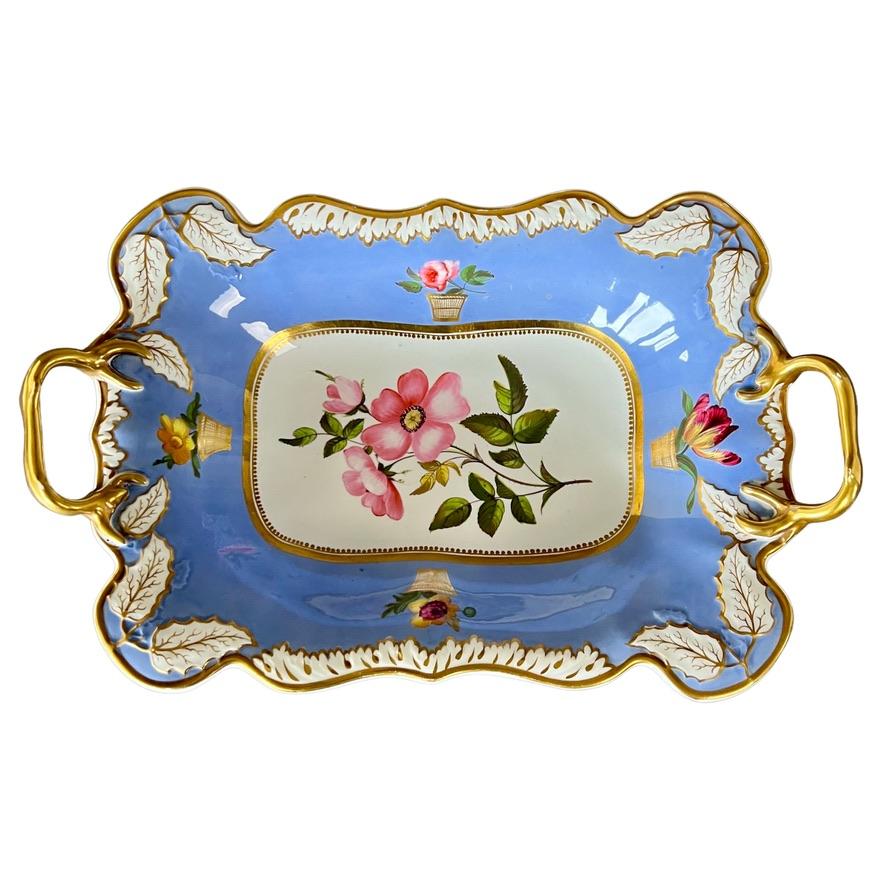
View AllSamuel Alcock Footed Comport, Melted Snow, Periwinkle Lilac, Flowers, ca 1822
By Samuel Alcock
Co.
Located in London, GB
A footed rectangular central comport or centre piece, periwinkle / lilac ground with melted snow and holly leaf borders and flowers, a large pink wild rose painting...
Category
Antique 1820s English Regency Serving Bowls
Materials
Porcelain
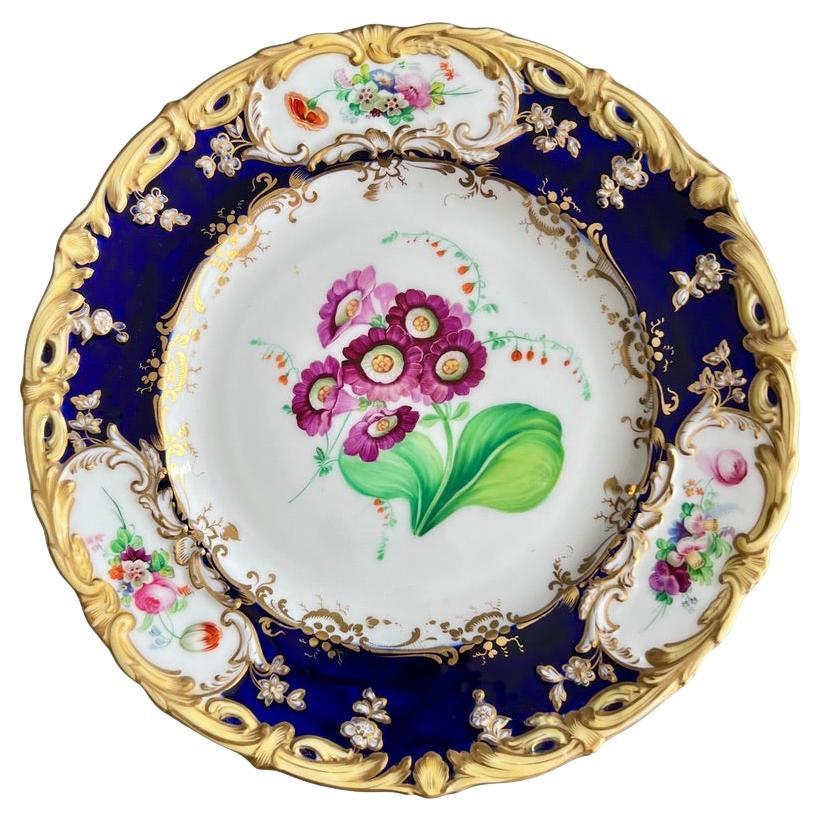
Coalport Plate, Cobalt Blue with Purple Primrose by Stephen Lawrance, 1840
By Coalport Porcelain
Located in London, GB
This beautiful plate was made by Coalport in about 1840 and would have belonged to large dessert service with the pattern 4/412, which we know has been done in many different colours...
Category
Antique 1840s English Regency Porcelain
Materials
Porcelain
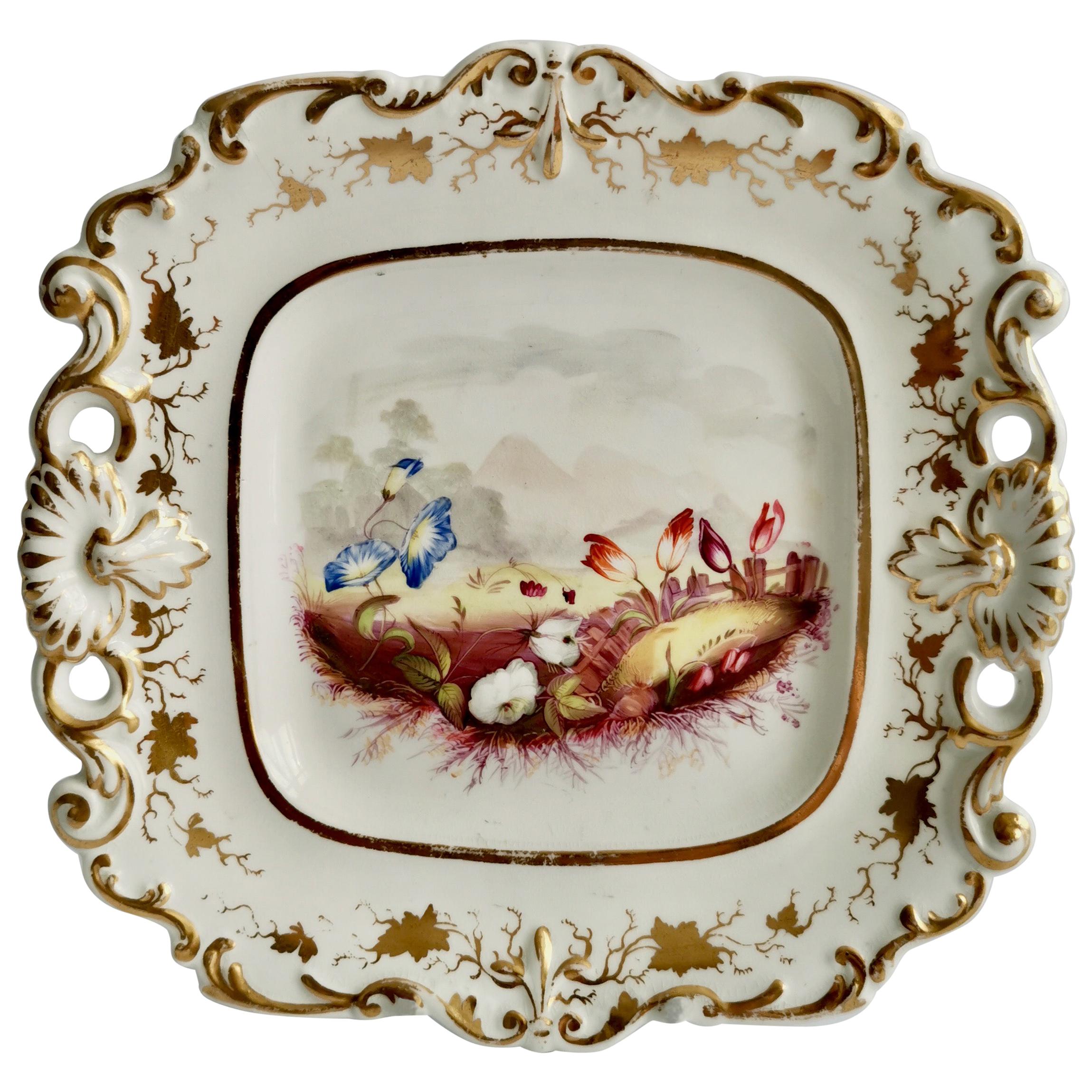
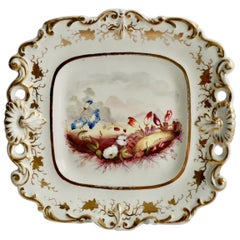
Samuel Alcock Plate, Inverted Shell, Flowers, Provenance G.A.Godden Regency 1822
By Samuel Alcock
Co.
Located in London, GB
This is a very striking and rare square dessert serving dish made by Samuel Alcock, circa 1822. The dish has a hand painted flower landscape in an unusual style. The dish has provena...
Category
Antique 1820s English Regency Platters and Serveware
Materials
Porcelain
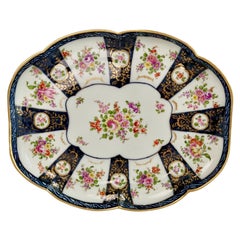
Edmé Samson Porcelain Cabaret Tray, Worcester Style Blue with Flowers, 19th C
By Edmé Samson, Royal Worcester
Located in London, GB
This is a beautiful cabaret tray made by Edmé Samson in Paris some time in the 19th century. The tray is in the 'blue scale' style that the Worcester fact...
Category
Antique 19th Century French Rococo Platters and Serveware
Materials
Porcelain
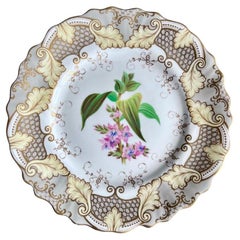
Samuel Alcock Plate, Grey and Beige Acanthus Border, Pink Flower, ca 1835
By Samuel Alcock
Co.
Located in London, GB
This is a beautiful plate with a warm grey and beige border of flowing acanthus leaves and pebble design with elaborate gilt, and a beautiful pink flower in the centre.
Pattern: 810...
Category
Antique 1830s English Rococo Revival Porcelain
Materials
Porcelain
H
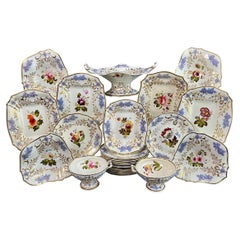
R Daniel Dessert Service, Floral with Lilac Sprigging, Regency, 1824
By H&R Daniel
Located in London, GB
This is a stunning dessert service made by H&R Daniel in 1824. The set consists of a large centre piece comport, two sauce comports (without covers), four large rectangular dishes, f...
Category
Antique 1820s English Regency Dinner Plates
Materials
Porcelain
You May Also Like
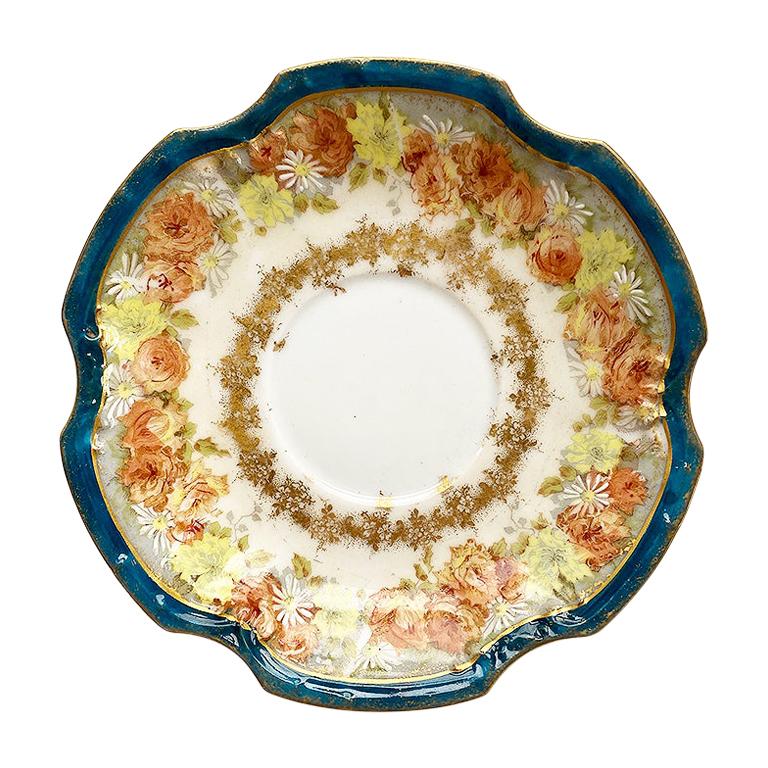
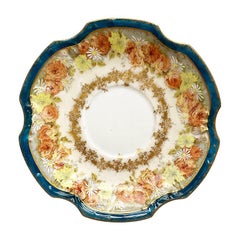
Floral Rich Blue Limoges Ceramic Coiffe Saucer, Limoges, France, 1800s
By Limoges
Located in Oklahoma City, OK
A beautiful Coiffe Limoges floral plate. Doesn't this pretty saucer remind you of Gucci? A rich blue decorates the scalloped edges at the outer rim, and ...
Category
Antique Late 19th Century French French Provincial Tableware
Materials
Gold
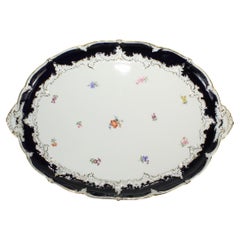
Antique Meissen Porcelain Tea Tray with Cobalt Blue Border
Spray Flowers
By Meissen Porcelain
Located in Philadelphia, PA
A fine antique porcelain tea tray or serving platter.
By Meissen.
With a scalloped rim and a rich cobalt blue border.
There are hand paint...
Category
20th Century German Tea Sets
Materials
Porcelain
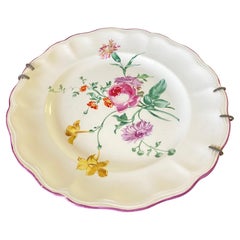
Faience Dish, by Luneville, with Flowers Decor France 19th Century, Signed
By Luneville
Located in Auribeau sur Siagne, FR
Old dish by Luneville. This dish is in Faience, and has been made in France, during the 19th century.
The colors are green and yellow, purple. It is signed.
Category
Antique 19th Century French French Provincial Delft and Faience
Materials
Faience
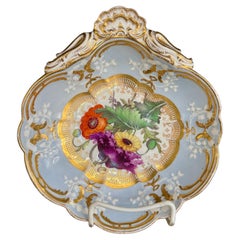
Antique English John Rose Coalport Periwinkle and Gilt Botanical Dessert Shell
By Coalport Porcelain
Located in CHARLESTON, SC
Quite possibly one of the Finest pieces of early 19th Century English porcelain attributed to John Rose Coalport. This "Periwinkle ground" relief-made dessert shell is considered as...
Category
Antique Early 19th Century English Georgian Porcelain
Materials
Porcelain
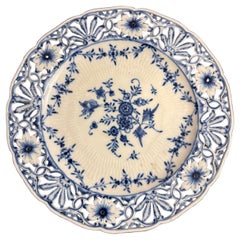
A Meissen Blue Porcelain Plate with Openwork Floral Rim, Early 20th Century
By Meissen Porcelain
Located in ARMADALE, VIC
A Blue Porcelain Plate with Openwork Floral Rim, Early 20th Century
Description:
A Chinoiserie design in the center and a pierced, reticulated (lace-like) border.
Provenance: Priva...
Category
Early 20th Century German Chinoiserie Decorative Dishes and Vide-Poche
Materials
Porcelain
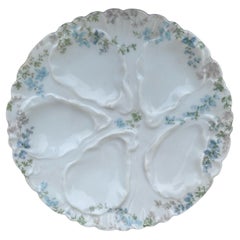
Small Porcelain Blue Flowers Oyster Plate Limoges, circa 1900
By Limoges
Located in Austin, TX
Small Porcelain Blue Flowers Oyster Plate Limoges, circa 1900.
7.5 inches diameter.
Category
Antique Early 1900s French Romantic Ceramics
Materials
Porcelain
More Ways To Browse
Antique Rockingham
Samuel Alcock
Alcock Porcelain
Majolica Cherries
Pairs Of Majolica Plates
Swan Glass Plate
Vintage Floral Dinner Plates Plates
Fornasetti Lina Cavalieri
Italian Fish Plate
Keller And Guerin Luneville
Ralph Lauren Vintage Silver
Silver Presentation Plates
12 Limoges Plates
Antique Gold Dinner Set
Aqua Majolica
Cabbage Plates
China Dinner Service
Daisy Dinner Plate