Video Loading
Want more images or videos?
Request additional images or videos from the seller
1 of 17

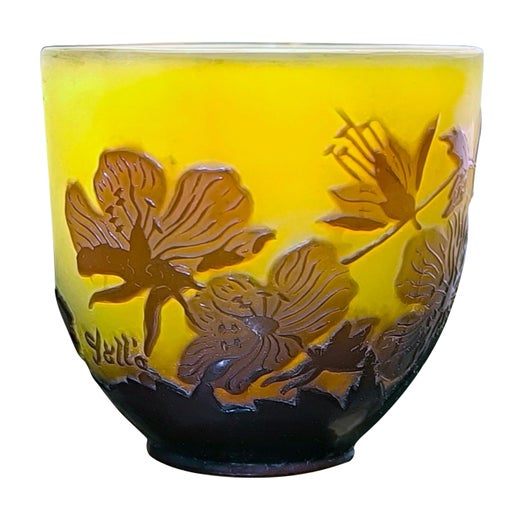
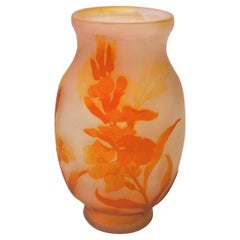
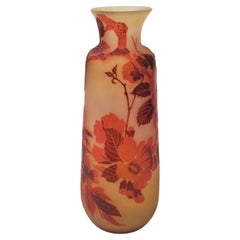
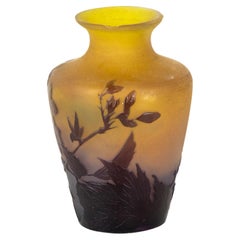
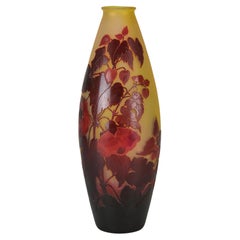
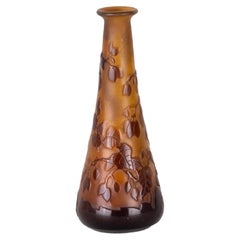
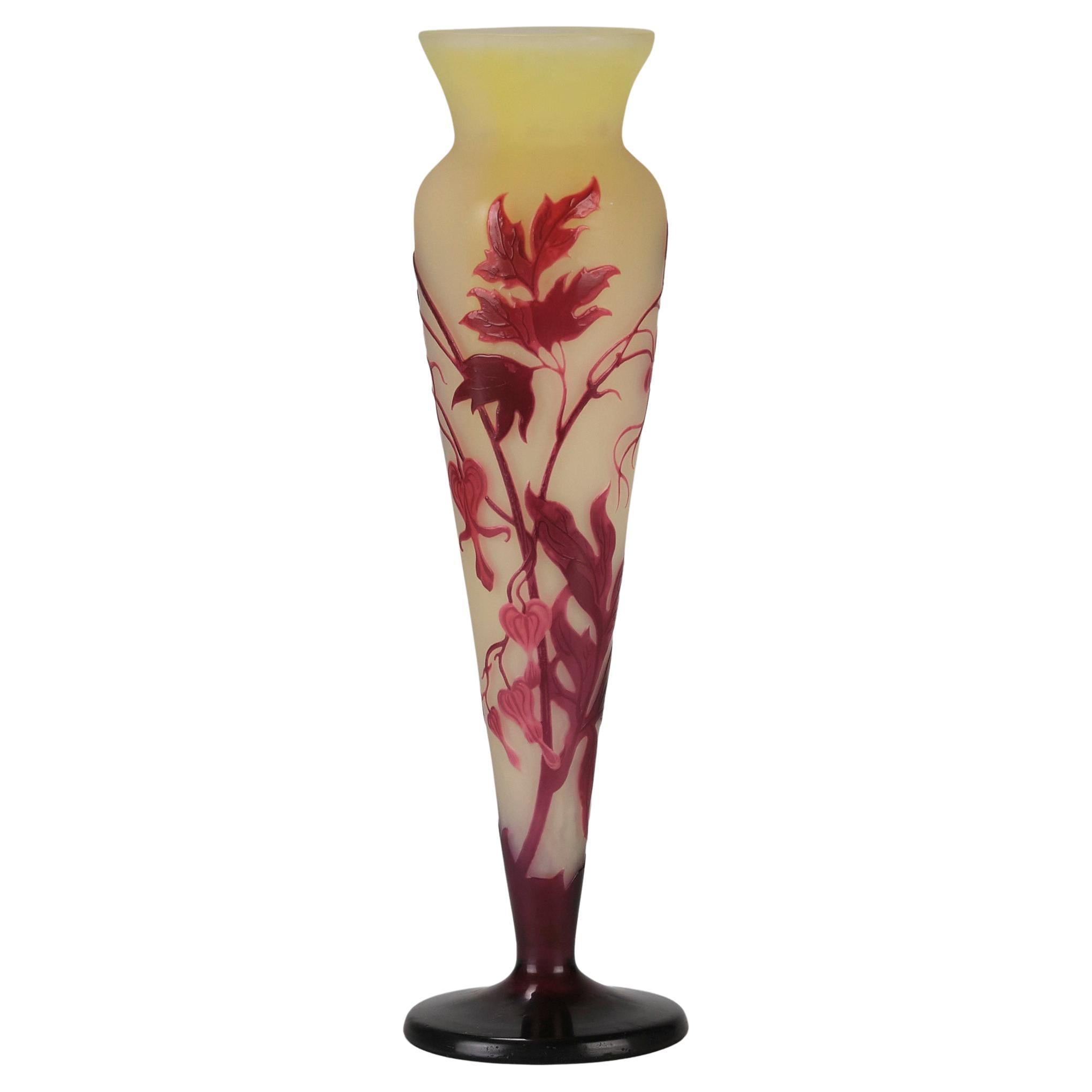
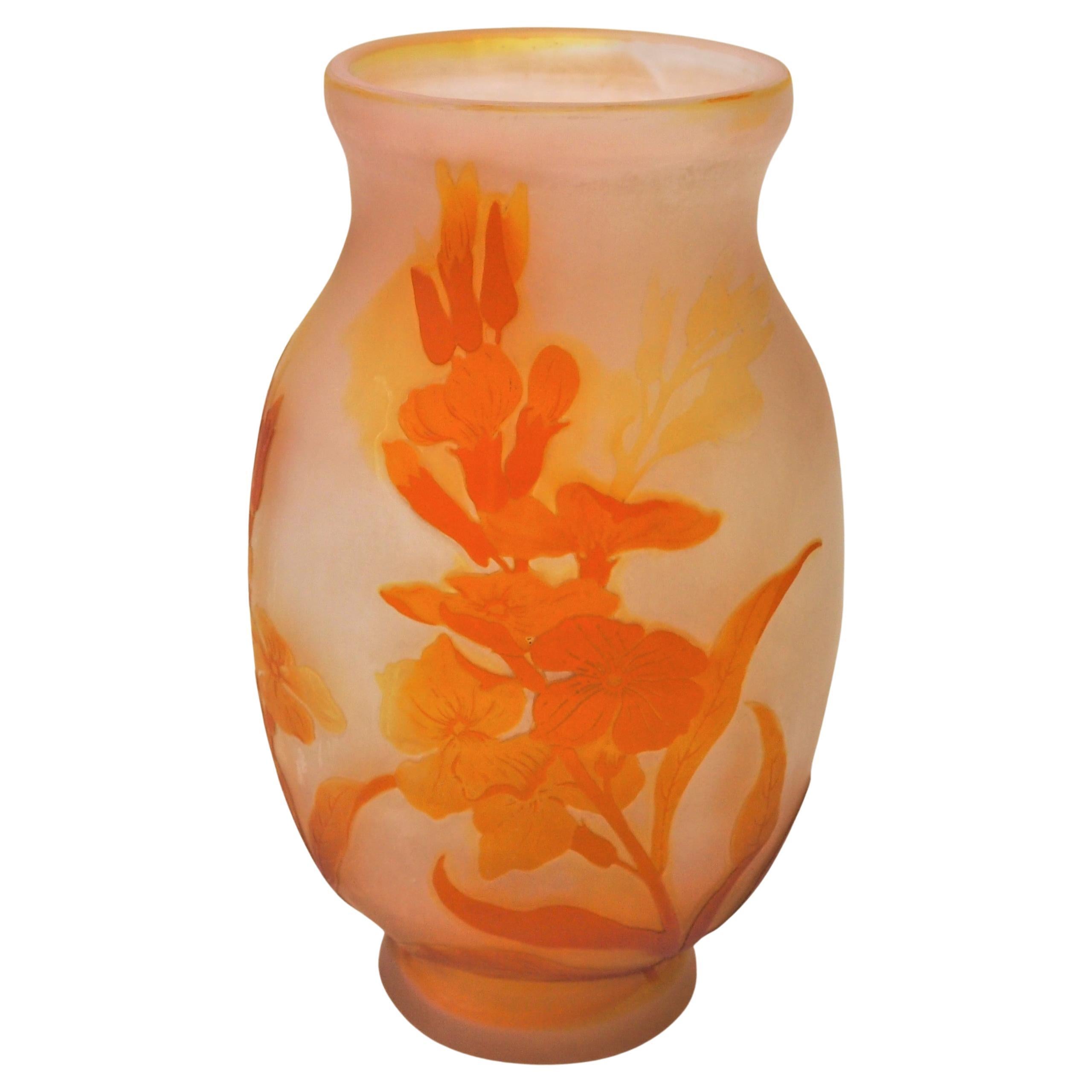
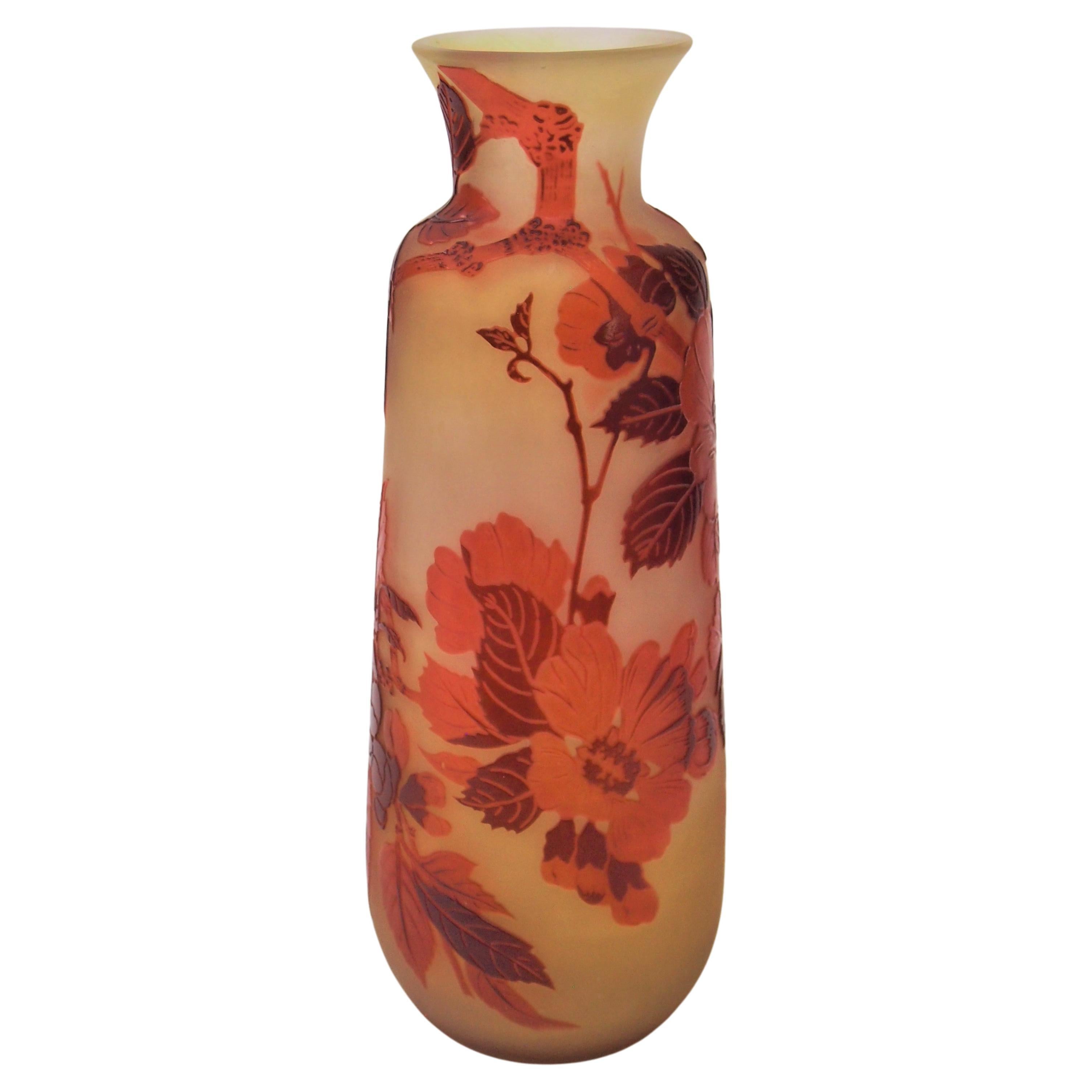
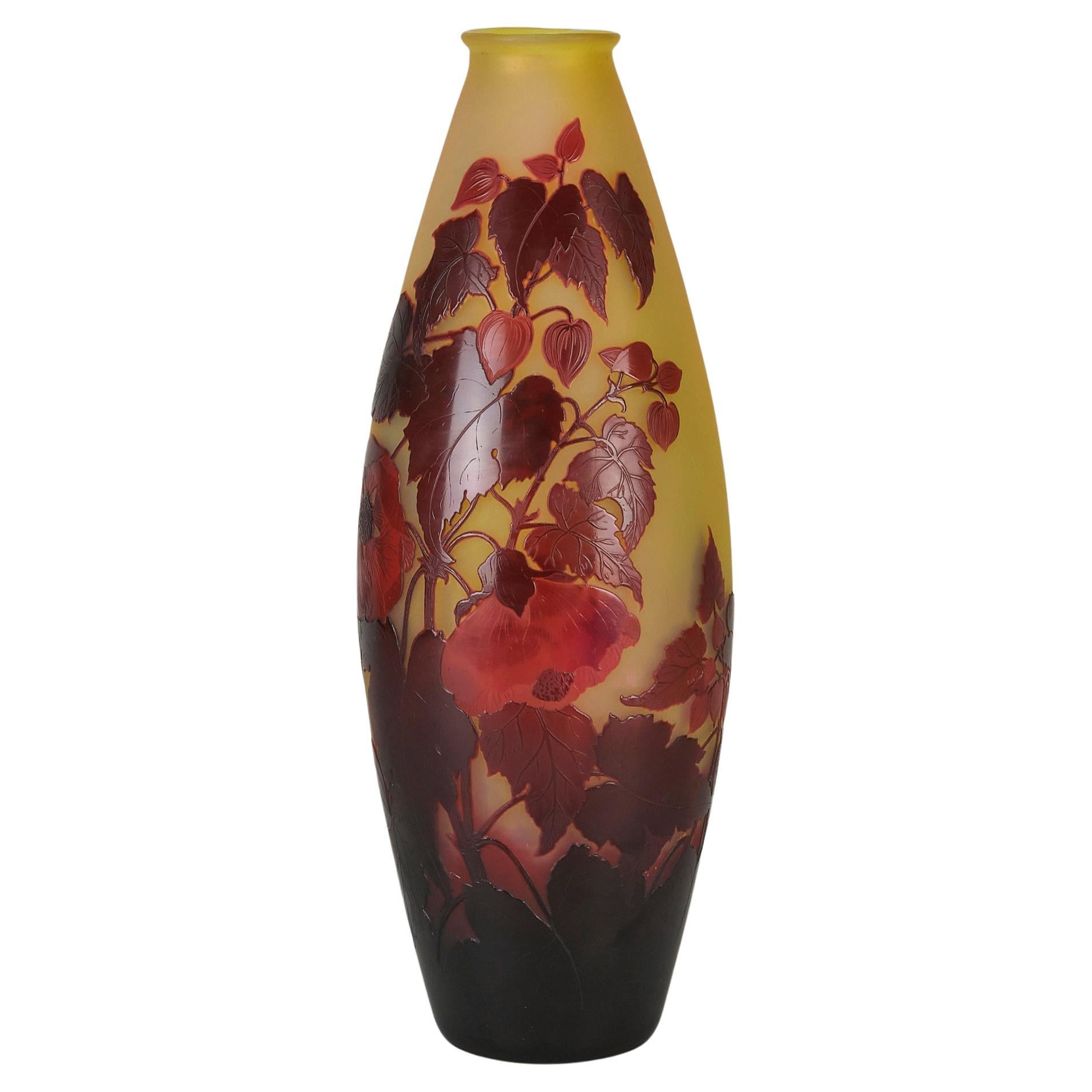
Émile Gallé (1846-1904) French Art Nouveau Glass Vase « Roses » circa 1910

$17,561.04
$21,951.3020% Off
£13,110.16
£16,387.7020% Off
€14,800
€18,50020% Off
CA$24,397.59
CA$30,496.9920% Off
A$26,243.10
A$32,803.8820% Off
CHF 14,025.07
CHF 17,531.3420% Off
MX$309,331.39
MX$386,664.2420% Off
NOK 176,823.34
NOK 221,029.1820% Off
SEK 161,650.09
SEK 202,062.6220% Off
DKK 112,792.62
DKK 140,990.7720% Off

About the Item

Émile Gallé (1846-1904) French Art Nouveau Caméo Glass Vase «Pavots » circa 1910 Multi-layered glass Triple overlay, green, red and yellow glass Acid-etched cameo decoration of poppies and poppy's flowers Engraved signature Gallé on the base Circa 1910 Émile Gallé was born in Nancy on 4 May 1846, the only son of Charles Gallé (1818-1902) and Fanny Reinemer (1828-1891), who had a crystal and porcelain business in Nancy. After a period of apprenticeship in various European cities, Weimar and Meisenthal among others, Émile Gallé was associated with his father’s business of trading and decoration of earthenware and glassware in 1867. He represented his father at the Universal Exhibition of 1867 in Paris where he obtained an honorable mention for glassware and at the Exposition universal and international of 1872 in Lyon where he obtained a gold medal in the class 33 (porcelain and crystals). He married in 1875, Henriette Grimm (1848-1914), daughter of a pastor of Bischwiller (Alsace), with whom he had four daughters. In 1877, Émile Gallé took over the family business and extended his activities to the cabinet-office in 1885. Already noticed at the Exposition de la Terre et du Verre in 1884, Émile Gallé was devoted to the Universal Exhibition in Paris in 1889 by three awards for his paintings, glassware and furniture (including a Grand Prix for his glassware). At this occasion, Gallé was made an officer of the Legion of Honor. Since then, Gallé has been intensively developing its technical and aesthetic research on glass work, a field in which it develops and creates new manufacturing processes. His glassworks were designed in Meisenthal until 1894, when Gallé opened a crystal factory that was set on fire on 29 May 1894 in his company in Nancy. His research led in 1898 to the filing of two patents, for "a kind of decoration and patina on crystal" and "a kind of marquetry of glasses and crystals". His work, with multiple references, expresses the diversity of interests of Émile Gallé where nature plays a dominant role, but not exclusive. Artist but also botanist, Gallé was elected secretary of the Central Society of Horticulture of Nancy in 1877. His patriotic and political commitments found their most successful form at the Universal Exhibitions of Paris in 1889 and 1900 with pieces such as the table "The Rhine" (which claims the return of an Alsace-Lorraine united to France) or spectacular installations like "Les sept cruches de Marjolaine" (in favor of the rehabilitation of Dreyfus). In 1898, Gallé was a founding member and treasurer of the Ligue des Droits de l'Homme et du Citoyen in Nancy and, the following year, a founding member of the Université populaire de Nancy. Dreyfusard of the first hour, he dedicated to the cause of Captain Dreyfus many talking glassware (which include a quote engraved on the glass), such as the vase Black Men, the chalice The Fig. Involved very early in the renewal of the decorative arts, Émile Gallé disseminated, in his French but also English and German works, quality series pieces, thanks to the industrialization of his production. He opened sales depots in Frankfurt (1894) and London (1901), but his main dealer was Marcelin Daigueperce in Paris (1879) and his son Albert Daigueperce in 1896. In 1901, he was the founder and first president of the Nancy School, "Alliance Provinciale des Industries d'Art" whose statutes he drafted. At the death of Émile Gallé in 1904, his widow Henriette Gallé, assisted by her son-in-law Paul Perdrizet (1870-1938), took over the artistic and industrial activity of the glassworks. In 1908 she published the Writings for Art, which included Gallé’s main writings on botany and floriculture, as well as all his exhibition notices and speeches (including the Décor symbolique, pronounced at Gallé’s admission to the Academy of Stanislaus in 1900) and several articles on art and artists. The limited company of Établissements Gallé, transformed in 1927, stopped its glass production in 1931. Created in 1904, the Museum of Decorative Art in Nancy bought thirty-eight glassworks in Gallé, shortly before his death.
  • Creator:
  • Dimensions:
    Height: 22.84 in (58 cm)Width: 8.27 in (21 cm)Depth: 8.27 in (21 cm)
  • Style:
    Art Nouveau (Of the Period)
  • Materials and Techniques:
    Art Glass,Etched
  • Place of Origin:
  • Period:
    1910-1919
  • Date of Manufacture:
    circa 1910
  • Condition:
    Wear consistent with age and use.
  • Seller Location:
    Saint-Ouen, FR
  • Reference Number:
    1stDibs: LU2612344061612

More From This Seller

View All
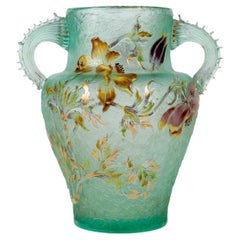
Émile Gallé (1846-1904) Enameled Grand Genre Glass Vase circa 1895
By Émile Gallé
Located in Saint-Ouen, FR
Émile Gallé (1846-1904) Grand Genre Glass Vase circa 1895 An early Art Nouveau hand etched granita glass vase, circa 1895, decorated with enameled flowers and leaves. Attached handl...
Category

Antique 1890s French Japonisme Glass

Materials

Art Glass

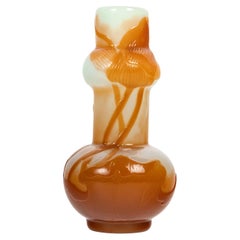
Émile Gallé (1846-1904) , a Cameo Glass Vase in the Peking Style, circa 1900
By Émile Gallé
Located in Saint-Ouen, FR
Émile Gallé (1846-1904) A Fire-Polished Cameo Glass Peking Vase Overlaid and acid-etched burnt orange glass over oyster white, with flower and leaves Design. Signed in relief and C...
Category

Antique Early 1900s French Art Nouveau Vases

Materials

Art Glass

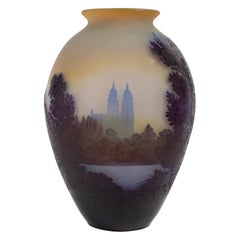
Émile Gallé (1846-1904), Rare Cameo Glass Vase Basilique Saint-Nicolas-de-Port
By Émile Gallé
Located in Saint-Ouen, FR
Émile Gallé (1846-1904) Rare and Important Galle French Cameo Glass Vase Cased glass, opalescent, colorless, yellow and blue, acid-etched design with the Basilica of St Nicolas de P...
Category

Vintage 1910s French Art Nouveau Vases

Materials

Art Glass

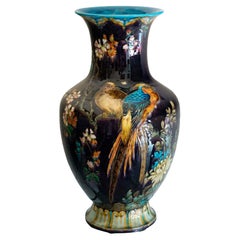
Théodore deck (1823-1891), An Impressive Enameled Faïence Vase, circa 1875
By Theodore Deck
Located in Saint-Ouen, FR
Théodore deck (1823-1891) Impressive Enameled Faïence Vase, circa 1875 Large baluster shape vase with eggplant enameled background Rich hand-painted polychrome decor of two birds re...
Category

Antique 1870s French Aesthetic Movement Ceramics

Materials

Faience

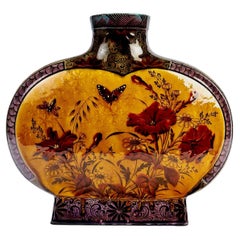
Théodore deck (1823-1891), A Gourd Shape Enameled Faïence Vase, circa 1885
By Theodore Deck
Located in Saint-Ouen, FR
Théodore Deck (1823-1891) Gourd shape vase with a spherical body and straight neck Polychrome glazed earthenware designed on both sides with a bird, butterflies, a bee, and flowers o...
Category

Antique 1880s French Aesthetic Movement Ceramics

Materials

Faience

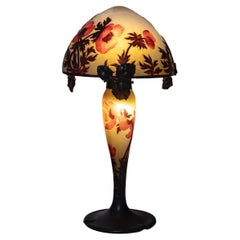
Müller Frères, Lunéville, "Anémones" Art Nouveau Glass Lamp circa 1910
By Muller Fres Luneville
Located in Saint-Ouen, FR
Muller Frères, Lunéville, “Anémones” Lamp Mushroom lamp in multi-layered glass with acid-etched and wheel-carved decoration of red and mauve magnolias in ...
Category

Vintage 1910s French Art Nouveau Table Lamps

Materials

Wrought Iron

You May Also Like

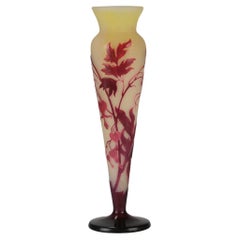
Early 20th Century French Cameo Glass Vase "Slender Floral Vase" by Emile Galle
By Émile Gallé
Located in London, GB
A very attractive early 20th Century French cameo glass slender shaped vase decroated with deep burgundy and red flowers against a vibrant yellow field, signed Gallé. ADDITIONAL INF...
Category

Early 20th Century French Art Nouveau Vases

Materials

Glass

French Art Nouveau Emile Galle Cameo Glass Vase -wild flowers C1899
By Émile Gallé
Located in Worcester Park, GB
Super early Emile Galle three colour cameo vase in the unusual combination of orange and yellow and pink featuring unusual wild flowers in bloom with a great early signature circa 18...
Category

Antique 1890s French Art Nouveau Glass

Materials

Art Glass

French Art Nouveau Emile Galle Cameo Glass Prunus Blossom Vase, circa 1920
By Émile Gallé
Located in Worcester Park, GB
Unusual Emile Galle cameo vase in dark red, and bright red over orange depicting Prunus Spinosa blossom (Blackthorn) falling from above (most Em...
Category

Vintage 1920s French Art Nouveau Glass

Materials

Art Glass

Gallé Cameo Glass Vase With Flowers, Art Nouveau, 20th Century
By Émile Gallé
Located in Lisbon, PT
An Émile Gallé vase by features an Art Nouveau acid-etched clematis flowers and leaves in warm brown and amber tones over a yellow ground. Gallé, a master of botanical symbolism, c...
Category

Early 20th Century French Art Nouveau Vases

Materials

Art Glass

Early 20th Century Art Nouveau Vase entitled "Large Floral Vase" by Emile Galle
By Émile Gallé
Located in London, GB
An attractive late 19th Century French cameo glass vase decorated with deep red and burgundy flowers against a variegating yellow field. Exhibiting excellent detail and colour, signe...
Category

Early 20th Century French Art Nouveau Vases

Materials

Glass

Gallé Glass Vase With Foliage, Art Nouveau, 1900s
By Émile Gallé
Located in Lisbon, PT
An Art Nouveau glass vase, attributed to Émile Gallé, features a graceful foliage motif in rich amber and brown tones. The conical shape enhances the naturalistic relief of leaves a...
Category

Early 20th Century French Art Nouveau Vases

Materials

Art Glass