Want more images or videos?
Request additional images or videos from the seller
1 of 7

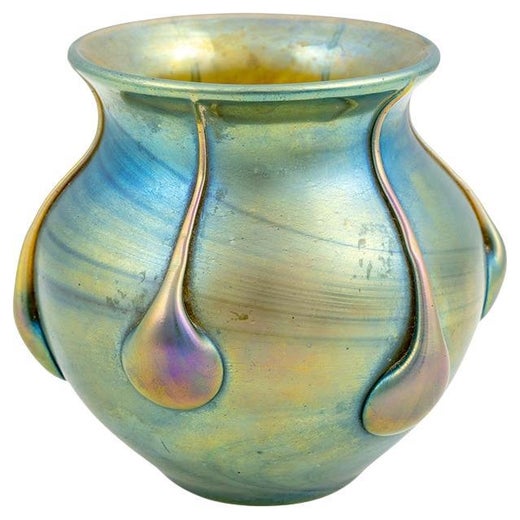
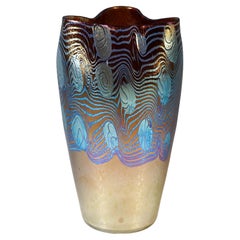
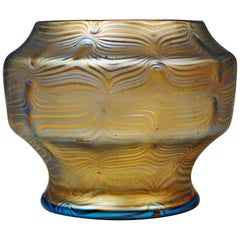
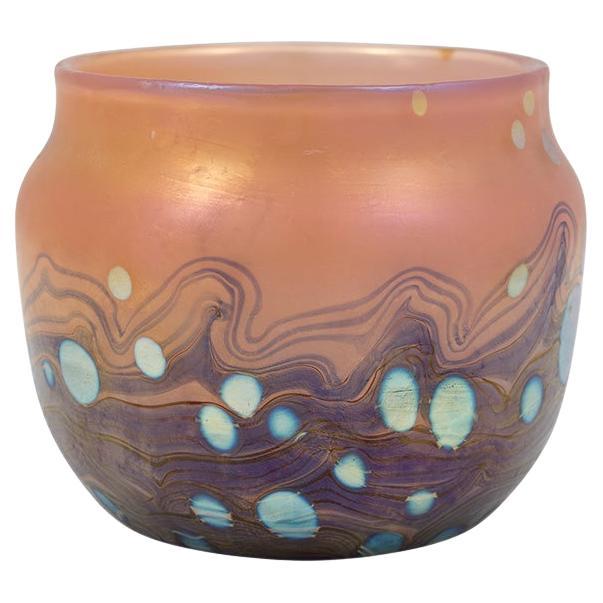
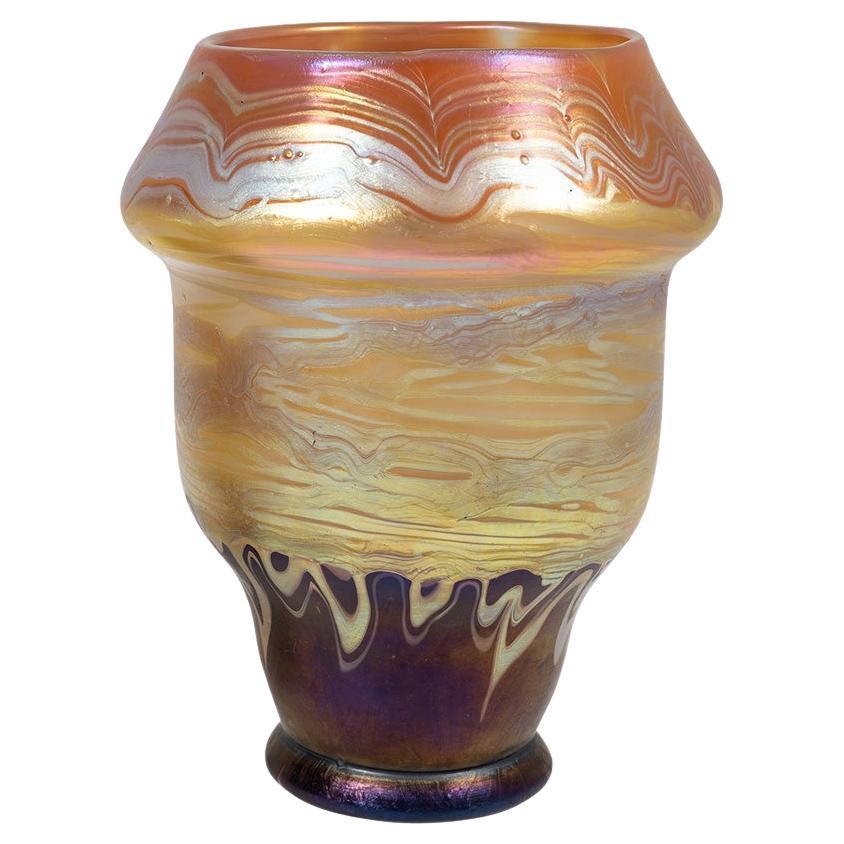
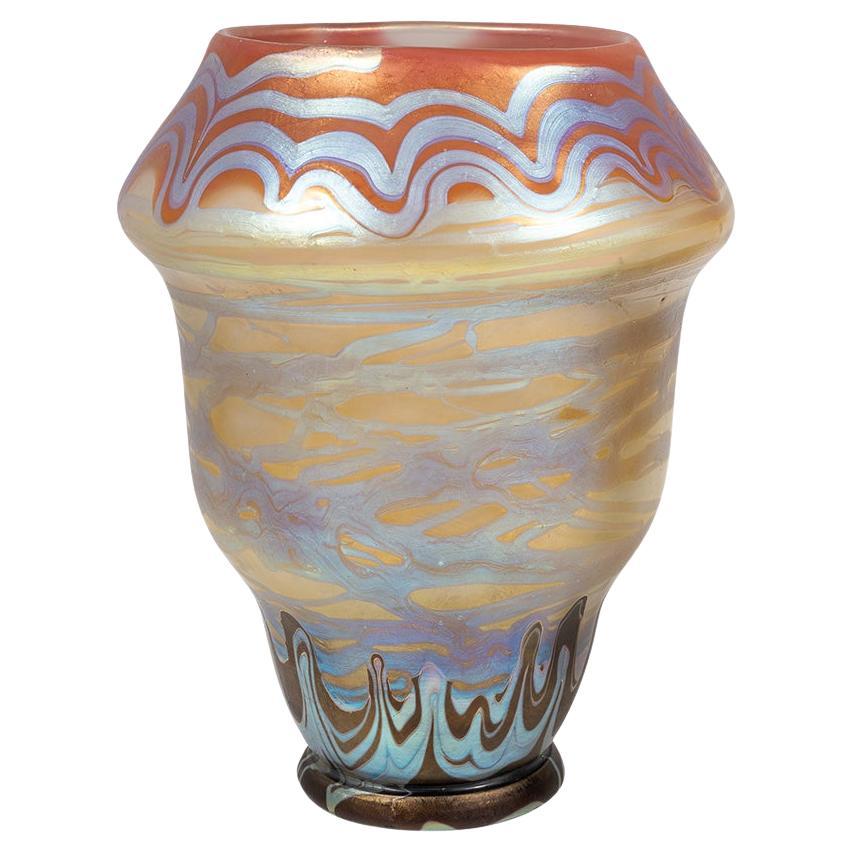
Glass Vase Loetz Cytisus Decoration Blue Orange Gold, circa 1902, Art Nouveau

$9,028.18
$11,285.2220% Off
£6,758.58
£8,448.2220% Off
€7,544
€9,43020% Off
CA$12,428.42
CA$15,535.5220% Off
A$13,586.70
A$16,983.3720% Off
CHF 7,187.97
CHF 8,984.9720% Off
MX$162,586.67
MX$203,233.3420% Off
NOK 91,456.65
NOK 114,320.8120% Off
SEK 83,719.31
SEK 104,649.1420% Off
DKK 57,475.99
DKK 71,844.9920% Off

About the Item

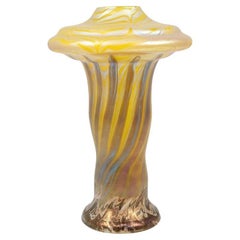
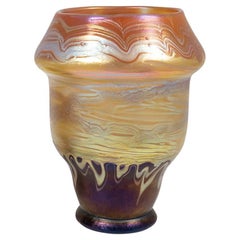
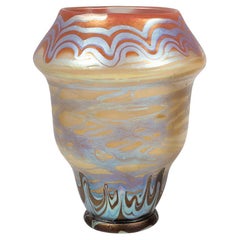
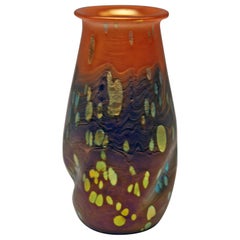
Austrian Jugendstil glass vase Johann Loetz Witwe blue orange gold circa 1902 "Cytisus Neuroth" decoration Art Nouveau Bohemian Glass This vase with its flower calyx-like form impressively illustrates how the designers at the Johann Loetz Witwe glassworks drew inspiration from nature. The symmetrically curved lips of the vase lend the otherwise predominantly classical form an accentuated dynamism. It is only through the curves and curvatures that the contrasting and rhythmic decoration can unfold. The complex surface design of the "Cytisus Neuroth" decoration demonstrates the high quality of craftsmanship of Loetz's glassblowers. The decoration, also known as "Gold Rain", shines with its finely spun silver oxide threads on the "neuroth" opal glass. The aesthetic highlight of this shimmering colourfulness is the irregularly distributed golden dots or spots ("Gold Rain"). Our vase is an excellent example of the contemporary artistic taste of Viennese society around 1900, which was influenced by the aesthetic qualities of Secessionist art.
  • Creator:
    Loetz Glass (Manufacturer)
  • Dimensions:
    Height: 4.14 in (10.5 cm)Diameter: 7.49 in (19 cm)
  • Style:
    Jugendstil (Of the Period)
  • Materials and Techniques:
  • Place of Origin:
  • Period:
  • Date of Manufacture:
    circa 1902
  • Condition:
    Wear consistent with age and use.
  • Seller Location:
    Klosterneuburg, AT
  • Reference Number:
    1stDibs: LU5830234049072

More From This Seller

View All
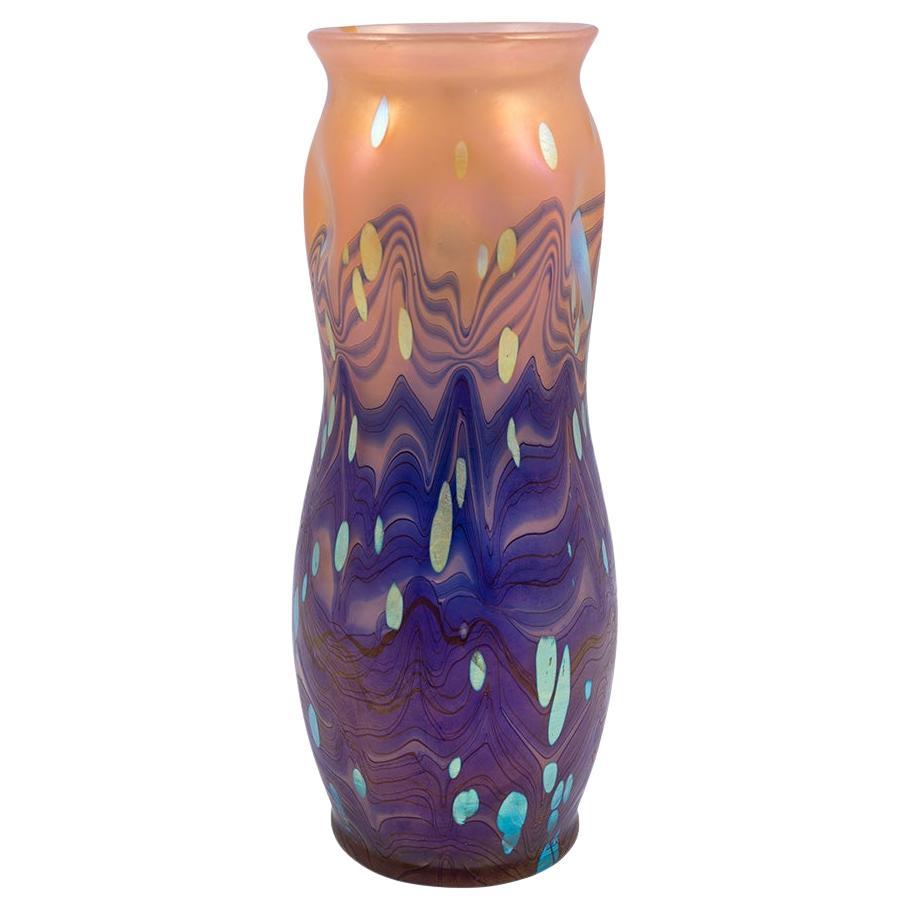
Glass Vase Loetz Cytisus Decoration Blue Orange Gold, circa 1902, Art Nouveau
By Loetz Glass
Located in Klosterneuburg, AT
Austrian Jugendstil glass vase Johann Loetz Witwe blue orange gold circa 1902 "Cytisus Neuroth" decoration Art Nouveau Bohemian Glass The "Cytisus" decoration is certainly one of ...
Category

Antique Early 1900s Austrian Jugendstil Vases

Materials

Glass

Bohemian Glass Vase Loetz Cytisus Red Green Orange Gold circa 1902 Art Nouveau
By Loetz Glass
Located in Klosterneuburg, AT
Austrian Jugendstil, floral glass vase, manufactured by Johann Loetz Witwe, red, green, orange, gold, circa 1902, "Cytisus Neuroth" decoration, bohemian glass, Austria The "Cytisu...
Category

Antique Early 1900s Austrian Jugendstil Glass

Materials

Glass

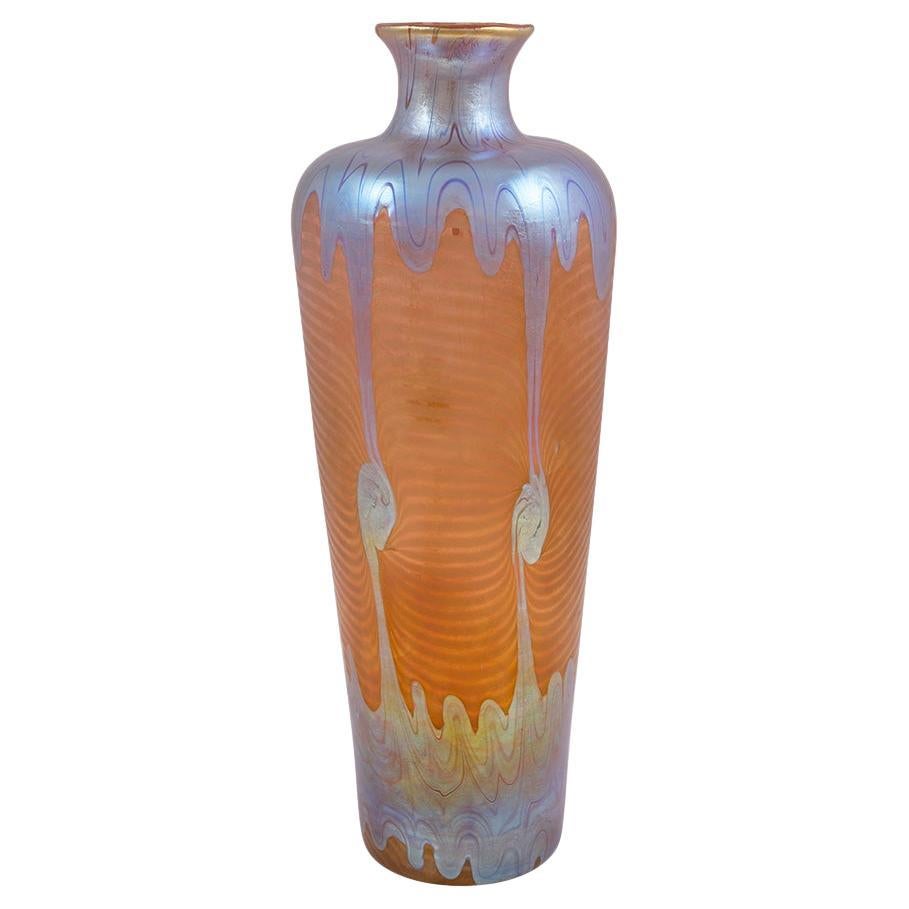
Glass Vase Loetz PG 1/214 Decoration circa 1901 Orange Blue Silver Art Nouveau
By Loetz Glass
Located in Klosterneuburg, AT
Glass vase, manufactured by Johann Loetz Witwe, PG 1/214 decoration, ca. 1901, signed Art Nouveau, Jugendstil, Art Deco, art glass, iridescent glass, orange, blue, silver signed "Lo...
Category

Early 20th Century Austrian Jugendstil Glass

Materials

Glass

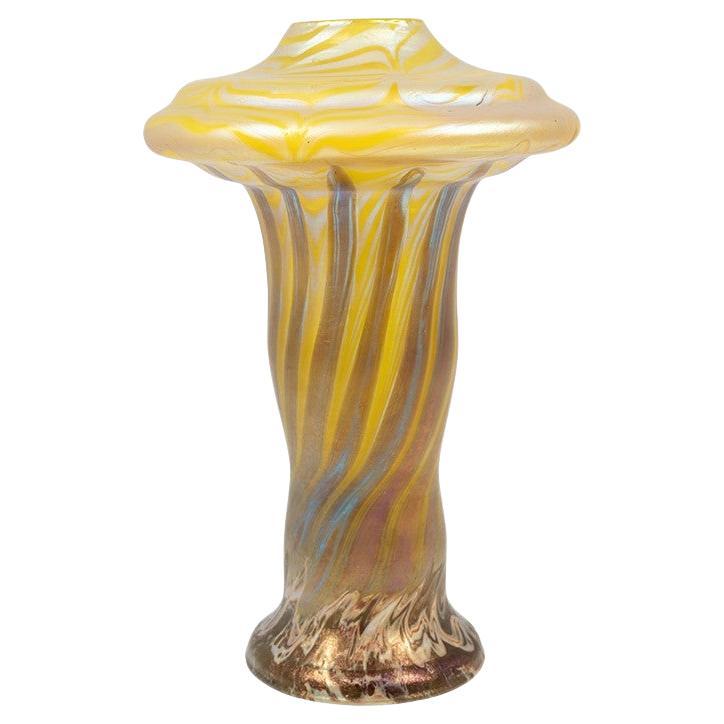
Signed Glass Vase Loetz circa 1900 Art Nouveau Jugendstil Bohemia Yellow Orange
By Loetz Glass
Located in Klosterneuburg, AT
Bohemian glass vase, manufactured by Johann Loetz Witwe, PG 356 decoration, ca. 1900, signed, Paris World Exhibition, yellow, orange, brown, ochre, silver, white, Bohemia, Viennese A...
Category

Early 20th Century Austrian Jugendstil Glass

Materials

Glass

Bohemian Glass Vase Loetz PG 358 Decoration circa 1900 Art Nouveau Signed
By Loetz Glass
Located in Klosterneuburg, AT
Bohemian glass vase, manufactured by Johann Loetz Witwe, PG 358 decoration (world exhibition decoration), ca. 1900, signed, orange, brown, ochre, silver, white, Bohemia, Viennese Art...
Category

Early 20th Century Austrian Jugendstil Glass

Materials

Glass

Glass Vase Loetz PG 358 Decoration circa 1900 Art Nouveau Jugendstil Bohemia
By Loetz Glass
Located in Klosterneuburg, AT
Bohemian glass vase, manufactured by Johann Loetz Witwe, PG 358 decoration (world exhibition decoration), ca. 1900, orange, brown, ochre, silver, white, Bohemia, Viennese Art Nouveau...
Category

Early 20th Century Austrian Jugendstil Glass

Materials

Glass

You May Also Like

Vase Loetz Widow Klostermuehle Bohemia Art Nouveau New Red Cytisus, circa 1902
By Loetz Glass
Located in Vienna, AT
Vase Loetz (Lötz) Widow Klostermuehle Bohemia Art Nouveau Made by Loetz, Klostermuehle (Bohemia), circa 1902 Decor: Neurot (= New Red) Cytisus It is a nicest Loetz Art Nouve...
Category

Antique Early 1900s Austrian Art Nouveau Glass

Materials

Glass

Loetz Art Nouveau Vase, Argus , Phenomenon Gre 2/351, Austria-Hungary, Ca 1902
By Loetz Glass
Located in Vienna, AT
Mould blown body widening conically towards the top on a flush round base, the rim shaped into a trefoil by impressions, polished pontil. Form: Prod. No. - PN 2/603, year 1902 Deco...
Category

Antique Early 1900s Austrian Art Nouveau Glass

Materials

Glass

Jugendstil LOETZ Vase Austria ca. 1900 Iridescent Blown Glass Franz Hofstoetter
By Franz Hofstotter
Located in Ciudad Autónoma Buenos Aires, AR
Jugendstil LOETZ vase; Austria, ca. 1900. Iridescent blown glass. An iridescent blown glass vase from the Austrian manufactory of Loetz, designed by Franz Hofstoetter, with a conical...
Category

Antique Early 1900s Austrian Art Nouveau Vases

Materials

Brass

Vase Loetz Widow Klostermuehle Bohemia Art Nouveau 1900 Phaenomen Genre 85/3780
By Loetz Glass
Located in Vienna, AT
Vase Loetz (Lötz) Widow Klostermuehle Bohemia Art Nouveau Made by Loetz, Klostermuehle (Bohemia), circa 1899-1900 Decor: Phaenomen Genre 85/3780 It is a most remarkable Loetz...
Category

Antique 1890s Austrian Art Nouveau Glass

Materials

Glass

Loetz Crete Phaenomen 85/3780 glass vase made exclusively for Bacalowitz c1902
By Loetz Glass
Located in Worcester Park, GB
Fabulous example of a Loetz Phaenomen crete (green based) vase ref 85/3780 made c1902. The green vase is covered in Silver-blue feathering, which has b...
Category

Antique Early 1900s Czech Art Nouveau Glass

Materials

Art Glass

Vase Loetz , Style : Art Nouveau , Bohemia, circa 1900
By Loetz Glass
Located in Ciudad Autónoma Buenos Aires, C
Loetz The glass factory, originally founded in 1836 by Johann Baptist Eisner, was taken over. Loetz was the premier Bohemian glass works during this period. It was located in Klostermühle, near Rejštejn in the Sušice district in South-West Bohemia, which belonged to the Austro-Hungarian Empire until 1918. Susanna Loetz, widow of Glass entrepreneur Johann Loetz in 1852. She renamed the company "Glasfabrik Johann Loetz Witwe", a name that was retained until all activities were stopped in 1947. In 1879 it passed to Max Ritter von Spaun. Under his guidance, together with director Eduard Prochaska, the glassworks flourished as never before and enjoyed its most successful period. Von Spaun and Prochaska concentrated on the development of innovative glass types and new production techniques. Their first successful speciality was a glass type simulating semiprecious stones. It is often called "Marmoriertes Glas" ("marbled glass"). The range contained Onyx (red/brown), Karneol (red/pink) and later Malachit (green). It was introduced in the second half of the 1880's. From the same period dates the Octopus glass, of which the decor resembles the tentacles of a cephalopod. The production of Marmorier-tes Glas was resumed in 1906, in different colours like yellow and white. Octopus, 1885-1890, 1885-1890, unknown, an Malachit, 1885-1890, unknown, The master glass-blowers of Klostermühle had already carried out experiments with iridescence in the first half of the 1890's, and they produced the Olympia, a classically inspired olive green type, in 1896. Similar, in variants of creta green, bronce or Olympia and averse to any redundant decoration was the Glatt decor. It highly contrasted with the more elaborate finishes of that time, but it constitutes a part of the production with a deep sense for taste and quality. Most of the pieces shown in the "Glatt" decors were manufactured for Max Emmanuel in London. The glatt decor remained in use for many years. The Chiné decor had thin glass threads spun around the body in irregular patterns. It is not to be confused with the type of glass that was produced by Kralik. Loetz "Chiné" came in clear, opal, green and pink, Kralik "Chiné" in dark purple. The logical sequel to Chiné was the Pampas decor, green or cobalt blue, in which the threads almost disappeared in the surface, with iridised parts in between. Around the same time the dotted Papillon decor was introduced. The beautiful silver spots were employed on a wide array of models and quite effective on the gooseneck (water sprinkler) and sea shell...
Category

Antique Early 1900s Austrian Art Nouveau Glass

Materials

Art Glass