16th Century More Dining and Entertaining
to
1
112
400
1,329
536
268
634
196
32
37
34
58
19
73
124
96
14
11
1
1
1
1
1
1
1
1
Period: 16th Century
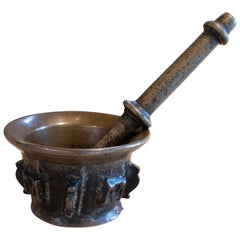
16th century Spanish Bronze Mortar with Letters M on the Sides
Located in Marbella, ES
16th century Spanish Bronze Mortar with Letters M on the Sides
Category
Spanish Antique 16th Century More Dining and Entertaining
Materials
Bronze
Related Items
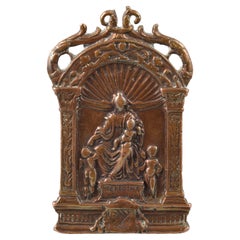
Bronze Pax or Pax Board, 16th Century
Located in Madrid, ES
Peacekeeper. Bronze. Century XVI.
Bronze purse with a handle on the back in the shape of an esse in the same material and a decoration in light relief on the front that shows, unde...
Category
Spanish Renaissance Antique 16th Century More Dining and Entertaining
Materials
Bronze

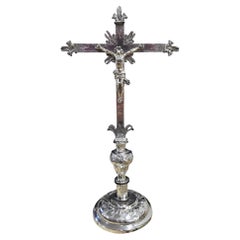
Important Spanish Solid Silver Altar Cross – 16th Century
Located in Madrid, ES
This remarkable 16th-century Spanish altar cross is a stunning example of ecclesiastical silverwork. Crafted from solid silver, the cross features the traditional depiction of Christ...
Category
Antique 16th Century More Dining and Entertaining
Materials
Sterling Silver
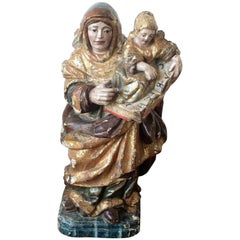
16th Century Spanish Carved
Polychrome Painted Saint Anne with the Infant Mary
Located in Miami, FL
This sculpture represents Santa Ana (Saint Anne) with the infant Mary.
Verge
Category
European Baroque Antique 16th Century More Dining and Entertaining
Materials
Wood
$15,600
H 1 in W 1 in D 1 in
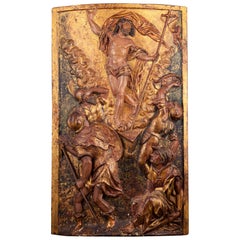
“Ressurrection”, Polychromed Wood, Spanish School, 16th Century
Located in Madrid, ES
The relief was probably a door of the Sagrario. The piece follows a customary decoration in the tabernacles of the Renaissance and the Baroque. Compare, for example, with the sevente...
Category
Spanish Renaissance Antique 16th Century More Dining and Entertaining
Materials
Other
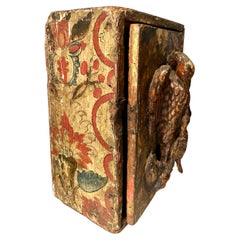
Spanish 16th C. Renaissance Wood Tabernacle, The Pelican in her Piety.
Located in Vero Beach, FL
Spanish 16th Century Renaissance Ecclesiastical Wood Carved Tabernacle, The Pelican in her Piety.
Magnificent polychrome and gilded wooden Tabernacle with a masterfully hand carved ...
Category
Spanish Renaissance Antique 16th Century More Dining and Entertaining
Materials
Pine, Giltwood, Paint
$7,200
H 17.5 in W 12 in D 11 in
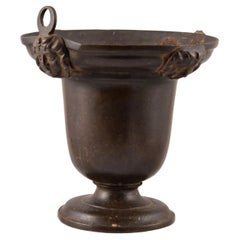
Bronze Situla, 16th Century
Located in Madrid, ES
Acetre. Bronze. Century XVI.
Bronze piece that has a circular foot, and a circular body, with an outwardly hollowed mouth at the top, and a decoration in relief in this last area o...
Category
European Renaissance Antique 16th Century More Dining and Entertaining
Materials
Bronze
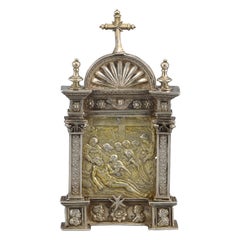
Silver Pax O Portapaz, Spain, 16th Century
Located in Madrid, ES
Portapaz. Silver in its color and gilded. Century XVI.
Portapaz made of silver that has a handle (decorated with delicate plant motifs similar to those of the pilasters) and a female and a male bust at the bottom, as well as other architectural elements on the back, and, on the front, an architectural composition classicist basement (with busts flanking a flower and a cross), two pilasters (vegetal decoration and capital recalling the composite order) with entablature (flowers flanking an angel's head; moldings), and a semicircular arch finish with elements veined in relief under cross and flanked by two architectural motifs in the upper part. This composition frames and enhances a gilt silver relief where you can see the Lament or Cry over the Body of Christ, with the Virgin holding the head of Jesus, Saint John at her side, the Magdalene and other characters, a cross following the group and a landscape background with houses and plant elements. This architectural structure mentioned is similar to the one present in other 16th century portapaces, such as that of the Magdalena de Dos Hermanas parish (Hernando de Ballesteros el Mozo, around 1575); or that of the Galaroza parish (same author and date); or that of the portapaz of San Miguel de Jerez de los Caballeros (in some details); etc. As for the relief, it is possible to clearly see a strong Italian influence, and the similarity between it and important pieces such as the Portapaz known as “de Cisneros by Juan de Burgos (1493-1497; MuseoCatedralicio de Alcalá de Henares), as well as in paintings and reliefs. Also noteworthy are both the male and female busts in the lower area and the Maltese cross (or Saint John's) that appears in this area. This symbol was used since the 12th century as an insignia by the Knights Hospitallers of the Order of Saint John of Jerusalem, also known as the Order of Malta...
Category
Spanish Renaissance Antique 16th Century More Dining and Entertaining
Materials
Silver
Choir stalls. Walnut wood. Spanish School, 16th century.
Located in Madrid, ES
Choir stalls. Walnut wood. Spanish School, 16th century.
Fragment of a choir stall, made of walnut, carved in its color, featuring three seats with their respective folding miserico...
Category
Spanish Renaissance Antique 16th Century More Dining and Entertaining
Materials
Walnut

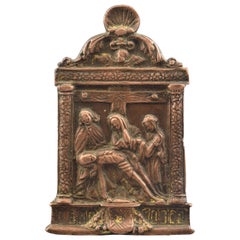
Pax or Pax Board, Bronze, Spain, 16th Century
Located in Madrid, ES
Paper holder bronze, 16th century.
Portapaz made of bronze with an "asymmetric" handle on the back, which presents a decoration in light relief framed in an architectural compositio...
Category
European Renaissance Antique 16th Century More Dining and Entertaining
Materials
Bronze
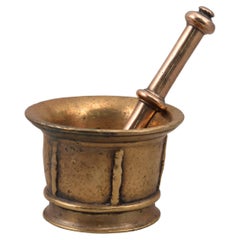
Bronze Mortar with Pestle, Spain, 17th Century
Located in Madrid, ES
Mortar with hand. Bronze. XVII century.
Mortar with a circular base, cylindrical body and slightly outwardly flared mouth, decorated with a series of smooth horizontal moldings arranged both in the lower and upper areas and with simple vertical elements (which still maintain slight balustraded shapes) derived from of the ribs that these specimens used to have in the medieval Spanish...
Category
Spanish Baroque Antique 16th Century More Dining and Entertaining
Materials
Bronze, Other
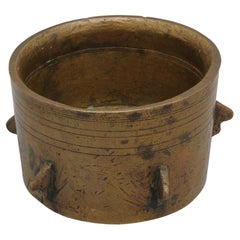
Spanish Moorish Gothic Mortar 15th century
Located in DELFT, NL
Spanish - Moorish Gothic bronze mortar and with ribs, most likely from Andalusia.
Of conical shape, resting on a circular base, the exterior decorated with a series of wing-shaped pr...
Category
Spanish Gothic Antique 16th Century More Dining and Entertaining
Materials
Bronze
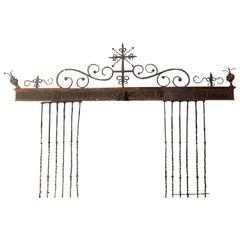
Wrought Iron Grille gate, Spain, 16th Century
Located in Madrid, ES
Typologically, it is a partial architectural grating with an ornamental and defensive purpose at the same time. Likewise, it clearly shows some of the striking decorative and typolog...
Category
Spanish Renaissance Antique 16th Century More Dining and Entertaining
Materials
Wrought Iron
Previously Available Items
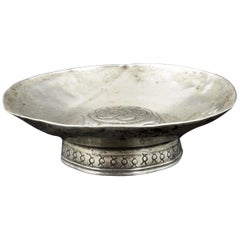
Silver Ceremonial Cup, Spain, 16th Century
Located in Madrid, ES
Catavinos or scrapie. Silver in its color. Spain, 16th Century.
With contrast marks, illegible.
Cup without foot or handles, in silver in its color and with a circular base, flar...
Category
Spanish Renaissance Antique 16th Century More Dining and Entertaining
Materials
Silver
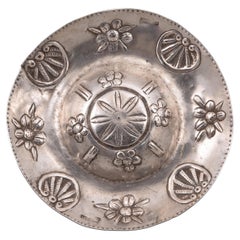
16th Century French Sandstone Mortar
Located in Vosselaar, BE
A large 16th century French sandstone mortar. Mortars were used since Antiquity to prepare food, medicines, pigments and cosmetics. In Europe stone...
Category
French Antique 16th Century More Dining and Entertaining
Materials
Sandstone
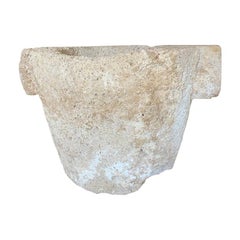
Silver Drinking Cup, Spain, 16th Century
Located in Madrid, ES
Also known as "catavinos", this type of drinking cups were used on special occasions (ceremonies ...), hence their material and the decoration they have, and were very common during the reign of the Habsburgs in Spain. Although they were objects of civil use, it was not strange that they were donated or ordered for their use in churches or in liturgical areas. Both the decoration and the shape of the cup show the origin of the same artistic core away from the main silversmith centers. Compare, for example, with the "bernegal" with handles in the form of cartons from the Museo del Prado in Madrid (catalog O00085) made in the late 16th century, which presents the upper part carved in concave double gallons and shows vegetable prints...
Category
Spanish Renaissance Antique 16th Century More Dining and Entertaining
Materials
Silver
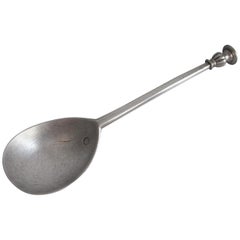
Exceptionally Fine Elizabeth I Seal Top Spoon, Maker
s Mark of a Mullet
Located in London, GB
This exceptionally fine example has a fig shaped bowl and hexagonal stem which terminates in a large baluster seal top, beautifully chased with lobes and palely gilded. The top of th...
Category
English Antique 16th Century More Dining and Entertaining
ELIZABETH I. A very fine Seal Top Spoon made in London in 1597 by William Cawdel
Located in London, GB
This very fine example has a fig shaped bowl and hexagonal stem which terminates in a baluster seal top, beautifully chased with lobes and palely gilded. The top of the seal is scrat...
Category
English Antique 16th Century More Dining and Entertaining
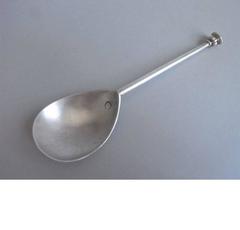
H 6.3 in W 0.1 in D 0.1 in
THE HOW MAIDENHEAD SPOON. An exceptionally rare Elizabeth I Maidenhead Spoon mad
Located in London, GB
The Spoon has a fig shaped bowl and faceted octagonal stem. The top of the stem terminates in a finely detailed cast Maidenhead finial, which is palely gilded. The reverse of the bowl is scratch engraved with the contemporary initials WG. The Spoon is in excellent condition, has a good colour, and is marked with the maker's mark in the bowl and a mullet and small quatrefoil on the stem. Length: 6.6 inches, 16.5cm
Spoons from Dorchester are very scarce. Lawrence Stratford's father, John, was a prosperous goldsmith in the town, of which he was Bailiff in 1552, and in 1558/9 was assessed at the very substantial figure of £ 9 in goods. Lawrence no doubt succeeded to the business, and served as Bailiff in 1583. The 1593 Tax lists him at £ 3 in goods, but the 1599 return does not mention him, so he may well have died circa 1595.
During the 1570's Lawrence provided Communion Cups...
Category
English Antique 16th Century More Dining and Entertaining
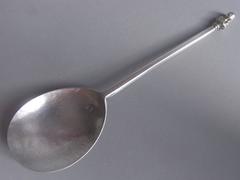
H 6.6 in W 0.1 in D 0.1 in