Items Similar to Antique Rolls Royce Spirit of Ecstasy Car Mascot Early - 20th Century
Video Loading
Want more images or videos?
Request additional images or videos from the seller
1 of 21
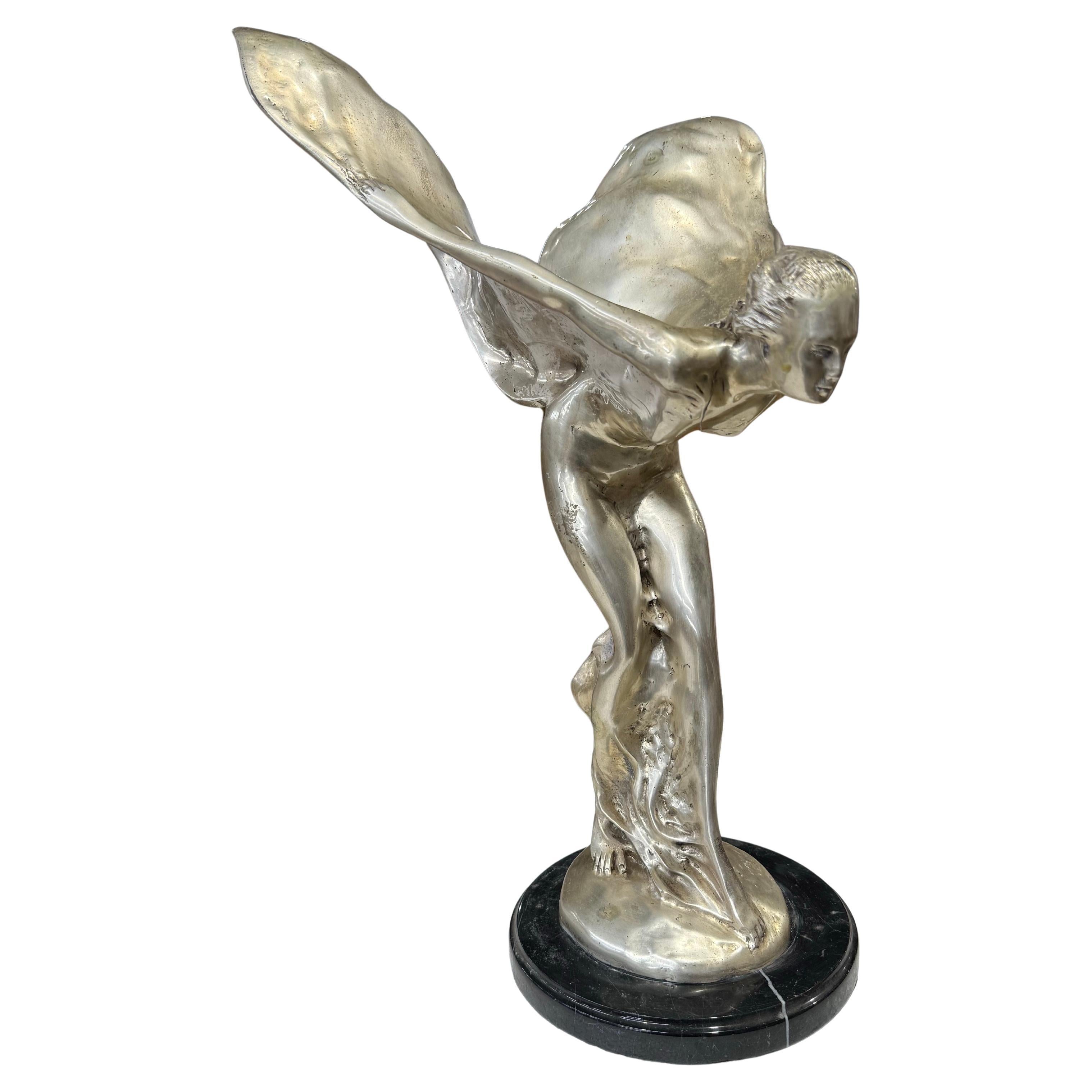
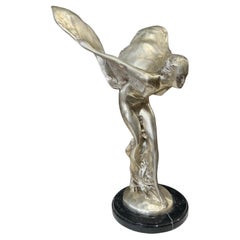
Antique Rolls Royce Spirit of Ecstasy Car Mascot Early - 20th Century
$1,264.86
£925
€1,087.10
CA$1,760.49
A$1,888.69
CHF 1,013.05
MX$22,739.57
NOK 12,770.74
SEK 11,645.15
DKK 8,122.12
About the Item
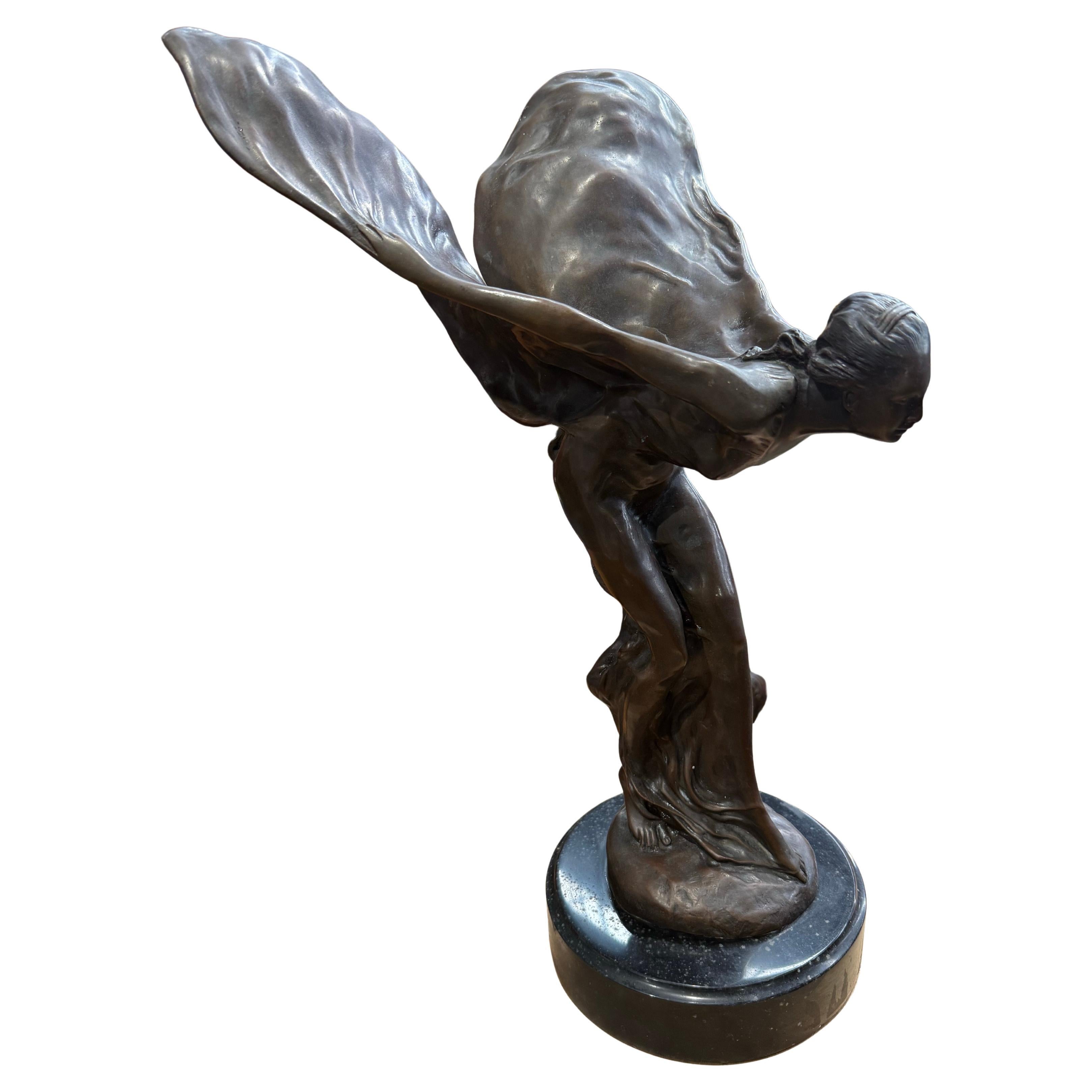
A beautiful antique Rolls Royce silver plated car mascot on an alabaster base, The Spirit of Ecstasy and dating from 1929-1939.
The winged maiden was designed by Charles Robinson Sykes (1875-1950), it is marked 'TRADE MARK REG.' beneath one wing and 'REG. US PAT. OFFICE' beneath the other, it has the vestiges of the cast signature to the domed base., as used on the 20/25 models. It features a large ovoid alabaster base with a label stating the base is in English alabaster by Nigel Owen, craftsman in stone, Rugby, Warwicks.
It is a striking piece which will look amazing on your desk, and is ideal for your keys.
Condition:
In excellent condition, please see photos for confirmation of condition.
Dimensions in cm:
Height 17 cm x Width 26.5 cm x Depth 13 cm
Weight 2.7 kg
Dimensions in inches:
Height 7 inches x Width 10 inches x Depth 5 inches
Weight 6.0 lbs
The Spirit of Ecstasy is the bonnet ornament on Rolls-Royce cars. It is in the form of a woman leaning forwards with her arms outstretched behind and above her. Billowing cloth runs from her arms to her back, resembling wings.
The Spirit of Ecstasy, also called "Emily", "Silver Lady" or "Flying Lady", was designed by English sculptor Charles Robinson Sykes and carries with it a story about secret passion between John Walter Edward Douglas-Scott-Montagu, (second Baron Montagu of Beaulieu after 1905, a pioneer of the automobile movement, and editor of The Car Illustrated magazine from 1902) and the model for the emblem, Eleanor Velasco Thornton. Eleanor (also known as Thorn) was the secretary of John Walter, who fell in love with her in 1902 when she worked for him on the aforesaid motoring magazine. Their secret love was to remain hidden, limited to their circle of friends, for more than a decade. The reason for the secrecy was Eleanor's impoverished social and economic status, which was an obstacle to their love. On the other hand, Montagu was married to Lady Cecil Victoria Constance Kerr since 1889.
Eleanor died on 30 December 1915 when the SS Persia was torpedoed by a U-boat south of Crete. She had been accompanying Lord Montagu who had been directed to assume a command in India. He was thought to have been killed too, but survived and was saved after several days adrift in a life raft.
Our reference: A4696
About the Seller
5.0
Platinum Seller
Premium sellers with a 4.7+ rating and 24-hour response times
Established in 1983
1stDibs seller since 2012
1,450 sales on 1stDibs
Typical response time: 1 hour
Associations
LAPADA - The Association of Arts
Antiques Dealers
- ShippingRetrieving quote...Shipping from: London, United Kingdom
- Return Policy
More From This Seller
View AllAntique WMF Silver Plated Sweets / Visiting Card / Key/ Tray Early 20th Century
Located in London, GB
This is a beautiful WMF Art Nouveau silver plated visiting card tray Circa 1900 in date.
Depicting a female figure in a long, flowing diaphanous dress, the train forming the double sided tray, with the impressed maker's mark and stamped '169' to underside.
This exquisite casket could house anything from trinkets, keys, sweets to jewellery.
Whatever you choose to use this item for you are sure to do it in style.
Condition:
In excellent condition with no dings, dents or signs of repair. Please see photos for confirmation.
Dimensions in cm:
Height 22 x Width 34.5 x Depth 16.5
Dimensions in inches:
Height 9 inches x Width 1 foot, 2 inches x Depth 6 inches
WMF
In 1853, Daniel Straub, a miller from Geislingen, joined forces with the Schweizer Brothers to form the "Metallwarenfabrik Straub & Schweizer" in Geislingen.
This was the second company to be founded by Straub - previously in 1850, from the nucleus of a small repair workshop, which he had set up to work on the construction of Geislingen's famous railway incline, he had founded Maschinenfabrik Geislingen. This company was involved mainly in manufacturing mill turbines and traded throughout Europe.
As early as 1862, the young company distinguished itself by winning a gold medal at the World Exhibition in London. In 1866, following the departure of the brothers Louis and Friedrich Schweizer, the company was renamed Straub & Sohn" (Straub & Son). The company showroom, built in 1868 in Berlin, gradually evolved to become the company's first retail outlet. Three years later, the company was already employing 60 workers. By 1880, the number of employees had grown to approximately 200 and the company was already producing 960 different items.
1880 saw the merger between Straub & Sohn and "Ritter & Co.", Esslingen, to form a public limited company under the name of Wurttembergische Metallwarenfabrik. At the time of the merger, Ritter & Co.'s Esslingen factory was already using the electroplating method of silver plating and had the more modern production facilities at its disposal. Straub's company, on the other hand, was the more profitable of the two.
1892 saw the development of a special technique for silver plating cutlery, whereby the silver is distributed in a way that, at the points of the cutlery most exposed to wear and tear, the coating is twice as thick as elsewhere. This process was patented and is still in use today. Known nowadays as 'Perfect Hard Silver plating' the technique remains exclusive to WMF.
Under Carl Hugele the company gained international standing. At the turn of the century the factory in Geislingen employed 3,000 workers. By 1910, this number had already grown to 4,000, making WMF the largest company in Wurttemberg at this time. Sales catalogues were printed in twelve languages. Subsidiary companies in London, Warsaw and Vienna opened up export markets.
Under the direction of Albert Mayer the WMF studio was influenced by the art nouveau style. The product range was modernized and considerably extended. In 1905 WMF acquired a majority holding of the Cologne company Orivit AG, which manufactured products from "Orivit", a tin alloy.
As of 1925, products created by the Contemporary Decorative Products Department (NKA) made their debut on the market. This department was set up under the direction of Hugo Debach in order to establish the name of WMF amongst consumers interested in art and design. This department was responsible for producing the special "Ikora" finish, which has earned an important place in the annals of art history. The "Ikora" brand name referred to a specific method of treating the surface of the metal, by which layers of coating were applied in a partly chemical and partly heat induced process. A host of newly developed hand-finishing techniques enhanced the possibilities for adding decorative flourishes to the products. Despite being mass produced, every item looked as if it had been individually crafted.
At the end of the war the company had lost its foreign assets, associated factories...
Category
Antique Early 1900s German Art Nouveau Sheffield and Silverplate
Materials
Silver Plate
Antique French Ormolu
Marble Double Encrier Inkstand Standish 19th Century
Located in London, GB
This is a wonderful antique French Empire Revival ormolu mounted and patinated Verde Antico marble inkstand, Circa 1870 in date.
Of rectangular form with a pair of raised inkwells h...
Category
Antique 1870s English Empire Revival Animal Sculptures
Materials
Ormolu
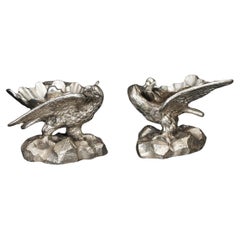
Antique Victorian Pair of Silver Plated Eagle Salts 19th C
Located in London, GB
This is a charming pair of antique Victorian silver plated salts each in the form of an eagle and in Baroque taste, circa 1880 in date.
The beautifully cast salts each feature a de...
Category
Antique 1880s Late Victorian Animal Sculptures
Materials
Silver Plate
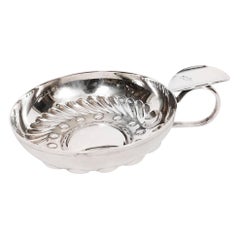
Vintage English Silver Plate Taste Vin Circa 1950 Mid Century
Located in London, GB
This is wonderful English Vintage silver plated tastevin, Circa 1950 in date.
A tastevin is a shallow, silver cup used for tasting wine, traditionally carried by sommeliers and wine...
Category
Vintage 1950s Platters and Serveware
Materials
Silver
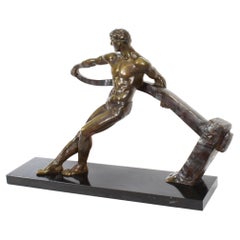
Antique Art Deco Bronze Figure by Maurice Guiraud-Rivière 20th Century
By Maurice Guiraud-Rivière
Located in London, GB
A large fine Art Deco patinated bronze figure of "The Riverman" by Maurice Guiraud-Rivière (French, 1881-1947), circa 1920 in date.
This powerful sculpture is modelled and cast a...
Category
20th Century French Art Deco Figurative Sculptures
Materials
Bronze
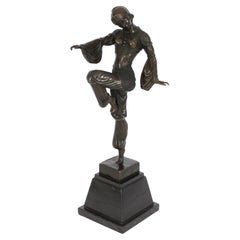
Vintage Art Deco Bronze Dancing Girl After Chiparus Mid 20th C
Located in London, GB
This is an eye-catching Vintage Art Deco Revival bronze dancing girl dating from the mid 20th century.
This beautiful piece is a 20th Century recast of a sculpture created by the famous Romanian sculptor Demetre Chiparus.
Made by the classical lost wax, or 'cire perdue', method, the stautue stands on a black marble base.
Condition:
In excellent condition, please see photos for confirmation.
Dimensions in cm:
Height 50 x Width 22 x Depth 16 & Weight 6 kg
Dimensions in inches:
Height 1 foot, 8 inches x Width 9 inches x Depth 6 inches & Weight 13.2 lbs
Lost Wax Method
sometimes called by the French name of cire perdue or the Latin, cera perduta is the process by which a bronze or brass is cast from an artists sculpture.
In industrial uses, the modern process is called investment casting. An ancient practice, the process today varies from foundry to foundry, but the steps which are usually used in casting small bronze sculptures in a modern bronze foundry are generally quite standardised.
Demetre H. Chiparus
was born in Romania in 1886, attended school in Italy, then, shortly before World War I moved to Paris. He attended school at the Ecole des Beaux Arts under two talented sculptors Anonin Mercier and Jean Boucher, who provided him the opportunity to learn the trade.
He later began to experiment with small bronze sculptures and produce small bronze works, exhibiting his small sculptures and, in 1914, was awarded an honorable mention at the Salon of the Societe des Artistes Francais. Many of Paris’ most affluent began to take notice of his work after World War One and the demand for his sculptures quickly increased.
Chiparus was captivated by dancers, in particular influenced by Diaghiley’s Ballets Russes and Leon Bakst’s stage designs. A few of his famous sculptures were Starfish Dancer...
Category
Vintage 1950s Art Deco Figurative Sculptures
Materials
Bronze
You May Also Like
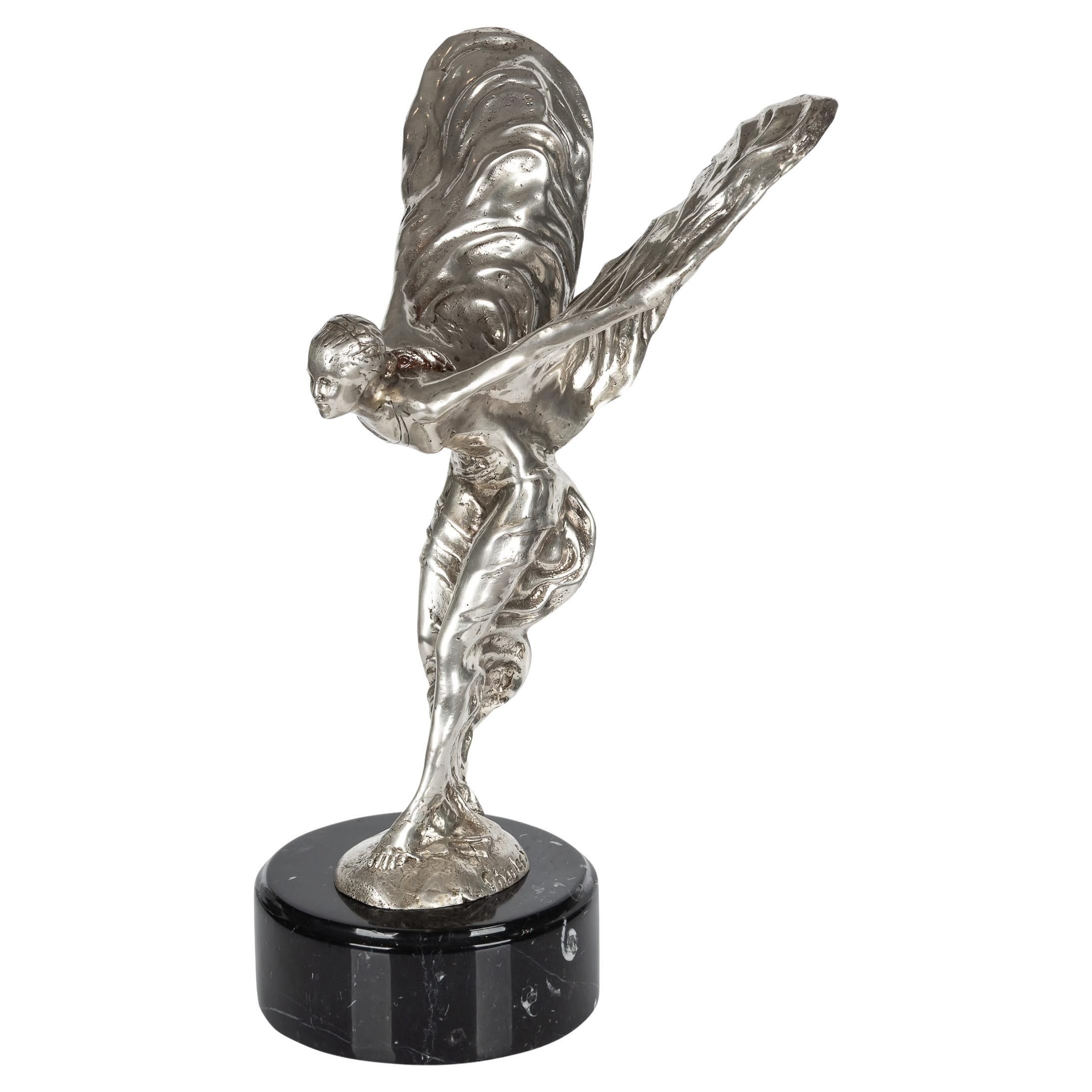
20th Century Rolls Royce
Spirit Of Ecstasy
Statue
By Charles Sykes
Located in Royal Tunbridge Wells, Kent
A 20th Century English silver plated model of the legendary Rolls-Royce mascot which was designed by Charles Sykes, this later cast silver plated statue stands on round marble plinth...
Category
20th Century British Other Mounted Objects
Materials
Marble, Metal
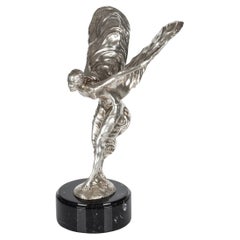
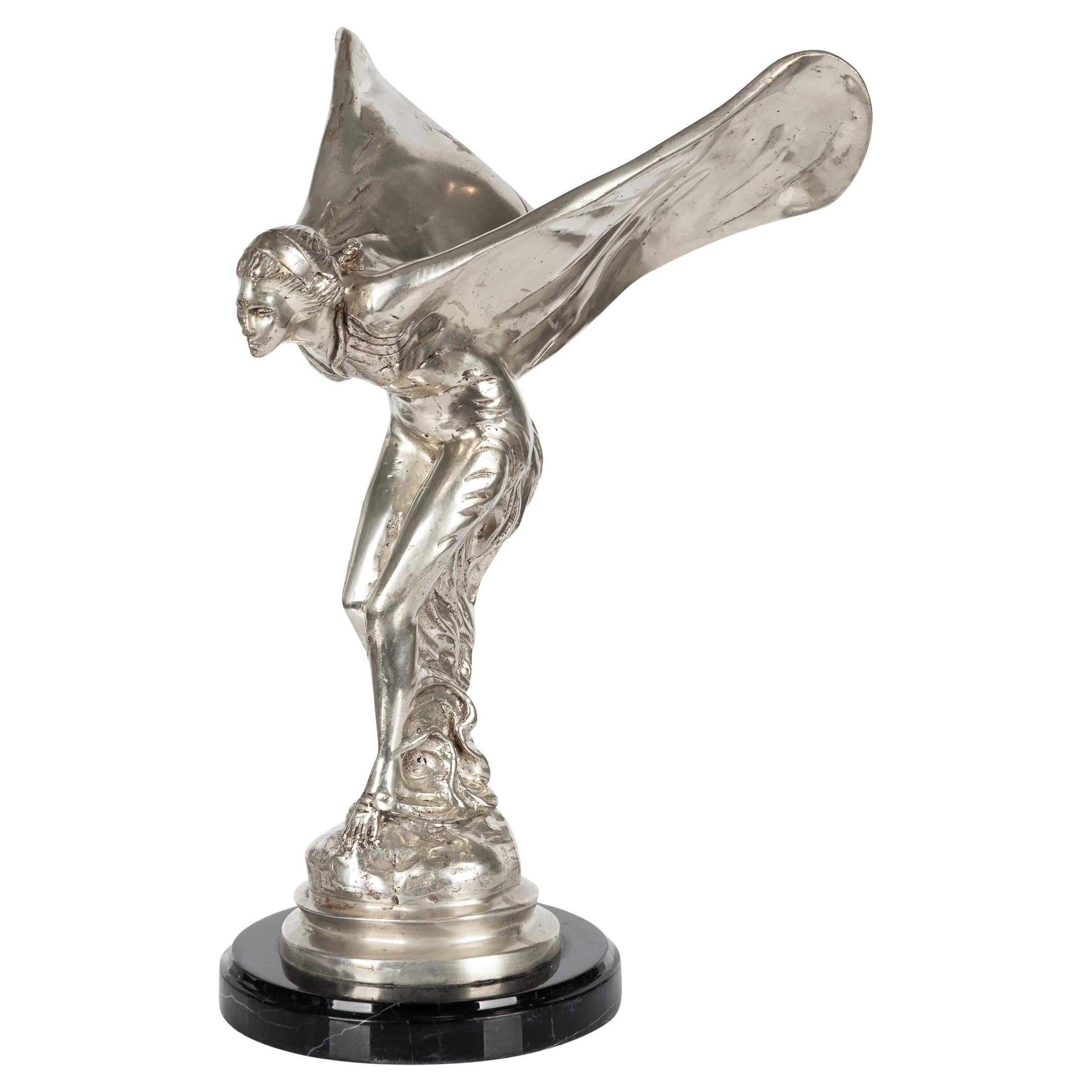
20th Century Rolls Royce
Spirit Of Ecstasy
Statue
By Charles Sykes
Located in Royal Tunbridge Wells, Kent
A 20th Century English silver plated model of the legendary Rolls-Royce mascot which was designed by Charles Sykes, this later cast silver plated statue stands on round marble plinth...
Category
20th Century British Other Mounted Objects
Materials
Marble, Metal
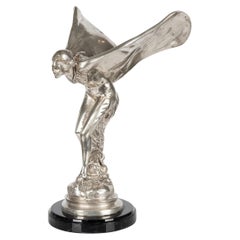
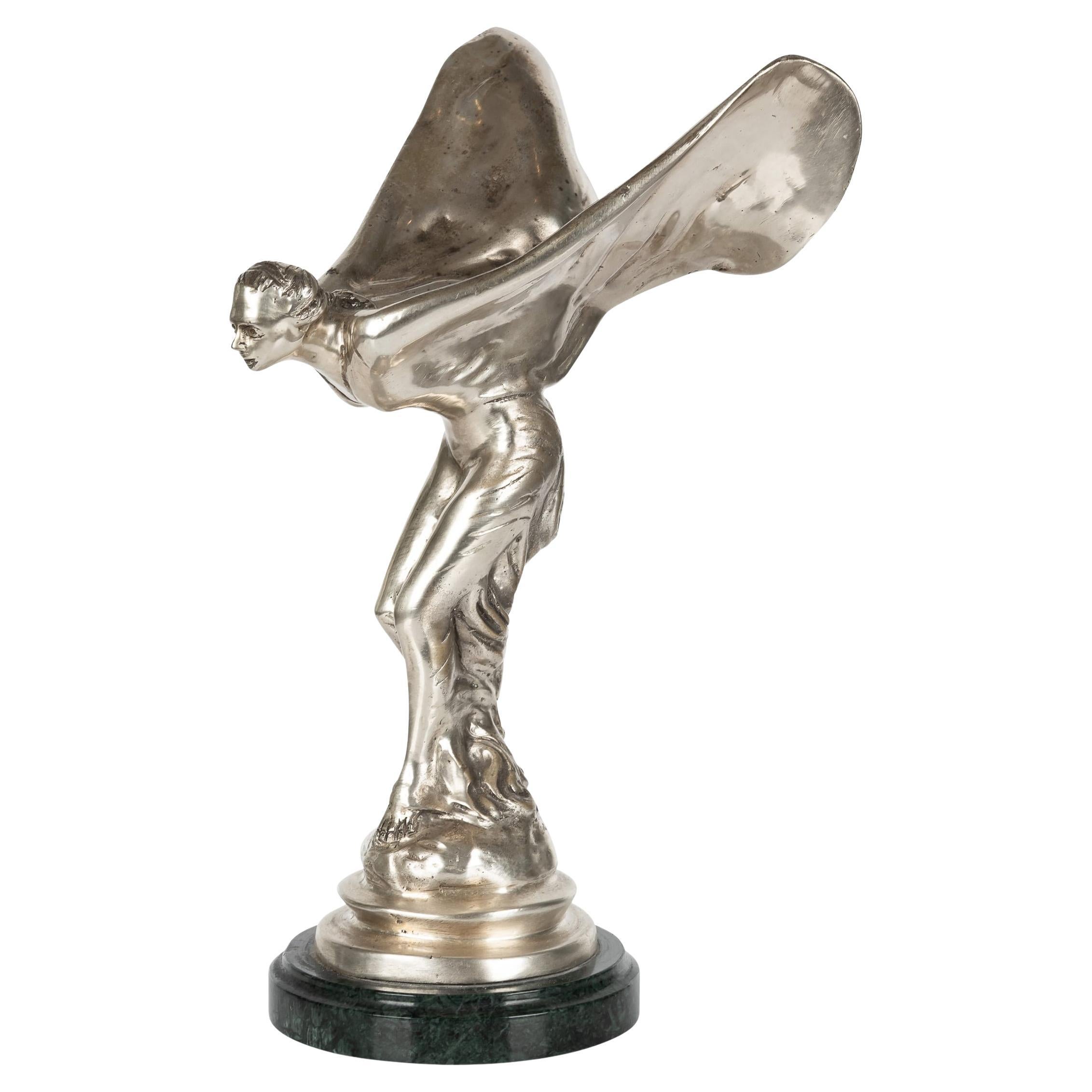
20th Century Rolls Royce
Spirit Of Ecstasy
Statue
By Charles Sykes
Located in Royal Tunbridge Wells, Kent
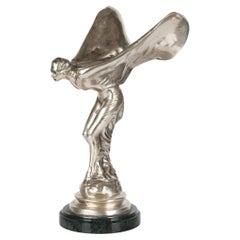
A 20th Century English silver plated model of the legendary Rolls-Royce mascot which was designed by Charles Sykes, this later cast silver plated statue stands on round marble plinth...
Category
20th Century British Other Mounted Objects
Materials
Marble, Metal
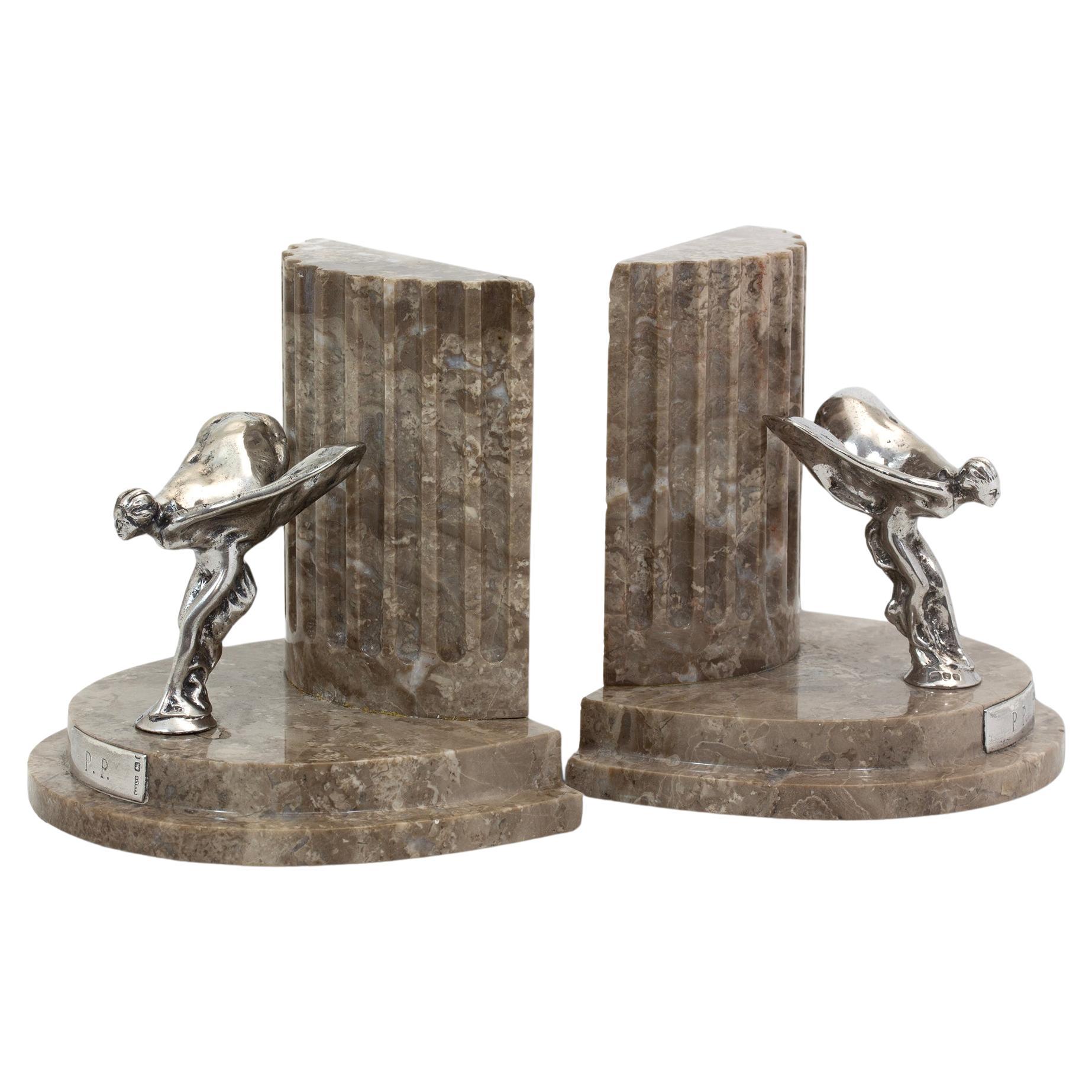
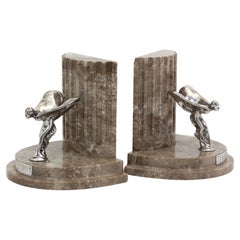
Rolls Royce Comissioned Silver Spirit of Ecstasy Book Ends
By Saunders
Shepherd
Located in Northampton, GB
Marble Columns
From our Accessories collection, we are delighted to offer a very rare pair of Silver Spirit of Ecstasy Book Ends. The Book End mounts are carved from marble with dem...
Category
Early 20th Century English Art Deco Bookends
Materials
Marble, Sterling Silver
Silver Plated Bronze “Spirit of Ecstasy” Sculpture on Marble Base
Located in Southall, GB
A striking silvered bronze rendition of the Spirit of Ecstasy, the iconic figure originally created by Charles Sykes for Rolls-Royce in 1911. Depicting a graceful female form leaning...
Category
20th Century European Figurative Sculptures
Materials
Silver Plate
“Spirit of Ecstasy” Bronze Sculpture on Marble Base – After Charles Sykes
Located in Southall, GB
A finely cast bronze rendition of the iconic Spirit of Ecstasy, originally designed by Charles Robinson Sykes in 1911 for Rolls-Royce. This elegant figure, with her robes flowing beh...
Category
Early 20th Century European Busts
Materials
Bronze
