Items Similar to Antique WMF Silver Plated Squirrel Nut Dish 19th Century
Want more images or videos?
Request additional images or videos from the seller
1 of 14
Antique WMF Silver Plated Squirrel Nut Dish 19th Century
$535.84
£385
€452.99
CA$735.47
A$777.14
CHF 417.95
MX$9,303.83
NOK 5,236.44
SEK 4,795.82
DKK 3,383.29
About the Item
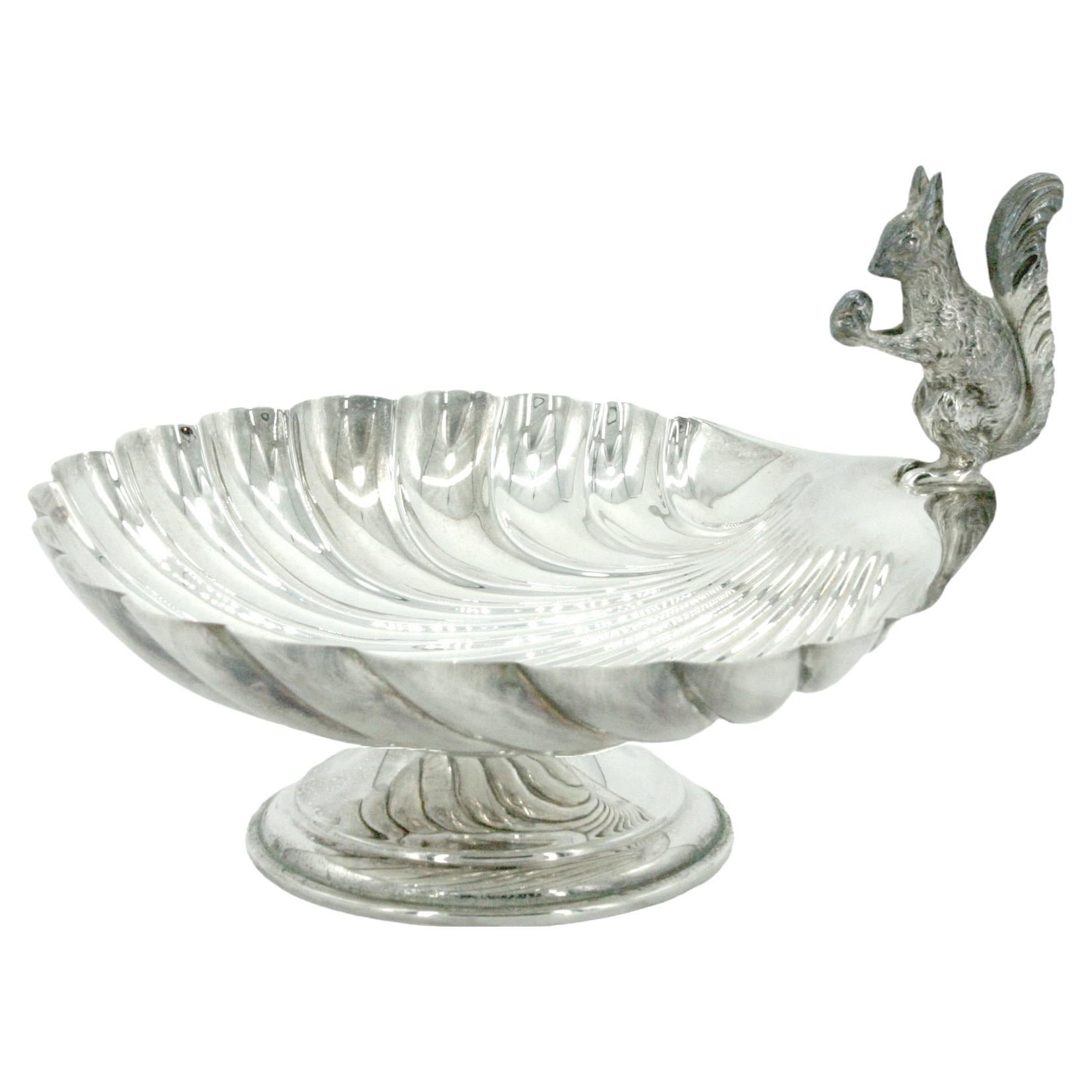
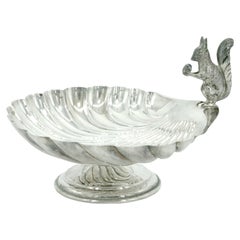
This is a fine good size, high quality. WMF antique silver-plated nut dish or sweet dish, marked Wurttembergische Metallwarefabrik, dating from the mid 19th century.
It features a fabulous shell embossed body with fluting and has a squirrel eating a nut whilst balanced on one end, the shell is raised on a round pedestal base. It is stamped WMF to the base.
Add a beautiful touch to your next dining experience.
Condition:
In excellent condition, please see photos for confirmation.
Dimensions in cm:
Height 12 cm x Width 30 cm x Depth 19 cm
Dimensions in inches:
Height 5 inches x Width 1 foot x Depth 7 inches
WMF
In 1853, Daniel Straub, a miller from Geislingen, joined forces with the Schweizer Brothers to form the "Metallwarenfabrik Straub & Schweizer" in Geislingen.
This was the second company to be founded by Straub - previously in 1850, from the nucleus of a small repair workshop, which he had set up to work on the construction of Geislingen's famous railway incline, he had founded Maschinenfabrik Geislingen. This company was involved mainly in manufacturing mill turbines and traded throughout Europe.
As early as 1862, the young company distinguished itself by winning a gold medal at the World Exhibition in London. In 1866, following the departure of the brothers Louis and Friedrich Schweizer, the company was renamed Straub & Sohn" (Straub
Son). The company showroom, built in 1868 in Berlin, gradually evolved to become the company's first retail outlet. Three years later, the company was already employing 60 workers. By 1880, the number of employees had grown to approximately 200 and the company was already producing 960 different items.
1880 saw the merger between Straub & Sohn and "Ritter
Co.", Esslingen, to form a public limited company under the name of Wurttembergische Metallwarenfabrik. At the time of the merger, Ritter
Co.'s Esslingen factory was already using the electroplating method of silver plating and had the more modern production facilities at its disposal. Straub's company, on the other hand, was the more profitable of the two.
1892 saw the development of a special technique for silver plating cutlery, whereby the silver is distributed in a way that, at the points of the cutlery most exposed to wear and tear, the coating is twice as thick as elsewhere. This process was patented and is still in use today. Known nowadays as 'Perfect Hard Silver plating' the technique remains exclusive to WMF.
Under Carl Hugele the company gained international standing. At the turn of the century the factory in Geislingen employed 3,000 workers. By 1910, this number had already grown to 4,000, making WMF the largest company in Wurttemberg at this time. Sales catalogues were printed in twelve languages. Subsidiary companies in London, Warsaw and Vienna opened up export markets.
Under the direction of Albert Mayer the WMF studio was influenced by the art nouveau style. The product range was modernized and considerably extended. In 1905 WMF acquired a majority holding of the Cologne company Orivit AG, which manufactured products from "Orivit", a tin alloy.
As of 1925, products created by the Contemporary Decorative Products Department (NKA) made their debut on the market. This department was set up under the direction of Hugo Debach in order to establish the name of WMF amongst consumers interested in art and design. This department was responsible for producing the special "Ikora" finish, which has earned an important place in the annals of art history. The "Ikora" brand name referred to a specific method of treating the surface of the metal, by which layers of coating were applied in a partly chemical and partly heat induced process. A host of newly developed hand-finishing techniques enhanced the possibilities for adding decorative flourishes to the products. Despite being mass produced, every item looked as if it had been individually crafted.
At the end of the war the company had lost its foreign assets, associated factories and retail outlets. The years following 1945 saw the start of a concerted effort to reconstruct in terms of personnel, organizational structures and technology in the remaining factory sites. The network of retail shops was rebuilt. Very soon, subsidiaries sprang up in the USA, Holland, Canada, Switzerland, Austria and Italy.
By 1950, WMF staff numbers had again swelled to 3,000. Silverplated tableware and cutlery accounted for two thirds of WMF's turnover, with shops specialising in clocks and watches, gold and silverware representing the company's main customers. A shift in emphasis occurred at the end of the 1950s and was marked by an increase in the importance of Cromargan cutlery and hollowware. This period saw the creation of classic products, such as designed by Wilhelm Wagenfeld, which still feature in or have been reintroduced into the WMF collection. It also saw an increase in the volume of trade in household and kitchenware items between WMF and specialist retail shops. A number of stemware collections completed the WMF catalogue, followed by the development of an extensive range of products for the hotel and catering industry.
By 1960, the Geislingen factory alone employed around 5,800 workers. A shortage of space and manpower at this site led to the setting up of additional branch factories, like the factory in Hayingen and Riedlingen.
Our reference: A4816
- Dimensions:Height: 4.73 in (12 cm)Width: 11.82 in (30 cm)Depth: 7.49 in (19 cm)
- Materials and Techniques:
- Period:
- Date of Manufacture:19th Century
- Condition:
- Seller Location:London, GB
- Reference Number:Seller: A48161stDibs: LU950647887982
About the Seller
5.0
Platinum Seller
Premium sellers with a 4.7+ rating and 24-hour response times
Established in 1983
1stDibs seller since 2012
1,456 sales on 1stDibs
Typical response time: <1 hour
Associations
LAPADA - The Association of Arts
Antiques Dealers
- ShippingRetrieving quote...Shipping from: London, United Kingdom
- Return Policy
More From This Seller
View AllAntique Victorian Silver Plated Fruit Basket James Dixon 19th Century
By James Dixon
Sons
Located in London, GB
This is an exceptionally fine antique English Victorian silver plated fruit basket with hallmarks for the celebrated silversmith, James Dixo...
Category
Antique 1880s English Victorian Sheffield and Silverplate
Materials
Silver Plate
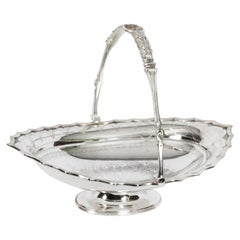
Antique George III Old Sheffield Silver on Copper Basket 19th Century
Located in London, GB
This is a fabulous antique Neo-classical George III Old Sheffield plate silver on copper bread basket / fruit dish, circa 1810 in date.
The rectagular swing handled basket features ...
Category
Antique 19th Century English Neoclassical Tableware
Materials
Silver Plate, Copper
Antique George III Old Sheffield Silver on Copper Basket, 18th Century
Located in London, GB
This is a fabulous antique Neo-classical George III Old Sheffield plate silver on copper bread basket / fruit dish, circa 1780 in date.
...
Category
Antique 1780s English George III Sheffield and Silverplate
Materials
Sheffield Plate
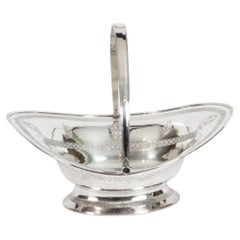
Antique Victorian Silver Plated Fruit Basket 19th Century
Located in London, GB
This is a stunning antique Victorian silver plated fruit basket, circa 1860 in date.
The oval shaped body features fabulous engrave ...
Category
Antique 1860s English Victorian Sheffield and Silverplate
Materials
Silver Plate
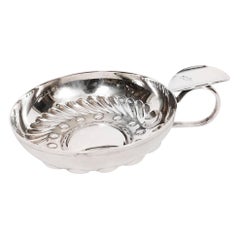
Vintage English Silver Plate Taste Vin Circa 1950 Mid Century
Located in London, GB
This is wonderful English Vintage silver plated tastevin, Circa 1950 in date.
A tastevin is a shallow, silver cup used for tasting wine, traditionally carried by sommeliers and wine...
Category
Vintage 1950s Platters and Serveware
Materials
Silver
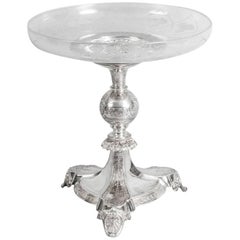
Antique Silver Plated and Engraved Glass Comport Centrepiece, 19th Century
Located in London, GB
This is a fabulous antique English silver-plated and engraved glass table centre comport, dated with the registration lozenge for 10th September 1...
Category
Antique 1850s English Sheffield and Silverplate
Materials
Silver Plate
You May Also Like
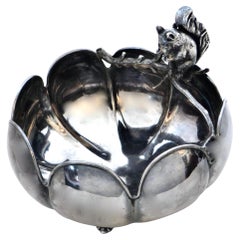
Late 19thC Silver Plated Victorian Squirrel Figural Nut Bowl American Circa 1885
Located in Incline Village, NV
Lovely and completely original fine quality squirrel themed silver plated figural Victorian circular nut bowl; a squirrel eating a nut is mounted on a realistic looking silver plated...
Category
Antique 1880s American Victorian Serving Bowls
Materials
Silver Plate
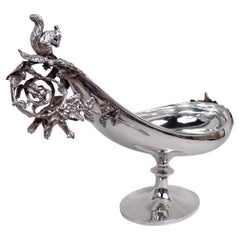
Gorham Victorian Classical Sterling Silver Squirrel Centerpiece Bowl, 1870
By Gorham Manufacturing Company
Located in New York, NY
Victorian Classical sterling silver bowl. Made by Gorham in Providence in 1870. Curved and asymmetrical ovoid bowl. Raised and narrow end applied cast figure of nut-nibbling squirrel...
Category
Antique 1870s American Victorian Centerpieces
Materials
Sterling Silver
English Silver Plate Tableware Serving Piece
By Sheffield Silver Co.
Located in Tarry Town, NY
English silver plate tableware/ barware serving piece with squirrel handle resting on a round base with interior swirl design details. The centerpiece is in great condition. Maker's ...
Category
Vintage 1930s English Serving Pieces
Materials
Silver Plate
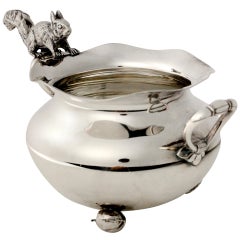
Silver Plate Nut Dish
By James W. Tufts
Located in New York, NY
Round silver plate nut dish with scalloped edge and small squirrel perched on side branch. James W. Tufts, Boston, "Plate Guaranteed", 1883.
Category
Antique 19th Century American Sheffield and Silverplate
Materials
Silver Plate
TIFFANY
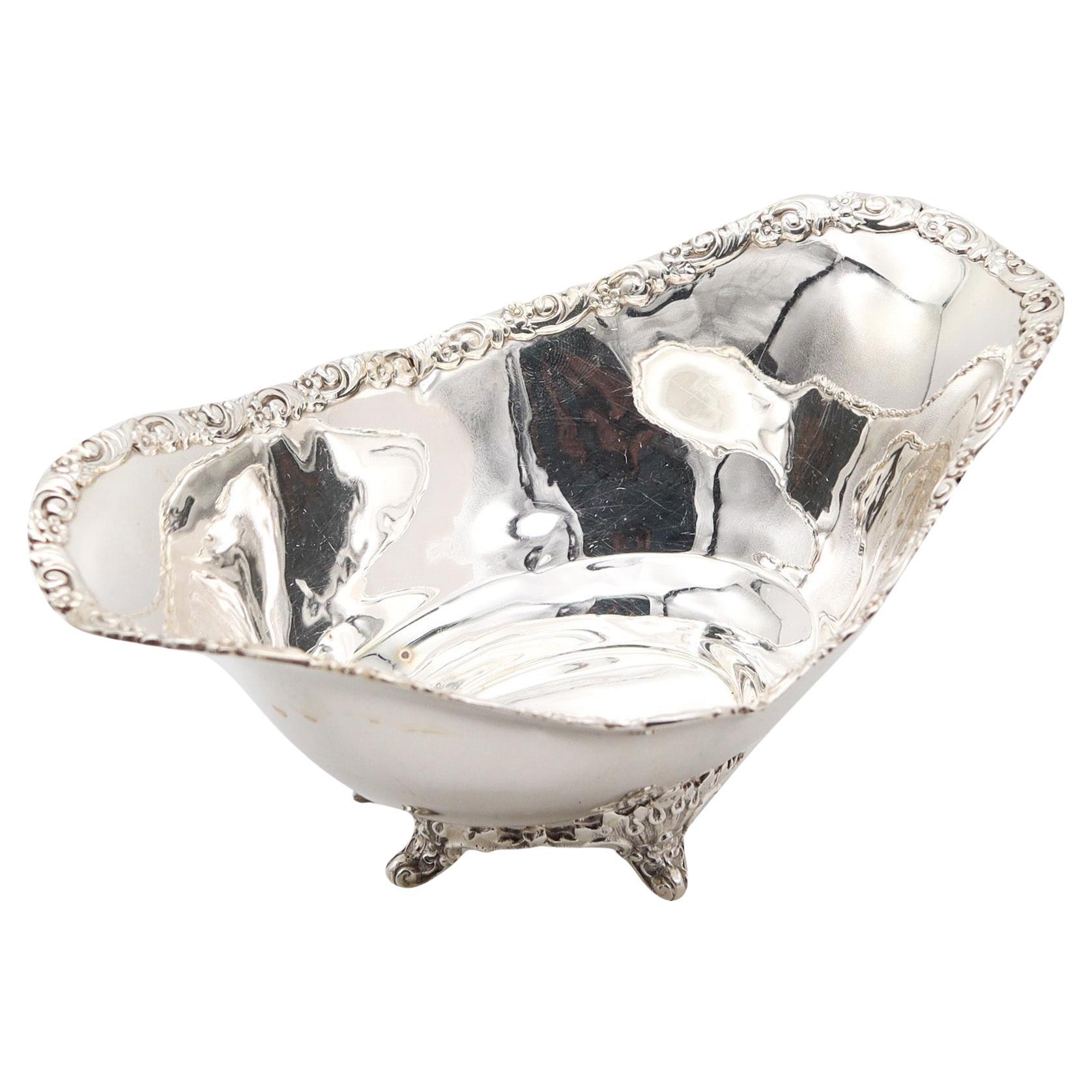
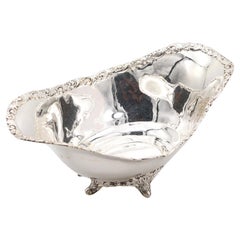
CO. 1901 Charles T. Cook Four-Legged Nut Dish In .925 Sterling Silver
By Charles Cooke, Tiffany
Co.
Located in Miami, FL
A four-legged dish designed by Tiffany & Co.
This is a beautiful antique Edwardian four-legged open dish for nuts, created in 1901 at Tiffany & Co. in New York city. It was carefully crafted in solid sterling silver .925/.999 under the directory period of Charles T. Cook (1902-1907). This lovely elongated nuts dish is the model 15602 designed with plain patterns and decorated with a floriated border. It rests in four legs. As with all Tiffany pieces, the quality and design are beyond compared. Exceptional and rare example of Tiffany's finest work.
Country: New York City, United States.
Period: Edwardian, 1901.
Designer: Period C, for Charles T. Cook.
Model pattern: 15602.
Amount produced: 45 Pieces, this 6/45.
Weight: 186.95 Grams, (119.85 Dwt) or 6 troy ounces.
Measurements: 83 mm by 121 mm by 178 mm (3.25 x 4.75 x 7 inches).
Hallmarks: Stamped with the maker's mark, the model numbers and the order numbers, the "C" for the period of Charles T. Cook, and signed in full as follows, "TIFFANY & CO. 15602 MAKERS 4371 STERLING SILVER .925-...1000 C.".
Tiffany Hallmarking
Tiffany silver holloware and flatware is generally marked Tiffany & Co and generally includes date letters indicating the period it was made. Flatware also usually includes a pattern number. The first date letter "M (old English) used by Tiffany’s represented Edward C. Moore, who was the head of tiffany's silver operations until 1891. after his death, the date letters were based on the initial of the current tiffany president; 1891-...1902 Charles L. Tiffany (T), 1902- ..1907 Charles T. Cook (C), 1907-...1947 John C. Moore (M), 1947-...1955 Louis De Bian Moore (B), 1955-ca. William T. Lusk 1965(L).
The Tiffany dynasty
Was founded in 1837 at 259 Broadway in New York City by Charles Louis Tiffany and partner John B. Young. It began not as a jewelry & silver emporium...
Category
Antique Early 1900s American Edwardian Serving Pieces
Materials
Sterling Silver, Silver
$1,706 Sale Price
25% Off
TIFFANY
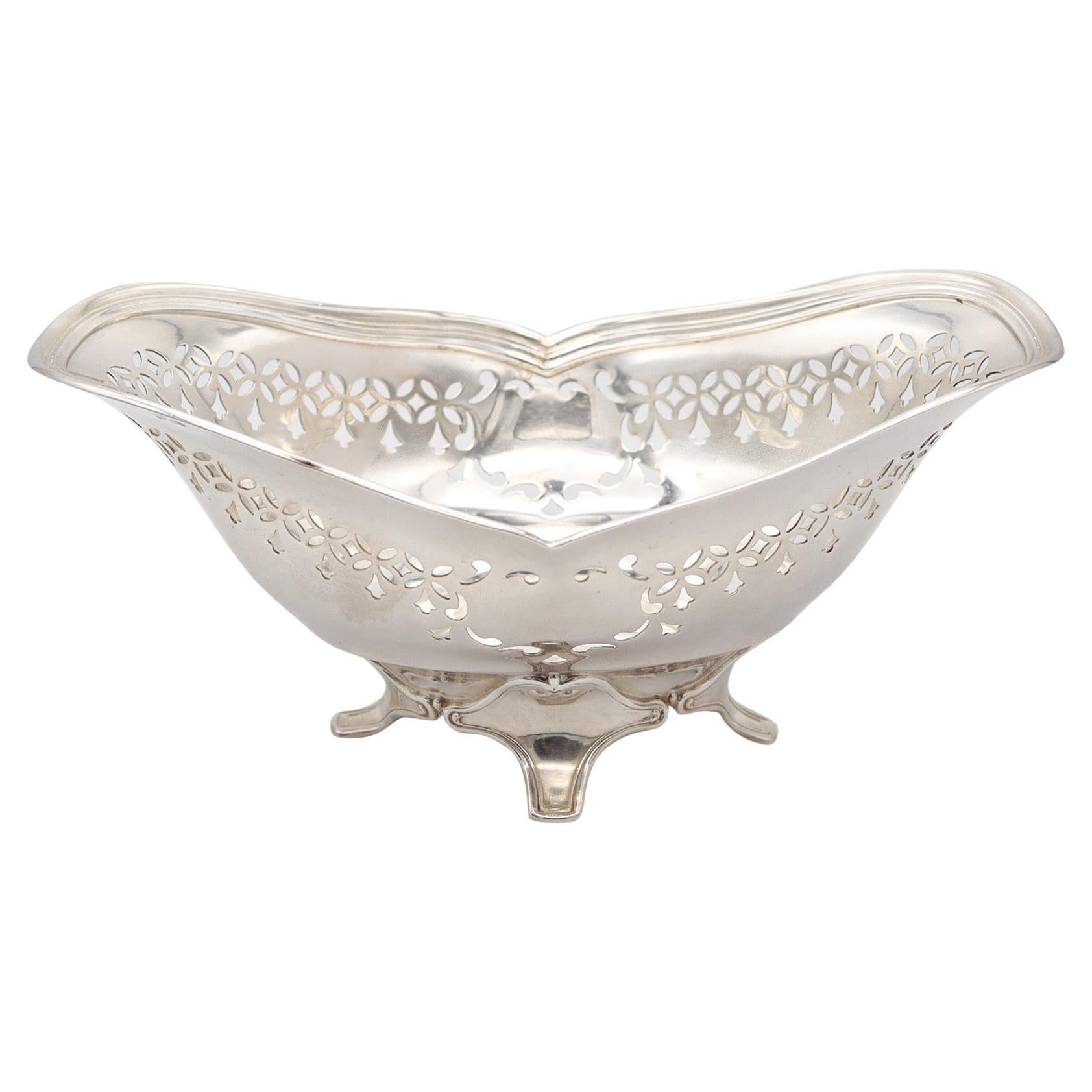
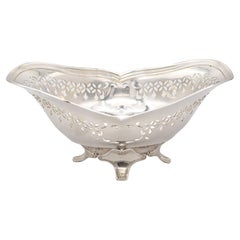
CO. 1907 John C. Moore Four-Legged Nut Dish In .925 Sterling Silver
By John C. Moore, Tiffany
Co.
Located in Miami, FL
A four-legged dish designed by Tiffany & Co.
This is a beautiful antique Edwardian four-legged open dish for nuts, created in 1907 at Tiffany & Co. in New York city. It was carefull...
Category
Antique Early 1900s American Edwardian Sterling Silver
Materials
Sterling Silver, Silver
$1,348 Sale Price
25% Off