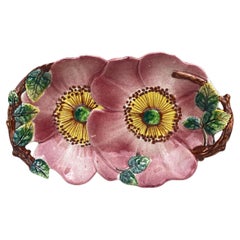
Eric Ravilious Garden Series Wedgwood Platter, circa 1939
About the Item
- Creator:Wedgwood (Maker),Eric Ravilious (Artist)
- Dimensions:Height: 11.75 in (29.85 cm)Width: 14.4 in (36.58 cm)Depth: 1.5 in (3.81 cm)
- Style:Art Deco (Of the Period)
- Materials and Techniques:Earthenware,Glazed
- Place of Origin:
- Period:
- Date of Manufacture:circa 1939
- Condition:Wear consistent with age and use. No chips, cracks or damage. Scattered very minor crazing.
- Seller Location:Essex, MA
- Reference Number:1stDibs: LU837719281522

Eric Ravilious
Eric William Ravilious was a British painter, designer, book illustrator and wood-engraver. He was born on July 22, 1903, in London. Ravilious studied at Eastbourne School of Art and at the Royal College of Art, where he studied under Paul Nash and became close friends with Edward Bawden. He began his career as a muralist, first coming to notice as an artist in 1924. He went on to become one of the best-known artists of the 1930s. Ravilious was the leading light of wood-engraving in England at that time and undertook ceramic designs for Wedgwood. He also designed graphics for London Transport. Ravilious died on September 2, 1942, in Iceland.
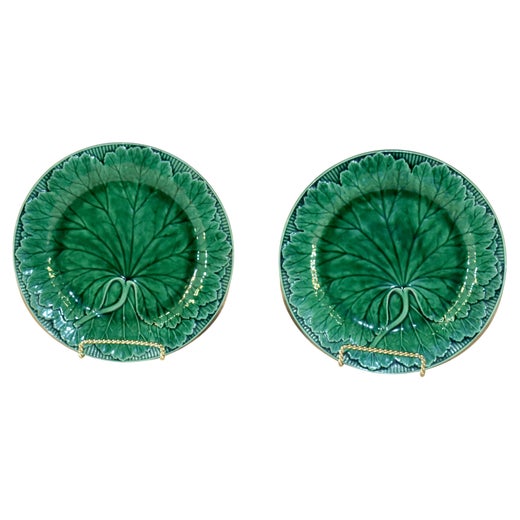
Wedgwood
Arguably the most celebrated of all English ceramics makers, Wedgwood was founded in 1759 by potter Josiah Wedgwood (1730–95) in Staffordshire, which was home at one time to hundreds of pottery workshops. The company is famed for its Jasperware — molded neoclassical stoneware vases, plates and other pieces inspired by ancient cameo glass, featuring white figures, scenes and decorative elements set in relief on a matte-colored background. The best-known background hue is light blue, but Wedgwood’s iconic silhouettes also appear on green, lilac, yellow, black and even white grounds. Some antique Wedgwood dinnerware pieces and other items feature three or more colors.
The Wedgwood firm first came to prominence for its tableware, which quickly gained favor in aristocratic households throughout Britain and Europe. In 1765, Wedgwood was commissioned to create a cream-colored earthenware service for Queen Charlotte, consort of King George III. The queen was so thrilled with her new china that Wedgwood was given permission to call himself “Potter to Her Majesty,” and the decorative style became known as Queen’s Ware.
Not to be outdone, Catherine the Great of Russia commissioned her own set of Wedgwood china in 1773. Nearly 200 years later, the firm created a 1,200-piece service for the coronation of Queen Elizabeth II. In recent years, leading designers including Jasper Conran and Vera Wang have collaborated with Wedgwood — in the tradition of such distinguished 18th-century artists such as the painter George Stubbs and metalsmith Matthew Boulton.
From plates and other dinnerware to decorative items like urns, cachepots and candlesticks, Wedgwood designs lend a traditional air to Anglophile interiors. And even if you have to make your own tea, you may find it comforting to sip it from a delicate cup that was manufactured in the same Stoke-on-Trent kiln that produced Her Majesty’s tea service. Be sure to keep your pinky raised.
Find antique Wedgwood pottery on 1stDibs.
You May Also Like
Mid-20th Century English Modern Ceramics
Ceramic
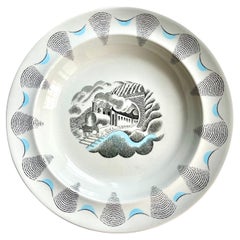
Mid-20th Century English Art Deco Dinner Plates
Ceramic
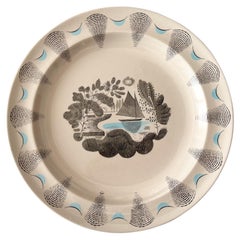
20th Century English Ceramics
Creamware
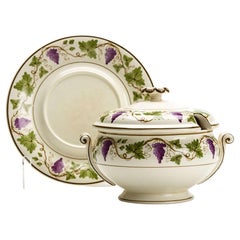
Antique 1890s Belgian Rustic Platters and Serveware
Ceramic, Faience
Antique 1880s French Country Platters and Serveware
Ceramic, Faience
Antique 1890s French French Provincial Platters and Serveware
Ceramic, Faience
Antique 1890s French Rustic Platters and Serveware
Ceramic, Faience
Antique 1890s French Country Platters and Serveware
Ceramic, Faience
Antique Early 1900s German Country Platters and Serveware
Ceramic, Faience
Antique Early 1900s French Art Nouveau Platters and Serveware
Majolica, Ceramic