Items Similar to Jerome Massier, Majolica Aperitive or Dessert Set, Vallauris, End 19th C.
Video Loading
Want more images or videos?
Request additional images or videos from the seller
1 of 20
Jerome Massier, Majolica Aperitive or Dessert Set, Vallauris, End 19th C.
$5,300per set
£4,022.97per set
€4,613.34per set
CA$7,480.92per set
A$8,030.07per set
CHF 4,275.60per set
MX$95,107.14per set
NOK 54,031.89per set
SEK 49,346.19per set
DKK 34,463.74per set
Quantity
About the Item
French Napoleon III Majolica Slip Aperitif or Dessert Set by Jérôme Massier, Vallauris, France, Late 19th Century.
This exquisite Napoleon III majolica slip aperitif or dessert set, crafted by Jérôme Massier in Vallauris, France, dates back to the late 19th century. The set includes six plates (2 sets of 3) and a platter, all featuring delicate floral motifs — anemone, pansy, and daisy — executed in vibrant, naturalistic colors. The plates are intaglio stamped, marking the authenticity of the pieces.
The set includes:
Plates: 6 plates, each with a 7.5" (19 cm) diameter, showcasing the three flowers.
Platter: A large platter with matching floral designs, 3" (7.5 cm) in height and 13" (33 cm) in diameter.
The platter is stamped "J. Massier Vallauris," while four of the plates bear the stamp "Jérôme Massier Vallauris" and one plate is marked "Jérôme Massier Fils Vallauris AM," indicating different stages of production.
The set is in excellent condition, with the exception of an original firing crack on one plate (see the last photo), a characteristic of the period.
The Massiers’ work represents a link between traditional Victorian majolica and Art Nouveau pottery. There were three Massiers working in the second half of the nineteenth century, heirs to an old line of potters, who transformed traditional utilitarian ceramics into an art form. Their ancestors had worked for several centuries in Vallauris on the French Riviera, where, in the twentieth century, Pablo Picasso was reigning ceramic artist. Delphin Massier (1836 - 1907), and Clément (1845 -1917) were brothers. A cousin, Jérome (1850 – 1916) worked with them, using the signature « Jérome Massier fils ». By 1899 the family firm was divided into branches headed by these three men.
In 1860 the Massiers began to produce their vibrantly colored majolica, perhaps inspired by the flowers of the Cote d’Azur. Clément was particularly interested in designs drawn from ancient Egypt, Greece, and Rome, as well as from Renaissance maiolica. Themes from these earlier cultures appeared in his highly decorative, large pieces, including vases, ewers, and free-standing decorative columns entwined with flowers. Delphin specialized in freestanding figures of birds, animals, and shellfish – including swans, chickens, sparrows, goats, donkeys, frogs, and crabs – ranging from six to thirty-six inches high. Especially popular were his large roosters, representing the symbol of France. Cockerels and hens, thirty-six inches tall, similar to those of Minton, were extemely well modeled. As with Minton majolica, tree trunks and branches were important in Massier designs. The firm also made majolica candlesticks, vases and cachepots. An unusual pair of majolica tambourines, made by Delphin Massier about 1870, depicts an Arab and his veiled wife.
From 1860 to 1900 skilled painters and sculptors who worked with the Massiers included Jean Barerol, Jean Bagnis, Camos, the Scotsman Alexander Munrose, the Swiss sculptor James Reibert, and greatest of all, Lucien Lévy. The latter was a passionate admirer of sinuous and sensuous floral arabesque patterns and his influence was felt in the Massiers’ designs. Lévy worked with Clément Massier from 1887 to 1895 before devoting himself exclusively to painting. In Paris, under the name of Lévy-Dhurmer, he became one of the leaders of Art Nouveau. The Massiers used in a particularly dramatic way the copper oxide flambé technique for glazing, a method that originated in China during the Sung dynasty (960 – 1280), in which the kiln is rich in carbon dioxide and low in oxygen (reduction atmosphere). The flambé technique as practiced by the Massiers also incorporated the lustre technique of the Hispano-Moresque ceramics. It entailed covering a previously glazed piece with a metallic silver or copper oxide and firing it again at a very low temperature "petit feu". The resulting new palette, intense rather than subtle, included colors hitherto unknown to majolica : powdered gold, speckled turquoise, willow-green, yellow-orange, hot pink, purple-violet, and peacock blue, as well as flambé and solid reds.
At the close of the nineteenth century the Massiers achieved a considerable reputation for their brilliantly glazed majolica and the factory enjoyed great success at national and international exhibitions. The arrival of the railroad in Vallauris increased their renown throughout France and the world of ceramics in general. A visit to the Massier workshop became mandatory for the cultured visitor to the French Riviera. Queen Victoria, King of Sweden, the Prince of Wales, Emile Zola, Victor Hugo, Camille Saint-Saëns, Charles Gounod, Georges Sand, Frédéric Mistral all visited and made purchases. They bought rectangular planters on which perched flocks of birds, plates and platters made of huge flower petals, wall plaques in the shape of butterflies, magnificent pitchers, and charming majolica-framed clocks.
Early Massier works rarely bore a signature. From 1862 to about 1902 (when the factory closed), with the firm’s increasing success, the signatures of each of the Massiers appeared on their pieces. They are represented in the Musée Municipal de Céramique et d’Art Moderne in Vallauris and two Paris museums : the Musée d’Art Moderne de la Ville de Paris and the Musée d’Orsay.
Each Massier was competent in the production of majolica glazes : all three shared a preference for green, red, and blue, especially the peacock blue that had been created by Delphin and Clément’s mother, Elisabeth. That inventive woman obtained the necessary copper oxide by scraping it from the sides of the stills used for the distillation of flowers by the manufacturers of perfumes in Grasse, a few kilometers from Vallauris. The Massiers were also indebted to a ceramist from Bologna, Gandolfo Gaetano, who had lived in Vallauris since the mid-century. Gaetano guided Clément Massier in the discovery of the splendors of the old ceramics, including the Hispano-Moresque techniques.The French potter Jacques Sicard worked closely with Clément Massier and acquired a great knowledge of fridescent glazes during that long association. In the early twentieth century he was employed at Samuel A. Weller’s pottery in Ohio, where Sicard’s technical skills enabled him to create a line of lustrous art pottery called Sicardo ware. He returned to France in 1907.
- Creator:Jerome Massier (Maker)
- Dimensions:Height: 2.96 in (7.5 cm)Diameter: 13 in (33 cm)
- Sold As:Set of 7
- Style:Napoleon III (Of the Period)
- Materials and Techniques:
- Place of Origin:
- Period:
- Date of Manufacture:End of the 19th Century
- Condition:
- Seller Location:Saint-Amans-des-Cots, FR
- Reference Number:1stDibs: LU2312343450622
About the Seller
5.0
Platinum Seller
Premium sellers with a 4.7+ rating and 24-hour response times
Established in 2003
1stDibs seller since 2016
520 sales on 1stDibs
Typical response time: <1 hour
- ShippingRetrieving quote...Shipping from: Saint-Amans-des-Cots, France
- Return Policy
More From This Seller
View AllSalins-lès-Bains Rare French Art Majolica Ceramic Asparagus Set, Late 19th C.
By Salins
Located in Saint-Amans-des-Cots, FR
French Art Majolica Ceramic Asparagus Set by Salins-lès-Bains, France, Late 19th Century.
This exquisite and rare French art majolica asparagus set, crafted by Salins-lès-Bains in t...
Category
Antique Late 19th Century French Napoleon III Tableware
Materials
Ceramic, Majolica
Longchamp Majolica Ceramic Oyster Set, 1970s
By Longchamp
Located in Saint-Amans-des-Cots, FR
French Art Majolica Ceramic Oyster Set by Longchamp, Côte d'Or, France, 1970s. This exceptional French art majolica ceramic oyster set, produced by Longchamp (Côte d'Or) in the 1970s...
Category
Vintage 1970s French Mid-Century Modern Serving Pieces
Materials
Ceramic
$1,900 / set
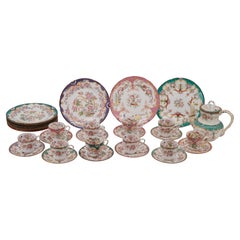
Sarreguemines Porcelain Minton Tea/Coffee Set, End 19th C.
By Sarreguemines
Located in Saint-Amans-des-Cots, FR
This beautiful Minton-pattern tea and coffee set by Sarreguemines captures the charm and elegance of late-19th-century French ceramic artistry. Made in France at the end of the 1800s...
Category
Antique 1890s French Napoleon III Tea Sets
Materials
Porcelain
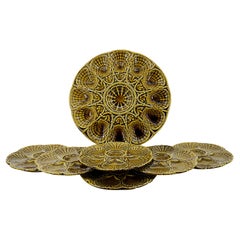
Sarreguemines Art Ceramic Oyster Set, 1970
By Faienceries Sarreguemines
Located in Saint-Amans-des-Cots, FR
French Art Ceramic Oyster Set by Sarreguemines, France, c. 1970. A stunning French art ceramic oyster set by Sarreguemines, France, circa 1970. This exceptional set includes a cerami...
Category
Mid-20th Century French Mid-Century Modern Serving Pieces
Materials
Ceramic
$3,500 / set
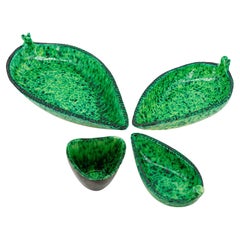
Accolay Pottery French Mid-Century Aperitive
Dinner Set, 1950s
By Accolay Pottery
Located in Saint-Amans-des-Cots, FR
French Mid-Century Modern Aperitif / Hors d’Oeuvre set by Accolay, France, 1950s.
Rare and sculptural French mid-century modern aperitif or serving set created by Accolay, France, c...
Category
Vintage 1950s French Mid-Century Modern Serving Pieces
Materials
Ceramic
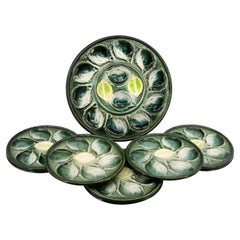
Saint-Clement Mid-century Art Ceramic Oyster Set, 1960s
By Saint-Clément
Located in Saint-Amans-des-Cots, FR
French Mid-Century Modern Stoneware Oyster Plate Set by Saint-Clément, 1960s. Elegant and rare mid-century modern French oyster set handcrafted by renowned ceramic maker Saint-Clémen...
Category
Vintage 1960s French Art Deco Dinner Plates
Materials
Ceramic, Stoneware
You May Also Like
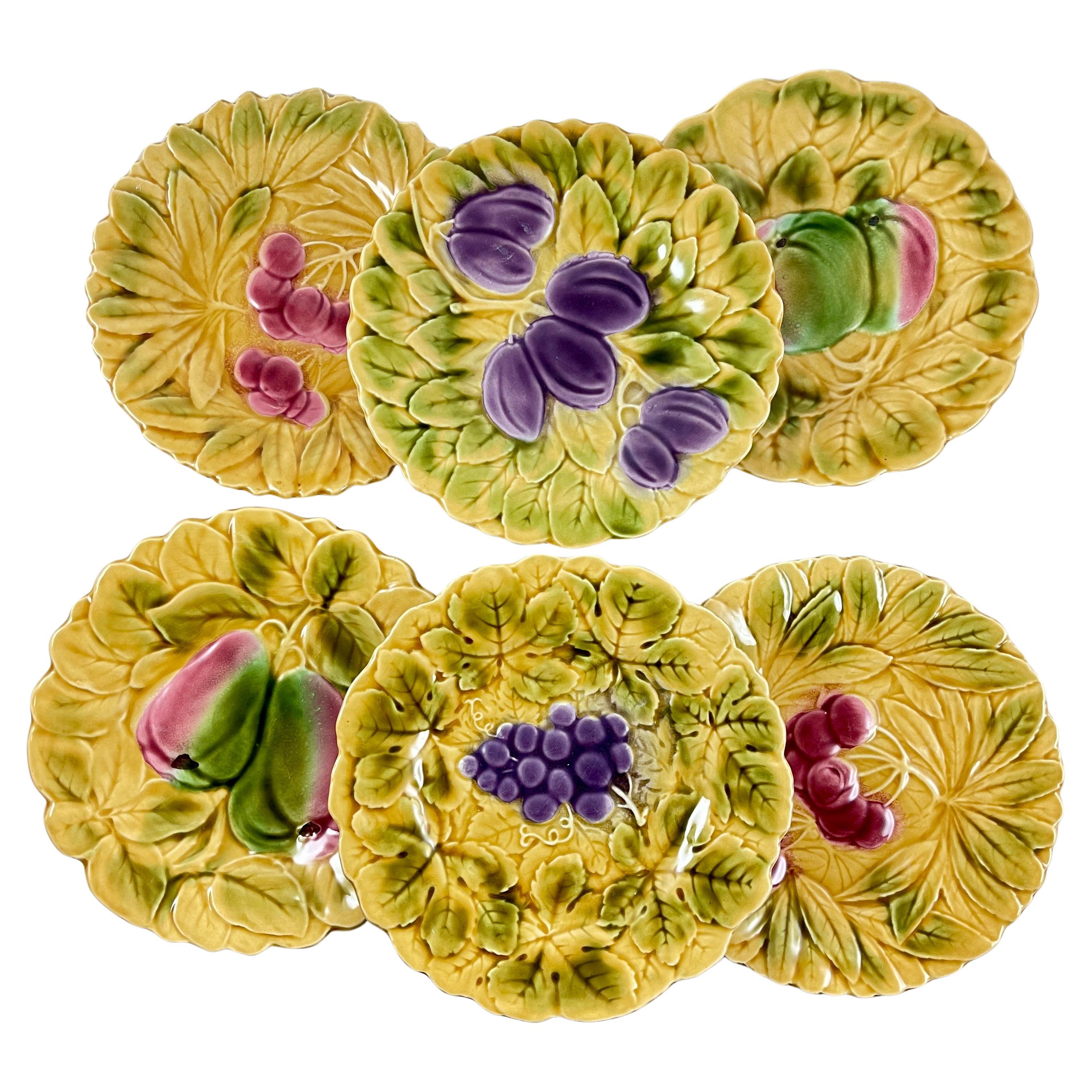
Sarreguemines French Faïence Majolica Fruit and Leaf Plates, Set of Six
By Faienceries Sarreguemines
Located in Philadelphia, PA
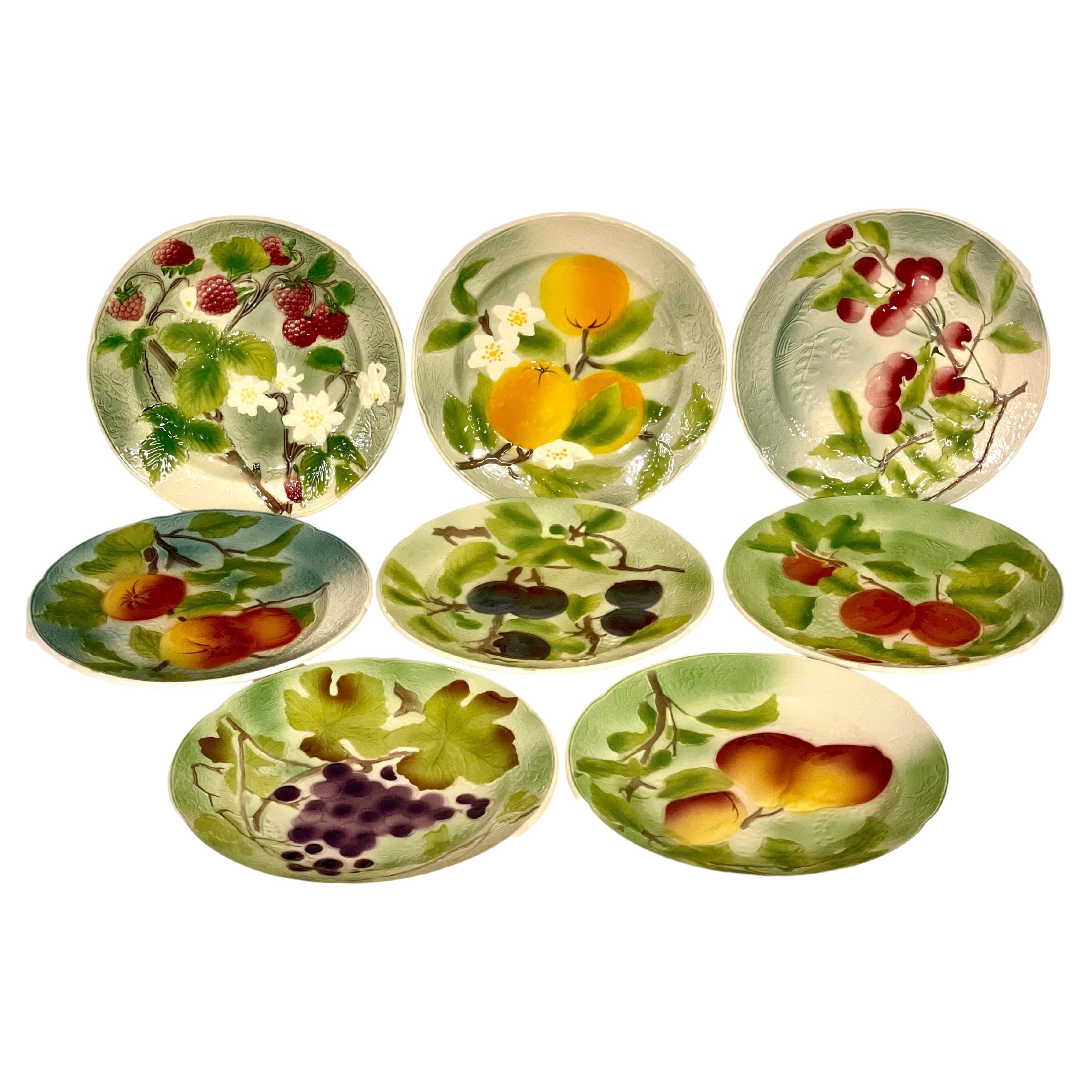
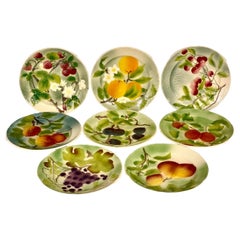
An assembled set of six Sarreguemines French faïence, majolica plates, each showing a different fruit on an ochre yellow ground of overlapping leaves, circa 1930s.
This group shows ...
Category
Early 20th Century French French Provincial Dinner Plates
Materials
Faience
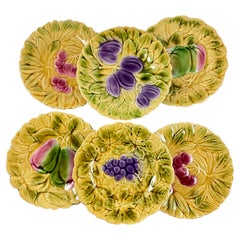
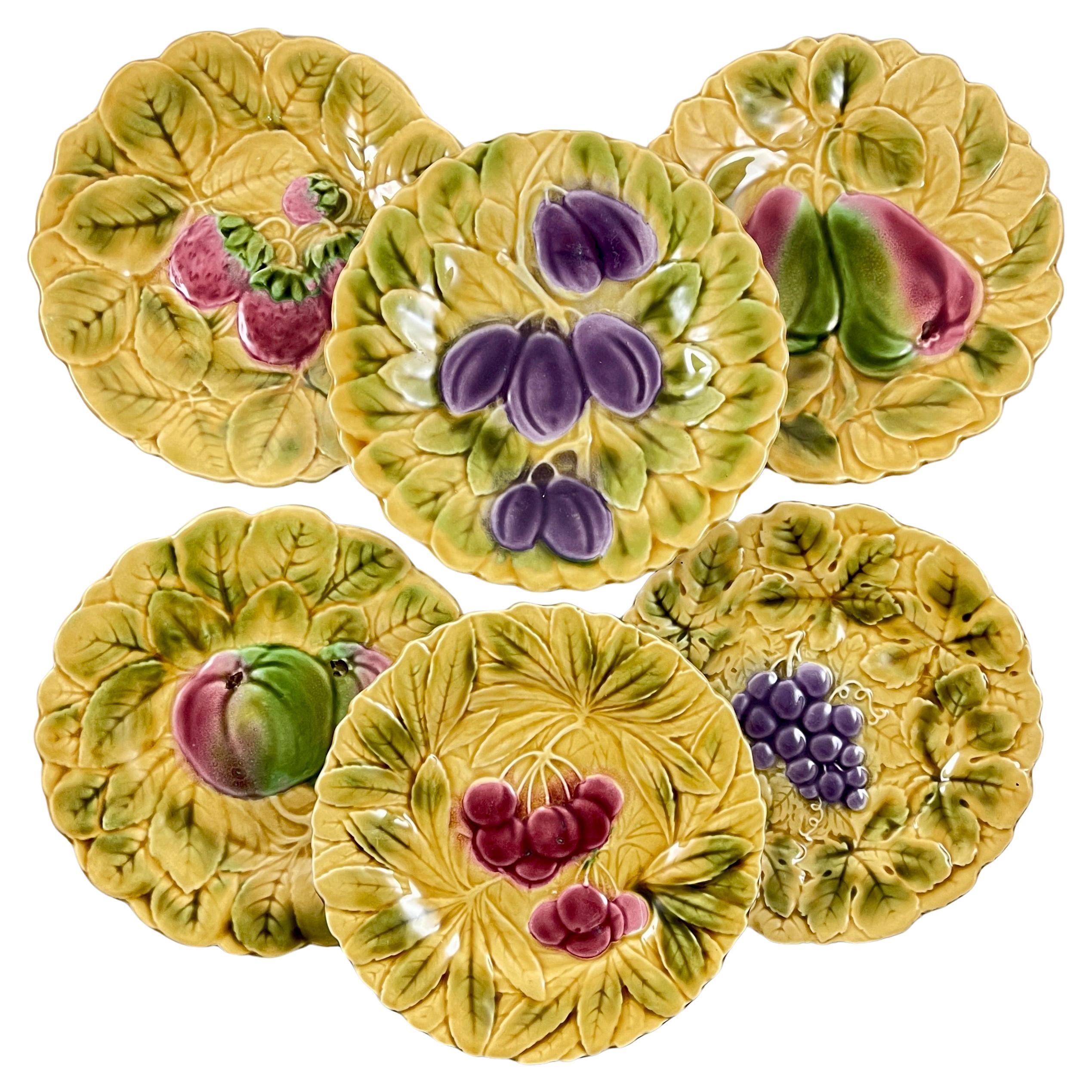
Sarreguemines French Faïence Majolica Fruit and Leaf Plates, Set of Six
By Faienceries Sarreguemines
Located in Philadelphia, PA
An assembled set of six Sarreguemines French faïence, majolica plates, each showing a different fruit on an ochre yellow ground of overlapping leaves, circa 1930s.
This group shows ...
Category
Early 20th Century French French Provincial Dinner Plates
Materials
Faience
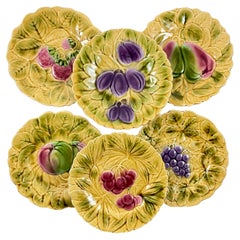
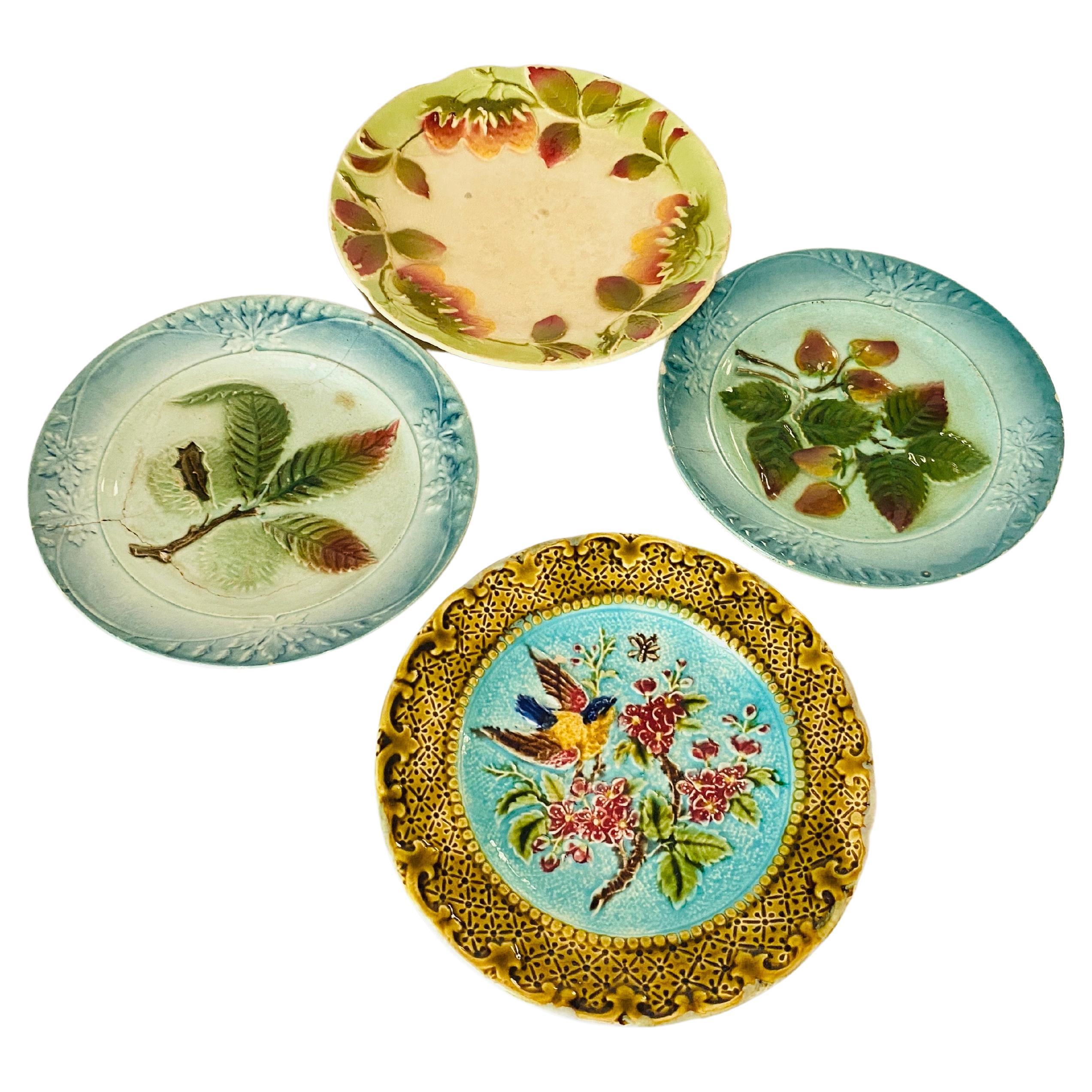
Majolica Plates France circa 1880 Set of 4
By Salins
Located in Auribeau sur Siagne, FR
They are two Majolica ceramics, for the service of Asparagus. They were made in France Circa 1880 Their colors are white, green and blue.
They are serving dishes.
Category
Antique 19th Century French French Provincial Platters and Serveware
Materials
Ceramic
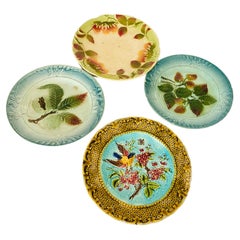
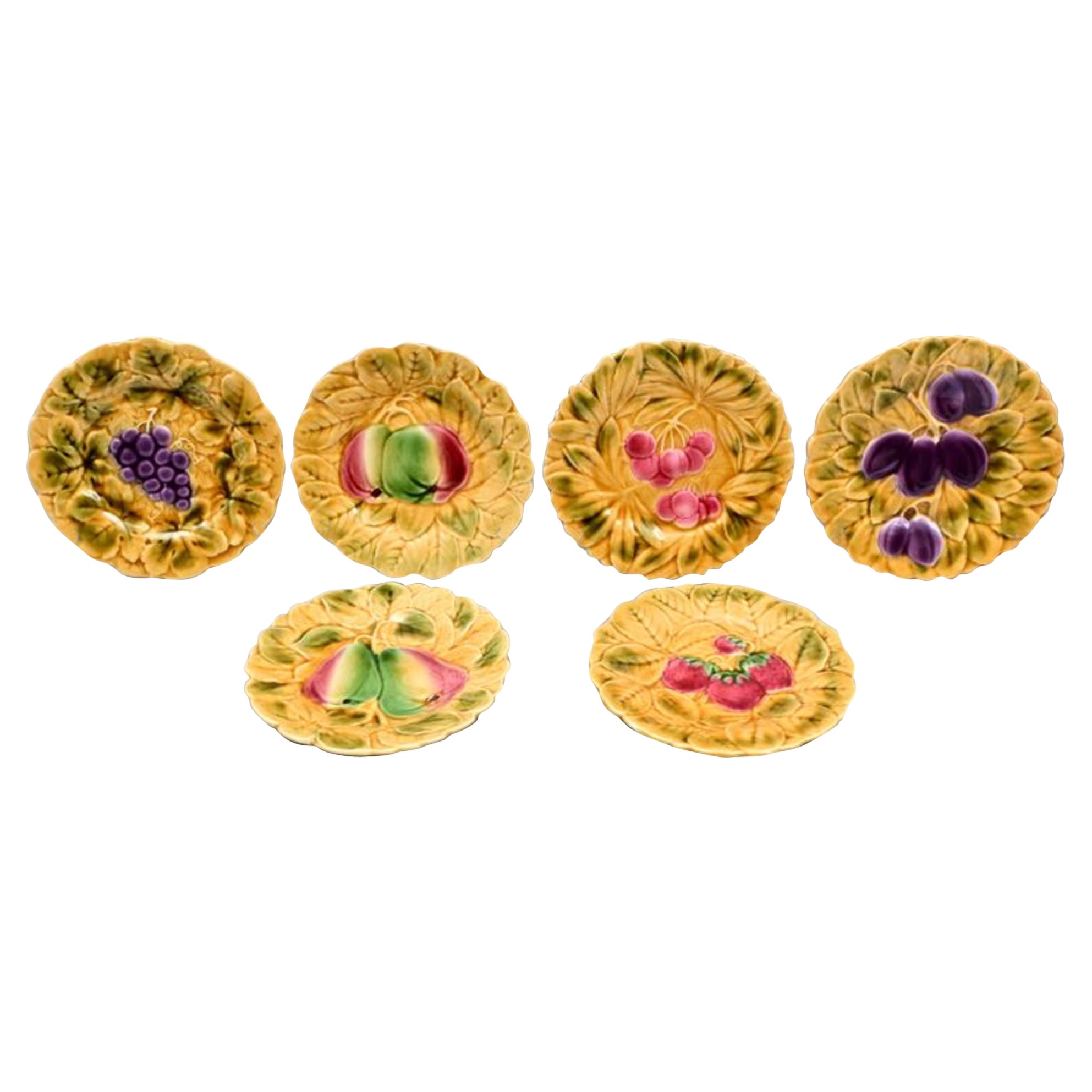
Six Majolica Plates with Fruit Decor, Sarreguemines, France, Early 20th Century
By Sarreguemines
Located in Nuernberg, DE
Six Early 20th century majolica plates with fruit decor, Earthenware. Differend fruit decorations, colourful painted. Underglaze mark. Small cracks in the ...
Category
Antique Early 1900s French Art Nouveau Ceramics
Materials
Ceramic, Majolica
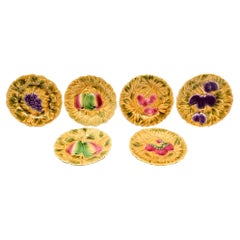
Vintage Set of French Majolica Fruit Plates by Saint-Clément
By Saint-Clément
Located in LA CIOTAT, FR
A highly collectible set of eight Majolica fruit plates by the renowned French earthenware manufacturer Saint-Clément, founded by Jacques Chambrette in 1758 and a favoured supplier f...
Category
Early 20th Century French Delft and Faience
Materials
Majolica
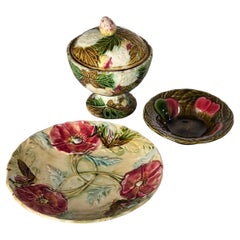
Set of Three Majolica Pieces, 19th
20th Century, Floral Hand-Painted Designs
Located in Auribeau sur Siagne, FR
Set of Three Majolica Pieces, 19th & 20th Century, Floral Hand-Painted Designs
Description:
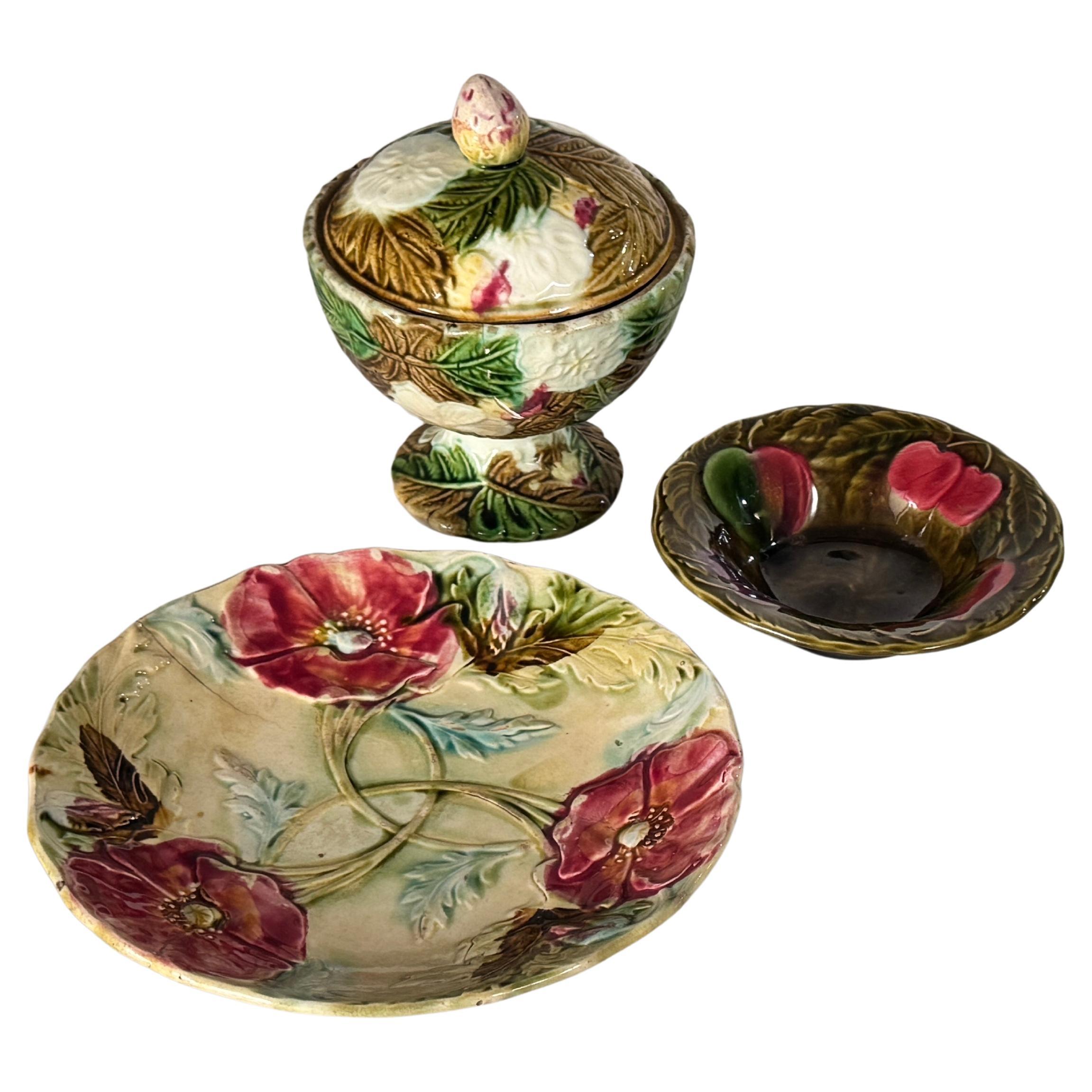
This beautiful set of three Majolica pieces, consisting of a sugar bowl, a plate, and a small dish, is a charming blend of 19th- and 20th-century craftsmanship. The hand-painted floral motifs, featuring red flowers intertwined with brown and green branches and leaves, create a rich, organic aesthetic. While two pieces date back to the 19th century, the small dish from the 20th century complements the set with its slightly deeper green glaze, adding a harmonious contrast to the ensemble.
Key features include:
Authentic Majolica Craftsmanship: Made from glazed ceramic, these pieces exemplify the vivid, glossy finishes and delicate relief work characteristic of Majolica pottery.
Elegant Floral Decor: The intricately painted red flowers, accompanied by earthy brown branches and lush green leaves, lend a natural and timeless charm to each piece.
Harmonious Color Palette: While each item features a unique glaze, the cohesive color scheme ensures they complement one another, making them ideal for display or functional use.
Versatile Use: Perfect as a decorative set for a kitchen or dining room, these pieces can also serve a practical purpose—the sugar bowl for sweeteners, the plate for serving, and the dish for small delicacies.
Antique Patina & Glossy Finish: The natural patina and high-gloss glaze highlight the rich colors and intricate detailing, making this set a beautiful collector's item.
Historical Charm: Combining two 19th-century pieces with a 20th-century Majolica dish, this set is a wonderful representation of traditional European ceramic artistry.
This Majolica set of three is more than just tableware—it is a testament to historic craftsmanship, offering both decorative appeal and everyday functionality. Whether displayed in a classic or rustic interior or used as part of a unique kitchen setting, it adds a touch of vintage elegance and timeless artistry.
Keywords: 19th-century Majolica pottery, hand-painted floral ceramics, vintage Majolica sugar...
Category
Antique 19th Century French French Provincial Platters and Serveware
Materials
Ceramic, Majolica
More Ways To Browse
Decorative Plates Set Of 2 Large
Flower Plaque
Hispano Moresque
Pink Peacocks
Antique Kitchen Wall Clock Wall Clocks
Hispano Moresque Ceramics
Butterfly Pitcher
Emile Hugo
Weller Sicard
Well And Tree Platter
Antique Rs Prussia
Armorial Charger
Arthur Court Tray
Begonia Leaf
Buccellati Silver Tray
Buccellati Tray
Cane Knife
Duck Platter