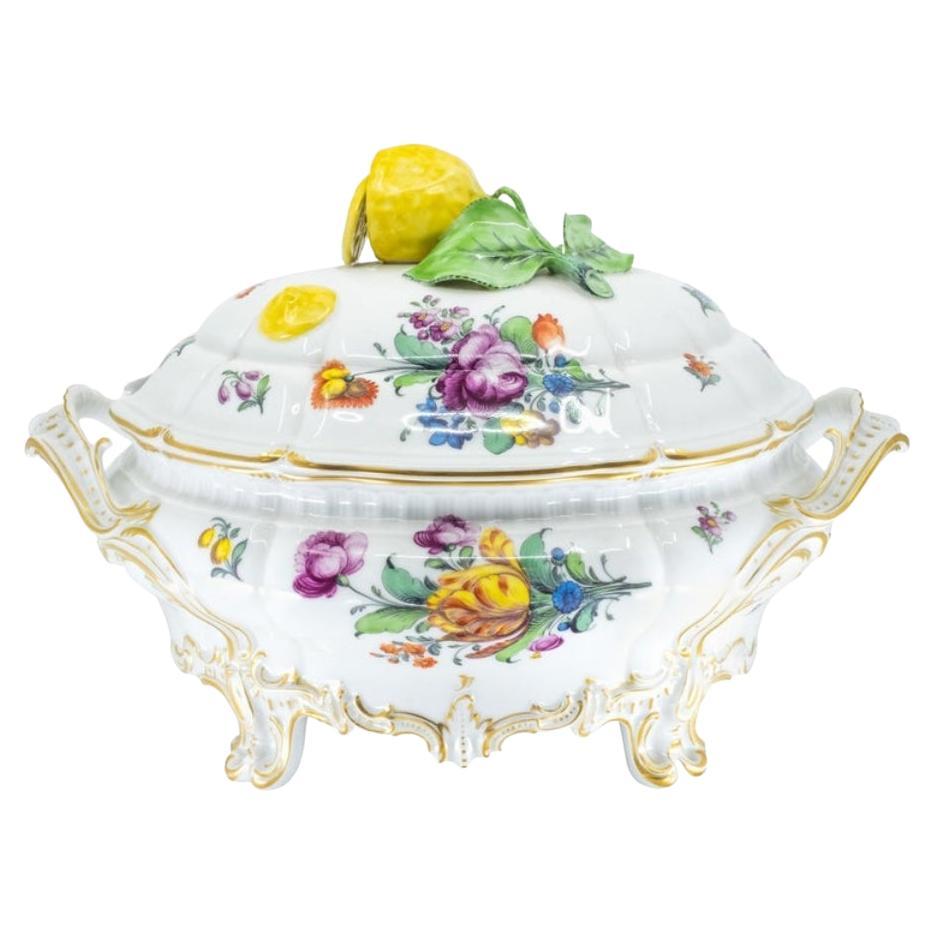
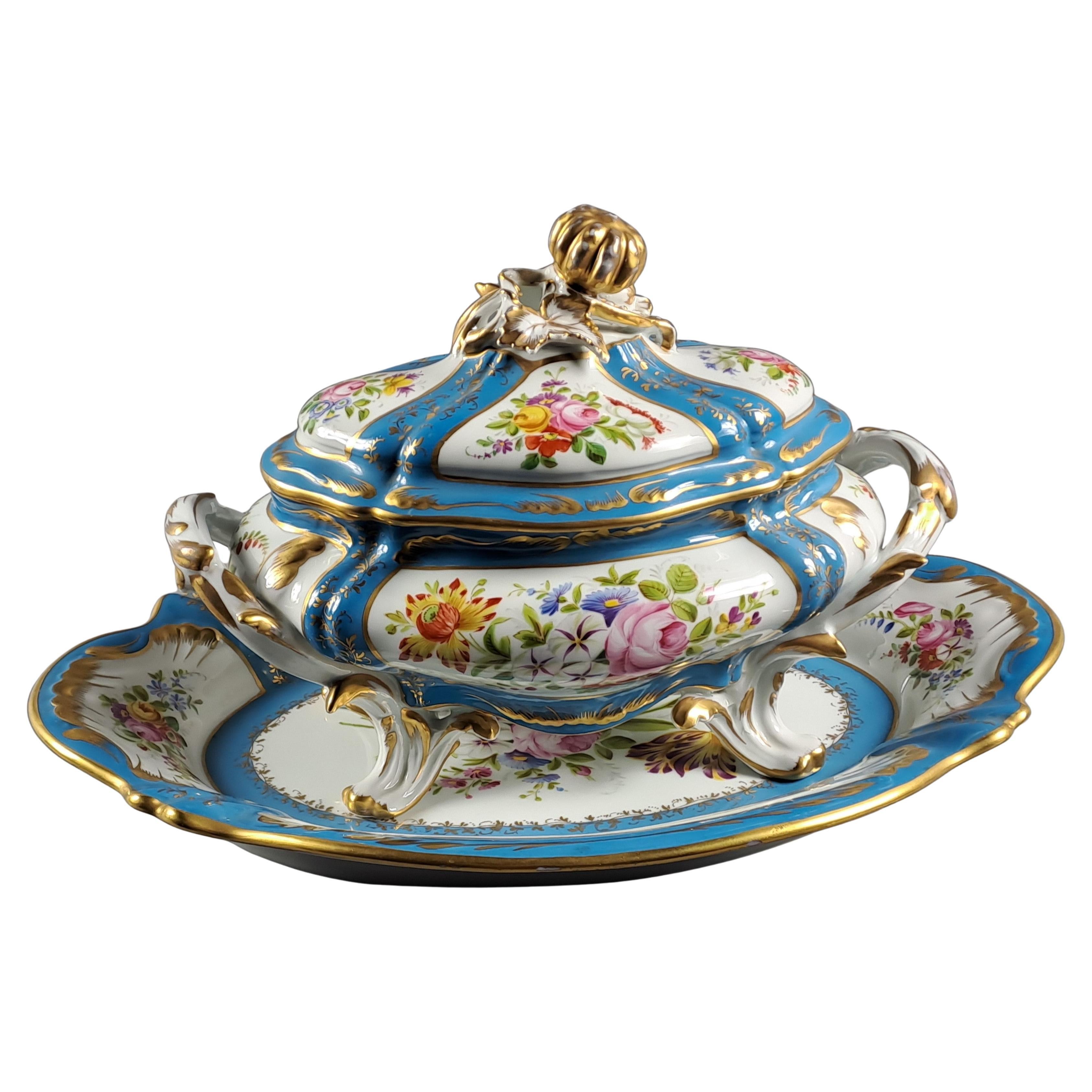
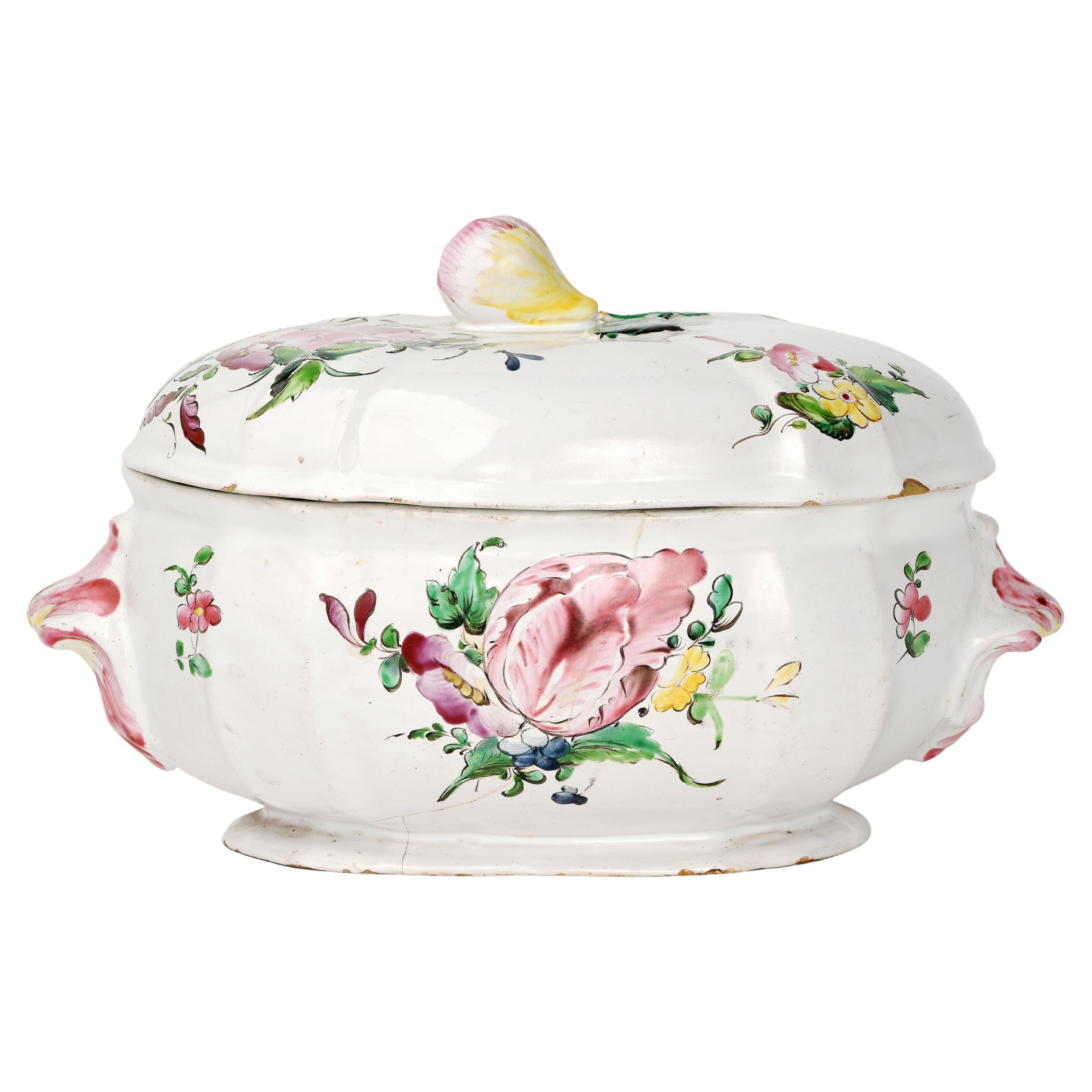

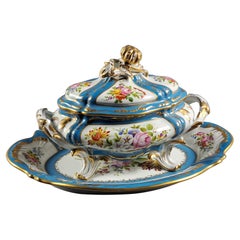
Nymphenburg Porcelain Tureen With Lemon Finial and Blue Green
About the Item
- Creator:Nymphenburg Porcelain (Maker)
- Dimensions:Height: 8 in (20.32 cm)Width: 11.5 in (29.21 cm)Depth: 7.5 in (19.05 cm)
- Style:Rococo (In the Style Of)
- Materials and Techniques:
- Place of Origin:
- Period:
- Date of Manufacture:Circa 1910
- Condition:Wear consistent with age and use. There is a hairline crack along the lid that starts from the finial, as shown in the last picture.
- Seller Location:Tampa, FL
- Reference Number:1stDibs: LU10701247814602
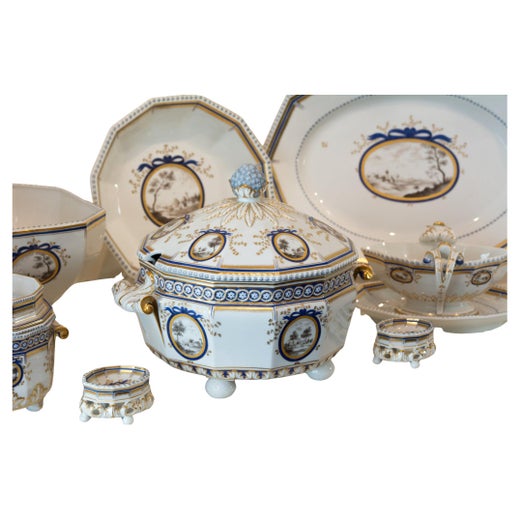
Nymphenburg Porcelain
Nymphenburg — one of Europe’s most venerable porcelain factories — was founded near Munich in 1747 by Maximilian III Joseph, the elector of Bavaria. It didn’t begin producing under the name we know today, however, until 1761, when it was moved to Nymphenburg Palace.
Porcelain was invented in East Asia around 2,000 years ago, and its formula, which requires a special clay called kaolin, became a closely guarded secret. It wasn’t until the early 1700s that chemists at Meissen, Germany, in the employ of Augustus II the Strong, the elector of Saxony, discovered a process for making true, as opposed to soft-paste, porcelain. Soon factories across Europe were producing fine porcelain services and sculpture for an elite clientele.
Nymphenburg was one of these factories, manufacturing elaborate services for dinner, dessert, coffee and tea, and sculptures for the Bavarian nobility. Round objects, such as Nymphenburg plates and vases, were turned on potter’s wheels, while more complex ones, like figures, were slip cast in molds. This technique ensured that the pieces’ dimensions were precise and consistent. Once shaped, they were fired and, after that, hand-decorated by experienced china painters, who finished each to exacting standards.
Among Nymphenburg’s most famous objects are its lively and charming Rococo-style figurines, most often depicting Commedia dell'Arte characters or exotic Chinese figures. Today, the company makes versions of its historic figurines with updated forms and decorations by such designers as Christian Lacroix and Vivienne Westwood.
It also still makes one of its earliest, and eternally popular, china patterns: the floral Cumberland, created in 1765 by Franz Anton Bustelli as the electoral court service. Cumberland is one of more than 20,000 patterns housed today in Nymphenburg’s archive, enabling owners of incomplete sets to find replacements. In addition, the company has engaged contemporary designers such as Ted Muehling and Hella Jongerius to create witty new designs that celebrate the firm’s history while giving it a fresh spin.
Find authentic Nymphenburg Porcelain decorative objects, tableware and other items on 1stDibs.
- ShippingRetrieving quote...Shipping from: Tampa, FL
- Return Policy
More From This Seller
View AllMid-20th Century Unknown Hollywood Regency Side Tables
Metal, Wrought Iron
1990s Rococo Wall Brackets
Cast Stone
Mid-20th Century French Neoclassical Wall Brackets
Cast Stone
Mid-20th Century American Hollywood Regency Demi-lune Tables
Metal
Late 20th Century Hollywood Regency Wall Mirrors
Mirror, Resin
Antique Mid-17th Century Unknown Side Tables
Granite, Iron
You May Also Like
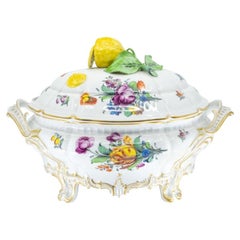
Early 20th Century German Soup Tureens
Porcelain
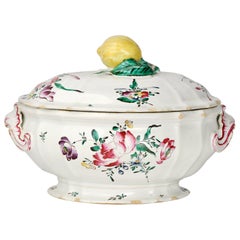
Antique 1770s Italian Rococo Ceramics
Maiolica
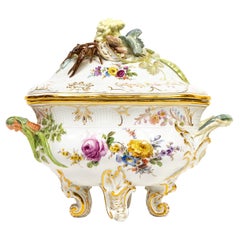
Antique 1880s German Rococo Revival Soup Tureens
Porcelain
Mid-20th Century French Louis XV Soup Tureens
Porcelain
Antique 1770s Italian Rococo Ceramics
Maiolica
Antique 1760s English Rococo Soup Tureens
Ceramic, Porcelain