Want more images or videos?
Request additional images or videos from the seller
1 of 8

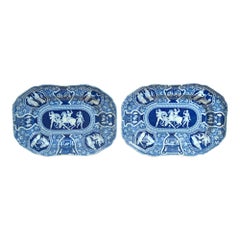
Spode Greek Ware Platter Blue white and Red

$1,800List Price

You May Also Like

Early Spode Red Greek Pattern Tile
By Josiah Spode, Spode
Located in Fort Lauderdale, FL
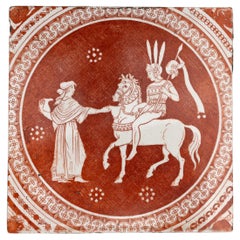
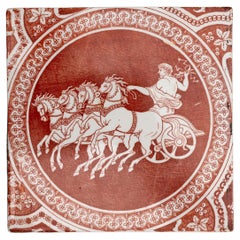
A Neoclassical red transferware tile made by Spode 1806-1810, with the ‘Refreshments for Phliasian Horseman’ pattern. Sir William Hamilton’s Collection of Etruscan, Greek and Roman antiquities, first published in 1766 by Pierre d’Hancarville, was a landmark publication in English design. It intended to disseminate the Antique style through its engravings of Attic pottery. The catalog’s faithful reproductions of Classical vases led British potteries, including Spode, to adapt or even copy the ancient art for modern life. These Spode Greek pattern tiles reflect the major influence of Hamilton’s catalog on English Neoclassicism. The central scene was taken directly from the catalog. This tile can be dated to a narrow window of production in the Spode factory, 1806-1810. During that time, Spode used a technique known as the “Pluck and Dust” method to print in red transfer designs onto creamware. Using this method, source prints were transferred overglaze using tissue imprinted with a very faint rendition of the design outlined in sticky oil. The decorator applied the tissue to the object then carefully “plucked” or pulled it away, leaving the sticky oil design behind. Then, a finely-ground enamel color was “dusted” onto the surface, sticking to any areas that had the oil. A final firing at a low temperature in the enamel kiln made the pattern permanent. The Pluck and Dust technique improved upon bat-printing and enabled larger designers to be transferred. It was short-lived, however, as under-glaze transfer printing soon took over as the preferred method for producing transferwares. Dimensions: 5 in. x 5 in. x 1/4 in. Condition: Excellent. Slight chip to the upper left corner measuring approximately 0.9 cm. in length. Provenance: The Collection of Nancy and Andrew Ramage Jonathan Horne...
Category

Antique Early 19th Century English Neoclassical Pottery

Materials

Earthenware, Creamware

Early Spode Red Greek Pattern Tile
$1,500
H 5 in W 5 in D 0.25 in
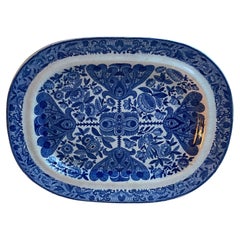
1874 Minton Chinese Blue and White Transferware Platter
By Minton
Located in Sheffield, MA
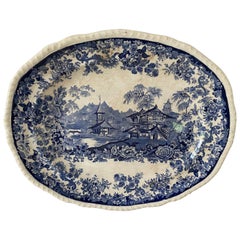
An antique 19th century Minton Chinese blue and white transferware platter. It has a lovely pastoral scene. The underside is marke...
Category

Antique 19th Century English Chinoiserie Platters and Serveware

Materials

Pottery

1874 Minton Chinese Blue and White Transferware Platter
$300 Sale Price
33% Off
H 1.38 in W 13.25 in D 10.58 in
Spode Gothic Castles Large Blue and White Staffordshire Platter, circa 1815
By Spode
Located in Kinderhook, NY
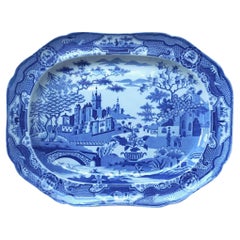
A large circa 1815 blue and white Staffordshire transferware platter produced by Spode in the 'Gothic Castles' pattern having shaped body with underglaze...
Category

Antique Early 19th Century English Regency Platters and Serveware

Materials

Ceramic

Early 19th Century Spode Red Greek Pattern Tile
By Spode, Josiah Spode
Located in Fort Lauderdale, FL
A Neoclassical red transferware tile made by Spode 1806-1810, with the ‘Zeus in His Chariot’ pattern. Sir William Hamilton’s Collection of Etruscan, Greek and Roman antiquities, first published in 1766 by Pierre d’Hancarville, was a landmark publication in English design. It intended to disseminate the Antique style through its engravings of Attic pottery. The catalog’s faithful reproductions of Classical vases led British potteries, including Spode, to adapt or even copy the ancient art for modern life. These Spode Greek pattern tiles reflect the major influence of Hamilton’s catalog on English Neoclassicism. The central scene was taken directly from the catalog. This tile can be dated to a narrow window of production in the Spode factory, 1806-1810. During that time, Spode used a technique known as the “Pluck and Dust” method to print in red transfer designs onto creamware. Using this method, source prints were transferred overglaze using tissue imprinted with a very faint rendition of the design outlined in sticky oil. The decorator applied the tissue to the object then carefully “plucked” or pulled it away, leaving the sticky oil design behind. Then, a finely-ground enamel color was “dusted” onto the surface, sticking to any areas that had the oil. A final firing at a low temperature in the enamel kiln made the pattern permanent. The Pluck and Dust technique improved upon bat-printing and enabled larger designers to be transferred. It was short-lived, however, as under-glaze transfer printing soon took over as the preferred method for producing transferwares. Dimensions: 5 in. x 5 in. x 1/4 in. Condition: Excellent. Provenance: The Collection of Nancy and Andrew Ramage Jonathan Horne...
Category

Antique Early 19th Century English Neoclassical Pottery

Materials

Earthenware, Creamware

Spode Neo-Classical Greek Pattern Blue Openwork Dessert Plates
By Spode
Located in Downingtown, PA
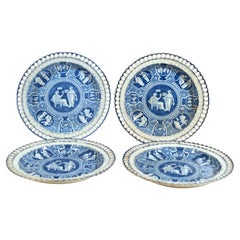
Spode neo-classical Greek pattern blue openwork dessert plates, Ceres with a Priestess, Four plates (4) Early 19th century From a large collection of Greek pattern Spode- more pi...
Category

Antique Early 19th Century English Neoclassical Pottery

Materials

Pearlware, Pottery

Spode Neo-classical Greek Pattern Blue Printed Hot Water Dishes
By Spode
Located in Downingtown, PA
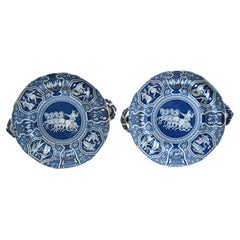
Spode Neo-classical Greek pattern blue printed hot water dishes, Zeus in his Chariot, A pair, Early 19th century (We have five in all-two pairs and a single) The Spode pottery...
Category

Antique Early 19th Century Neoclassical Pottery

Materials

Pearlware, Pottery

Regency Spode Neo-Classical Greek Pattern Blue Tazza
By Spode
Located in Downingtown, PA
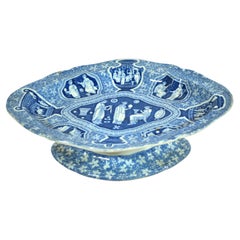
Spode Neo-Classical Greek Pattern Tazza Early-19th century The Spode pottery underglaze blue Greek pattern has an oval shaped top with a central des...
Category

Antique Early 19th Century English Regency Pottery

Materials

Pearlware, Pottery

Regency Period Spode Neo-classical Greek Pattern Blue Dessert Dishes- a Pair
By Spode
Located in Downingtown, PA
Regency Spode neo-Classical Greek pattern blue rectangular dessert dishes, Four figures in battle, Early 19th century The Spode Greek pattern pott...
Category

Antique Early 18th Century English Neoclassical Pottery

Materials

Pearlware, Pottery

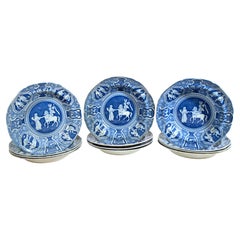
Spode Neo-classical Greek Pattern Blue Soup Plates- Set of Ten
By Spode
Located in Downingtown, PA
Greek Revival Dining: Set of 10 Spode "Phliasian Horseman" Soup Plates (c. 1806–1820) A fine set of 10 early 19th-century blue and white transfer-printed pottery soup plates by Spo...
Category

Antique Early 19th Century English Neoclassical Pottery

Materials

Pearlware, Pottery

Spode Flower Cross Pearlware Platter
By Spode
Located in Stamford, CT
Spode Flower Cross pearlware platter. As found condition with light signs of wear from age and use.
Category

Vintage 1930s English Regency Platters and Serveware

Materials

Porcelain

More From This Seller

View All
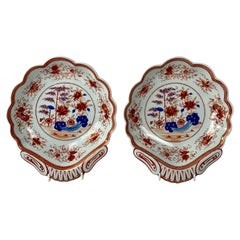
Pair Antique Spode Shell-Shaped Dishes Orange and Blue Pattern England Circa 182
By Spode
Located in Katonah, NY
Spode made this pair of fine quality shell-shaped dishes in England in the early 19th century, circa 1820. The dishes were printed in shades of orange and blue Orange and blue is t...
Category

Antique Early 19th Century English Chinoiserie Pottery

Materials

Ironstone

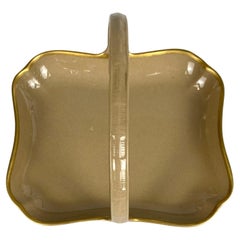
A Drabware Tray with Handle Made by Spode England Circa 1825
By Spode
Located in Katonah, NY
This rare Spode drabware rectangular tray was made for slices of bread or small breakfast rolls. Made in England by Spode circa 1825, it has a deep, rich color. The carrying handle i...
Category

Antique Early 19th Century English Pottery

Materials

Pottery

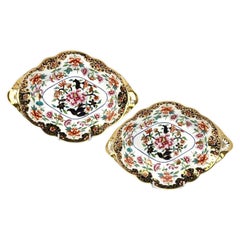
Pair Antique Spode Oval Shaped Dishes Decorated with Waterlilies England C-1825
By Josiah Spode
Located in Katonah, NY
The most exceptional aspect of this pair of dishes is the fabulous gilding lavished over the cobalt borders. As a less prominent feature, the gilding carries throughout the decoratio...
Category

Antique Early 19th Century English Decorative Dishes and Vide-Poche

Materials

Pearlware

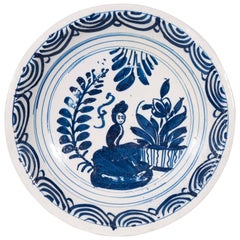
Blue and White Delft Charger Early 18th Century Netherlands Circa 1720
Located in Katonah, NY
We are pleased to offer this early 18th-century Dutch Delft charger painted in cobalt blue with a scene showing a lady seated in a garden. The border is decorated with linked concen...
Category

Antique Mid-18th Century Dutch Chinoiserie Delft and Faience

Materials

Delft

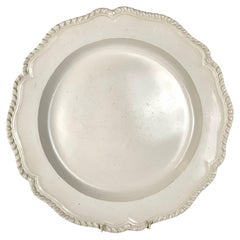
Large Antique Salt Glaze Saltglazed Charger Mid-18th Century England Circa 1765
By Staffordshire
Located in Katonah, NY
Provenance: The Collection of Sir Samuel Hoare* This large salt-glaze charger was made in Staffordshire, England, in the 18th century, circa 1765. The design is elegant and straigh...
Category

Antique Mid-18th Century English Neoclassical Platters and Serveware

Materials

Stoneware

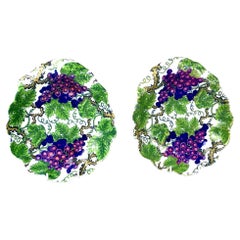
Pair Antique Spode Green Grapes Pattern Dishes England Circa 1820
By Spode
Located in Katonah, NY
This pair of Spode pearlware shell-shaped dishes features the exquisite "Grapes" pattern. Rich purple grapes, ochre/brown branches, and gorgeous two-tone green leaves cover the entir...
Category

Antique Early 19th Century English Decorative Dishes and Vide-Poche

Materials

Pearlware

Still Thinking About These?

All Recently Viewed