Items Similar to Antique French Sevres Porcelain and Ormolu Jewelry Casket, 19th Century
Video Loading
Want more images or videos?
Request additional images or videos from the seller
1 of 16
Antique French Sevres Porcelain and Ormolu Jewelry Casket, 19th Century
$2,670.31
£1,950
€2,285.78
CA$3,677.24
A$4,002.58
CHF 2,120.83
MX$48,137.12
NOK 26,965.75
SEK 24,711.13
DKK 17,074.63
About the Item
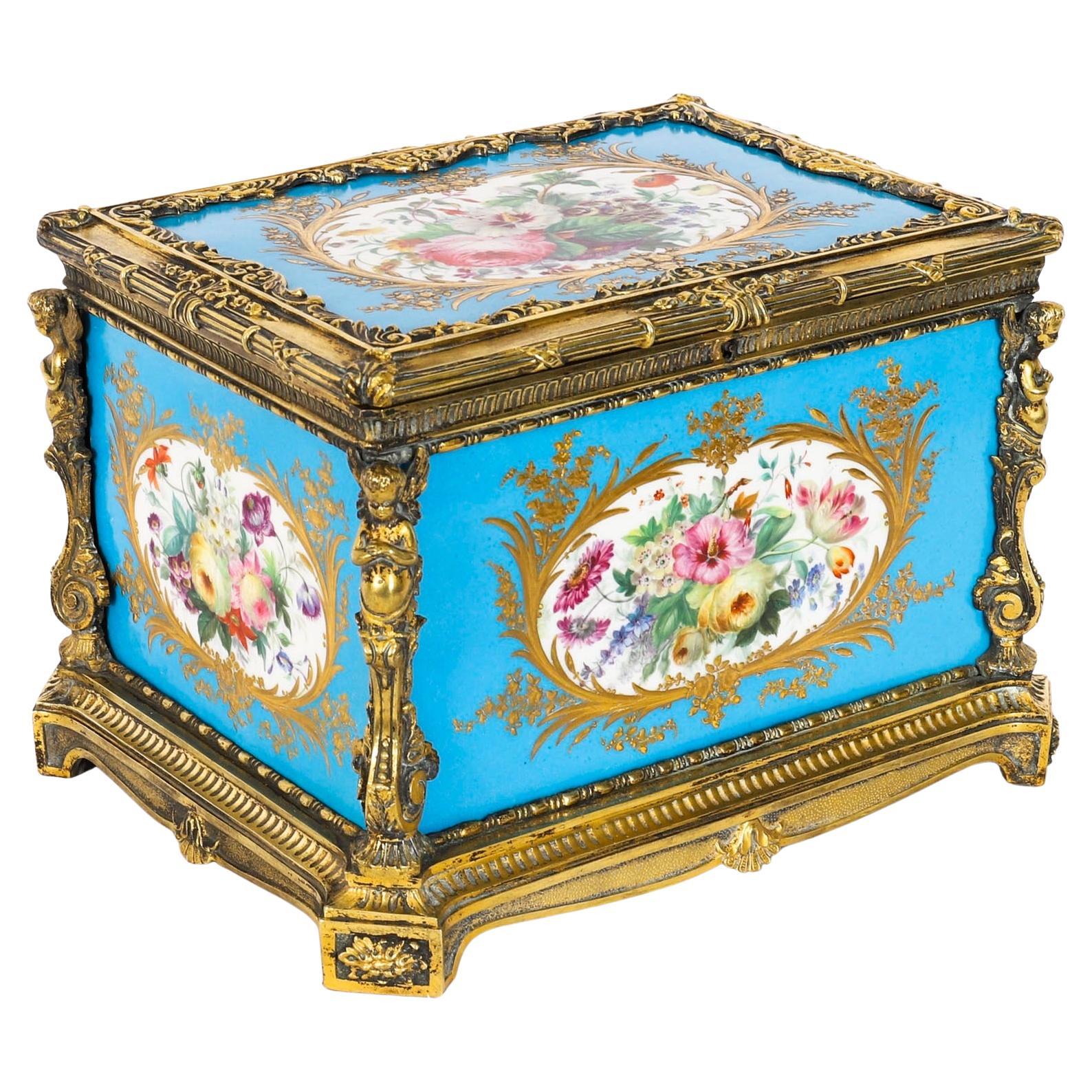
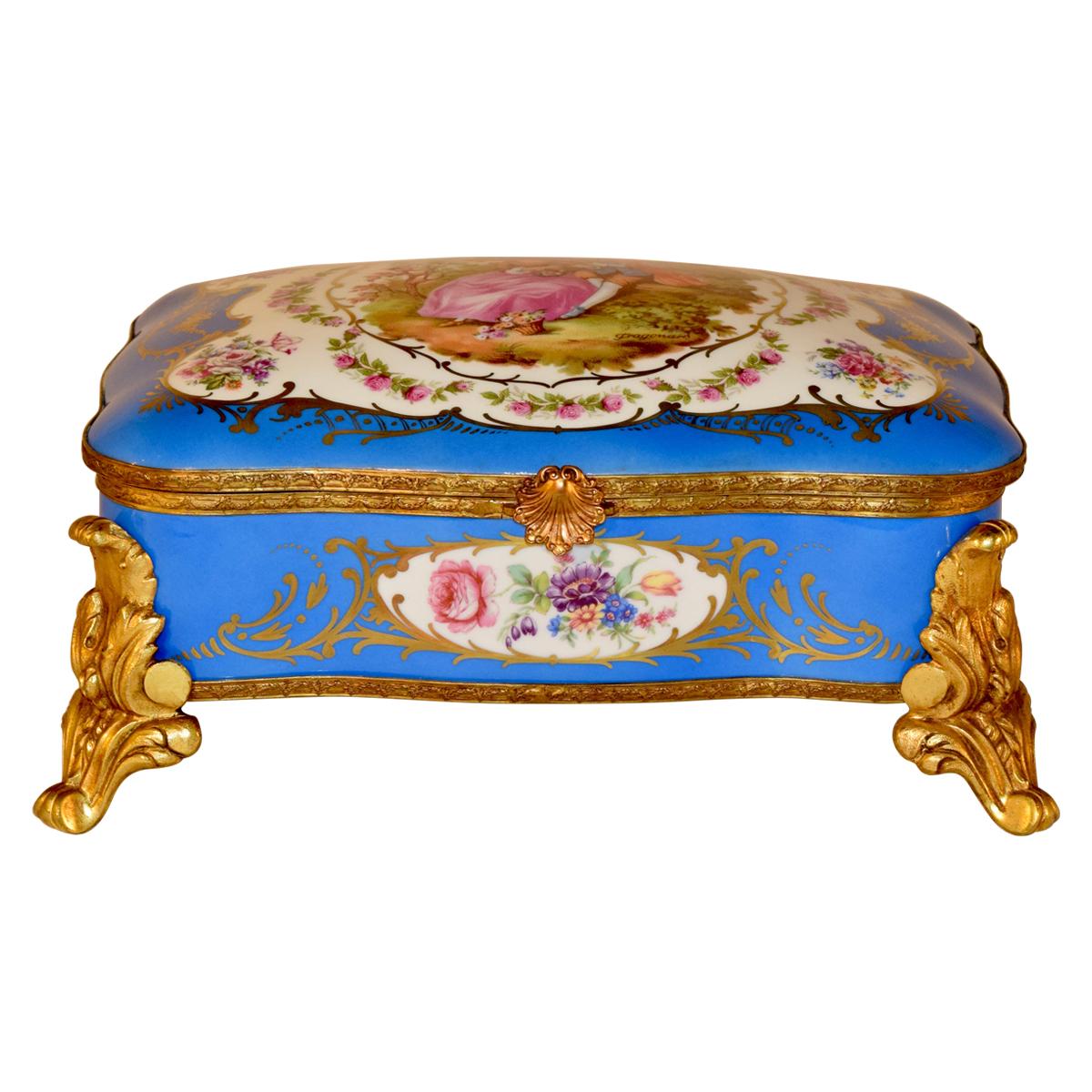
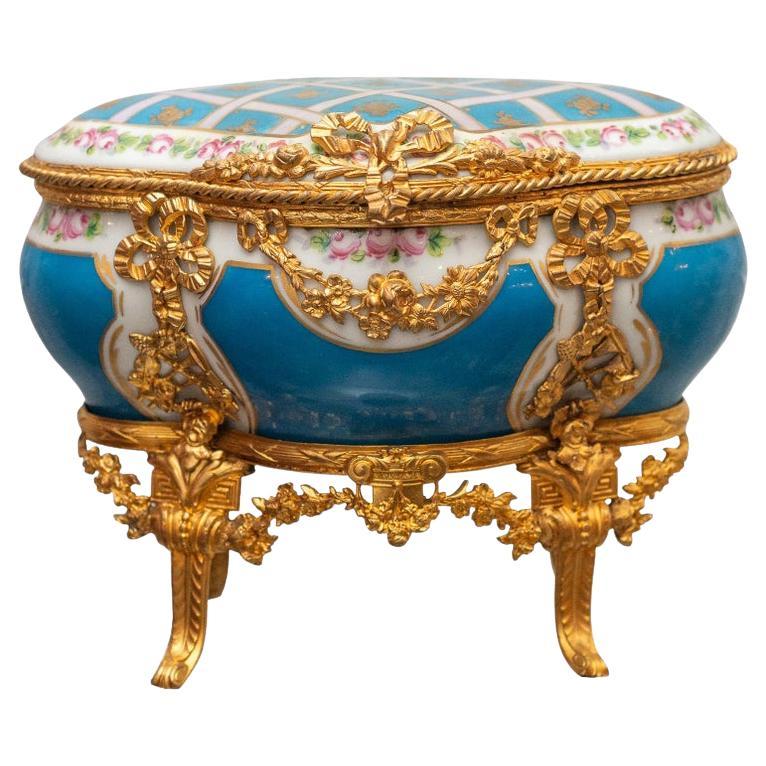
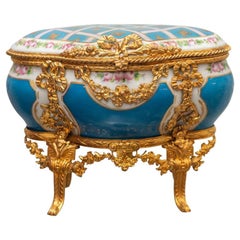
This is a fabulous antique French Ormolu and Sevres Porcelain jewelry casket, circa 1870 in date.
This magnificent casket is rectangular in shape, with the top as well as each side exceptionally well decorated with superb Sevres Porcelain panels featuring splendid scenes of lovely putti in landscapes, enclosed within charming floral gilt borders against a Bleu Celeste background.
The lid opens to reveal a sumptuous purple velvet lined interior, which is ready to keep custody of your precious items.
It is raised on four magnificent gilt corner columns, which add an extra touch of opulence to this gorgeous piece.
This jewelry casket is of superb quality and is incredibly rare, it will instantly enhance any room.
Condition:
In excellent condition. With no chips, cracks or signs of repair, please see photos for confirmation.
Dimensions in cm:
Height 11 x width 23 x depth 12
Dimensions in inches:
Height 4.3 x width 9.1 x depth 4.7
Sevres Porcelain
traces its roots in France to early craftsmen who had small manufacturing operations in such places as Lille, Rouen. St. Cloud, and most notably Chantilly. It is from Chantilly that a cadre of workers migrated to the Chateau de Vincennes near Paris to form a larger porcelain manufactory in 1738.
French King Louis XV, perhaps inspired by his rumoured relationship with mistress Madame de Pompadour, took an intense interest in porcelain and moved the operation in 1756 to even larger quarters in the Paris suburb of Sevres. Sevres was also conveniently near the home of Madame de Pompadour and the King's own Palace at Versailles.
From the outset the king's clear aim was to produce Sevres Porcelain that surpassed the established Saxony works of Meissen and Dresden. Though the French lacked an ample supply of kaolin, a required ingredient for hard-paste porcelain (pate dure), their soft-paste porcelain (pate tendre) was fired at a lower temperature and was thus compatible with a wider variety of colors and glazes that in many cases were also richer and more vivid. Unglazed white Sevres Porcelain "biscuit" figurines were also a great success. However, soft-paste Sevres Porcelain was more easily broken. Therefore, early pieces of Sevres Porcelain that remain intact have become rare indeed.
The Sevres Porcelain manufactory always seemed to be in dire financial straits despite the incredibly fine works it produced. In fact, the king's insistence that only the finest items be created may have contributed to the difficulties. Only a limited number of European nobility could afford the extravagant prices demanded for such works. King Louis XV and eventually his heir, the ill-fated Louis XVI, were obliged to invest heavily in the enterprise. Ultimately, the Sevres Porcelain Factory produced items under the name of "Royal" and thus the well-known Sevres mark was born. King Louis XV even mandated laws that severely restricted other porcelain production in France so as to retain a near monopoly for his Sevres Porcelain. The king even willingly became chief salesman for the finest of his products, hosting an annual New Year's Day showing for French nobility in his private quarters at Versailles. He eagerly circulated among potential buyers, pitching the merits of ownership and policing the occasional light-fingered guest.
Sevres Porcelain may have indeed given the makers of Meissen and Dresden a run for their money by the end of the 18th Century but for the French Revolution. By 1800, the Sevres Porcelain Works were practically out of business due to the economic devastation of the new French Republic.
About the time when Napoleon Bonaparte named himself Emperor of France (1804), a new director was named for the Sevres Porcelain Manufactory. Alexandre Brongniart, highly educated in many fields, resurrected Sevres Porcelain. Soft-paste porcelain was eliminated altogether thanks to the earlier discovery of kaolin near Limoges. For four decades until his death, Brongniart presided over monumental progress for Sevres Porcelain, catering not only to Napoleon himself, but at last to include the more financially profitable mid-priced market in the emerging middle class.
Ormolu - (from French 'or moulu', signifying ground or pounded gold) is an 18th-century English term for applying finely ground, high-carat gold in a mercury amalgam to an object of bronze.The mercury is driven off in a kiln leaving behind a gold-colored veneer known as 'gilt bronze'.
The manufacture of true ormolu employs a process known as mercury-gilding or fire-gilding, in which a solution of nitrate of mercury is applied to a piece of copper, brass, or bronze, followed by the application of an amalgam of gold and mercury. The item was then exposed to extreme heat until the mercury burned off and the gold remained, adhered to the metal object.
No true ormolu was produced in France after circa 1830 because legislation had outlawed the use of mercury. Therefore, other techniques were used instead but nothing surpasses the original mercury-firing ormolu method for sheer beauty and richness of color. Electroplating is the most common modern technique. Ormolu techniques are essentially the same as those used on silver, to produce silver-gilt (also known as vermeil).
About the Seller
5.0
Platinum Seller
Premium sellers with a 4.7+ rating and 24-hour response times
Established in 1983
1stDibs seller since 2012
1,445 sales on 1stDibs
Typical response time: <1 hour
Associations
LAPADA - The Association of Arts
Antiques Dealers
- ShippingRetrieving quote...Shipping from: London, United Kingdom
- Return Policy
More From This Seller
View AllAntique French Sevres Porcelain and Ormolu Jewellery Casket C1860 19thCentury
Located in London, GB
This is a fine large antique French Ormolu and Sevres Porcelain jewellery casket, circa 1860 in date.
This magnificent casket is rectangular in shape with the lid and each side exce...
Category
Antique 1860s Jewelry Boxes
Materials
Porcelain
Antique French Sevres Cobalt Blue Porcelain Jewellery Casket 19th Century
Located in London, GB
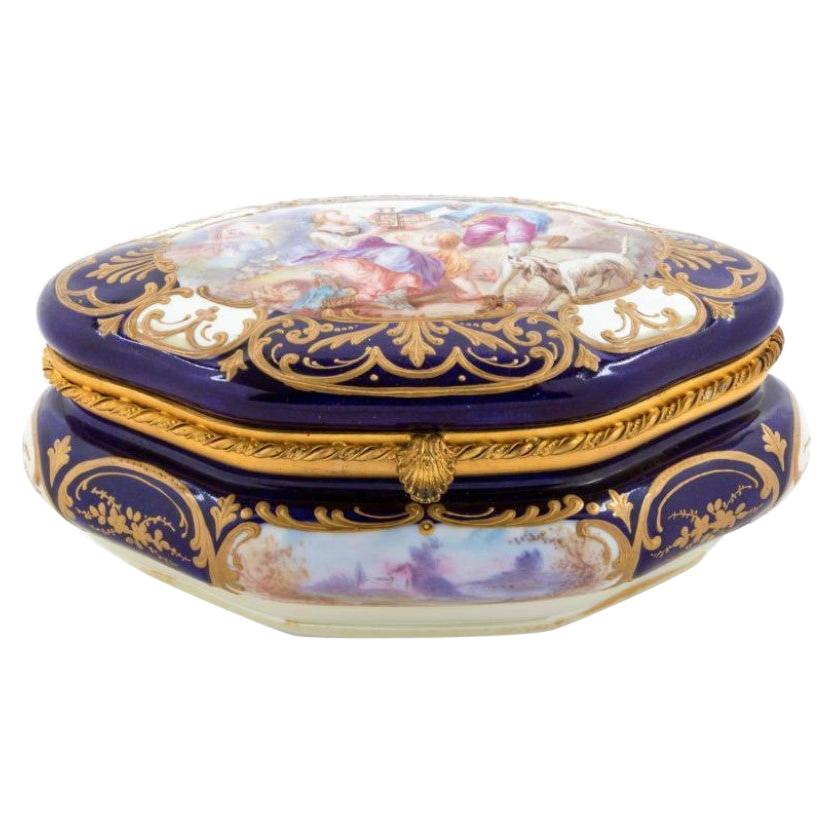
This is a fabulous antique French Sevres ormolu mounted cobalt blue soft paste porcelain jewellery casket, Circa 1870 in date.
The shaped hinged ormolu mounted cover is superbly de...
Category
Antique 1870s Decorative Boxes
Materials
Ormolu
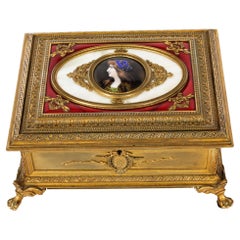
Antique Gilt Bronze Jewellery Casket
Limoges Miniature 19th Century
Located in London, GB
This is a beautiful antique Napoleon III gilded ormolu and Limoges enamel jewellery casket, Circa 1870 in date.
The hinged lid having a beautiful finely painted miniature Limoges en...
Category
Antique 1870s French Napoleon III Jewelry Boxes
Materials
Ormolu
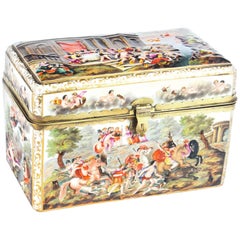
Antique Italian Capodimonte Porcelain Table Casket, 19th Century
Located in London, GB
This is a beautiful antique large Italian Capodimonte porcelain table casket, 1880 in date.
It features a gladiatorial scene with the Emperor and Empr...
Category
Antique 1880s Italian Porcelain
Materials
Ormolu
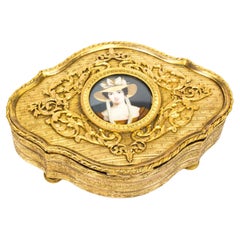
Antique Gilt Bronze Jewellery Casket
Miniature c.1870
Located in London, GB
This is a beautiful antique gilded ormolu serpentine shaped jewellery casket, Circa 1870 in date.
The top, front, sides and back are beautifully cast and tooled in gilt bronze. The ...
Category
Antique 1870s Jewelry Boxes
Materials
Bronze, Ormolu
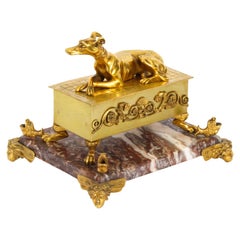
Antique French Ormolu
Marble Casket 19th Century
Located in London, GB
This is a fine antique French Empire Revival ormolu and patinated marble casket, circa 1820 in date.
Of rectangular form decorated with a central sculp...
Category
Antique 1820s French Empire Revival Animal Sculptures
Materials
Marble, Ormolu
You May Also Like
Late 19th Century French Sevres Style Porcelain Casket
By Manufacture Nationale de Sèvres
Located in Brighton, Sussex
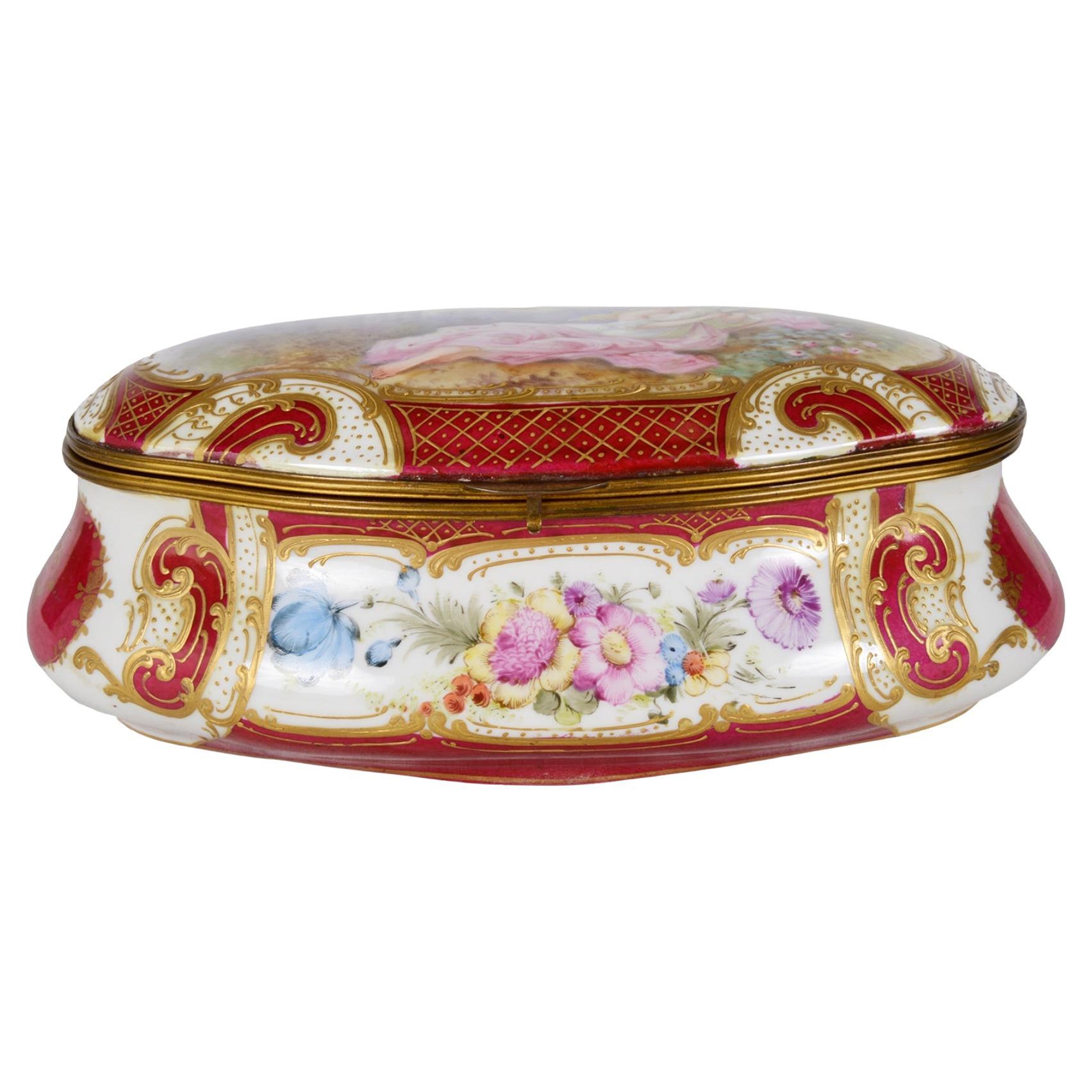
A very decorative late 19th century French Sevres style porcelain, hand painted casket. Having a Burgundy colour ground, with an inset pa...
Category
Antique Late 19th Century French Louis XVI Decorative Boxes
Materials
Porcelain
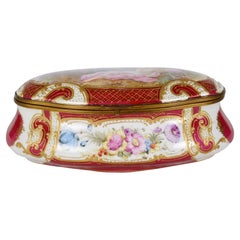
Sèvres Porcelain Casket, Napoleon III Period, 19th Century.
Located in Saint-Ouen, FR
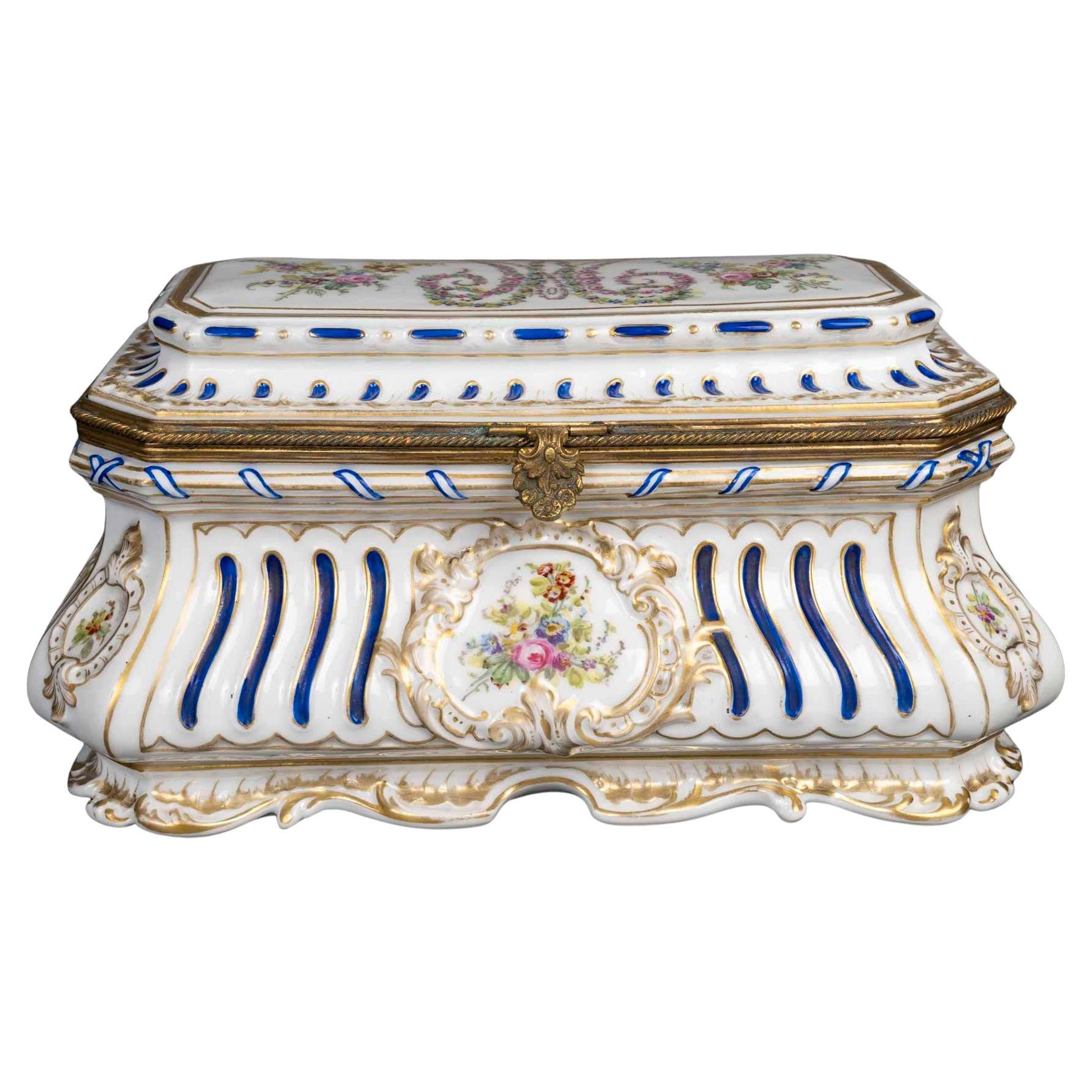
Sèvres porcelain casket, Napoleon III period, 19th century.
19th century casket, Napoleon III period, Sèvres porcelain and gilt brass mount.
H: 13...
Category
Antique 19th Century French Napoleon III Decorative Boxes
Materials
Porcelain
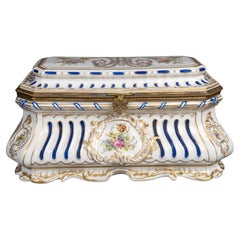
19th Century French Sevres Porcelain Box
Located in Los Angeles, CA
19th century French Sevres Porcelain box.
Category
Antique 19th Century French Jewelry Boxes
Materials
Porcelain
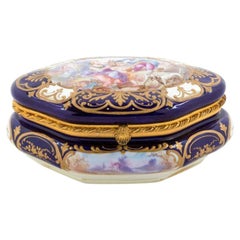
Sevres Style Porcelain Footed Dresser Box, circa 1920
Located in High Point, NC
Sevres style hand painted porcelain dresser box with hand applied ormolu mounts and feet. Wonderful condition.
Category
Early 20th Century French French Provincial Decorative Boxes
Materials
Ormolu
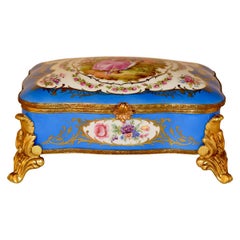
Antique Sévres Bleu Celeste Porcelain Jewelry Casket with Gold Ormolu Details
By Manufacture Nationale de Sèvres
Located in Toronto, ON
A breathtaking example of French artistry, this Antique Sèvres Bleu Céleste Porcelain Jewelry Casket epitomizes opulence and refinement. Crafted in...
Category
Early 20th Century French Jewelry Boxes
Materials
Ormolu
A Sèvres Porcelain, Rectangular Jewellery Casket
Located in Brighton, West Sussex
A Gilt-Bronze Mounted Turquoise Sèvres Porcelain Rectangular Jewellery Casket, painted with a seated mother and child before a window. This is with...
Category
Antique 19th Century French Decorative Boxes
Materials
Ormolu

More Ways To Browse
Bleu Celeste
White Porcelain Figurine
Sevres Biscuit
Antique White Porcelain Figurines
Biscuit Figurines
Sevres Figurine
Sevres Porcelain Figurines
Meissen Floral
Vintage Demitasse Cups
B And G Denmark Porcelain
Continental Antique Silver
Danica Flora
German Porcelain Bird
Herend China
Hungarian China
Meissen Porcelain On Sale
Royal Copenhagen Blue Fluted Plain
Antique Chelsea Porcelain