Want more images or videos?
Request additional images or videos from the seller
1 of 21
Chinese Ewer, Figures Fanning Themselves, Chongzhen Transitional, circa 1640
$4,425List Price
About the Item
- Dimensions:Height: 7 in (17.78 cm)Width: 6.75 in (17.15 cm)Length: 7 in (17.78 cm)
- Style:Ming (Of the Period)
- Materials and Techniques:
- Place of Origin:
- Period:Early 17th Century
- Date of Manufacture:Early 17th Century
- Condition:Wear consistent with age and use. In good condition: body is perfect, some nibbles to rim, spout and bridge.
- Seller Location:London, GB
- Reference Number:Seller: CP04-281stDibs: LU4805120183802
About the Seller
5.0
Vetted Professional Seller
Every seller passes strict standards for authenticity and reliability
Established in 2016
1stDibs seller since 2019
228 sales on 1stDibs
Authenticity Guarantee
In the unlikely event there’s an issue with an item’s authenticity, contact us within 1 year for a full refund. DetailsMoney-Back Guarantee
If your item is not as described, is damaged in transit, or does not arrive, contact us within 7 days for a full refund. Details24-Hour Cancellation
You have a 24-hour grace period in which to reconsider your purchase, with no questions asked.Vetted Professional Sellers
Our world-class sellers must adhere to strict standards for service and quality, maintaining the integrity of our listings.Price-Match Guarantee
If you find that a seller listed the same item for a lower price elsewhere, we’ll match it.Trusted Global Delivery
Our best-in-class carrier network provides specialized shipping options worldwide, including custom delivery.You May Also Like
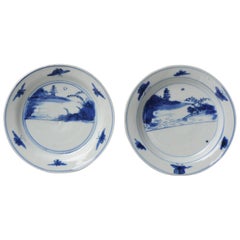
Antique Chinese 17c Kosometsuke Tianqi/Chongzhen Porcelain Landscape
Located in Amsterdam, Noord Holland
Description
A very nicely decorated Late Ming Blue and White Porcelain Dish with a landscape scene situated in two concentric circles wi...
Category
Antique 17th Century Chinese Ceramics
Materials
Porcelain
$3,326 Sale Price / set
20% Off
H 1.07 in Dm 6.03 in
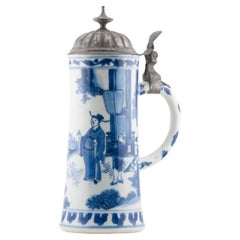
20CM Antique Chinese 17C Chongzhen Transitional Chinese Porcelain Tankard
Located in Amsterdam, Noord Holland
A very nicely decorated and large tankard in underglaze blue. With a figural scene. Visible is a literatus in a garden scene with 2 servants.
Similar pieces are sold here:
Countr...
Category
Antique 17th Century Chinese Ming Ceramics
Materials
Porcelain
$5,837 Sale Price
20% Off
H 7.88 in Dm 0.04 in
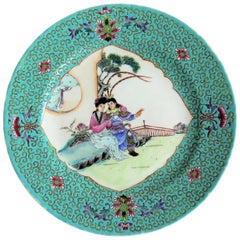
Chinese Export Porcelain Plate Famille Rose Hand Painted Figures, Circa 1940s
Located in Lincoln, Lincolnshire
This is a good Chinese Export porcelain Plate which has been beautifully hand enamelled, over-glaze, in the Famille Rose palette with excellent detail, dating to Circa 1940.
The mai...
Category
Mid-20th Century Chinese Chinese Export Ceramics
Materials
Porcelain
$239
H 1.15 in Dm 9.94 in
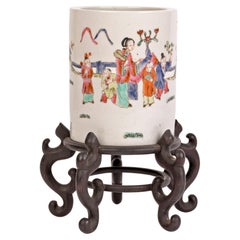
Chinese Qing Porcelain Brush Pot Painted with Figures and Seal Mark with Stand
Located in Bishop
s Stortford, Hertfordshire
A fine quality Chinese Qing porcelain brush pot with wooden stand hand painted with children and lady and with Zhuanshu script mark to the base dating from the 19th century. The brus...
Category
Antique 19th Century Chinese Qing Ceramics
Materials
Porcelain, Wood
$1,089
Free Shipping
H 4.53 in Dm 3.75 in
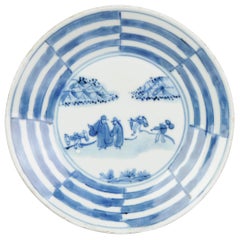
Antique Chinese Taste Kosometsuke Tianqi/Chongzhen Dish Porcelain Mi
Located in Amsterdam, Noord Holland
A very nicely decorated plate. Late Ming. Traders and travellers in a landscape. An extraordinary border pattern. Very rare type of plate.
C...
Category
Antique 17th Century Chinese Ming Ceramics
Materials
Porcelain
$1,711 Sale Price
20% Off
H 1.07 in Dm 6.34 in
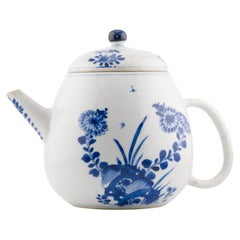
Antique Chongzhen / Shunzhi Period Chinese Porcelain Blue
White TeaPot
Located in Amsterdam, Noord Holland
Sharing with you this fantastic and large pot from the Transitional period. At first hand we thought it was a teapot but possibly this was also used a a wine pot, not sure. The paint...
Category
Antique 17th Century Chinese Ming Ceramics
Materials
Porcelain
$5,932 Sale Price
20% Off
H 6.3 in Dm 7.88 in
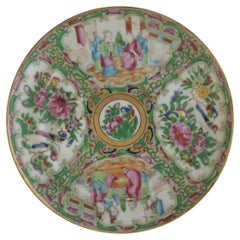
Chinese Export Porcelain Plate Rose Medallion Hand Painted, Qing, circa 1875
Located in Lincoln, Lincolnshire
This is a very decorative Chinese Export, porcelain, Rose Medallion dish or plate which we date to the 19th century, Qing dynasty, circa 1875.
I...
Category
Antique 19th Century Chinese Chinese Export Ceramics
Materials
Porcelain
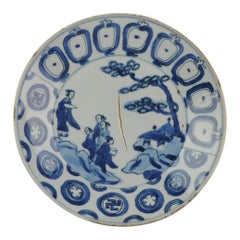
Antique Chinese Porcelain Figural Dish Late Ming Tianqi or CHongzhen
Located in Amsterdam, Noord Holland
A very nicely decorated plate with a scene figures in a landscape
10-8-19-1-6
Condition
/ Overall Condition. Rimfritting, only. 206mm
Period
17th century Ming (1368 - 1620)
Category
Antique 16th Century Chinese Ming Ceramics
Materials
Porcelain
$2,092 Sale Price
20% Off
H 0.04 in Dm 8.12 in
Antique Chinese Taste Kosometsuke Tianqi/Chongzhen Dish Porcelain Go players
Located in Amsterdam, Noord Holland
A very nicely decorated plate. Late Ming. Go players in a mountain landscape under a palm tree and next to a pavillion. Dish on high foot.
For similar examples of this listing see...
Category
Antique 17th Century Chinese Ming Ceramics
Materials
Porcelain
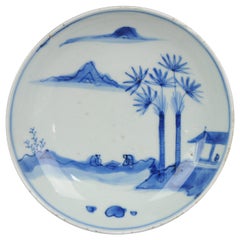
$1,711 Sale Price
20% Off
H 1.78 in Dm 6.78 in
Kosometsuke 17C Chinese Porcelain Ming Period Kaiseki Dish Tianqi / Chongzhen
Located in Amsterdam, Noord Holland
Sharing with you this lovely and unusual Chinese porcelain Kaiseki dish from the late Ming period, Tianqi/Chongzhen period most. Jingdezhen made for the Japanese market.
Origin: C...
Category
Antique 17th Century Chinese Ming Ceramics
Materials
Porcelain
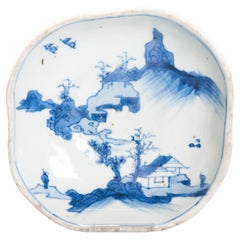
$6,122 Sale Price
20% Off
H 1.74 in Dm 5.52 in
More From This Seller
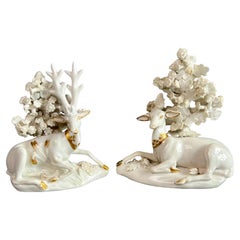
View AllBloor Derby Pair of Porcelain Figures, Stag and Doe, circa 1765-1820
By Derby, Bloor Derby
Located in London, GB
This is a very charming pair of porcelain figures of a stag and a doe, probably cast by Derby in about 1760 and decorated by Bloor Derby in 1820. The figures are a simple white porce...
Category
Antique 1760s English Rococo Figurative Sculptures
Materials
Porcelain
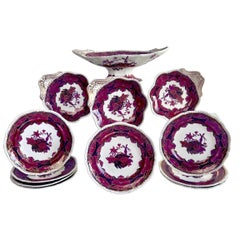
Spode Imperial China Dessert Service, Frog Pattern in Mauve, Regency circa 1828
By Spode
Located in London, GB
This is a very striking part dessert service made by Spode in about 1828, which is the Regency era. It is made of Spode's Imperial China and has the Frog pattern in mauve/purple. It consists of a high footed comport...
Category
Antique 1820s English Regency Porcelain
Materials
Ironstone
Bow Pair of Porcelain Figures of Liberty
Matrimony, Rococo 1760-1764
By Bow Porcelain
Located in London, GB
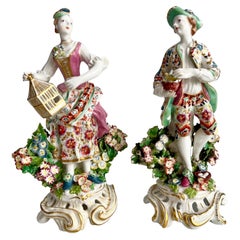
This is a fabulous pair of figures of Liberty and Matrimony made by the Bow Porcelain factory between 1760 and 1764. These figures were a popular pair portraying marriage.
The bow p...
Category
Antique 1760s English Rococo Figurative Sculptures
Materials
Porcelain
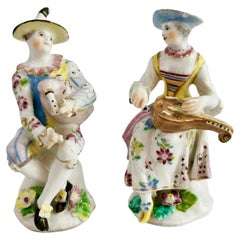
Bow Pair of Porcelain Figures, Arlecchino and Columbina, Rococo ca 1758
By Bow Porcelain
Located in London, GB
This is a wonderful pair of figures of Arlecchino and Columbina, made by the Bow Porcelain factory in about 1758. These figures formed part of a series of the Commedia dell'Arte, a very popular series of theatrical figures that served as decoration at the dinner table in the 18th Century.
The Bow Porcelain Factory was one of the first potteries in Britain to make soft paste porcelain, and most probably the very first to use bone ash, which later got perfected by Josiah Spode to what is now the universally used "bone china". Bow was the main competitor of the Chelsea Porcelain Factory, but where Chelsea made very fine slipcast porcelain, Bow made a different soft paste porcelain that tended to be softer and could be pressed into moulds. Bow served a larger public generally at lower prices. The factory was only in operation between 1743 and 1774, after which the tradition got incorporated into some of the later famous potteries such as Worcester and Derby.
These figures were used to adorn the dinner table when dessert was served; groups of figures served to express something about the host, the guests, or to direct the conversation. The Italian Commedia Dell'Arte, a comical form of masked theatre, was very popular in those days and Bow copied many figures of the German Meissen series that were brought out in the decades before.
This pair dates from about 1758, which was at the height of Bow's ability to make beautiful figurines often copied from Chelsea or Meissen. The pair is modelled after a Meissen pair by Kaendler. The porcelain is translucent with a beautiful milky glaze - Bow was probably the first pottery using bone in its porcelain recipe. Arlecchino (Harlequin) is playing the bagpipes, dressed in an odd costume of mismatched chintz and playing cards and wearing a funny black trumpet...
Category
Antique 1750s English Rococo Figurative Sculptures
Materials
Porcelain
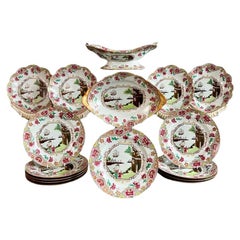
Spode Dessert Service, Ship Pattern no. 3133 on Stone China, 1813-1822
By Spode
Located in London, GB
This is a stunning and rare Spode dessert service made between 1813 and 1822, consisting of a centre piece, a lozenge shape dish, four shell dish...
Category
Antique 1810s English Regency Porcelain
Materials
Stoneware
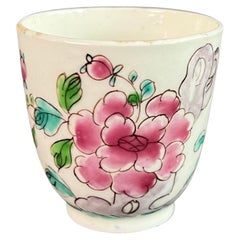
Bow Porcelain Orphaned Coffee Cup, Famille Rose Peony, circa 1755
By Bow Porcelain
Located in London, GB
This is a very charming orphaned coffee cup made by the Bow Porcelain factory in about 1755. The cup is decorated in a Chinese "famille rose" peony pattern. This cup would have been part of a large tea service, and the tiny size shows how expensive coffee was in the 18th Century.
The Bow Porcelain Factory was one of the first potteries in Britain to make soft paste porcelain, and most probably the very first to use bone ash, which later got perfected by Josiah Spode to what is now the universally used "bone china". Bow was the main competitor of the Chelsea Porcelain Factory, but where Chelsea made very fine slipcast porcelain, Bow made a different soft paste porcelain that tended to be softer and could be pressed into moulds. Bow served a larger public generally at lower prices. The factory was only in operation between 1743 and 1774, after which the tradition got incorporated into some of the later famous potteries such as Worcester and Derby.
The cup is unmarked, which is normal for Bow items of this era.
Condition report the cup is in excellent condition without any damage or repairs. There are various glazing imperfections, which are quite normal for porcelain of this era.
Antique British porcelain...
Category
Antique 1750s English Rococo Tea Sets
Materials
Porcelain
Still Thinking About These?
All Recently ViewedMore Ways To Browse
Vintage Little Girl Figurine
Chinese Export Warming Plate
English Lusterware
Follement Lacroix
Fornasetti Plate 1988
Fornasetti Plate Astronomici
France Limoges Coronet
Green Fitzhugh
H Stinton
Haddon Hall China
Hand Painted Japan Teacups
Handleless Cup And Saucer
Hermes Marqueterie De Pierres D Orient
Imperial Bone China
Imperial Imari
J Pouyat Limoges
Kpm Berlin Weichmalerei
Kpm Weichmalerei