Want more images or videos?
Request additional images or videos from the seller
1 of 7
Byzantine Clay Hand Grenade Greek Fire 9th-10th Century
$545.99List Price
About the Item
- Dimensions:Height: 3.35 in (8.5 cm)Diameter: 2.76 in (7 cm)
- Materials and Techniques:
- Place of Origin:
- Period:
- Date of Manufacture:900
- Condition:Wear consistent with age and use.
- Seller Location:Tunbridge Wells, GB
- Reference Number:Seller: 230708061stDibs: LU8525236432412
About the Seller
5.0
Vetted Professional Seller
Every seller passes strict standards for authenticity and reliability
Established in 2014
1stDibs seller since 2023
92 sales on 1stDibs
Typical response time: 1 to 2 days
Authenticity Guarantee
In the unlikely event there’s an issue with an item’s authenticity, contact us within 1 year for a full refund. DetailsMoney-Back Guarantee
If your item is not as described, is damaged in transit, or does not arrive, contact us within 7 days for a full refund. Details24-Hour Cancellation
You have a 24-hour grace period in which to reconsider your purchase, with no questions asked.Vetted Professional Sellers
Our world-class sellers must adhere to strict standards for service and quality, maintaining the integrity of our listings.Price-Match Guarantee
If you find that a seller listed the same item for a lower price elsewhere, we’ll match it.Trusted Global Delivery
Our best-in-class carrier network provides specialized shipping options worldwide, including custom delivery.You May Also Like
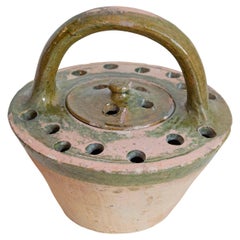
French 19th Century Fired Clay and Green Glaze Lidded Pottery Heater
Located in Atlanta, GA
A French fired clay and green glazed pottery heater from the 19th century with lid, large handle and petite holes at the top. This 19th-century French fired clay and green glazed pot...
Category
Antique 19th Century French Rustic Pottery
Materials
Clay, Pottery
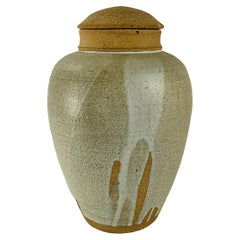
Mid 20th century hand turned clay lidded jar with a lava glazed finish
Located in Dallas, TX
A mid 20th century hand turned clay lidded jar with a lava glazed finish. Signature marked on the bottom of the jar. This jar is of a slightly egg-like shape.
Majority of the body ...
Category
Mid-20th Century Ceramics
Materials
Clay
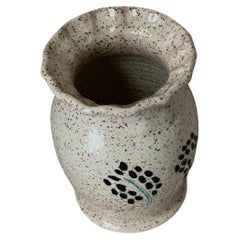
1970
s Hand-Painted Studio Pottery Clay Vase
Located in Saint Petersburg, FL
A vintage hand painted clay pottery vase with scalloped edge.
Category
Late 20th Century Unknown Post-Modern Pottery
Materials
Clay
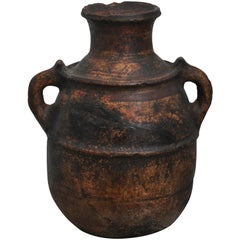
Late 19th Century Primitive Spanish Clay Pot
Located in Wainscott, NY
Late 19th Century Primitive Spanish Clay Pot. Found in Spain.
This Substantial and beautiful pot has two handles and a blacked finish.
Dimensions: 1...
Category
Antique Late 19th Century Spanish Jars
Materials
Clay
19th Century Copeland Spode Greek Tazza
By Copeland Spode
Located in Fort Lauderdale, FL
A brightly colored Neoclassical tazza or cake plate in the 'Greek' pattern made by Copeland Spode in the late 19th century.
This tazza, in Copeland Spode’s ‘Greek...
Category
Antique Late 19th Century British Neoclassical Revival Pottery
Materials
Earthenware, Pearlware
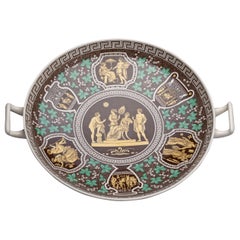
19th Century Greek Revival Copeland Spode Bowl
By Copeland Spode
Located in Fort Lauderdale, FL
A vibrant Neoclassical Revival decorative bowl in the 'Greek' pattern made by Copeland Spode in the late 19th century.
Sir William Hamilton’s Collection of Etruscan, Greek and Roman antiquities, first published in 1766 by Pierre d’Hancarville, was a landmark publication in English design. It intended to disseminate the Antique style through its engravings of Attic pottery. The catalog’s faithful reproductions of Classical vases led British potteries, including Spode, to adapt or even copy the ancient art for modern life. This Copeland Spode Greek...
Category
Antique Late 19th Century British Neoclassical Revival Pottery
Materials
Earthenware, Pearlware
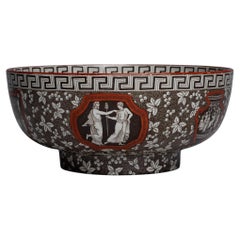
Early 19th Century Spode Red Greek Pattern Tile
By Josiah Spode, Spode
Located in Fort Lauderdale, FL
A Neoclassical red transferware tile made by Spode 1806-1810, with the ‘Zeus in His Chariot’ pattern.
Sir William Hamilton’s Collection of Etruscan, Greek and Roman antiquities, first published in 1766 by Pierre d’Hancarville, was a landmark publication in English design. It intended to disseminate the Antique style through its engravings of Attic pottery. The catalog’s faithful reproductions of Classical vases led British potteries, including Spode, to adapt or even copy the ancient art for modern life. These Spode Greek pattern tiles reflect the major influence of Hamilton’s catalog on English Neoclassicism. The central scene was taken directly from the catalog.
This tile can be dated to a narrow window of production in the Spode factory, 1806-1810. During that time, Spode used a technique known as the “Pluck and Dust” method to print in red transfer designs onto creamware. Using this method, source prints were transferred overglaze using tissue imprinted with a very faint rendition of the design outlined in sticky oil. The decorator applied the tissue to the object then carefully “plucked” or pulled it away, leaving the sticky oil design behind. Then, a finely-ground enamel color was “dusted” onto the surface, sticking to any areas that had the oil. A final firing at a low temperature in the enamel kiln made the pattern permanent. The Pluck and Dust technique improved upon bat-printing and enabled larger designers to be transferred. It was short-lived, however, as under-glaze transfer printing soon took over as the preferred method for producing transferwares.
Dimensions: 5 in. x 5 in. x 1/4 in.
Condition: Excellent.
Provenance:
The Collection of Nancy and Andrew Ramage
Jonathan Horne...
Category
Antique Early 19th Century English Neoclassical Pottery
Materials
Earthenware, Creamware
Set of 18 Hand Painted Abstract Surrealist Greek Art Pottery Tiles, Greece, 1970
By Pablo Picasso
Located in Sacramento, CA
Set of eighteen original hand painted Greek art pottery tiles, circa 1970.
Tiles are abstract in style and feature surrealist figures, faces and myt...
Category
Vintage 1970s Greek Modern Pottery
Materials
Clay

$3,460
H 5 in W 5 in D 0.375 in
Pair 19th Century Greek Attic Style Terracotta Volure-Kraters
Located in Houston, TX
A pair of large two handled 19th Century Attic style volute kraters.
Category
Antique 19th Century Italian Greek Revival Pottery
Materials
Terracotta
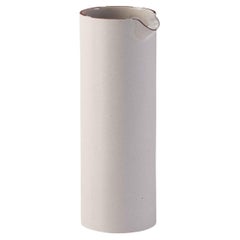
Stoneware Clay Carafe in stone colour hand cast in UK
By Custhom
Located in London, GB
The pieces are slip cast in London, made from stoneware in small batches. The hand painted details around the rim of each item in the collection is created by glaze in a complimentar...
Category
2010s English Modern Ceramics
Materials
Cast Stone
More From This Seller
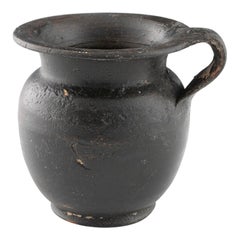
View AllAncient Greek Pottery Attic Black Glazed Cup c450BC
Located in Tunbridge Wells, GB
Heading : Ancient greek pottery Attic black glazed cup
Material: Black glazed pottery
Period: Ancient Greek
Date: c450BC
Origin: Attica/Athens, Greece
Condition: VF, slight cos...
Category
Antique 15th Century and Earlier Greek Classical Greek Pottery
Materials
Pottery
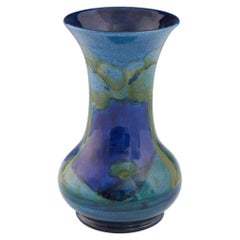
William Moorcroft Vase - Moonlit Blue c1925
By William Moorcroft
Located in Tunbridge Wells, GB
Heading : William Moorcroft Moonlit Blue vase
Date : c1925
Origin : Burslem, England
Bowl Features : Baluster form with everted rim. Deep and pa...
Category
Vintage 1920s British Art Nouveau Pottery
Materials
Pottery
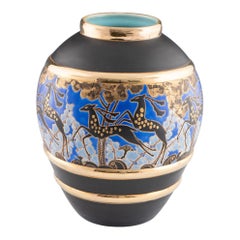
Boch Freres Earthenware Vase by Raymond Chevalier (1900-1959)
By Raymond Chevalier, Boch Freres Keramis
Located in Tunbridge Wells, GB
Heading : A stunning bosch earthenware vase by Raymond Chevalier
Date : c1935
Origin : La Louviere, Belgium
Bowl Features : Leaping gazelles amidst stlised foliage set between gilded...
Category
Vintage 1950s Belgian Art Deco Pottery
Materials
Pottery
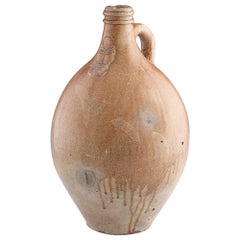
A Very Large Bellarmine Salt Glazed Jug c1675
By Bellarmine
Located in Tunbridge Wells, GB
Heading : Bellarmine jug
Date : Second half seventeenth century
Origin : Germany
Colour : Mottled brown
Body : Moulded bearded man "Bartmann" above a medallion. Applied applied handle. The string rim is to secure a cork
Size : 44cm tall and approximately 26cm in diameter at widest
Condition : Some chips as expected.
Restoration : None
Weight : 5534 grams
References : The Decanter, An Illustrated History of Glass By Andy McConell - Page 27 Plate 23.
Antique Sealed Bottles 1640-1900 By David Burton - Page 9.
A Bartmann "bearded man" jug also known as a Bellarmine in English . These were made in Germany and imported to Britain by Dutch merchants...
Category
Antique 1670s German Pottery
Materials
Pottery
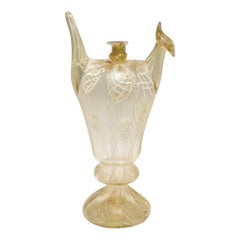
Catalan or Spanish Càntir Water Jug - 18th century
Located in Tunbridge Wells, GB
Heading : Catalan or Spanish Càntir
Date : 18th century
Origin : Catalonia or Spain
Colour : Pale green
Type : Free-blown contiguous hollow body and foot, waisted to form rudimentar...
Category
Antique 1750s Spanish Glass
Materials
Blown Glass
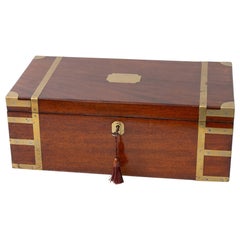
Brass Bound Writing Slope from the Mid 19th Century
Located in Tunbridge Wells, GB
Heading : Brass bound writing slope from the mid 19th century
Date : c1850
Period : Victoria
Origin : England
Decoration : Brass bound with vacant brass cartouche. Inteiror lined...
Category
Antique Early 19th Century British Victorian Decorative Boxes
Materials
Wood
Still Thinking About These?
All Recently ViewedMore Ways To Browse
Silver Grenade
Arcimboldo Style
Bennington Potter Trigger
Black Frankoma Pottery
Blanche Vulliamy
Carl Klimt On Sale
Ceramic Cannister
Clarice Cliff Harvest
Davis Pottery
Dayle Rushall
Deruta Dragon
Elsa Benattar
French Faience Moustiers Pottery
French Yellow Ware
Frog Mug
Fuddling Cup
Plain English Kitchen
Poppy Trail