Items Similar to Collection of 6, c1965 stoneware plates by Japanese American potter Teruo Hara
Video Loading
Want more images or videos?
Request additional images or videos from the seller
1 of 13
Collection of 6, c1965 stoneware plates by Japanese American potter Teruo Hara
$1,950per set
£1,477.69per set
€1,702.86per set
CA$2,757.84per set
A$2,965.82per set
CHF 1,585.83per set
MX$35,766.99per set
NOK 20,053.93per set
SEK 18,271.71per set
DKK 12,724.17per set
About the Item
A rare set of 6, mid 1960s stoneware plates by famed Japanese-American potter Teruo Hara. Each plate is signed on the reverse with Hara's TH chop mark. Hara's work is difficult to come by and a set of 6 plates is something special. Thank you for looking and feel fee to reach out should you have any questions about these plates.
The following article on Hara was clipped from the Nov./Dec. 1962 issue of Craft Horizons.
In the United States before World War II the utility of ceramics overshadowed aesthetic considerations relegating the potters art to a minor position. This western dualism between function and design has never existed in Japan where art is philosophically inseparable from any human activity. But in the West, it was only in the late 1940’s in a world rapidly becoming more mechanized and innundated with mass produced goods that the hand-crafted pot surpassed function and took on its own value.
For centuries in Japan beautifully hand-crafted ceramics had been integral in the tea ceremony and flower arrangement, but the vocabulary of forms had become ritualized so that there was little opportunity for an artist to supercede the traditional with new ideas.
Teruo Hara was one of a generation of young artists who challenged these traditional forms. After a liberal arts education Hara first practiced industrial design and architecture before becoming interested in ceramics. He was a member of the Crafts Group of Japan, comprised of industrial designers, artists, architects and critics who sought to find a new standard of expression. In this milieu Hara became a master of his craft while he explored new design concepts. By 1958 he began to feel that his real opportunity lay in America. Earlier, he had been criticized in Japan for his innovation and he sought greater freedom. Under the auspices of the Fine Arts Committee and the American Craftsmens Council, he came to tour the United States and work with American potters. He was particularly excited by the freedom with which such West Coast potters as Peter Voulkos and Paul Soldner worked, but he felt on the other hand that there was too great an importance placed on experiment and originality for its own sake at the expense of quality.
Hara is unique in having worked ten years in Japan and ten in the United States. He is able to draw freely from both traditions. Shortly after he arrived in this country, he had a one-man show in New York, but even though this was well received, he realized he lacked knowledge of the ceramic materials and technology available in the United States—that he needed time for study. He went to work for Design Technics in Stroudsburg, Pennsylvania developing clay bodies, glazes, kilns, and designing wall plaques for architectural use. This was also a period of adjusting to the language and customs of his new country.
By 1963, he felt ready for another New York exhibition, and once again was received with acclaim. He was described as “Creating compositions which combine the understatement of Oriental concepts with the vigor and excitement of the best in U.S. ceramics . . . Teruo Hara emerges here as one of the most interesting potters on the East Coast. His own outlook was summed up in his statement:
The craftsman in the United States today faces a happy future, for Americans are recognizing more and more the value of hand craftsmanship in our increasingly mechanized world. There exists in this country freedom to see and evaluate the work and trends of all nations and to incorporate its vigor and freshness. The craftsman is no longer confined to mere repetition of colloquial traditional forms. With this freedom and inspiration, the craftsman must develop a new tradition—and to do so he must be willing to draw from painting, sculpture, and architecture.
Having learned the mechanics of American ceramics and having reveled in the great freedom in this field, Hara was able to begin to reassess the traditional oriental pots. He moved to Warrenton, Virginia, and living in relative isolation spent a great deal of time studying classic pots, becoming more aware of the values he had rejected in his youth. He began to once again sense the beauty in the simple wheel-thrown and hand-built forms and realized that violent expression was contrary to his basically poetic sensibility. His work became simpler, characterized by a sculptural quality in which volume and movement were unified. He returned to the use of ancient glazes of copper red, celadon, temmoku and ash. As a mature artist, he was able to handle the means he had largely rejected as a youth, but now he was fully competent to evaluate the early techniques and traditions and to select what was pertinent for his own aesthetic expression. Although he returned to classic forms, his pots retained a spontaneity, individual flavor and freshness. He echoed, but did not imitate, the achievements of his artistic ancestry.
The artist’s most recent works are wheel-thrown, simple and quiet in form. A plate is never perfectly round for it must have its own individual life—bottles are never symmetrical but contain subtle movement. The highly refined glazes are applied to enhance the forms, to fit the need of the shape and to create a sensuous immediacy.
He recognizes that he faces the danger of becoming trapped in this strict and limited world of beauty. Even though he feels his current work brings a unity to his life, having come full circle after twenty years, he is ready to once again review his position to “see if there is anything he has missed.”
One hopes that he will continue making his quietly beautiful pots; in a complex world where messages are shouted, their simplicity speaks softly but eloquently for this twentieth century artist who has distilled his own aesthetic by means of a return to the classic.
Craft Horiions, November-December, 1962.
- Creator:Teruo Hara (Maker)
- Dimensions:Height: 1 in (2.54 cm)Diameter: 8.5 in (21.59 cm)
- Sold As:Set of 6
- Style:Organic Modern (Of the Period)
- Materials and Techniques:
- Place of Origin:
- Period:
- Date of Manufacture:c1965
- Condition:Wear consistent with age and use. like new condition.
- Seller Location:Southampton, NJ
- Reference Number:Seller: Jonathan1stDibs: LU1566248227592
About the Seller
4.9
Platinum Seller
Premium sellers with a 4.7+ rating and 24-hour response times
Established in 2010
1stDibs seller since 2015
810 sales on 1stDibs
Typical response time: <1 hour
- ShippingRetrieving quote...Shipping from: Clark, NJ
- Return Policy
More From This Seller
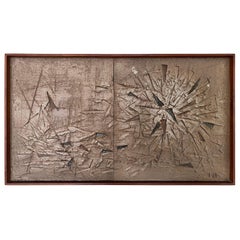
View AllEarly 1960s Teruo Hara Stoneware Wall Sculpture for Design Technics
By Teruo Hara
Located in Southampton, NJ
A rare, early 1960s stoneware Wall Sculpture by famed Japanese-American potter Teruo Hara for Design Technics. Signed on the lower right with Hara's TH chop mark along with the DT ch...
Category
Vintage 1960s North American Mid-Century Modern Decorative Art
Materials
Walnut, Stoneware, Pottery, Clay, Ceramic
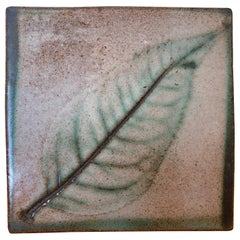
Nancy Wickham Stoneware Leaf Tile for the Vermont Workshop ex. Design Technics
By Nancy Wickham Boyd
Located in Southampton, NJ
An early 1980s stoneware tile by Nancy Wickham Boyd featuring a green leaf motif. The sgrafitto design is highlighted with green, brown and grqphite-colored glazing. Like quite a few...
Category
Vintage 1980s American Organic Modern Pottery
Materials
Ceramic, Clay, Pottery
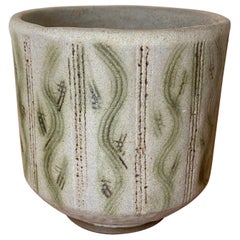
Stoneware vase by Nancy Wickham of the Vermont Workshop ex. Design Technics
By Nancy Wickham Boyd
Located in Southampton, NJ
A late 1940s stoneware vase by Nancy Wickham Boyd featuring a dynamic vine-like sgrafitto motif which is highlighted with green glazing. Like quite a few well-known NYC potters Nancy...
Category
Mid-20th Century American Organic Modern Vases
Materials
Ceramic, Clay, Pottery
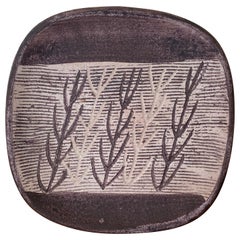
Midcentury Nancy Wickham Boyd Stoneware Plate with Branch Design
By Nancy Wickham Boyd
Located in Southampton, NJ
A late 1940s stoneware plate by Nancy Wickham Boyd featuring a dynamic design motif of bare twigs. The curved organic shape of the plate is a nice compliment to the more severe carvi...
Category
Mid-20th Century American Mid-Century Modern Decorative Dishes and Vide-...
Materials
Clay, Pottery, Paint
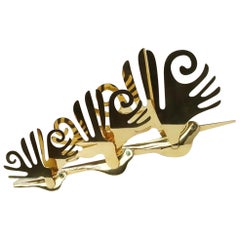
Collection of 3 Brass Pre-Columbian Style Hummingbirds by Joaquin Tinta
By Joaquin Tinta
Located in Southampton, NJ
Spanish name: Colibrí Pre Colombiano, Translation: Pre Columbian Hummingbird
Collection of 3 handmade polished brass hummingbirds with abstract wing design. The design was inspired ...
Category
Mid-20th Century Ecuadorean Mid-Century Modern Animal Sculptures
Materials
Brass
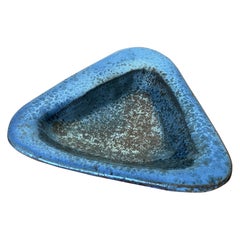
Midcentury Nancy Wickham Boyd Biomorphic Triangular Stoneware Pottery Bowl
By Nancy Wickham Boyd
Located in Southampton, NJ
A late 1940s stoneware biomorphic bowl by Nancy Wickham Boyd featuring a rich blue glaze with graphite and brown highlights. Like quite a few well-known NYC potters Nancy got her sta...
Category
Mid-20th Century American Organic Modern Decorative Bowls
Materials
Clay, Pottery
You May Also Like
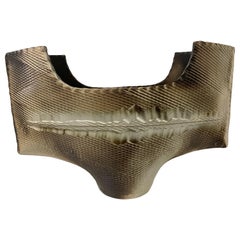
Japanese Stoneware Vessel
Located in Palm Springs, CA
Beautiful Japanese stoneware pottery vessel. It is signed on the base in characters. Nice glaze and wonderful form.
In good condition, with some m...
Category
20th Century Pottery
Materials
Stoneware
$960 Sale Price
20% Off
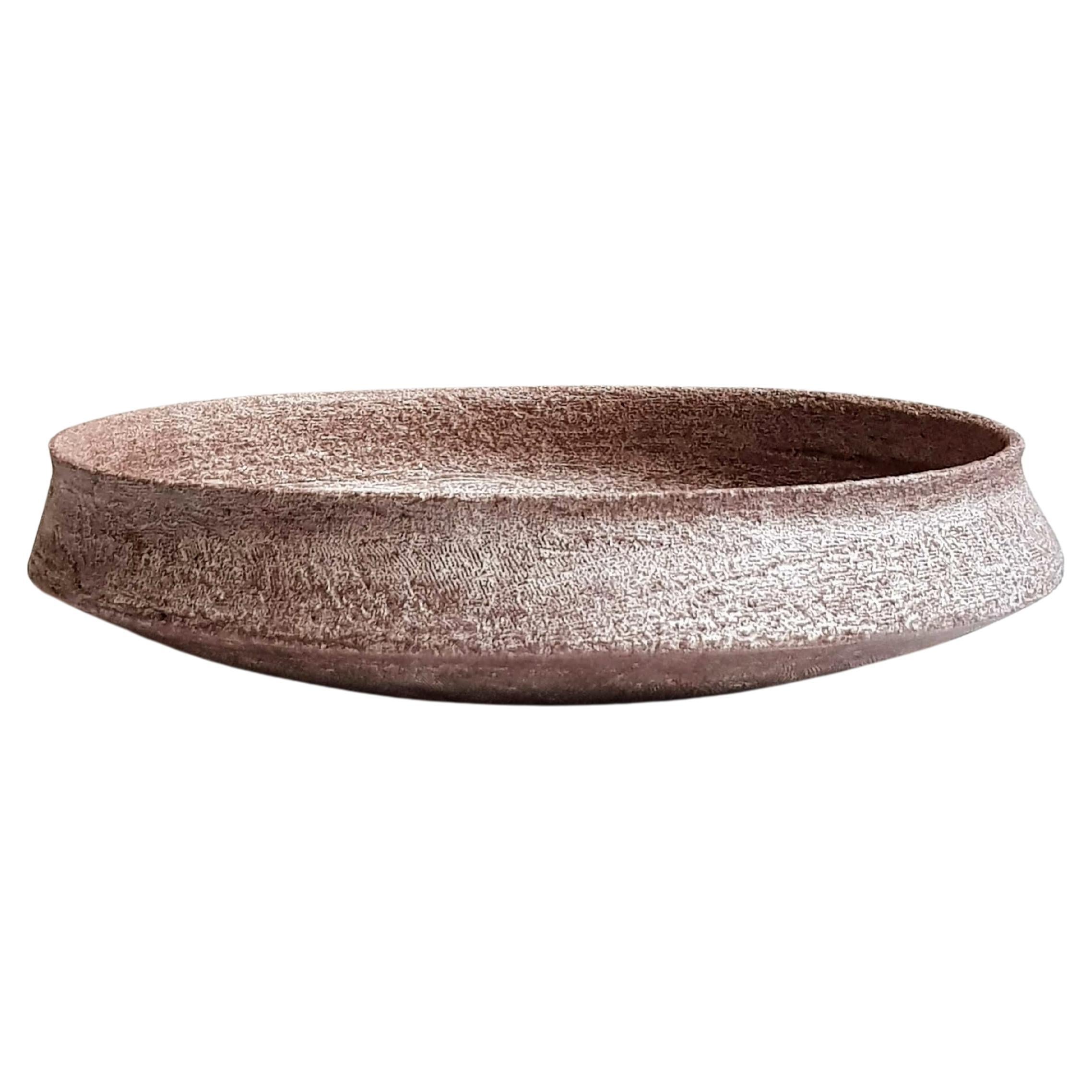
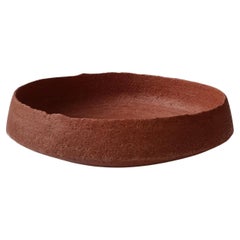
Red Stoneware Pinakio Plate by Elena Vasilantonaki
Located in Geneve, CH
Red Stoneware Pinakio Plate by Elena Vasilantonaki
Unique
Dimensions: ⌀ 34 x H 10 cm (Dimensions may vary)
Materials: Stoneware
Available finishes: With\...
Category
2010s Greek Post-Modern Pottery
Materials
Stoneware
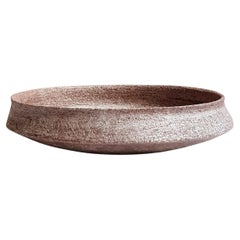
Red Stoneware Phiale Plate by Elena Vasilantonaki
Located in Geneve, CH
Red Stoneware Phiale Plate by Elena Vasilantonaki
Unique
Dimensions: ⌀ 30 x H 10 cm (Dimensions may vary)
Materials: Stoneware
Available finishes: With\w...
Category
2010s Greek Post-Modern Pottery
Materials
Stoneware
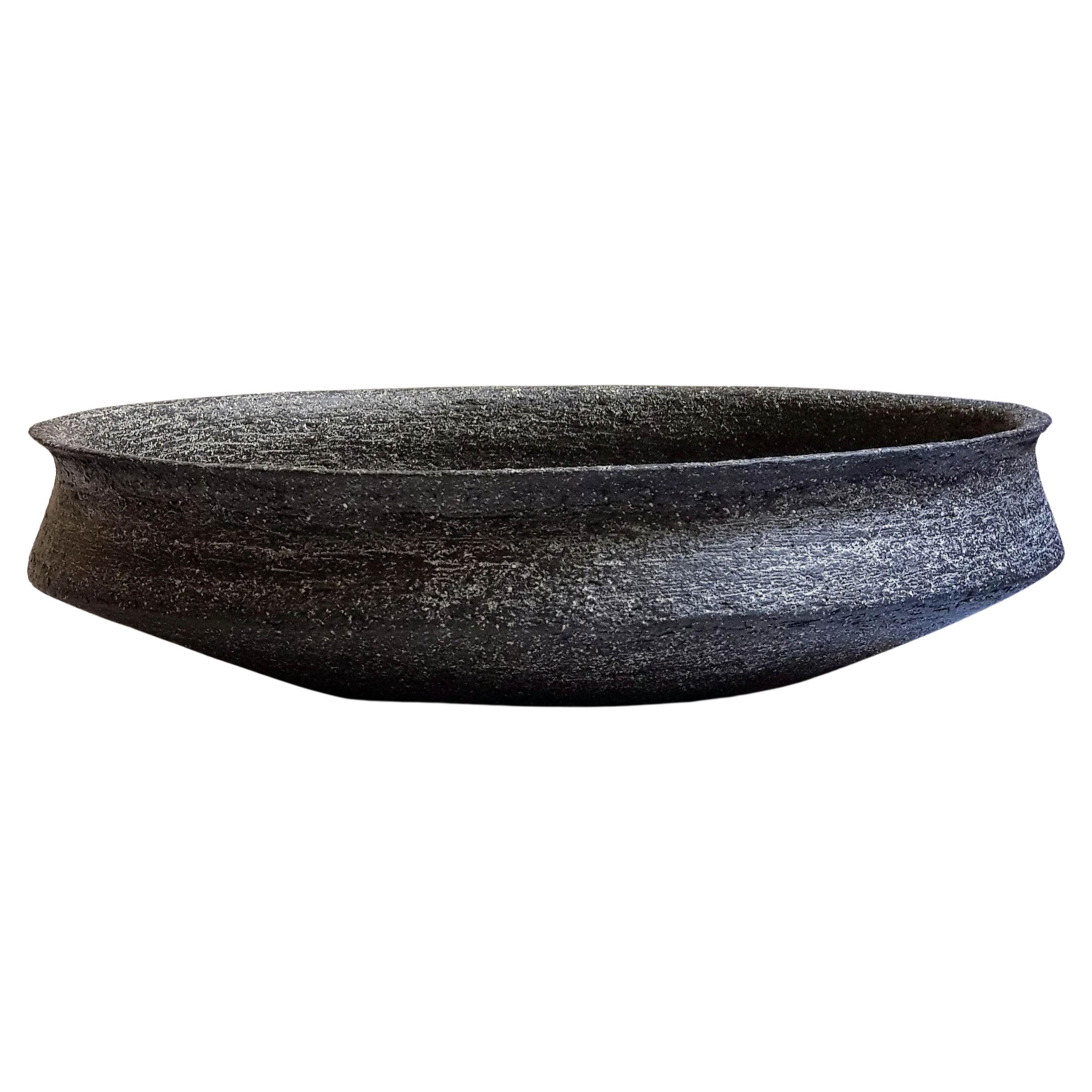
Grey Stoneware Pinakio Plate by Elena Vasilantonaki
Located in Geneve, CH
Grey Stoneware Pinakio Plate by Elena Vasilantonaki
Unique
Dimensions: ⌀ 34 x H 10 cm (Dimensions may vary)
Materials: Stoneware
Available finishes: With\without handles - Black, Whi...
Category
2010s Greek Post-Modern Pottery
Materials
Stoneware
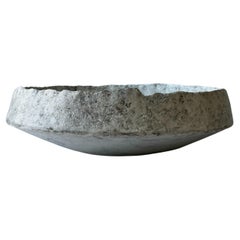
Black Stoneware Phiale Plate by Elena Vasilantonaki
Located in Geneve, CH
Black Stoneware Phiale Plate by Elena Vasilantonaki
Unique
Dimensions: ⌀ 30 x H 10 cm (Dimensions may vary)
Materials: Stoneware
Available finishes: With\without handle - Black, Whit...
Category
2010s Greek Post-Modern Pottery
Materials
Stoneware
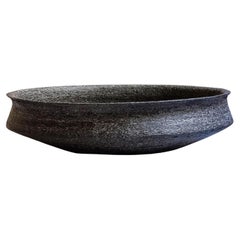
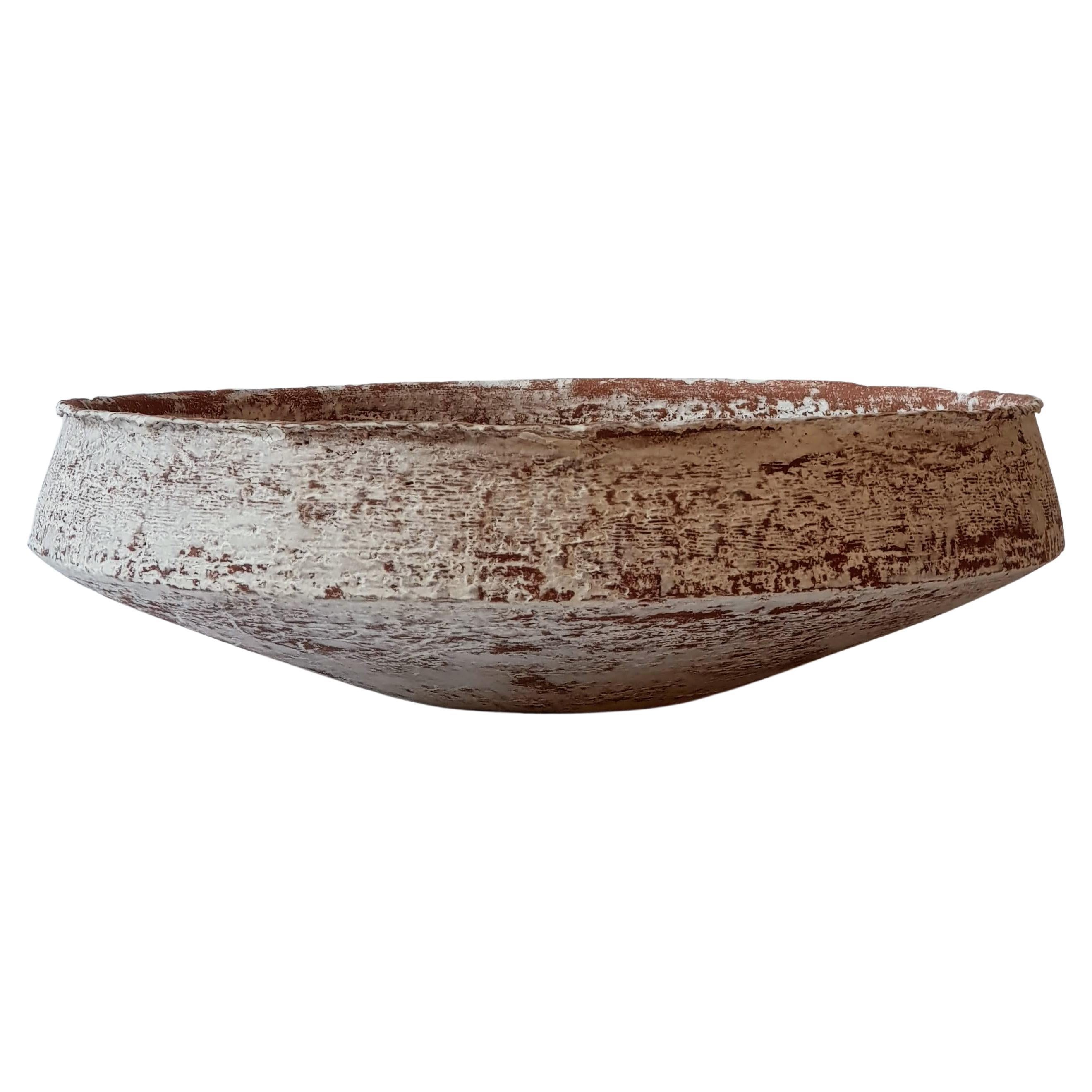
Brown Stoneware Pinakio Plate by Elena Vasilantonaki
Located in Geneve, CH
Brown Stoneware Pinakio Plate by Elena Vasilantonaki
Unique
Dimensions: ⌀ 34 x H 10 cm (Dimensions may vary)
Materials: Stoneware
Available finishes: With\without handles - Black, Wh...
Category
2010s Greek Post-Modern Pottery
Materials
Stoneware