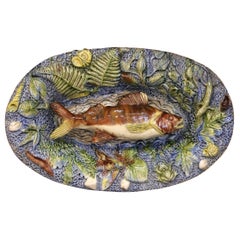
Items Similar to French Majolica Large Palissy Fish Dish, Longchamp Maker.
Want more images or videos?
Request additional images or videos from the seller
1 of 17
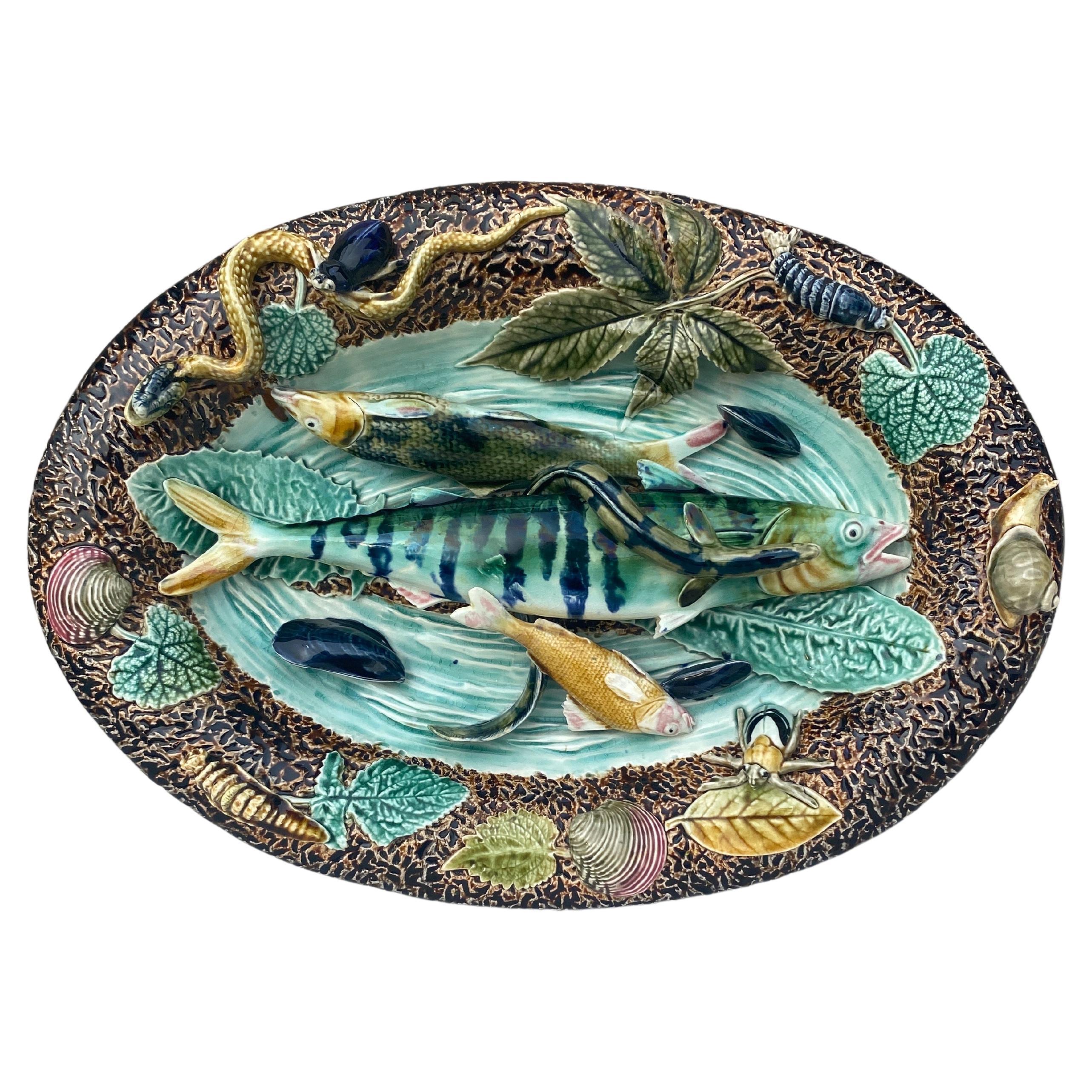
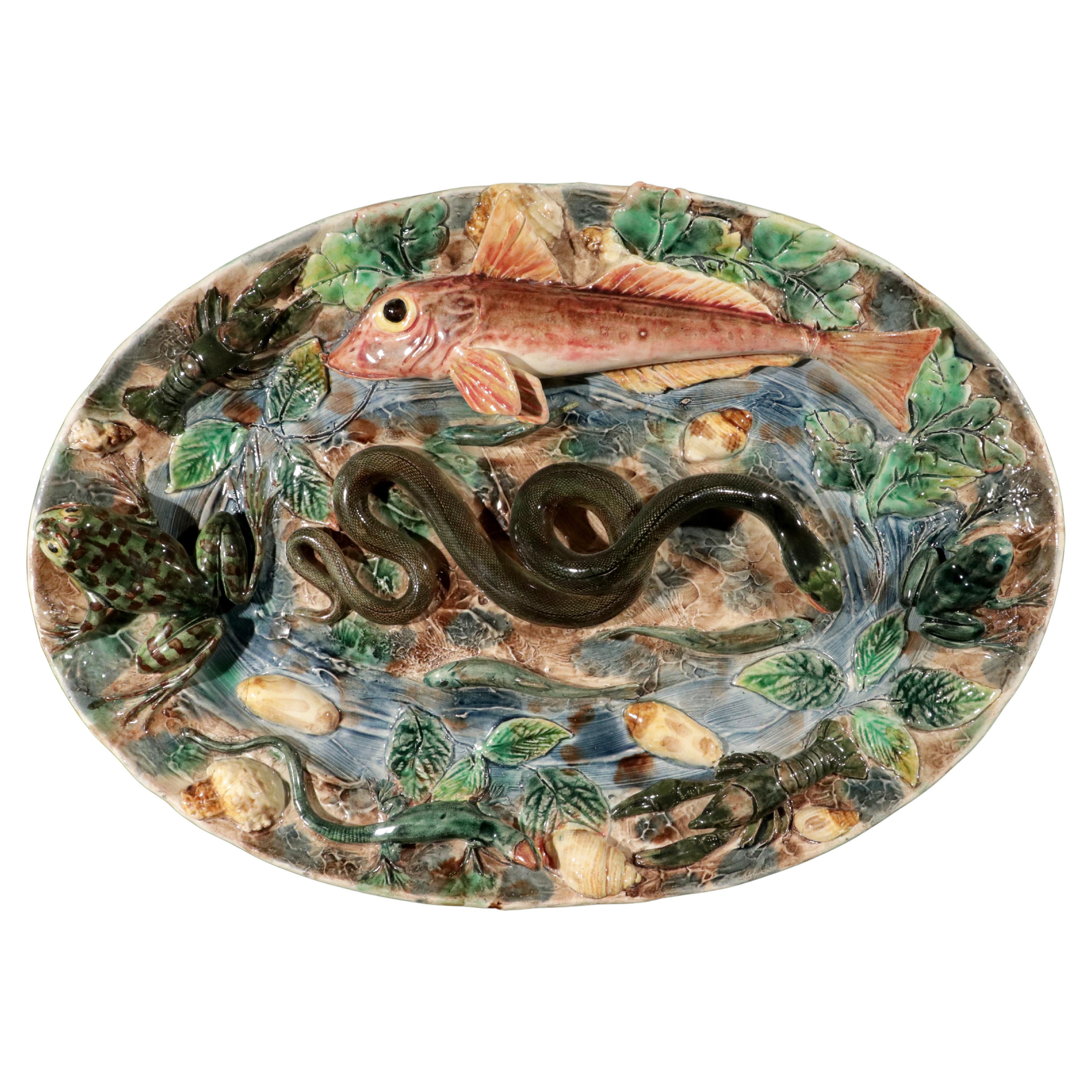
French Majolica Large Palissy Fish Dish, Longchamp Maker.
$5,500
£4,165.74
€4,784.21
CA$7,707.30
A$8,379.39
CHF 4,442.76
MX$100,447.61
NOK 56,465.21
SEK 51,729.81
DKK 35,755.90
About the Item
Aquatic Drama: Longchamp's Grande Majolica Grotto Platter
Object: Large French Majolica C Dish, "The Grand Riverbank"
Maker: Longchamp Pottery, France
Date: Circa 1880
Medium: Earthenware, deeply molded high relief, multi-colored lead glazes (Majolica/Barbotine)
Dimensions: 24 1/2 inches (Length) × 16 3/4 inches (Width) × 3 inches (Height)
Provenance: Private Delaware Collection (Acquired from Charles L. Washburn, February 2014)
A Feast for the Eyes: Monumental Neo-Palissy
This monumental oval platter from the Longchamp factory represents the peak decorative ambition of the Neo-Palissy movement in late 19th-century France. Its size and deep relief transform the piece from a simple dish into an elaborate, theatrical sculpture intended as a centerpiece or a striking wall decoration.
Historical and Artistic Context
As with all Neo-Palissy ware, this piece pays homage to the 16th-century master Bernard Palissy. However, the 19th-century version, particularly by major manufacturers like Longchamp, often amplified the size and complexity of the modeling to suit grand Victorian and Second Empire interiors. This dish’s large format and deep, curved border (creating a "deep well" effect) were designed to maximize the dramatic trompe-l'œil illusion.
Details and Composition
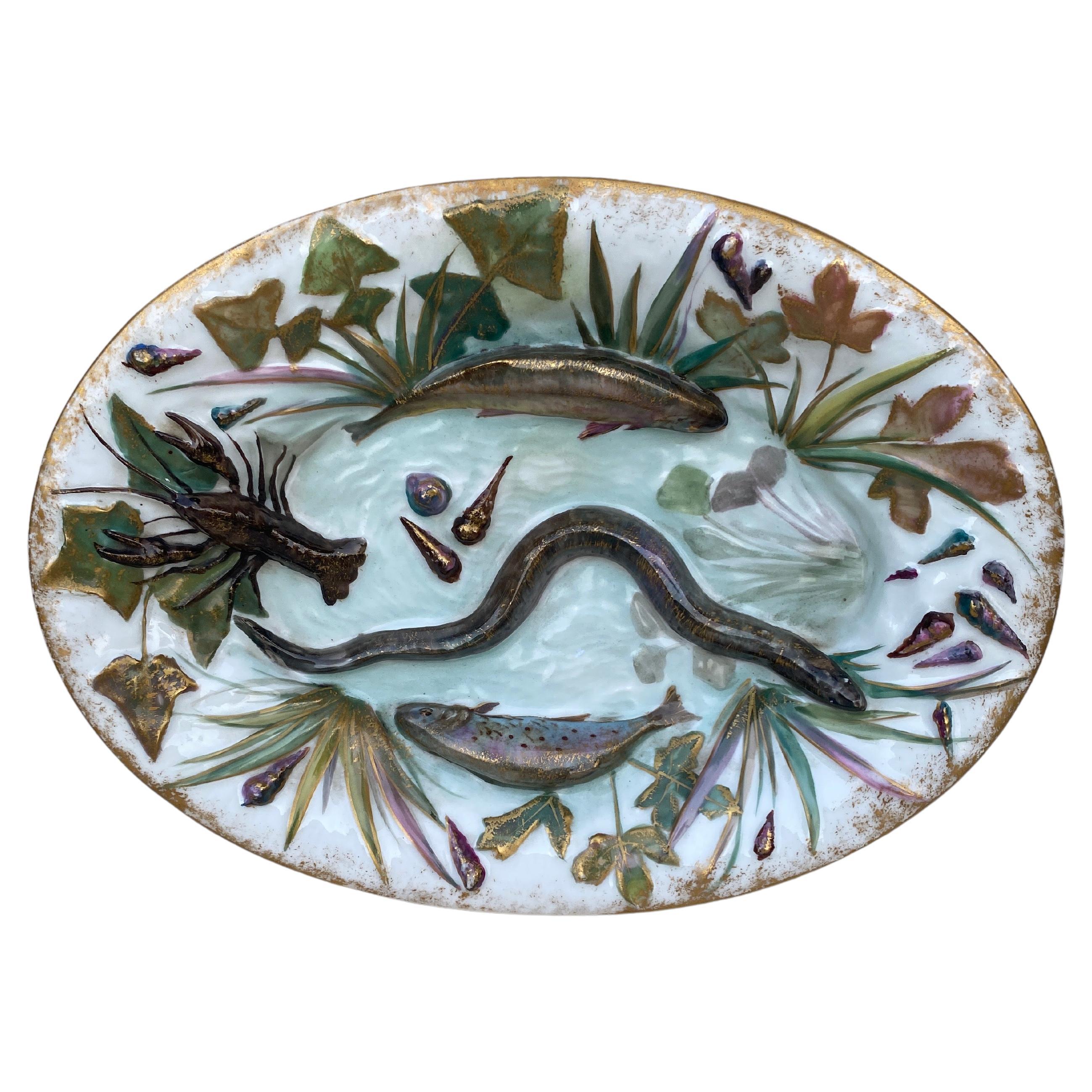
The Scene: The platter captures a dense, chaotic, and fascinating riverine environment. The central oval well simulates rippling water, featuring a large, curved fish (possibly an eel or large trout) modeled in glossy dark blue/gray, a smaller red fish, and a small eel/worm at the bottom. The high-gloss white glaze of the central well convincingly suggests agitated water foam or light reflection.
The Border: The wide, heavily molded border is a richly textured habitat of naturalistic elements. It is teeming with life and vegetation:
Aquatic Creatures: Including two prominent crayfish/lobsters (rendered in dark reddish-brown), frogs, and salamanders or smaller reptiles that weave amongst the foliage.
Flora and Ground: A variety of sharply defined seaweed, ferns, and other aquatic plants in vibrant greens, turquoise, and rusty-red tips create a dense tapestry. The ground glaze is mottled light brown and gray, simulating pebbly riverbed sediment.
Shells: Seashells and snails are strategically placed around the rim, adding another layer of texture and detail to the overall composition.
Technique and Glazing: The complexity lies in the multiple glazes applied to the deeply molded earthenware (Barbotine). The separation of the central white "water" from the dark, textured border requires precise firing and glazing to achieve the intended depth and color separation, underscoring Longchamp’s technical mastery during this period. The mottled brown glaze on the underside is characteristic of industrial majolica production.
Reference Sources
Katz, Marshall P., and Lehr, Robert. Palissy Ware: Nineteenth-Century French Ceramists from Avisseau to Renoleau. London: The Athlone Press, 1996. (Essential for placing Longchamp's Neo-Palissy production within the wider French revival context.)
Mottahedeh, Mildred. The Great Exhibition of 1851: Majolica and the New Victorian Ceramics. New York: Mottahedeh
Co., 1978. (Provides insight into the popularity and display of large, ornamental Majolica pieces in the late 19th century, of which this Longchamp platter is a prime example.)
Hajdamach, Charles R. British Art Pottery, 1870-1940. Woodbridge, Suffolk: Antique Collectors' Club, 1991. (While focused on British pottery, it provides vital context on the international market for majolica and the Neo-Palissy style that influenced makers across Europe, including French factories like Longchamp.)
(Ref: VM98781)
- Creator:Longchamp (Maker)
- Dimensions:Height: 3 in (7.62 cm)Width: 24.5 in (62.23 cm)Depth: 16.75 in (42.55 cm)
- Style:Victorian (Of the Period)
- Materials and Techniques:
- Place of Origin:
- Period:
- Date of Manufacture:1880
- Condition:Wear consistent with age and use.
- Seller Location:Downingtown, PA
- Reference Number:Seller: vm987811stDibs: LU861047207502
About the Seller
5.0
Recognized Seller
These prestigious sellers are industry leaders and represent the highest echelon for item quality and design.
Gold Seller
Premium sellers maintaining a 4.3+ rating and 24-hour response times
Established in 1916
1stDibs seller since 2009
437 sales on 1stDibs
Typical response time: 1 hour
Associations
The Art and Antique Dealers League of AmericaAntiques Associations Members
- ShippingRetrieving quote...Shipping from: Downingtown, PA
- Return Policy
More From This Seller
View AllLongchamp
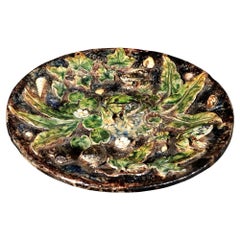
s Wild Majolica Menagerie: French Majolica Palissy Dish
By Longchamp
Located in Downingtown, PA
Longchamp's Wild Majolica Menagerie:
French Majolica Palissy Dish
Maker: Longchamp Pottery, France
Date: Circa 1880
Medium: Earthenware, multi-colored lead glazes (Majolica/Barboti...
Category
Antique 1880s French Aesthetic Movement Pottery
Materials
Majolica, Pottery
Léon Brard
s Midnight Pond -French Majolica Palissy Dish, "Frogs Amongst Lilies
Located in Downingtown, PA
Léon Brard's Midnight Pond Plate
French Majolica Palissy Dish, "Frogs Amongst Lilies"
Artist/Maker: Léon Brard (French, active late 19th century)
Date: Circa 1890
Medium: Earthenwa...
Category
Antique 1880s French Mid-Century Modern Pottery
Materials
Majolica, Pottery
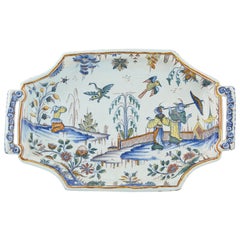
French Faïence Oblong Octagonal Chinoiserie Tray (Bannette), Most likely Rouen
By Rouen
Located in Downingtown, PA
French Faïence Oblong Octagonal Chinoiserie Letter or Document Tray,
Circa 1730-1740,
This exquisite piece is a French Faïence Oblong Octagonal Chinoiserie Letter or Document Tray,...
Category
Antique 1730s Georgian Delft and Faience
Materials
Faience
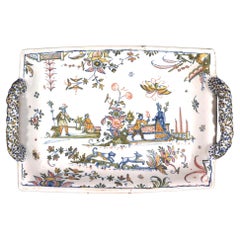
Early 18th-century Marseille Faïence Chinoiserie Footed Tray
Located in Downingtown, PA
Marseille Faïence Chinoiserie Footed Tray (Bannette),
Attributed to the Leroy Workshop,
Circa 1730
The center with two vignettes of courting couples separated by a central flowering...
Category
Antique Early 18th Century Rococo Delft and Faience
Materials
Faience
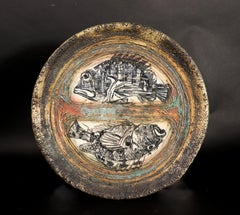
Studio Pottery Double Fish Dish, Dated 2003
Located in Downingtown, PA
Studio Pottery Double Fish Dish,
La Funente, Dated 2003
The large stoneware Studio Pottery dish depicts two fish within demi-lune panels. The dish was made using enamel and a sgraf...
Category
Early 2000s Modern Pottery
Materials
Ceramic, Abalone, Stoneware
$800 / item
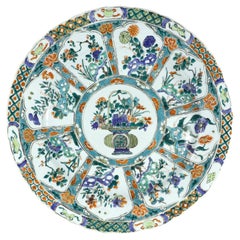
Chinese Porcelain Famille Verte Large "Flower Basket" Dish, Kangxi Period
Located in Downingtown, PA
Vibrant Prosperity: A Famille Verte 'Flower Basket' Dish from the Kangxi Golden Age
This magnificent Chinese Export porcelain dish, dating to the height of the Kangxi Period (c. 1700-1710), is a resplendent example of the famed famille verte (green family) palette. This enameling technique, characterized by its brilliant, translucent greens, yellows, and blues, reached its zenith under the patronage of the Kangxi Emperor, ushering in a golden age of ceramic production at the imperial kilns in Jingdezhen (Guest and Gray).
Auspicious Symbolism and Design Mastery
The dish is a feast of intricate design and rich symbolism, centered on an openwork beribboned basket of peony and lotus flowers. The flower basket motif is highly auspicious in Chinese art, being one of the attributes of the Daoist Immortal Lan Caihe, and symbolizes longevity and good fortune (Sotheby's, Lot 657, 2015). This meaning is powerfully reinforced by the inclusion of a central shou character (寿) in the basket, the Chinese ideograph for Longevity, a core wish in Chinese culture for a long, healthy, and prosperous life (Metropolitan Museum of Art). The presence of the shou character, often incorporated into designs for Imperial birthday celebrations during this era, underscores the dish's grand and celebratory intent.
The radial design radiates outward with petal-shaped reserves in the cavetto, each containing detailed flowering plants issuing from rockwork, all set against a signature pale-green stippled ground (Dizi). The border completes the composition with an ornate pattern of green trellis-work punctuated by iron-red flower heads, alternating with oval panels containing various Precious Objects (Ba Gu), further emphasizing wealth and good fortune.
This large dish, at over 14 inches in diameter, was one of the exquisite items commissioned for the European export market, particularly by the Dutch East India Company (VOC), where its vibrant colors and complex iconography were highly prized by wealthy clientele (Guest and Gray). The reverse, painted in underglaze blue with delicate floral sprays, maintains a link to the more traditional Chinese aesthetic. This piece is a tangible embodiment of the technical sophistication and artistic brilliance that made Kangxi famille verte porcelain...
Category
Antique Early 1700s Chinese Chinese Export Platters and Serveware
Materials
Porcelain
You May Also Like
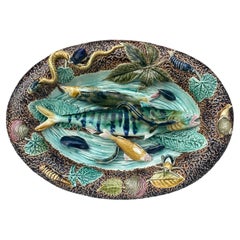
19th Century Majolica Palissy Wall Fish Platter Choisy Le Roi
By Choisy-le-Roi
Located in Austin, TX
Colorful Palissy wall platter signed Hippolyte Boulenger Choisy le Roi, circa 1880.
Decorated with fishs,snake, snail,bugs,shells,mussel and lea...
Category
Antique 1880s French Victorian Decorative Art
Materials
Ceramic, Faience, Majolica
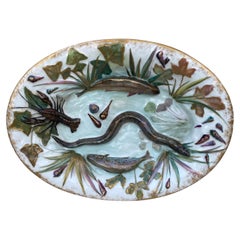
19th Century Majolica Porcelain Palissy Fish Wall Platter
Located in Austin, TX
Rare 19th century porcelain Palissy platter with fishs, eel, shells , crawfish and ivy leaves.
Category
Antique 1880s French Victorian Decorative Art
Materials
Ceramic, Majolica, Porcelain
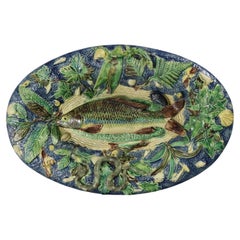
French Palissy Majolica Platter with Fish
Located in Chelmsford, Essex
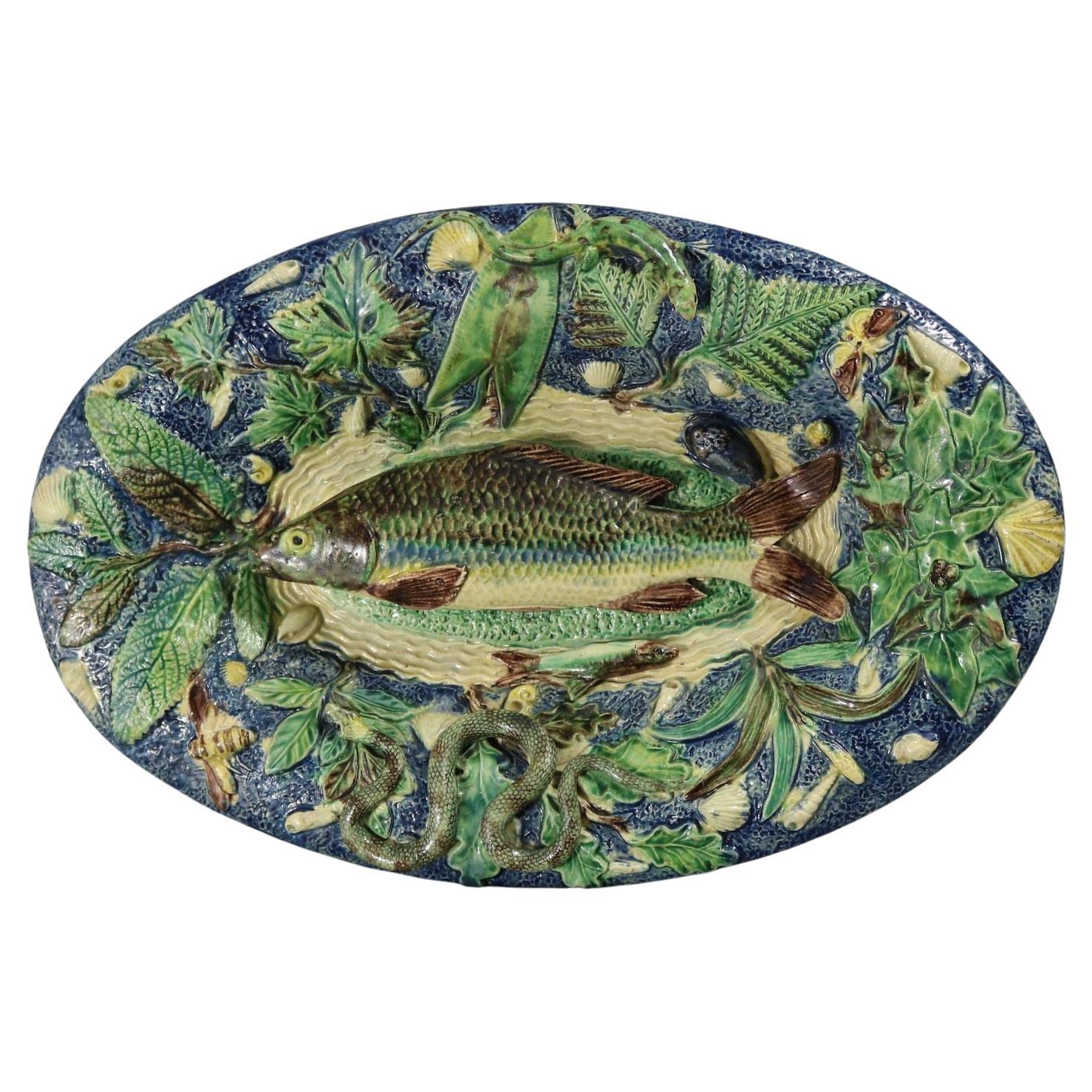
Unidentified French French Palissy Majolica wall platter which features a fish (carp), a snake, a frog, a lizard, shellfish, insects and leaves. Ripple effect ground. Colouration: gr...
Category
Antique Late 19th Century Decorative Art
Materials
Majolica
Barbizet French Palissy Majolica Platter with Fish
By Victor Barbizet
Located in Chelmsford, Essex
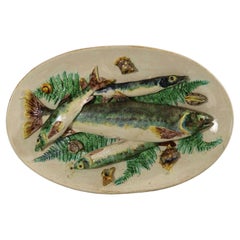
Barbizet French Palissy Majolica wall platter which features various overlying fish and shells on a bed of fern leaves. Colouration: white, green, blue, are predominant.
Category
Antique 1870s Victorian Wall-mounted Sculptures
Materials
Majolica
19th Century Majolica Palissy Fish Wall Platter Thomas Sergent
By Thomas Victor Sergent
Located in Austin, TX
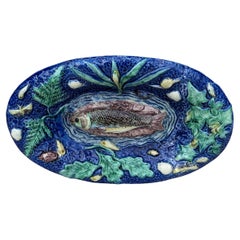
19th Century small oval Palissy Thomas Sergent.
7.5 inches W. by 4.5 inches H.
Fish on the center , shells , ivy , oak leaves , bugs , snail.
Thomas Victor Sergent was an active memb...
Category
Antique 1880s French Victorian Decorative Art
Materials
Majolica, Ceramic
19th Century French Hand Painted Ceramic Barbotine Fish Platter Palissy Style
By Bernard Palissy
Located in Dallas, TX
Vivid and sculptural, this antique Palissy-style majolica plate was crafted in France circa 1880 and exemplifies the naturalistic tradition inspired by Bernard Palissy. Modeled in hi...
Category
Antique Late 19th Century French Pottery
Materials
Ceramic, Terracotta