Items Similar to Léon Brard
s Midnight Pond -French Majolica Palissy Dish, "Frogs Amongst Lilies
Video Loading
Want more images or videos?
Request additional images or videos from the seller
1 of 15
Léon Brard
s Midnight Pond -French Majolica Palissy Dish, "Frogs Amongst Lilies
$4,250
£3,226.52
€3,719.65
CA$6,012.21
A$6,472.69
CHF 3,466.25
MX$77,993.64
NOK 43,734.51
SEK 40,024.14
DKK 27,794.72
About the Item
Léon Brard's Midnight Pond Plate
French Majolica Palissy Dish, "Frogs Amongst Lilies"
Artist/Maker: Léon Brard (French, active late 19th century)
Date: Circa 1890
Medium: Earthenware, high-relief modeling, multi-colored lead glazes (Majolica/Barbotine)
Dimensions: 12 3/4 inches (Diameter) × 2 inches (Height)
Master of the Neo-Palissy Grotto
This dark, evocative plate is a superb example of the Neo-Palissy style, created by one of its most accomplished independent practitioners, Léon Brard. Unlike the factory-produced pieces of Longchamp (like the previous dish), Brard belonged to the "School of Tours" ceramists—a group based in the Loire Valley region (including Charles Avisseau and Thomas Sergent) who were particularly dedicated to the meticulous, hand-finished revival of Bernard Palissy’s (d. 1590) 16th-century rustic ware.
Details and Composition
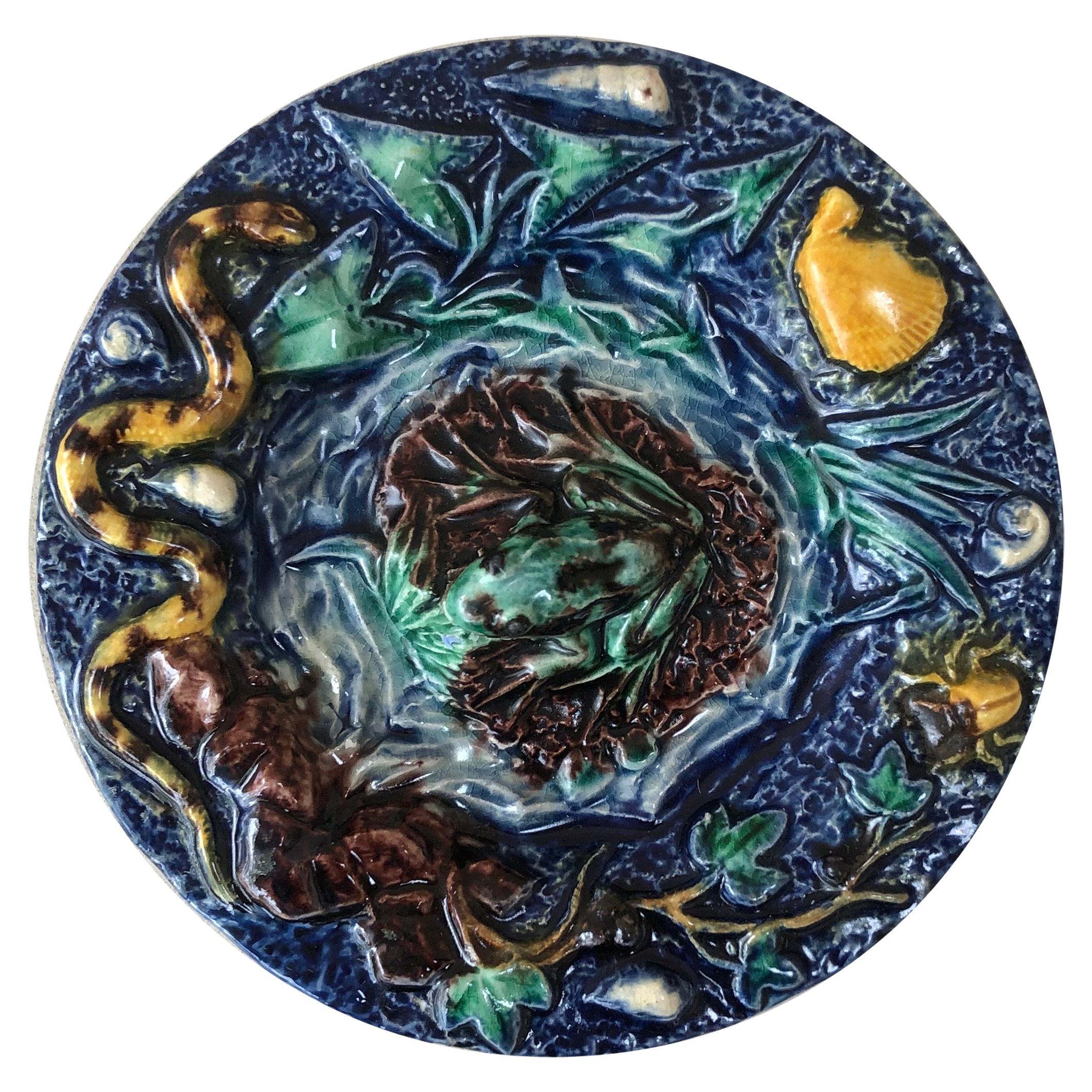
The Subject: The circular dish captures a nocturnal, stagnant pond scene. A large, central frog is positioned amidst lily pads and small white flowers, surrounded by richly modeled, deeply veined aquatic leaves. Three smaller frogs or toads are tucked into the foliage around the rim, contributing to the unsettling trompe-l'œil effect. Scattered seashells and snails are embedded in the periphery, emphasizing the naturalistic clutter of a freshwater environment.
Glazing Technique: Brard's genius lies in his powerful command of the Majolica (or French Barbotine) glazes. The plate features a dramatically dark, almost midnight-blue and brown ground, which perfectly simulates deep, murky pond water. This dark background causes the high-relief elements—the vivid green and yellow-tipped leaves, the shiny, speckled green of the frogs, and the pale shells—to pop with startling realism. The glossy, pooled glazes give the piece a wet, glistening appearance, enhancing the illusion.
The Maker's Mark: The dish is stamped on the reverse with the impressed Brard mark, typically consisting of a medallion and monograms within an oval. Brard’s work is characterized by its high quality, strong relief, and preference for dark, rich backgrounds, setting it apart from the lighter, more mass-produced Majolica of his contemporaries. Pieces by Brard are highly sought after as they represent the highest echelon of the 19th-century ceramic art revival.
Reference Sources
Katz, Marshall P., and Lehr, Robert. Palissy Ware: Nineteenth-Century French Ceramists from Avisseau to Renoleau. London: The Athlone Press, 1996. (Pages dedicated to Léon Brard and the "School of Tours" ceramists.)
Picard, Jean-François. Majolique: Art de la faïence décorative au XIXe siècle en France. Paris: Éditions de l'Amateur, 1999. (A key reference for French Barbotine and Majolica, detailing the artistic differences between the School of Tours and the factory production.)
Amico, Leonard N. Bernard Palissy: In Search of Earthly Paradise. New York: Flammarion, 1996. (Provides context on the 16th-century precedent for the style, explaining the trompe-l'œil and naturalistic modeling techniques revived by Brard.)
(Ref: VM98780)
- Dimensions:Height: 2 in (5.08 cm)Diameter: 12.75 in (32.39 cm)
- Style:Mid-Century Modern (Of the Period)
- Materials and Techniques:
- Place of Origin:
- Period:
- Date of Manufacture:1880
- Condition:Repaired: Good with several frits to rim filled invisibly. Wear consistent with age and use.
- Seller Location:Downingtown, PA
- Reference Number:Seller: VM987801stDibs: LU861047062032
About the Seller
5.0
Recognized Seller
These prestigious sellers are industry leaders and represent the highest echelon for item quality and design.
Gold Seller
Premium sellers maintaining a 4.3+ rating and 24-hour response times
Established in 1916
1stDibs seller since 2009
438 sales on 1stDibs
Typical response time: 1 hour
Associations
The Art and Antique Dealers League of AmericaAntiques Associations Members
- ShippingRetrieving quote...Shipping from: Downingtown, PA
- Return Policy
More From This Seller
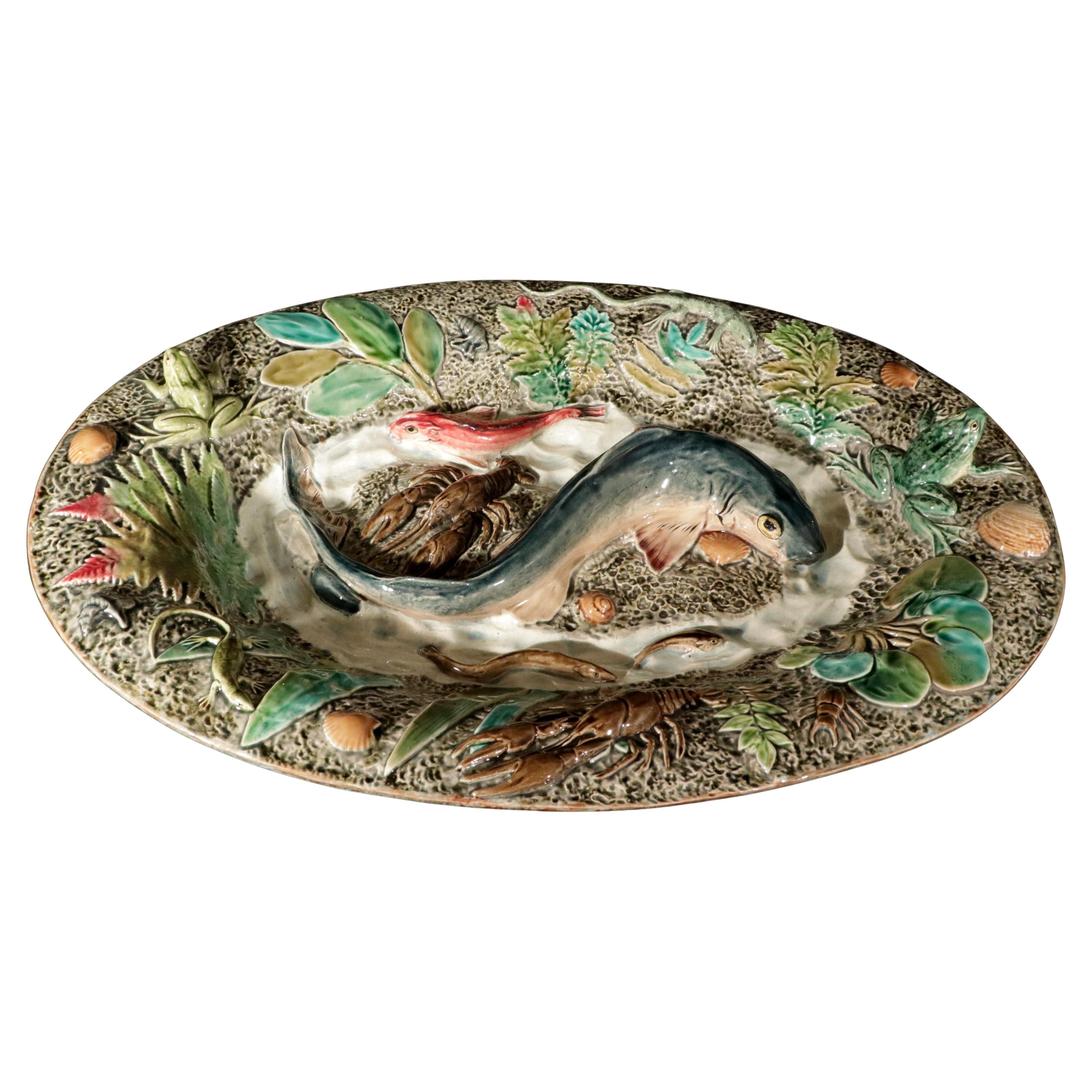
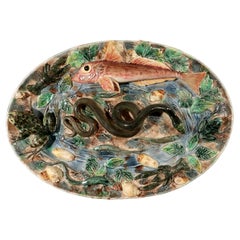
View AllFrench Majolica Large Palissy Fish Dish, Longchamp Maker.
By Longchamp
Located in Downingtown, PA
Aquatic Drama: Longchamp's Grande Majolica Grotto Platter
Object: Large French Majolica C Dish, "The Grand Riverbank"
Maker: Longchamp Pottery, France
Date: Circa 1880
Medium: Eart...
Category
Antique 1880s French Victorian Pottery
Materials
Ceramic, Majolica, Pottery
Longchamp
s Wild Majolica Menagerie: French Majolica Palissy Dish
By Longchamp
Located in Downingtown, PA
Longchamp's Wild Majolica Menagerie:
French Majolica Palissy Dish
Maker: Longchamp Pottery, France
Date: Circa 1880
Medium: Earthenware, multi-colored lead glazes (Majolica/Barboti...
Category
Antique 1880s French Aesthetic Movement Pottery
Materials
Majolica, Pottery
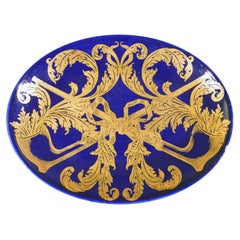
Piero Fornasetti Oval Dish with Gilt Pipe and Tobacco Motif
By Piero Fornasetti
Located in Downingtown, PA
The Piero Fornasetti Pip motif oval dish is painted on a dark blue ground with a gilt design of two pipes entwined with tobacco leaves and tied together with a central ribbon.
Ref...
Category
Mid-20th Century Italian Mid-Century Modern Porcelain
Materials
Ceramic
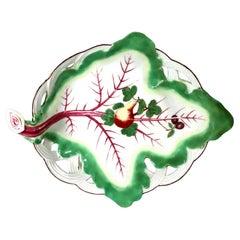
18th Century Chelsea Porcelain Trompe L
oeil Leaf Dish with Fruit
By Chelsea Porcelain
Located in Downingtown, PA
18th century Chelsea Porcelain Trompe L'oeil Leaf Dish with Fruit,
Brown Anchor,
circa 1758-60
The trompe L'oeil porcelain Chelsea ...
Category
Antique 1750s English Georgian Platters and Serveware
Materials
Porcelain
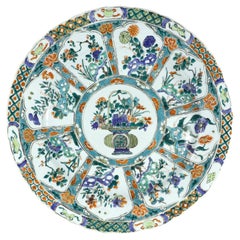
Chinese Porcelain Famille Verte Large "Flower Basket" Dish, Kangxi Period
Located in Downingtown, PA
Vibrant Prosperity: A Famille Verte 'Flower Basket' Dish from the Kangxi Golden Age
This magnificent Chinese Export porcelain dish, dating to the height of the Kangxi Period (c. 1700-1710), is a resplendent example of the famed famille verte (green family) palette. This enameling technique, characterized by its brilliant, translucent greens, yellows, and blues, reached its zenith under the patronage of the Kangxi Emperor, ushering in a golden age of ceramic production at the imperial kilns in Jingdezhen (Guest and Gray).
Auspicious Symbolism and Design Mastery
The dish is a feast of intricate design and rich symbolism, centered on an openwork beribboned basket of peony and lotus flowers. The flower basket motif is highly auspicious in Chinese art, being one of the attributes of the Daoist Immortal Lan Caihe, and symbolizes longevity and good fortune (Sotheby's, Lot 657, 2015). This meaning is powerfully reinforced by the inclusion of a central shou character (寿) in the basket, the Chinese ideograph for Longevity, a core wish in Chinese culture for a long, healthy, and prosperous life (Metropolitan Museum of Art). The presence of the shou character, often incorporated into designs for Imperial birthday celebrations during this era, underscores the dish's grand and celebratory intent.
The radial design radiates outward with petal-shaped reserves in the cavetto, each containing detailed flowering plants issuing from rockwork, all set against a signature pale-green stippled ground (Dizi). The border completes the composition with an ornate pattern of green trellis-work punctuated by iron-red flower heads, alternating with oval panels containing various Precious Objects (Ba Gu), further emphasizing wealth and good fortune.
This large dish, at over 14 inches in diameter, was one of the exquisite items commissioned for the European export market, particularly by the Dutch East India Company (VOC), where its vibrant colors and complex iconography were highly prized by wealthy clientele (Guest and Gray). The reverse, painted in underglaze blue with delicate floral sprays, maintains a link to the more traditional Chinese aesthetic. This piece is a tangible embodiment of the technical sophistication and artistic brilliance that made Kangxi famille verte porcelain...
Category
Antique Early 1700s Chinese Chinese Export Platters and Serveware
Materials
Porcelain
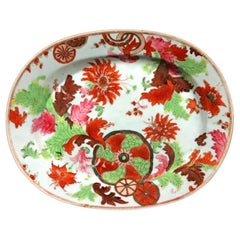
18th-century Chinese Export Pseudo Tobacco Leaf Oval Dish
Located in Downingtown, PA
Verdant Splendor: Chinese Export "Pseudo Tobacco Leaf" Oval Dish
This vibrant Chinese Export porcelain oval dish, dating from circa 1765, presents a magnificent and early variation ...
Category
Antique 1760s Chinese Chinese Export Platters and Serveware
Materials
Porcelain
You May Also Like
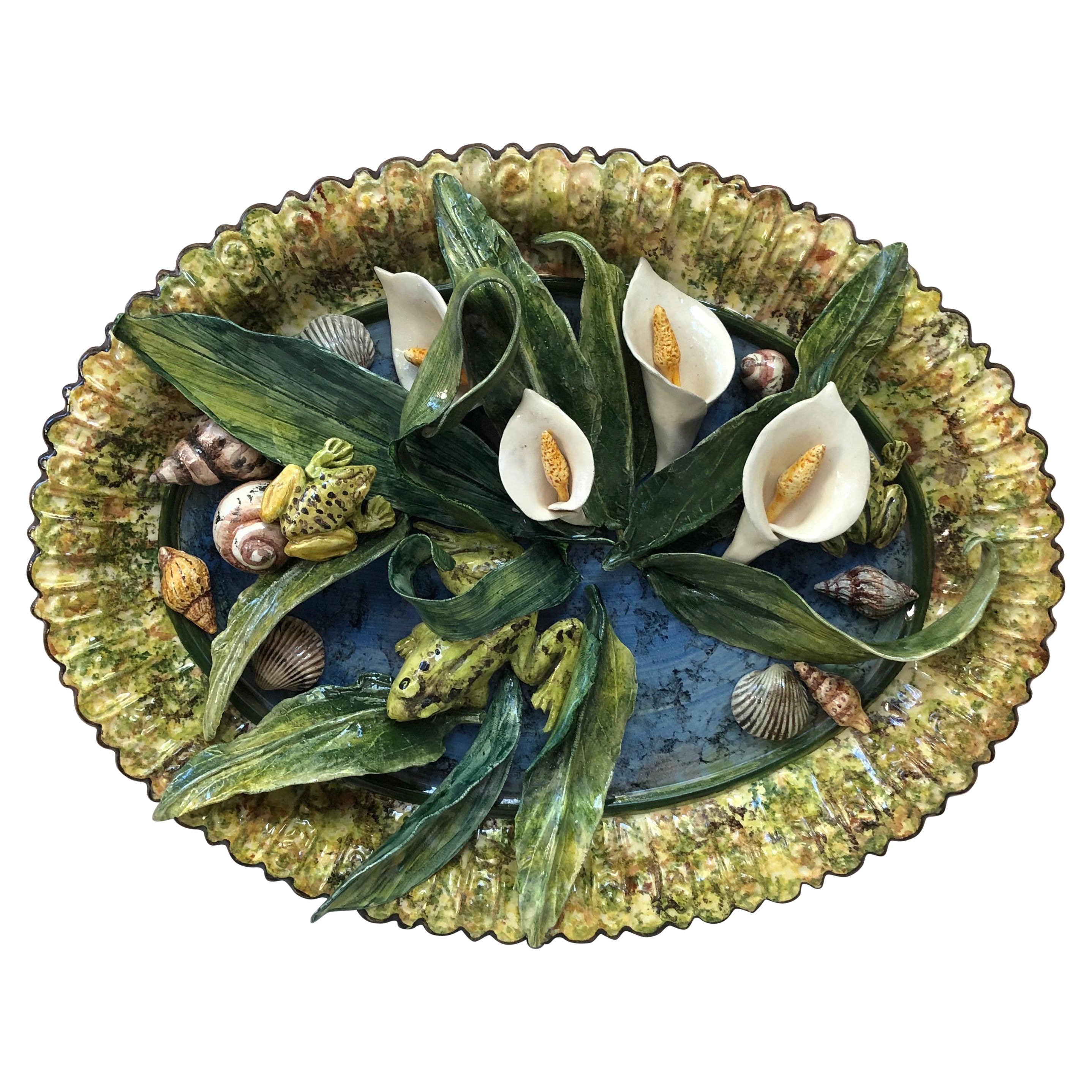
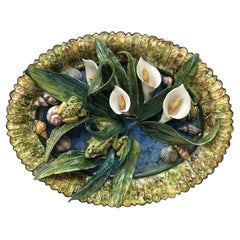
French Majolica Palissy Platter Arums, Frogs, Shells Signed Christine Viennet
By Christine Viennet
Located in Austin, TX
Rare Majolica platter arums, frogs, shells signed Christine Viennet circa 2000.
Christine Viennet studied at the Oslo school of art, then apprentice...
Category
Early 2000s French Country Decorative Art
Materials
Ceramic, Faience
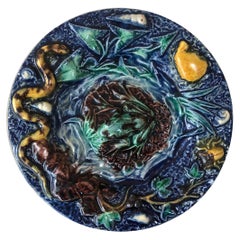
19th Century Majolica Palissy Frog Wall Platter Thomas Sergent
By Thomas Victor Sergent
Located in Austin, TX
Rare small Palissy platter with frog, shells, butterfly and plants, circa 1880 signed Thomas Sergent.
Category
Antique 1880s French Victorian Decorative Art
Materials
Majolica, Ceramic
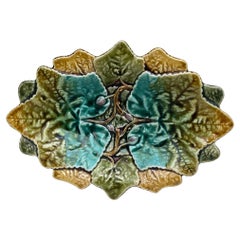
Majolica Leaves Oval Platter Choisy le Roi, circa 1890
By Choisy-le-Roi
Located in Austin, TX
Majolica Leaves Oval Platter Choisy le Roi, circa 1890
11.5 by 8 inches.
Category
Antique 1890s French Rustic Platters and Serveware
Materials
Ceramic, Faience
19th Century Majolica Palissy Wall Fish Platter Choisy Le Roi
By Choisy-le-Roi
Located in Austin, TX
Colorful Palissy wall platter signed Hippolyte Boulenger Choisy le Roi, circa 1880.
Decorated with fishs,snake, snail,bugs,shells,mussel and lea...
Category
Antique 1880s French Victorian Decorative Art
Materials
Ceramic, Faience, Majolica
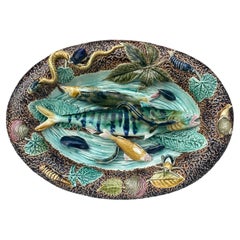
George Jones Majolica Pond Lilies and Bullrushes 10-in Tray, English, c. 1875
By George Jones
Located in Banner Elk, NC
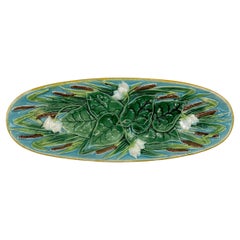
A George Jones Majolica 10-inch Oval Pen Tray, with green-glazed relief-molded lily pads with white blossoms and naturalistically glazed bullrushes on turquoise-glazed water forming the ground, with a yellow ocher rim, the reverse glazed in brown and green tortoiseshell...
Category
Antique 19th Century English Victorian Ceramics
Materials
Majolica
Large Majolica Oyster Platter Vallauris circa 1950
By Vallauris
Located in Austin, TX
Large Majolica Oyster Platter Vallauris circa 1950.
Category
Vintage 1950s French Mid-Century Modern Platters and Serveware
Materials
Ceramic