1 of 5
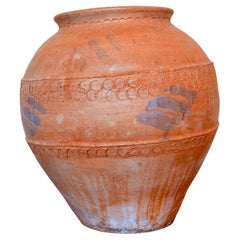
Pair Large Early 19th c. Biots
$12,000List Price
About the Item
- Dimensions:Height: 37.5 in (95.25 cm)Diameter: 28 in (71.12 cm)
- Materials and Techniques:
- Period:
- Date of Manufacture:19th c.
- Condition:Shows markings consistent with history.
- Seller Location:Houston, TX
- Reference Number:Seller: 5831-8.11stDibs: U091023847095
Authenticity Guarantee
In the unlikely event there’s an issue with an item’s authenticity, contact us within 1 year for a full refund. DetailsMoney-Back Guarantee
If your item is not as described, is damaged in transit, or does not arrive, contact us within 7 days for a full refund. Details24-Hour Cancellation
You have a 24-hour grace period in which to reconsider your purchase, with no questions asked.Vetted Professional Sellers
Our world-class sellers must adhere to strict standards for service and quality, maintaining the integrity of our listings.Price-Match Guarantee
If you find that a seller listed the same item for a lower price elsewhere, we’ll match it.Trusted Global Delivery
Our best-in-class carrier network provides specialized shipping options worldwide, including custom delivery.You May Also Like
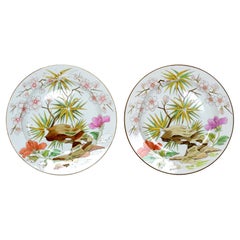
Pair of Early 19th c Wedgwood Pearlware Prunus Pattern 8" Plates
By Wedgwood
Located in valatie, NY
Pair of Early 19th c Wedgwood Pearlware Prunus Pattern 8" Plates. With impressed 'WEDGWOOD' mark on the base and the number '10'. This is a hard to find pattern.
Trent Antiques has ...
Category
Antique Early 19th Century English Pottery
Materials
Pottery
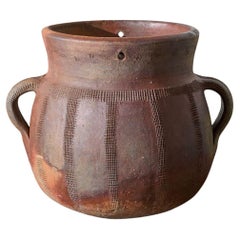
Early 19th century Earthenware ponne pot
Located in Malton, GB
This is a hugely decorative and high quality 19th century French ponne pot. The deep purple red colour is stunning and will work well in a number of interiors or outside. Overall con...
Category
Antique 19th Century Pottery
Materials
Earthenware
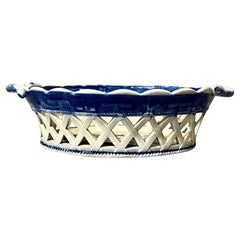
Early 19th Century Pearlware Chestnut Basket
Located in Pasadena, CA
This is a good example of a very early 19th century Pearlware Chestnut Basket in the "Blue Willow" transfer pattern. Creamware was invented during the second half of the 18th century and reached its height of popularity c.1810. Chestnut baskets were common serving pieces in 18th and 19th century households. Period antique Chestnut basket...
Category
Antique Early 19th Century English Regency Ceramics
Materials
Clay
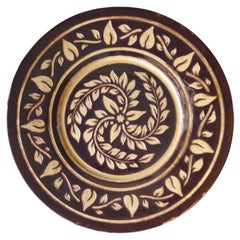
Large Decorative Dish, Biot, France c. 1960
By Biot
Located in St Ouen, FR
Exceptional dimensions for this extra-large dish which can be also a wall-mounted decoration.
Ceramic center since Antiquity, the charming city of Biot has gained notoriety both for...
Category
Vintage 1960s French Folk Art Pottery
Materials
Earthenware
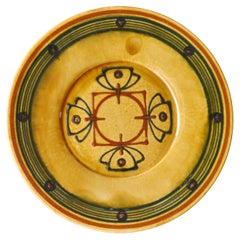
Large Decorative Dish, Biot, France c. 1960
By Biot
Located in St Ouen, FR
Exceptional dimensions for this extra-large dish which can be also a wall-mounted decoration.
Glazed earthenware with incised floral decor.
Hollow stamp on the back.
Ceramic center...
Category
Vintage 1960s French Folk Art Pottery
Materials
Earthenware
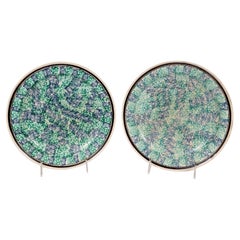
Pair of Antique Early 19th Century Spongeware Staffordshire Pottery Plates
Located in Philadelphia, PA
A fine pair of 19th century English Spongeware pottery plates.
Both plates with green & blue painted decoration that appears to have been dabbed or spread with a sponge, hence the name spongeware.
One of the plates has some overpaint and is more brightly decorated than its mate.
Simply a great pair of 19th century Staffordshire spongeware plates...
Category
Antique Early 19th Century English Early Victorian Pottery
Materials
Pottery
$950 / set
H 0.75 in Dm 9 in
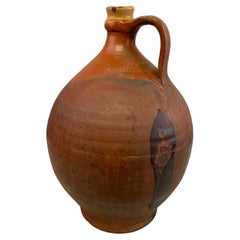
Early 19th Century French Terracotta Water Jug
Located in Winter Park, FL
A French Terracotta Pottery water jug with some glazing near the top. Great color and it weighs 9 Lbs. Dimensions are 15" high by 10" diameter.
Circa 1820-1840. In Good condition wi...
Category
Antique Early 19th Century European French Provincial Pottery
Materials
Terracotta
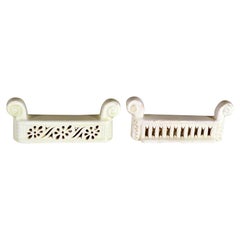
Early 19th Century Italian Creamware Knife Rests
Located in Downingtown, PA
Creamware knife rests,
Italian,
Circa 1810-1820
The two rests are of similar form with a raised scroll terminal to each end. One with pierced stylized f...
Category
Antique Early 19th Century Italian Georgian Pottery
Materials
Creamware, Pottery
18th Century Rare Large Terracotta Hand Carved French Biot Pot
Located in Miami, FL
This fabulous handmade terracotta pot originated in the Provençal town of Biot and was used to store olive oil. The interior glaze that extends to around the rim was used to prevent ...
Category
Antique 1780s French Baroque Pottery
Materials
Terracotta
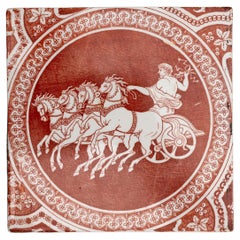
Early 19th Century Spode Red Greek Pattern Tile
By Spode, Josiah Spode
Located in Fort Lauderdale, FL
A Neoclassical red transferware tile made by Spode 1806-1810, with the ‘Zeus in His Chariot’ pattern.
Sir William Hamilton’s Collection of Etruscan, Greek and Roman antiquities, first published in 1766 by Pierre d’Hancarville, was a landmark publication in English design. It intended to disseminate the Antique style through its engravings of Attic pottery. The catalog’s faithful reproductions of Classical vases led British potteries, including Spode, to adapt or even copy the ancient art for modern life. These Spode Greek pattern tiles reflect the major influence of Hamilton’s catalog on English Neoclassicism. The central scene was taken directly from the catalog.
This tile can be dated to a narrow window of production in the Spode factory, 1806-1810. During that time, Spode used a technique known as the “Pluck and Dust” method to print in red transfer designs onto creamware. Using this method, source prints were transferred overglaze using tissue imprinted with a very faint rendition of the design outlined in sticky oil. The decorator applied the tissue to the object then carefully “plucked” or pulled it away, leaving the sticky oil design behind. Then, a finely-ground enamel color was “dusted” onto the surface, sticking to any areas that had the oil. A final firing at a low temperature in the enamel kiln made the pattern permanent. The Pluck and Dust technique improved upon bat-printing and enabled larger designers to be transferred. It was short-lived, however, as under-glaze transfer printing soon took over as the preferred method for producing transferwares.
Dimensions: 5 in. x 5 in. x 1/4 in.
Condition: Excellent.
Provenance:
The Collection of Nancy and Andrew Ramage
Jonathan Horne...
Category
Antique Early 19th Century English Neoclassical Pottery
Materials
Earthenware, Creamware
Still Thinking About These?
All Recently ViewedMore Ways To Browse
Potter Houda
Spode Neoclassical Greek
Grapes Pottery
Provencal Ceramics
Staffordshire Cups
Vintage Bauer Pottery
York Pottery
Antique Turkish Pottery
Delft Pottery England
Hammer Pottery
Pearlware Blue And White
Pottery Boat
Wedgwood And Bentley
Whieldon Creamware
Antique Blue Crocks
Antique Slipware
Antique Spongeware Pottery And Glass
French Walnut Oil