Want more images or videos?
Request additional images or videos from the seller
1 of 2
Silver British Golf Hole-in-One Trophy, Late 20th Century
$175List Price
About the Item
- Dimensions:Height: 11.5 in (29.21 cm)Width: 6.5 in (16.51 cm)Depth: 6.5 in (16.51 cm)
- Period:
- Date of Manufacture:1993
- Condition:Wear consistent with age and use.
- Seller Location:Colorado Springs, CO
- Reference Number:1stDibs: LU90973200992
About the Seller
4.9
Platinum Seller
Premium sellers with a 4.7+ rating and 24-hour response times
Established in 2010
1stDibs seller since 2011
474 sales on 1stDibs
Typical response time: 5 hours
Authenticity Guarantee
In the unlikely event there’s an issue with an item’s authenticity, contact us within 1 year for a full refund. DetailsMoney-Back Guarantee
If your item is not as described, is damaged in transit, or does not arrive, contact us within 7 days for a full refund. Details24-Hour Cancellation
You have a 24-hour grace period in which to reconsider your purchase, with no questions asked.Vetted Professional Sellers
Our world-class sellers must adhere to strict standards for service and quality, maintaining the integrity of our listings.Price-Match Guarantee
If you find that a seller listed the same item for a lower price elsewhere, we’ll match it.Trusted Global Delivery
Our best-in-class carrier network provides specialized shipping options worldwide, including custom delivery.You May Also Like
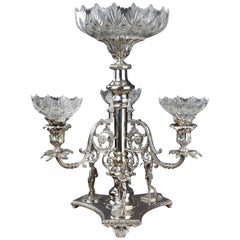
19th Century Silver Plate Golfing Candelabra Trophy / Centre Piece
Located in Chelmsford, Essex
A fine quality late 19th-early 20th century silver plate centrepiece with central column and three foliate arms with leaf mounted holders supporting three etched cut glass bowls and ...
Category
Antique Late 19th Century English Victorian Sheffield and Silverplate
Materials
Silver Plate
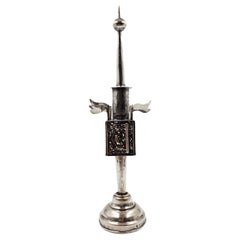
Spice TowerJudaica in Silver, 20th Century
Located in Autonomous City Buenos Aires, CABA
Spice Tower in Judaic Silver, 20th Century
A beautiful spice tower of typical design, with four flags, the tower is topped with a small ball. Set on a round leg. Decorated with filig...
Category
20th Century European Art Deco Sheffield and Silverplate
Materials
Silver Plate
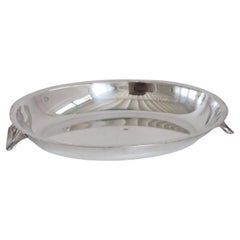
20th Century Silver Plate Pocket Emptier
Located in Casale Monferrato, IT
Beautiful 20th century silver plate pocket emptier. Refined finely chiseled decorations. Perfect for embellishing a desk with class.
Category
Vintage 1930s English Sheffield and Silverplate
Materials
Silver Plate
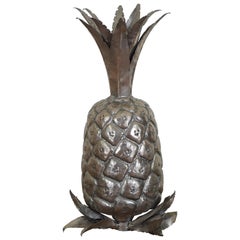
Continental Silver Plated Pineapple, 20th Century
Located in Atlanta, GA
The miniature pineapple well cast and plated in silver, with a leaf-form lower section serving as a stand.
Category
Mid-20th Century European Barware
Early 20th century French Silver Plated Set of 12 Spoon and one Clamp
Located in LEGNY, FR
Very nice box composed of twelve silver plate small spoons and a clamp dating from the beginning of the 20th century.
Beautiful foliage decoration. On the handle of the spoon we can ...
Category
Early 20th Century French Sheffield and Silverplate
Materials
Silver Plate
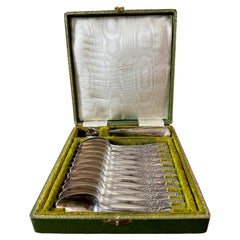
$772 / set
H 1.58 in W 7.49 in D 7.88 in
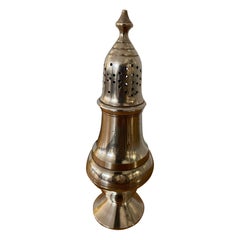
20th century Silver plate Sugar Bowl, 1950s
Located in LEGNY, FR
Very nice and original silver plate sugar bowl. The top is removable to put the sugar in. Good quality and condition.
Category
Vintage 1950s French Sheffield and Silverplate
Materials
Silver Plate
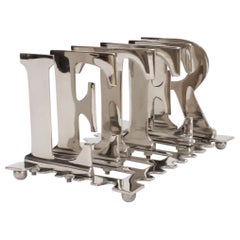
Vintage Silver Plated Letter Rack 20th Century
Located in London, GB
An attractive and unusual vintage silver plated letter rack, late 20th Century in date.
The letters "L E T T E R' form the dividers of this charming piece.
The craftsmanship is sec...
Category
1990s English Sheffield and Silverplate
Materials
Silver Plate
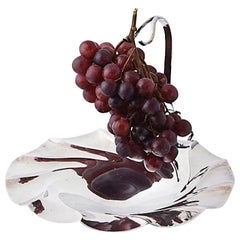
Mid-20th Century Silver Plate Grape Stand Centerpiece
Located in Miami Beach, FL
Midcentury silver plate grape stand featuring a ruffled edge bowl with ball feet and a simple curved rack to hold the grapes. The rack can be removed for s...
Category
Mid-20th Century Sheffield and Silverplate
Materials
Silver Plate
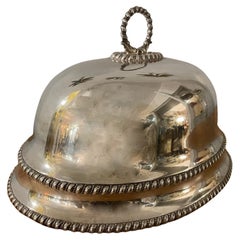
20th century English Silver plate Dish Bell, 1950s
Located in LEGNY, FR
Beautiful 20th century English Silver plate Dish Bell from the 1950s.
Very elegant details, especially of the handle.
Make a difference on a diner table...
Category
Vintage 1950s French Sheffield and Silverplate
Materials
Silver Plate
$618 Sale Price
20% Off
H 9.45 in W 14.18 in D 10.63 in
20th century French Silver Plate Fruits Bowl, 1920s
Located in LEGNY, FR
Elegant silver-plated fruit bowl dating from the 1920s, raised on a molded pedestal base with a delicate beaded border. The wide circular bowl is adorned with two finely detailed dol...
Category
Vintage 1920s French Sheffield and Silverplate
Materials
Silver Plate

More From This Seller
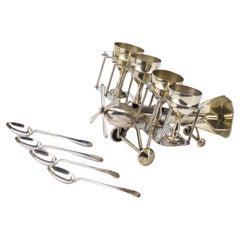
View AllSilver Plated Airplane-Themed Tableware, circa 1910
Located in Colorado Springs, CO
This is a beautiful silver-plated egg cup and spoon set with an airplane motif, dating to the early 1910s. The set includes four matching footed egg cups. The cups sit upon the stack...
Category
Vintage 1910s English Art Deco Sheffield and Silverplate
Materials
Silver
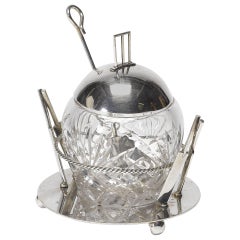
Silver Sheffield Cricket Sugar Jar, circa 1900
Located in Colorado Springs, CO
This is an exquisite early 20th century crystal jar with a silver lid and spoon. The lid's top is fashioned after a cricket wicket. The jar sits on a round silver base with decorativ...
Category
Antique Early 19th Century British Sheffield and Silverplate
Materials
Silver
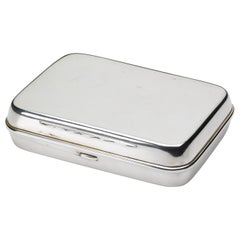
Hallmarked Silver Plated Keepsake Box, Sheffield, Uk, Circa 1900
Located in Colorado Springs, CO
Offered is a stunning Sheffield silver keepsake box dating to 1900, with associated hallmark. This small box includes a clean interior and rounded corners. The box is free of names or initials, but would have been used to house keepsakes such as jewelry or cufflinks. A well maintained, elegant piece, this antique silver box is an excellent addition to any silver collection.
Trinket or keepsake boxes have taken on many forms since their first conception in ancient times. However their purpose remains the same; to store jewelry and other items precious to the owner. Originally, these boxes were used specifically for jewelry. These were in common use as early as 5000 BC in Ancient Egypt, when the majority of Egyptians, both male and female, wore jewelry. Boxes were used to keep these gemstone encrusted items safe. In Ancient Rome, jewelry was a status symbol. Rings and brooches were utilized to represent ones status in society. Again, boxes were needed for security and storage purposes. Finding early examples of these are quite rare.
Victorian and Edwardian examples of trinket boxes are far more common. This is because owning jewellery was a luxury until the Victorian era- let alone possessing so much a box was needed to store it all. Fine jewelry and other items became available to the masses after the industrial revolution due to the reduction in production costs. This led to a demand for trinket boxes, which were much smaller than jewelry boxes and therefore better suited to the needs of the middle class who did not yet possess an abundance of jewelry.
In Victorian households, collectables and other items of interested were also stashed inside these boxes. This is why they are known as trinket or keepsake boxes, rather than just jewelry boxes, although of course jewelry was also stored in them. Trinket boxes were produced in large numbers around this time. Many were lined with colored plush or velvet or rich wood. More elaborate designs had interior divisions and trays for rings and other pieces of jewellery. It was also common to see trinket boxes so small that they could only contain one item, such as a single ring. Ornate exteriors were created to reflect the value of the trinket boxes contents.
The Edwardian era saw the introduction of new styles of trinket box. These included small circular or oblong boxes...
Category
Antique Early 1900s British Art Deco Decorative Boxes
Materials
Silver
Hallmarked Silver Plated Keepsake Box, Sheffield, UK, circa 1900
Located in Colorado Springs, CO
Offered is a stunning silver plated keepsake box dating to 1900, with associated hallmark. This small box includes a wooden interior with two slots and a blank square on top where initials could have been engraved. A well maintained, elegant piece, this antique silver box is an excellent addition to any silver or home decor collection.
Trinket or keepsake boxes have taken on many forms since their first conception in ancient times. However their purpose remains the same; to store jewelry and other items precious to the owner. Originally, these boxes were used specifically for jewelry. These were in common use as early as 5000 BC in Ancient Egypt, when the majority of Egyptians, both male and female, wore jewelry. Boxes were used to keep these gemstone encrusted items safe. In Ancient Rome, jewelry was a status symbol. Rings and brooches were utilized to represent ones status in society. Again, boxes were needed for security and storage purposes. Finding early examples of these are quite rare.
Victorian and Edwardian examples of trinket boxes are far more common. This is because owning jewellery was a luxury until the Victorian era- let alone possessing so much a box was needed to store it all. Fine jewelry and other items became available to the masses after the industrial revolution due to the reduction in production costs. This led to a demand for trinket boxes, which were much smaller than jewelry boxes and therefore better suited to the needs of the middle class who did not yet possess an abundance of jewelry.
In Victorian households, collectables and other items of interested were also stashed inside these boxes. This is why they are known as trinket or keepsake boxes, rather than just jewelry boxes, although of course jewelry was also stored in them. Trinket boxes were produced in large numbers around this time. Many were lined with colored plush or velvet or rich wood. More elaborate designs had interior divisions and trays for rings and other pieces of jewellery. It was also common to see trinket boxes so small that they could only contain one item, such as a single ring. Ornate exteriors were created to reflect the value of the trinket boxes contents.
The Edwardian era saw the introduction of new styles of trinket box. These included small circular or oblong boxes...
Category
Antique Early 1900s English Art Deco Decorative Boxes
Materials
Silver
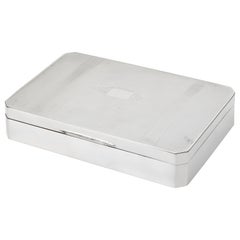
$600 Sale Price
20% Off
Silver Plated Keepsake Box, Early 20th Century
Located in Colorado Springs, CO
Offered is a silver plated keepsake box, dating to the early 1900s. The hallmarked box offers great storage solution for jewelry, cufflinks, and other keepsakes, with a divided inter...
Category
Antique Early 1900s English Jewelry Boxes
Materials
Silver
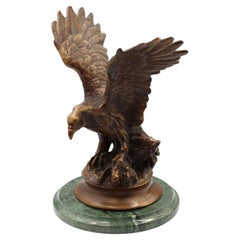
Vintage Bronze Eagle on Rocks, after Jules Moigniez, Late 20th Century
Located in Colorado Springs, CO
This is a bronze eagle on rocks sculpture, after Jules Moigniez, circa late 20th century. The bronze sculpture depicts a majestic bald eagle with its wings fully spread open, landing on a rocky outcropping. With an intense stare and intricate feather detail, this sculpture is dramatic, full of movement, and artfully crafted. The sculpture is presented on a green marble base.
The bald eagle is both the national bird and the national animal of the United States. The eagle motif has been widely used throughout our nation's history, most notably as part of our Great Seal. The founders of the United States were fond of comparing their new republic with the Roman Republic, in which eagle imagery, usually the golden eagle, was prominent. On June 20, 1782, the Continental Congress adopted the design for the Great Seal of the United States depicting a bald eagle grasping 13 arrows and an olive branch with its talons. This sculpture is inspired by the symbolic history of the bald eagle, combining the powerful natural beauty of the bird with the patriotic symbol of freedom and strength.
Jules Moigniez (1835-1894) was a French sculptor widely known for his highly detailed bronze works depicting dynamic wildlife. After studying under Paul Cromolera, Moigniez made a name for himself at his first exhibition in 1855 at the Exposition Universelle. Since then, he continued to show his works on a yearly basis. While many artists at the time focused solely on the subject, Moigniez incorporated highly detailed bases to accommodate his various animals. In America and England, his bird sculptures gained massive popularity and he soon became better known for his birds. After Jules Moigniez’s tragic death in 1894, his father continued to cast his son’s bronzes from the foundry he purchased. Just before Moigniez’s father also passed away, he sold the foundry and his casts to Auguste Gouge, who once cast bronzes for Paul Cromolera. Gouge continued to produce Moigniez’s bronze...
Category
Late 20th Century Animal Sculptures
Materials
Bronze
Still Thinking About These?
All Recently ViewedMore Ways To Browse
Silverplate Trophy
Cruet Bottles Antique
Ellis Barker Silver Plate
Meriden Silver Plate
Antique Sheffield Silver Plate Tea Service
Antique Silver Ingot
Silver Plated Butter Dish
Sheffield Dome
Sheffield Epergne
Sheffield Silver Dome
Silver Plated Samovar
Silverplate Coffee Service
Vintage Christofle
Antique Fruit Plates
Sheffield Silver Plateau
Silver Plated Entree Dish
Antique Coffee Urns
Antique Meat Dome