Items Similar to A Dutch Silver Salver by George Reevers, 1856
Want more images or videos?
Request additional images or videos from the seller
1 of 9
A Dutch Silver Salver by George Reevers, 1856
$1,765.19
£1,321.43
€1,475
CA$2,430
A$2,656.47
CHF 1,405.39
MX$31,788.88
NOK 17,881.57
SEK 16,368.77
DKK 11,237.68
About the Item
A Dutch Silver Salver by George Reevers, 1856
A silver rectangular salver with round shapes, made by the silversmith George Reevers, Amsterdam, dated with the year letter W for 1856. The salver has a double edge with an engraving of Rocaille leaf motif in each corner, raised on four ball feet. The salver is Dutch hallmarked with the "Lion 1" for 934/000 purity of silver. Minerva head (Assayers mark) "A" for Amsterdam. The Year letter W for 1856. The shop brand mark van Benten
Zonen and the silversmith hallmark of George Reevers (mark used between 1838-1856)
The measurement is 2 cm high, 22.5 cm wide and the depth is 18 cm.
The silver salver weights 338 grams.
Shows traces of use
- Dimensions:Height: 0.79 in (2 cm)Width: 8.86 in (22.5 cm)Depth: 7.09 in (18 cm)
- Materials and Techniques:
- Place of Origin:
- Period:
- Date of Manufacture:1856
- Condition:Wear consistent with age and use.
- Seller Location:Delft, NL
- Reference Number:Seller: M15511stDibs: LU3465136105272
About the Seller
5.0
Platinum Seller
Premium sellers with a 4.7+ rating and 24-hour response times
Established in 1995
1stDibs seller since 2018
404 sales on 1stDibs
Typical response time: 1 hour
- ShippingRetrieving quote...Shipping from: Delft, Netherlands
- Return Policy
More From This Seller
View AllEnglish Oval Silver Salver by William Bennett, 1800
By William Bennett
Located in Delft, NL
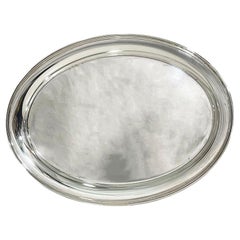
An English oval silver salver by William Bennett, 1800
An English silver oval salver with reed edge, engraved and raised on four feet. The salver shows traces of use and please feel free to take a closer look at the details in the pictures (dent, scratches)
The salver is made by William Bennett and is registered at 1796 and died 1825 in England
The salver has English silver hallmarks...
Category
Antique Early 1800s English Sterling Silver
Materials
Silver
English silver tray, raised on three paw feet by Gibson and Langman, 1898
By Gibson
Langman
Located in Delft, NL
English silver tray, raised on three paw feet by Gibson and Langman, 1898
A round silver tray with shells on the rim between scrolls, rising diagon...
Category
Antique Late 19th Century English Serving Pieces
Materials
Silver
Dutch Silver tray by Begeer, Utrecht 1916-1921
By C.J. Begeer
Located in Delft, NL
Dutch Silver tray by Begeer, Utrecht 1916-1921
An oval silver tray with double filet edge by C.J. Begeer, Utrecht with 830/000 purity of silver. Dutch silver hallmarked with 830. Th...
Category
Early 20th Century Tableware
Materials
Silver
German silver salver with the text "A friend in need is a friend indeed"
By Gebruder Kuhn
Located in Delft, NL
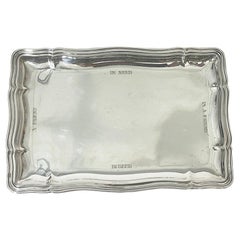
German silver salver with the text "A friend in need is a friend indeed"
A rectangular Chippendale-style silver salver, fineness 800/000, with contouring and a weaving rim. The hall...
Category
Antique 19th Century German Tableware
Materials
Silver
Dutch Silver serving Tray, dated 1948
Located in Delft, NL
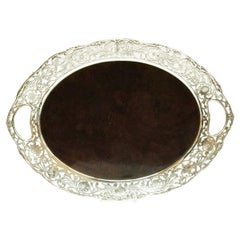
Dutch Silver serving Tray, dated 1948
An oval Dutch silver mounted tray with handles and richly engraved and openwork floral decor and walnut wooden base
The serving tray mount is D...
Category
20th Century Dutch Serving Pieces
Materials
Silver
Silver dish designed by de Rudder for Wolfers, Brussel, Belgium 1892-1900
By Wolfers Frères, Isidore De Rudder
Located in Delft, NL
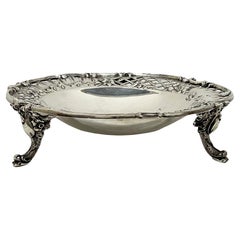
Silver dish designed by de Rudder for Wolfers, Brussel, Belgium 1892-1900
A silver dish made of silver with 800/000 purity of silver, designed by Isidore de Rudder (Isidore Lievin D...
Category
Antique Late 19th Century Belgian Tableware
Materials
Silver
You May Also Like
Sterling Silver English Salver
By Martin Hall
Co.
Located in Brooklyn, NY
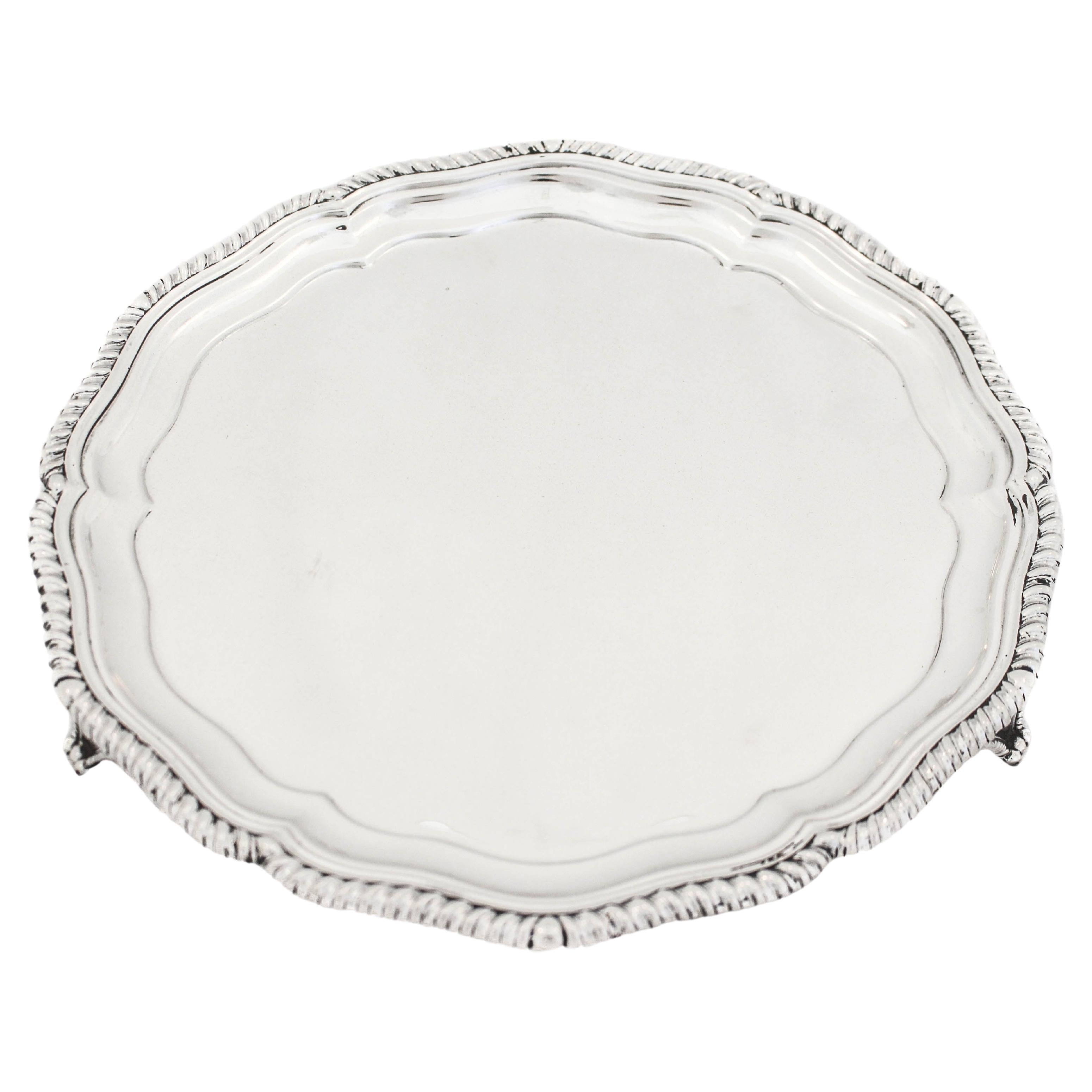
Being offered is a sterling silver English salver made by Martin Hall & Company, hallmarked Sheffield 1927.
It is scalloped and has a gadroon design around the rim. The center is fl...
Category
Vintage 1920s English Sterling Silver
Materials
Sterling Silver
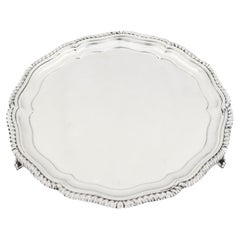
Sterling Silver English Salver
Located in Brooklyn, NY
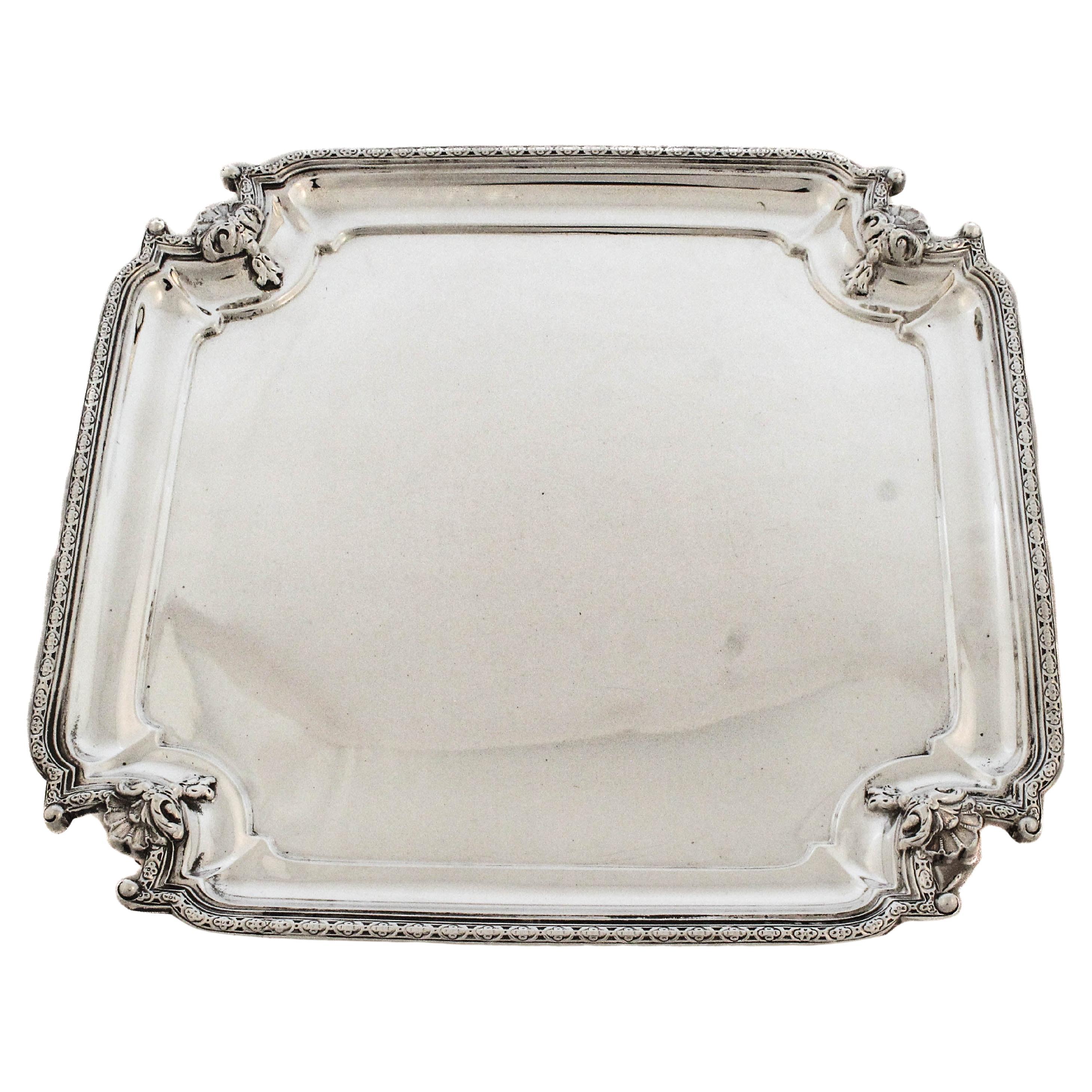
This striking English sterling silver salver is square in shape with elegantly canted corners, giving it a refined and stately presence. Each corner is adorned with intricate applied...
Category
Vintage 1930s English Sterling Silver
Materials
Sterling Silver
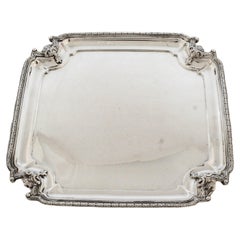
Victorian sterling silver salver made in London 1868 by Martin
Hall
By Martin
Hall
Located in London, London
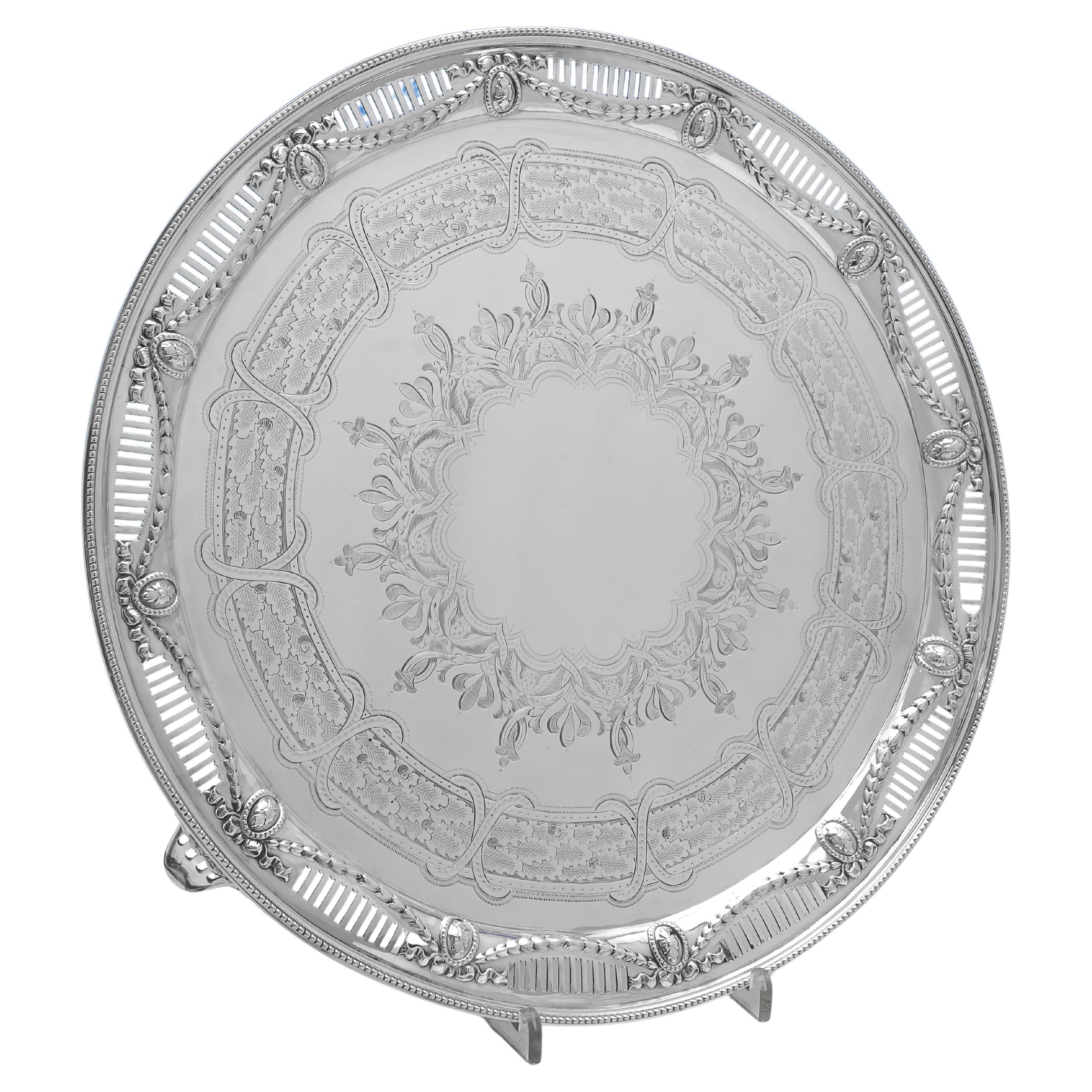
Hallmarked in London in 1868 by Martin & Hall, this very attractive, Victorian Antique Sterling Silver Salver, features a pierced border, 3 feet, and wonderful engraved decoration to...
Category
Antique 1860s English Victorian Platters and Serveware
Materials
Sterling Silver
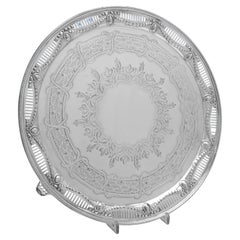
Large Silver Salver by Dobson
Sons, 19th Century
By Dobson and Sons
Located in London, GB
Large silver salver by Dobson & Sons, 19th century
English, c.1893
Height 6.5cm, diameter 64cm
Weight 5kg
This exquisite antique tray is crafted entirely of solid silver, making it ...
Category
Antique Late 19th Century English Victorian Tableware
Materials
Silver
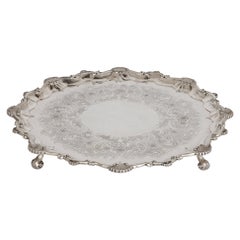
19th Century Regency Solid Silver Magnificent Salver Tray, J Hayne, circa 1827
By Jonathan Hayne
Located in Royal Tunbridge Wells, Kent
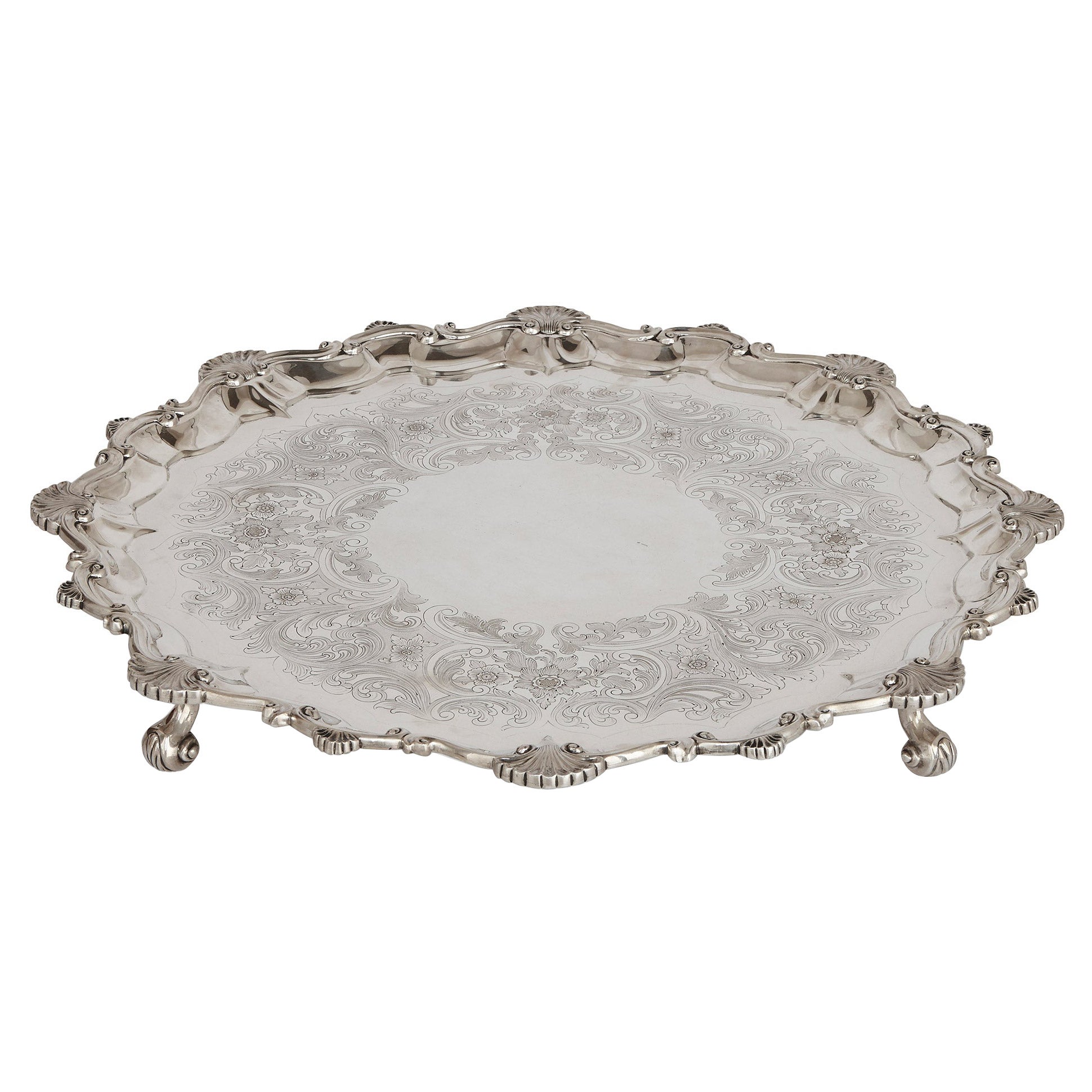
Antique 19th century rare and exceptional George IV solid silver salver tray with cast border, large size and extremely heavy gauge, of shaped-circular form with applied cast border ...
Category
Antique 19th Century English George IV Decorative Dishes and Vide-Poche
Materials
Sterling Silver
Antique George III Sterling Silver Salver by Paul Storr 19th Century
By Paul Storr
Located in London, GB
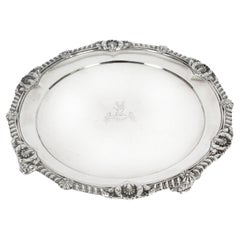
This is a wonderful English antique George III sterling silver 10 inch salver, by the world famous silversmith Paul Storr.
It has clear hallmarks for London 1811 and the makers mark of Paul Storr.
It is typical of his work with the raised gadrooned rim with anthemion at intervals, on four fabulous foliate bracket feet. The salver is engraved with a crest and motto and the underside is later engraved
Charlotte J. Parke from C. J. Parke, March 1893'
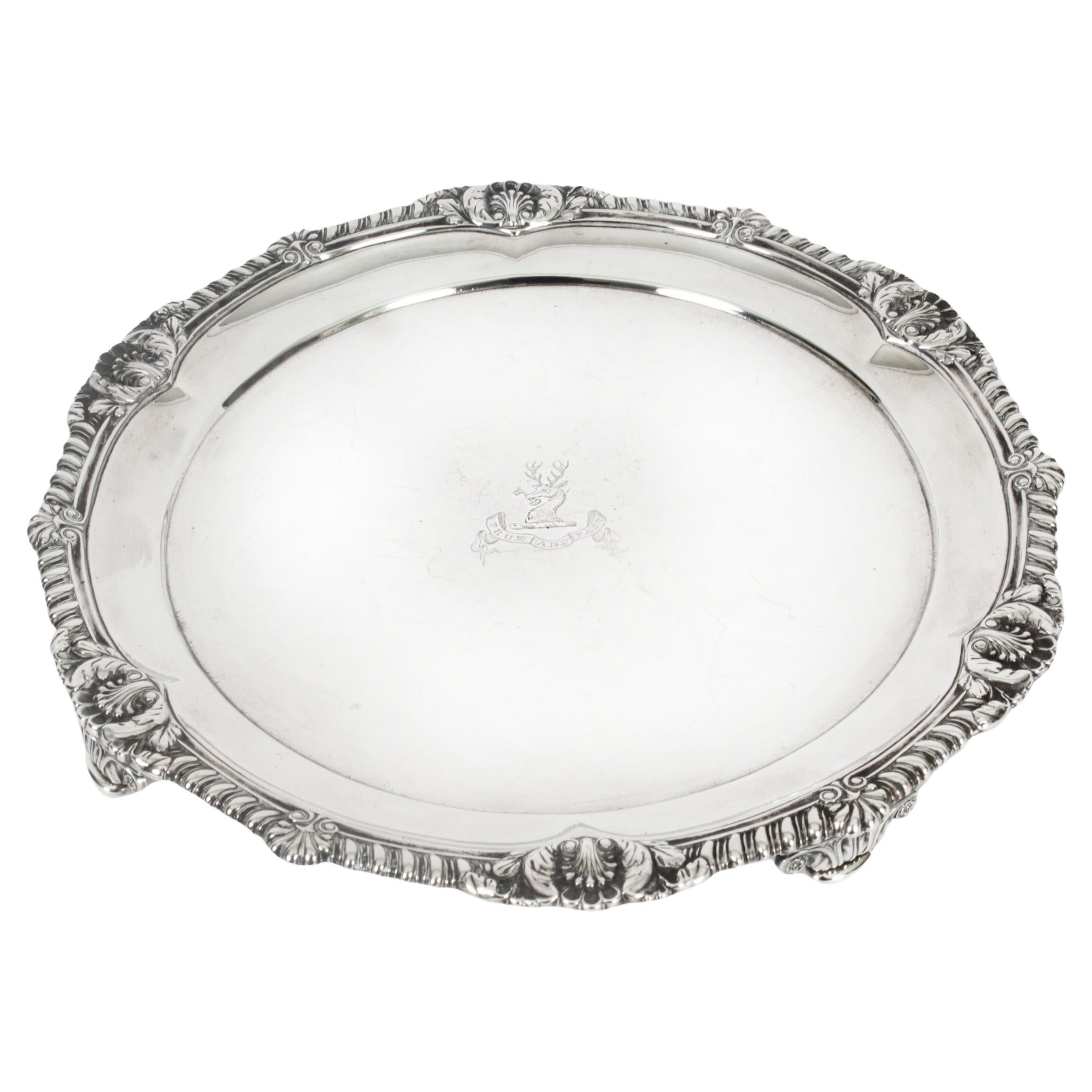
The centre is engraved with a crest above a motto 'True and Fast' and I have researched this crest:
The Crest of Parke
The crest as engraved upon this George III English Sterling Silver Footed Salver by Paul Storr hallmarked London 1811 is that of the family of Parke. It may be blazoned as follows:
Crest: A stag’s head couped sable holding in the mouth a key or
Motto: True and fast
The family of Parke originally hailed from the County of Cumberland in the northeast of England1 later settling in the County of Dorset at Henbury House, Sturminster Marshal, near Wimborne. Given the evidence of the inscription found on the underside of the salver ‘Charlotte J. Parke from C. J. Parke, March 1893’ it was undoubtedly at one time in the possession of Charles Joseph Parke (died 9th March 1893) of Henbury House aforesaid and gifted to Charlotte Josephine Parke (baptised 4th January 1857 died 2nd January 1941) his third daughter by his wife, Ellen Mary Ethelston. I would venture the following hypothesis that the salver was bequeathed to Charlotte in her father’s will that was granted probate at London on the 20th May 1893. The ‘March 1893’ of the inscription acts as a remembrance of the month of the death of her father. It was noted that Charlotte’s father left an estate worth some £66,892, 19 shillings and one pence, a very considerable sum in the last decade of the 19th Century and even thereafter. Charlotte never married and was living at the time of her death at The Coppice, Sixpenny Handley in the County of Dorset. Her will was proved for probate at Llandudno on the 25th March 1941. She left an estate worth £18,866, 10 shillings and 4 pence. Again, a comfortable sum in 1941.
See the photo of Henbury House, Sturminster Marshal, near Wimborne, Co. Dorset. The former seat of the Parke family. The house was destroyed by fire, the remains of which were demolished in the 1990's.
There is no mistaking its unique quality and design, which is sure to make it a treasured piece by any discerning collector.
Condition:
In excellent condition with clear hallmarks and no dings, dents or signs of repair. Please see photos for confirmation.
Dimensions in cm:
Height 2 x Width 26.5 x Depth 26.5
Weight 0.69 kg
Dimensions in inches:
Height 1 inch x Width 10 inches x Depth 10 inches
Weight 1.5 lbs
Paul Storr
born in London England in 1771, was to become one of the most talented silversmiths of the nineteenth century. Today his legacy of exceptionally well crafted silver, found worldwide in museums and private collections, leaves one in awe when compared to that of his contemporaries.After having served a seven year apprenticeship from the age of 14, he began his career in 1792 when he went into a brief partnership with William Frisbee. This did not last and in 1793 a new mark, (his initials ‘P S’) was entered. By the beginning of the nineteenth century he had established himself as one of London’s top silversmiths producing, amongst others, commissions for Royalty.
In 1801 he married Elizabeth Susanna Beyer with whom he was to have ten children. In 1807 Paul Storr entered into a working relationship with Philip Rundell and by 1811 was a partner, and managing the workshops for Rundell, Bridge & Rundell.
During this period he kept his own marks and separate workshop. However it was through Rundell, Bridge & Rundell who were appointed Goldsmith in Ordinary to George III in 1804 that his reputation as a master silversmith grew. His talents lay in being able to transform ideas and designs from Rundell, Bridge & Rundell’s designers, William Theed...
Category
Antique 1810s English George III Sterling Silver
Materials
Sterling Silver
More Ways To Browse
George Holland
Van Benten
Sterling Silver Pepper Pots
Sterling Silver Ship
Stieff Company Sterling Silver
Tiffany Glass Salt
Vermeil Spoon
Antique Silver Berry Spoons
Antique Silver Ring Boxes
Antique Steuben Crystal
Antique Sugar Shaker
Antique Tiffany Spoons
Art Deco Creamer
Carter London
Dolphin Sterling
Dragsted Denmark
Fiddle Pattern Silver
George Iii Silver Tankard