Items Similar to German Novelty Silver Cat by Ludwig Neresheimer
Co
Want more images or videos?
Request additional images or videos from the seller
1 of 12
German Novelty Silver Cat by Ludwig Neresheimer
Co
$6,864.71
£5,000
€5,877.16
CA$9,518.23
A$10,236.06
CHF 5,473.24
MX$123,443.98
NOK 69,212.88
SEK 63,061.85
DKK 43,915.42
About the Item
FREE WORLDWIDE SHIPPING
From our Silver collection we are delighted to offer this rare German Silver Cat by Ludwig Neresheimer
Co.
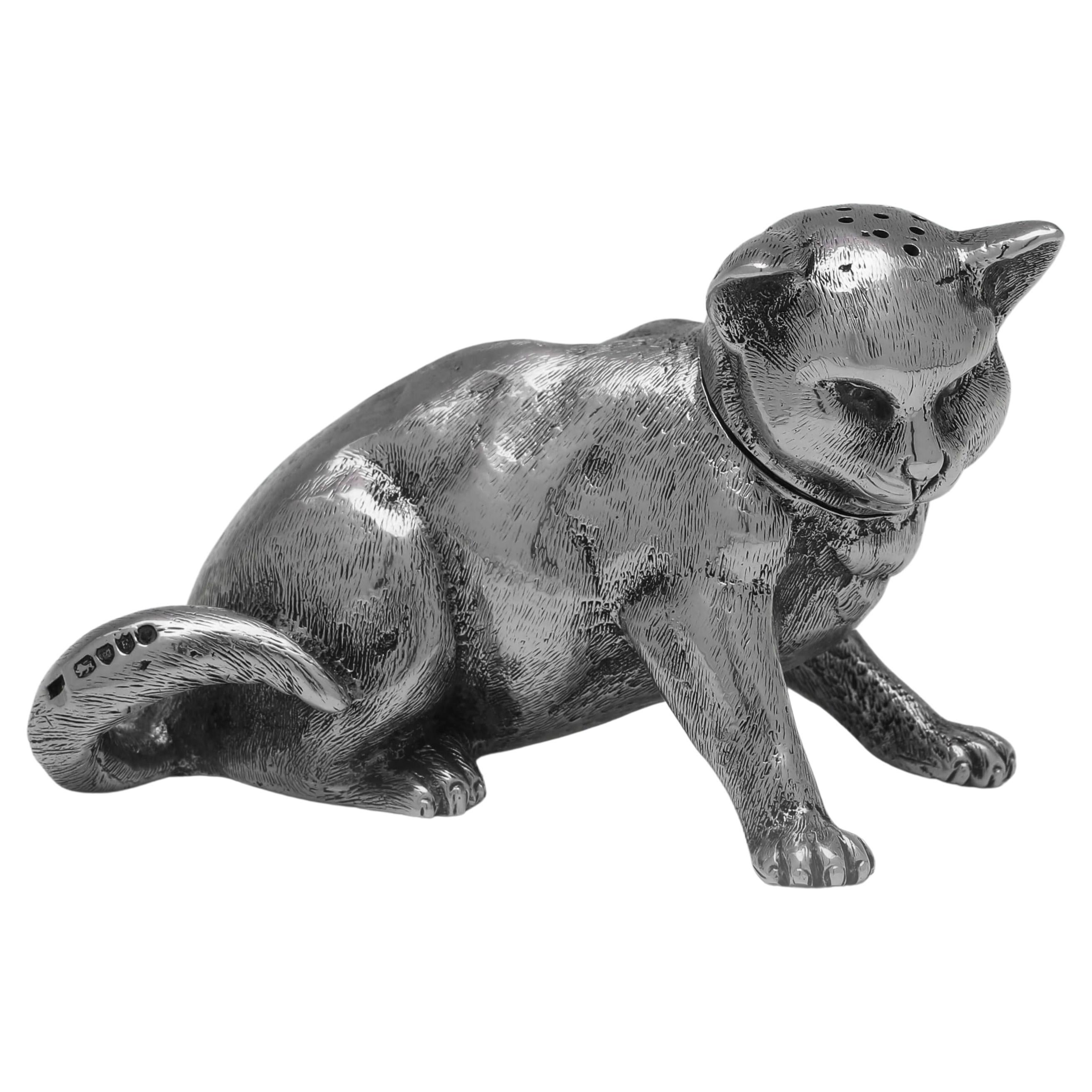
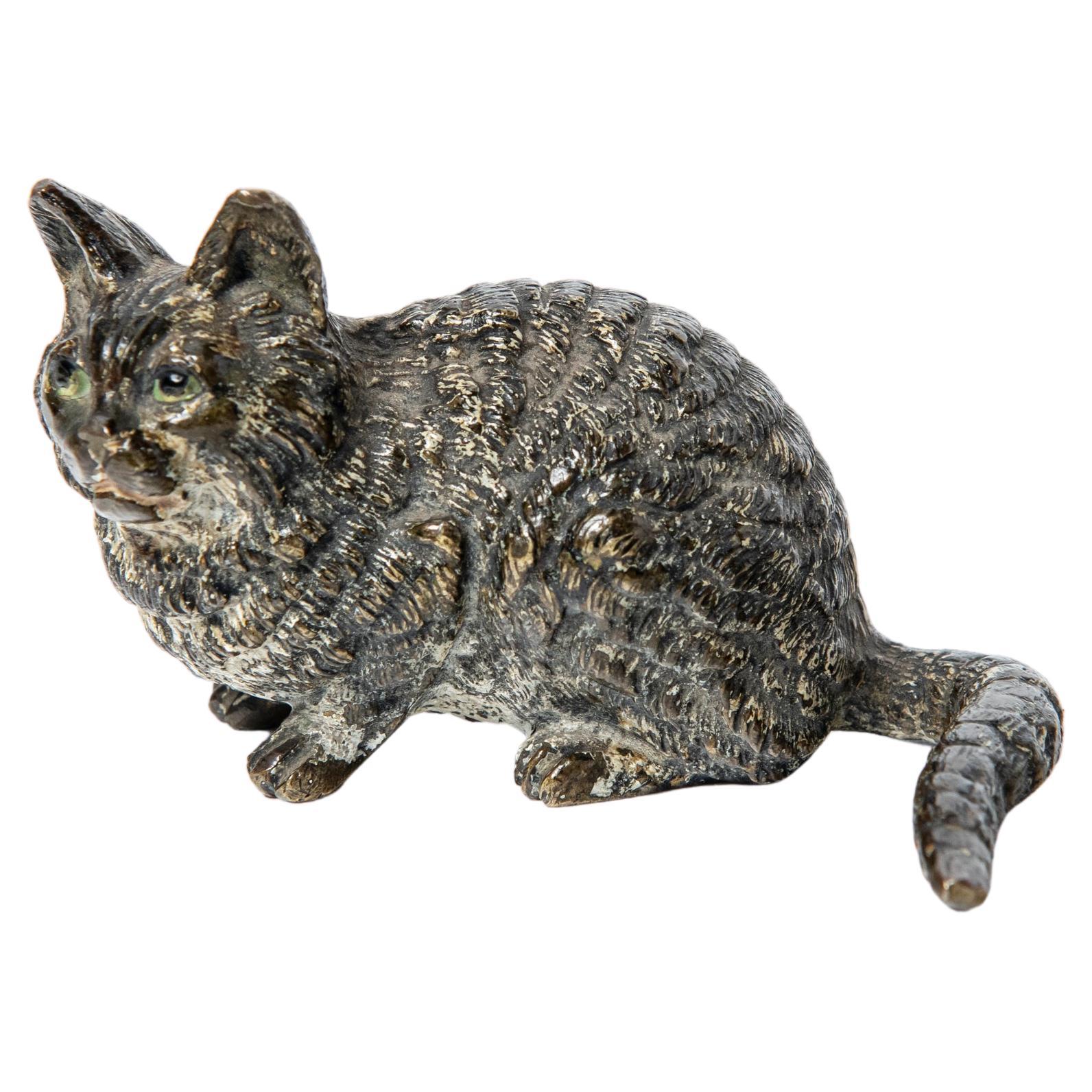
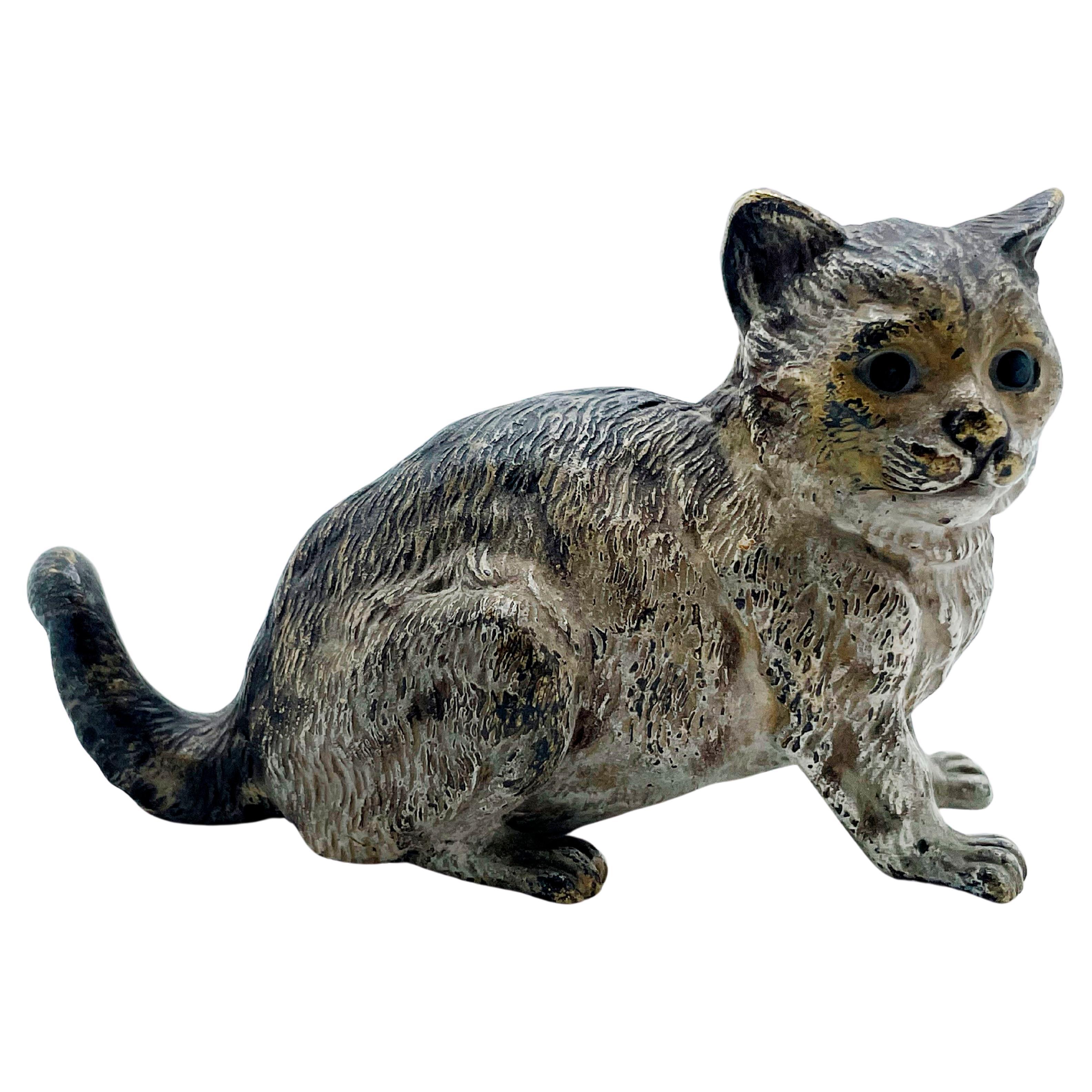
The cat is modelled in a naturalistic pose, humorously shown cleaning itself with one paw raised and its tongue out while looking alert. The piece features a detachable head, giving access to the hollow body for storage or decorative display. The inner collar beneath the head is hallmarked with the German Hanau marks for Ludwig Neresheimer
Co.
This German Silver Cat dates to the early 20th century, circa 1905, and remains an unusual and highly collectable example of Hanau silver.
LUDWIG NERESHEIMER
CO
Founded as B. Neresheimer
Sohne, Hanau in 1893 were a prominent German silversmith firm based in Hanau during the late 19th and early 20th centuries. Known for producing high-quality silverware, the company often created ornate pieces in historical revival styles such as Renaissance, Rococo, and Baroque many of which were exported to England. They frequently collaborated with British retailers and their work was sometimes marked with British import hallmarks. They were later known as Ludwig Neresheimer
Co from 1903.
TIGER’S EYE
is a semi-precious stone known for its golden-brown colour and silky, striped appearance. It’s a type of quartz that gets its distinctive look from light reflecting off fibrous inclusions within the stone, giving it a “chatoyant” or “cat’s eye” effect. The stone usually features bands of yellow, brown, and gold, though variations like blue or red tiger’s eye also exist.
Historically, tiger’s eye has been used in jewellery and ornamentation for centuries, appreciated not just for its striking appearance but also for the belief that it offered protection and clarity. It’s found in several parts of the world, including South Africa, Australia, and India, and is often cut into cabochons or beads to showcase its natural sheen. Its earthy tones make it a popular choice in both vintage and modern jewellery.
- Creator:Ludwig Neresheimer (Maker)
- Dimensions:Height: 6.89 in (17.5 cm)Width: 7.88 in (20 cm)Depth: 4.73 in (12 cm)
- Style:Art Nouveau (Of the Period)
- Materials and Techniques:
- Place of Origin:
- Period:1900-1909
- Date of Manufacture:Circa 1905
- Condition:
- Seller Location:Newark, GB
- Reference Number:Seller: VADDD1stDibs: LU6971246517472
About the Seller
5.0
Vetted Professional Seller
Every seller passes strict standards for authenticity and reliability
Established in 2019
1stDibs seller since 2022
40 sales on 1stDibs
Typical response time: 3 hours
- ShippingRetrieving quote...Shipping from: Newark, United Kingdom
- Return Policy
More From This Seller
View AllFrench Art Deco Cold Painted Bronze Lion Pride Table Lamp by Louis-Albert Carvin
By Louis-Albert Carvin
Located in Newark, England
Wired & PAT Tested to UK Specs
From our Decorative collection we are delighted to offer this French Lion Table Lamp by Louis-Albert Carvin. The table lamp cast in Bronze and cold pa...
Category
Vintage 1920s French Art Deco Table Lamps
Materials
Bronze
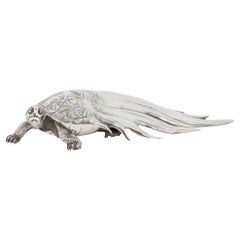
Japanese Antique Silvered Bronze Minogame by Ryūbundō Meiji Period
Located in Newark, England
FREE WORLDWIDE SHIPPING
LEGENDARY JAPANESE MINOGAME
From our Japanese collection, we’re pleased to offer this Meiji period silvered bronze minogame Okimono by Ryūbundō.
Cast in si...
Category
Antique Early 1900s Japanese Meiji Sculptures and Carvings
Materials
Silver, Bronze
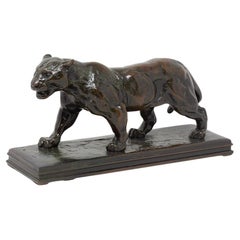
French Bronze Jaguar Qui Marche No. 2 (Walking Jaguar) by Antoine Barye
By Antoine-Louis Barye
Located in Newark, England
SIGNED BAYRE
From our Sculpture collection, we are delighted to offer this Jaguar Qui Marche No. 2 (Walking Jaguar) Bronze by Antoine-Louis Barye. The Jaguar Qui Marche translates ...
Category
Antique Late 19th Century French Belle Époque Animal Sculptures
Materials
Bronze
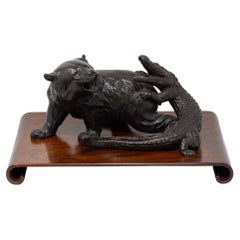
Japanese Meiji Bronze Okimono by Yoshimitsu Depicting a Bear and Alligator
By Saeki Yoshimitsu
Located in Newark, England
FREE WORLDWIDE SHIPPING
A DYNAMIC MEIJI PERIOD BRONZE OKIMONO BY YOSHIMITSU FEATURING A BEAR AND ALLIGATOR IN COMBAT.
From our Japanese collection, we are pleased to present this ...
Category
Antique Late 19th Century Japanese Meiji Animal Sculptures
Materials
Bronze
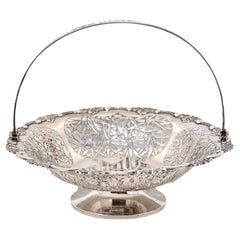
Chinese Export Antique Silver Basket by Wang Hing
By Wang Hing
Co.
Located in Newark, England
Highly Detailed Silver
From our Chinese collection, we are delighted to offer this Chinese Export Silver Basket by Wang Hing. The Silver Basket of circular form expertly crafted wit...
Category
Early 20th Century Chinese Qing Sterling Silver
Materials
Silver
English Silver Engraved Decanter Widdowson
Veale
By Alexander MacRae
Located in Newark, England
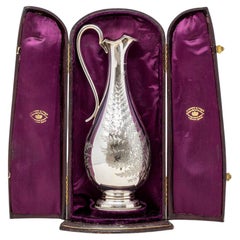
The Decanter of slim tapered form with bulbous body, splayed circular foot with pinched stem and shaped opening. The Decanter extensively decorated throughout the body with two large fern leaves stemming from a central tied ribbon in the form of a bow. The decanter features a rounded handle fitted to the upper half of the decanter with a hinged shaped lid opening with gravity. To the base of the decanter an engraving reading “Jesse Collings. from I. Chamberlain.” Hallmarked to the neck AM (Alexander Macrae), Lion passant (sterling silver), Leopard Head town mark for London, Date letter R (1872) and the sovereign head duty mark. The Decanter is complete with its original latched fitted box lined in purple velvet with gold stringing to the exterior and the retailers mark to the inside doors “Widdowson & Veale, Goldsmith & Jewellery, to the Court of Spain, 73 Strand London.”
Widdowson & Veale George Widdowson (b. 1804 Lincoln – Died 1872 Dulwich Village) was a celebrated silversmith and goldsmith although he took the route of retailer rather than a craftsman and by the age of 28 he had taken over his uncle’s London shop on the Strand, London. His uncle John Salter had been a close friend of Lord Nelson’s daughter, Horatia, and was godfather to one of her children. The shop was very successful and John Salter had supplied Nelson with many pieces of jewellery, including mourning rings.
Widdowson developed the shop into Widdowson & Veale located at No. 73 Strand on the corner of Adam Street and opposite the Adelphi. Widdowson had a real eye for marketing. He once had a detailed newspaper article dedicated to his proposal to make a copy of Aeneas’ shield, as described in Virgil’s Aeneid. There is no evidence the shield was ever made though it did get good publicity.
The company made swords and other weapons for the British army and navy, orders and decorations for the British court and were goldsmiths and jewellers to the court of Spain. In 1842 on the christening of Queen Victoria’s eldest son (later King Edward VII), Widdowson’s eye for publicity meant that the firm gave a christening gift of ‘an immense silver coronet supporting the Prince of Wales feathers.’ Widdowson & Veale were also makers to HRH the Duke of Sussex and the Court of Spain.
In 1844, George was 40 and his business was doing well, as was the economy as a whole. The firm were able to advertise for apprentices, asking for a premium of £100. On 11 February 1847 George married Eliza Duffield (nee Boville), the daughter of a Putney wine merchant who had been living in Gibraltar but returned when her first husband, John Duffield, died. George and Eliza were middle-aged when they married and did not have children.
Alexander Macrae founder of the firm that went on to be C J Vander Ltd. Macrae was recorded at 32 Bow Street, Covent Garden, London September 1856. He was joined in partnership by Martin Goldstein c. 1870, whereupon the style of the firm was changed to Macrae & Goldstein – first listed in 1871 as a silversmith. Alexander Macrae supplied many of the great firms at that time such as Elkington, Harry Emanuel...
Category
Antique Late 19th Century British Late Victorian Pitchers
Materials
Silver, Sterling Silver
You May Also Like
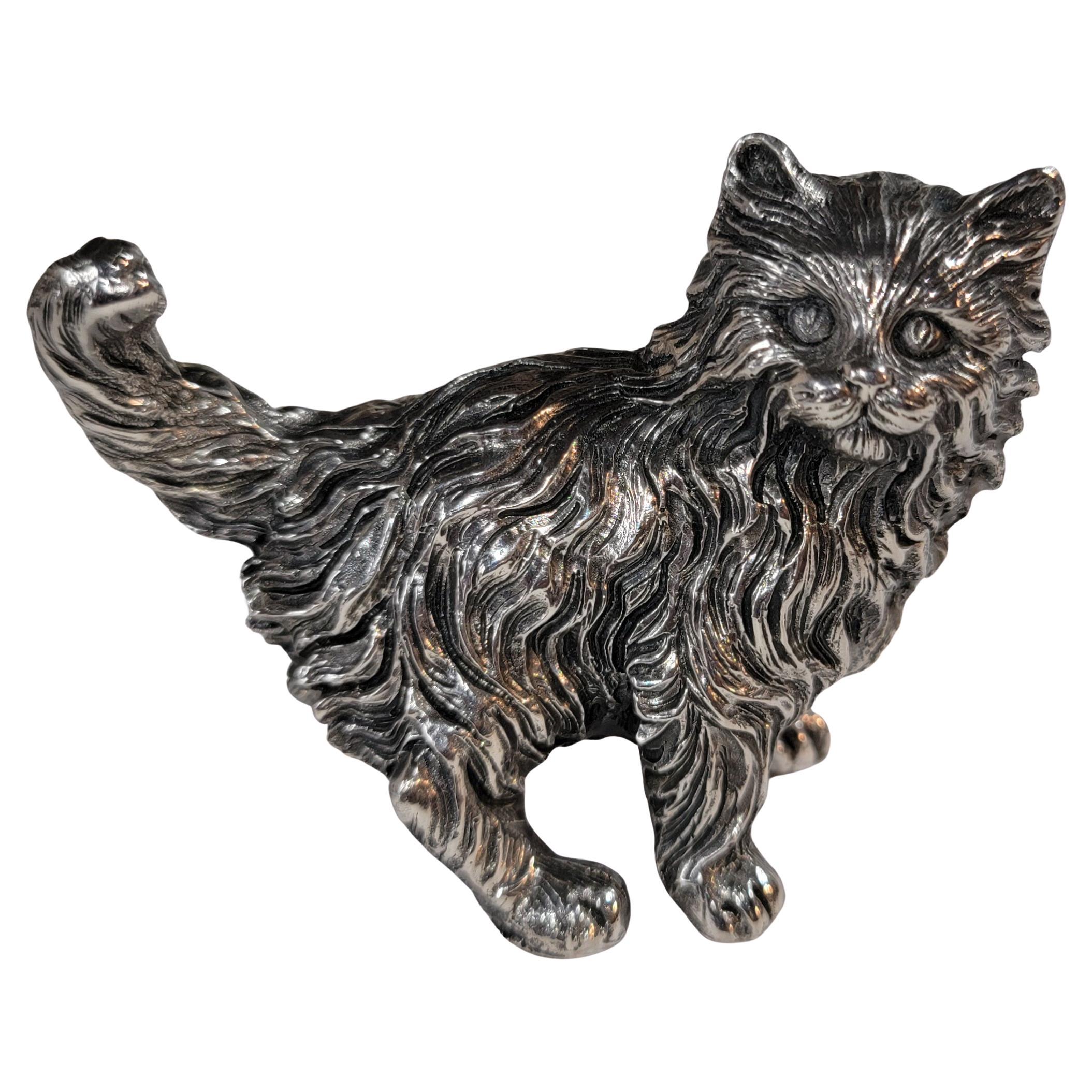
Sterling Silver Cat
Located in Los Angeles, CA
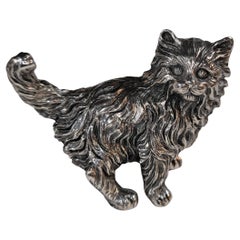
Amazing sterling silver full body cat in fine condition.Marked sterling & 925.
Category
Late 20th Century American Adirondack Sterling Silver
Materials
Sterling Silver
$636 Sale Price
20% Off
Rare Collectible Victorian Antique Sterling Silver Cat Pepper Pot, London, 1880
By Jane Brownett 1
Located in London, London
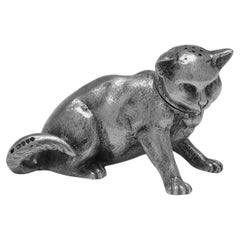
Hallmarked in London in 1880 by Jane Brownett, this very rare, Victorian, Antique Sterling Silver Cat Pepper Pot, is elegantly modelled, and real...
Category
Antique 1880s English Victorian Sterling Silver
Materials
Sterling Silver
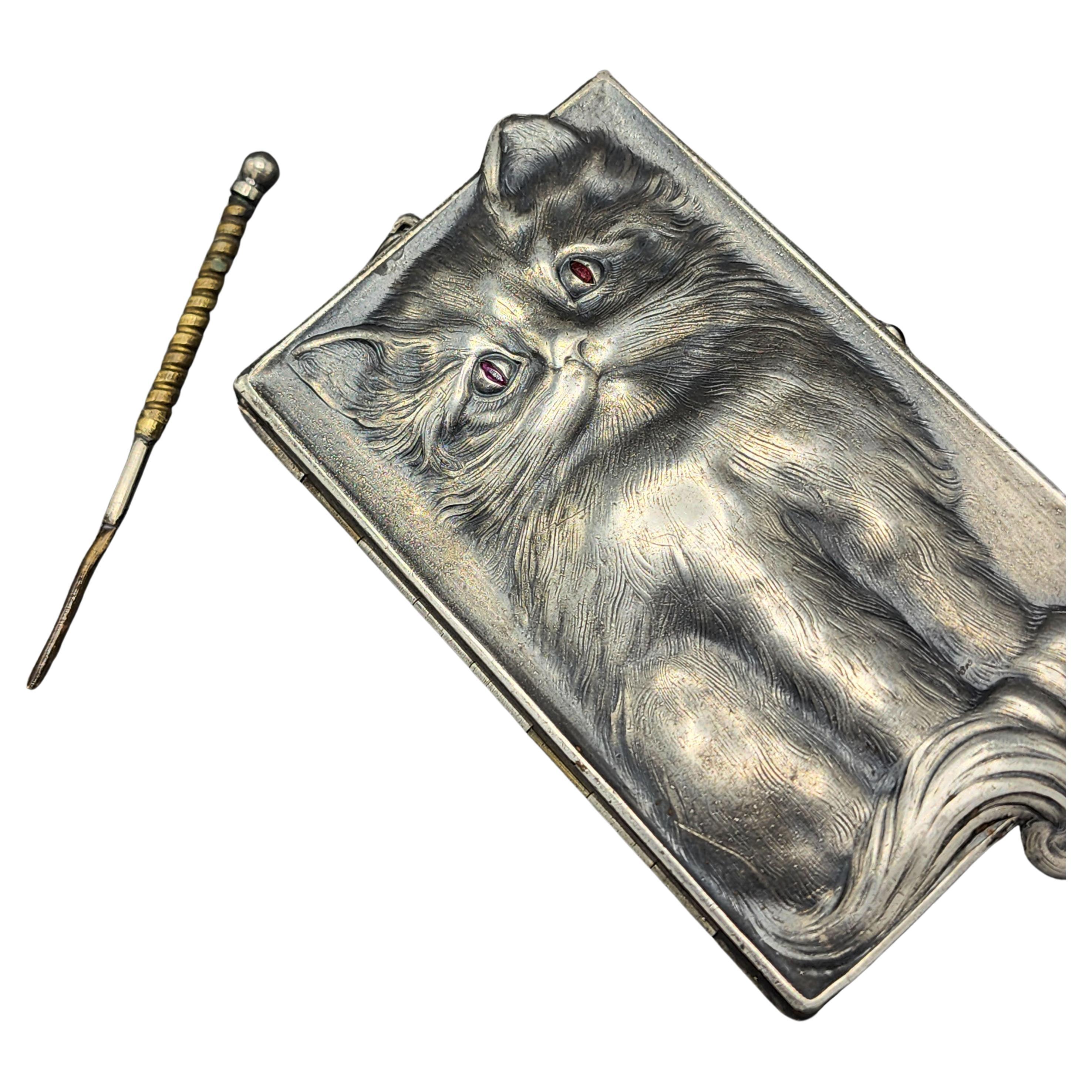
Louis Kuppenheim silver Cat Germany (ca. 1910)
By Louis Kuppenheim
Located in Autonomous City Buenos Aires, CABA
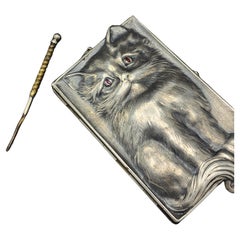
Magnificent antique German solid silver adorned with a deeply embossed silver cat on the front of the case,
with the back of the cat on the back cover.
The cat is encrusted with pr...
Category
Vintage 1910s German Art Deco Sterling Silver
Materials
Silver
Cold-painted bronze cat sculpture signed Geschützt. Austria, early 20th century
By Geschutzt
Located in Buenos Aires, Buenos Aires
Cold-painted bronze sculpture signed Geschützt. Austria, early 20th century
Category
Early 20th Century Austrian Belle Époque Animal Sculptures
Materials
Bronze
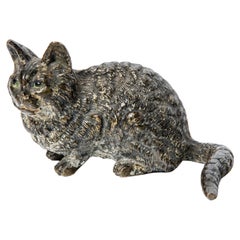
Antique Vienna Bronze sculpture of a cat from Bergman, Austria, ca. 1900
By Bergmann Foundry
Located in Autonomous City Buenos Aires, CABA
Antique Vienna bronze sculpture of a cat by Bergman. Stamped FB and Geschutzt. Cold painted patina. This model is illustrated in “Antique Vienna bronzes” by Joseph Zobel. Schiffer. M...
Category
Antique Early 1900s Austrian Art Nouveau Animal Sculptures
Materials
Bronze
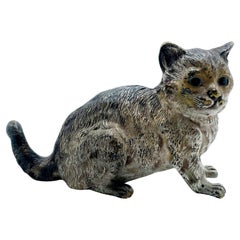
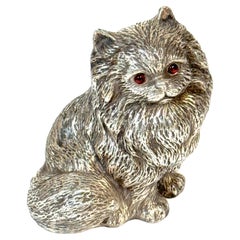
Russian Silver Persian Cat Sculpture, Soviet Period, 88 Zolotnik, Marked "S.W."
Located in West Palm Beach, FL
Highly Detailed Russian Silver, Soviet Period Persian Cat Sculpture with Garnet Eyes, 88 Zolotnik, Marked "S.W.," Circa 1950s
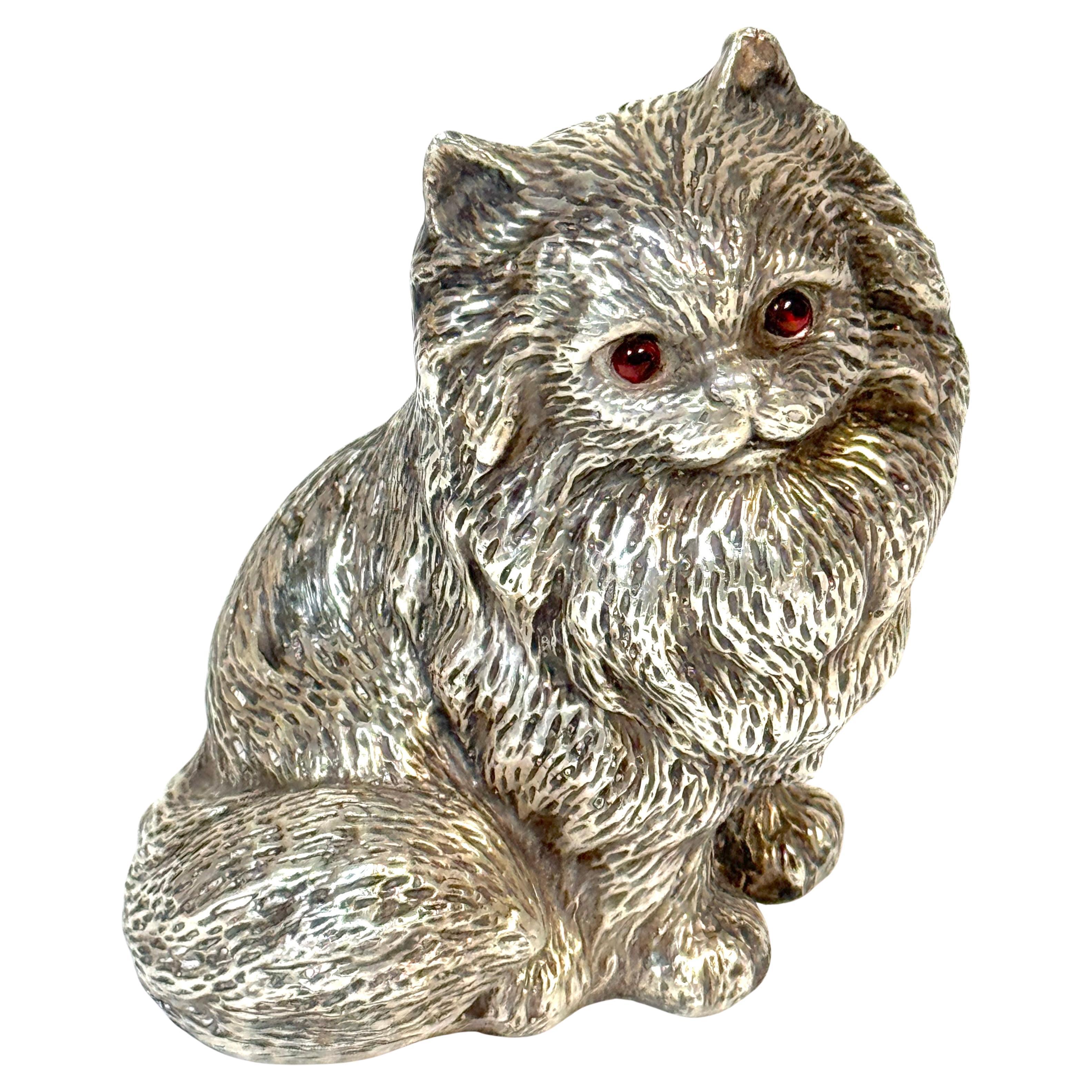
A finely modeled and intricately chased hollow silver sculpture of a long-haired domestic cat, likely modeled after the Persian or Himalayan breed. The animal is depicted in a seated posture, with a stylized curling tail and attentive expression, rendered with lifelike depth and emotional presence. The rich fur texture is deeply chased and subtly polished across high points, creating dramatic surface contrast and a tactile, almost lifelike softness.
The sculpture’s meticulous hand-chasing, naturalistic pose, and jewel-like eyes reflect the enduring influence of Karl Fabergé’s animalier tradition, particularly the small-scale silver and hardstone animal studies produced in his Moscow workshops at the turn of the 20th century. Like Fabergé’s celebrated menagerie, this piece captures both the anatomical accuracy and the spirited personality of its subject, elevating it from a decorative object to a work of art imbued with character and luxury.
The figure's eyes are set with smooth red cabochon stones—likely garnets or finely colored glass paste—enhancing its realistic gaze. The underside bears a Russian silver hallmark, including the “88” zolotnik standard (equivalent to .916 silver purity), along with the Latin-letter maker’s mark “S.W.,” attributed to a postwar Soviet-era workshop producing fine export silver.
Although the piece appears solid at first glance, it is finely executed as a sealed hollow-form casting using the lost-wax method, a traditional sculptural technique that allowed for rich surface modeling while minimizing weight. A faint rattle can be heard when the figure is gently moved, caused by a small remnant from the casting core or finishing process—a common occurrence in Russian and Continental silver animal figures...
Category
20th Century Russian Animal Sculptures
Materials
Multi-gemstone, Sterling Silver