Items Similar to Rare and highly important art deco judaica wine jug made by Bernhard Friedländer
Want more images or videos?
Request additional images or videos from the seller
1 of 13
Rare and highly important art deco judaica wine jug made by Bernhard Friedländer
$14,000
£10,628.53
€12,252.97
CA$19,804.93
A$21,321.81
CHF 11,418.25
MX$256,920.23
NOK 144,066.61
SEK 131,844.21
DKK 91,559.08
About the Item
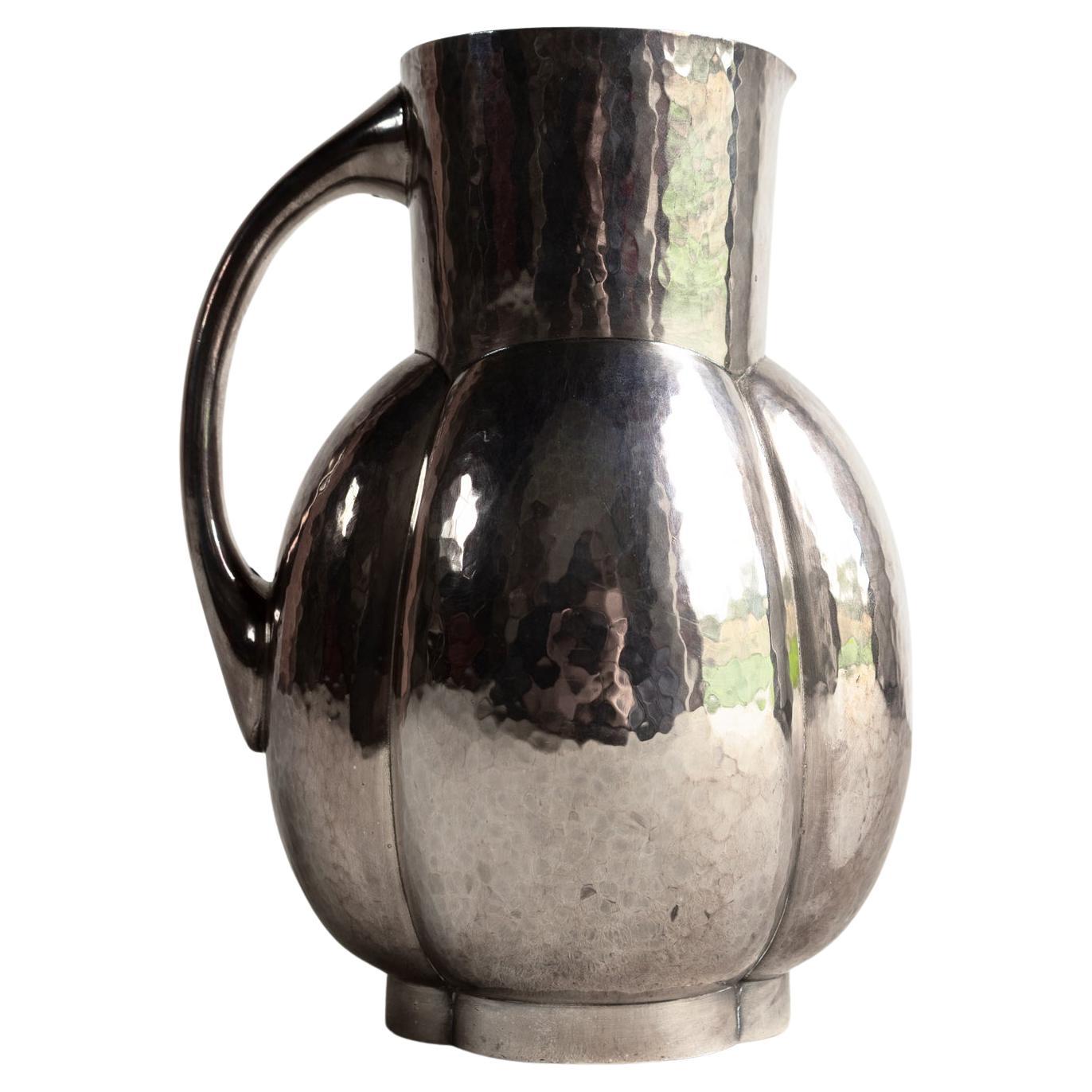
This wine jug in front of us is all hand made by Bernhard Friedländer in the 1920s' in Düsseldorf, Friedländers works from this era are very rare and mostly very small objects that were smuggled outside nazi Germany survived, this piece was brought by a German family to the land of Israel before WW2, and was used for years as a wine jug for pouring wine at jewish holidays and sabbath. the design is just amazing, very robust and strong art deco design, with sharp ridges and corners, all the river is hand hammered and welded and the handle is made from an exotic Harwood with silver accents on it, a truly rare modern Judaica object or an amazing Design object, Just a piece of art, a museum piece that will adorn every important judaica collection or museum.
This jug is massive and the weight is 1200 Grams. it is signed on a silver plaque attached to the base " B. Friedländers 930 (930 is the silver content)"
Bernhard Friedländer was born around 1880 in Czenstochau, in what is now Poland. He trained as a goldsmith, silversmith and stone setter in Łódź, Odesa, Tbilisi and Berlin. From 1904, he worked in Germany, with stops in Berlin, Munich, Essen and Bonn. In 1913, he set up his own business in Düsseldorf and produced unique Judaica, both for private use and for synagogues. He was well-received: his works were shown in exhibitions such as the GeSoLei in Düsseldorf in 1926, in the USA in 1927 and at the Kult und Form exhibition in various cities from 1930 onwards. He was applauded in newspapers and encyclopaedias. His most creative period was in Düsseldorf from 1913 to 1928. In 1928 he moved to Antwerp, and in 1932 he emigrated to Tel Aviv in what was then Mandate Palestine. Besides some unique chanukka lamps, he produced large numbers of Judaica and silverware – mass-produced goods.
Friedländer died in 1941 Bernhard Friedländer’s most sophisticated works remained in Germany and were destroyed during the Nazi era. In Tel Aviv, he made candlesticks, chanukka lamps, kiddush cups and silverware, which were less unusual. Some people, especially Israelis, know his firm, Michsaf, which still exists today. But few know it was founded by Friedländer, who sold it long before he died. A last reason is Friedländer’s somewhat early death in 1941, at age sixty. By contrast, Yehuda Wolpert, who worked in Friedländer’s Tel Aviv workshop for two years and then as a teacher at the Bezalel Academy of Art and Design, lived until 1981. Wolpert also found much acclaim for the modern works he created. Today, Wolpert is remembered as the inventor of modern Judaica. But Wolpert’s reception overlooks the innovative work of many artists in Germany before 1938, such as Bernhard Friedländer.
There exist very few silver Judaica objects in the style of Art Deco. Of that which are known, most are of German origin. Of the few makers known, one of the major artists working after 1925 was Bernhard Friedlaender of Dusseldorf. While very few of the objects he created have survived the Holocaust. Friedlaender emigrated to Palestine at some point in the 1930's where he continued to work in silver during the remainder of that decade. This cup was fashioned by him during this period and is made in a simple yet elegant modern style. His work is very much in concert with that of two other German emigres to Palestine, Ludwig Wolpert and Gumbel.
- Style:Art Deco (Of the Period)
- Materials and Techniques:
- Place of Origin:
- Period:
- Date of Manufacture:1925
- Condition:very good original condition, no breaks or repairs, there are a few minor dings that can be fixed easily, there are some scratches from use.
- Seller Location:Tel Aviv - Jaffa, IL
- Reference Number:1stDibs: LU8130242455042
About the Seller
No Reviews Yet
Vetted Professional Seller
Every seller passes strict standards for authenticity and reliability
1stDibs seller since 2023
- ShippingRetrieving quote...Shipping from: Tel Aviv - Jaffa, Israel
- Return Policy
More From This Seller
View AllImportant Early 20th Century Silver Kiddush Goblet by Bezalel School Jerusalem
Located in Tel Aviv - Jaffa, IL
Important Handmade sterling silver Kiddush goblet by Bezalel School, Jerusalem, circa 1910-1913.
On round base decorated with silver filigree and Cabouchon shaped green agate applications.
The base fitted with Bezalel mark. The upper portion is all adorned with amazing filigree work, the base and the actual cup adorned with swirling filigree designs, in the middle there are 3 roundels, made in another technique of hammered silver, similar to the works that were produced in this time all over Europe, in the middle of each roundel there is a perfectly centered Cabouchon green agate.
This work is attributed to Yehia Yemini.
The goblet is marked on the base, with the earliest silver mark of the school that just say "Bezalel" in Hebrew.
Yehia Yemini :
Was one of the biggest and must famous Bezalel silver...
Category
Early 20th Century Israeli Jugendstil Sterling Silver
Materials
Silver
Exceptional George III Teapot by Preeminent Silversmith Paul Storr, 1793
By Paul Storr
Located in Tel Aviv - Jaffa, IL
This rare and exceptional George III teapot is the work of preeminent Georgian silversmith Paul Storr, it is one of his earliest works, the date mark on this pieces of the year 1793 which is the first year Storr marked items with his own initials (P S)
The teapot is designed in the neoclassical taste with some Chinese influences, or Chinoiserie taste, though the decoration shows signs of later 19th century enhancement in the technique and style of the chasing.
It is very hard to impossible to find works from this early period with this interesting Royalty provenance.
The family crest on the front is of the Tollemache family, and dating of The teapot indicate It belonged and probably commissioned by or as a gift to William Manners Tollemache, Lord Huntingtower, William, On 12 January 1793, at the Age of 26, he was created a Baronet, of Hanby Hall in the County of Lincoln.
So this teapot was commissioned to celebrate the occasion.
William Manners Tollemache:
Lord Huntingtower (19 May 1766 – 11 March 1833), known as Sir William Manners, Bt, between 1793 and 1821, was a British nobleman And Tory politician.
Born William Manners, he was the eldest son of John Manners and Louisa Tollemache, 7th Countess of Dysart. On 12 January 1793, at the age of 26, he was Ceated a Baronet, of Hanby Hall in the County of Lincoln.On his mother's Succession to the earldom in 1821, he was styled Lord Huntingtower, and adopted The surname of Talmash or Tollemache
Paul Storr:
(baptised 28 October 1770 in London – 18 March 1844 in London) was an English goldsmith and silversmith working in the Neoclassical and other styles During the late eighteenth and early nineteenth centuries. His works range from Simple tableware to magnificent sculptural pieces made for royalty
Paul Storr was England's most celebrated silversmith during the first half of the Nineteenth century and his legacy lives on today. His pieces historically and Currently adorn royal palaces and the finest stately homes throughout Europe and The world. Storr's reputation rests on his mastery of the grandiose neo-Classical Style developed in the Regency period. He quickly became the most prominent Silversmith of the nineteenth century, producing much of the silver purchased by King George III and King George IV. Storr entered his first mark in the first part of 1792, which reflects his short-lived partnership with William Frisbee. Soon after, he Began to use his PS mark, which he maintained throughout his career with only Minor changes. His first major work was a gold font commissioned by the Duke of Portland...
Category
Antique 1790s English Neoclassical Tea Sets
Materials
Silver
Important Early 20th Century Silver Kiddush cup by Bezalel School Jerusalem
Located in Tel Aviv - Jaffa, IL
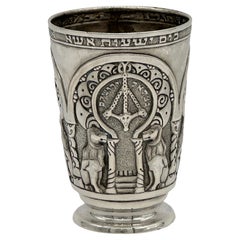
Important Handmade sterling silver Kiddush goblet by Bezalel School, Jerusalem, Circa 1910-1913.
On the cup there are 3 identical scenes of flanked lions and on the middle of them There are two columns with a staircase, this design is probably taken from Eastern European torah ark, on the middle part there is a chandelier with 3 tiger/lioness Heads, the top of the cup has 3 inscription on top of each flanking lions scene, first One says : ״כוס ישועות אשא״ (Psalms 116:13) which means " I will take the cup of Salvation", this is a rather common blessing on kiddush cups.
Next inscription says : ״אין שמחה אלא ביין״ in English " there is no joy except in wine" This says that after the temple was destroyed we have our joy only in the wine of Kiddish.
The last inscription says ״ושמחת בחגך״ (Deuteronomy 16:14 ) in English : "And you shall rejoice in your festival".
So this cup is a kiddish cup...
Category
Vintage 1910s Israeli Art Nouveau Sterling Silver
Materials
Silver
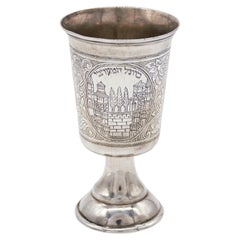
Rare "Safed" kiddush cup, late 19th century Poland/ Eretz ISRAEL
Located in Tel Aviv - Jaffa, IL
This 84 silver cup was made in Europe, in Poland or parts of Poland that are in modern Russia in the 19th century, the interesting and important in this cup types is that they were s...
Category
Antique 1890s Israeli Sterling Silver
Materials
Silver
Antique early 20th Chinese Exceptional Solid Silver Teapot, Wu Hua物華, Tianjin
Located in Tel Aviv - Jaffa, IL
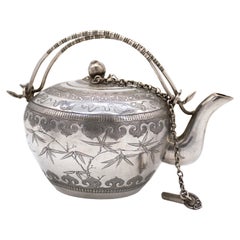
Antique early 20th Century exceptionally rare Chinese solid silver teapot, of traditional round form, the body finely engraved in traditional Chinese style, suggesting this teapot was made for the Chinese market. The body engraved with bamboo and butterflies , the unusual handle imitating bamboo, the removable lid set with a peach finial (Peaches are the symbol of longevity). According to Daoist lore, the peaches of immortality grew in the garden of the Queen Mother of the West - Xi Wangmu.
the spout with a hedged cover in the shape of a lingzhi mushroom and a FU symbol of good furtune.
the top frieze is decorated with 8 Chinese symbols: a scroll, a Ruyi scepter, a qin, The Endless Knot, a pendant, an old book, a wrist rest, and two overlapping squares.
The teapot is very unusual, fine and exceptionally crisp. it is made of heavy Gauge silver and the attention to detail and design is simply outstanding.
"WU HUA...
Category
Early 20th Century Chinese Chinese Export Metalwork
Materials
Silver
A RARE SILVER SHMIROT KIDDUSH CUP. Galician, c. 1850.
Located in Tel Aviv - Jaffa, IL
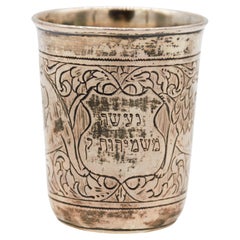
A RARE SILVER SHMIROT KIDDUSH CUP. Galician, c. 1850.
Among some Hassidic courts, it was a practice for the Rabbi to give a blessed silver coin to his Hassidim as an amulet. Such protection might be given for all manner of life events, from healing from an illness to success in travel and the amulet was carried on the body of the recipient. This custom was particularly popular among the Ryzhiner Hassidim and these coins were called "Shmirot". To such coins were attributed extraordinary power and value and they were treasured with great care and love.
this cup is marked with polish loth 12 mark which indicate silver content of 75%.
Size :
Height 2.3 inch / 6 cm
Width : 2 inch / 5 cm
After the specific event for which they had originally be given, such a coin or coins were used in the making of other objects, which maintained the special aura of the Rabbi. Such a coin would be melted in other silver with the amuletic valued being spread evenly to all the silver. Then a ritual object would be fashioned by a silversmith and the special nature of the item would be inscribed on it, indicating in one of several ways that this object had been made from "Shmirot". this objects include Kiddish cups, a Havdalah tray, a Shabbat salt holder, a Chanukkah Menorah, a Torah crown etc.
This object is a Kiddish cup fashioned from such silver. On this cup, the inscription indicating Shmirot is found in the abbreviation of the words "made from shmirot k (kodesh)' " (This is the cup of Shmirot). Such cups were used for blessing the wine so that each use renewed the power of protection granted by the Rabbi. This cup was used for the blessing over wine on Shabbat and holidays. Inscription:
the other iconography on the cup is of a lion that represent Through the tribe of Judah, the lion symbol came to represent the blessing, majesty, and even divine protection of the Jews. The lion symbol continued to be used even after the destruction of Jerusalem, the capital of Judah's nation,
and a unicorn or a re'em, also reëm (Hebrew: רְאֵם), is an animal mentioned nine times in the Hebrew Bible It has been translated as "unicorn" in the Latin Vulgate, King James Version, and in some Christian Bible translations as "oryx" (which was accepted as the referent in Modern Hebrew),[citation needed] "wild ox", "wild bull", "buffalo" or "rhinoceros". Rabbi Natan Slifkin has argued that the re'em was an aurochs, as has Isaac Asimov...
Category
Antique 1850s Sterling Silver
Materials
Silver
You May Also Like
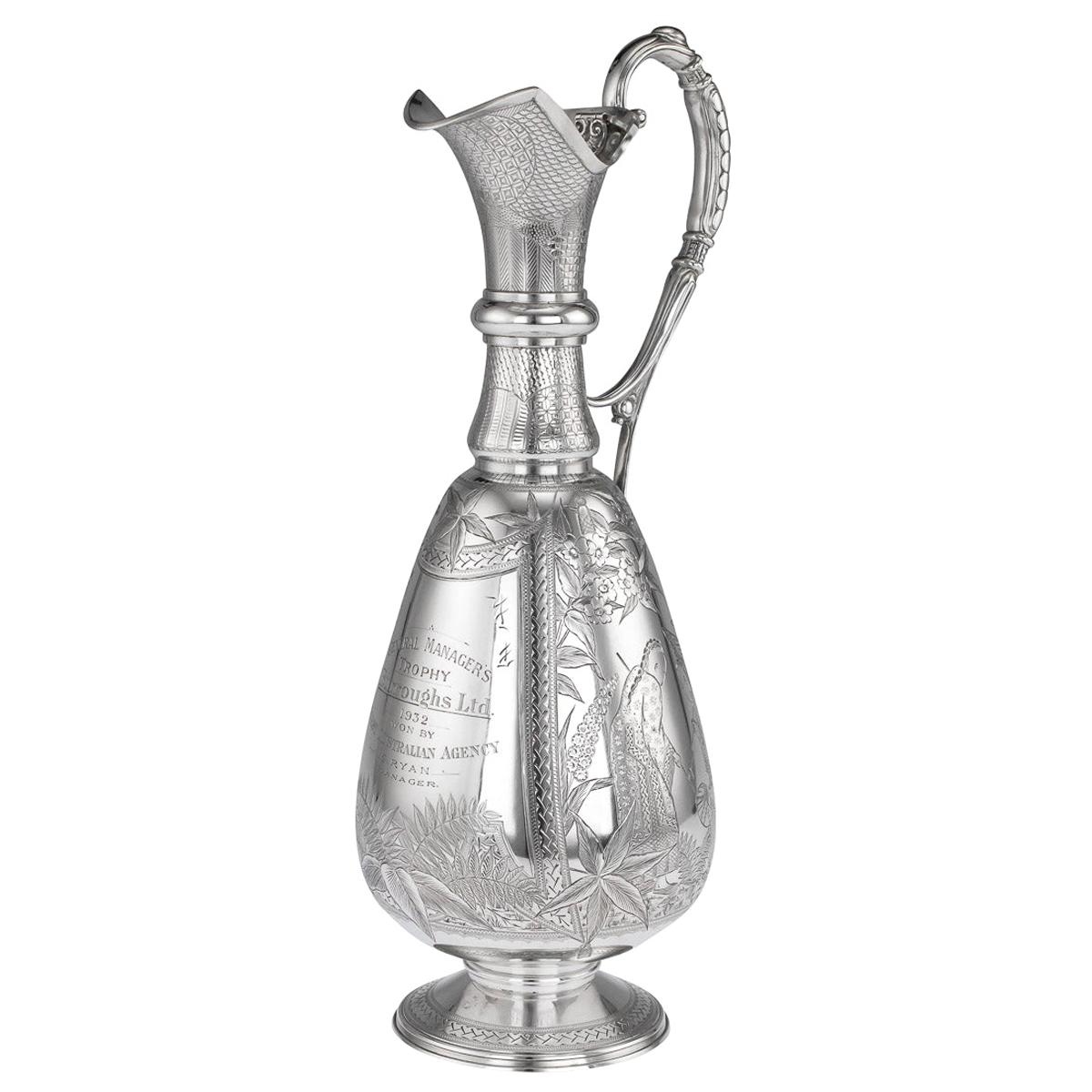
19th Century Victorian Solid Silver Wine Jug, Edward Barnard
Sons c.1870
Located in Royal Tunbridge Wells, Kent
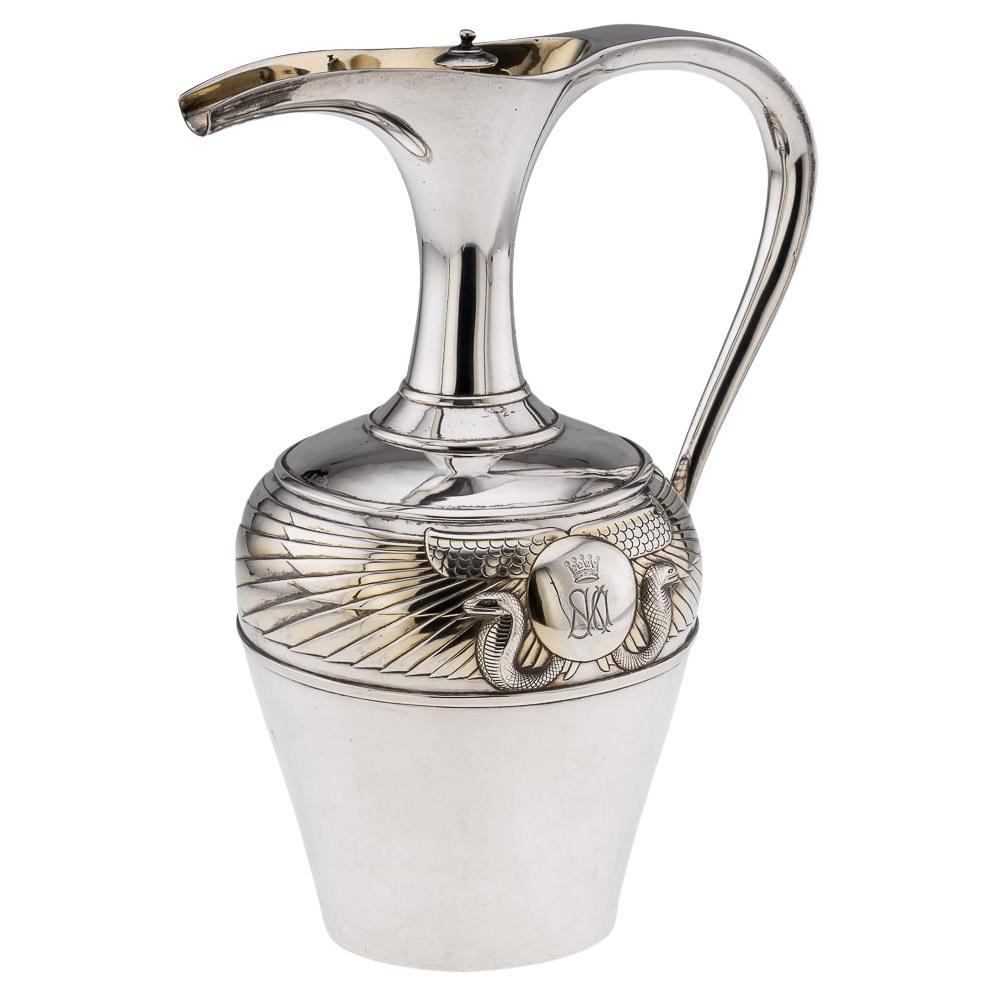
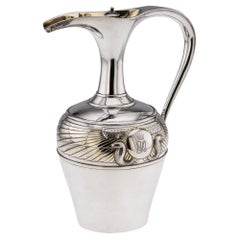
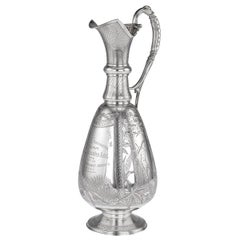
Antique 19th Century Victorian solid silver gilt wine jug, made in the Egyptian revival style, the centre featuring a a pair of snakes, flanked by wings, cartouche engraved with crow...
Category
Antique 19th Century Sterling Silver
Materials
Silver
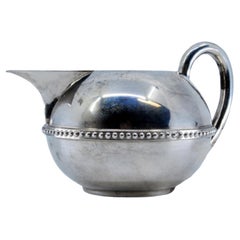
Silver wine jug with raised surround on the frieze
Located in Porto, PT
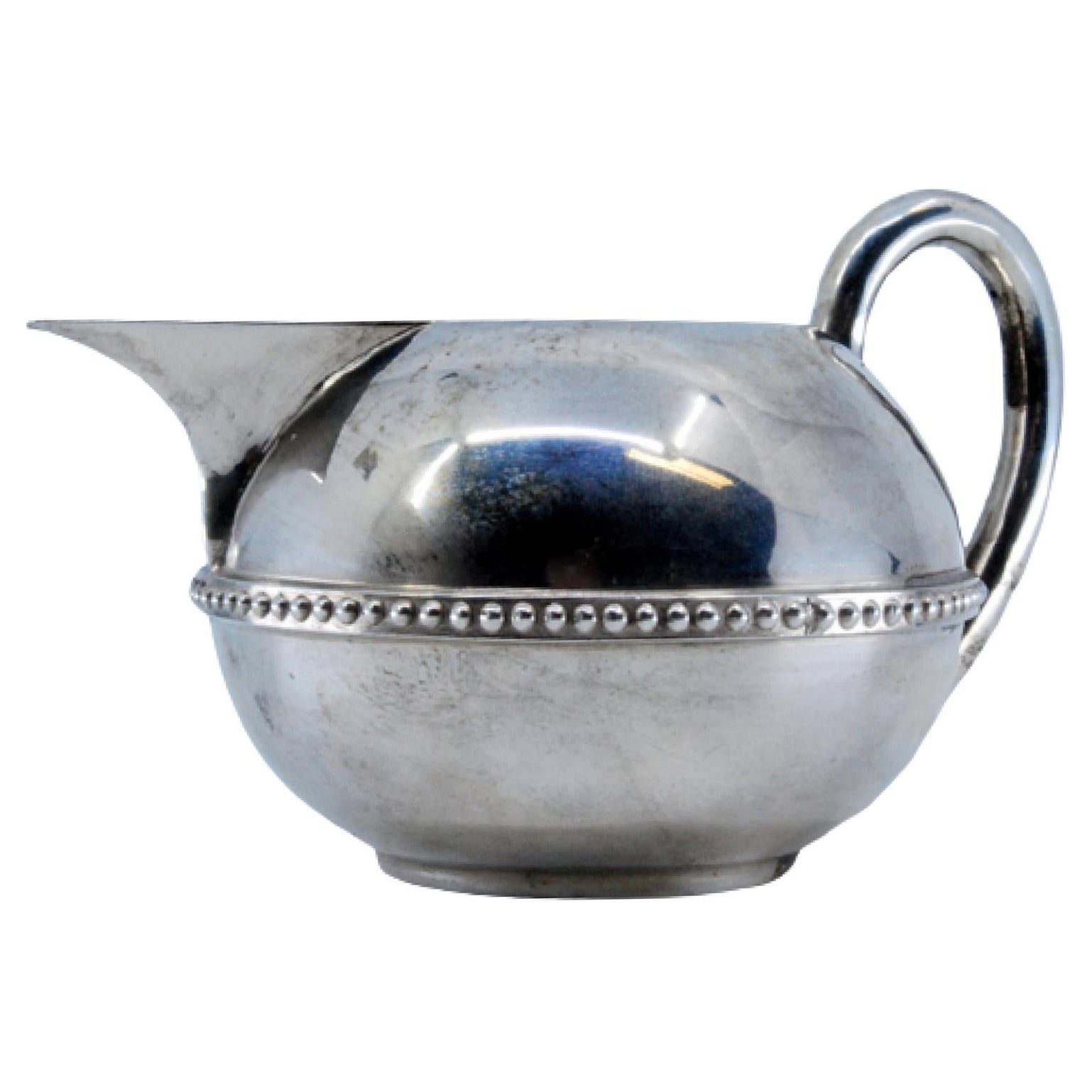
Description: Silver wine jug with raised surround on the frieze. Metal: Silver. Origin: Portuguese. Brand: javali II Title. Weight: 118.29 grams. Dimensions: 12.3x4.6cm. Content: 833...
Category
Antique 19th Century European Pitchers
Materials
Silver
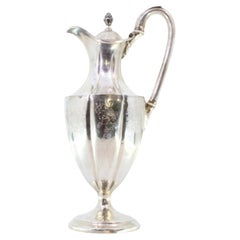
Silver wine jug w/ engraved wine motifs, knob on the hinged lid
circular base
Located in Porto, PT
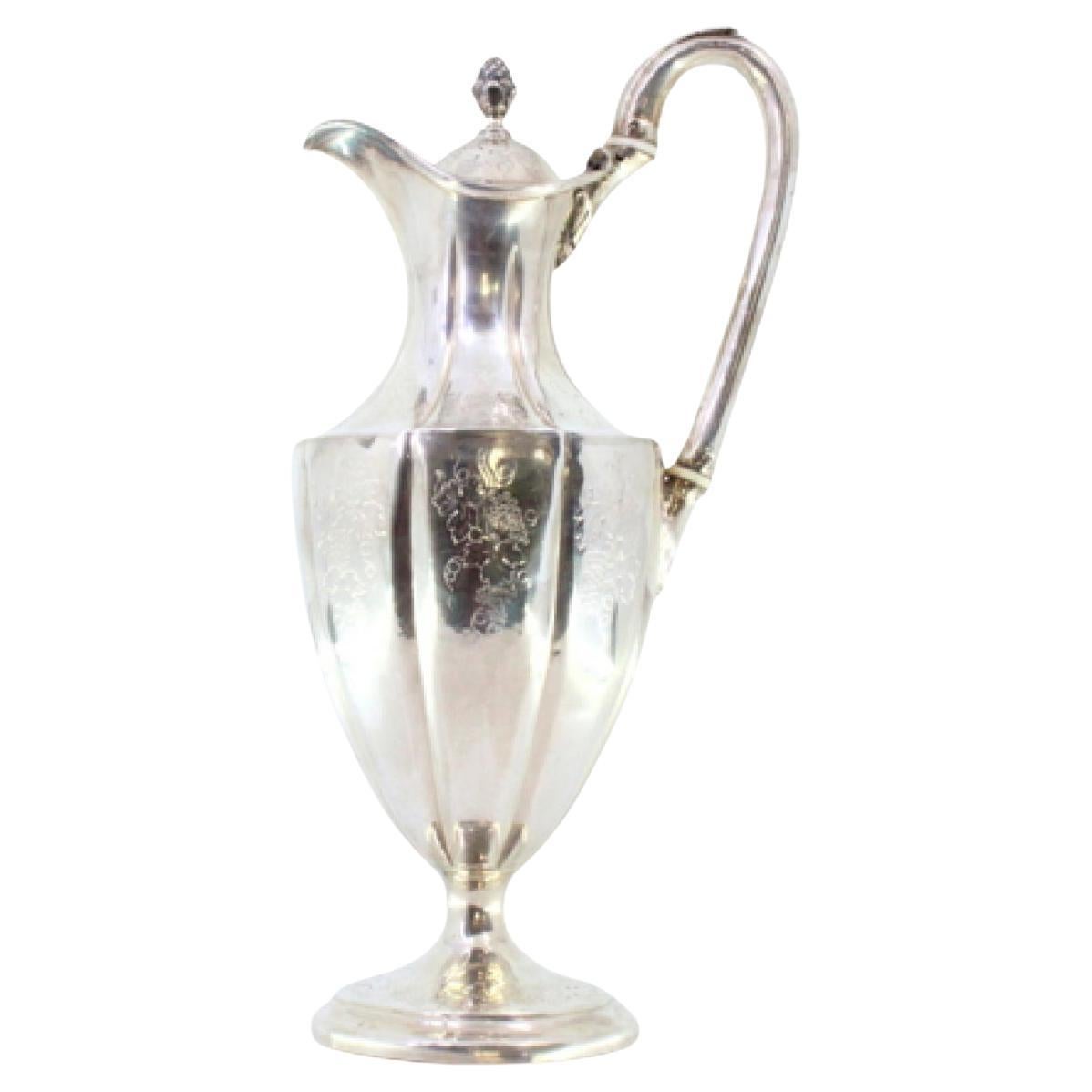
Description: Silver wine jug with engraved wine motifs, knob on the hinged lid and circular base. Metal: Silver. Origin: English. Brand: London. Weight: 621.21 grams. Dimensions: 15c...
Category
Early 20th Century European Pitchers
Materials
Silver
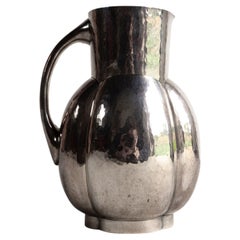
$2,500 Sale Price
50% Off
Free Shipping
French Art Deco Silver Plated
Melone
Jug By Fjerdingstad For Christofle, 1930s
By Christofle, Christian Fjerdingstad
Located in Bristol, GB
ANTIQUE JUG/PITCHER
Designed in 1926 by Danish silversmith and sculptor Christian Fjerdingstad (1891-1968) for high-quality French goldsmiths and silversmiths Christofle, forming pa...
Category
Vintage 1930s French Art Deco Pitchers
Materials
Silver Plate
19th Century Victorian Aesthetic Movement Solid Silver Wine Jug, c.1879
By George John Richards
Edward Charles Brown
Located in Royal Tunbridge Wells, Kent
Antique 19th century Victorian Aesthetic movement solid silver wine jug, the bulbous body beautifully hand engraved with chinoiserie scenes of nobility...
Category
Antique 19th Century English Victorian Pitchers
Materials
Sterling Silver
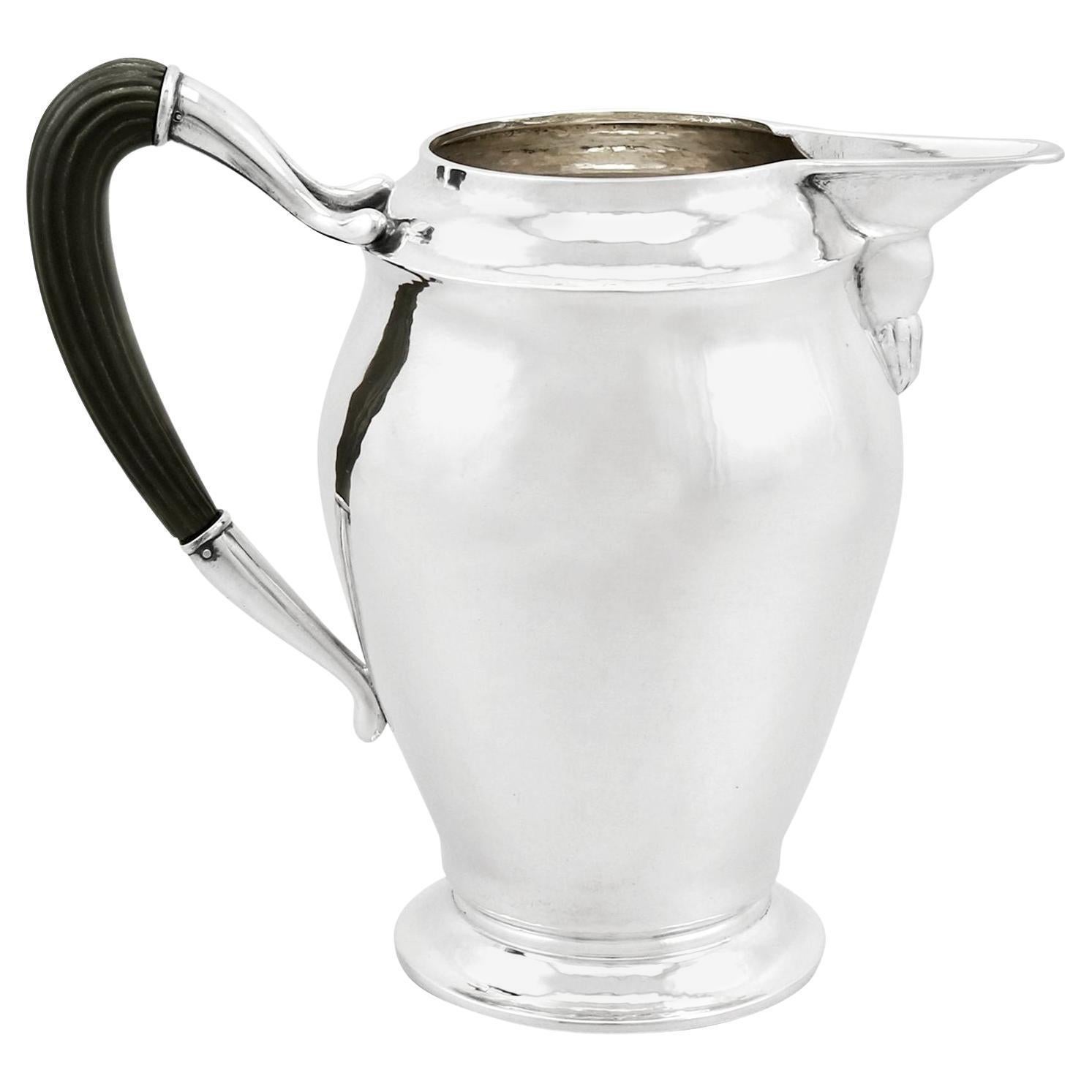
Art Nouveau Style Danish Silver Water Jug
Located in Jesmond, Newcastle Upon Tyne
An exceptional, fine and impressive antique Danish silver water/cordial jug made in the Art Nouveau style; an addition to our range of collectable silverware.
This exceptional antique Danish silver jug has a circular rounded form onto a circular spreading foot, all in the Art Nouveau style. The surface of this antique water jug has a subtle planished finish. This impressive piece is fitted with a C-shaped handle, with a bifurcating upper portion and the original carved painted wood hand piece. The spout is embellished with a vase shaped design to the nadir. The underside of the Art Nouveau jug bears the engraved initials 'A.N' and date '1927', in addition to the hallmarks.
The hallmarks struck to this silver jug include:
Assay mark: Three Tower Mark, 20 (Copenhagen, 1920)
Assay Master Mark: CFH (Christian F. Heise)
Condition
This antique Art Nouveau jug is an exceptional gauge of silver, exceptional quality and in exceptional condition. The jug has been professionally polished and is in presentation condition. Danish hallmarks struck to the underside of the jug are all very clear.
Dimensions
Length from back of handle to tip of lip 19.5cm/7.7"
Width 10.3cm/4.1"
Diameter of foot 8.6cm/3.4"
Height 18.3cm/7.2"
Weight 12.1 troy ounces/375g
Maker: Unmarked
Date: 1920
Origin: Denmark, Europe
Video: Video of this fine piece is available upon request.
Reflections in photographs may detract from the true representation of this piece of antique Danish silverware...
Category
Vintage 1920s Danish Art Nouveau Pitchers
Materials
Silver

More Ways To Browse
Antique Judaica Silver
Rare Antique Hammers
German Repousse
Antique Kiddush Cup
Antique Kiddush Cups
Antique German Repousse Sterling
Oneida Rose
Rare Knives
Richelieu Sterling
Royal Danish International Sterling
Rundell Bridge And Rundell
Scallop Spoon
Silver Dressing Set
Silver Fruit Spoons
Silver Holloware
Silver Pedestal Dish
Silver Wine Funnel
Spoon Rest Vintage