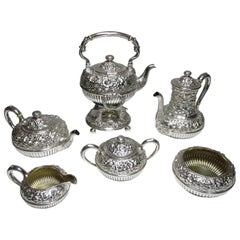
Marcus
Co. of New York Four-Piece Sterling Silver Cocoa or Hot Chocolate Set
About the Item
- Creator:Marcus Co. (Maker)
- Dimensions:Height: 17.13 in (43.52 cm)Width: 11 in (27.94 cm)Depth: 11 in (27.94 cm)
- Materials and Techniques:Sterling Silver,Repoussé
- Place of Origin:
- Period:
- Date of Manufacture:1908
- Condition:Wear consistent with age and use.
- Seller Location:Newport, NH
- Reference Number:1stDibs: LU3920313979282
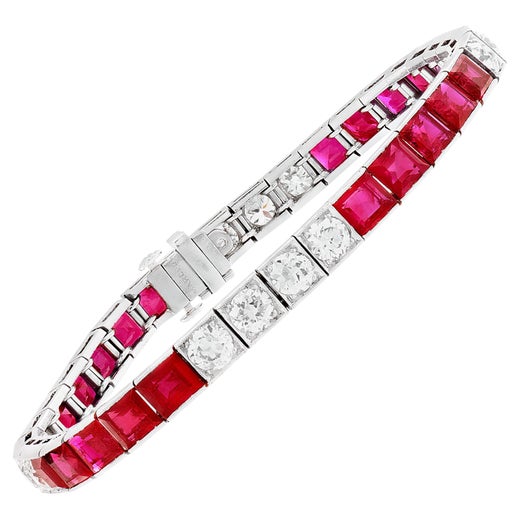
Marcus & Co.
Throughout the early 20th century, Marcus Co. established a reputation as one of the finest American producers of Art Nouveau jewelry. The firm’s innovative techniques included the use of plique-à-jour enameling. During the 1900s, this rare method was used by only three other jewelry companies in the United States — Tiffany Co., Riker Bros. and Whiteside and Blank.
Marcus Co. was founded in 1892, in New York City, by Herman Marcus and his son William. Herman was born and raised in Germany, where he worked as a jeweler for Ellemeyer, the court jewelers of Dresden, before moving to the United States in 1850.
After arriving in New York City, Herman worked as a designer at several prestigious luxury firms, including Ball, Black Co., Tiffany Co. and was a partner at Starr and Marcus before he went into business with William. Later, they were joined by Herman’s other son, George.
Herman worked with his sons until his death in 1899, when William and George expanded the firm to include a silversmithing department to make serveware. However, Marcus Co. focused mainly on jewelry design and manufacturing, offering Revival-style pieces.
In 1900, the company exhibited a series of striking orchid motif brooches at the Exposition Universelle in Paris. The brooches attracted critical acclaim for their plique-à-jour enameling and intricate detail — characteristics that would become Marcus Co.’s signature.
The company’s Art Nouveau jewelry took shape during the 1920s and 1930s. Cocktail rings, engagement rings, necklaces and cufflinks featured fine diamonds, natural pearls and gems rarely seen during that period, such as peridots, zircons, spinels and chrysoberyls. Marcus Co.’s designs were comparable by critics to fine art jewelry made by René Lalique and attracted high-profile clientele like business tycoon John D. Rockefeller.
Despite Marcus Co.’s success, the firm closed briefly during World War II. In 1962, they merged with the company Black, Starr Frost.
Marcus Co. pieces are still highly coveted among jewelry collectors. The firm’s Art Nouveau plique-à-jour accessories, a technique that sees enamel powder applied to cells on a thin sheet of copper foil or mica and then etched away — instead applying the enamel directly to metal — are particularly collectible. In 2011, a Morning Glory plique-à-jour pendant brooch and chain made in 1900 sold at a Sotheby’s auction for $302,500.
On 1stDibs, discover antique Marcus Co. brooches, rings and decorative objects.
You May Also Like
Early 20th Century North American Tea Sets
Sterling Silver
Vintage 1910s English Sterling Silver
Sterling Silver
Early 20th Century German Mid-Century Modern Sterling Silver
Sterling Silver

Vintage 1980s Italian Renaissance Sterling Silver
Sterling Silver
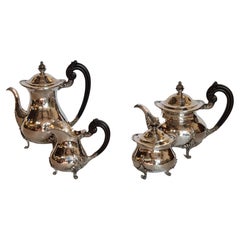
Vintage 1980s Italian Rococo Sterling Silver
Sterling Silver
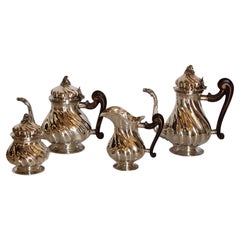
Early 20th Century French Neoclassical Sterling Silver
Sterling Silver
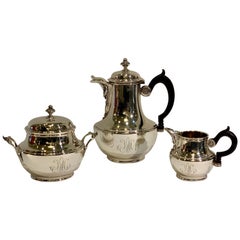
Antique 1860s British Victorian Tea Sets
Silver, Sterling Silver
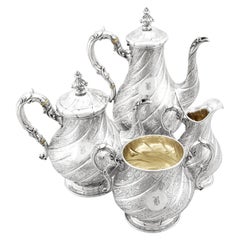
Antique Early 1900s English Edwardian Tea Sets
Sterling Silver
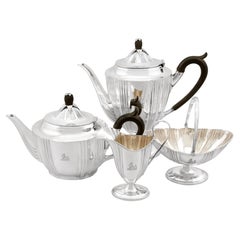
Antique Early 1900s British Tea Sets
Sterling Silver
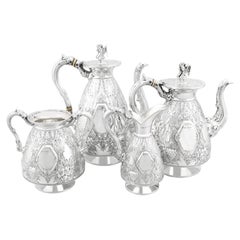
Vintage 1920s American Rococo Revival Sterling Silver
Sterling Silver