Want more images or videos?
Request additional images or videos from the seller
1 of 11
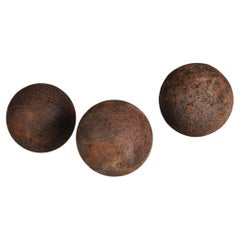
Antique Boule Set, Boule Balls, Pétanque, 1880s, France, Craftsmanship
Price:$253.77
$371.99List Price
About the Item
- Dimensions:Height: 3.15 in (8 cm)Diameter: 3.15 in (8 cm)
- Sold As:Set of 3
- Style:Late Victorian (Of the Period)
- Materials and Techniques:
- Place of Origin:
- Period:
- Date of Manufacture:Circa 1880
- Condition:Wear consistent with age and use. Very nice, age-related and cleaned condition.
- Seller Location:Greven, DE
- Reference Number:1stDibs: LU5419239378322
About the Seller
5.0
Platinum Seller
Premium sellers with a 4.7+ rating and 24-hour response times
Established in 2014
1stDibs seller since 2020
214 sales on 1stDibs
Typical response time: 1 hour
Authenticity Guarantee
In the unlikely event there’s an issue with an item’s authenticity, contact us within 1 year for a full refund. DetailsMoney-Back Guarantee
If your item is not as described, is damaged in transit, or does not arrive, contact us within 7 days for a full refund. Details24-Hour Cancellation
You have a 24-hour grace period in which to reconsider your purchase, with no questions asked.Vetted Professional Sellers
Our world-class sellers must adhere to strict standards for service and quality, maintaining the integrity of our listings.Price-Match Guarantee
If you find that a seller listed the same item for a lower price elsewhere, we’ll match it.Trusted Global Delivery
Our best-in-class carrier network provides specialized shipping options worldwide, including custom delivery.You May Also Like
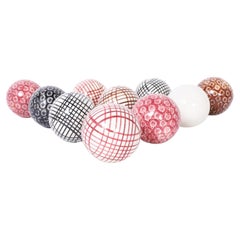
Collection of Ten Antique Carpet Balls
Located in Palm Beach, FL
Ten carpet balls crafted in stoneware, decorated and glazed in several different colors and designs including a white cue ball.
Category
Antique Late 19th Century English Victorian Antiquities
Materials
Stoneware
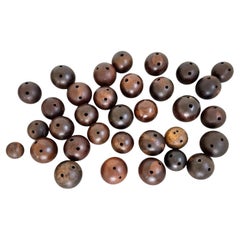
Set of 33 Antique Wood Bowling Balls, Late 1800
s USA
Located in Los Angeles, CA
This remarkable set of 33 antique wooden bowling balls is an exceptional find, dating back to the late 1800s United States. Each piece is meticulously crafted from Lignum Vitae, a pr...
Category
Antique Late 19th Century American Folk Art Antiquities
Materials
Wood
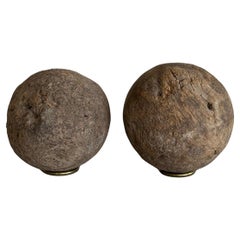
Set 18th Century Wooden Sculpted Balls
Located in Nijlen, BE
Playing balls from the 18th century in France.
Although the most famous variant, pétanque, only emerged in the early 20th century, a precursor already had a long history. The game w...
Category
Antique 18th Century French Folk Art Antiquities
Materials
Oak
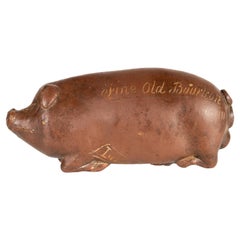
Genuine 1880s Albany Slip Glazed Anna Pottery Stoneware Pig Flask
Located in Coeur d
Alene, ID
Albany slip glazed Anna pottery stoneware pig flask by Wallace and Cornwall Kirkpatrick, Anna. Anatomically correct prone pig. In sized inscriptions "Fine Old Burmann Inn" and alongside "Lard Oil Drill". Underside flask opening under tail. Anna Pottery was s operative by the Kirkpatrick brothers between 1859 and 1896. They took part in art exhibitions such as Philadelphia Centennial in 1876 and the World's Columbian Exposition in Chicago 1893. In 1938 the first inscription of Anna pottery was published in the New York Historical Society. Pieces of Anna pottery pigs...
Category
Antique 1880s American Pottery
Materials
Pottery
$6,000 Sale Price
40% Off
H 3.5 in W 6.5 in D 3.5 in
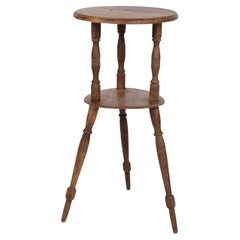
Side/Flower Table In Pine With Turned Legs From 1880s
Located in Lejre, DK
Antique pine side/flower table from the 1880s. Two-tier with turned legs.
— Period: 1880s
— Material: Pine
— Details: Turned legs
two-tier construction
— Dimensions: H: 75 c...
Category
Antique Early 1800s Danish Mid-Century Modern Antiquities
Materials
Pine
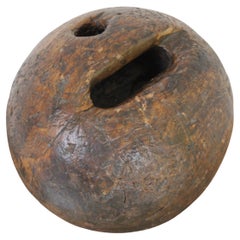
Boule ball hard wood
Located in Diest, BE
French ball from a folk art game. Great patina and form.
Normandy, France ca. 1860
Category
Antique 1860s French French Provincial Antiquities
Materials
Wood
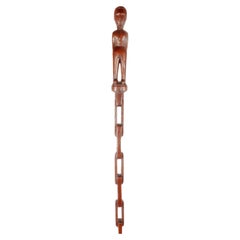
Folk art walking stick depicting a man on a chain-shaped shaft, USA 1880s.
Located in Milan, IT
Folk art walking stick of American folk art.
The stick is made entirely from a single branch of fruit wood, carved and ingraved. The tip is made of copper, smooth with decorative lin...
Category
Antique 1880s American Antiquities
Materials
Copper
$4,199
H 43 in W 2 in D 2 in
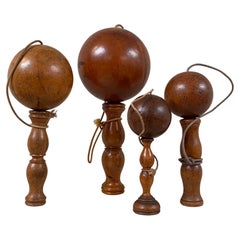
Set of 4 Antique Bilboquets, France
Located in Schellebelle, BE
Beautiful set of four antique Bilboquets from France,around 1920,
cup-and-bowl children toys in turned Beechwood, dark tinted,
pretty patina,
a set full of charm and authenticity
...
Category
Vintage 1920s French Antiquities
Materials
Beech
Vintage 20th-Century Floral Ceramic Wall Fountain - French Craftsmanship - 2Y551
Located in Bordeaux, FR
Enhance your decor with this beautiful vintage ceramic wall fountain from the 20th century, featuring an elegant floral design. Measuring 68.5 cm in height, 33.5 cm in length, and 17...
Category
20th Century Antiquities
Materials
Ceramic
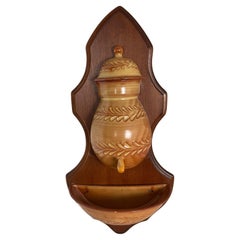
$815
H 26.78 in W 13 in D 6.7 in
Large Antique Steer Weathervane c. 1880
Located in Lancaster, PA
Beautiful antique weathervane most likely by Cushing and White. Origin is New England c. 1880. This weathervane was purchased from Allan Katz Amer...
Category
Antique Late 19th Century American Folk Art Antiquities
Materials
Copper
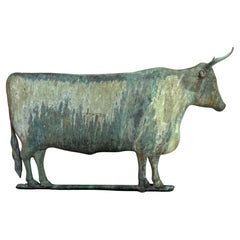
More From This Seller
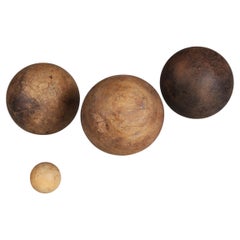
View AllAntique Boule Set, Boule Balls, Pétanque, 1880s, France, Craftsmanship
Located in Greven, DE
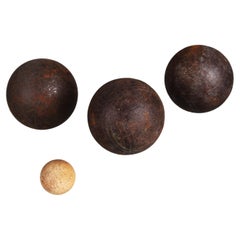
Beautiful, unique Boule set of three Boule balls and one target ball, France, late 19th century.
In the 19th century, the manufacture of boule balls underwent significant developmen...
Category
Antique Late 19th Century French Late Victorian Antiquities
Materials
Olive
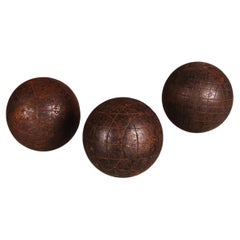
Antique Boule Set, Boule Balls, Pétanque, 1880s, France, Craftsmanship
Located in Greven, DE
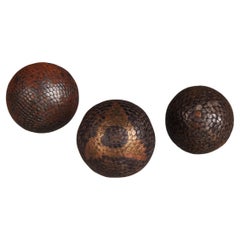
Beautiful, unique Boule set of three Boule balls, France, late 19th century.
In the 19th century, antique metal boules balls experienced a renaissance that took the game of boules to a new level.
These ornately crafted balls were not only instruments of the game, but also symbols of elegance and sophistication in leisure activities.
Made from high-quality metals such as steel or brass, Boule balls were forged and polished by skilled craftsmen to ensure a smooth and even surface.
The antique boules...
Category
Antique Late 19th Century French Late Victorian Antiquities
Materials
Metal
Antique Boule Set, Boule Balls, Pétanque, 1880s, France, Craftsmanship
Located in Greven, DE
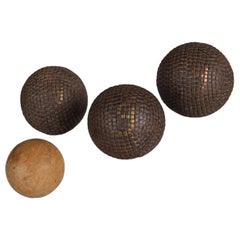
Beautiful, unique Boule set of three Boule balls and one target ball, France, late 19th Century.
Diameter 8,5 cm.
Fantastic colour and patina!
In the 19th century, antique metal boules balls experienced a renaissance that took the game of boules to a new level.
These ornately crafted balls were not only instruments of the game, but also symbols of elegance and sophistication in leisure activities.
Made from high-quality metals such as steel or brass, Boule balls were forged and polished by skilled craftsmen to ensure a smooth and even surface.
The antique boules...
Category
Antique Late 19th Century French Late Victorian Antiquities
Materials
Metal
Antique Boule Set, Boule Balls, Pétanque, 1880s, France, Craftsmanship
Located in Greven, DE
Beautiful, unique Boule set of three Boule balls and one target ball, France, late 19th Century.
Fantastic colour and patina!
In the 19th century, antique metal boules balls experienced a renaissance that took the game of boules to a new level.
These ornately crafted balls were not only instruments of the game, but also symbols of elegance and sophistication in leisure activities.
Made from high-quality metals such as steel or brass, Boule balls were forged and polished by skilled craftsmen to ensure a smooth and even surface.
The antique boules...
Category
Antique Late 19th Century French Late Victorian Antiquities
Materials
Metal
Antique Boule Balls Set "9", Pétanque, 1880s, France, Craftsmanship
Located in Greven, DE
Beautiful, unique Boule set of three Boule balls and one target ball, France, late 19th century.
In the 19th century, the manufacture of boules balls underwent significant development in France as the game of boules, particularly the pétanque variant, gained in popularity. The manufacture of boules balls during this period was a manual process that required expertise, precision and love to detail.
In the late 19th and early 20th centuries, particularly in rural areas of France and other Mediterranean regions, olive wood was a commonly used source of material for making boules balls. This was not only due to the availability of the material, but also to the outstanding properties of olive wood, which was characterized by hardness, strength and a rich grain.
First, the olive wood was carefully selected and shaped into raw balls, which were then sanded to the desired size and shape. The nails were then hammered into the balls one by one, making sure that they were evenly distributed and firmly anchored. Finally, the spheres were polished and coated with a protective varnish to enhance their natural beauty and protect them from the elements.
The use of nails to decorate and reinforce olive wood boules was a traditional practice that not only gave the ball a rustic aesthetic, but also improved its durability and contributed to customization. Many balls were made according to the specific requirements and preferences of the players. Nails were driven at regular intervals around the ball, with each nail hole precisely placed so as not to affect the balance and weight distribution of the ball. These nails not only served as a decorative element, but also helped to strengthen the structure of the ball and make it more resistant to the hard knocks and wear and tear during play. Individual engravings or decorations were often applied to the balls to make them unique and identify the player.
Antique boules...
Category
Antique Late 19th Century French Late Victorian Antiquities
Materials
Olive
Antique Boule Balls Set "B", Pétanque, 1880s, France, Craftsmanship
Located in Greven, DE
Beautiful, unique Boule set of three Boule balls, France, late 19th Century.
In the 19th century, the manufacture of boules balls underwent significant development in France as the game of boules, particularly the pétanque variant, gained in popularity. The manufacture of boules balls during this period was a manual process that required expertise, precision and love to detail.
In the late 19th and early 20th centuries, particularly in rural areas of France and other Mediterranean regions, olive wood was a commonly used source of material for making boules balls. This was not only due to the availability of the material, but also to the outstanding properties of olive wood, which was characterized by hardness, strength and a rich grain.
First, the olive wood was carefully selected and shaped into raw balls, which were then sanded to the desired size and shape. The nails were then hammered into the balls one by one, making sure that they were evenly distributed and firmly anchored. Finally, the spheres were polished and coated with a protective varnish to enhance their natural beauty and protect them from the elements.
The use of nails to decorate and reinforce olive wood boules was a traditional practice that not only gave the ball a rustic aesthetic, but also improved its durability and contributed to customization. Many balls were made according to the specific requirements and preferences of the players. Nails were driven at regular intervals around the ball, with each nail hole precisely placed so as not to affect the balance and weight distribution of the ball. These nails not only served as a decorative element, but also helped to strengthen the structure of the ball and make it more resistant to the hard knocks and wear and tear during play. Individual engravings or decorations were often applied to the balls to make them unique and identify the player.
Antique boules...
Category
Antique Late 19th Century French Late Victorian Antiquities
Materials
Olive
Still Thinking About These?
All Recently ViewedMore Ways To Browse
Funerary Mask
Gun Canes
J Blum
Pre Columbian Nayarit
Apulian Red Figure
Crusader Ring
Nipping Press
Nok Terracotta
Philip Ii Coin
Pre Columbian Chimu Peru Blackware
Pre Columbian Frog
Precolumbian Art Art
Vintage Walking Stick Badges
Ancient Egyptian Death Mask
Anna Pottery Pig
Bird Automated
Coca Leaf Bag
Ktas Antique Phone